Brazil's financial institutions have raised their expectations for this year's National Consumer Price Index (IPCA) from 4.86 percent to 4.89 percent, according to a weekly survey released by the Central Bank of Brazil on Monday.
Due to the escalating uncertainty brought by conflicts in the Middle East, financial market in Brazil has raised their IPCA for the eighth consecutive week and surpassed the target range set by the central bank.
Previously, the Monetary Policy Committee of the central bank had set an inflation target of 3 percent, with a tolerance interval of 1.5 percentage points, meaning a lower band of 1.5 percent and an upper band of 4.5 percent.

Brazil raises inflation expectations for eighth consecutive week
The increase in energy prices affects every participant in the European economy, including businesses and households, pushing the EU economy toward slower growth and higher inflation, said European Commissioner for Economy Valdis Dombrovskis at a press conference on Monday.
Due to the conflict in the Middle East, energy prices have soared. Last week, the oil prices exceeded 125 U.S. dollars per barrel. Dombrovskis stressed that declining confidence, tighter financing conditions, and weak external demand have all exacerbated the direct impact. According to him, the current overall economic impact will depend on the evolution of the conflict, particularly its effects on energy supply and infrastructure. But, Dombrovskis said, due to the high levels of deficits and debts in EU countries, the high interest rate environment, and the urgent need to increase defense spending, the EU has very limited room for maneuver.
The war in Iran has led to severe economic consequences, said Joachim Nagel, president of the central bank of Germany (Deutsche Bundesbank), on Monday.
Nagel delivered a speech at an event in Frankfurt, saying that the prices of oil and natural gas recently have been soaring in the international market, and the fluctuation range has been much higher than the level before this round of war in Iran.
This has caused dual negative impacts: On the one hand, it has restrained the economic growth of the eurozone, and on the other hand, it has exacerbated inflation in the eurozone. And these consequences will continue to affect the eurozone for a considerable period of time in the future, Nagel said.
Nagel stated that in order to address the current crisis, the European Central Bank's (ECB) executive committee will hold the next monetary policy meeting in June. At that time, the ECB will have a deeper understanding of the developments in the Middle East and will release new forecast data. If these forecasts indicate that the inflation outlook has not significantly improved, it could hike interest rates, Nagel said.
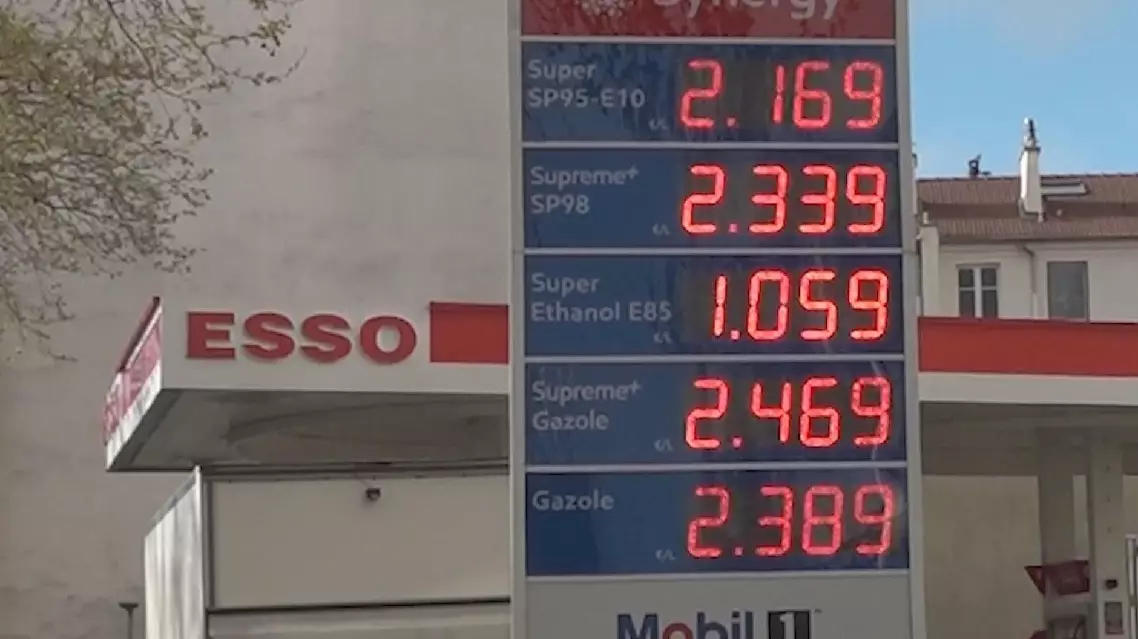
Middle East conflict delivers shock to economic growth in Europe: economic officials