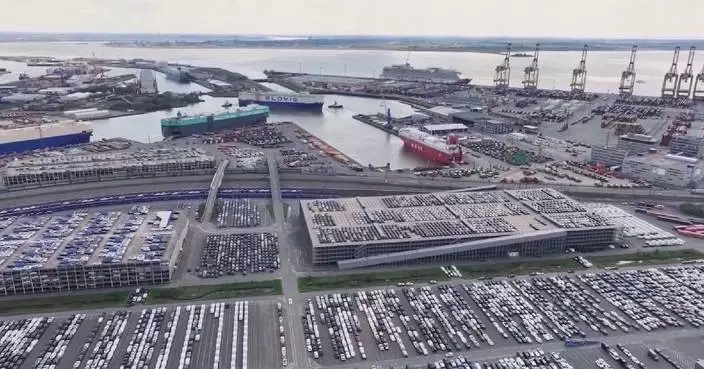
The increase in energy prices affects every participant in the European economy, including businesses and households, pushing the EU economy toward slower growth and higher inflation, said European Commissioner for Economy Valdis Dombrovskis at a press conference on Monday.
Due to the conflict in the Middle East, energy prices have soared. Last week, the oil prices exceeded 125 U.S. dollars per barrel. Dombrovskis stressed that declining confidence, tighter financing conditions, and weak external demand have all exacerbated the direct impact. According to him, the current overall economic impact will depend on the evolution of the conflict, particularly its effects on energy supply and infrastructure. But, Dombrovskis said, due to the high levels of deficits and debts in EU countries, the high interest rate environment, and the urgent need to increase defense spending, the EU has very limited room for maneuver.
The war in Iran has led to severe economic consequences, said Joachim Nagel, president of the central bank of Germany (Deutsche Bundesbank), on Monday.
Nagel delivered a speech at an event in Frankfurt, saying that the prices of oil and natural gas recently have been soaring in the international market, and the fluctuation range has been much higher than the level before this round of war in Iran.
This has caused dual negative impacts: On the one hand, it has restrained the economic growth of the eurozone, and on the other hand, it has exacerbated inflation in the eurozone. And these consequences will continue to affect the eurozone for a considerable period of time in the future, Nagel said.
Nagel stated that in order to address the current crisis, the European Central Bank's (ECB) executive committee will hold the next monetary policy meeting in June. At that time, the ECB will have a deeper understanding of the developments in the Middle East and will release new forecast data. If these forecasts indicate that the inflation outlook has not significantly improved, it could hike interest rates, Nagel said.

Middle East conflict delivers shock to economic growth in Europe: economic officials
Voices of opposition from media and political circles are growing in Japan, after Prime Minister Sanae Takaichi reaffirmed her intention to revise the country's postwar pacifist Constitution on Sunday.
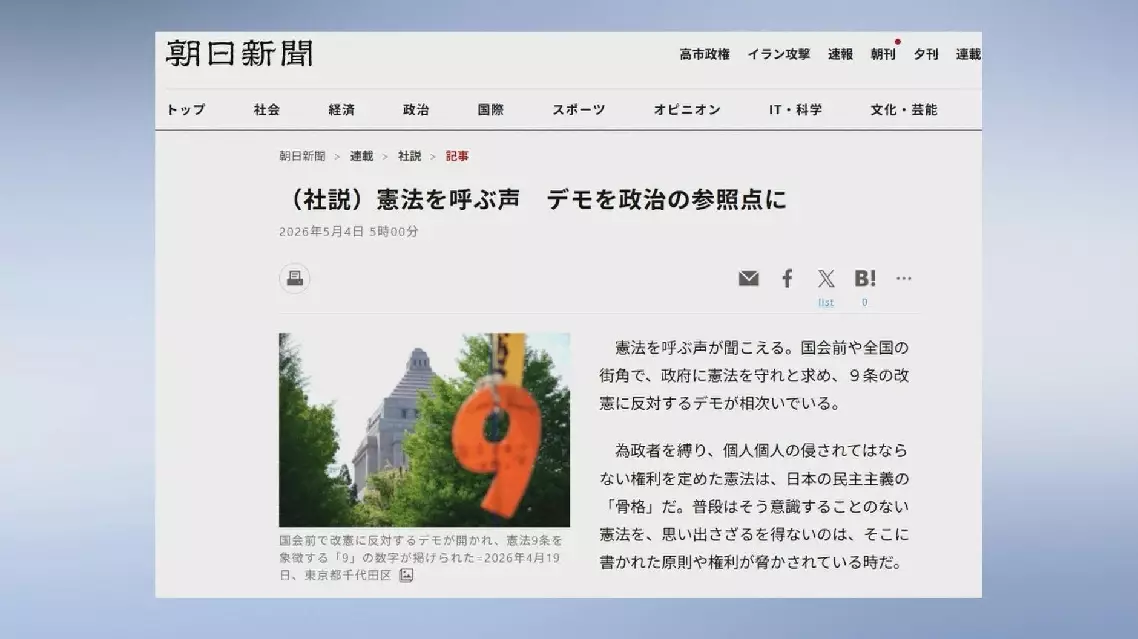
Major newspapers published editorials condemning the move, highlighting widespread street protests fueled by public anxiety that Japan could abandon its peacekeeping role and become an aggressor nation.
The outlets stressed that the postwar pillars of peace and sovereignty must not be forgotten.
Politicians have also voiced sharp criticism on social media.
A senator said the Constitution, particularly Article 9, has acted as a crucial barrier preventing reckless actions like deploying troops to the Middle East.
A former lawmaker said forgetting history invites crisis, while a sitting legislator has condemned the effort as an attempt to turn the nation into a "war profiteer" at the expense of citizens' lives.
Takaichi, on Sunday, the country's Constitution Memorial Day, reaffirmed her intention to revise the Constitution.
Speaking in a video message to a gathering of revision proponents, Takaichi stressed that the postwar supreme law, which serves as the foundation of the country, "should be periodically updated in accordance with the demands of the times," the Kyodo News reported.
Takaichi said that her ruling Liberal Democratic Party (LDP) would "advance discussions in the Diet (Japan's parliament) aimed at reaching decisions while securing the cooperation of other parties."
Japan's Constitution, which took effect in 1947, is often referred to as the pacifist Constitution because its Article 9 renounces war as a sovereign right and prohibits Japan from possessing "war potential."
Takaichi is pushing for the first-ever change to the Constitution. According to the Kyodo News, possible amendments include revisions to Article 9, the clause widely seen as the cornerstone of Japan's postwar pacifist stance.
Just weeks ago, at an LDP convention on April 12, Takaichi declared that "the time has come" to reform the Constitution, saying that "we would like to hold next year's convention with a proposal for a constitutional amendment in sight," a move that has triggered deep concern and large-scale protests in Japan.
Opposition voices rise in Japan against revision of pacifist constitution