SANTA CLARA, Cuba (AP) — Yudelaimys Barrero Muñoz used to spend up to three hours on the side of a highway under the blazing sun waving money at drivers as she attempted to hitch a ride from Cienfuegos, Cuba to Santa Clara, where she buys supplies to resell and support her husband and two children.
The 43-mile (70-kilometer) trip was impossible to make on her husband’s bicycle — at one time the family’s only mode of transportation — and later, with a rechargeable, three-wheeled vehicle whose battery didn't have the capacity for the round trip.
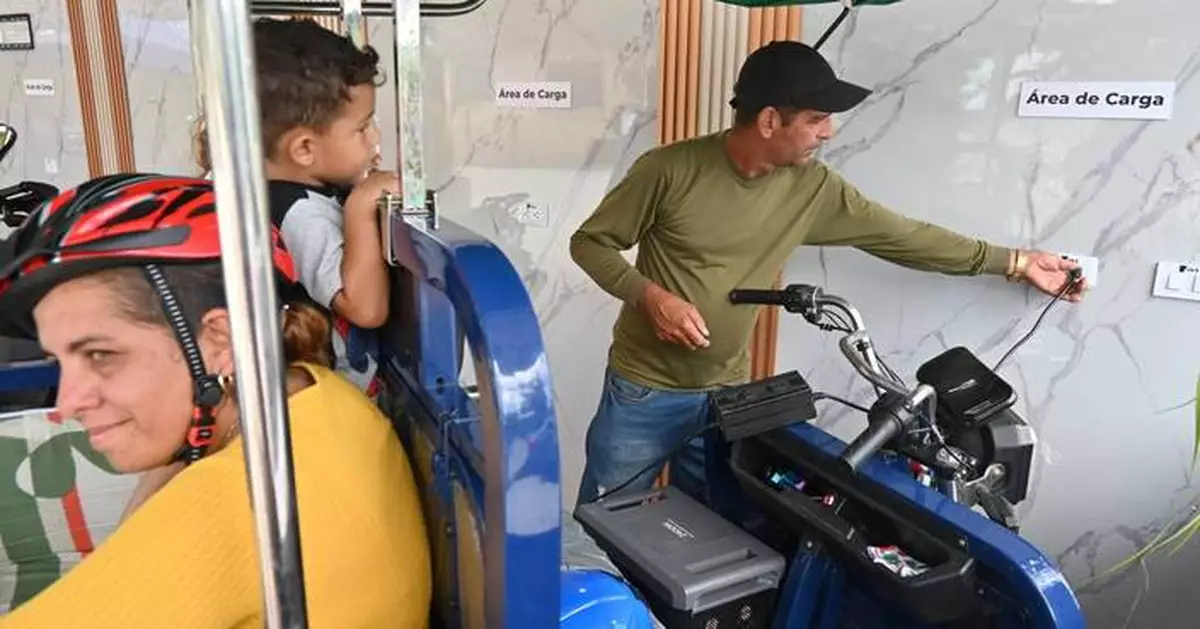
Then, in early April, a local business owner opened what is believed to be Cuba’s first solar-powered charging station — and it was free. Cubans soon flocked to the solar station — or “solinera” as it's known in Cuba — recharging everything from electric vehicles to UV nail lamps.
The Cuban government has stepped up the installation of solar panels in hospitals and other public places and established solar farms in the face of chronic blackouts and in recent months, a severe gas shortage stemming from a U.S. energy blockade.
Renewable energy now accounts for some 10% of the island's electricity, up from 3.6% in 2024, but distribution remains limited, and few Cubans can afford such a system. Globally, just over 30% of electricity generation comes from renewable energies like solar, wind and hydropower, according to energy think tank Ember.
Because there is little gas for cars these days, Cubans are traveling miles to the Santa Clara solar station on rechargeable motorcycles and three-wheeled vehicles. Others walk to the station. They haul cellphones with nearly depleted batteries, rice cookers, pressure cookers — an endless array of gadgets, appliances and vehicles that need power.
“They have solved many problems for many people,” Barrero Muñoz said.
She and her husband, along with their children, ages 3 and 4, drive regularly to Santa Clara now that they can charge their three-wheeled vehicle at the solar station.
“If it hadn’t been for this, I wouldn’t have been able to keep selling,” she said.
Barrero Muñoz now buys rice, sugar, hot dogs, mortadella, soap, shampoo, deodorant and other items regardless of their weight, because it all goes into the vehicle instead of the two bags and a backpack she used to haul when she was forced to hitch a ride.
“I have more clients because I have more merchandise,” she said with a smile.
Cars are largely absent on the highway from Havana to Santa Clara; horse-drawn carts are a more common sight in rural areas, where, inevitably, crises in Cuba hit harder.
With nearly a quarter of a million people, Santa Clara is one of Cuba’s most populous cities, best known as the city of “Marta and El Che.”
El Che — Ernesto Guevara de la Serna — led a key battle during Cuba's 1959 Revolution in Santa Clara, where his remains are housed in a mausoleum.
It is also the town of Marta de los Ángeles González Abreu y Arencibia, a well-known philanthropist who supported Santa Clara and Cuba’s push for independence.
Santa Clara is home to people like Danailys Arboláez Pérez, a 32-year-old mother of two who sells sandwiches, coffee, beer and cigarettes out of her home. It is a short walk away from the solar station.
“Almost everyone in this neighborhood goes there,” she said.
Arboláez Pérez has cooked rice and beans and even fried fish at the solar station, even when she has electricity because she would like to save money on natural gas.
She also recharges two fans that cool the rooms of her 2-year-old son and 7-year-old daughter as Cuba’s temperatures start rising, noting that the power outages last year were “apocalyptic.”
She’s grateful that she no longer has to jump out of bed when the power suddenly comes on, forcing her to cook or wash at untimely hours including 2 a.m.
“We’re not running around so much,” she said. “I cook slowly, calmly. … If the power goes out, I’ll just take the pot there.”
Alexander Gutiérrez Altuve works at the business next door that helped finance and set up the solar station in Santa Clara.
It’s unknown how much the project cost, but he said the owner of the business, who was not available for an interview, worked with the government to install solar panels that provide 30 kilowatts of energy and a battery of 60 kilowatts. That's enough energy to power the average U.S. home for a single day.
The station has 20 sockets to charge equipment, 16 spots to charge vehicles and 12 for cooking.
“This is something that hadn’t really been done before,” Gutiérrez Altuve said.
Some people are too shy to try it out.
“They are truly surprised when you tell them that it’s free,” said Lisandra Couto Pérez, a co-worker of Gutiérrez Altuve who helps track usage.
On a recent afternoon, Lorenzo Ravelo, Barrero Muñoz’s husband, drove his three-wheeled vehicle into the station and plugged it in as his wife and two young children hopped out the back.
Before buying the small three-wheeler, Ravelo would borrow money from neighbors to rent a car if their children needed medical care, "and later make payments however you can and whenever you can.”
With only a bicycle at the time, he couldn't take his family on fun road trips to help them escape Cuba’s daily grind. Now, they can even go in their own vehicle to the beach, he explained, tearing up.
“It’s a great solution,” he said.
Follow AP’s coverage of Latin America and the Caribbean at https://apnews.com/hub/latin-america
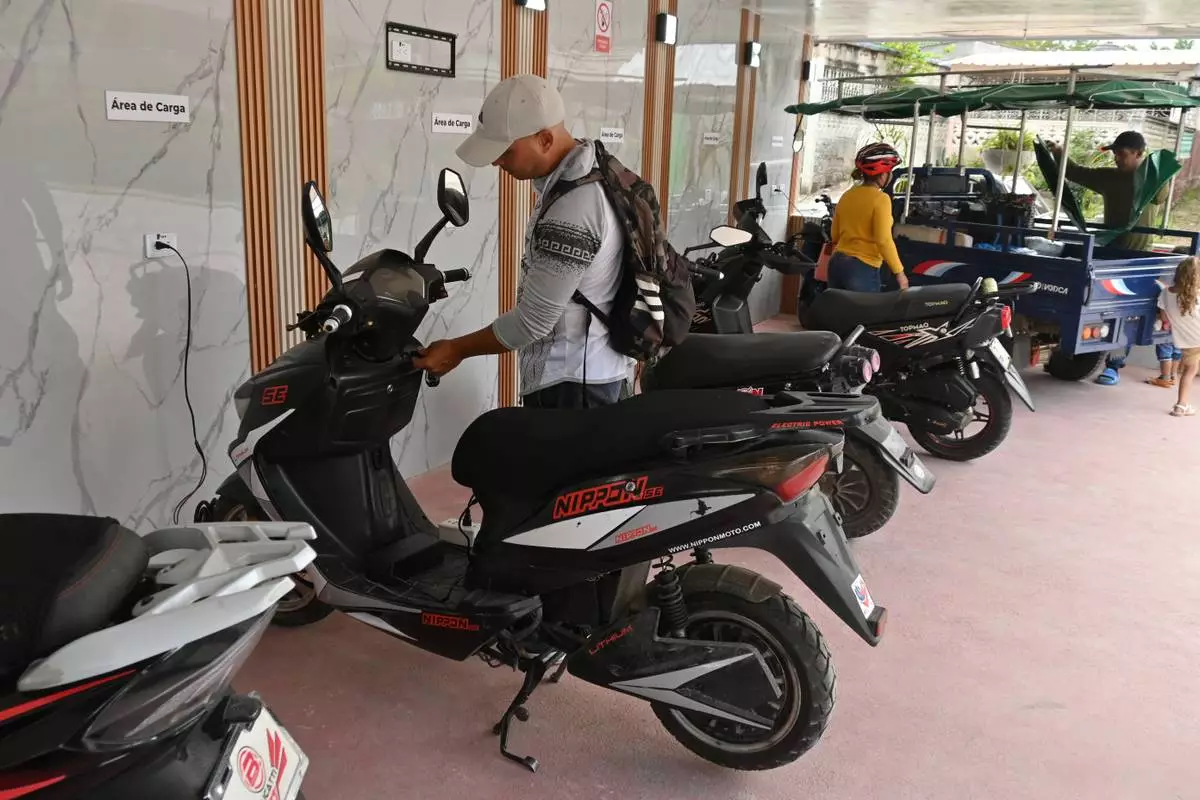
Giraldo Lazaro Perez Paret, who works in the tourism sector, recharges his electric motorcycle in Santa Clara, Cuba, Saturday, May 2, 2026. (AP Photo/Jorge Luis Banos)
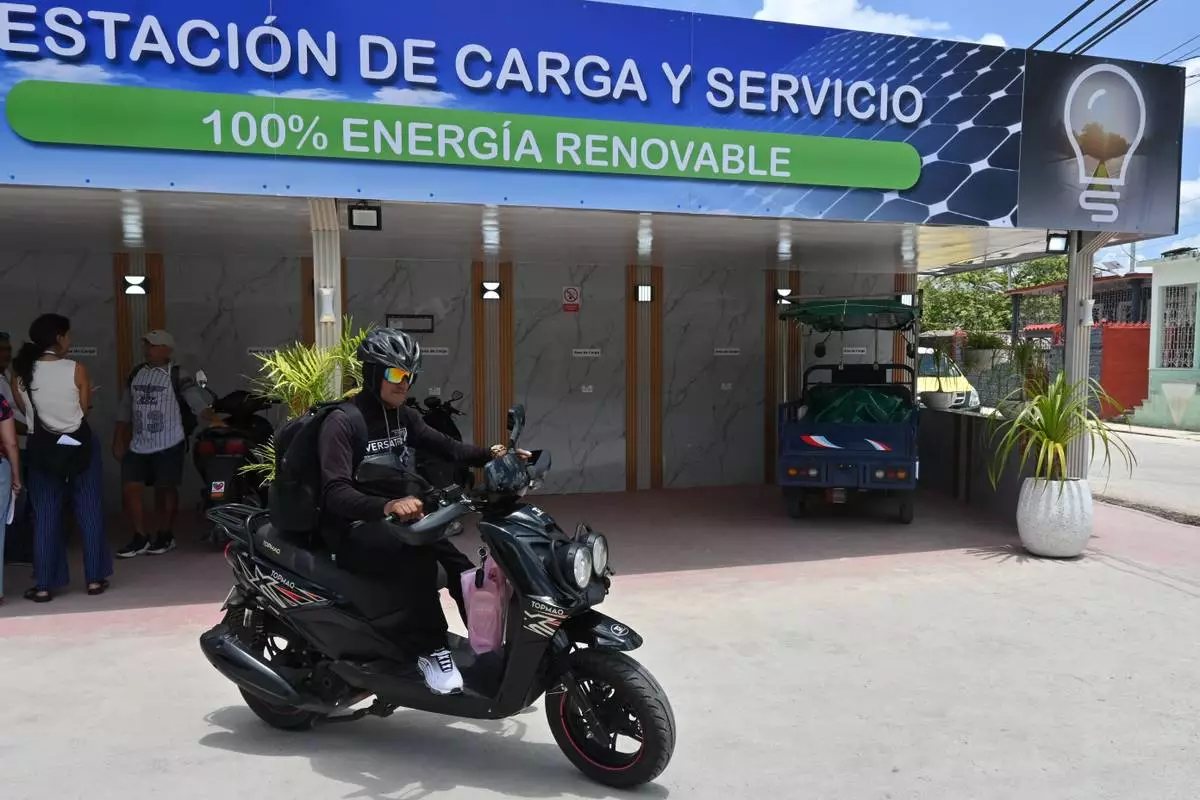
A motorcyclist leaves after recharging his electric bike at a charging station in Santa Clara, Cuba, Saturday, May 2, 2026. (AP Photo/Jorge Luis Banos)
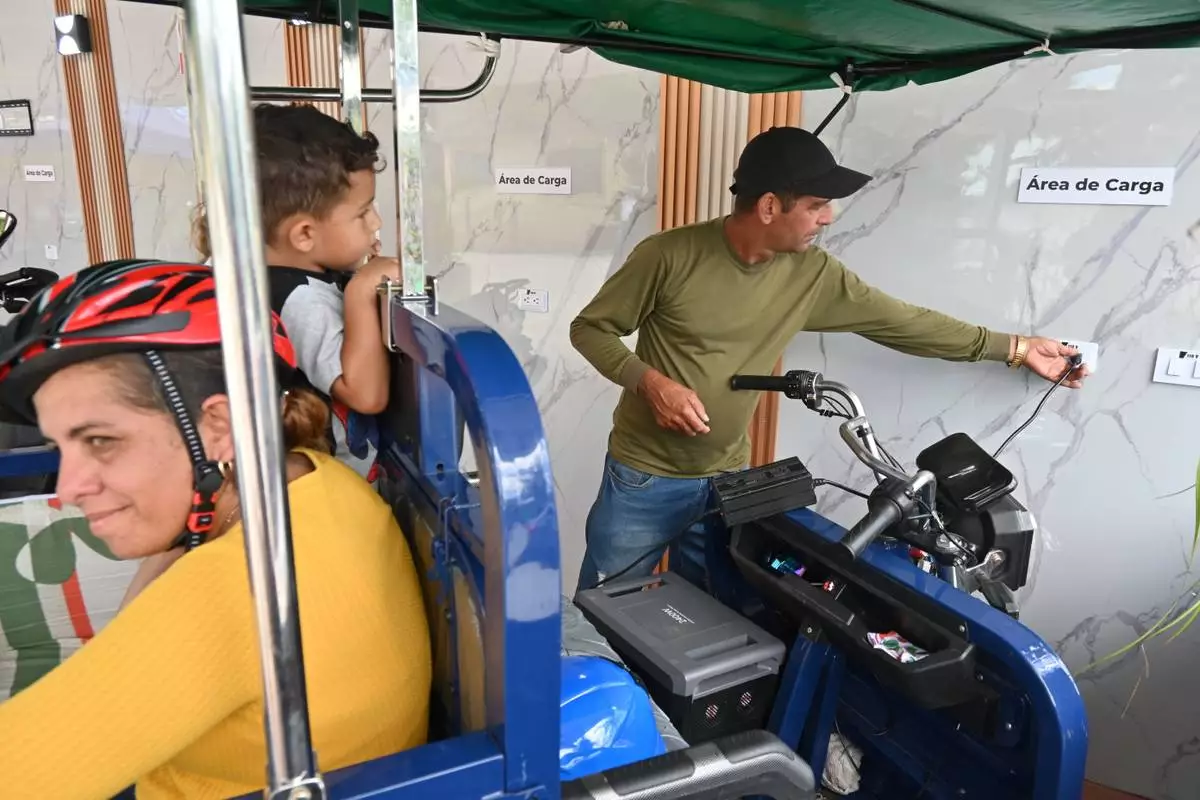
Lorenzo Ravelo, right, plugs in his electric tricycle at a charging station in Santa Clara, Cuba, Saturday, May 2, 2026. (AP Photo/Jorge Luis Banos)
LONDON (AP) — British voters will cast ballots Thursday in elections that could hasten the end of Prime Minister Keir Starmer’s troubled term and confirm that an increasingly fractured United Kingdom has entered an era of messy multiparty politics.
Starmer’s center-left Labour Party is expected to take a battering in elections for local authorities across England and for semiautonomous legislatures in Scotland and Wales.
With the prime minister’s popularity in the doldrums from a weak economy and repeated questions about his judgment, rival parties are framing Thursday’s votes as a referendum on Starmer and his 2-year-old government. “Vote Reform, Get Starmer Out” is the campaign slogan of the hard-right party Reform UK.
The next national election does not have to be held until 2029, but a wipeout on Thursday could tip a restive Labour Party into revolt against its unpopular leader.
Less than two years after winning a landslide election victory, “Keir Starmer has become a vessel for people’s disappointment (and) disillusionment,” said Luke Tryl of pollster More in Common.
Starmer's popularity has plunged after repeated missteps since he became prime minister in July 2024. His government has struggled to deliver promised economic growth, repair tattered public services and ease the cost of living — tasks made harder by the U.S.-Israeli war with Iran, which has choked off oil shipments through the Strait of Hormuz.
The prime minister has been further hurt by his disastrous decision to appoint Peter Mandelson, a scandal-tarnished friend of Jeffrey Epstein, as Britain’s ambassador to Washington.
Forecasters suggest Labour will lose well over half of the 2,500 seats it is defending on English local councils. It is expected to lose votes to parties on both left and right — especially to the Green Party in London and Reform UK in working-class, former Labour strongholds in England’s north.
“These elections are a perilous, perilous moment for Keir Starmer,” said Tony Travers, professor in the Department of Government at the London School of Economics. He said that after a series of policy U-turns and in an economy where “there isn’t much money to spend on anything … his opponents are lining up.”
Starmer has already survived one crisis in February, when some Labour lawmakers, including the party’s leader in Scotland, urged him to quit over the Mandelson appointment.
An election rout could trigger a snap leadership challenge from a high-profile rival such as Health Secretary Wes Streeting, former Deputy Prime Minister Angela Rayner or Greater Manchester Mayor Andy Burnham. Any challenger would need the support of 80 lawmakers, one-fifth of the party in the House of Commons, to trigger a contest. In Burnham’s case he would have to win election to Parliament before he could take over.
Alternately, Starmer could face pressure from the party to set a timetable for his departure after an orderly leadership contest.
“His parliamentary party are unsure as to whether now is the right time to unseat him,” said Tim Bale, professor of politics at Queen Mary University of London. “So there might be a stay of execution.”
But, Bale added, “it’s a case of when rather than if he goes.”
For decades, Labour losses would have been good news for its main rival, the right-of-center Conservative Party. But the Conservatives are tarnished by 14 tumultuous years in power that ended in 2024. In these elections, it’s Nigel Farage-led Reform UK, the left-leaning Greens and nationalist Welsh and Scottish parties that will likely be the main beneficiaries.
Opponents have heightened their scrutiny of Reform and the Greens in an effort to stop their rise. Farage is facing questions over a 5 million pound ($6.8 million) donation from a cryptocurrency billionaire that he accepted in 2024 but did not declare. He says it was a personal gift.
The environmentalist Greens, who have stressed their pro-Palestinian credentials under self-described “eco-populist” leader Zack Polanski, have fired several candidates for antisemitic social media posts.
Travers said Britain is moving from being a “two-and-a-half party system” — with the Liberal Democrats as the usual third party — “to something more like a five-party one.”
That is excellent news for Rhun ap Iorwerth, who leads Plaid Cymru (the Party of Wales) and stands a strong chance of leading that country’s semiautonomous government.
“The old politics is gone,” he said. “Labour is not going to win this election.”
Labour has dominated Welsh politics for a century and has held power in Cardiff since the Welsh government was established in 1999. Polls suggest Labour will be pushed into third place behind Plaid Cymru and Reform UK, who are running neck-and-neck.
A Plaid victory would give three of the four parts of the U.K. pro-independence leaders. Northern Ireland is governed by Irish nationalist party Sinn Fein in a power-sharing arrangement with the pro-British Democratic Unionist Party.
The Scottish National Party, which has governed in Edinburgh since 2007, says it will push for a new referendum on independence if it wins a majority on Thursday. Scottish voters rejected leaving the U.K. in a 2014 vote.
Plaid Cymru says a secession vote isn’t on the agenda in the next few years, though independence remains the party’s ultimate goal. In the short term, it wants more power to raise taxes and more control over how money is spent.
“We need a fundamental redesign of Britain,” ap Iowerth said. “This is an unequal union.”

Britain's Conservative Party leader Kemi Badenoch during a rally at the National Motorcycle Museum in Solihull, England, Tuesday May 5, 2026, whilst on the campaign trail for the upcoming local elections. (Jacob King/PA via AP)
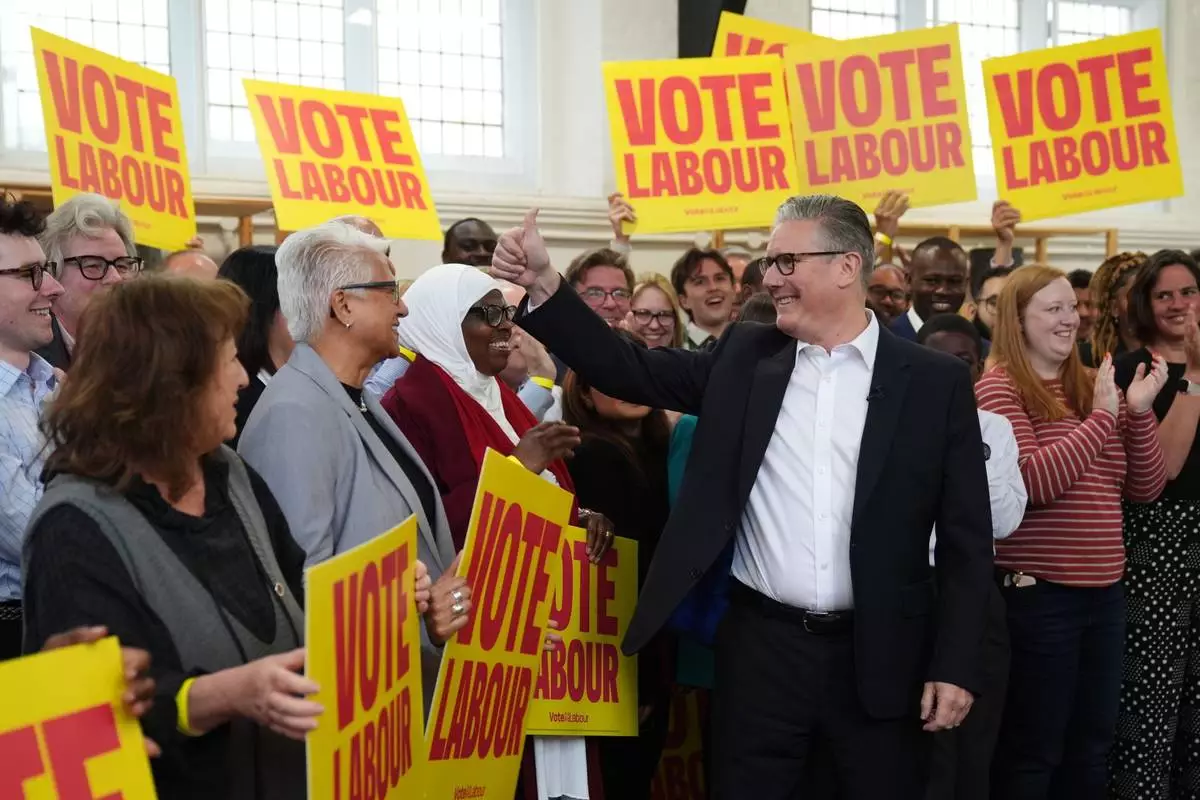
Britain's Prime Minister Keir Starmer gestures to supporters during a visit to All Saints Hall in south London, Tuesday May 5, 2026, whilst campaigning for the upcoming local elections. (Ben Whitley/PA via AP)
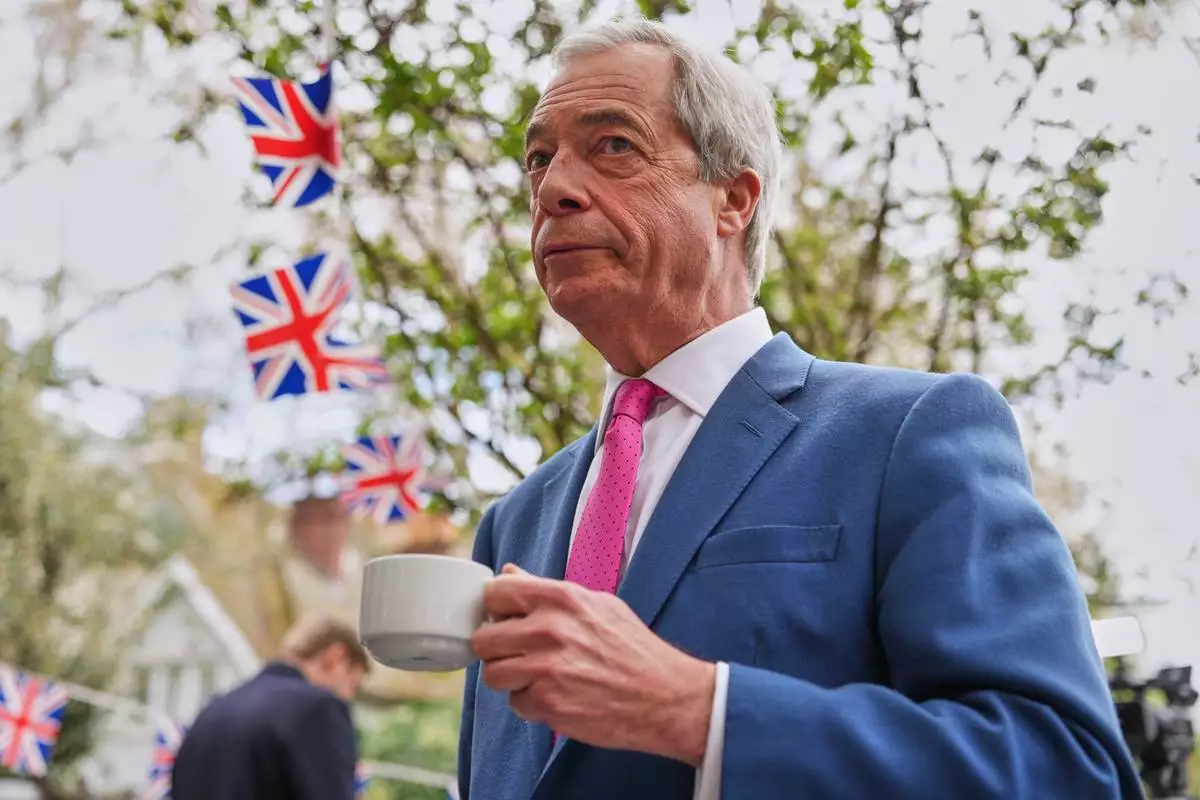
FILE - Nigel Farage, the leader of Reform UK, drinks a cup of tea as he meets supporters after a news conference in London on April 2, 2026. (AP Photo/Kirsty Wigglesworth, File)
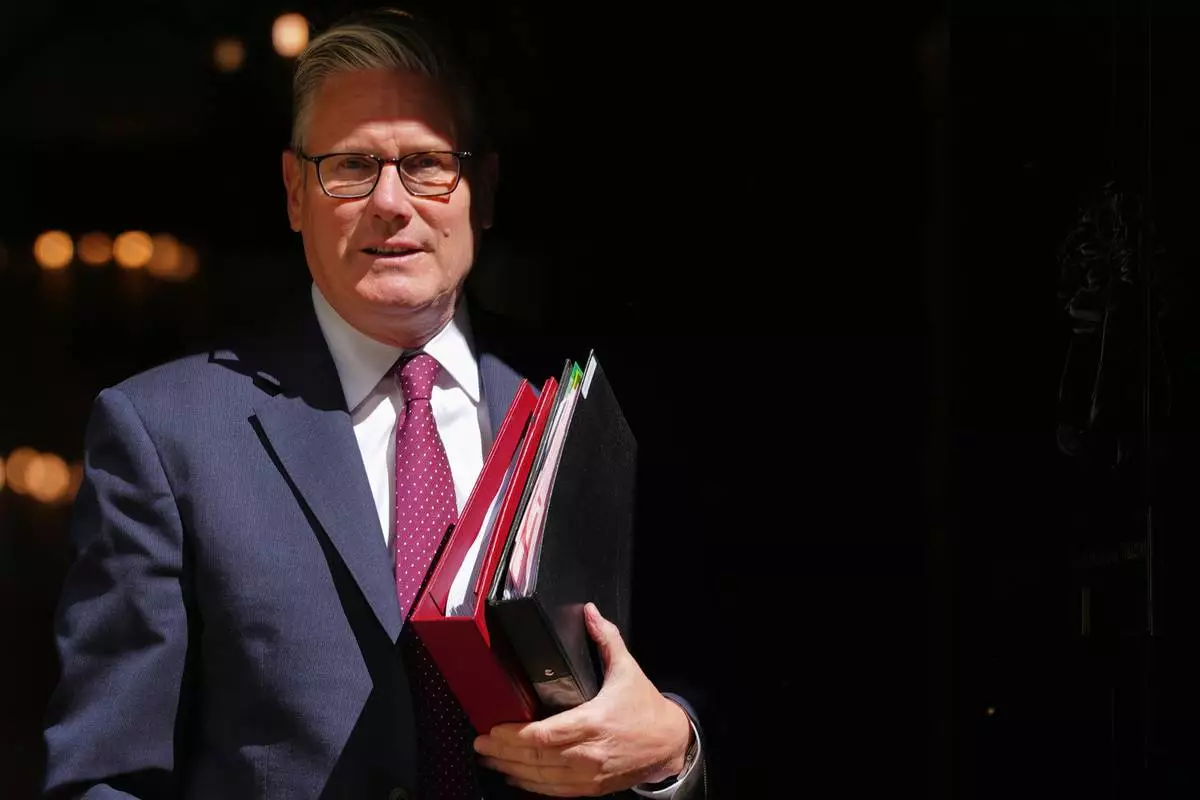
FILE - Britain's Prime Minister Keir Starmer leaves 10 Downing Street in London on April 29, 2026. (AP Photo/Kirsty Wigglesworth, File)