DJERBA, Tunisia (AP) — The annual Jewish pilgrimage to the 26-century-old El-Ghriba Synagogue in Tunisia drew a modest but notable return of international visitors this year, worshipping together under tight security after a deadly 2023 attack disrupted the festival.
Visitors came from France, China, Ivory Coast and Italy, including France’s ambassador to Tunisia, a symbolic gesture after two French citizens were among those killed in the 2023 attack. A national guardsman shot and killed five people at the El-Ghriba synagogue soon after the festival that year, spreading fear among the local Jewish population and international pilgrims.
Click to Gallery
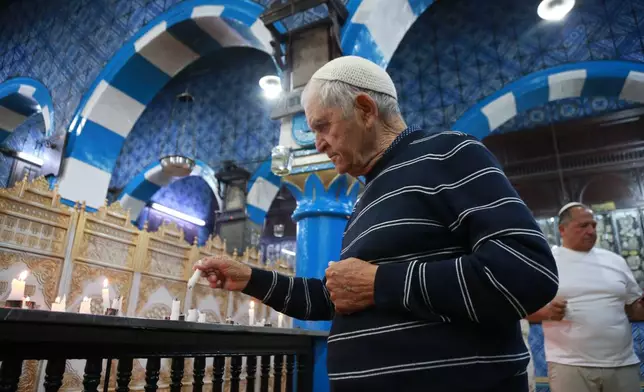
Jewish pilgrims attend an annual pilgrimage at the Ghriba synagogue in the resort of Djerba, Tunisia, on Monday, May 4, 2026. (AP Photo/Bassem Aouini)
Jewish pilgrims attend an annual pilgrimage at the Ghriba synagogue in the resort of Djerba, Tunisia, on Monday, May 4, 2026. (AP Photo/Bassem Aouini)
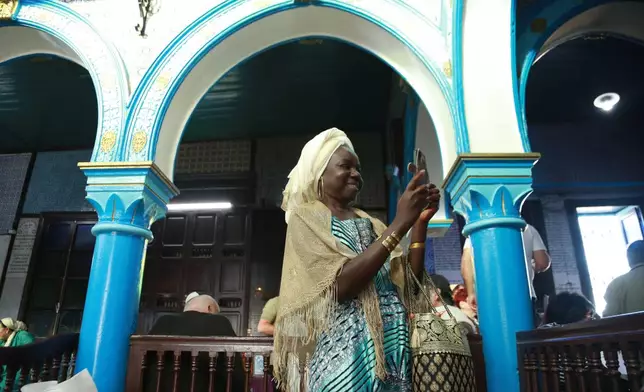
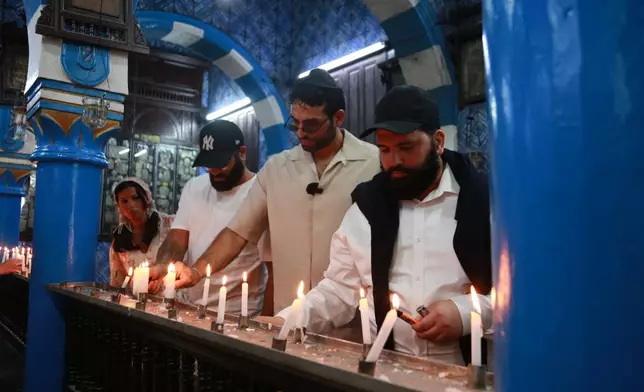
Jewish pilgrims during a ceremony as they attend an annual pilgrimage at the Ghriba synagogue in the resort of Djerba, Tunisia, on Monday, May 4, 2026. (AP Photo/Bassem Aouini)
Jewish pilgrims attend an annual pilgrimage at the Ghriba synagogue in the resort of Djerba, Tunisia, on Monday, May 4, 2026. (AP Photo/Bassem Aouini)
Jewish pilgrims take part in a procession as they attend an annual pilgrimage at the Ghriba synagogue in the resort of Djerba, Tunisia, on Monday, May 4, 2026. (AP Photo/Bassem Aouini)
Participants said about 500 people have attended this year’s pilgrimage, held on the Mediterranean island of Djerba from April 30 to May 6 to celebrate the Lag B’Omer Jewish holiday. Jews have lived in Tunisia since Roman times, and the pilgrimage remains central to the country’s small but long-standing Jewish community.
Inside the synagogue, the atmosphere was calm and devotional, while also buzzing with conversations and social exchanges. Worshippers lit candles, read sacred texts and wrote wishes on eggs later placed in a sacred cave within the complex, a tradition believed to bring blessings.
Among them was Redj Cahen, a Tunisian-Italian pilgrim who returned after missing last year’s gathering. “We are back, and we are proud to be Tunisian Jews,” he said. “It is a feeling you cannot explain. Only those who come here understand.”
The gathering draws both local worshippers and members of the diaspora returning to their ancestral roots and has long been seen as a symbol of coexistence, attracting Muslim visitors alongside Jewish pilgrims.
A visible but contained security presence surrounded the synagogue, while heavier measures were deployed at access points to the island, where police checkpoints and barricades controlled entry. Vehicles were searched and identification documents carefully inspected. Within Djerba, security was especially concentrated in Hara Seghira and Hara Kebira, the island’s main Jewish quarters.
Despite security worries, the traditional “Minara” procession took place for the first time since the 2023 attack, signaling a cautious easing of restrictions.
The Minara, a pyramid-shaped tower of gold and silver, is placed at the center of the synagogue. Women drape it with colorful scarves in a gesture associated with good fortune, fertility and marriage. A symbolic auction of paintings and Jewish religious items follows as part of a traditional fundraiser for the synagogue’s maintenance, after which the scarf-laden Minara is placed on a cart and paraded outside to the sounds of the traditional darbuka drum, singing and throwing of candy. It is later brought back into the synagogue, concluding one of the event’s pillar traditions.
The pilgrimage, one of the oldest in Africa, has historically drawn thousands from around the world. Attendance dropped sharply after the 2023 shooting outside the synagogue that killed two pilgrims and three security officers. The synagogue was also targeted by a 2002 truck bombing by al-Qaida that killed about 20 people.
“This year’s Ghriba pilgrimage marks a gradual return,” said former Tourism Minister René Trabelsi. “We are returning little by little.''
Trabelsi said Tunisian authorities had pushed to maintain the pilgrimage despite the challenges. The event plays an important role in supporting the local economy.
Khedir Hnaia, who has worked at the synagogue for more than three decades, welcomed the return of longtime visitors. “We would like to reflect a good image to the world, to bring back the glory of Ghriba and make it even better than how it used to be,” he said.
“We need to stand up for our country, we love Tunisia very much and in the same way our country stood up for us we will always stand up for it,” said Haim Haddad, a member of the pilgrimage organizing committee from Zarzis.
Ben Mbarek reported from Tunis, Tunisia.
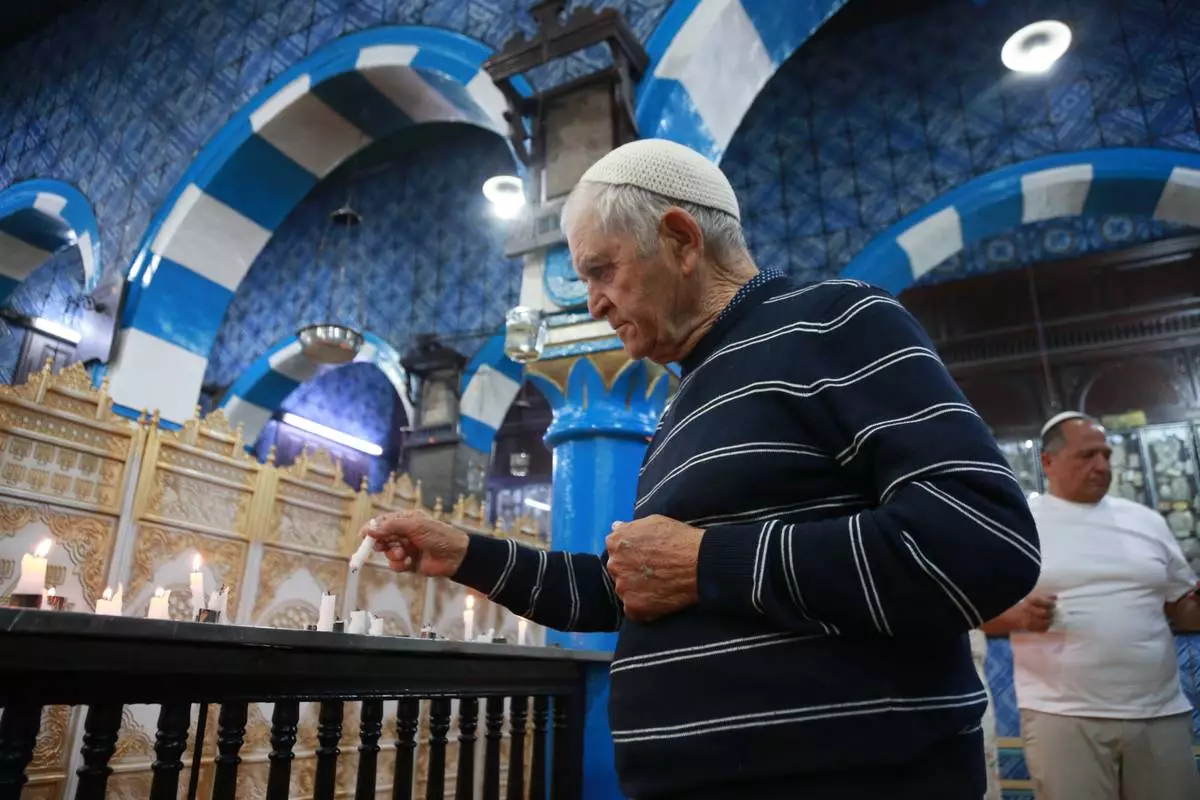
Jewish pilgrims attend an annual pilgrimage at the Ghriba synagogue in the resort of Djerba, Tunisia, on Monday, May 4, 2026. (AP Photo/Bassem Aouini)
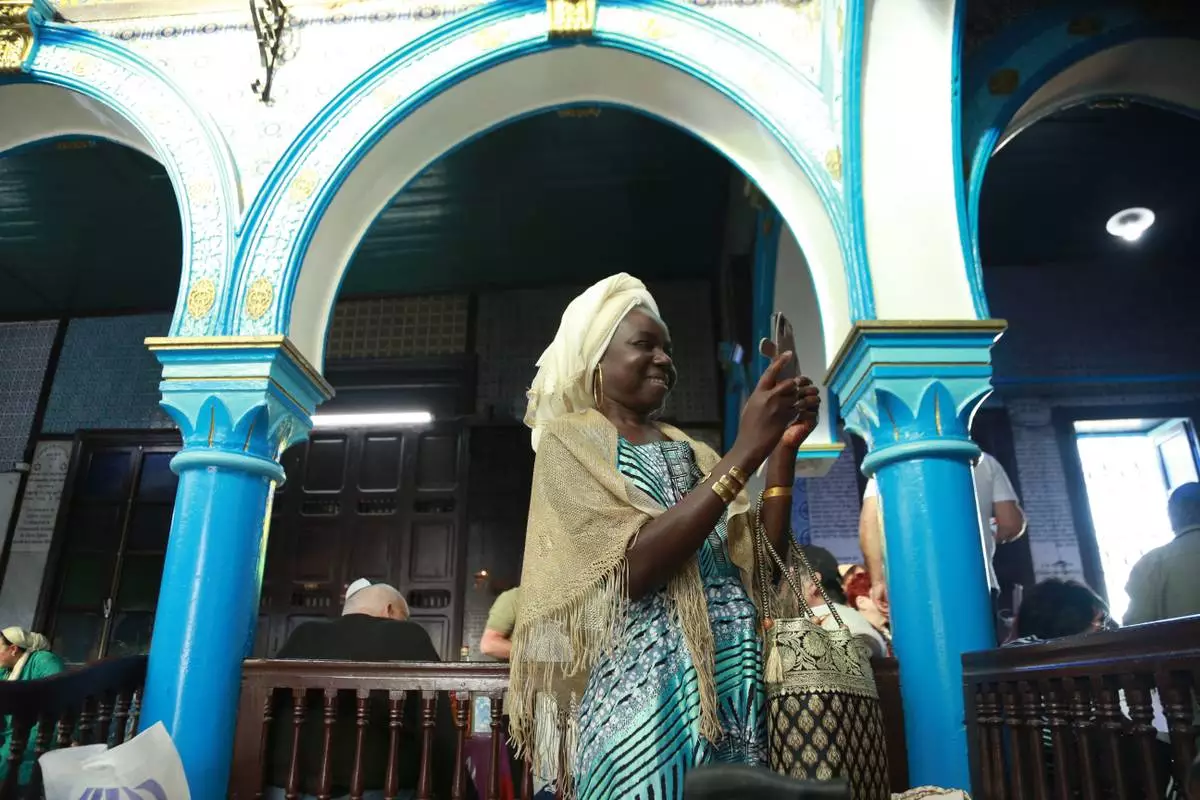
Jewish pilgrims attend an annual pilgrimage at the Ghriba synagogue in the resort of Djerba, Tunisia, on Monday, May 4, 2026. (AP Photo/Bassem Aouini)

Jewish pilgrims during a ceremony as they attend an annual pilgrimage at the Ghriba synagogue in the resort of Djerba, Tunisia, on Monday, May 4, 2026. (AP Photo/Bassem Aouini)
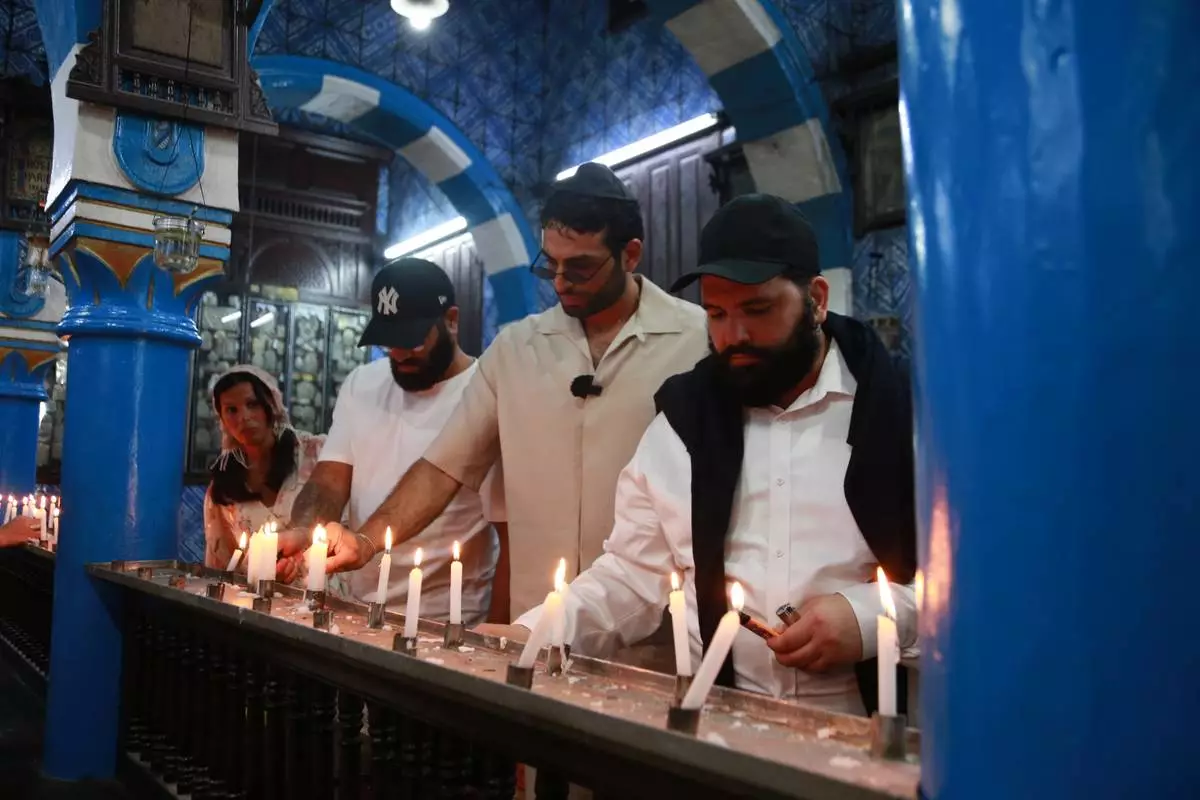
Jewish pilgrims attend an annual pilgrimage at the Ghriba synagogue in the resort of Djerba, Tunisia, on Monday, May 4, 2026. (AP Photo/Bassem Aouini)

Jewish pilgrims take part in a procession as they attend an annual pilgrimage at the Ghriba synagogue in the resort of Djerba, Tunisia, on Monday, May 4, 2026. (AP Photo/Bassem Aouini)
SANTA CLARA, Cuba (AP) — Yudelaimys Barrero Muñoz used to spend up to three hours on the side of a highway under the blazing sun waving money at drivers as she attempted to hitch a ride from Cienfuegos, Cuba to Santa Clara, where she buys supplies to resell and support her husband and two children.
The 43-mile (70-kilometer) trip was impossible to make on her husband’s bicycle — at one time the family’s only mode of transportation — and later, with a rechargeable, three-wheeled vehicle whose battery didn't have the capacity for the round trip.
Then, in early April, a local business owner opened what is believed to be Cuba’s first solar-powered charging station — and it was free. Cubans soon flocked to the solar station — or “solinera” as it's known in Cuba — recharging everything from electric vehicles to UV nail lamps.
The Cuban government has stepped up the installation of solar panels in hospitals and other public places and established solar farms in the face of chronic blackouts and in recent months, a severe gas shortage stemming from a U.S. energy blockade.
Renewable energy now accounts for some 10% of the island's electricity, up from 3.6% in 2024, but distribution remains limited, and few Cubans can afford such a system. Globally, just over 30% of electricity generation comes from renewable energies like solar, wind and hydropower, according to energy think tank Ember.
Because there is little gas for cars these days, Cubans are traveling miles to the Santa Clara solar station on rechargeable motorcycles and three-wheeled vehicles. Others walk to the station. They haul cellphones with nearly depleted batteries, rice cookers, pressure cookers — an endless array of gadgets, appliances and vehicles that need power.
“They have solved many problems for many people,” Barrero Muñoz said.
She and her husband, along with their children, ages 3 and 4, drive regularly to Santa Clara now that they can charge their three-wheeled vehicle at the solar station.
“If it hadn’t been for this, I wouldn’t have been able to keep selling,” she said.
Barrero Muñoz now buys rice, sugar, hot dogs, mortadella, soap, shampoo, deodorant and other items regardless of their weight, because it all goes into the vehicle instead of the two bags and a backpack she used to haul when she was forced to hitch a ride.
“I have more clients because I have more merchandise,” she said with a smile.
Cars are largely absent on the highway from Havana to Santa Clara; horse-drawn carts are a more common sight in rural areas, where, inevitably, crises in Cuba hit harder.
With nearly a quarter of a million people, Santa Clara is one of Cuba’s most populous cities, best known as the city of “Marta and El Che.”
El Che — Ernesto Guevara de la Serna — led a key battle during Cuba's 1959 Revolution in Santa Clara, where his remains are housed in a mausoleum.
It is also the town of Marta de los Ángeles González Abreu y Arencibia, a well-known philanthropist who supported Santa Clara and Cuba’s push for independence.
Santa Clara is home to people like Danailys Arboláez Pérez, a 32-year-old mother of two who sells sandwiches, coffee, beer and cigarettes out of her home. It is a short walk away from the solar station.
“Almost everyone in this neighborhood goes there,” she said.
Arboláez Pérez has cooked rice and beans and even fried fish at the solar station, even when she has electricity because she would like to save money on natural gas.
She also recharges two fans that cool the rooms of her 2-year-old son and 7-year-old daughter as Cuba’s temperatures start rising, noting that the power outages last year were “apocalyptic.”
She’s grateful that she no longer has to jump out of bed when the power suddenly comes on, forcing her to cook or wash at untimely hours including 2 a.m.
“We’re not running around so much,” she said. “I cook slowly, calmly. … If the power goes out, I’ll just take the pot there.”
Alexander Gutiérrez Altuve works at the business next door that helped finance and set up the solar station in Santa Clara.
It’s unknown how much the project cost, but he said the owner of the business, who was not available for an interview, worked with the government to install solar panels that provide 30 kilowatts of energy and a battery of 60 kilowatts. That's enough energy to power the average U.S. home for a single day.
The station has 20 sockets to charge equipment, 16 spots to charge vehicles and 12 for cooking.
“This is something that hadn’t really been done before,” Gutiérrez Altuve said.
Some people are too shy to try it out.
“They are truly surprised when you tell them that it’s free,” said Lisandra Couto Pérez, a co-worker of Gutiérrez Altuve who helps track usage.
On a recent afternoon, Lorenzo Ravelo, Barrero Muñoz’s husband, drove his three-wheeled vehicle into the station and plugged it in as his wife and two young children hopped out the back.
Before buying the small three-wheeler, Ravelo would borrow money from neighbors to rent a car if their children needed medical care, "and later make payments however you can and whenever you can.”
With only a bicycle at the time, he couldn't take his family on fun road trips to help them escape Cuba’s daily grind. Now, they can even go in their own vehicle to the beach, he explained, tearing up.
“It’s a great solution,” he said.
Follow AP’s coverage of Latin America and the Caribbean at https://apnews.com/hub/latin-america

Giraldo Lazaro Perez Paret, who works in the tourism sector, recharges his electric motorcycle in Santa Clara, Cuba, Saturday, May 2, 2026. (AP Photo/Jorge Luis Banos)
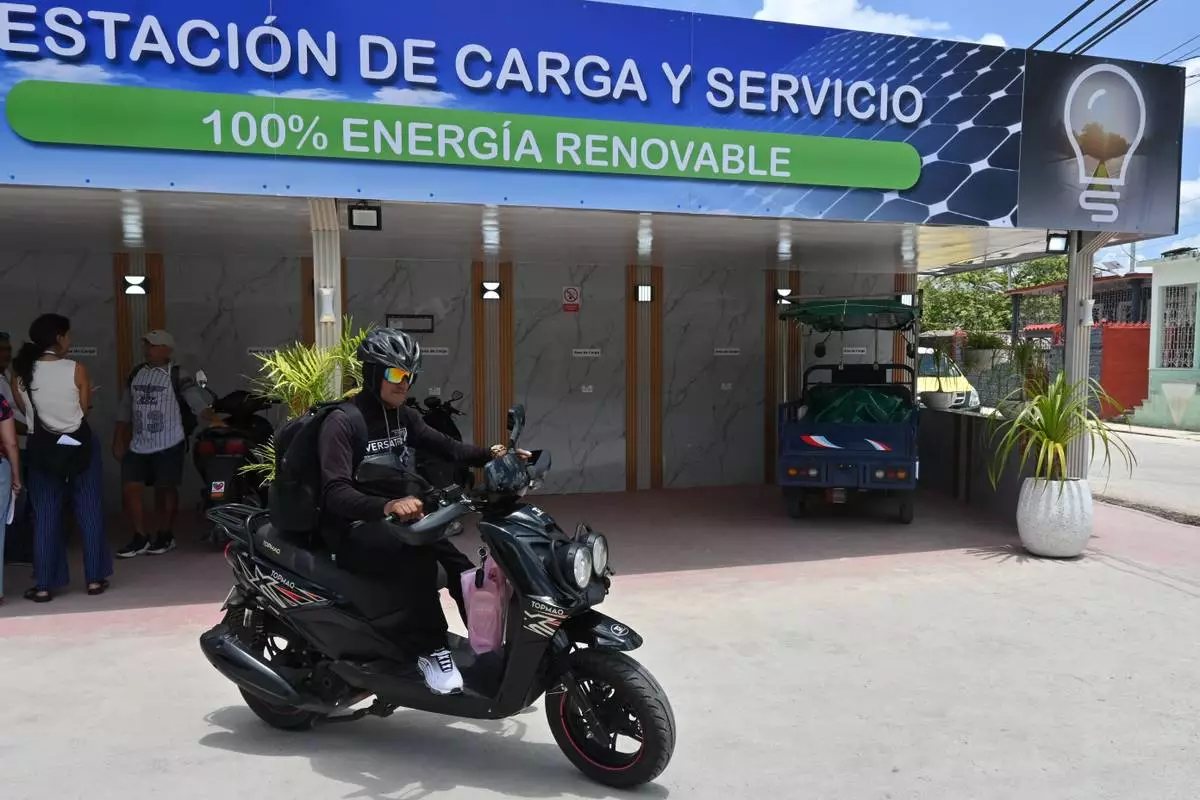
A motorcyclist leaves after recharging his electric bike at a charging station in Santa Clara, Cuba, Saturday, May 2, 2026. (AP Photo/Jorge Luis Banos)
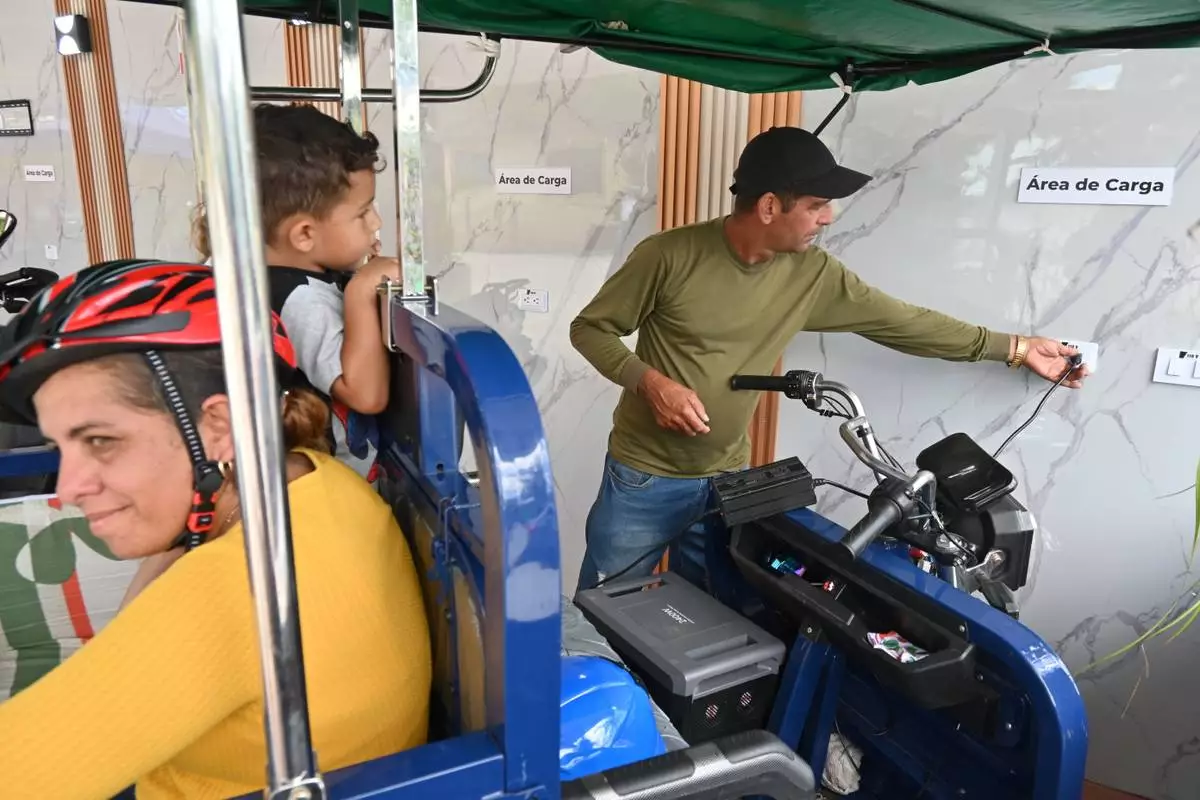
Lorenzo Ravelo, right, plugs in his electric tricycle at a charging station in Santa Clara, Cuba, Saturday, May 2, 2026. (AP Photo/Jorge Luis Banos)