CEBU, Philippines (AP) — Southeast Asian leaders met in an annual summit Friday under intense pressure to mitigate the impact on their people and economies from the Iran war, which one top minister said, “should not have occurred in the first place.”
The alarm by the heads of state of the Association of Southeast Asian Nations is underscored by their decision to focus discussions on a contingency plan to ensure their fast-growing region, which imports most of its oil and gas from the Middle East, will have stable fuel and food supplies.
Click to Gallery
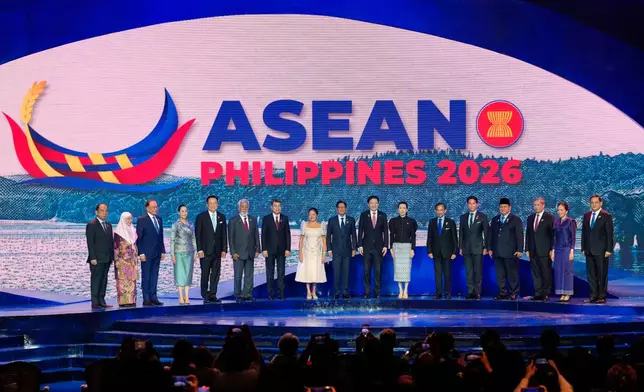
From left, Myanmar's Permanent Secretary of the Ministry of Foreign Affairs Hau Khan Sum, Malaysia's first lady Wan Azizah Wan Ismail, Malaysia's Prime Minister Anwar Ibrahim, Thailand's prime minister's wife Thananon Niramit, Thailand's Prime Minister Anutin Charnvirakul, East Timor's Prime Minister Xanana Gusmao, Vietnam's Prime Minister Le Minh Hung, Philippines first lady Maria Louise Marcos, Philippine President Ferdinand Marcos Jr., Singapore's Prime Minister Lawrence Wong, his wife Loo Tze Lui, Brunei's Sultan Hassanal Bolkiah, his son Prince Abdul Mateen, Indonesia's President Prabowo Subianto, Cambodia's Prime Minister Hun Manet, his wife Pich Chanmony and Laos' Prime Minister Sonexay Siphandone pose for a group photo during the opening ceremony of the 48th ASEAN Summit and Related Meetings in Cebu, Philippines on Friday, May 8, 2026. (AP Photo/Aaron Favila, Pool)
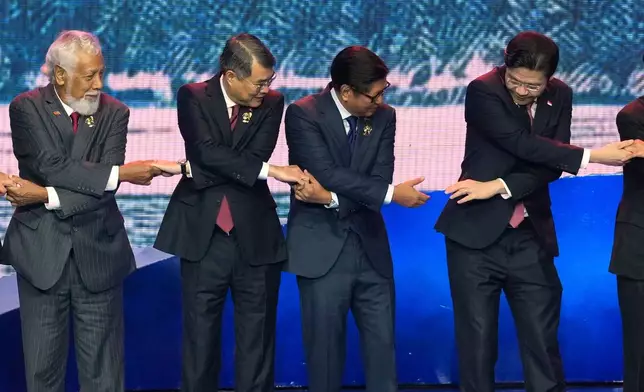
From left, East Timor's Prime Minister Xanana Gusmao, Vietnam's Prime Minister Le Minh Hung, Philippine President Ferdinand Marcos Jr. and Singapore's Prime Minister Lawrence Wong hold hands for a group photo during the opening ceremony of the 48th ASEAN Summit and Related Meetings in Cebu, Philippines on Friday, May 8, 2026. (AP Photo/Aaron Favila, Pool)
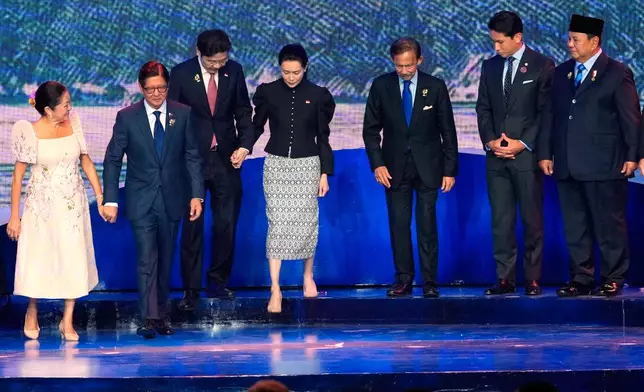
From left, Philippines first lady Maria Louise Marcos, Philippine President Ferdinand Marcos Jr., Singapore's Prime Minister Lawrence Wong, his wife Loo Tze Lui, Brunei's Sultan Hassanal Bolkiah, his son Prince Abdul Mateen and Indonesia's President Prabowo Subianto leave the stage after a group photo during the opening ceremony of the 48th ASEAN Summit and Related Meetings in Cebu, Philippines on Friday, May 8, 2026. (AP Photo/Aaron Favila, Pool)
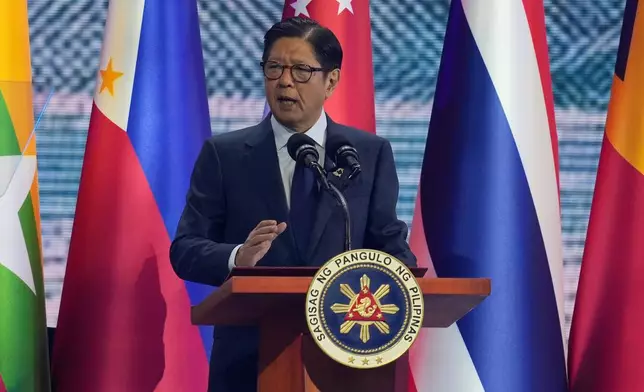
Philippine President Ferdinand Marcos Jr. delivers his remarks during the opening ceremony of the 48th ASEAN Summit and Related Meetings in Cebu, Philippines on Friday, May 8, 2026. (AP Photo/Aaron Favila, Pool)
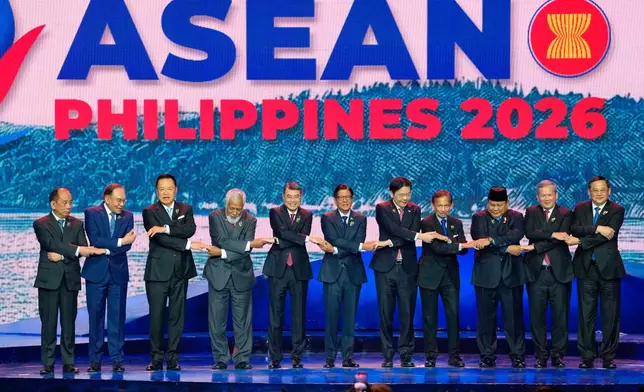
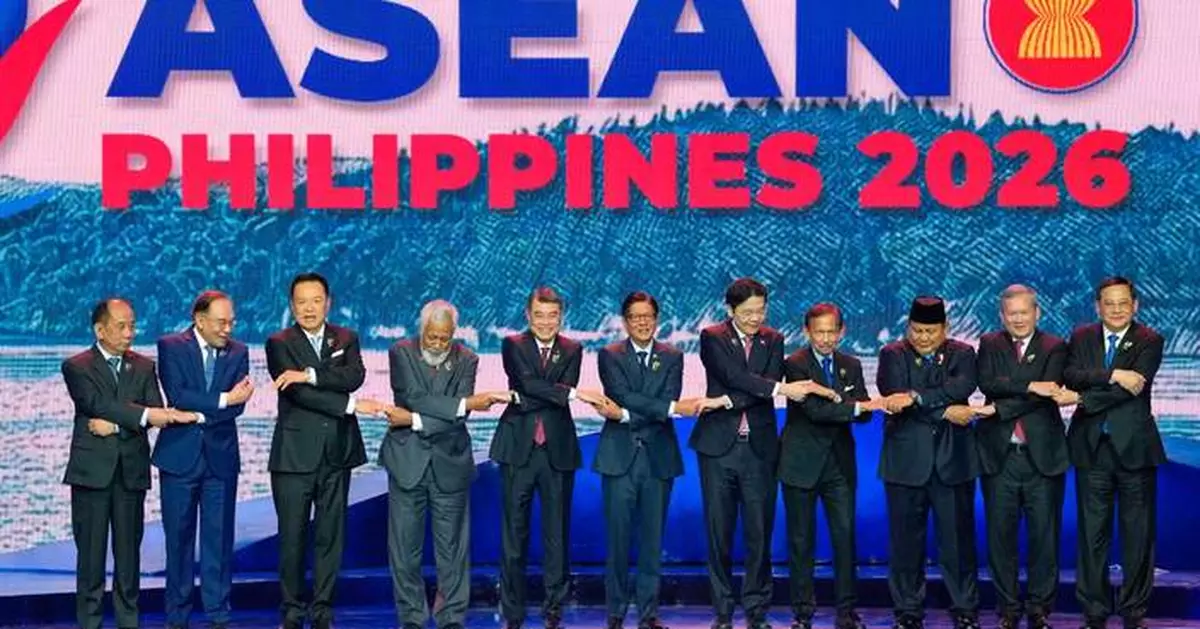
From left, Myanmar's Permanent Secretary of the Ministry of Foreign Affairs U Hau Khan Sum, Malaysia's Prime Minister Anwar Ibrahim, Thailand's Prime Minister Anutin Charnvirakul, East Timor's Prime Minister Xanana Gusmao, Vietnam's Prime Minister Le Minh Hung, Philippine President Ferdinand Marcos Jr., Singapore's Prime Minister Lawrence Wong, Brunei's Sultan Hassanal Bolkiah, Indonesia's President Prabowo Subianto, Cambodia's Prime Minister Hun Manet, and Laos' Prime Minister Sonexay Siphandone hold hands for a group photo during the opening ceremony of the 48th ASEAN summit and Related Meeting in Cebu, Philippines on Friday, May 8, 2026. (AP Photo/Aaron Favila, Pool)
The Philippines is hosting the summit on the central island province of Cebu. President Ferdinand Marcos Jr. has ordered the summit to be stripped of the traditional pomp and pageantry in keeping with the economic headwinds worldwide.
A key dilemma of the ASEAN leaders is how to carry out large-scale evacuations from the Middle East, where more than a million of their citizens work and live, if widespread hostilities flare up again.
Several Southeast Asian citizens have been killed since the United States and Israel launched military strikes on Feb. 28 against Iran. The hostilities have continued sporadically despite a month-old ceasefire, especially in the strategic Strait of Hormuz.
A draft of a joint declaration by the leaders which outlines a contingency plan and which was seen by The Associated Press, called on the regional bloc’s 11 state members to share information and strengthen coordination with international organizations “to ensure the safety and welfare of ASEAN nationals in affected areas.”
Known for their conservative and careful rhetoric, top delegates to the ASEAN summit avoided blunt expressions of their disappointment over the continuing hostilities, but Thailand’s foreign minister, Sihasak Phuangketkeow, was more emphatic and called for the current ceasefire between the U.S. and Iran to be indefinitely extended and the safe passage of ships through the Strait of Hormuz assured.
“This war should not have occurred in the first place,” Sihasak told AP in a brief interview and added that all ASEAN states were alarmed. “We don’t know what the objectives are right?”
“The peace talks seem to be moving but we want the war to end,” Sihasak said.
ASEAN’s contingency plan calls for actions including the ratification possibly this year of an agreement that will pave the way for coordinated emergency fuel sharing, planning a regional power grid, diversifying the region’s sources of crude oil, promoting the use of electric vehicles and studying the use of new technologies, including civilian nuclear energy.
Despite the focus on the Middle East and their shortened summit to cut costs, the leaders will take up major regional flash points, including the South China Sea territorial disputes involving Beijing, a five-year civil war in Myanmar and a recent border conflict between Thailand and Cambodia.
In a separate statement by the leaders on maritime issues that will be made public after the summit, they pledged to “endeavour to conclude the negotiation of an effective and substantive Code of Conduct in the South China Sea.”
Negotiations on the proposed non-aggression pact by the ASEAN and China has dragged on for more than a decade as increasingly tense confrontations intensified in recent years, particularly between Chinese and Philippine coast guard and naval forces.
That has stoked criticisms of ASEAN as an ineffective “talk shop,” where leaders show up each year in their native shirts and pose for a group handshake to project unity despite deep divisions.
ASEAN members Brunei, Malaysia, Vietnam and the Philippines are involved in the decades-long territorial standoffs in the South China Sea. The other members of the regional bloc are Cambodia, East Timor, Indonesia, Laos, Myanmar, Singapore and Thailand.
Aaron Favila and Syawall Zain in Cebu, Philippines contributed to this report.
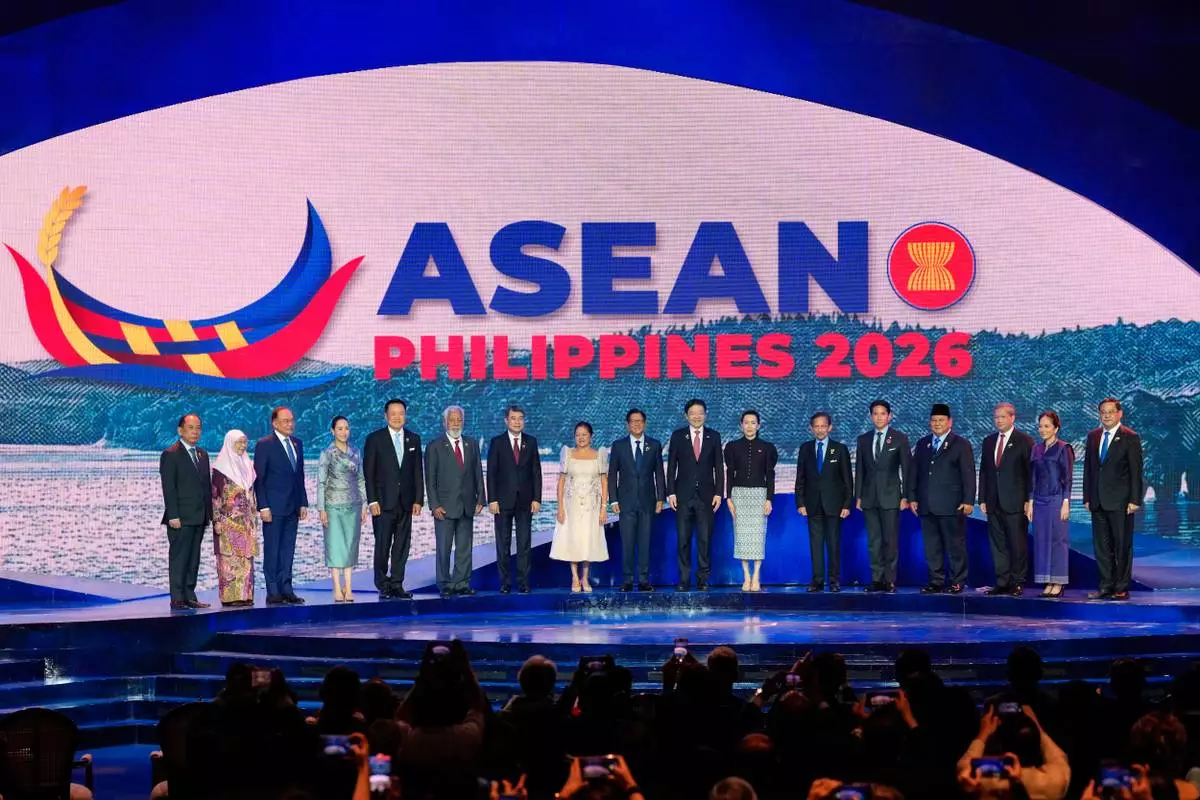
From left, Myanmar's Permanent Secretary of the Ministry of Foreign Affairs Hau Khan Sum, Malaysia's first lady Wan Azizah Wan Ismail, Malaysia's Prime Minister Anwar Ibrahim, Thailand's prime minister's wife Thananon Niramit, Thailand's Prime Minister Anutin Charnvirakul, East Timor's Prime Minister Xanana Gusmao, Vietnam's Prime Minister Le Minh Hung, Philippines first lady Maria Louise Marcos, Philippine President Ferdinand Marcos Jr., Singapore's Prime Minister Lawrence Wong, his wife Loo Tze Lui, Brunei's Sultan Hassanal Bolkiah, his son Prince Abdul Mateen, Indonesia's President Prabowo Subianto, Cambodia's Prime Minister Hun Manet, his wife Pich Chanmony and Laos' Prime Minister Sonexay Siphandone pose for a group photo during the opening ceremony of the 48th ASEAN Summit and Related Meetings in Cebu, Philippines on Friday, May 8, 2026. (AP Photo/Aaron Favila, Pool)
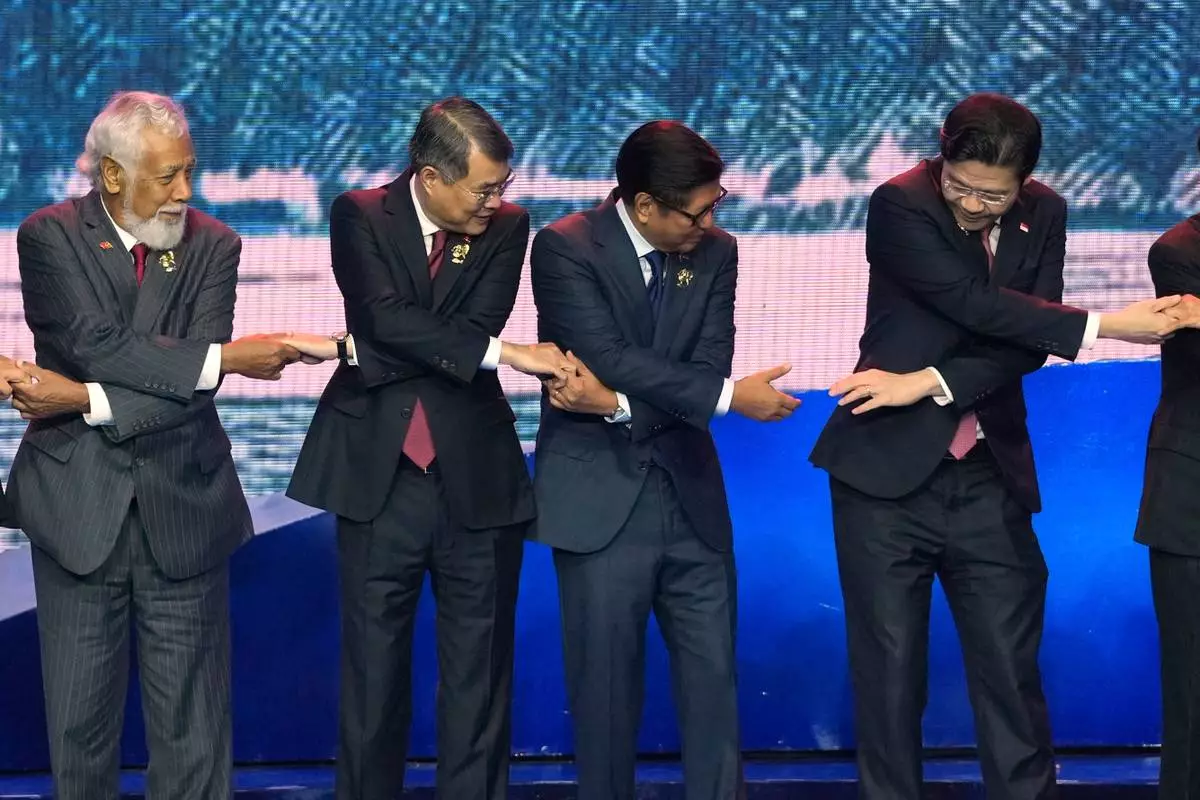
From left, East Timor's Prime Minister Xanana Gusmao, Vietnam's Prime Minister Le Minh Hung, Philippine President Ferdinand Marcos Jr. and Singapore's Prime Minister Lawrence Wong hold hands for a group photo during the opening ceremony of the 48th ASEAN Summit and Related Meetings in Cebu, Philippines on Friday, May 8, 2026. (AP Photo/Aaron Favila, Pool)
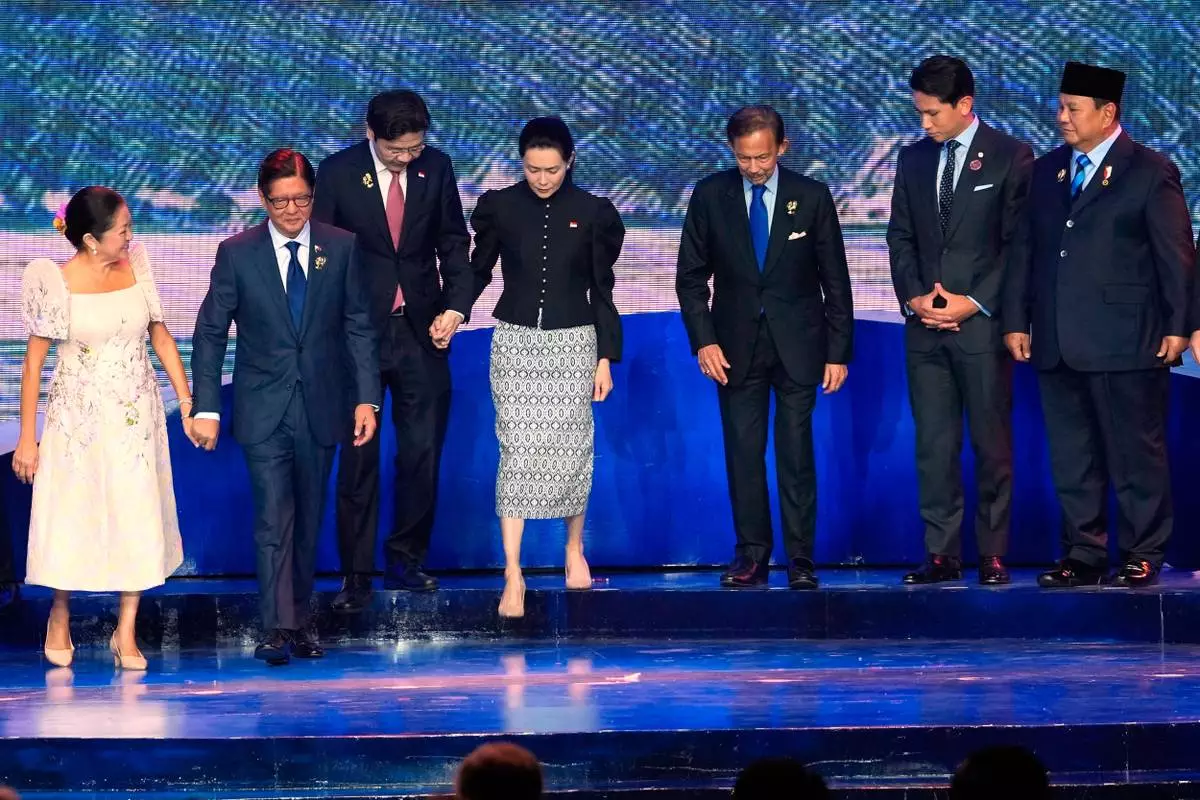
From left, Philippines first lady Maria Louise Marcos, Philippine President Ferdinand Marcos Jr., Singapore's Prime Minister Lawrence Wong, his wife Loo Tze Lui, Brunei's Sultan Hassanal Bolkiah, his son Prince Abdul Mateen and Indonesia's President Prabowo Subianto leave the stage after a group photo during the opening ceremony of the 48th ASEAN Summit and Related Meetings in Cebu, Philippines on Friday, May 8, 2026. (AP Photo/Aaron Favila, Pool)
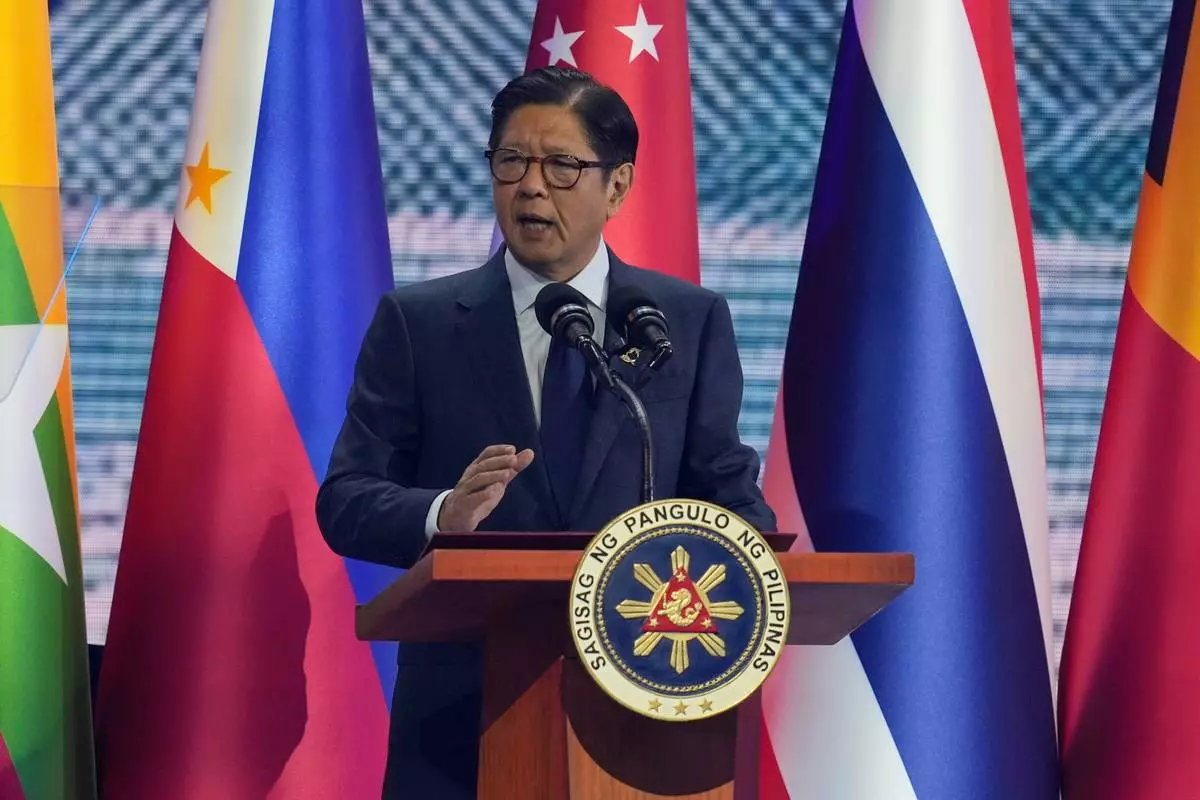
Philippine President Ferdinand Marcos Jr. delivers his remarks during the opening ceremony of the 48th ASEAN Summit and Related Meetings in Cebu, Philippines on Friday, May 8, 2026. (AP Photo/Aaron Favila, Pool)
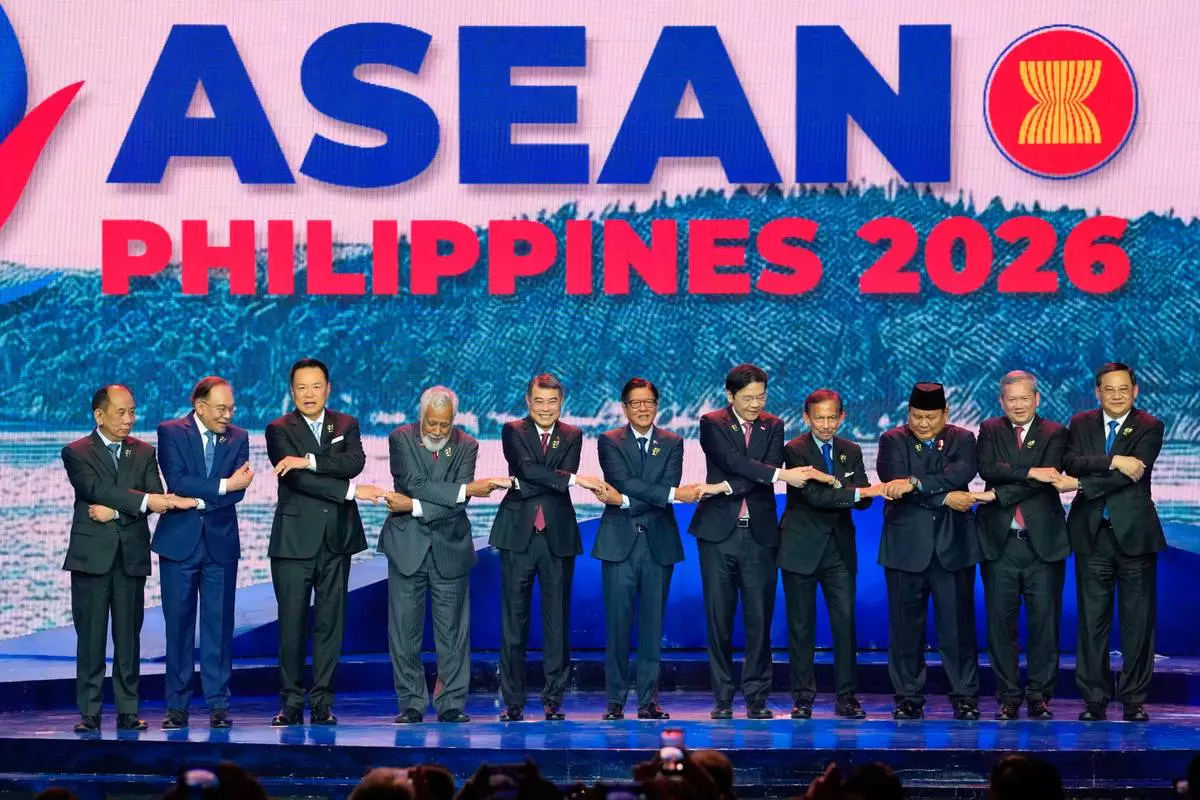
From left, Myanmar's Permanent Secretary of the Ministry of Foreign Affairs U Hau Khan Sum, Malaysia's Prime Minister Anwar Ibrahim, Thailand's Prime Minister Anutin Charnvirakul, East Timor's Prime Minister Xanana Gusmao, Vietnam's Prime Minister Le Minh Hung, Philippine President Ferdinand Marcos Jr., Singapore's Prime Minister Lawrence Wong, Brunei's Sultan Hassanal Bolkiah, Indonesia's President Prabowo Subianto, Cambodia's Prime Minister Hun Manet, and Laos' Prime Minister Sonexay Siphandone hold hands for a group photo during the opening ceremony of the 48th ASEAN summit and Related Meeting in Cebu, Philippines on Friday, May 8, 2026. (AP Photo/Aaron Favila, Pool)