Skip to Content Facebook Feature Image

Elaborately decorated skeletons in Catholic churches across Bavaria take some visitors by surprise

News

Elaborately decorated skeletons in Catholic churches across Bavaria take some visitors by surprise
News

News

Elaborately decorated skeletons in Catholic churches across Bavaria take some visitors by surprise

2026-05-08 13:00 Last Updated At:13:11

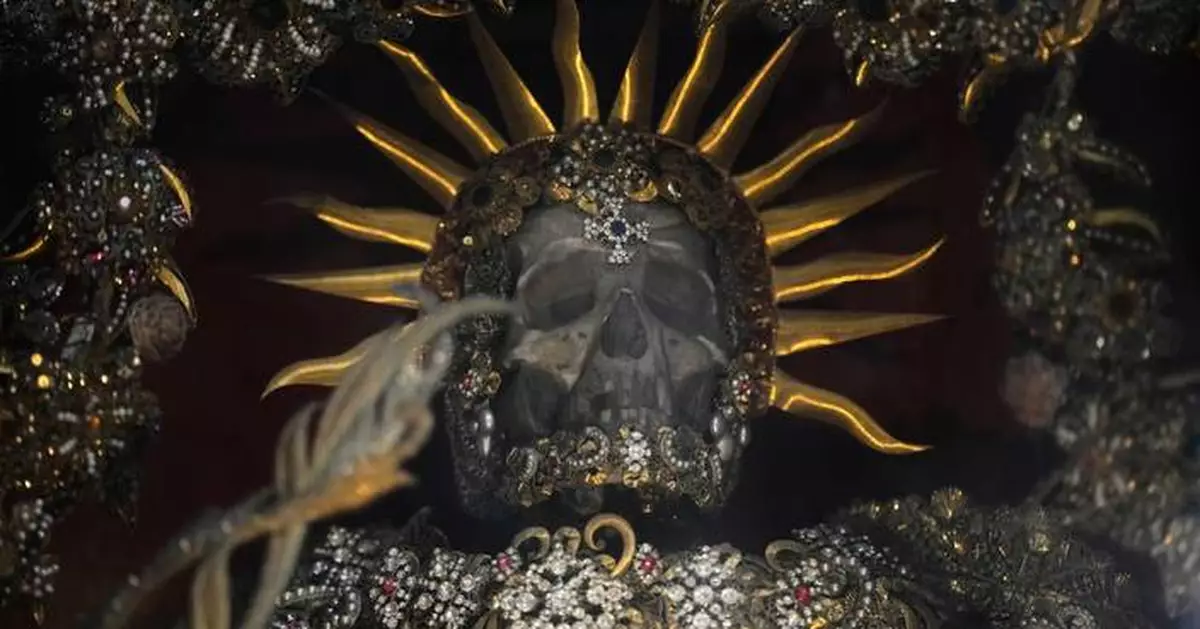
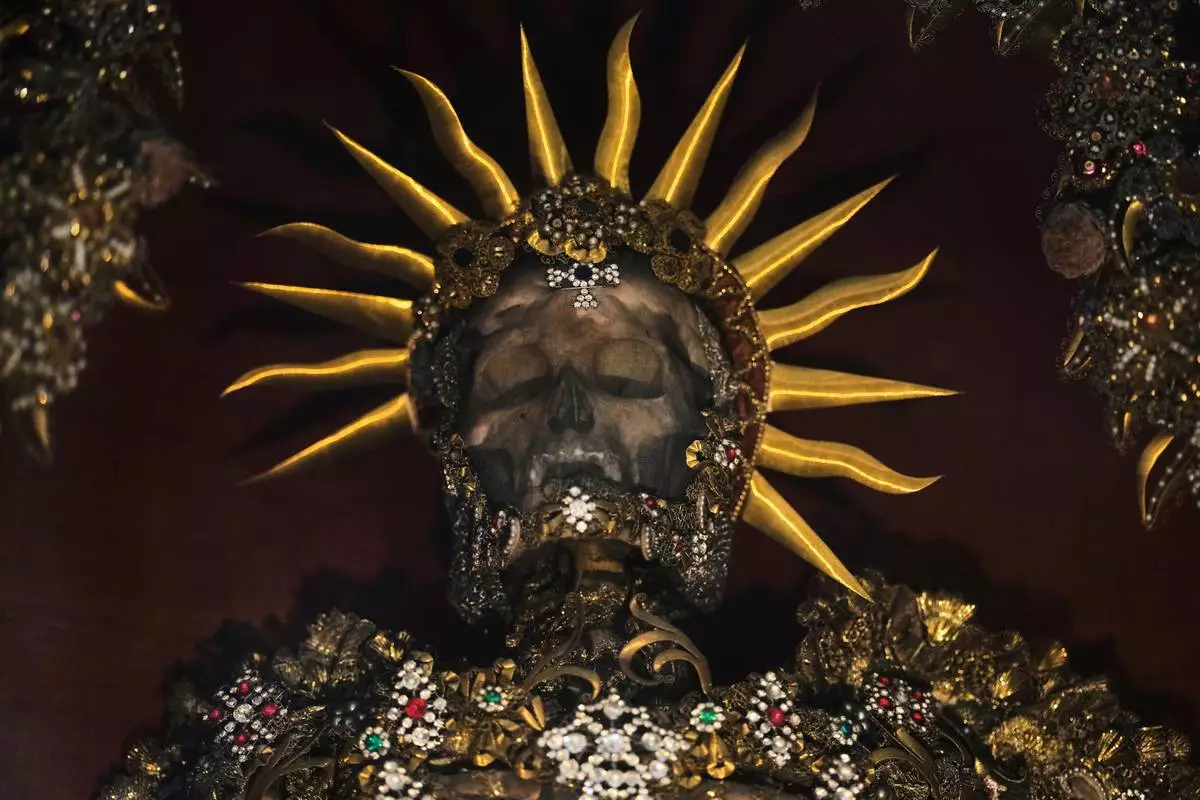
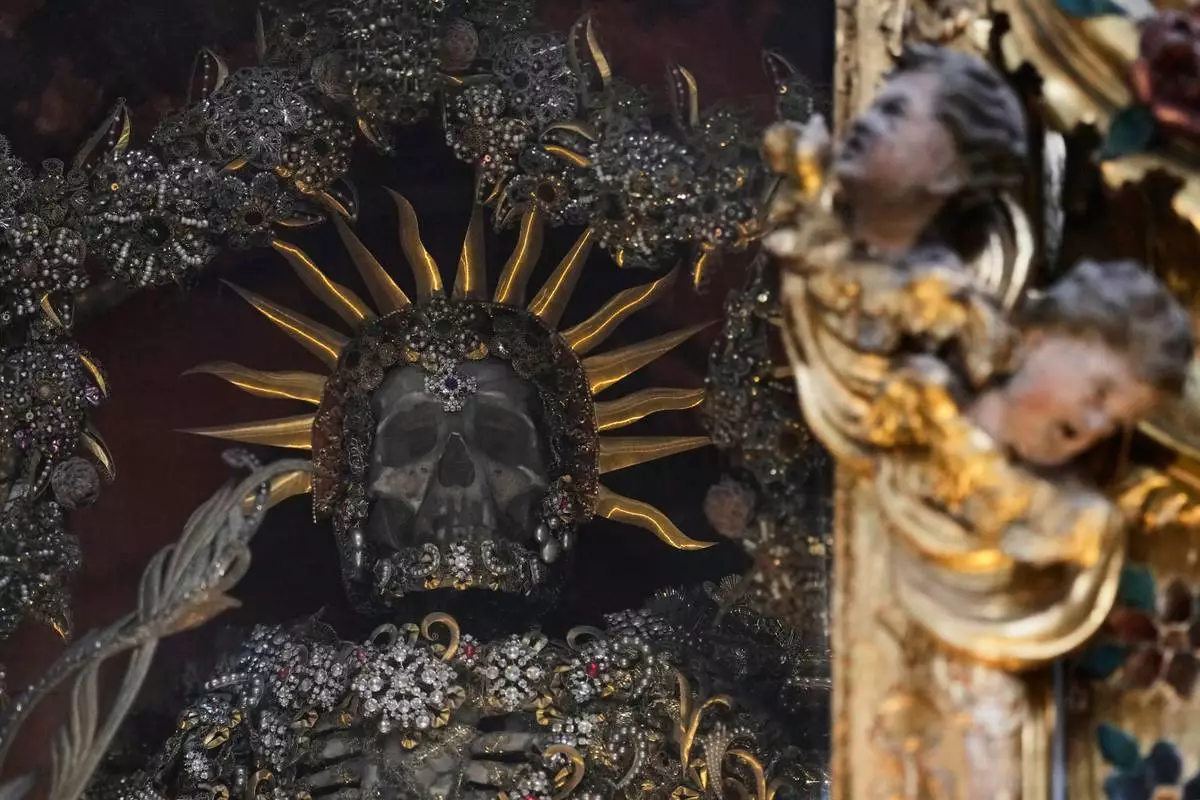
BAD STAFFELSTEIN, Germany (AP) — It is a sight that has sent shivers down the spines of many visitors: four complete skeletons draped in silk and brocade, adorned with precious stones, filigree gold, silver and lace that have been on display for centuries at the Catholic monastery church of Banz in southern Germany.

The skeletons — known as Vincenzius, Valerius, Benedictus and Felix Benedictus — are the remains of so-called catacomb saints that were brought to the Benedictine monastery near the Bavarian town of Bad Staffelstein from Rome in the late 17th and 18th century.

More Images
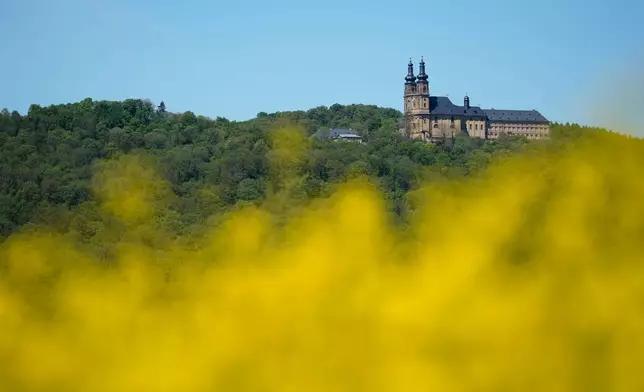
Outside view of the catholic monastery church of Banz in Bad Staffelstein, Germany, Saturday, May 2, 2026. (AP Photo/Matthias Schrader)
Outside view of the catholic monastery church of Banz in Bad Staffelstein, Germany, Saturday, May 2, 2026. (AP Photo/Matthias Schrader)
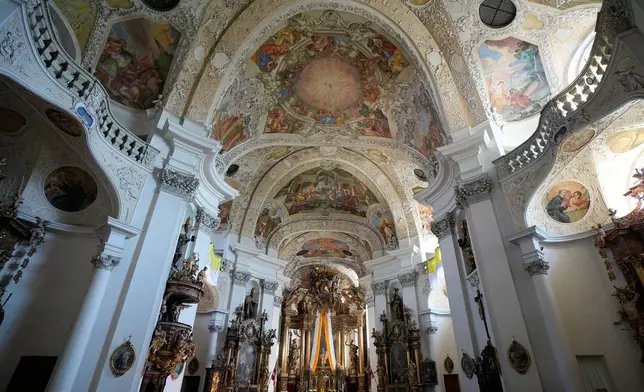
Inside view of the catholic monastery church of Banz in Bad Staffelstein, Germany, Saturday, May 2, 2026. (AP Photo/Matthias Schrader)
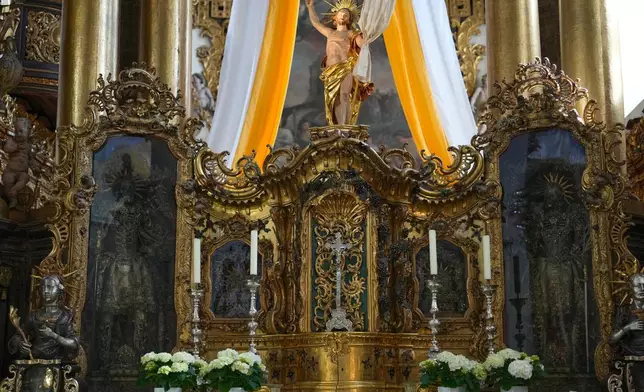
Inside view of the catholic monastery church of Banz in Bad Staffelstein, Germany, Saturday, May 2, 2026. (AP Photo/Matthias Schrader)
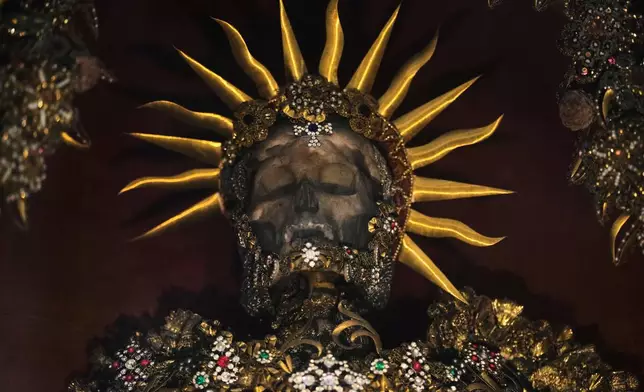
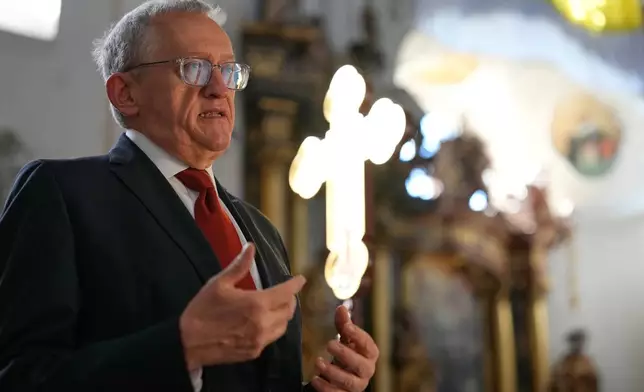
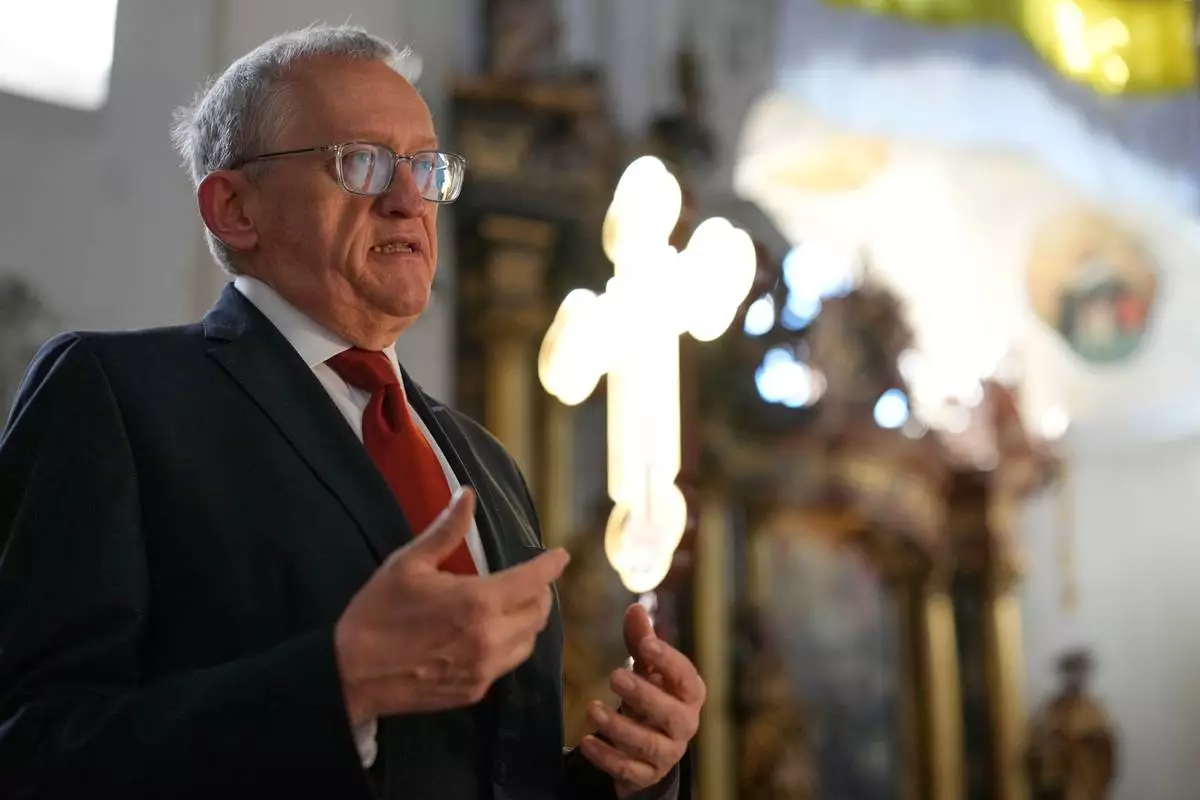
Historian Gunter Dippold gestures as he talks to journalists inside the catholic monastery church of Banz in Bad Staffelstein, Germany, Saturday, May 2, 2026. (AP Photo/Matthias Schrader)
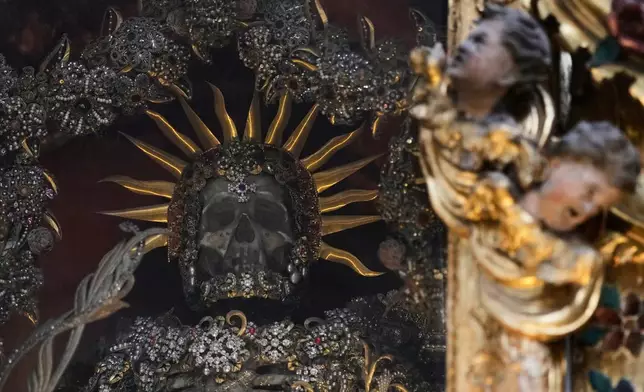
Historian Gunter Dippold gestures as he talks to journalists inside the catholic monastery church of Banz in Bad Staffelstein, Germany, Saturday, May 2, 2026. (AP Photo/Matthias Schrader)
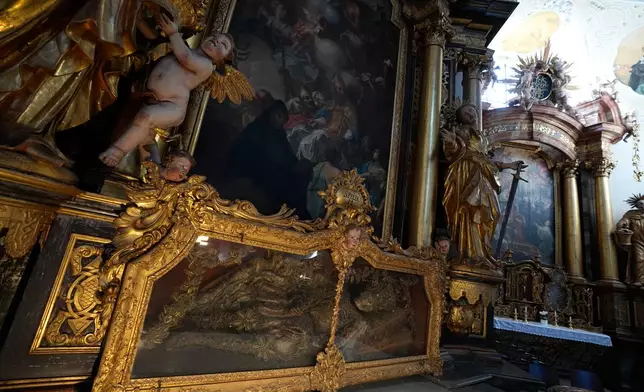
An elaborately decorated skeleton lies in the catholic monastery church of Banz in Bad Staffelstein, Germany, Saturday, May 2, 2026. (AP Photo/Matthias Schrader)
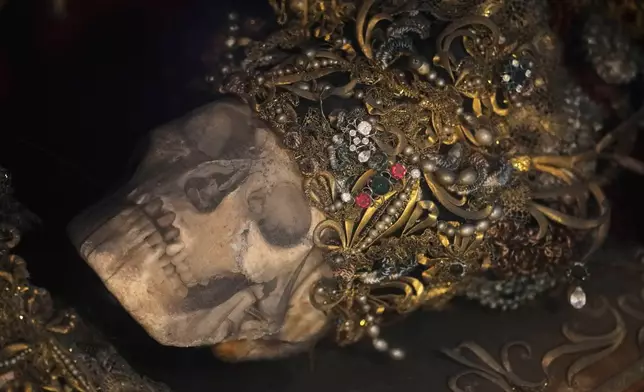
An elaborately decorated skeleton lies in the catholic monastery church of Banz in Bad Staffelstein, Germany, Saturday, May 2, 2026. (AP Photo/Matthias Schrader)
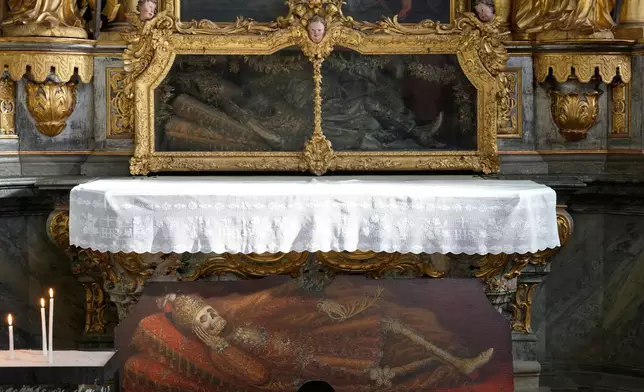
An elaborately decorated skeleton lies in the catholic monastery church of Banz in Bad Staffelstein, Germany, Saturday, May 2, 2026. (AP Photo/Matthias Schrader)
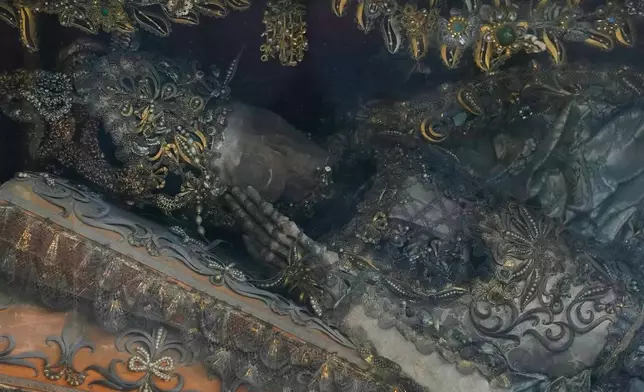
An elaborately decorated skeleton lies in the catholic monastery church of Banz in Bad Staffelstein, Germany, Saturday, May 2, 2026. (AP Photo/Matthias Schrader)
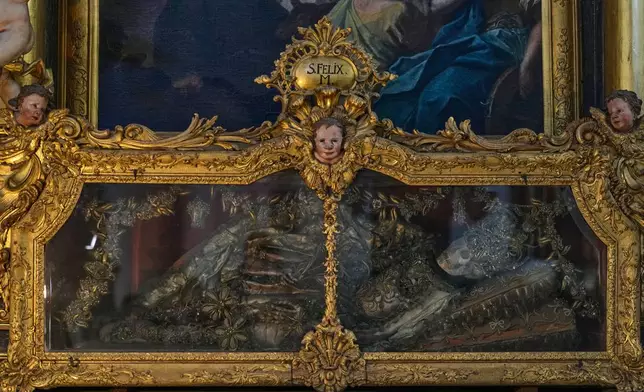
An elaborately decorated skeleton lies in the catholic monastery church of Banz in Bad Staffelstein, Germany, Saturday, May 2, 2026. (AP Photo/Matthias Schrader)
An elaborately decorated skeleton lies in the catholic monastery church of Banz in Bad Staffelstein, Germany, Saturday, May 2, 2026. (AP Photo/Matthias Schrader)
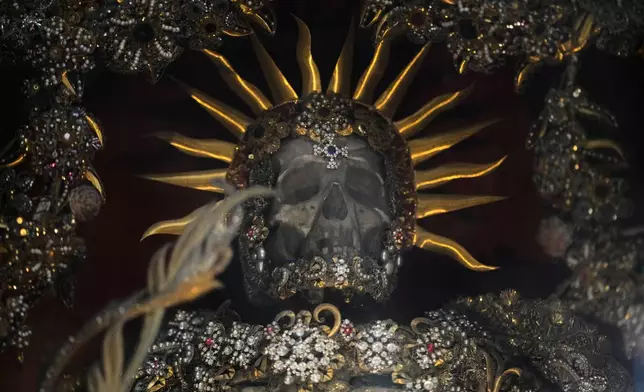
An elaborately decorated skeleton lies in the catholic monastery church of Banz in Bad Staffelstein, Germany, Saturday, May 2, 2026. (AP Photo/Matthias Schrader)

An elaborately decorated skeleton lies in the catholic monastery church of Banz in Bad Staffelstein, Germany, Saturday, May 2, 2026. (AP Photo/Matthias Schrader)

An elaborately decorated skeleton lies in the catholic monastery church of Banz in Bad Staffelstein, Germany, Saturday, May 2, 2026. (AP Photo/Matthias Schrader)

An elaborately decorated skeleton lies in the catholic monastery church of Banz in Bad Staffelstein, Germany, Saturday, May 2, 2026. (AP Photo/Matthias Schrader)

An elaborately decorated skeleton lies in the catholic monastery church of Banz in Bad Staffelstein, Germany, Saturday, May 2, 2026. (AP Photo/Matthias Schrader)

An elaborately decorated skeleton lies in the catholic monastery church of Banz in Bad Staffelstein, Germany, Saturday, May 2, 2026. (AP Photo/Matthias Schrader)

An elaborately decorated skeleton lies in the catholic monastery church of Banz in Bad Staffelstein, Germany, Saturday, May 2, 2026. (AP Photo/Matthias Schrader)

An elaborately decorated skeleton lies in the catholic monastery church of Banz in Bad Staffelstein, Germany, Saturday, May 2, 2026. (AP Photo/Matthias Schrader)

An elaborately decorated skeleton lies in the catholic monastery church of Banz in Bad Staffelstein, Germany, Saturday, May 2, 2026. (AP Photo/Matthias Schrader)

An elaborately decorated skeleton lies in the catholic monastery church of Banz in Bad Staffelstein, Germany, Saturday, May 2, 2026. (AP Photo/Matthias Schrader)

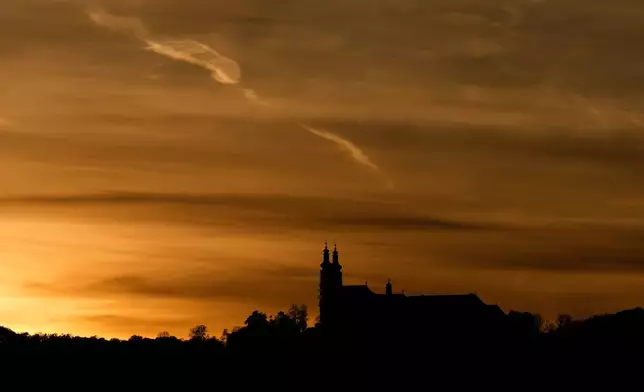
The suns sets behind the catholic monastery church of Banz in Bad Staffelstein, Germany, Saturday, May 2, 2026. (AP Photo/Matthias Schrader)

The suns sets behind the catholic monastery church of Banz in Bad Staffelstein, Germany, Saturday, May 2, 2026. (AP Photo/Matthias Schrader)

An elaborately decorated skeleton stands in the catholic monastery church of Banz in Bad Staffelstein, Germany, Saturday, May 2, 2026. (AP Photo/Matthias Schrader)

An elaborately decorated skeleton stands in the catholic monastery church of Banz in Bad Staffelstein, Germany, Saturday, May 2, 2026. (AP Photo/Matthias Schrader)

“It’s actually a little creepy,” whispered church custodian Anita Gottschlich as she looked at one of the skeletons. It seemed to be staring right back at her through its hollow eye sockets.

"I notice that when older people come here who visited as children, they always look for the Holy Bodies, because they can still remember them,” she added, noting the enduring fascination the skeletons hold for people of all ages.

While they may seem unfamiliar or even disturbing to some visitors, catacomb saints — or Holy Bodies — can still be found in many Baroque Catholic churches and monasteries across Bavaria.

The skeletons, often presented in glass coffin-like cabinets, are also a familiar sight in churches in neighboring Austria, Switzerland, Czechia, and in Italy.

Legend has it that these relics are the remains of martyrs from the early days of Christianity in Rome that were discovered in the 16th century in unmarked graves in the city's catacombs.

“At the time, the church simply designated them all as saints,” said Catholic priest Walter Ries. "And, of course, in many countries, including Germany, people wanted to have such holy remains, such relics, simply because this enhanced the status of their own church or monastery and perhaps turned it into a place of pilgrimage.”

Ries ministers to the congregation of 211 members that belongs to the monastery church. It's a far cry from the golden age of the monastery, which was founded by Benedictine monks in 1070 and flourished for hundreds of years until it was dissolved in 1803. Nowadays, only the church is still actively in use; the monastery is home to a political foundation.

“A great deal has changed over the course of the centuries," the priest said. "Back then, these relics were very important, but today they really aren’t anymore.”

The veneration of the catacomb saints during the late 17th and 18th centuries came at a time when vast stretches of Europe, including Bavaria, were still reeling from the Thirty Years’ War. It began as a religious struggle between Catholics and Protestants and led to an estimated 4 to 8 million deaths from the effects of battle, famine or disease.

“That was a terrible time," said Ries. "And so people tried to open the gates of heaven through the Baroque. That’s why everything was designed so beautifully. It was an escape from the present, which was often so terrible. That’s also why these eerie skeletons were so beautifully draped and depicted as lifelike as possible.”

The abbots of the Banz monastery and the church, which is ostentatiously adorned with lots of gold, cherubs and paintings in the Baroque style, sent emissaries to Rome in 1680 and again in 1745, who successfully brought home the four skeletons which were then decorated by nuns in the nearby town of Bamberg.

To ensure that viewing the Holy Bodies was an exceptional experience, they were and are still kept out of sight for most of the year by attaching wooden panels depicting the respective skeletons to the front of the display cases. On special occasions, such as All Saints’ Day, the covers are taken off and the Holy Bodies are shown to the believers.

In general, the elaborate decoration "is not meant to show the dead body of a saint, but rather to show his glorified body," said Günter Dippold, a historian who has been researching the catacomb saints and the Banz monastery.

"It is therefore intended to show the faithful who view it what we will look like after the resurrection, after being raised from the dead, when we no longer have our earthly bodies but rather glorified ones.”

Associated Press religion coverage receives support through the AP’s collaboration with The Conversation US, with funding from Lilly Endowment Inc. The AP is solely responsible for this content.
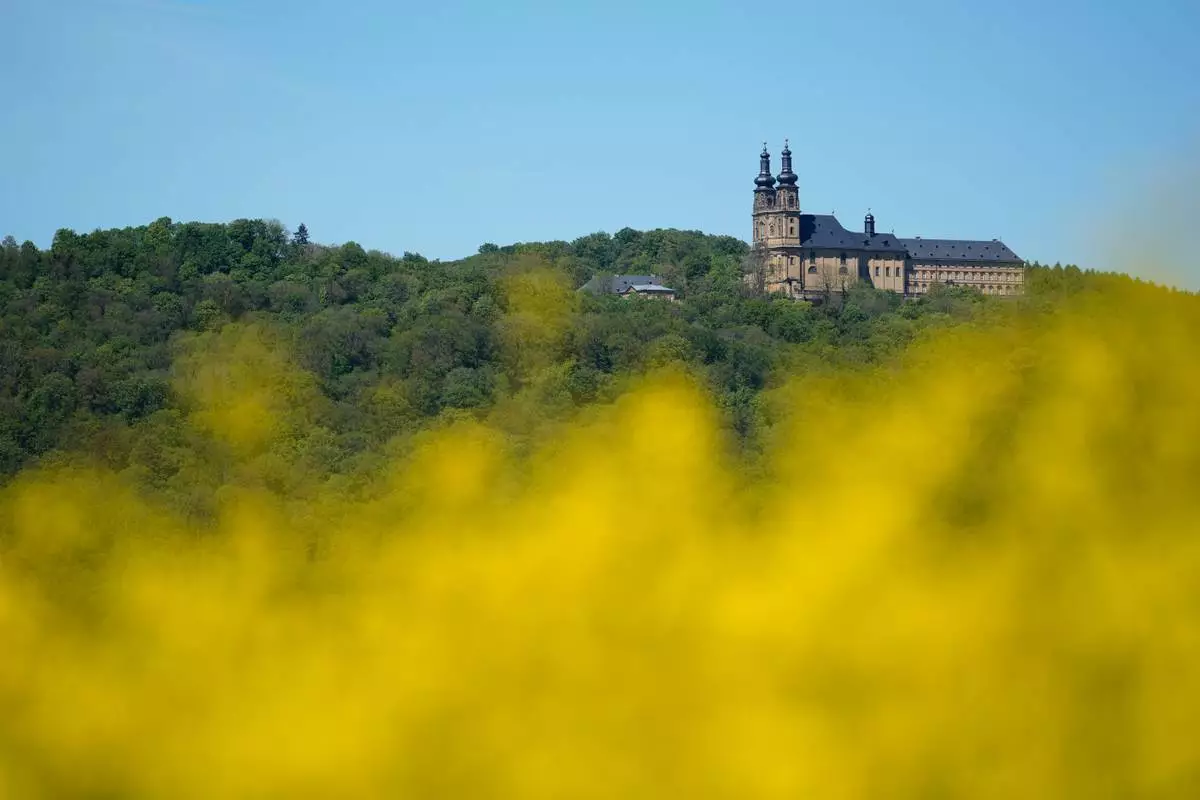
Outside view of the catholic monastery church of Banz in Bad Staffelstein, Germany, Saturday, May 2, 2026. (AP Photo/Matthias Schrader)
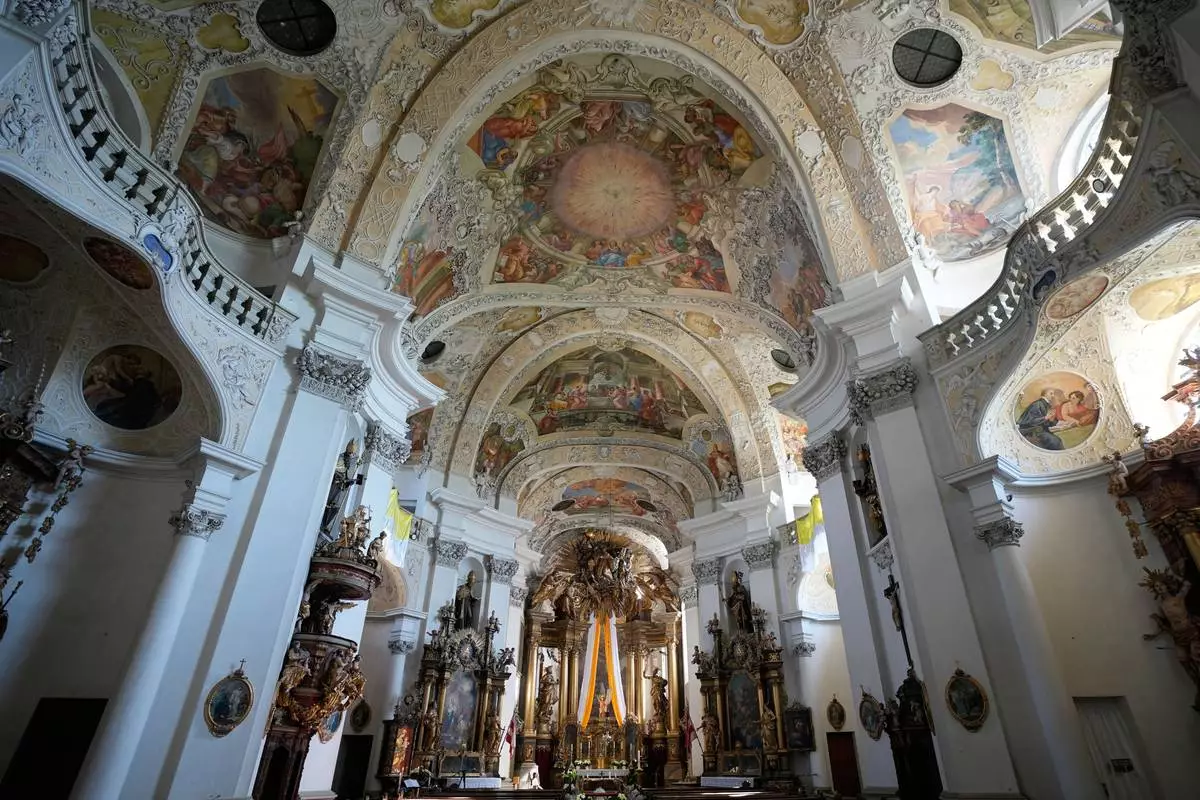
Outside view of the catholic monastery church of Banz in Bad Staffelstein, Germany, Saturday, May 2, 2026. (AP Photo/Matthias Schrader)
Inside view of the catholic monastery church of Banz in Bad Staffelstein, Germany, Saturday, May 2, 2026. (AP Photo/Matthias Schrader)
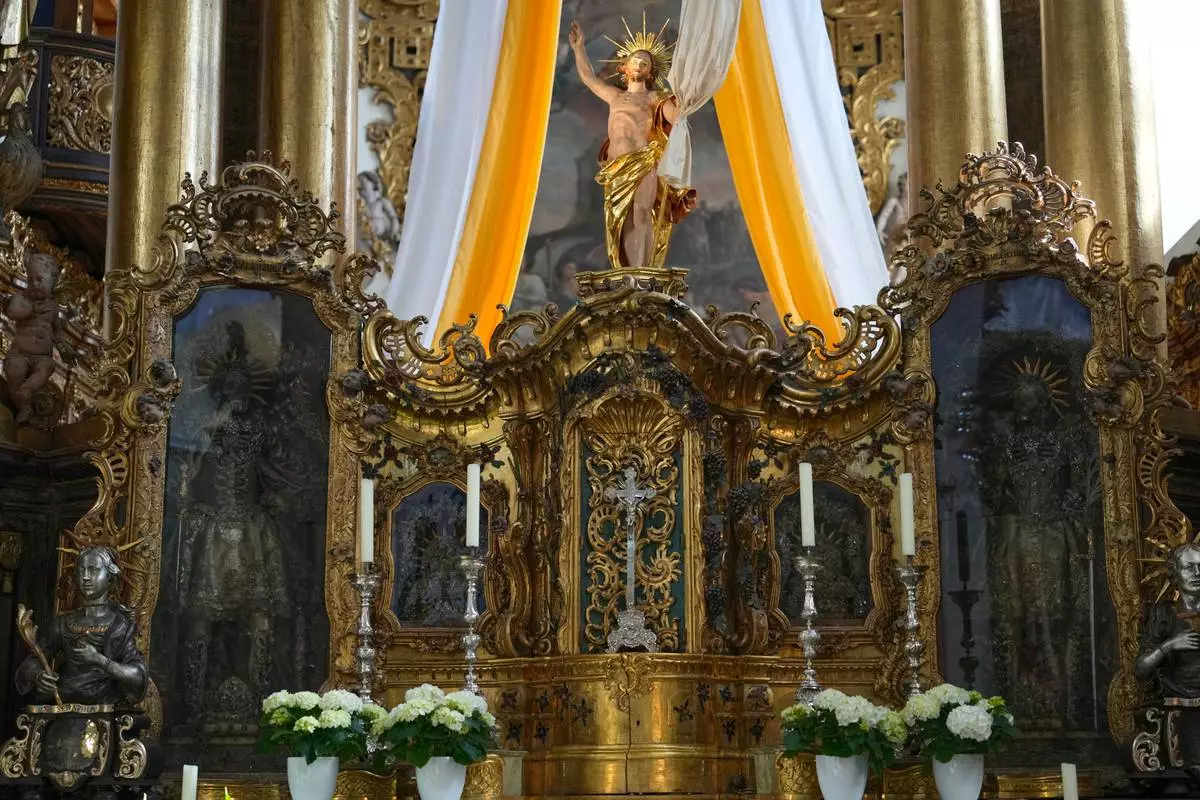
Inside view of the catholic monastery church of Banz in Bad Staffelstein, Germany, Saturday, May 2, 2026. (AP Photo/Matthias Schrader)
Historian Gunter Dippold gestures as he talks to journalists inside the catholic monastery church of Banz in Bad Staffelstein, Germany, Saturday, May 2, 2026. (AP Photo/Matthias Schrader)
Historian Gunter Dippold gestures as he talks to journalists inside the catholic monastery church of Banz in Bad Staffelstein, Germany, Saturday, May 2, 2026. (AP Photo/Matthias Schrader)
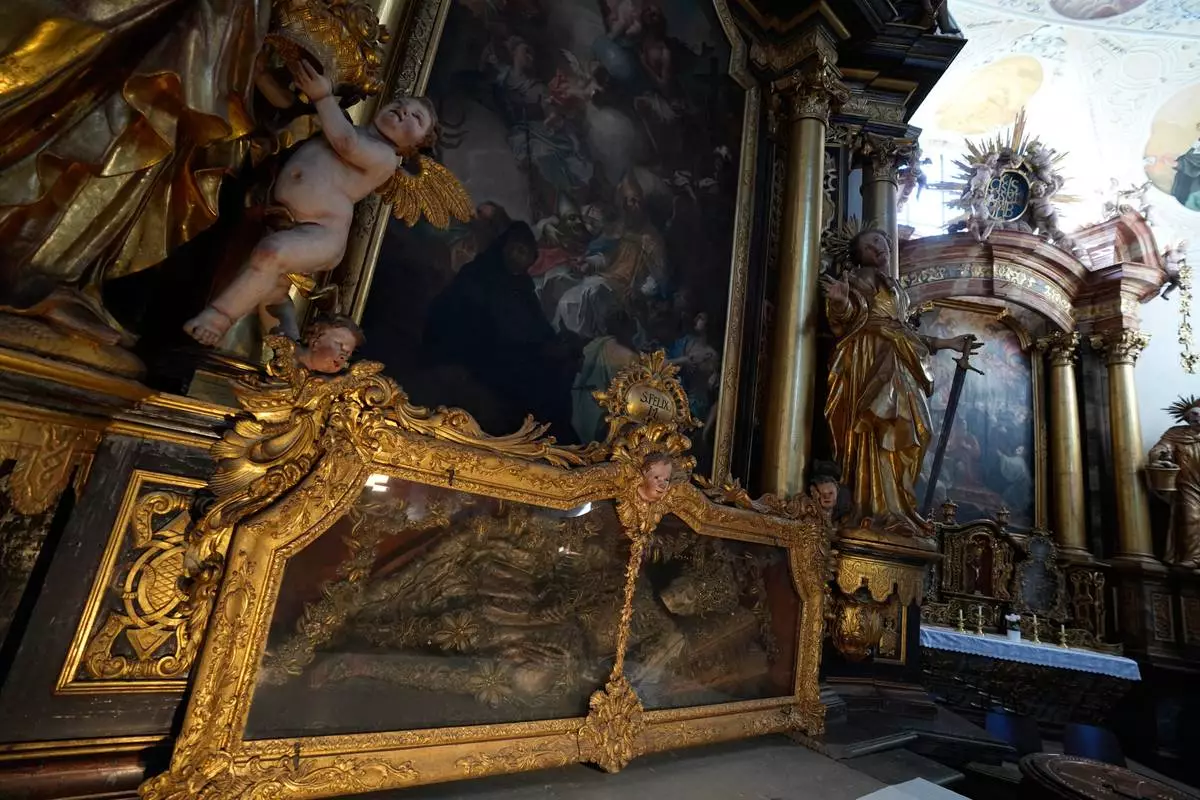
An elaborately decorated skeleton lies in the catholic monastery church of Banz in Bad Staffelstein, Germany, Saturday, May 2, 2026. (AP Photo/Matthias Schrader)
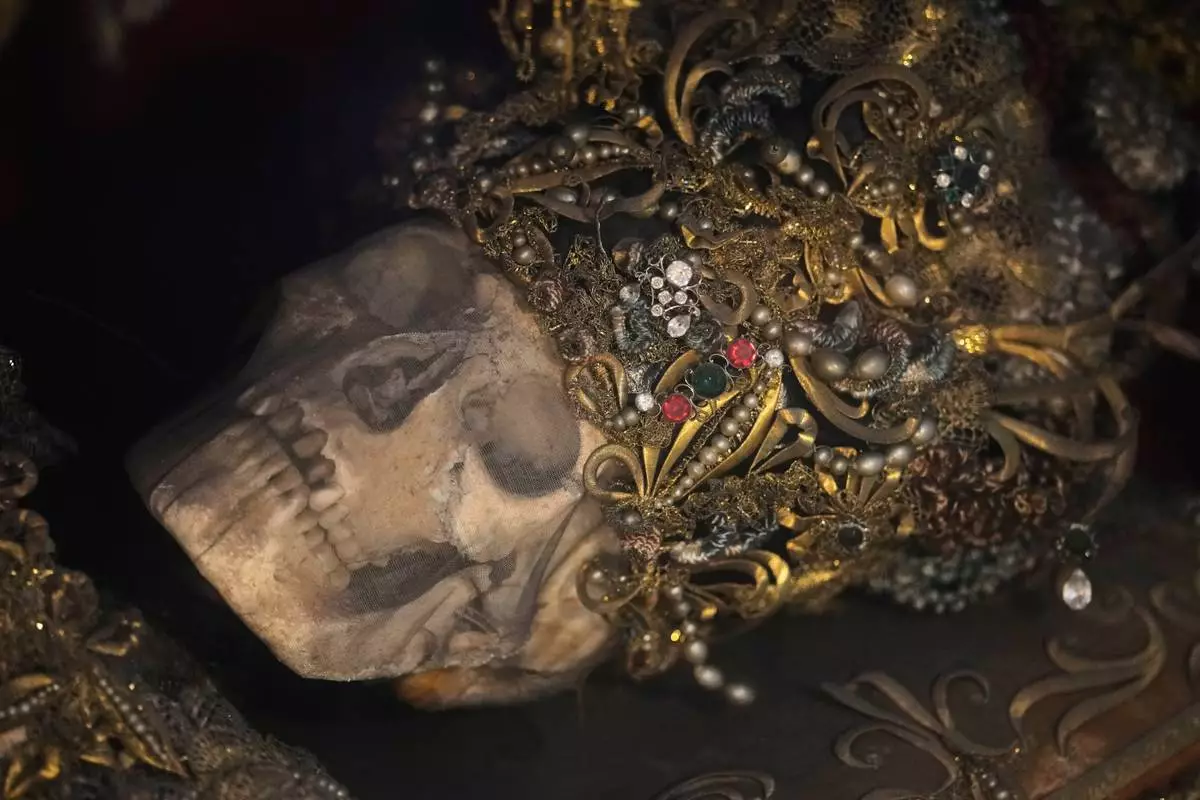
An elaborately decorated skeleton lies in the catholic monastery church of Banz in Bad Staffelstein, Germany, Saturday, May 2, 2026. (AP Photo/Matthias Schrader)
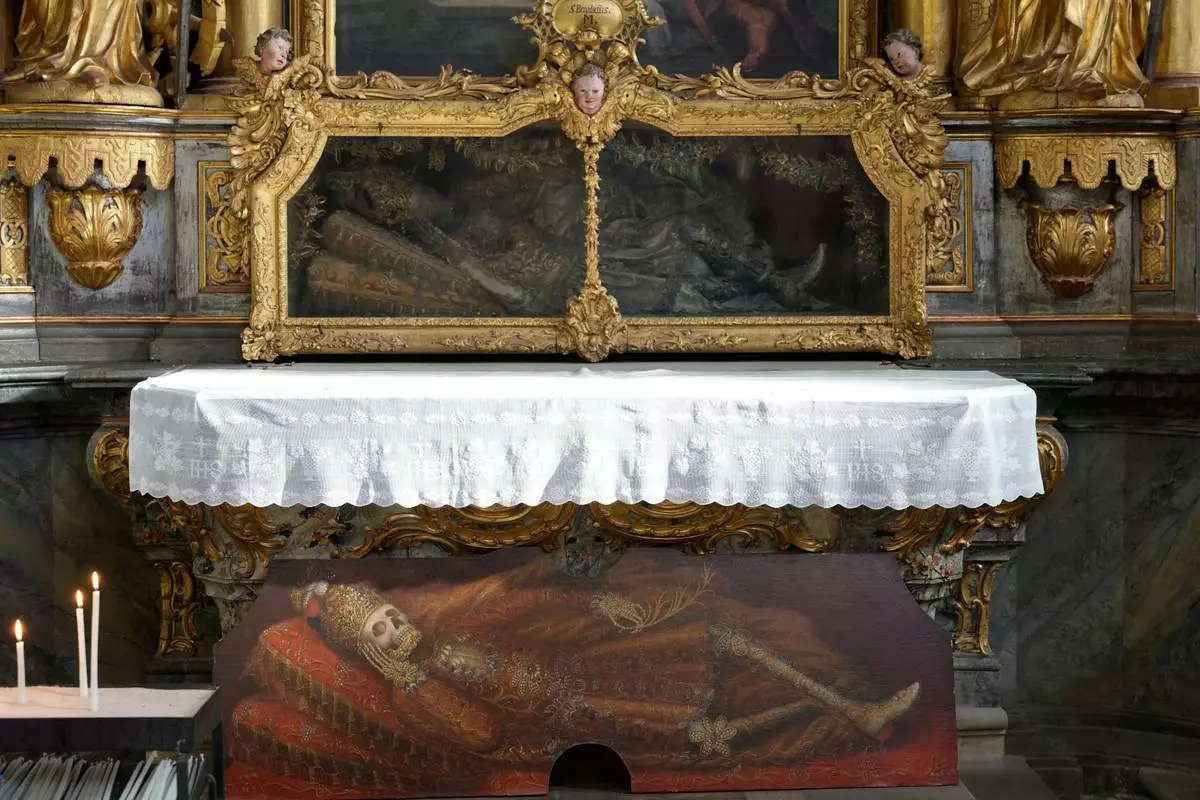
An elaborately decorated skeleton lies in the catholic monastery church of Banz in Bad Staffelstein, Germany, Saturday, May 2, 2026. (AP Photo/Matthias Schrader)
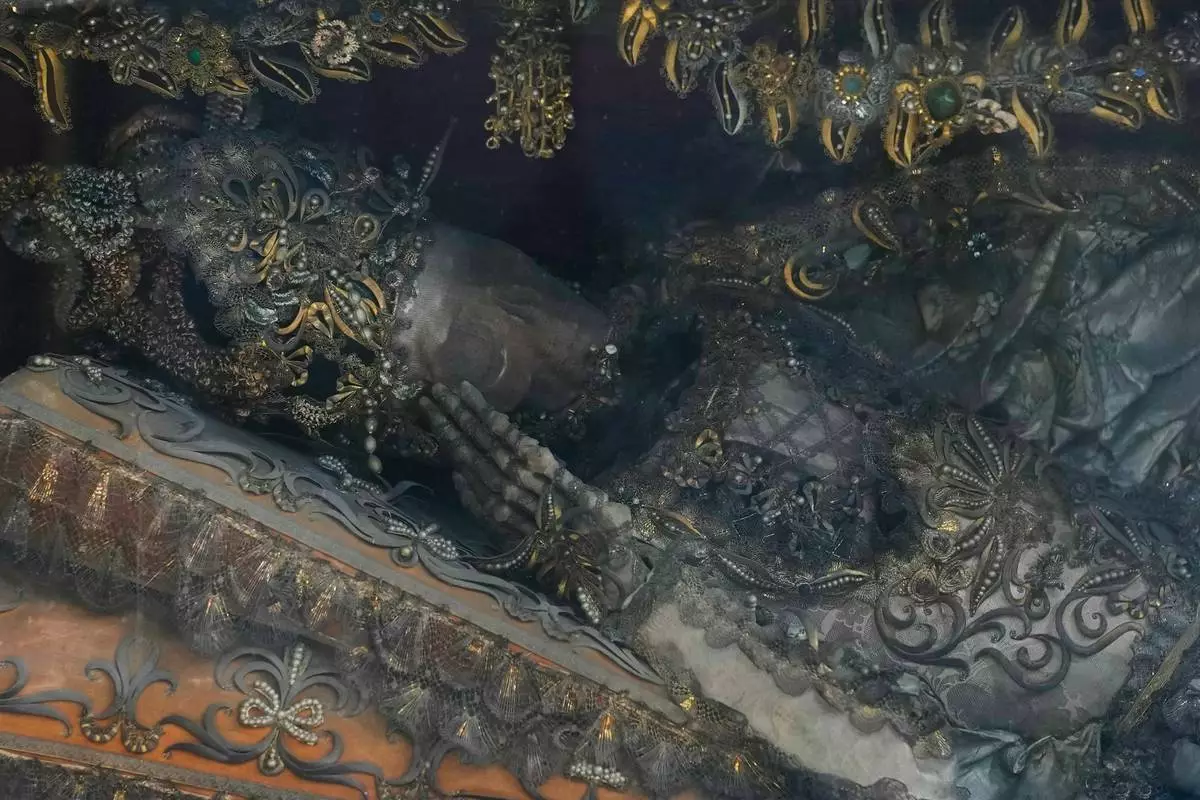
An elaborately decorated skeleton lies in the catholic monastery church of Banz in Bad Staffelstein, Germany, Saturday, May 2, 2026. (AP Photo/Matthias Schrader)
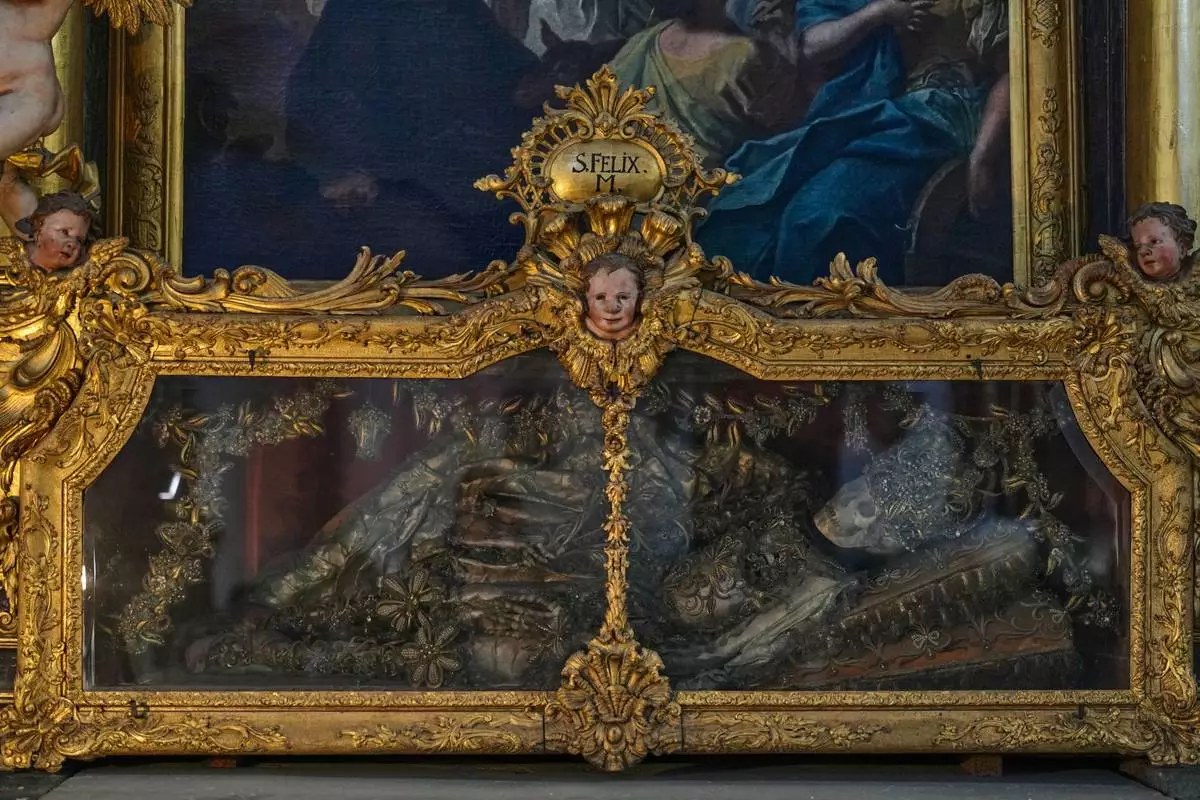
An elaborately decorated skeleton lies in the catholic monastery church of Banz in Bad Staffelstein, Germany, Saturday, May 2, 2026. (AP Photo/Matthias Schrader)
An elaborately decorated skeleton lies in the catholic monastery church of Banz in Bad Staffelstein, Germany, Saturday, May 2, 2026. (AP Photo/Matthias Schrader)
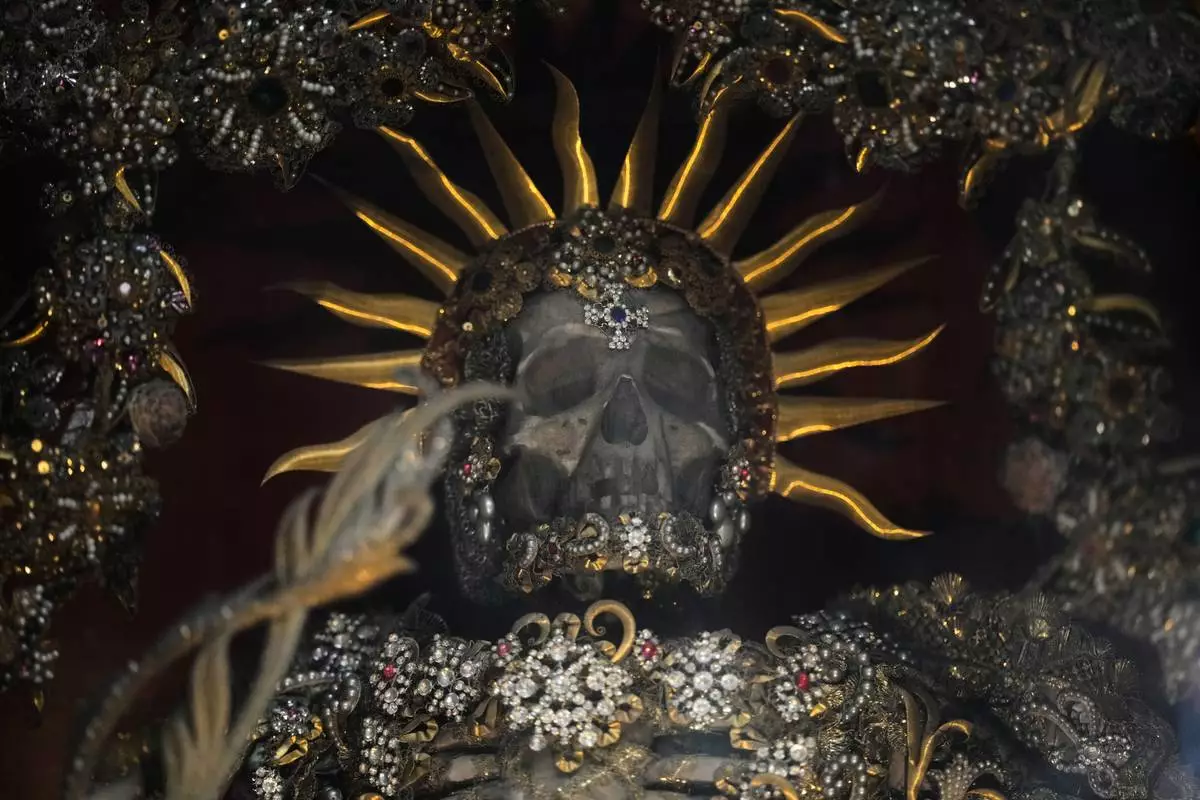
An elaborately decorated skeleton lies in the catholic monastery church of Banz in Bad Staffelstein, Germany, Saturday, May 2, 2026. (AP Photo/Matthias Schrader)


An elaborately decorated skeleton lies in the catholic monastery church of Banz in Bad Staffelstein, Germany, Saturday, May 2, 2026. (AP Photo/Matthias Schrader)

An elaborately decorated skeleton lies in the catholic monastery church of Banz in Bad Staffelstein, Germany, Saturday, May 2, 2026. (AP Photo/Matthias Schrader)

An elaborately decorated skeleton lies in the catholic monastery church of Banz in Bad Staffelstein, Germany, Saturday, May 2, 2026. (AP Photo/Matthias Schrader)

An elaborately decorated skeleton lies in the catholic monastery church of Banz in Bad Staffelstein, Germany, Saturday, May 2, 2026. (AP Photo/Matthias Schrader)

An elaborately decorated skeleton lies in the catholic monastery church of Banz in Bad Staffelstein, Germany, Saturday, May 2, 2026. (AP Photo/Matthias Schrader)

An elaborately decorated skeleton lies in the catholic monastery church of Banz in Bad Staffelstein, Germany, Saturday, May 2, 2026. (AP Photo/Matthias Schrader)

An elaborately decorated skeleton lies in the catholic monastery church of Banz in Bad Staffelstein, Germany, Saturday, May 2, 2026. (AP Photo/Matthias Schrader)

An elaborately decorated skeleton lies in the catholic monastery church of Banz in Bad Staffelstein, Germany, Saturday, May 2, 2026. (AP Photo/Matthias Schrader)

An elaborately decorated skeleton lies in the catholic monastery church of Banz in Bad Staffelstein, Germany, Saturday, May 2, 2026. (AP Photo/Matthias Schrader)

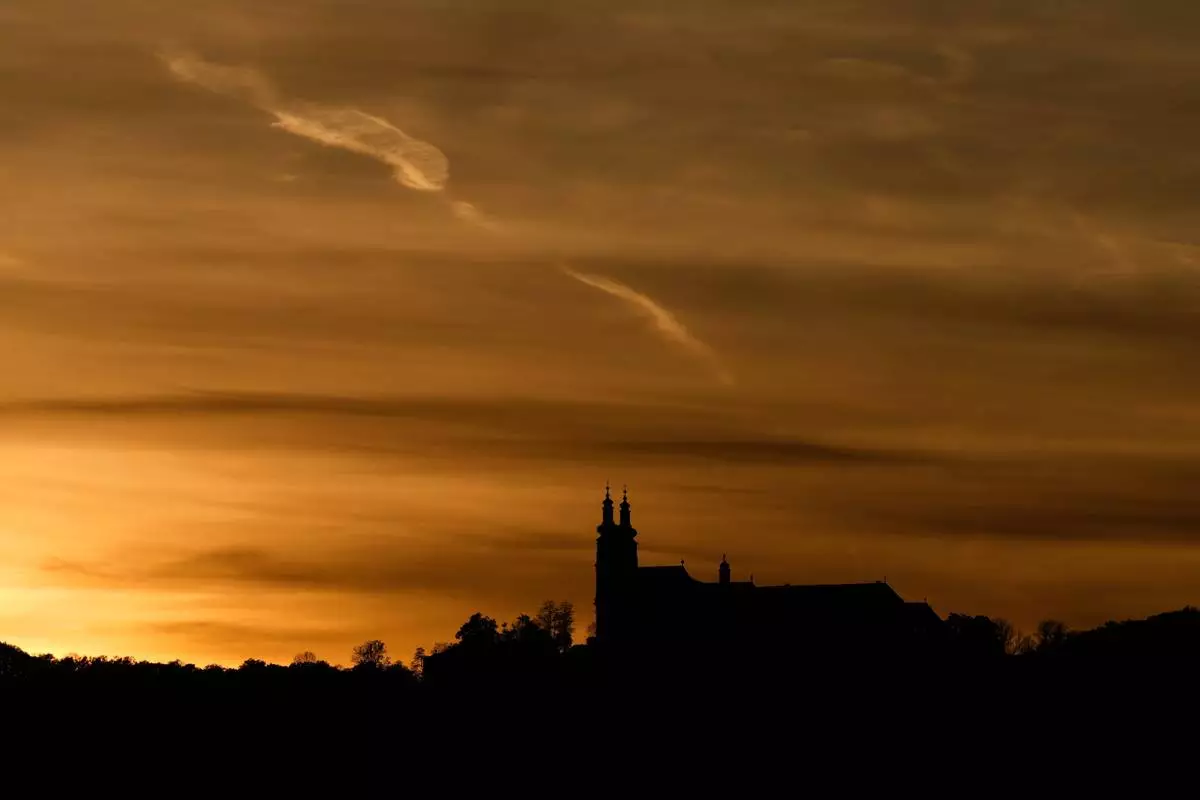
The suns sets behind the catholic monastery church of Banz in Bad Staffelstein, Germany, Saturday, May 2, 2026. (AP Photo/Matthias Schrader)

The suns sets behind the catholic monastery church of Banz in Bad Staffelstein, Germany, Saturday, May 2, 2026. (AP Photo/Matthias Schrader)

An elaborately decorated skeleton stands in the catholic monastery church of Banz in Bad Staffelstein, Germany, Saturday, May 2, 2026. (AP Photo/Matthias Schrader)

An elaborately decorated skeleton stands in the catholic monastery church of Banz in Bad Staffelstein, Germany, Saturday, May 2, 2026. (AP Photo/Matthias Schrader)

BUDAPEST, Hungary (AP) — As incoming prime minister Péter Magyar takes his oath of office within the halls of Hungary's sprawling neo-Gothic parliament on Saturday, thousands are expected to gather on a square just outside to celebrate the final moments of Viktor Orbán 's 16-year rule.

Magyar's center-right Tisza party defeated Orbán's nationalist-populist Fidesz in a landslide victory last month, gaining more votes and seats in parliament than any other party in Hungary's post-Communist history.

It was an earthquake mandate that will allow Tisza to roll back many of the policies that gave Orbán a reputation among many of his critics as a far-right authoritarian, and to dig into the economic system which led to the spectacular enrichment of many his allies and family members.

But before his work of governing begins, Magyar has called on Hungarians to an all-day “regime-change” celebration on Saturday to mark his inauguration — and the end of the Orbán era.

“We will step through the gateway of regime change with a huge party. Come along, and invite your family and friends!” Magyar wrote in a social media post Sunday.

Magyar, a 45-year-old lawyer who formed Tisza in 2024 after spending years as an insider within Orbán's party, has vowed to do away with official corruption which he argues has robbed Hungarians of economic opportunity.

One of his top priorities is unlocking about 17 billion euros ($20 billion) of European Union funds for Hungary that were frozen during Orbán's time in office over rule-of-law and corruption concerns. That money is sorely needed to help jump-start Hungary's struggling economy, which has stagnated for the last four years.

Magyar has also promised to repair his country's ties with its EU partners that Orbán had pushed to the breaking point, and to restore Hungary's place among Western democracies that had come under question as Orbán drifted ever closer to Russia.

In a sign of that commitment, Tisza officials say they will once again fly the EU flag on the parliament building's facade, beginning on Saturday, after Orbán's government removed it in 2014.

Despite wide jubilation over the end of Orbán's reign, many of the nearly 3.4 million Hungarians that voted for Tisza expect Magyar to hold Fidesz officials and their business allies accountable for the perceived misconduct of the outgoing administration.

Magyar plans to form the National Asset Recovery and Protection Office, an authority tasked with investigating and seeking to recover public funds misused during Orbán’s tenure. He's also vowed to suspend the news services of Hungary's public broadcaster — widely seen as a mouthpiece of Orbán's party — until objectivity can be restored.

Tisza is also expected to conduct a major overhaul of much of Hungary’s governmental structure, and to create separate ministries for health, environmental protection and education that did not exist under Orbán.

Magyar has said he will restore competence to Hungary's government, and has nominated numerous officials to cabinet positions who are internationally recognized in their fields.

The incoming leader has tipped diplomat and foreign policy expert Anita Orbán, who is not related to the outgoing prime minister, for minister of foreign affairs, former Shell executive István Kapitány for minister of economy and energy, and economist András Kármán for minister of finance.

Magyar is set to take his oath of office around 3 p.m. local time on Saturday, after which he will address the crowd outside. In an invitation to the event, he promised artistic performances and surprise guests.

The liberal mayor of Hungary's capital Budapest, Gergely Karácsony, has also announced a “system-closing” party along the Danube River, an event he said is meant to show gratitude to Hungarians who have spent years speaking out against Orbán's system.

“Teachers fired, civilians and journalists humiliated, small churches torn apart,” Karácsony wrote in a social media post. “We can finally leave this era behind us — but first, let us remember the everyday heroes and express our gratitude with a farewell to the system.”

European Commission President Ursula von der Leyen, right, walks with Hungary's incoming Prime Minister Peter Magyar prior to a meeting at EU heaquarters in Brussels, Wednesday, April 29, 2026. (John Thys, Pool Photo via AP)

European Commission President Ursula von der Leyen, right, walks with Hungary's incoming Prime Minister Peter Magyar prior to a meeting at EU heaquarters in Brussels, Wednesday, April 29, 2026. (John Thys, Pool Photo via AP)

Recommended Articles