Seasonal models are predicting an El Nino climate pattern that could be the strongest on record, bringing with it more extreme weather.
“I think we’re going to see weather events that we’ve never seen in modern history before,” WFLA-TV Chief Meteorologist and Climate Specialist Jeff Berardelli, in Tampa, Florida, said Friday.
An El Nino event is expected to develop from the middle of this year, impacting global temperature and rainfall patterns, according to the World Meteorological Organization. While the models indicate that this may be a strong event, the WMO cautioned that the models also have a harder time making accurate forecasts in the spring.
El Nino is a cyclical and natural warming of patches of the equatorial Pacific that then alters the world’s weather patterns. Its counterpart, La Nina, is marked by waters that are cooler than average.
Berardelli said an El Nino event essentially redistributes heat on Earth. Currently, the subsurface heat in the Pacific is moving east across the ocean and ascending to the surface from the deep waters, the initial stages of El Nino.
The WMO's Global Seasonal Climate Update showed that sea-surface temperatures are rising rapidly. There is high confidence in the onset of El Nino, followed by further intensification in the months to follow, according to Wilfran Moufouma Okia, chief of climate prediction at WMO.
El Nino typically occurs every two to seven years and lasts around nine to 12 months, WMO said.
It looks like the predictive models are onto something, said California Institute for Water Resources climate scientist Daniel Swain. That is because the volume and the intensity of the subsurface warm water anomalies — or pulses of unusually warm water that are a key part of El Nino physics— are about as large as we’ve seen in the historical record, he added.
The very strongest events are called “super El Ninos.”
“One of the key building blocks to make it fully materialize is, in fact, occurring,” Swain said Friday. “We still don't know exactly what's going to happen. It's not guaranteed it'll be a super El Nino. But the potential is there for something genuinely remarkable.”
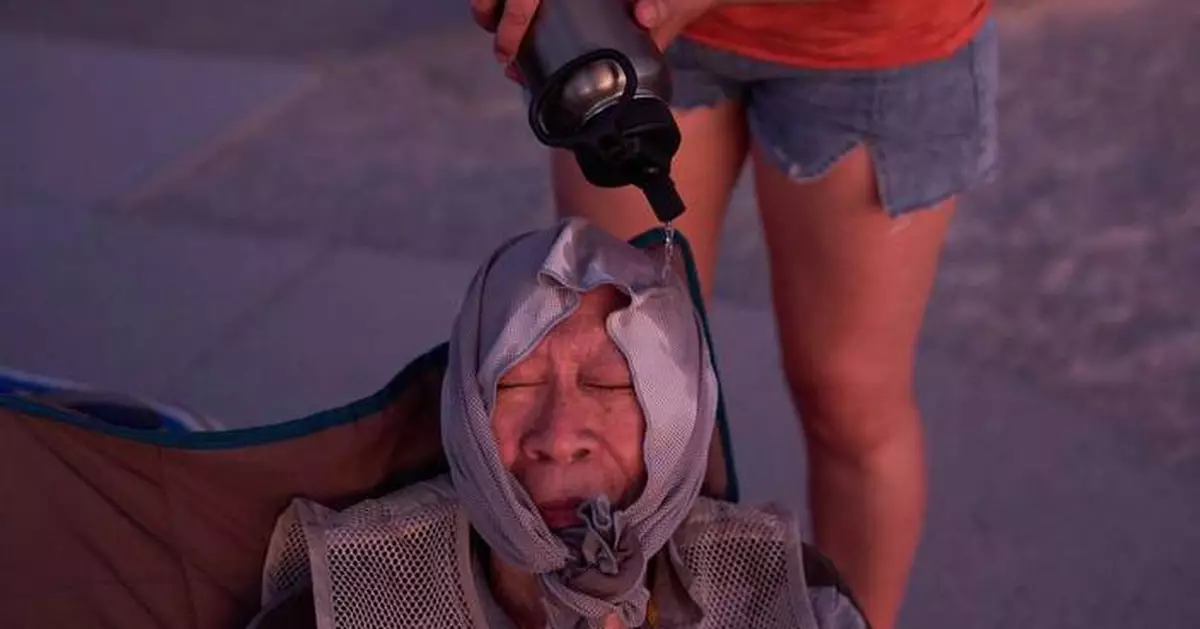
If the Pacific releases a lot of heat, it supercharges the climate system and wreaks havoc weather-wise, Berardelli said. With more heat, there will be stronger heat waves, worsening drought in some areas, but also more moisture in the air that leads to more intense floods, he said.
El Nino also subdues the hurricane season in the Atlantic because there is so much heat in the Pacific that outcompetes the Atlantic, Berardelli added. Places like the Caribbean will be extra dry this summer and likely have fewer tropical systems, he said.
El Nino has global impacts. Across the United States, it looks like this summer will be hotter than normal, with significant heat waves, Berardelli said. While the specifics are hard to pinpoint this far out, Berardelli is also expecting to see more frequent daily thunderstorms in the Southwest U.S.
Forest degradation, driven by wildfires, logging and drought, affects about 40% of the Amazon. This could be exacerbated in 2026 with a strong El Nino.
The excess heat brought to the surface by El Nino, combined with the planet's warming due to climate change, will lead to record-breaking global warmth, Swain said. He expects to see record global warm temperatures later this year, next year or both.
“All indicators are, at this point, that the next year is going to be a pretty wild year from a global climate perspective,” Swain said.
Michael Mann, a University of Pennsylvania climate scientist, said that while El Nino boosts global temperatures a bit for a year or two, it’s basically a “zero-sum game." It typically oscillates back toward La Nina, which in turn lowers global temperatures for a year or two, he added. The thing to worry about is the longer-term, steady warming trend that will continue as long as people continue to burn fossil fuels, Mann said Friday.
Associated Press News Director Peter Prengaman contributed to this report.
The Associated Press’ climate and environmental coverage receives financial support from multiple private foundations. AP is solely responsible for all content. Find AP’s standards for working with philanthropies, a list of supporters and funded coverage areas at AP.org.
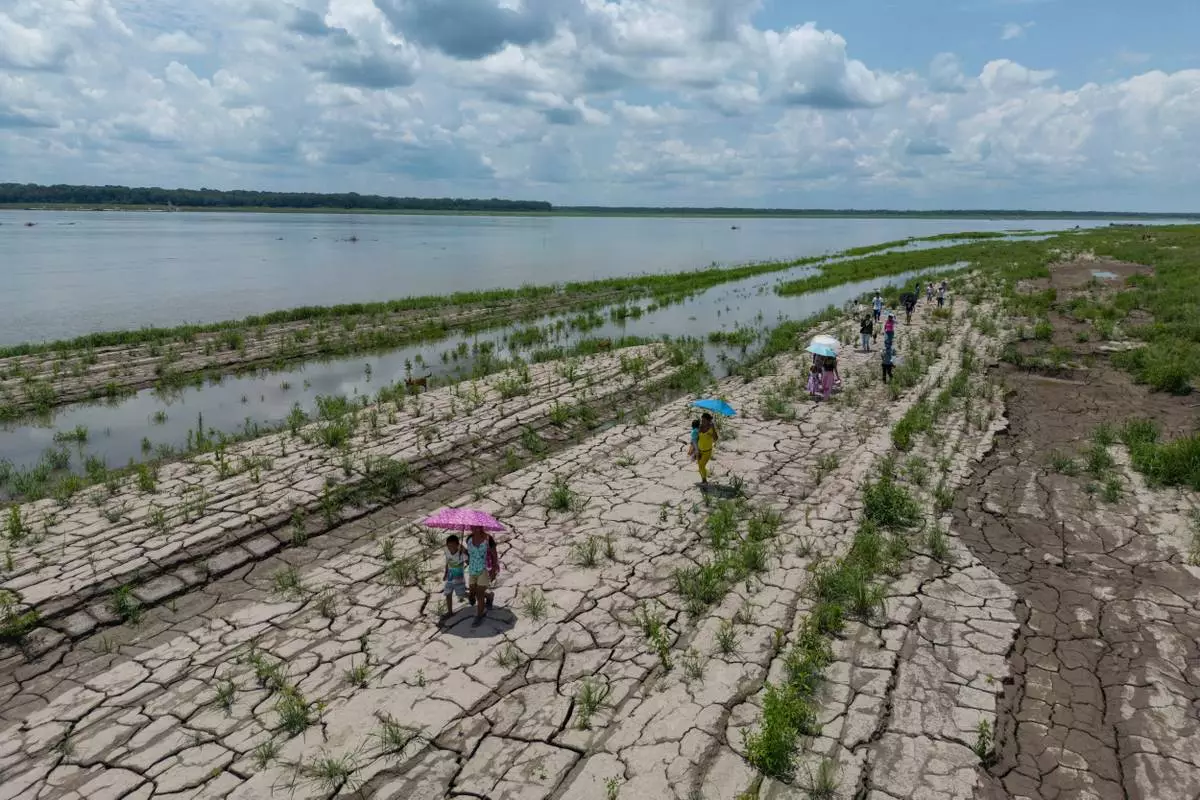
FILE - People walk through a part of the Amazon River that shows signs of drought in Santa Sofia, on the outskirts of Leticia, Colombia, Oct. 20, 2024. (AP Photo/Ivan Valencia, File)
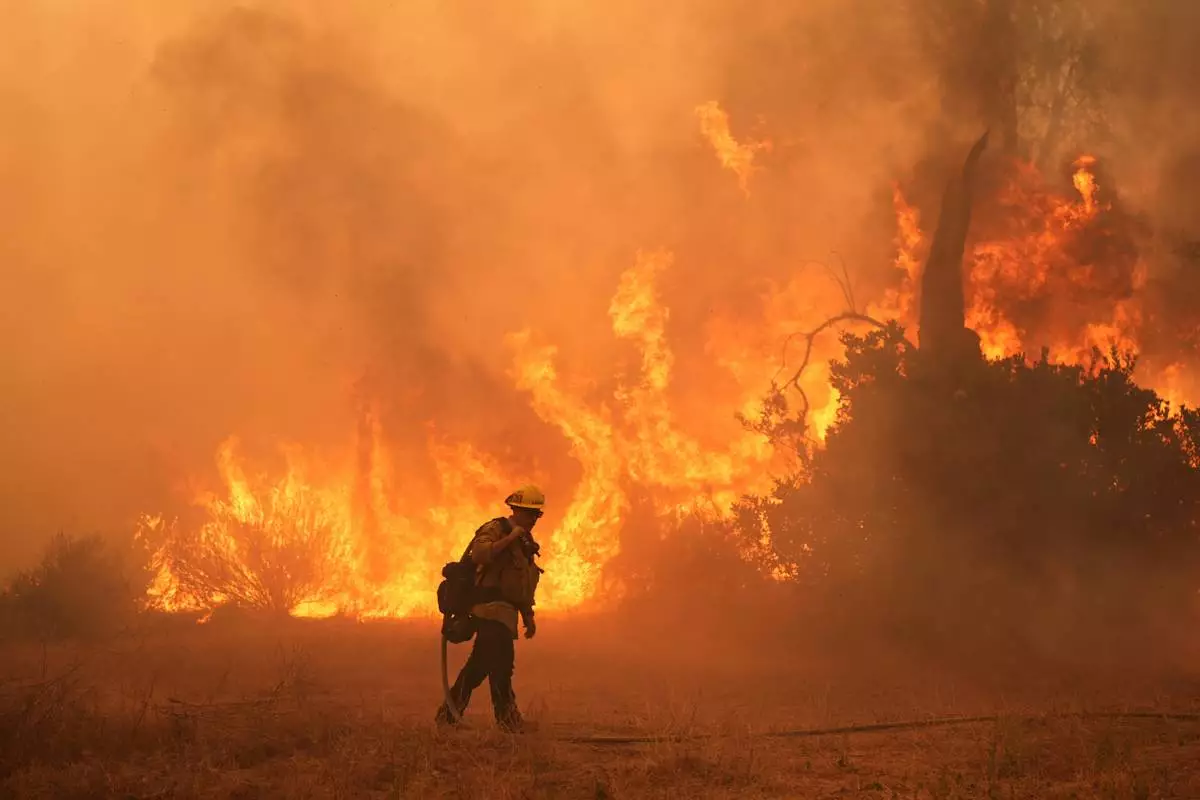
FILE - A firefighter battles the Canyon Fire on Aug. 7, 2025, in Hasley Canyon, Calif. (AP Photo/Marcio Jose Sanchez, File)
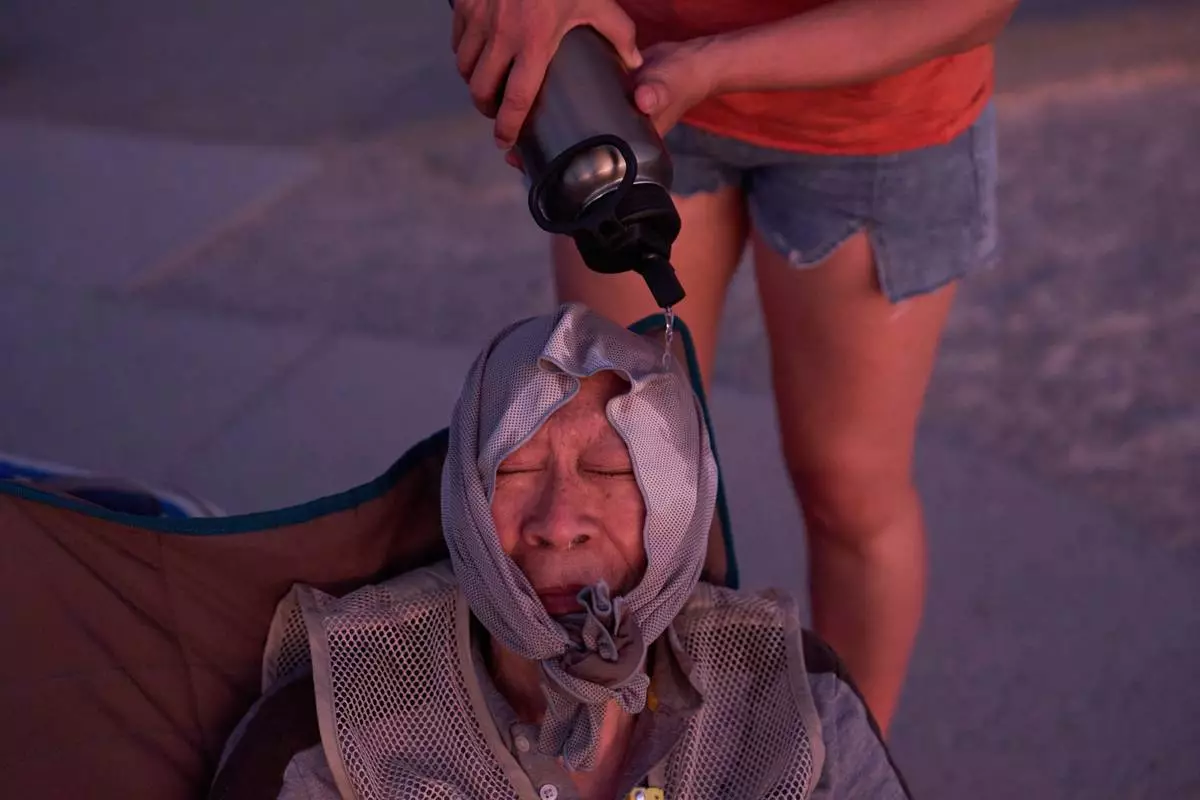
FILE - Grace Chyuwei pours water on Joe Chyuwei to help with the heat Aug. 3, 2025, in Death Valley National Park, Calif. (AP Photo/John Locher, File)
LONDON (AP) — Britain looks set to get a change of tone at the top, replacing stolid, unpopular Prime Minister Keir Starmer with popular, affable Andy Burnham.
But the charismatic Burnham may have difficulty — at least initially — distancing himself from policies set in motion by his predecessor.
Burnham, the former mayor of Greater Manchester who was sworn into Parliament hours after Starmer announced his resignation on Monday, will be constrained by the platform the center-left Labour Party was elected on that decisively ended 14 years of Conservative rule in 2024.
It's not entirely clear how he'll navigate those limits and bring his unique brand of politics to the revolving-door post that would make him the 7th prime minister in a decade. He’ll lay out his economic vision in a speech next week.
“At the moment, Andy Burnham is being almost hailed and held up as a folk hero that will save British politics,” said Matthew Flinders, politics professor at University of Sheffield. “The tide is changing and the big issue for Andy Burnham is that when the world suddenly moves against him and he becomes a folk devil, will he sustain the pressure?”
Burnham is currently the only contestant for the job of leading the Labour Party and the country, and will likely take over July 17 if no one else enters the race. His return to the House of Commons follows a decade leading the region around the U.K.’s third-largest city, birthplace of the Industrial Revolution, which has enjoyed an economic revival during his tenure.
His main challenge will be to overcome Starmer's inability to deliver promised economic growth, repair tattered public services and ease the cost of living.
Burnham highlighted those issues — along with housing and creating opportunities for young people — in a post on social media after Starmer said he was quitting.
“The country expects stability, seriousness and a continued focus on the issues that matter most and that is what it will get,” he said on X.
Burnham, who is widely regarded as sitting to the left of Starmer in the party, has said he'll revive a sluggish economy without going beyond the current government’s spending and borrowing plans. That pledge has helped reassure markets traumatized in 2022 after Prime Minister Liz Truss announced unfunded tax cuts and then withdrew them, leading to her 49-day record as Britain's shortest-serving leader.
“If you are a Labour prime minister from the soft left of the party, the markets don’t need that much invitation to panic,” said Mark Goodwin, a politics lecturer at Coventry University. “They will start from a position of skepticism. So he’d have to be very, very careful."
He said Burnham will face a challenge “to convince people that this is something different, without the markets reading that as ‘This is too different.’"
Burnham promotes what has been called “Manchesterism,” a business-friendly socialist approach that involves harnessing private investment for major projects and decentralizing government to give communities more control of housing, utilities, transportation and education.
In a possible preview of how he would move power from the capital, he is reportedly planning to move some of the prime minister’s operation closer to home, about 200 miles north of 10 Downing St., the London office and home of the U.K.’s leader.
He has said he would not raise taxes on workers — sticking to a Starmer pledge — and suggested policies that include easing the tax burden on businesses, and possibly reversing an increase in a tax employers pay to fund pensions, public health care and welfare.
The big question is how he will fund programs, if he'll scrap existing priorities, and how he'll meet demands for higher defense spending, said Jill Rutter, senior fellow at the Institute for Government think tank.
Starmer's government pledged to meet a NATO target of spending 3.5% of GDP on the military by 2035. But John Healey stepped down as defense secretary this month after complaining that Starmer was not moving fast enough to meet the target.
Burnham's lack of experience on the world stage could present a challenge improving the so-called special relationship with the U.S. after President Donald Trump turned on Starmer.
Trump described Burnham this week as a “town” mayor and said he heard he was “extremely liberal” and probably wouldn't expand North Sea oil drilling — one of his frequent gripes about Starmer.
Starmer made a priority of forging cordial ties with Trump despite their political differences, and was rewarded with a U.S.-U.K. trade deal. But it came at the cost of angering some in Labour's liberal voter base, and the president soured on Starmer after the British leader criticized his designs on Greenland and declined to enter the Iran war.
Burnham has not always said nice things about Trump. After Trump's followers stormed the U.S. Capitol on Jan. 6, 2021, Burnham posted on X that "any politician who gave Trump the time of day should be ashamed right now.”
Starmer won praise from many for his international role, especially in bolstering European support for Ukraine. But he was criticized by some for being distracted by foreign affairs, Rutter said. She doesn't expect the same from Burnham and he could farm out some of those duties by choosing an experienced hand as foreign secretary, the U.K.'s top diplomat.
"I don’t think Andy Burnham will want to be ‘never-here Andy’ in succession to ‘never-here Keir,’” Rutter said in reference to Starmer's globetrotting moniker.
Foreign Secretary Yvette Cooper said on Wednesday that she spoke with Burnham about policy issues and said “he’s 100% behind our unwavering support for Ukraine” and ”is a fundamental believer in NATO and in our shared deterrence and in the multilateral partnerships that we have."
An early priority for Burnham will be something Starmer struggled with: crafting a clear and convincing narrative that people understand about the direction he wants to take the country, Flinders said.
That plays to Burnham's communications skills and the popularity he has achieved by presenting himself as an amiable northern everyman who favors T-shirts over suits and ties, plays soccer for kicks and is known for spinning 1990s tunes during DJ battles.
So far, he has played it safe and tried not to raise public expectations too high. But if he can prove himself to be a competent leader and win public support to survive the remaining three years before a general election must be held, he can lay out a bolder vision for another term in his own manifesto.
Burnham has spoken of reshaping the political system, such as replacing the House of Lords with an elected senate and introducing proportional representation in voting. He also said he'd like to see the U.K. rejoin the European Union in his lifetime, though he backed away from that during his campaign in a constituency that voted 2-to-1 in favor of Brexit.
“My sense is that he will take some time, sensibly, to build up his team, his narrative, his story and his connections in order to then try to secure a public mandate and the next general election to then approach the more radical phase that he wants to deliver, which is exactly what Margaret Thatcher did in the '80s,” Flinders said.
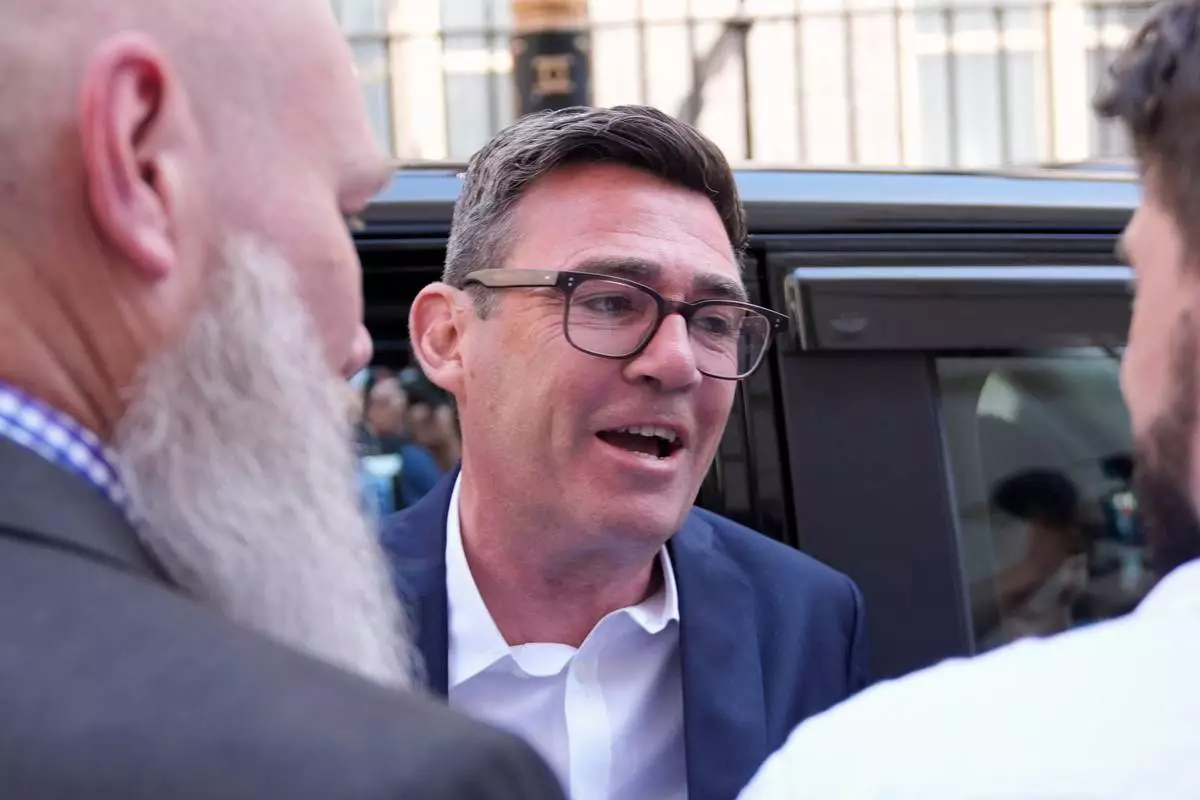
Andy Burnham arrives at Portcullis House in Westminster, central London, Monday June 22, 2026. (Andrew Matthews/PA via AP)
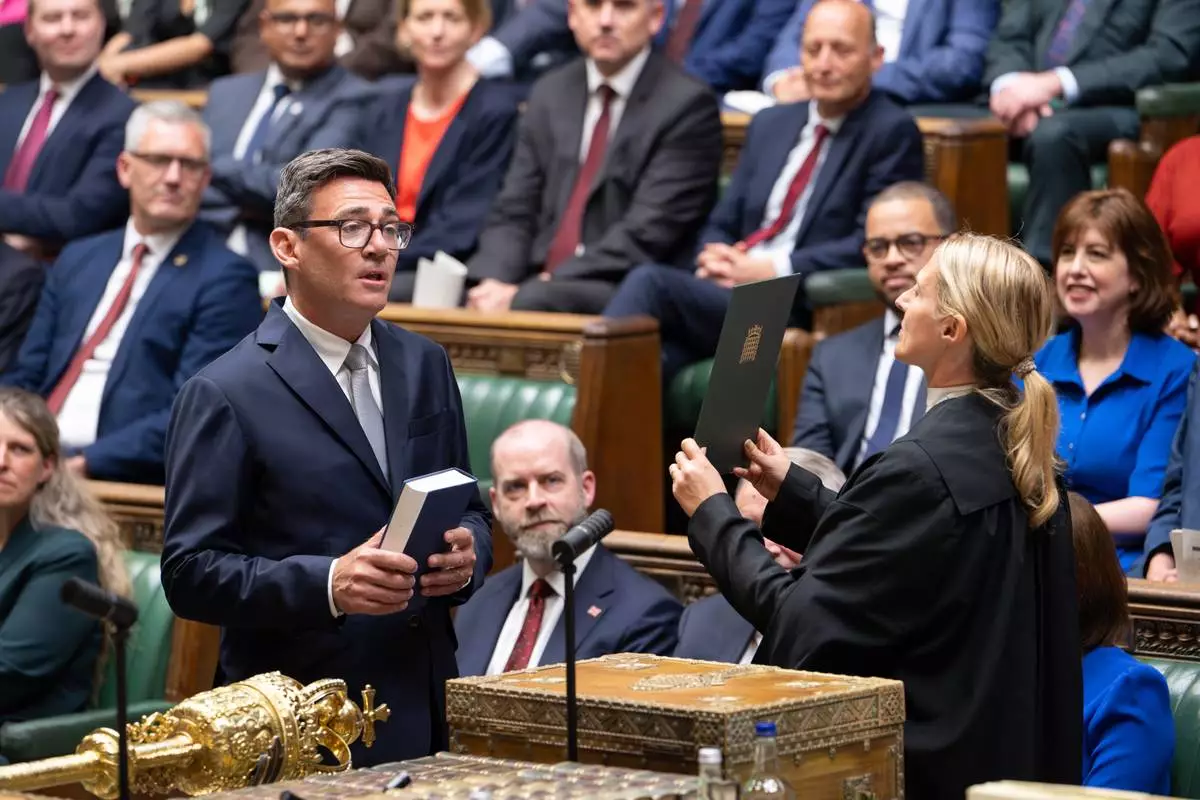
Andy Burnham, front left, is sworn-in as an MP in the House of Common in London, England, Monday, June 22, 2026. (House of Commons via AP)
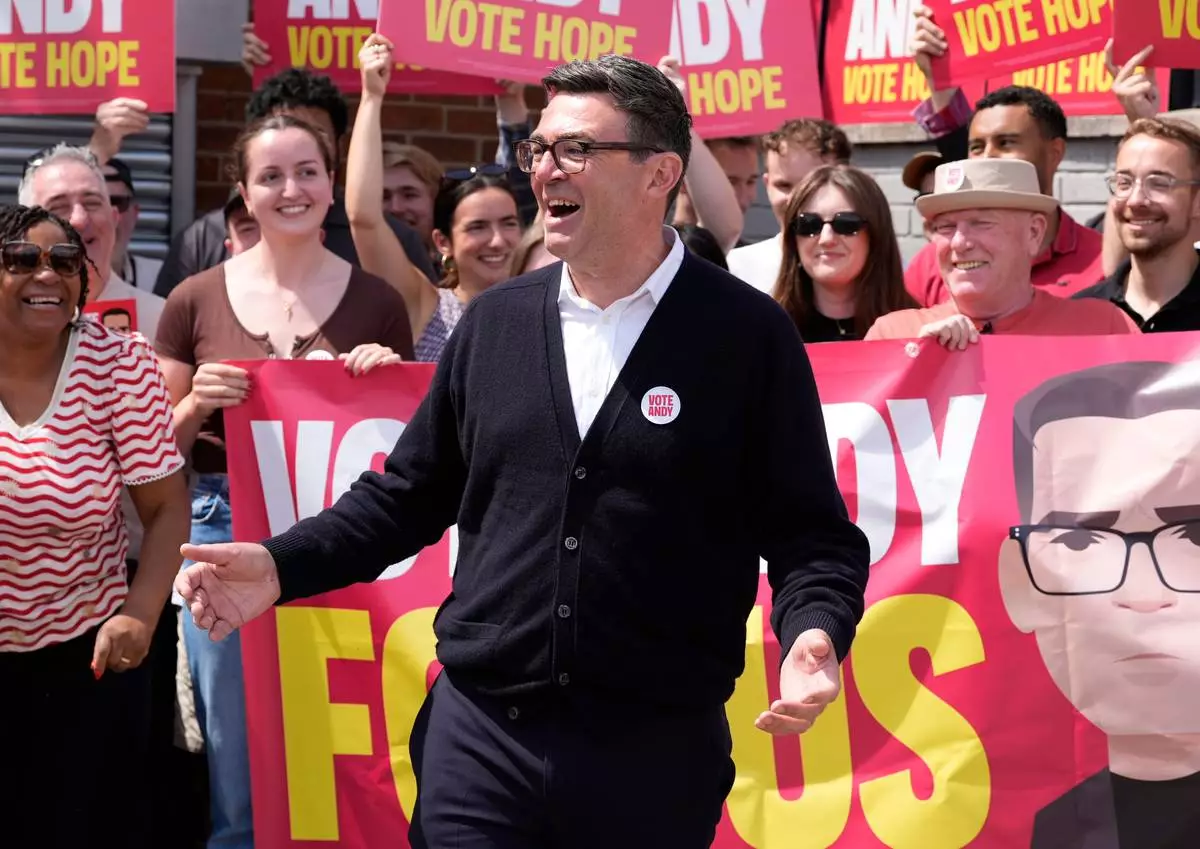
FILE - Labour candidate Andy Burnham gestures, surrounded by supporters at the Stubshaw Cross Community and Sports Club as voting is underway in the Makerfield by-election, in Ashton-in-Makerfield, England, Thursday, June 18, 2026. (Peter Byrne/PA via AP, file)
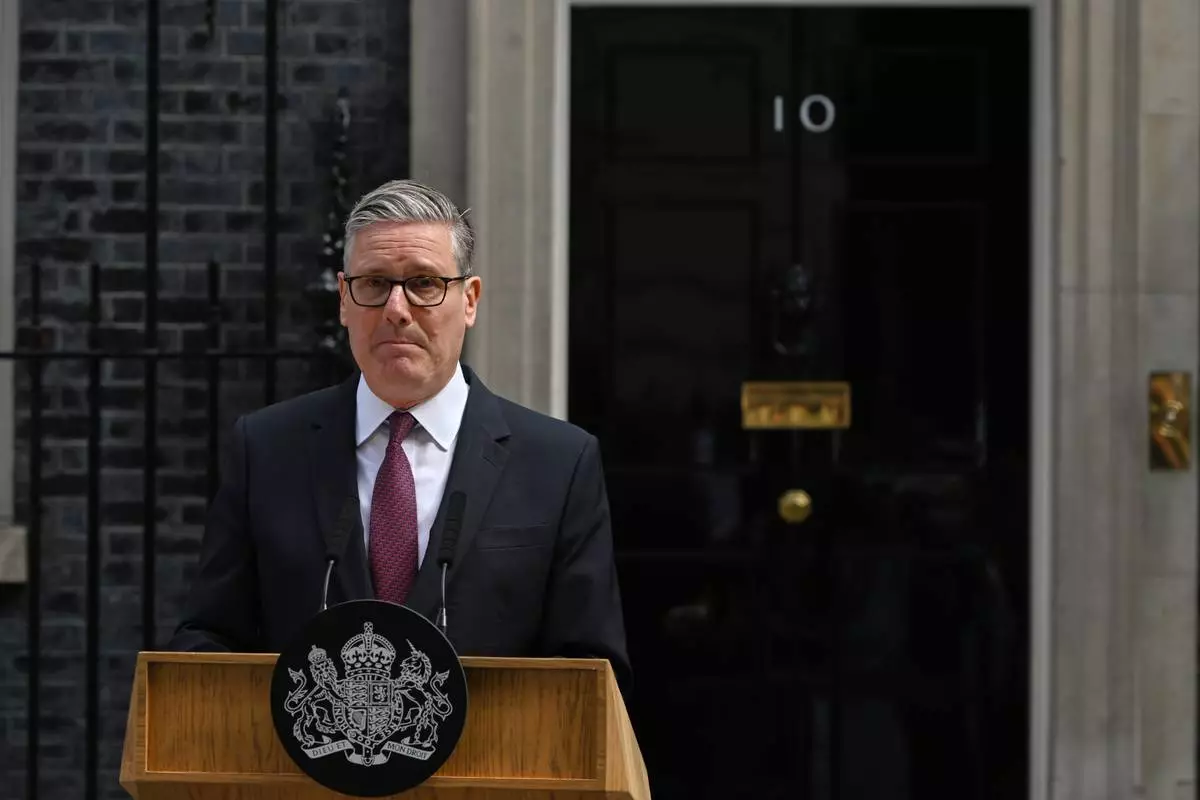
Britain's Prime Minister Keir Starmer speaks to the media outside 10 Downing Street to announce his resignation in London, Monday, June 22, 2026.(AP Photo/Thomas Krych)
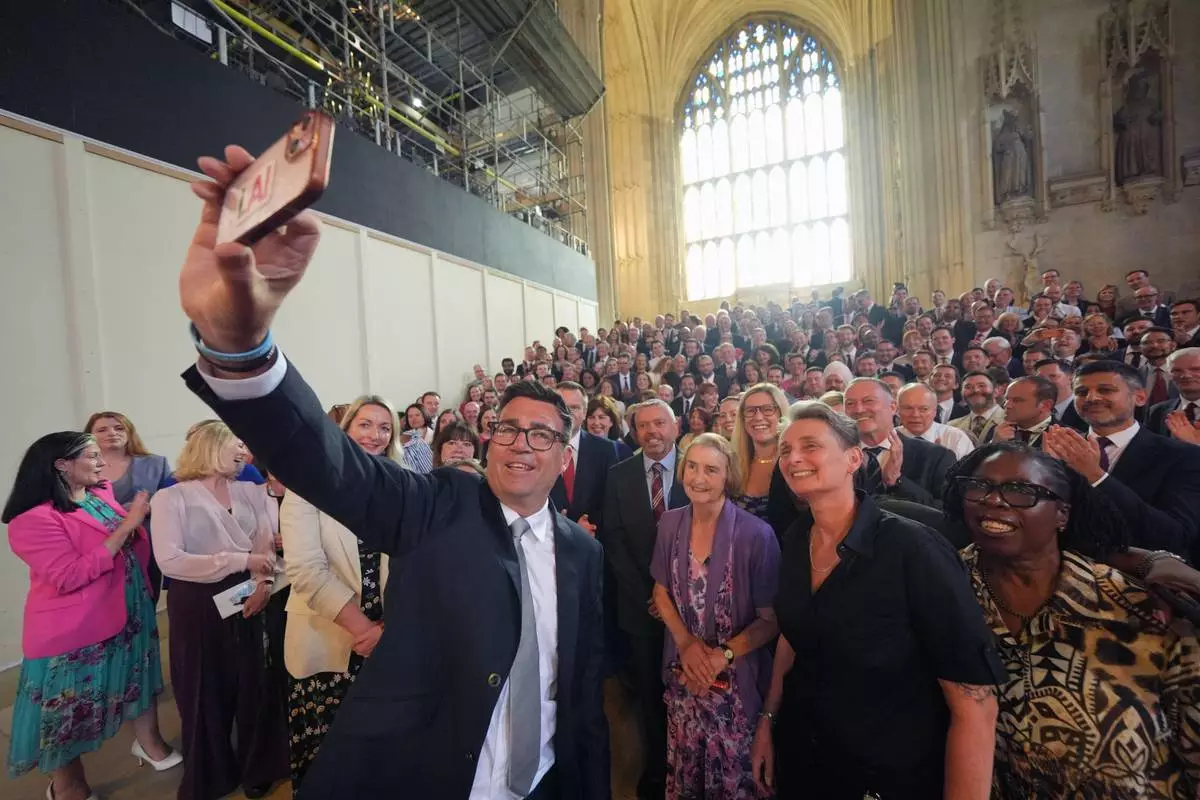
Andy Burnham with colleagues from the Parliamentary Labour Party in Westminster Hall at the Houses of Parliament in central London, as he returns to the House of Commons to take up his seat after winning the Makerfield by-election, Monday June 22, 2026. (Yui Mok/PA via AP)