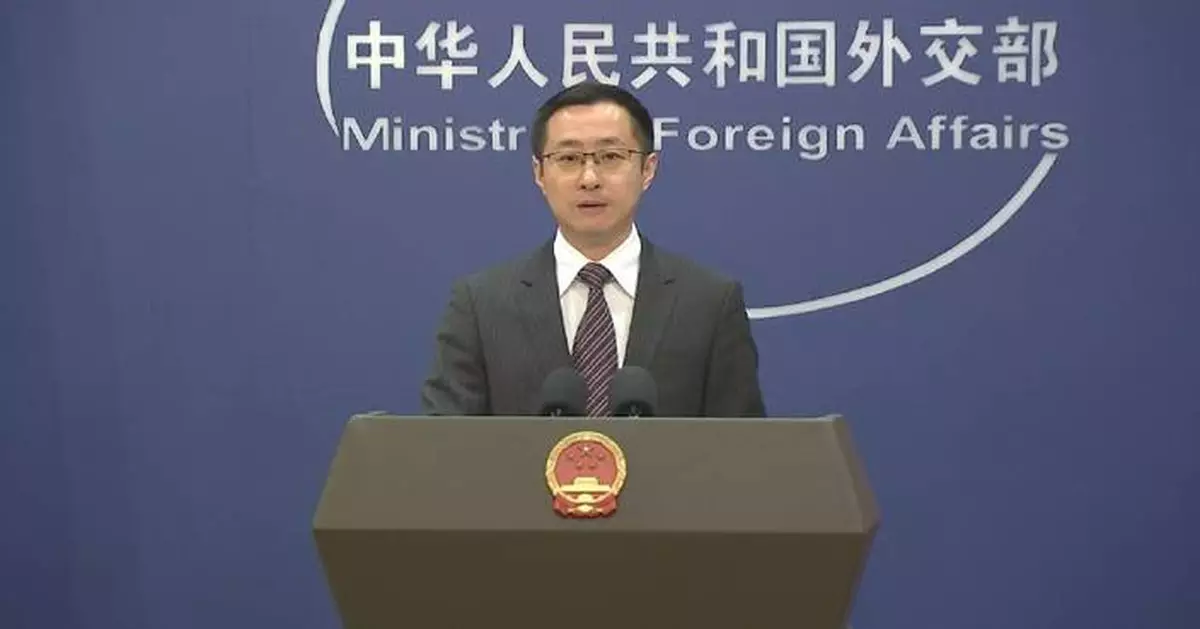
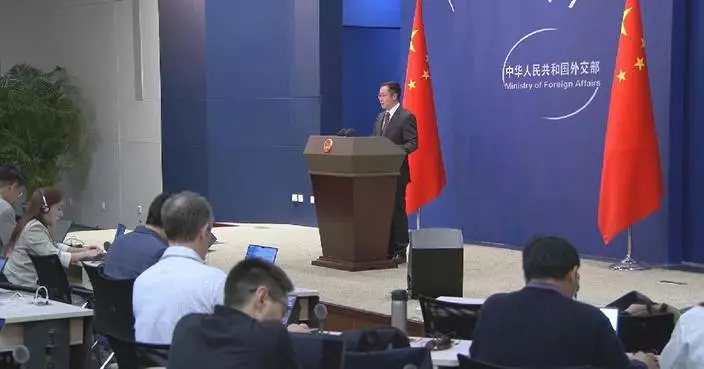
Cooperation between China and Honduras does not target any third party and should not be interfered with by any third party, Chinese Foreign Ministry spokesman Lin Jian said at a press conference in Beijing on Friday.
Lin rejected a media report on relations between China and Honduras, and stressed that the one-China principle is the political foundation and prerequisite for the development of China-Honduras ties and bilateral cooperation.
"The report puts headline-grabbing sensationalism before journalistic ethics of reporting the truth, taking things out of context, misrepresenting facts and sowing discord. Let me stress, there is but one China in the world. Taiwan is an inalienable part of China's territory. The Government of the People's Republic of China is the sole legal government representing the whole of China. The one-China principle is a prevailing international consensus and a basic norm governing international relations. It is the political foundation and prerequisite for the development of China-Honduras ties and bilateral cooperation," said Lin.
Then he emphasized that the cooperation between China and Honduras does not target a third party, nor should it be disturbed by any third party.
"Taiwan separatist forces' attempts to split the country find no support and are doomed to fail. China-Honduras cooperation does not target any third party and should be free from disruptions from any third party. The legitimate and lawful rights and interests of the Chinese side must be fully respected," Lin noted.
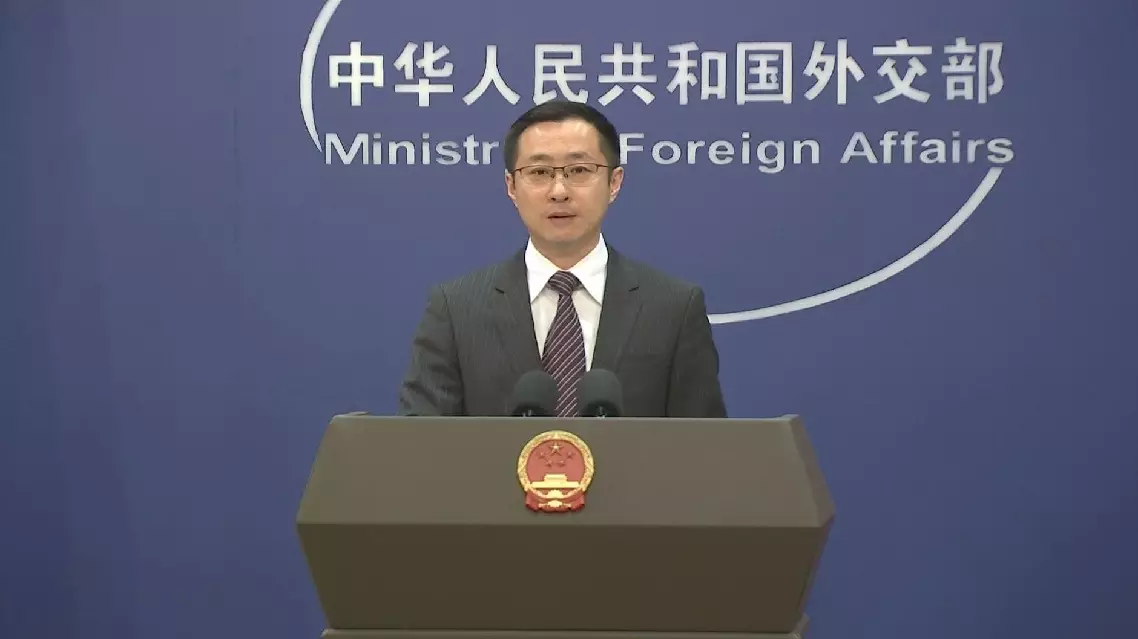
China-Honduras cooperation does not target any third party: spokesman
The Iranian Ministry of Foreign Affairs on Friday strongly condemned U.S. attacks on Iranian oil tankers and several locations along the coast of the Strait of Hormuz.
In a statement, the ministry emphasized that Iranian forces are determined to defend the country's territorial integrity, independence, and national sovereignty against any aggression.
It also said the ministry had called on the United Nations Security Council and the UN Secretary-General to uphold international peace and security in accordance with the UN Charter.
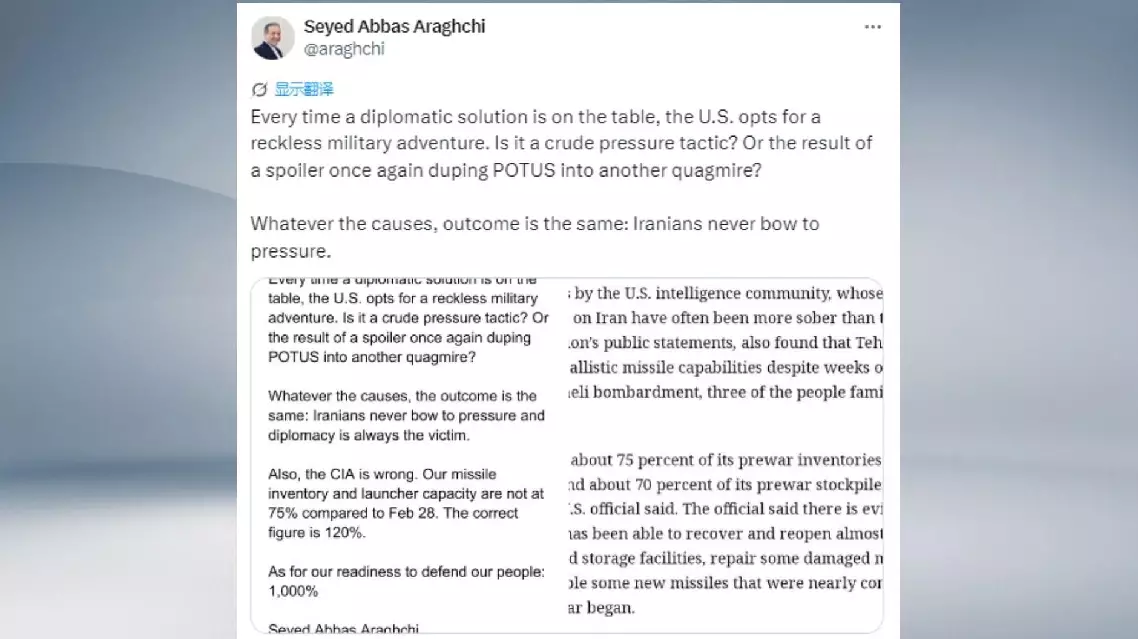
Meanwhile, Iranian Foreign Minister Seyed Abbas Araghchi on Friday slammed the U.S. for once again choosing what he called a "reckless military adventure" when "a diplomatic solution is on the table" again.
Writing on social media platform X, Araghchi said Iranians "never bow to pressure" and "diplomacy is always the victim."
He also dismissed the U.S. intelligence assessment, saying Iran's missile inventory and launch capacity were not at 75 percent of their February 28 levels, but had reached 120 percent. Iran's readiness to defend its people, he added, stood at "1,000 percent."
U.S. forces on Friday struck and disabled two more Iranian-flagged empty oil tankers before they entered an Iranian port on the Gulf of Oman amid rising tensions in the Strait of Hormuz, U.S. Central Command (CENTCOM) said.
In a post on X, CENTCOM said it had "enforced blockade measures against two Iranian-flagged empty oil tankers attempting to pull into an Iranian port on the Gulf of Oman."
A U.S. Navy F/A-18 Super Hornet from the USS George H.W. Bush disabled both tankers by firing precision munitions into their smokestacks, the command said.
On Wednesday, U.S. forces disabled another unladen Iranian-flagged oil tanker, the Hasna, as it attempted to sail to an Iranian port on the Gulf of Oman. An F/A-18 Super Hornet from the USS Abraham Lincoln fired several rounds from a 20mm cannon to disable the ship's rudder.
"All three vessels are no longer transiting to Iran," the command said.
CENTCOM commander Brad Cooper said U.S. forces would continue to fully enforce blockade measures against vessels entering and leaving Iran.
There are currently more than 70 oil tankers that U.S. forces are preventing from entering or leaving Iranian ports, CENTCOM said in another post, noting these commercial ships have the capacity to transport over 166 million barrels of Iranian oil worth an estimated 13 billion-plus U.S. dollars.
U.S. and Iranian forces traded fire on Thursday when three U.S. Navy destroyers were transiting out of the Strait of Hormuz.
CENTCOM said it was a "self-defense" action while Tehran accused Washington of violating a ceasefire which took effect on April 8.
Iran condemns U.S. attacks on tankers