Skip to Content Facebook Feature Image

10th China-Russia Expo to be held in Harbin from May 17-21: official

China

China

China

10th China-Russia Expo to be held in Harbin from May 17-21: official

2026-05-09 02:02 Last Updated At:06:17

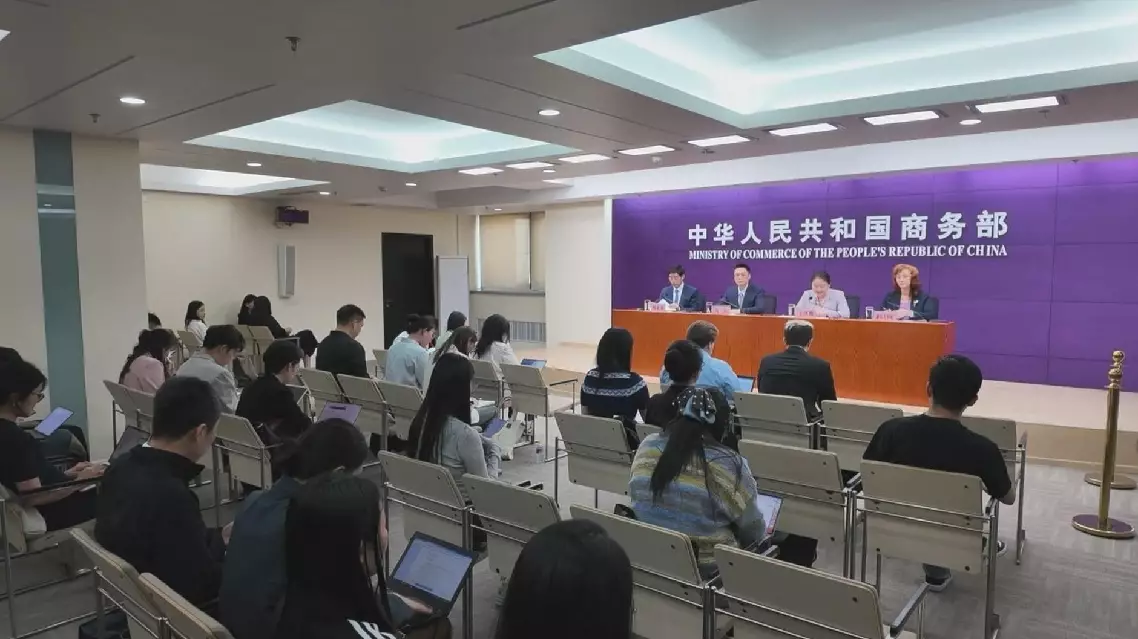
The 10th China-Russia Expo, a major platform to deepen economic, trade, and investment cooperation between the two nations, is scheduled to be held in Harbin, in northeast China's Heilongjiang Province, from May 17 to 21, China's Ministry of Commerce said on Friday.

At a press conference in Beijing, officials outlined the agenda for the upcoming expo and underscored the robust China-Russia trade relations.

"As an important institutional exchange platform for the economic, industrial, and business communities of both countries, the China-Russia Expo has, since its inception [in 2014], achieved a cumulative exhibition area of nearly 800,000 square meters, covering about 80 industrial sectors. To date, more than 7,200 enterprises from China and Russia have participated in the expo, with over 250,000 buyers and business delegates attending for procurement and business matchmaking purposes. The total transaction value generated through the expo has reached 300 billion yuan (about 44 billion U.S. dollars)," said Wang Xinmei, vice president of the Heilongjiang Provincial Council for the Promotion of International Trade.

From its initial focus on traditional sectors such as energy, minerals, and mechanical equipment, the expo has progressively expanded into emerging fields, including the digital economy, green and low-carbon technologies, cross-border e-commerce, and biomedicine, Wang noted.

She highlighted that the expo has become a primary platform for business matchmaking, an important window for subnational-level exchange, and a flagship brand of China-Russia economic and trade cooperation.

Officials also stressed that the two countries have seen a solid and stable trade relationship in recent years. In 2025, China-Russia trade volume reached 227.9 billion U.S. dollars, surpassing the 200-billion-dollar threshold for the third consecutive year. China has maintained its position as Russia's largest trading partner for 16 straight years.

Looking ahead, Ma Chi, director of the Ministry of Commerce's Eurasia Department, outlined the following priority areas for future cooperation.

"First, we will continue to consolidate and expand the scale of bilateral trade. We will maintain stable trade in bulk commodities such as energy, minerals, and grain, thereby safeguarding the security and stability of both countries' industrial and supply chains while injecting stability and new momentum into the global economy. Second, we will continue to deepen investment cooperation in key areas. We will fully implement the China-Russia bilateral investment agreement, focusing on infrastructure, green and low-carbon technologies, biomedicine, and other sectors, to expand the space for two-way investment cooperation," said Ma.

"Third, we will continue to enhance the facilitation of trade and investment. We will strengthen cooperation with Russia in areas such as customs clearance, inspection and quarantine, standards certification, and intellectual property protection, ensuring the unimpeded flow of cross-border logistics," he said.
10th China-Russia Expo to be held in Harbin from May 17-21: official
10th China-Russia Expo to be held in Harbin from May 17-21: official
The prolonged power outages in northern Cameroon have triggered an economic and social crisis, where halted commercial activity and soaring household expenses are compounding daily losses for both residents and businesses.

For Sabo Sani, a tailor and garment maker at the Yelwa market in Garoua, life has changed dramatically over the past few months. Due to recurring power cuts, he can no longer work properly, and customer orders have gone undelivered.

"I have a tailor workshop, but it's not up and running at the moment. Why isn't it working? Because we need electricity, but we don't have any. We only get electricity for maybe three or four hours a day," he said.

It is a harsh reality shared by all traders in this market and the surrounding areas.

"What the customer needs is very difficult, very difficult -- because you cannot do everything. You cannot wash the head, you cannot use the hair dryer, because there's no light. And we don't know how to do again, because this situation has been going on now around three months. With what is going on now, I cannot even work again. My business is stopped, and I have to check and look for another way to try to satisfy my customers," said Tatania Zouatom, a hairdresser.

"All our products are damaged. Just look at the state of the fish -- they're no longer presentable. Under these circumstances, we're losing a great deal. Some products simply become unsellable. There are goods that we're forced to set aside, a situation that has been going on for nearly three months. We're really disappo," said July Nzatssa, a local fishmonger.

Despite the presence of the Lagdo Dam -- a key power generation facility in the region -- the situation has failed to improve.

Standing 40 meters tall and 297 meters long, the dam was built between 1978 and 1984 with an installed capacity of 82 megawatts. It has long supplied electricity to three regions in northern Cameroon, while also providing flood control and irrigation.

But in recent years, it has fallen short of 80 percent of its targets. According to ENEO Cameroon, a state-owned power company in Cameroon, which has cited the issue for years, the problem lies in low water levels.

"During 2021 and 2022, we first experienced the most critical deficit from this site. So actually, what we are facing is load shedding -- it is just because the Lagdo, due to water, cannot generate power at a high level. The level of water is too low, and we are managing to avoid a crack within this month of May," said Ahmadou Bivoung, a power station director at the company.

Experts said the dam can no longer maintain normal water levels, and that is affecting power generation.

"Admittedly, the power station is over 40 years old, but I would like to reassure you that all four turbines are operational and capable of generating power at their rated capacity. Maintenance work is carried out on a regular basis. However, what is currently limiting production is the low water level," said Steve Ndanga, an official of the Lagdo Dam.

As a stopgap measure, ENEO Cameroon has built a diesel-powered plant in Garoua, with plans to supply electricity to the three northern regions for a few months. Unfortunately, those plans remain far from sufficient. Industry experts are now recommending solar power -- an energy source that Garoua enjoys for nine months of the year.

For now, Cameroonian authorities have moved to fully take over the major power provider, while communities continue to call for diversification of the electricity supply to end chronic blackouts.

Frequent blackouts in northern Cameroon plunge local communities, businesses into crisis

Frequent blackouts in northern Cameroon plunge local communities, businesses into crisis

Recommended Articles