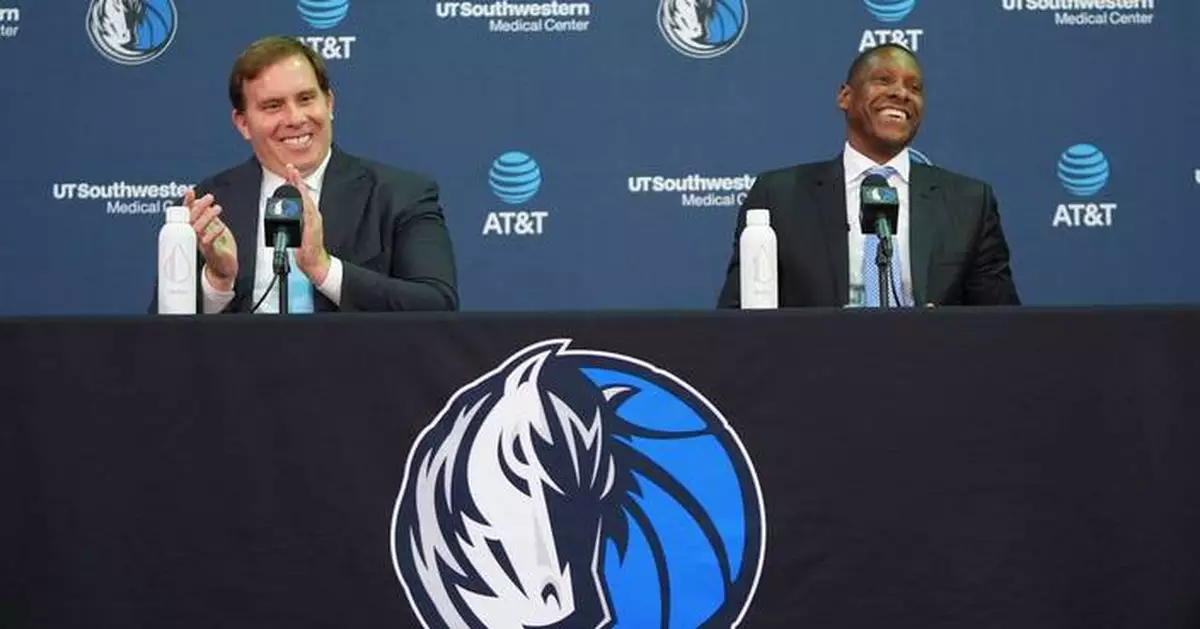
DALLAS (AP) — The Dallas Mavericks hired Mike Schmitz as general manager on Friday, naming the Portland Trail Blazers' assistant GM to his new role three days after introducing Masai Ujiri as team president and alternate governor.
The announcement gives Schmitz the title Nico Harrison held until he was fired in November, nine months after trading Luka Doncic to the Los Angeles Lakers in a move that backfired badly on the franchise.
The Mavericks said Schmitz would oversee day-to-day management and strategic alignment in the club's basketball operations department.
The move comes with Dallas still not having provided any clarity on the future roles of Michael Finley and Matt Riccardi. They were named co-interim GMs when Harrison was fired and engineered the trade of Anthony Davis, the centerpiece acquired by Dallas in the Doncic deal, to Washington.
Schmitz and the Nigerian-raised Ujiri have strong ties to Africa. Schmitz has spent time working on youth basketball development in Ujiri's homeland and has served as an assistant coach with the Ugandan national team.
Schmitz joined the Trail Blazers in 2022 after spending five years as a draft analyst at ESPN.
“I have tremendous respect for Masai, this ownership group and the vision they have for the future of the franchise,” Schmitz said. “I'm excited to get to work alongside the talented people already in place and help build a championship-caliber organization.”
AP NBA: https://apnews.com/nba

Dallas Mavericks' new team president Masai Ujiri, right, laughs as team governor Patrick Dumont claps during an introductory NBA basketball news conference in Dallas, Tuesday, May 5, 2026. (AP Photo/LM Otero)
NEW YORK (AP) — The U.S. stock market rose to records Friday following the latest sign that the nation’s job market is doing better than economists expected.
The S&P 500 climbed 0.8% to an all-time high after a report said U.S. employers added 115,000 more jobs than they cut last month, even though the war with Iran is raising fuel costs and uncertainty for everyone. The Dow Jones Industrial Average edged up by 12 points, or less than 0.1%, and the Nasdaq composite rallied 1.7% to its own record.
While hiring slowed from March’s level, it was still nearly double what economists expected. And it helped the S&P 500 close out a sixth straight winning week, its longest such streak since 2024. The U.S. stock market has been blasting higher since late March, in part on hopes that the war will not mean a worst-case scenario for the global economy and that the Strait of Hormuz will reopen to allow oil tankers to deliver crude from the Persian Gulf again.
It’s still to be determined if those hopes are warranted or just wishful. U.S. forces fired on and disabled two Iranian oil tankers on Friday after exchanging fire with Iranian forces in the Strait of Hormuz overnight. It’s the latest flare-up in fighting to raise doubts about the tenuous month-old ceasefire that the United States has insisted is still in effect.
The price for a barrel of Brent crude oil rose 1.2% to settle at $101.29 following the latest volleys of fire. That’s below its heights above $119 during the war, but it’s still much more expensive than its roughly $70 level from late February before the fighting began.
One big factor helping to support the U.S. stock market despite the war’s uncertainties is the strong profits that companies have been reporting for the start of 2026.
Monster Beverage jumped 13.6% after the energy drink maker joined the parade of companies topping analysts’ expectations for profit and revenue for the latest quarter. It benefited from strong growth outside the United States, and total net sales from there made up about 45% of its total, the highest percentage ever for the company.
Akamai Technologies leaped even more, 26.6%, after its results squeaked past expectations. It announced a $1.8 billion deal to provide cloud infrastructure services to an unnamed client over seven years. The cybersecurity and cloud computing company is benefiting from the surge in investment in artificial-intelligence technology.
Voracious demand for AI helped CoreWeave report revenue for the latest quarter that was more than double what it was a year earlier, but its net loss was worse than analysts expected. It also gave a forecasted range for revenue in the current quarter whose midpoint fell below analysts’ expectations. The stock of the company, which offers AI computing power to customers over the cloud, fell 11.4%.
All told, the S&P 500 rose 61.82 points to 7,398.93. The Dow Jones Industrial Average added 12.19 to 49,609.16, and the Nasdaq composite climbed 440.88 to 26,247.08.
In stock markets abroad, indexes fell across much of Europe and Asia. Germany’s DAX lost 1.3%, and Hong Kong’s Hang Seng dropped 0.9% for two of the bigger losses.
South Korea’s Kospi was an exception, and it inched up 0.1% to another all-time high.
In the bond market, Treasury yields eased and remained lower after a preliminary report suggested sentiment among U.S. consumers is stuck near its lowest level since 2022. Consumers told the survey from the University of Michigan they’re concerned about both high gasoline prices and tariffs, though their expectations for inflation in the coming year softened by a bit.
The yield on the 10-year Treasury fell to 4.36% from 4.41% late Thursday and from 4.45% early this week.
Lower yields can bring down rates for mortgages and other kinds of loans going to U.S. households and businesses, which in turn can give the economy a boost. Lower yields also tend to push upward on prices for stocks and other kinds of investments.
The 10-year Treasury yield, though, remains well above its 3.97% level from just before the war.
AP Business Writers Chan Ho-him and Matt Ott contributed to this report.
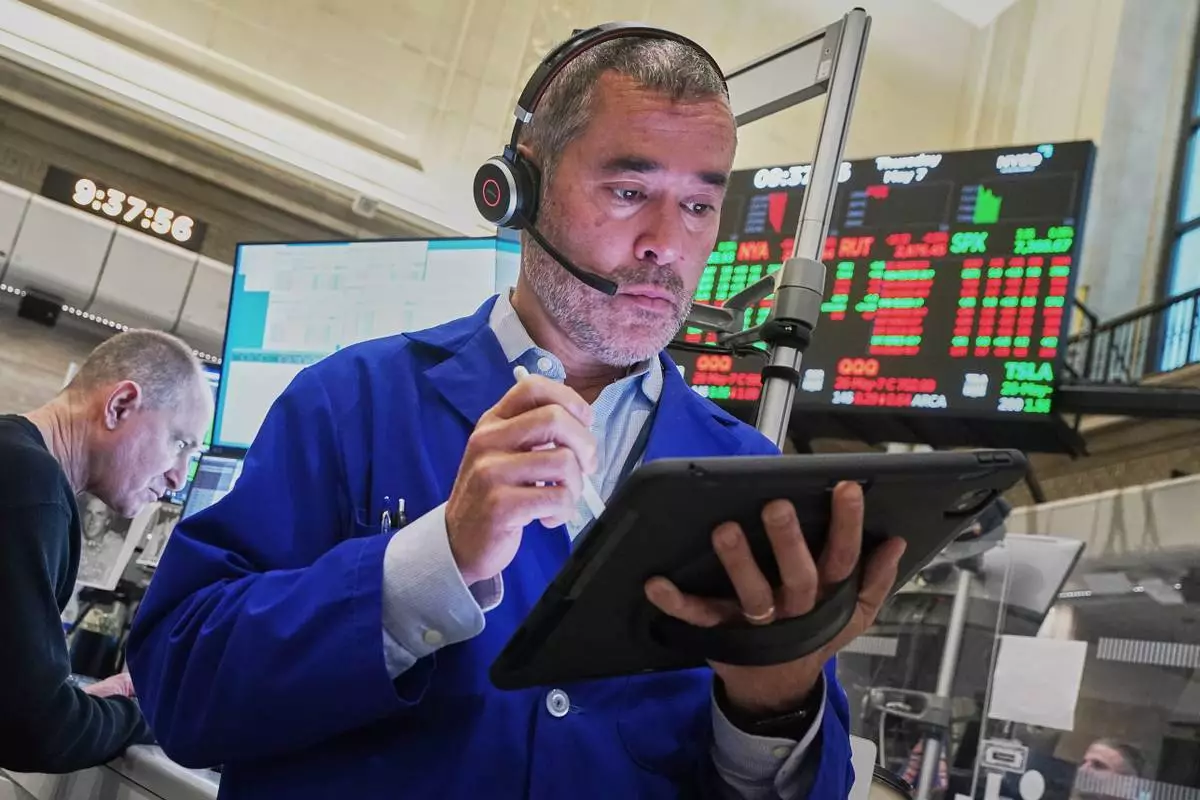
Options trader Justin Kanda works on the floor of the New York Stock Exchange, Thursday, May 7, 2026. (AP Photo/Richard Drew)
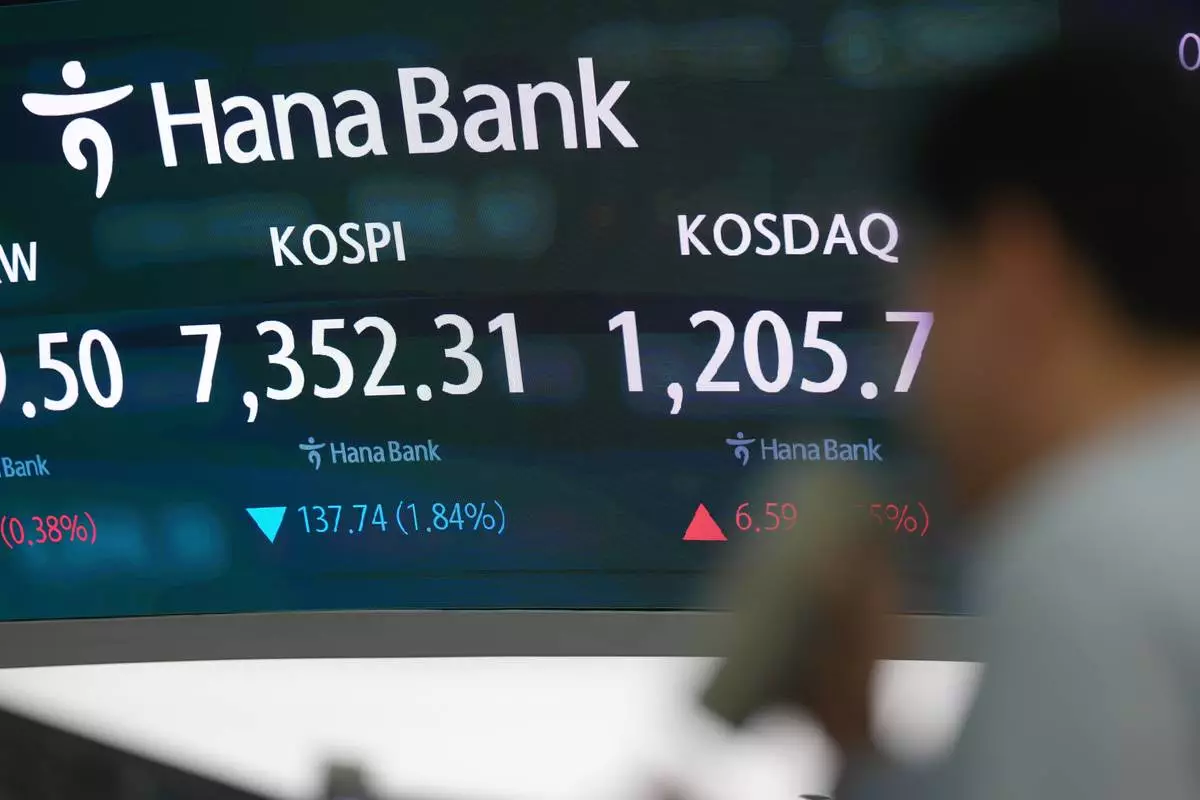
A dealer walks past near the screen showing the Korea Composite Stock Price Index (KOSPI) and the Korean Securities Dealers Automated Quotations (KOSDAQ) at a dealing room of Hana Bank in Seoul, South Korea, Friday, May 8, 2026. (AP Photo/Lee Jin-man)
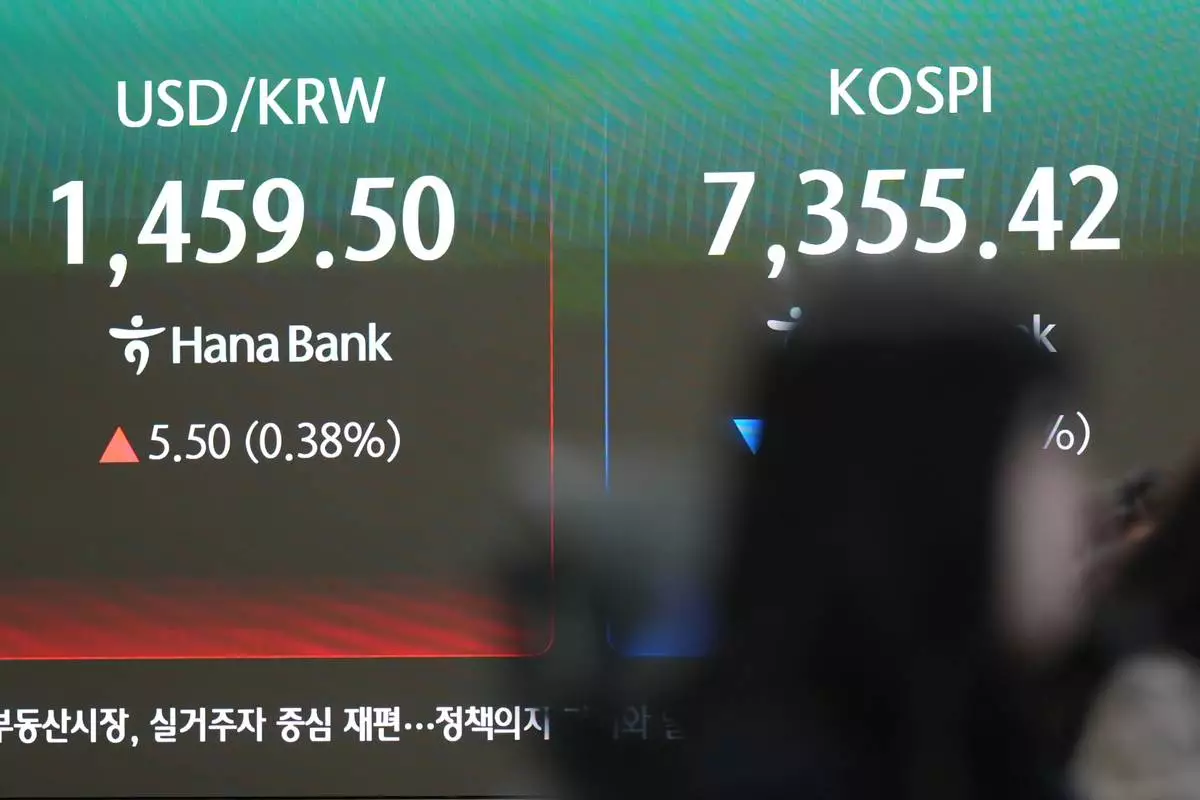
The screens showing the Korea Composite Stock Price Index (KOSPI) and the foreign exchange rate between U.S. dollar and South Korean won are displayed at a dealing room of Hana Bank in Seoul, South Korea, Friday, May 8, 2026. (AP Photo/Lee Jin-man)
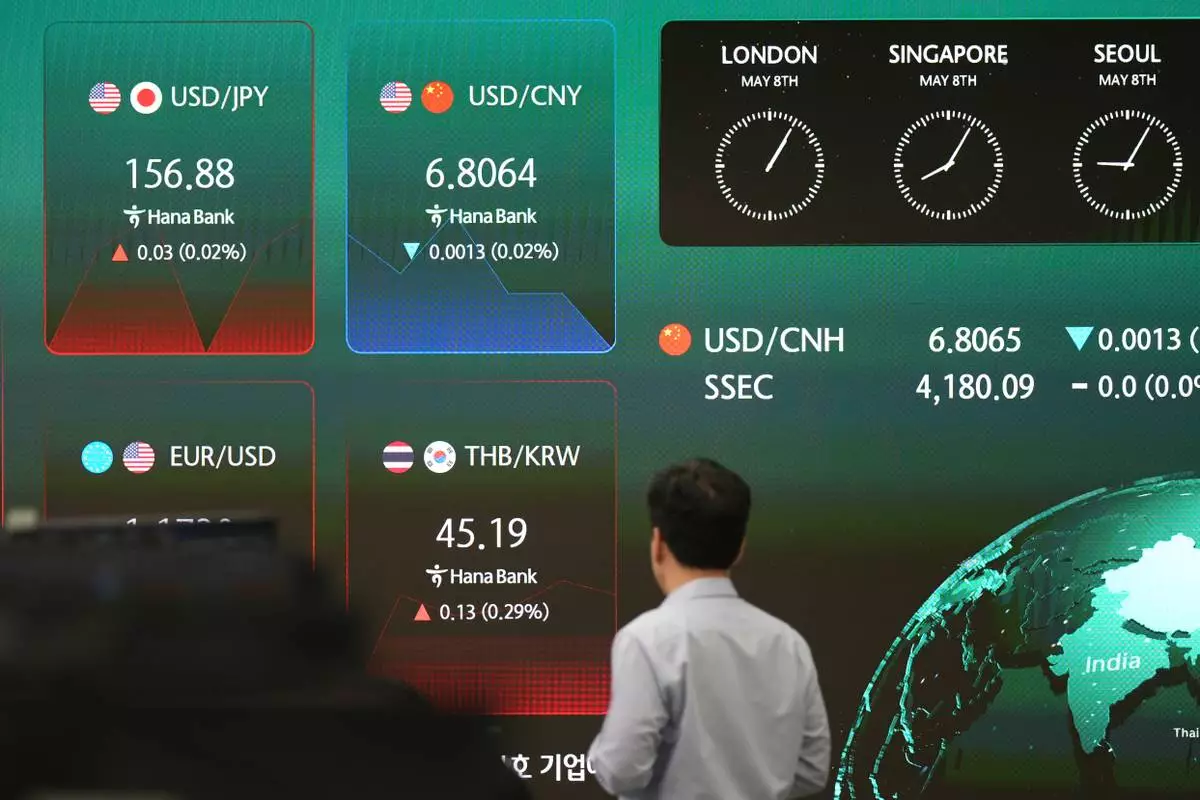
A dealer walks past near the screens showing the foreign exchange rates at a dealing room of Hana Bank in Seoul, South Korea, Friday, May 8, 2026. (AP Photo/Lee Jin-man)
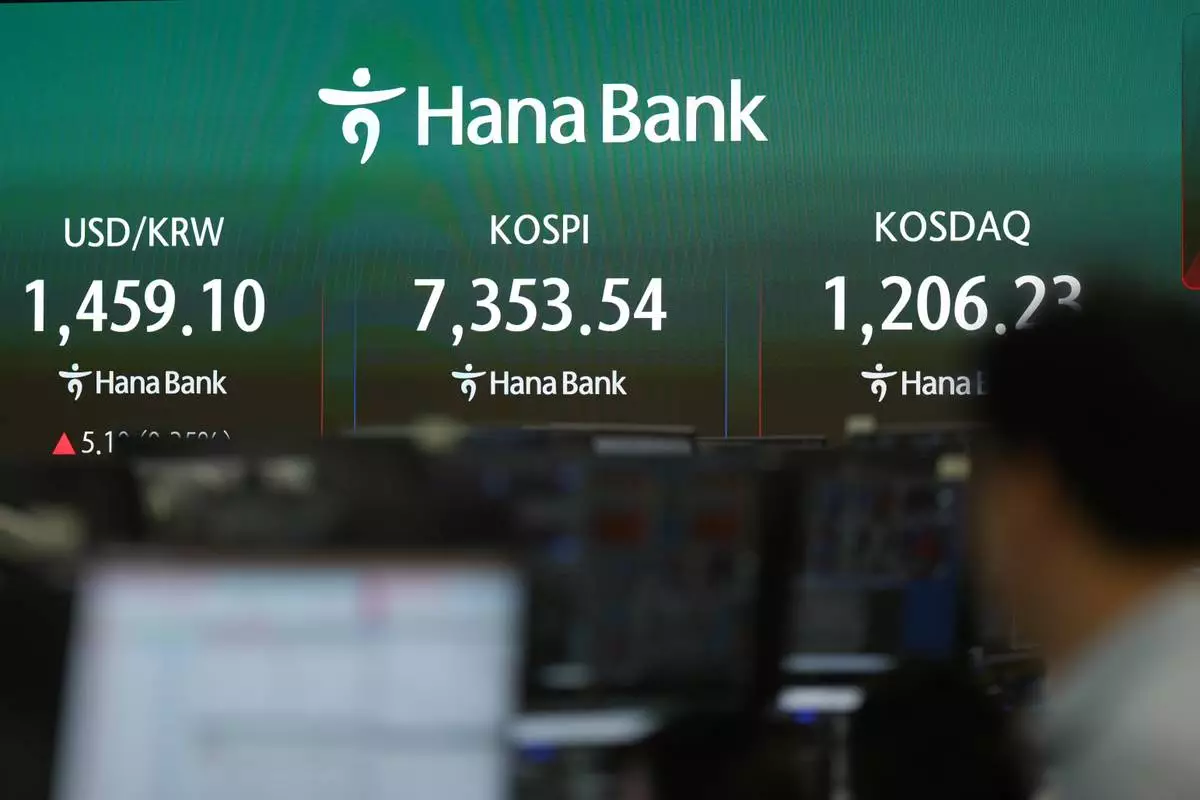
A dealer walks past near the screens showing the Korea Composite Stock Price Index (KOSPI), the foreign exchange rate between U.S. dollar and South Korean won and the Korean Securities Dealers Automated Quotations (KOSDAQ) at a dealing room of Hana Bank in Seoul, South Korea, Friday, May 8, 2026. (AP Photo/Lee Jin-man)
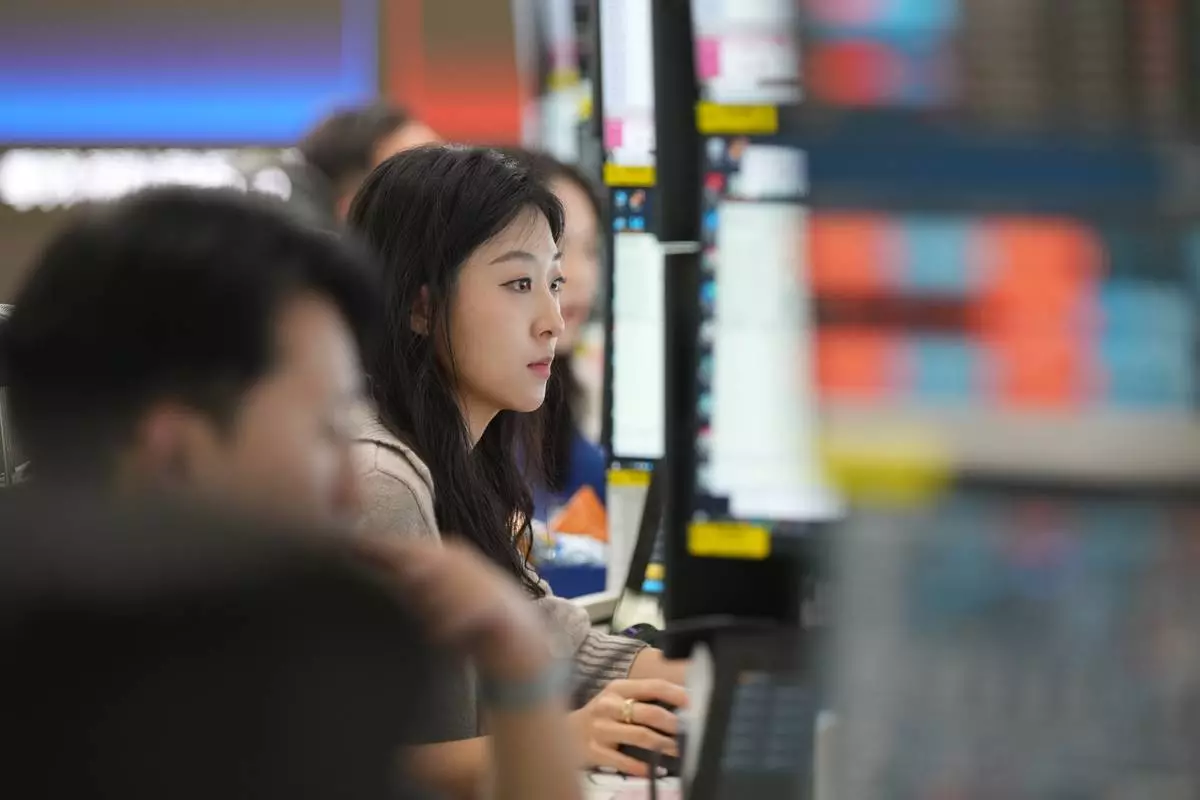
A dealer watches computer monitors at a dealing room of Hana Bank in Seoul, South Korea, Friday, May 8, 2026. (AP Photo/Lee Jin-man)