
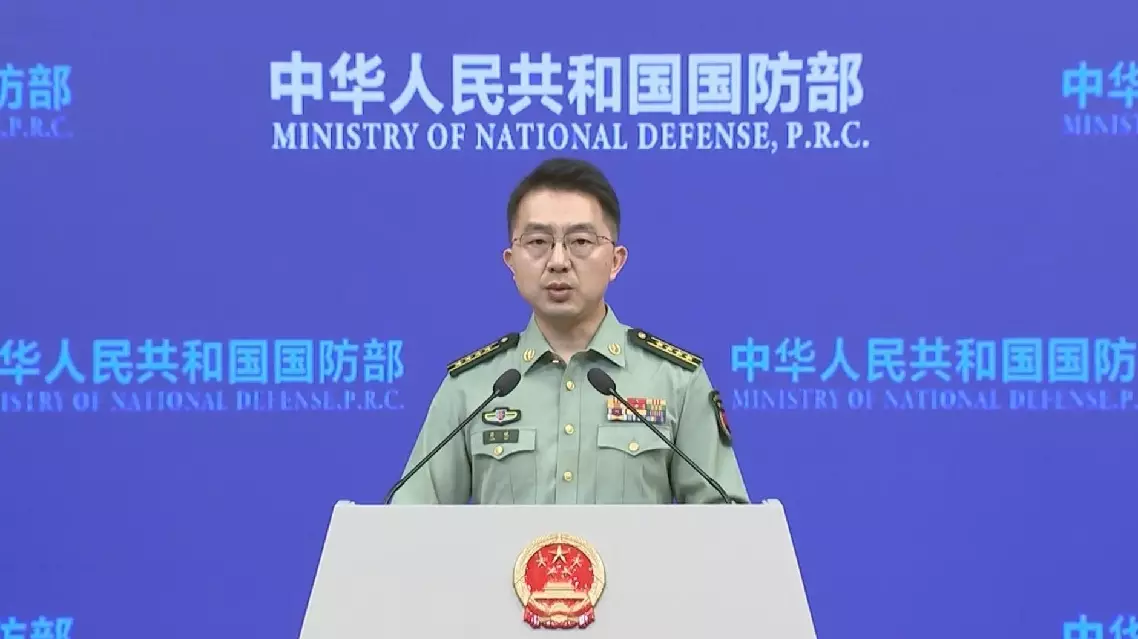
A Chinese Defense Ministry spokesman on Saturday issued a stern warning against the rise of Japanese neo-militarism, urging Tokyo to abandon its dangerous ambition of military buildup and demonstrate a genuine willingness to face history with sincere acts of remorse to win the trust of neighboring Asian countries and the international community.
Senior Colonel Jiang Bin, the ministry spokesman, made the statement at a press briefing in Beijing in response to Japanese Prime Minister Sanae Takaichi's remarks made during her recent visits to Australia and Vietnam.
During the visits, she called for strengthening security cooperation with these countries and proposed a new "free and open Indo-Pacific" vision while also suggesting that Japan's postwar pacifist constitution should be periodically updated to reflect contemporary security challenges.
"We firmly oppose Japan's ruling authorities for using the so-called 'freedom and openness' and 'security cooperation' as a pretext to provoke camp confrontation and form exclusive groupings to undermine the strategic security and interests of other countries and seek excuses and breakthroughs in loosening restrictions on its own military capabilities," said Jiang.
"May 3 this year marks the 80th anniversary of the opening of the Tokyo Trial. Over the past 80 years, Japanese right-wing forces have deliberately sought to downplay and defy the solemn rulings that represent humanity's conscience and historical justice, distorting and denying the well-documented aggressive crimes committed by Japanese militarism. Class-A war criminals who committed heinous atrocities are glorified as 'heroes' and enshrined at the Yasukuni Shrine. The Japanese government's stance on 'upholding the pacifist constitution and pursuing the path of a peaceful nation' has evolved from explicit commitments to duplicity, and now, under the Takaichi administration, to openly promoting constitutional revision. Japanese right-wing forces are gradually shedding their disguise, shifting from covert military expansion to overt war preparations, and the real-world threat posed by Japan's neo-militarism to regional peace is becoming increasingly apparent," he said.
"The true demand of our times is to seek peace rather than war, and cooperation rather than confrontation. We urge Japan's ruling authorities to cease their hypocritical self-proclamation and the dangerous ambition of expanding military capabilities and preparing for war, and instead demonstrate a genuine willingness to face history with sincere acts of remorse, thereby winning the trust of neighboring Asian countries and the international community,"said the spokesman.
China warns against rising Japanese neo-militarism, urges sincere remorse from Japan