The devastating quakes that struck Venezuela last Wednesday have inflicted deep psychological trauma on the country's people, leaving many too fearful of aftershocks to return home.
The death toll from the earthquakes has risen to 1,719, with more than 5,000 people injured, Venezuelan National Assembly President Jorge Rodriguez said Monday.
Numerous others have been forced to leave their homes due to damage or fear. In Caracas, displaced people said they would rather live in temporary tents on the streets than go back home.
"It was truly terrifying at the time, so much so that whenever an aftershock occurs and I feel the tremor, the scenes of the earthquake replay vividly in my mind," said Jerez, a local resident.
"The earthquake has left huge psychic trauma to many people, because it was so intense. At that time, buildings were shaking strongly. Total chaos everywhere. Everybody was running, including children. Some people even fell down on stairs," said Olares, another local resident.
In order to provide medical and psychological aid, temporary service points were set up by local medical schools. Students engaged children with interactive activities, while local physicians offered psychological support to the community.
"The majority of people now suffer from PTSD. This is because they just went through the earthquake, and their body has remained in high alert. The impacts of that won't quickly go away," said Costa, a doctor offering his services.
However, fears of aftershocks are not unfounded. On Monday, a strong aftershock forced the subway system in Caracas to halt and complicated ongoing search and rescue operations.

Venezuelans suffer from psychic trauma after deadly earthquakes
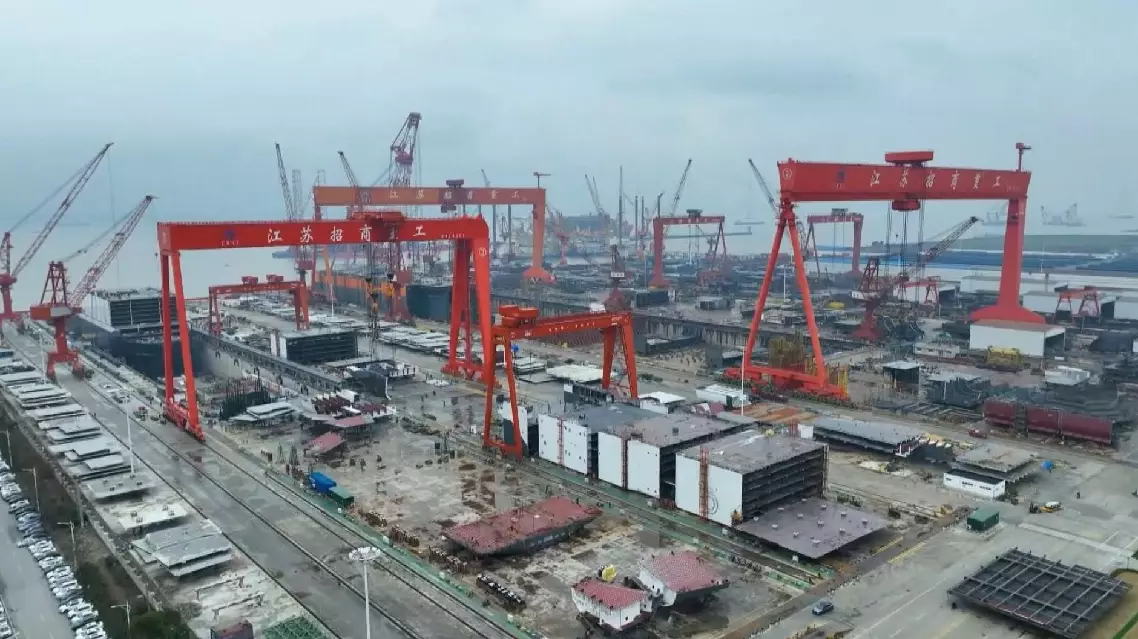
Equipment manufacturing and high-tech manufacturing were the primary growth drivers of China's expanding factory activity in June, underscoring the country's accelerating shift toward innovation-driven, high-end production, according to a leading industry expert.
The purchasing managers' index (PMI) for China's manufacturing sector rose to 50.3 in June, up 0.3 percentage points from May, marking expansion for the fourth consecutive month, latest data jointly released Tuesday by the National Bureau of Statistics (NBS) and the China Federation of Logistics and Purchasing (CFLP) showed.
A reading above 50 indicates expansion, while one below 50 reflects contraction.
A breakdown of the headline figure by industry showed that equipment manufacturing and high-tech manufacturing emerged as the standout performers.
The PMI for the equipment manufacturing sector came in at 52.5 percent in June, up 0.4 percentage points from May and marking the fourth consecutive month of expansion.
The high-tech manufacturing PMI registered even stronger growth, rising 0.6 percentage points to 53.5 percent, also its fourth straight monthly increase. This acceleration is closely tied to the rapid expansion of artificial intelligence (AI)-related industries.
Looking at quarterly trends, the average PMI readings for equipment manufacturing and high-tech manufacturing in the second quarter stood at 52.1 percent and 52.9 percent, respectively.
Both figures not only remained at robust levels but also significantly outpaced their first-quarter averages and the quarterly averages of the same period last year, a clear indication that the structural transformation of China's manufacturing base is deepening.
"The momentum in both equipment manufacturing and high-tech manufacturing points to strong demand and supply on both sides of the new growth drivers. The pace of expansion is accelerating, and the spearheading role these sectors play in the broader manufacturing landscape is becoming increasingly evident," said He Hui, vice president of CFLP.
On the expectations front, the production and business activity expectations index for June reached 54.3 percent, up 0.4 percentage points from May. The uptick suggests that Chinese manufacturing firms are growing more optimistic about market conditions in the months ahead.
"Looking at specific industries, the production and business activity expectations index for specialized equipment, railway/ship/aerospace equipment, and electrical machinery and equipment all remained above 57 percent, firmly in the high-confidence territory. This indicates that companies in these sectors are increasingly optimistic about their industry outlook," said Huo Lihui, chief statistician at the Service Survey Center of the NBS.
Equipment, high-tech sectors spearhead China's manufacturing PMI expansion in June