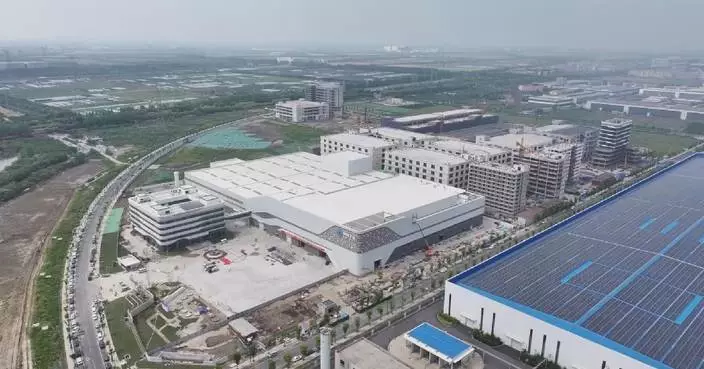
Driven by the latest rising trend in China's smart electronics sector, manufacturers of intelligent cleaning robots have rolled out a series of new products in the eastern Jiangsu Province, with overseas orders keeping production lines running at full capacity.
At a cleaning robot manufacturing enterprise in Suzhou City, all production lines are operating at full capacity to fulfill overseas orders for advanced products.
"Our value of exports in the first quarter of this year grew by more than 50 percent, driven primarily by our robotic vacuum cleaners. We updated the functions of drum-type mopping and rapid charging, which has been recognized by customers in Southeast Asia and Europe. Therefore, our exports to Europe and Southeast Asia have increased significantly in the first half of this year," said Ma Xianbin, chief public-relation officer of a robotics company in Suzhou.
The rapid growth in exports stems from the company's precise understanding of market demand. Since the beginning of this year, the company has responded quickly to different demand scenarios, carrying out customized design and development, enabling wave after wave of new products to quickly capture the global market. "Regular products of this kind typically have a diameter of 38 centimeters. However, this product has a diameter of only 28 centimeters, allowing it to easily reach into very low and narrow spaces. We have also designed a handle for it, which makes it very convenient to use. Now we can update each generation roughly every six to nine months. Since we develop and manufacture everything ourselves, from underlying technologies and key components to the finished products, we are able to move at a relatively fast pace," he said.
The Qilin Technology Innovation Park in Nanjing City has gathered more than 100 robot-related enterprises.
At a company that manufactures intelligent robots for train inspection, the research and development team is currently updating and upgrading the visual algorithm model.
At present, the inspection robots developed independently by this company have achieved an overall detection accuracy rate of over 95 percent, with the correct detection rate for loose parts, missing components, and foreign objects exceeding 98 percent.
"To better meet the needs of our customers in Southeast Asian, we made a dedicated trip overseas to conduct on-site inspections and validation. Taking into account the differences in overseas train models, we used a high-precision structured light camera mounted on the robot to capture complete 3D spatial images of the train bodies, and also carried out customized development of AI recognition algorithm," said Zhu Hao, product manager of a robotics company in Nanjing.
In the first quarter of this year, the company successfully achieved the first application of its products in the Thai market. In addition, for potential customers in the European and Southeast Asian markets, the company has provided targeted, personalized, and differentiated services.
"In addition to leveraging the support and collaboration of leading enterprises in the industry chain to 'go global,' we have also placed great importance on exploring independently our own strategies of going abroad. This year has been a year of rapid growth for our overseas business. We expect that our overseas business will grow by 300 percent by the end of this year. At the same time, we expect that over the next three years, our overseas business will account for more than 35 percent of the company's total market revenue," said Wu Mengying, deputy general manager of a robotics company in Nanjing.
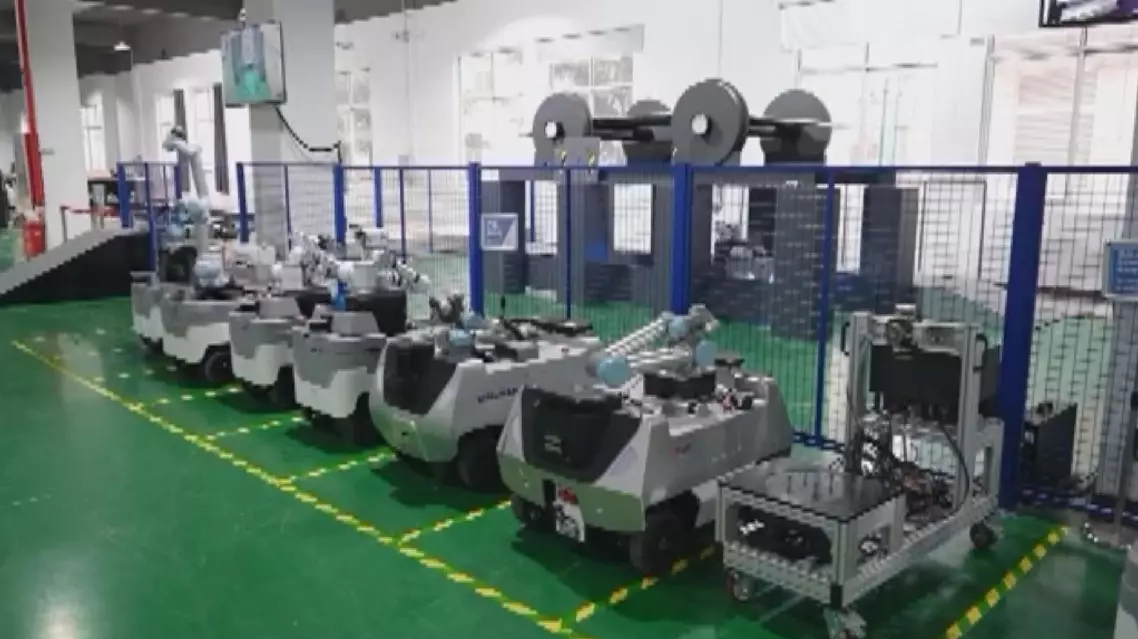
Cleaning robot makers in Jiangsu race to meet surging overseas orders