KYIV, Ukraine (AP) — A contemporary art fair has been held in the Ukrainian capital with an unusual premise: that art can help a society come to terms with what war has made normal.
“Holding the event during wartime means not waiting for a better moment, but working with reality as it is,” said Anna Avetova, director of the Art Kyiv fair. “In this context, art does not stand apart from life — it helps make sense of the present, preserve cultural continuity, and lay the groundwork for the future.”
Titled This is Normal, the fair has become a space where Ukrainians try to make sense through painting, sculpture and conversation of a reality in which missile strikes, death and loss have quietly become a part of ordinary life.
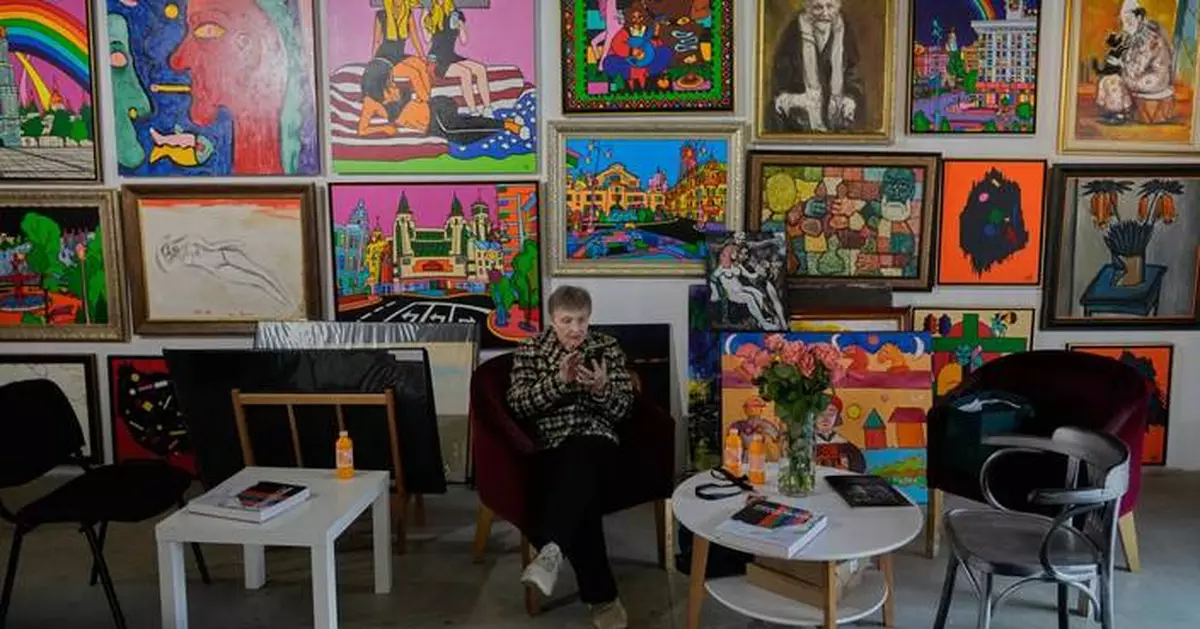
Hundreds of works filled the space at the Lavra Gallery, from oddly shaped sculptures to paintings spanning from expressive abstraction to surreal portraiture and atmospheric landscapes. Notably, not a single booth is dedicated specifically to the war. That was a deliberate choice.
“The war is always in the air, we just really didn’t want to make a point of mentioning it,” Avetova said. “Art is one of the things that keeps us human. It sustains us and warms our soul when things are very hard.”
The organizers said the event was also intended to provide a boost to the domestic art market, which had already stagnated under COVID-19 before the Russian war made things worse. The market is gradually beginning to recover, and the fair is one example of how Ukrainian artists are ready not only to speak about the war, but to sell paintings.
Art Kyiv describes itself as a cultural platform where artistic experience, public discourse and contemporary Ukrainian reality meet. In a hall occasionally pierced by air-raid sirens warning of Russian strikes, the event has united Ukraine’s most prominent galleries, artists, collectors, and cultural institutions.
It is being held for only the second time since the war began after launching in October.
Ceramic artist Tala Vovk is showing her work for the first time. She tries to attend art events in Kyiv frequently, as it helps her take her mind off the war and “detach from the tragedy.”
“Art is a place where the everyday doesn’t exist,” she said. In her view, even during wartime such events matter, because it is important to nourish the cultural foundation and give it strength so that it can take root and grow stronger. “And that would give strength in any situation,” she said.
That was the case for artist Yuriy Vatkin, who in the first weeks of Russia’s invasion found himself trapped under occupation between Ukraine’s northern city Kharkiv and the Russian border. Painting helped him to survive and maintain his mental health, even after his studio was damaged in an attack, according to his representative at the fair, Denys Dmytriev.
None of the art works, which are primarily for sale, show anything focused on the war. The artists have opted instead for something more neutral. Vatkin is represented by works in his signature style, where thick, layered brushstrokes, fragmented forms and a vivid use of color create a sense of motion and instability.
Anna Domashchenko, a visitor to the event, said she was drawn to the rich, saturated hues because they evoke intense emotions.
She attends art events frequently and says it matters deeply to her that they continue despite the war.
“Sometimes you wonder whether it’s appropriate… but these are exactly the things that inspire you and remind you that life is full of color, and all of those colors should be present at any time,” she said. “Even in times as hard as these.”
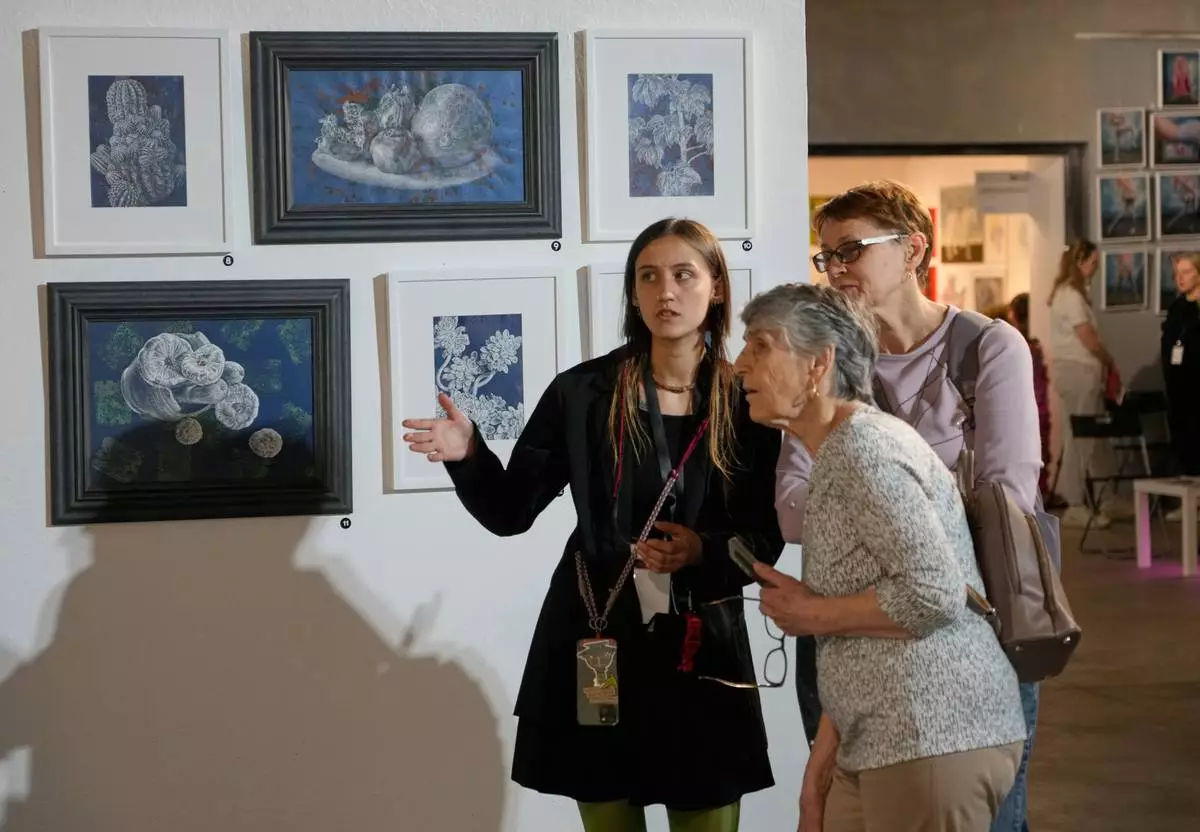
Visitors look at paintings by Ukrainian artists at the Art Kyiv 2026 Festival at the Art Ukraine Gallery in Kyiv, Ukraine, Friday, May 8, 2026. (AP Photo/Efrem Lukatsky)
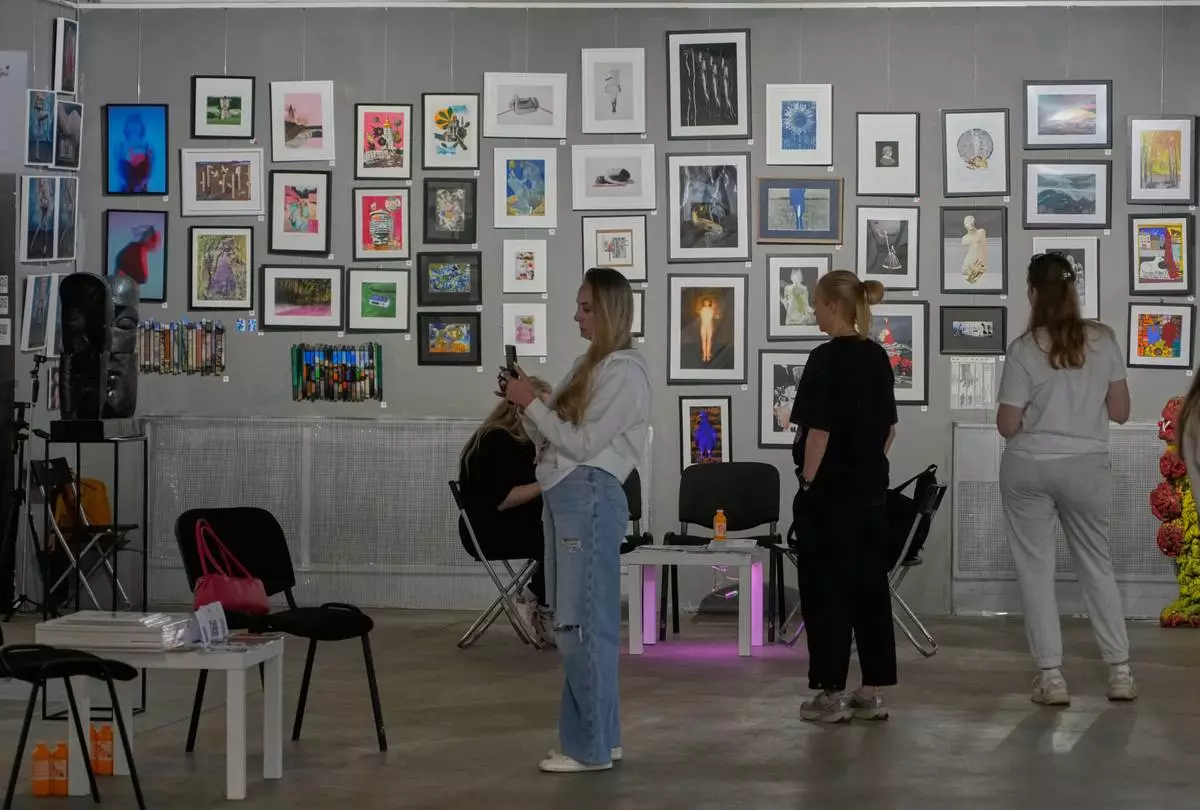
Visitors look at paintings by Ukrainian artists at the Art Kyiv 2026 Festival at the Art Ukraine Gallery in Kyiv, Ukraine, Friday, May 8, 2026. (AP Photo/Efrem Lukatsky)
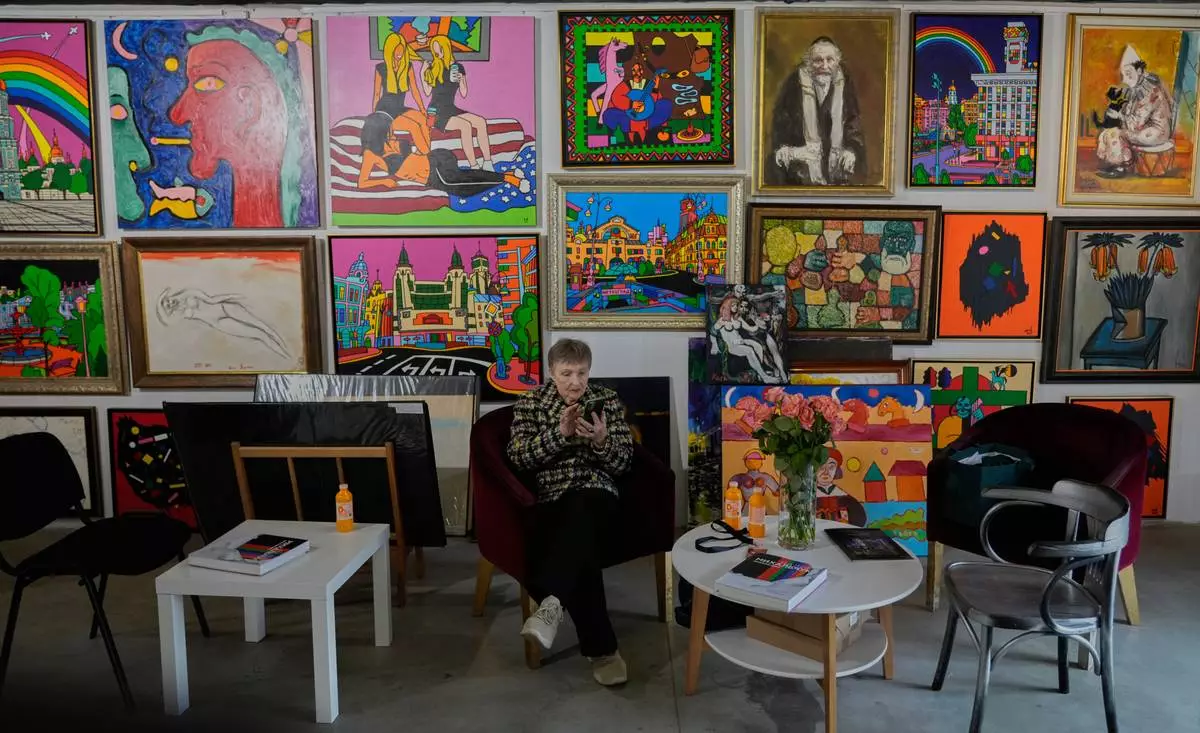
A gallery attendant sits in an armchair near the wall covered with paintings by Ukrainian artists at the Art Kyiv 2026 Festival at the Art Ukraine Gallery in Kyiv, Ukraine, Friday, May 8, 2026. (AP Photo/Efrem Lukatsky)
Neon chief and co-founder Tom Quinn has watched the last six Palme d’Or ceremonies from the same spot: gathered with colleagues around a laptop on the breakfast tables at his Cannes hotel.
“I think we upgraded a couple years ago and connected the computer to a TV,” Quinn says. “I wouldn’t want to do it any different.”
Quinn has good reason to keep any good luck charm. In all six of those awards ceremonies, Neon has won the Palme, the prestigious top honor of the Cannes Film Festival. It’s an unparalleled streak for one of the most sought-after prizes in movies, second only to the best picture Oscar. No other studio has ever come close to anything like it.
“No one ever believes it, but we’ve never gone to Cannes thinking we were going to win the Palme d’Or,” Quinn says. “It’s been a surprise every single year.”
When the 79th Cannes Film Festival gets underway Tuesday, Neon — a 60-person company founded in 2017 — rides in as an unlikely heavyweight. It’s backing more than a quarter of the 22 films in competition for the Palme. Its odds of making it seven in a row are good. Some of the most hotly anticipated titles — including Japanese filmmaker Ryusuke Hamaguchi's “All of a Sudden,” Korean auteur Na Hong-jin's “Hope” and James Gray’s “Paper Tiger” — are Neon’s.
Altogether, the indie distributor has nine films in Cannes. All, Quinn notes, they signed on for before the films' Cannes invite.
“I hate to break it to everyone but don’t hate us for our good taste,” says Quinn. “Who’s chasing who here? Thierry (Frémaux, Cannes artistic director) is going to make up his own mind and we’re going to make up our own mind. It just so happens that we agree.”
When Frémaux announced the lineup of this year’s festival, he lamented the almost nonexistent presence of Hollywood’s major studios. “When the studios are less present in Cannes, they are less present full stop,” he said.
While studio releases like Warner Bros.’ “One Battle After Another” and Universal’s upcoming “The Odyssey” can be major Oscar players, a wide swath of the most original movies of the past decade have been released by specialty labels like Neon and A24.
Both have risen to prominence at international film festivals like Cannes and at the Oscars by focusing on filmmakers, not IP.
“It’s not rocket science and there’s nothing secret about it,” says Quinn. “It’s pursuing the directors and films we want to be a part of.”
Quinn had worked at Samuel Goldwyn Films and Magnolia Pictures before, in 2011, launching Radius, a boutique label with Harvey Weinstein. Though, at Neon, Quinn expected A24 to be his chief competition, he found himself often bidding against Netflix, on movies like Neon’s first acquisition, the Margot Robbie-led “I, Tonya” and Céline Sciamma’s “Portrait of a Lady on Fire.”
“We did not outbid them but we out-passioned them,” says Quinn.
Neon does produce films (like the upcoming “I Love Boosters”), but it largely sticks to distributing movies in North America, often with awards campaigns attached to their releases. It has boarded its Palme d’Or winners — “It Was Just an Accident,” “Anora,” “Anatomy of a Fall,” “Triangle of Sadness,” “Titane” and “Parasite” — in a variety of ways.
Some were acquired in Cannes. Some, like “Parasite,” Neon boarded at the script stage. Quinn signed up for the body horror freak-out “Titane” even though the script made no sense to him. He just believed in its writer-director Julia Ducournau. In that way, Neon is the ultimate anti-algorithm studio.
And yet faith in filmmakers and good taste have carried Neon to the greatest heights of Hollywood. Both “Parasite” and “Anora” won best picture at the Academy Awards after winning the Palme. Neon nearly swept the best international Oscar category last March, with four of the five nominees: the winning “Sentimental Value,” “Sirāt,” “The Secret Agent” and “It Was Just an Accident.”
“Parasite” famously became the first non-English-language film to win best picture — a triumph for the “1-inch-tall barrier of subtitles,” as Bong Joon Ho noted in his acceptance speech.
Neon, majority owned by Dan Friedkin’s 30West, is far from competing with studio blockbusters at the box office. (Its biggest ticket seller thus far was Osgood Perkins’ “Longlegs,” with $75 million.) But Neon has proved there’s a larger audience than many would have expected for daring, often international cinema.
They are, Quinn says, “agnostic” about where its titles come from, and the company’s small size means they can give each movie a bespoke rollout. And by the end of the year, Neon will gather its releases into a DVD box set, even though many voters don’t have DVD players anymore.
“Audiences are desperate, desperate for creativity,” Quinn says. “Films are not packaged goods. The idea that this art form that is so subjective is treated as a P & L (profit and loss statement), I don’t know how you can make good creative decisions when you’re dealing with billions of debt looming at your door.”
Neon’s slate in Cannes is typically wide-ranging. Also up for the Palme is Romanian filmmaker Cristian Mungiu’s “Fjord,” with Sebastian Stan and Renate Reinsve; Japanese auteur Hirokazu Kore-eda’s “Sheep in the Box”; and “The Unknown,” by “Anatomy of a Fall” cowriter Arthur Harari. It also has Nicolas Winding Refn’s “Her Private Hell”; Arie Esiri and Chuko Esiri’s “Clarissa” and William and David Greaves’ already lauded documentary, “Once Upon a Time in Harlem.”
Some of the movies that escaped Neon’s grasp still irk Quinn. He missed out on Kore-eda’s “Shoplifters,” the Palme winner in 2018.
“The idea that we would have won seven Palmes in a row is completely outlandish,” Quinn says. “But that’s a huge regret.”
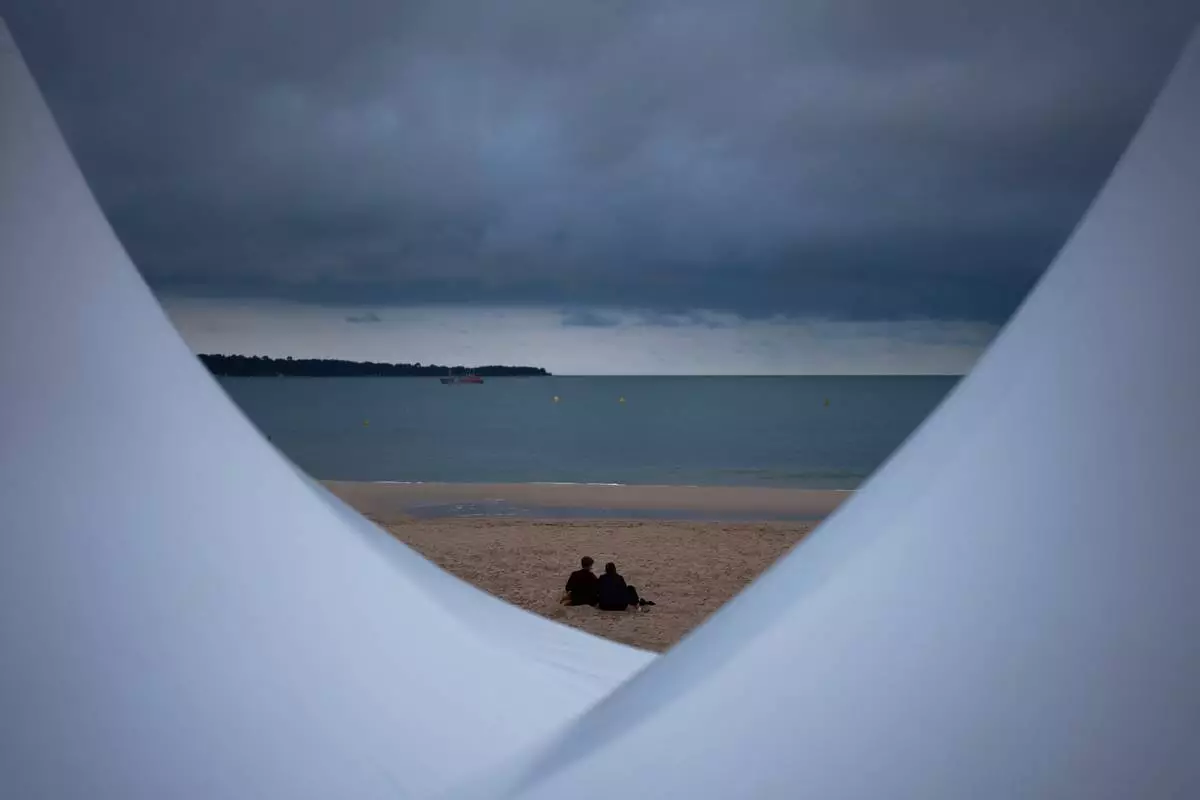
People sit on the beach ahead of the 79th Cannes international film festival Sunday, May 10, 2026, in Cannes, southern France. (AP Photo/John Locher)
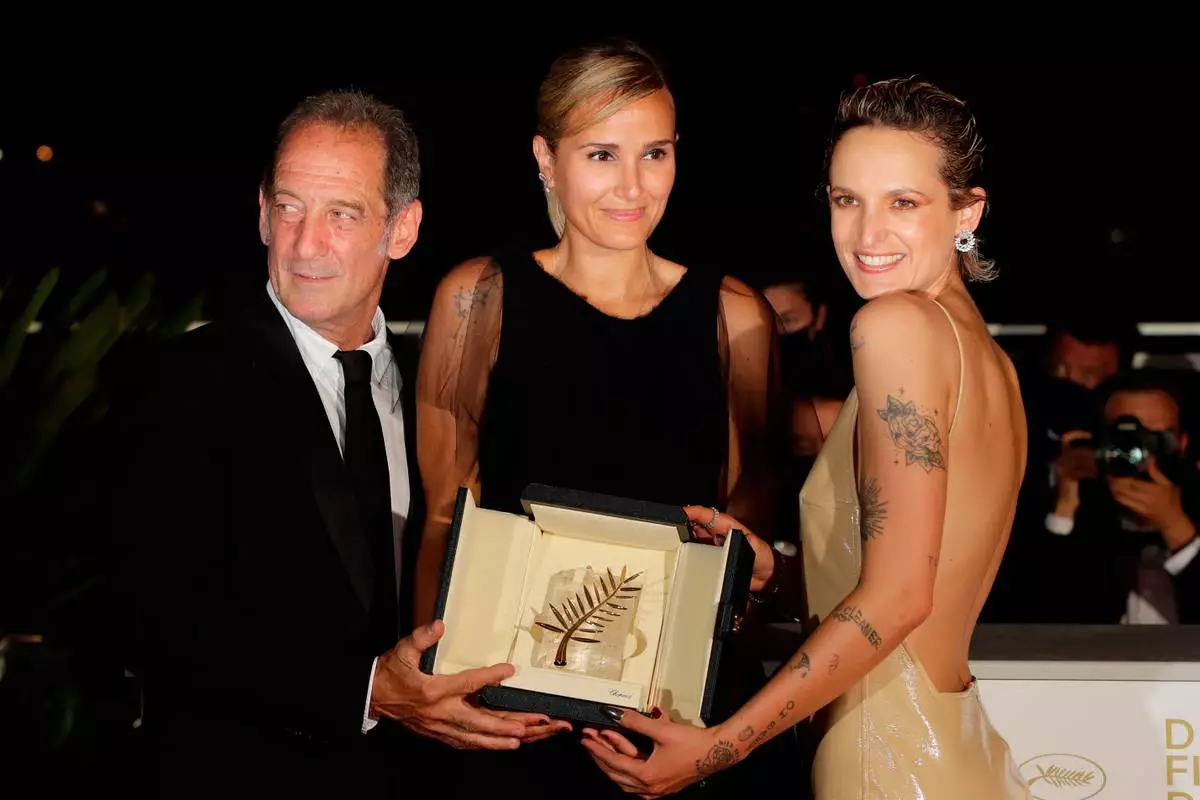
FILE - Director Julia Ducournau, center, winner of the Palme d'Or for the film "Titane" poses with Vincent Lindon, left, and Agathe Rousselle during a photo call at the 74th international film festival, Cannes, southern France, on July 17, 2021. (Photo by Vianney Le Caer/Invision/AP, File)
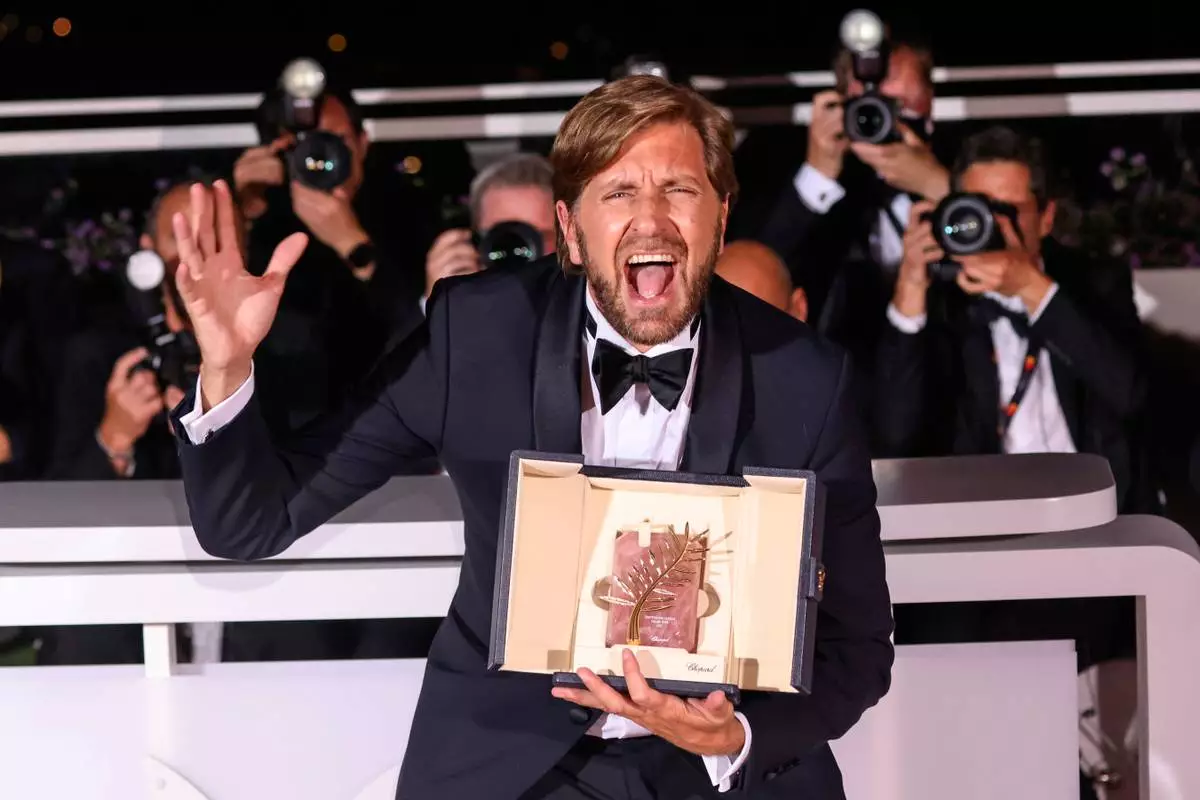
FILE - Writer-director Ruben Ostlund, winner of the Palme d'Or for "Triangle of Sadness," poses at the 75th international film festival, Cannes, southern France, Saturday, May 28, 2022. (Photo by Vianney Le Caer/Invision/AP, File)
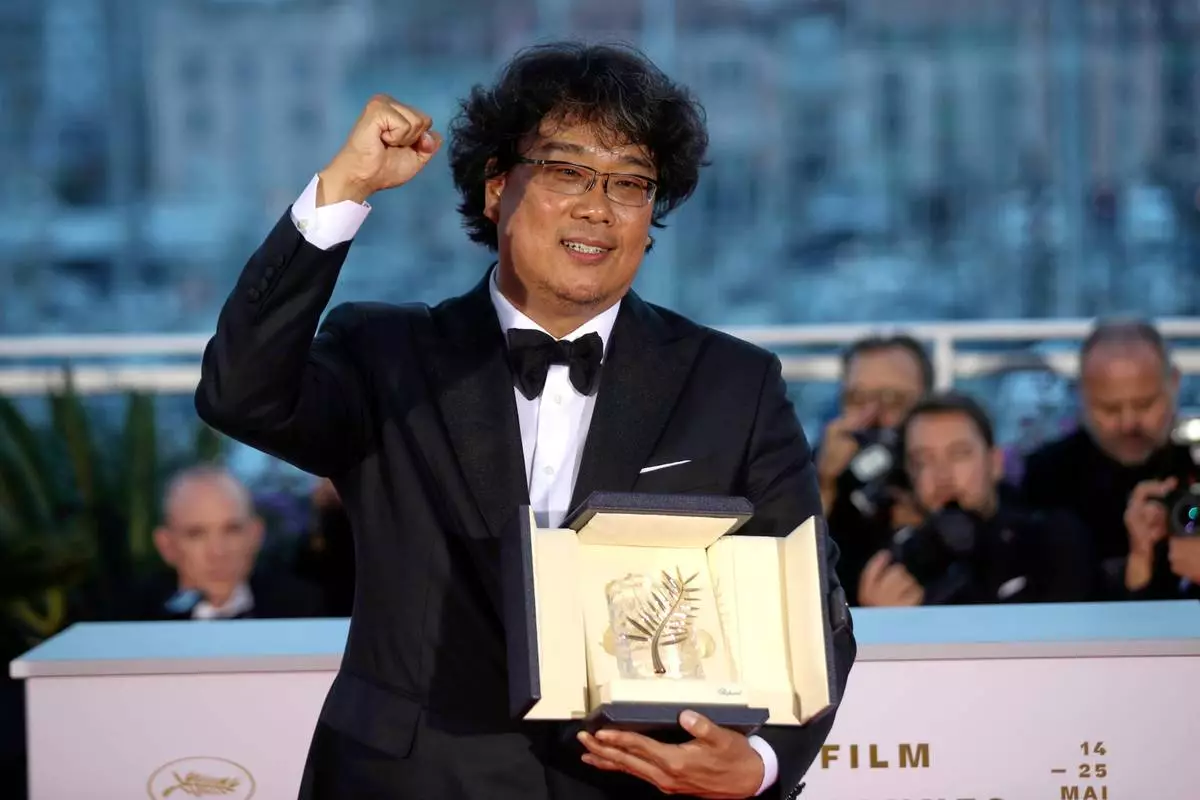
FILE - Director Bong Joon Ho poses with the Palme d'Or award for the film "Parasite" at the 72nd international film festival, Cannes, southern France on May 25, 2019. (AP Photo/Petros Giannakouris, File)
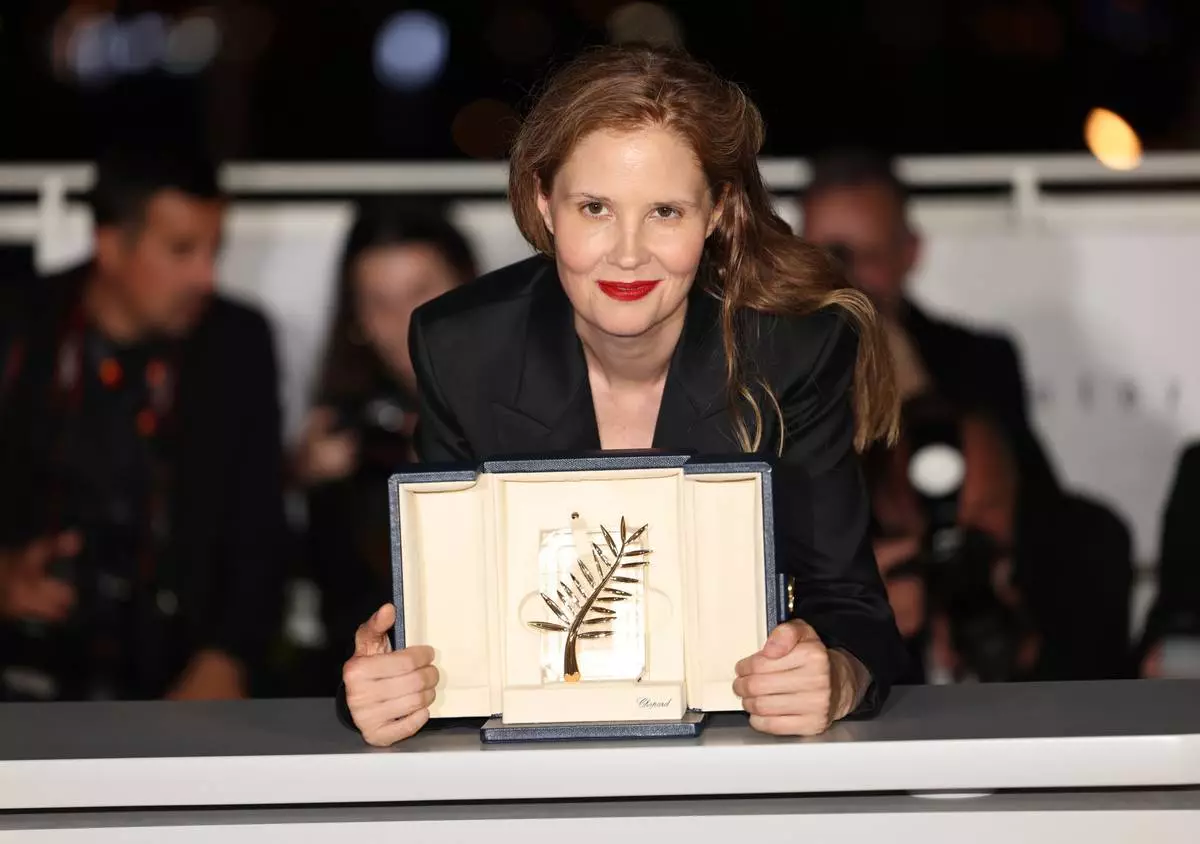
FILE - Justine Triet, winner of the Palme d'Or for "Anatomy of a Fall," poses for photographers during a photo call following the awards ceremony at the 76th international film festival, Cannes, southern France, on May 27, 2023. (Photo by Vianney Le Caer/Invision/AP, File)
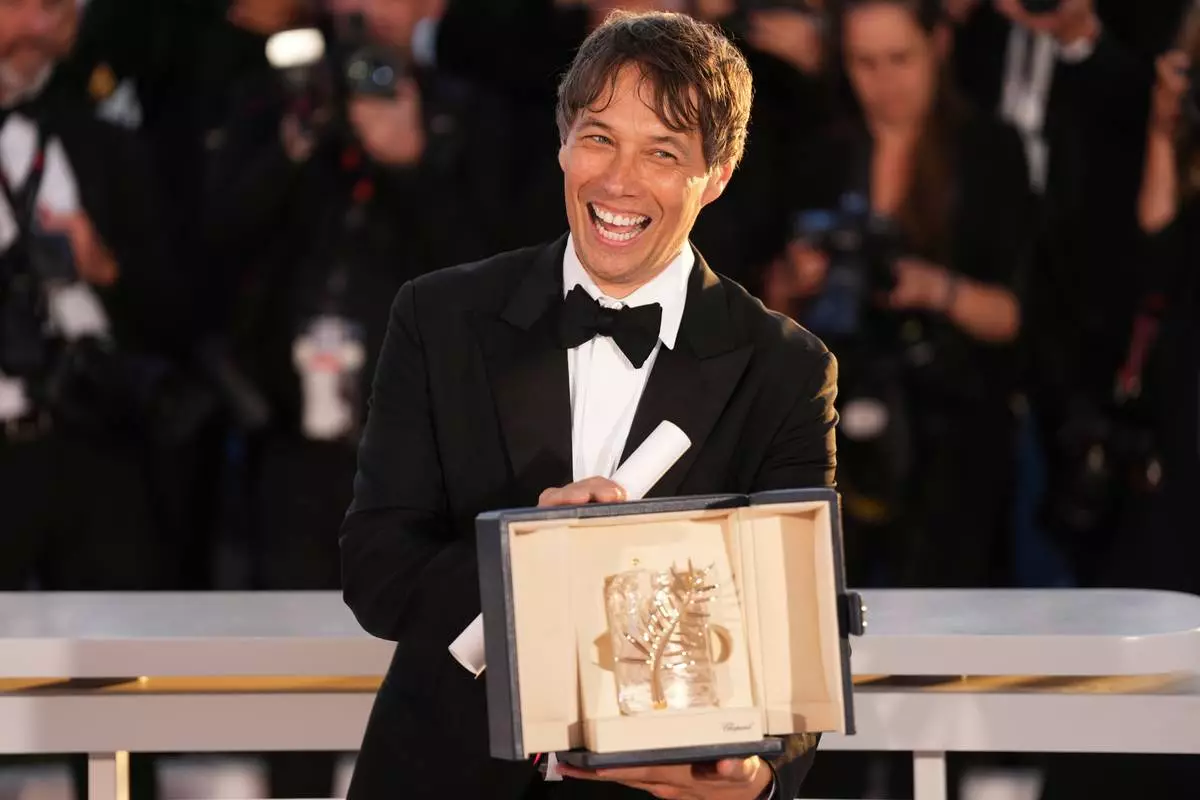
FILE - Sean Baker, winner of the Palme d'Or for the film "Anora," appears at the 77th international film festival, Cannes, southern France, on May 25, 2024. (Photo by Scott A Garfitt/Invision/AP, File)
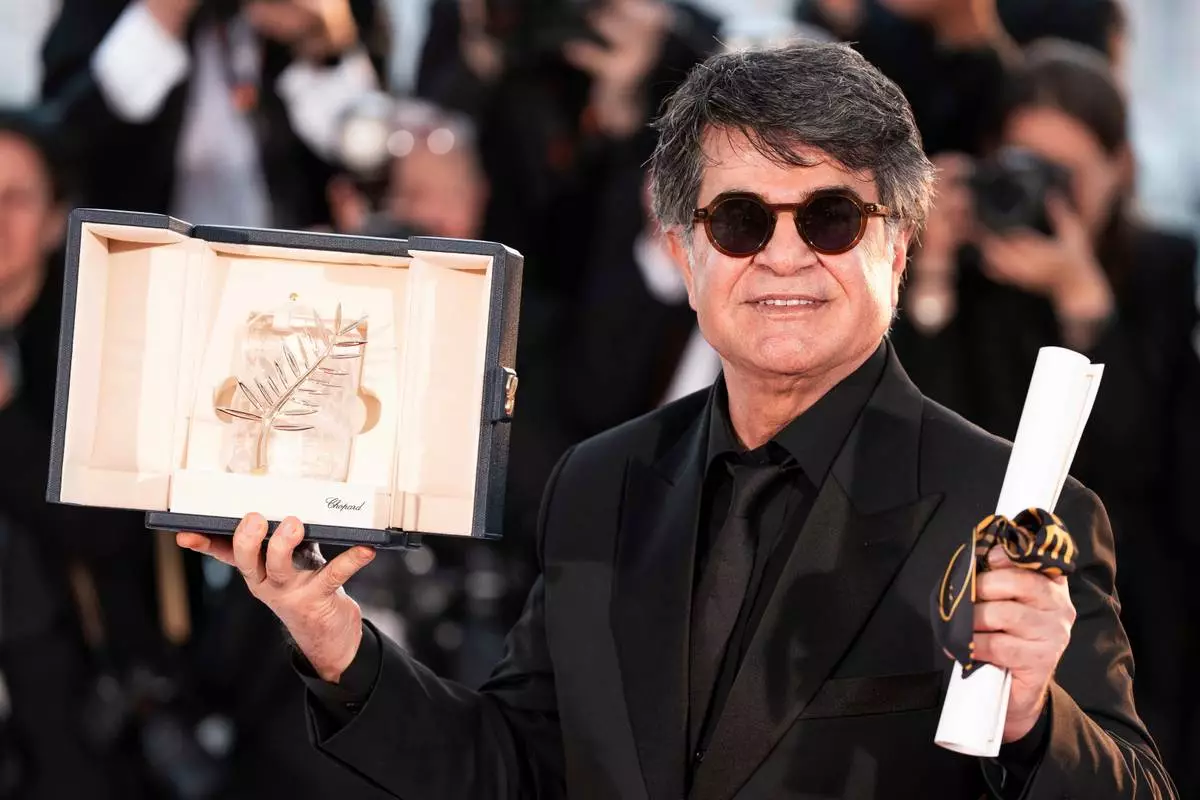
FILE - Director Jafar Panahi, winner of the Palme d'Or for the film "It Was Just an Accident," appears at the awards ceremony photo call at the 78th international film festival, Cannes, southern France, on May 24, 2025. (Photo by Scott A Garfitt/Invision/AP, File)