The evolving nature of current geopolitical dynamics means a "friend-or-foe" world view is no longer functionable way of looking at the world, said a leading U.S. businessman and scholar, as he called for countries to cooperate based on common interests and to seek win-win possibilities even amid competition.
Stephen A. Schwarzman, the founding trustee of the Schwarzman Scholars -- a post-graduate program at Beijing's prestigious Tsinghua University -- was speaking in an interview with the China Global Television Network (CGTN) ahead of U.S. President Donald Trump's upcoming visit to China.
Schwarzman, who is the founder and CEO of the American investment firm Blackstone Inc., and was previously an advisor to Trump during his first term in office, gave his assessment of the current geopolitical complexities facing the world.
He said that fluctuations in global ties is not an unusual phenomenon, but called for establishing a platform to teach young people that a changing world requires constant adjustment.
"The geopolitical changes and [period of] instability have happened in various times in history. I think we have to provide a framework for that so people, when they are younger, learn that this is the way the world's going to be and there are going to be certain adjustments that you have to make when you're living in that world," he said.
Schwarzman said that the concept of globalization has now entered a more "selective" phase as countries around the world look for areas to both compete and cooperate.
"Globalization isn't over; it's just more selective. There are certain things that certainly can be global for all the reasons that globalization happened, that not every country can be self sufficient in everything. I think you're going to have more nuanced type of relationships where people are competing. So that paradigm of having relationships where you do both is going to be necessary. The way recent history has worked, you're either a friend or a foe, that kind of world won't function very well," said Schwarzman.
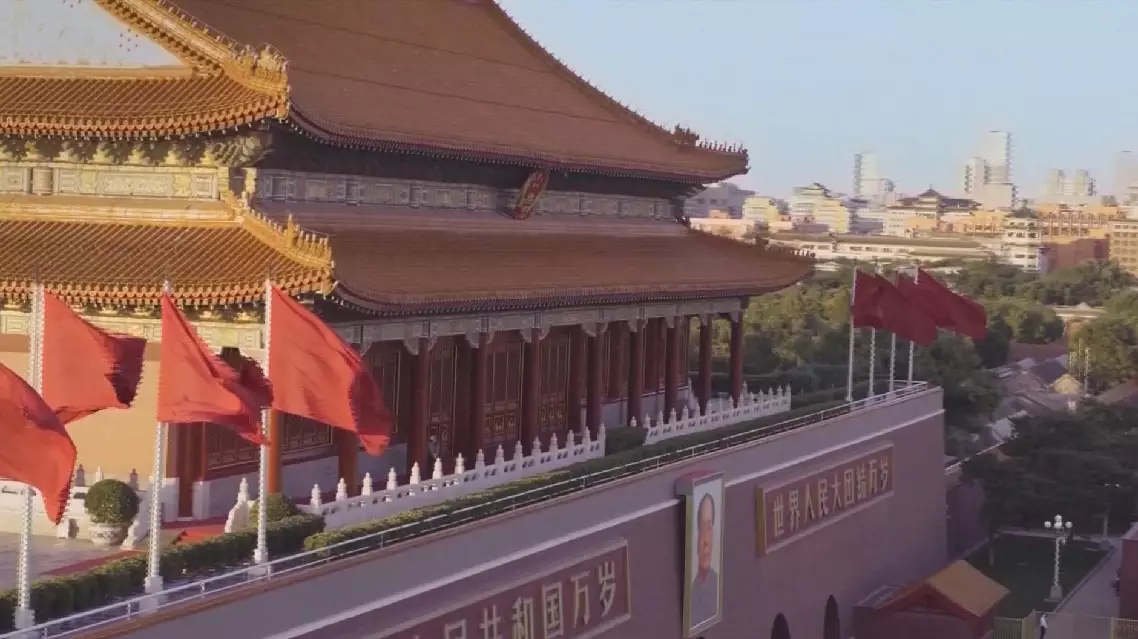
At the invitation of Chinese President Xi Jinping, President Trump will pay a state visit to China from May 13 to 15, a Chinese foreign ministry spokesperson announced on Monday.
'Friend-or-foe' world view no longer functions amid complex global dynamics: US scholar, businessman
The Hong Kong stock market drifted lower for most of Monday's session before staging a comeback to wipe out all losses by the end of the day, while Tokyo's Nikkei benchmark experienced a slight decline as the continuing tensions between the U.S. and Iran continued to cast a cloud over investor confidence.
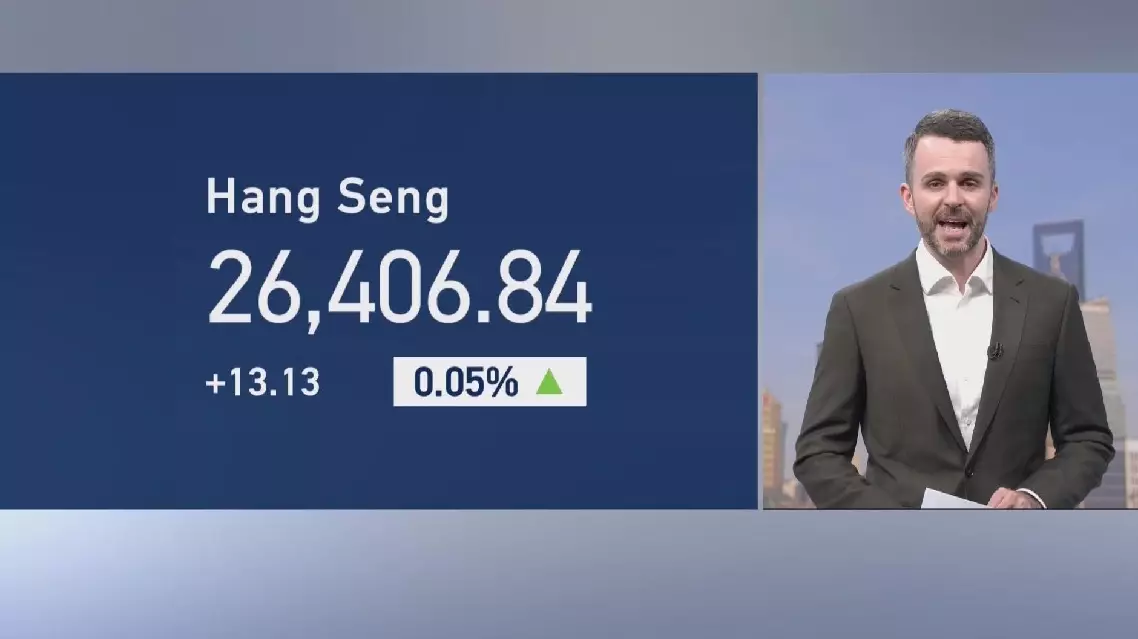
Hong Kong's stock market ended higher Monday with the benchmark Hang Seng Index up 0.05 percent to close at 26,406.84 points.
The Hang Seng China Enterprises Index dipped 0.05 percent to end at 8,884.20 points, while the Hang Seng Tech Index edged up 0.07 percent to end at 5,106.40 points.
Recapping on the day's developments, Timothy Pope, a market analyst for the China Global Television Network (CGTN), noted that the uncertainties surrounding the situation in the Middle East continued to weigh on investor sentiment across the Asian markets.
"Around the region, attention really did turn to President Trump's blunt rejection of Iran's counter-proposal to the White House's one-page peace plan -- that leaves the conflict to drag on, and shipping in the region remains at a standstill. The Hang Seng spent most of the session lower. It did actually claw back all of those losses and closed pretty much flat. Resources, travel and tech stocks were among the biggest drags on the Hang Seng today," he said.
Despite this, Pope noted a surprising rally in the Chinese property market, with the state-owned China Poly Property Group Corporation seeing a jump after it posted encouraging sales figures for last month, as well as a strong debut showing for a newly-listed Chinese robotics firm.
"We don't get much good news from Chinese property developers these days, but over the last couple of sessions they have been doing a little bit better and a few of them have been reporting growth in property sales. Poly Property is the latest to release that kind of data with contracted sales amounting to 4.2 billion yuan in April. Now that's a huge jump and its stocks added about 5.5 percent today as a result. The big winner in Hong Kong though was robot maker Shenzhen Ldrobot, one that is brand new to the market. It debuted today and shot up more than 150 percent at one stage and still ended the day slightly off that but 127 percent higher," said Pope.
Japan's Nikkei Stock Average slipped 295.77 points, or 0.47 percent, to close at 62,417.88 on Monday.
"The Nikkei 225 went into retreat after some early gains took it to new record highs. But the Iran situation is weighing on investors minds there and the index closed 0.5 percent lower. The latest U.S. economic data has also raised some concerns about consumer sentiment there. And really that is fallout from the conflict that could hurt Japanese exporters too. As I've already said, though, nobody's worried about demand for AI going away, and that sector was doing okay in Tokyo," said Pope.
There was big disappointment for the Japanese video game giant Nintendo after its move to hike up the price of its games console was met with a poor reception on the markets, Pope said.
"The big drag actually came from the games company Nintendo. It slumped 8.4 percent today after increasing the price of its flagship 'Switch 2' console in the face of what's been growing market concerns that that video games console isn't attracting enough top-quality, high-profile video games coming out at the moment and they've just increased the price, so that didn't go down too well," said the analyst.
Hong Kong stocks rally, Tokyo slips amid Middle East turbulence