Beijing municipal government departments released the city’s second batch of negative lists for cross-border data transfer on Monday, to facilitate digital economy while ensuring data security.
The negative list, jointly released by the Cyberspace Administration of Beijing Municipality, the Beijing Municipal Commerce Bureau, and the Beijing Municipal Administration of Government Services and Data Management, expands its scope from the China (Beijing) Pilot Free Trade Zone to the entire city.
In 2024, Beijing issued its first batch of negative lists covering five sectors -- automobiles, pharmaceuticals, civil aviation, retail and modern services, and AI training data.
The new batch adds four sectors -- medical devices, trade logistics, banking, and autonomous driving (intelligent connected vehicles). Together, the nine sector-specific lists clarify the scope of data subject to outbound transfer management, making it easier for enterprises and research institutions to operate.
"Take the negative list for medical devices as an example. In common business scenarios such as device development and clinical trials, we have established tiered management rules regarding individual subjects' health and physiological information, including medical records and examination reports," said Yang Hu, director of the Cybersecurity Coordination Division of the Cyberspace Administration of Beijing Municipality.
"For outbound data involving 50,000 or more individuals annually, a security assessment must be submitted. For data involving 10,000 to 50,000 individuals, filing or certification is required to ensure that personal information protection measures are in place. For data involving fewer than 10,000 individuals, cross-border transfer is permitted in compliance with the law. Companies no longer need to determine on their own how or whether data can be transferred. They can simply follow the negative lists," said Yang.
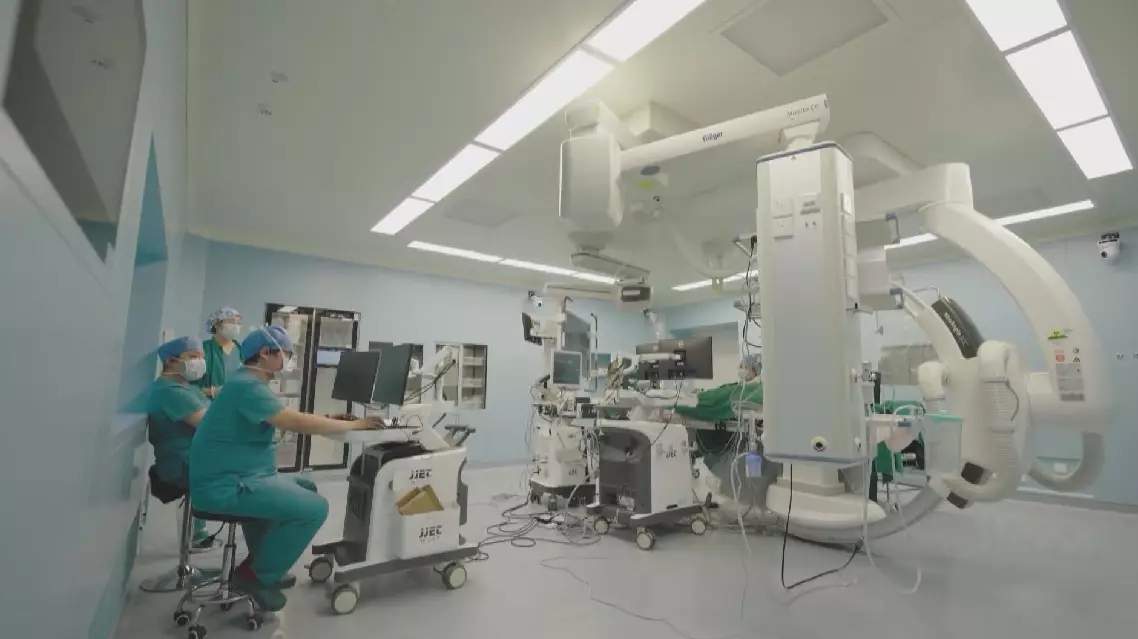
Beijing releases 2nd batch of negative lists for cross-border data transfer
The Hong Kong stock market drifted lower for most of Monday's session before staging a comeback to wipe out all losses by the end of the day, while Tokyo's Nikkei benchmark experienced a slight decline as the continuing tensions between the U.S. and Iran continued to cast a cloud over investor confidence.
Hong Kong's stock market ended higher Monday with the benchmark Hang Seng Index up 0.05 percent to close at 26,406.84 points.
The Hang Seng China Enterprises Index dipped 0.05 percent to end at 8,884.20 points, while the Hang Seng Tech Index edged up 0.07 percent to end at 5,106.40 points.
Recapping on the day's developments, Timothy Pope, a market analyst for the China Global Television Network (CGTN), noted that the uncertainties surrounding the situation in the Middle East continued to weigh on investor sentiment across the Asian markets.
"Around the region, attention really did turn to President Trump's blunt rejection of Iran's counter-proposal to the White House's one-page peace plan -- that leaves the conflict to drag on, and shipping in the region remains at a standstill. The Hang Seng spent most of the session lower. It did actually claw back all of those losses and closed pretty much flat. Resources, travel and tech stocks were among the biggest drags on the Hang Seng today," he said.
Despite this, Pope noted a surprising rally in the Chinese property market, with the state-owned China Poly Property Group Corporation seeing a jump after it posted encouraging sales figures for last month, as well as a strong debut showing for a newly-listed Chinese robotics firm.
"We don't get much good news from Chinese property developers these days, but over the last couple of sessions they have been doing a little bit better and a few of them have been reporting growth in property sales. Poly Property is the latest to release that kind of data with contracted sales amounting to 4.2 billion yuan in April. Now that's a huge jump and its stocks added about 5.5 percent today as a result. The big winner in Hong Kong though was robot maker Shenzhen Ldrobot, one that is brand new to the market. It debuted today and shot up more than 150 percent at one stage and still ended the day slightly off that but 127 percent higher," said Pope.
Japan's Nikkei Stock Average slipped 295.77 points, or 0.47 percent, to close at 62,417.88 on Monday.
"The Nikkei 225 went into retreat after some early gains took it to new record highs. But the Iran situation is weighing on investors minds there and the index closed 0.5 percent lower. The latest U.S. economic data has also raised some concerns about consumer sentiment there. And really that is fallout from the conflict that could hurt Japanese exporters too. As I've already said, though, nobody's worried about demand for AI going away, and that sector was doing okay in Tokyo," said Pope.
There was big disappointment for the Japanese video game giant Nintendo after its move to hike up the price of its games console was met with a poor reception on the markets, Pope said.
"The big drag actually came from the games company Nintendo. It slumped 8.4 percent today after increasing the price of its flagship 'Switch 2' console in the face of what's been growing market concerns that that video games console isn't attracting enough top-quality, high-profile video games coming out at the moment and they've just increased the price, so that didn't go down too well," said the analyst.
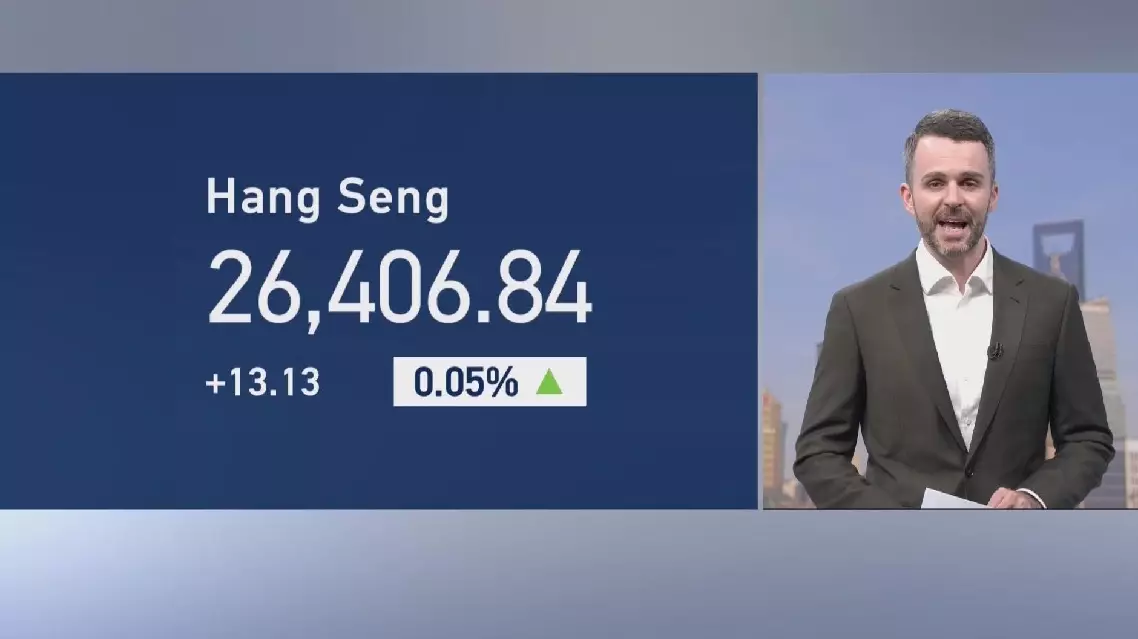
Hong Kong stocks rally, Tokyo slips amid Middle East turbulence