Caves 38 to 45 at the Yungang Grottoes site in north China's Shanxi Province are temporarily closed starting Monday until July 31 for digital documentation to strengthen the preservation and inheritance of this cultural heritage.
With 45 major caves and more than 51,000 statues, the 1,500-year-old Yungang Grottoes were listed as a UNESCO World Heritage Site in 2001.
Caves 38 to 45 are located in the western part of the grotto complex and the sculptures and reliefs there date back to the late Yungang period.
Cave 38, with its rich carved motifs, is an invaluable resource for studying the folk art and culture of the Northern Wei Dynasty (386-534 A.D.).
Cave 39 is the largest cave in the western zone and a typical "central pillar cave".
Its central pillar is modeled after traditional Chinese wooden pavilions, featuring a delicate structure and exquisite carvings, making it an important example for the study of Northern Wei architecture.
The other caves each have their own characteristics, preserving the core remains of late Yungang art, and have deep historical, artistic and cultural research value.
"We will use a high precision, multi technology integration solution to fully capture the fine textures and carving details of the statues, and create 3D models of the cave structures, achieving comprehensive documentation of the cultural relics without blind spots. On one hand, this provides accurate data support for future restoration, disease monitoring and academic research; on the other hand, the digital results will be transformed into resources for exhibitions, science education and cultural dissemination, allowing more people to experience the artistic charm of the Yungang Grottoes up close through digital means," said Zhao Xiaodan, a staff member at Datong Yungang Digital Technology Co., Ltd.
Representing the outstanding achievement of Buddhist cave art, the Yungang Grottoes are one of the three major grotto sites in China. The others are the Mogao Grottoes in Dunhuang, Gansu Province, and the Longmen Grottoes in Luoyang, Henan Province.
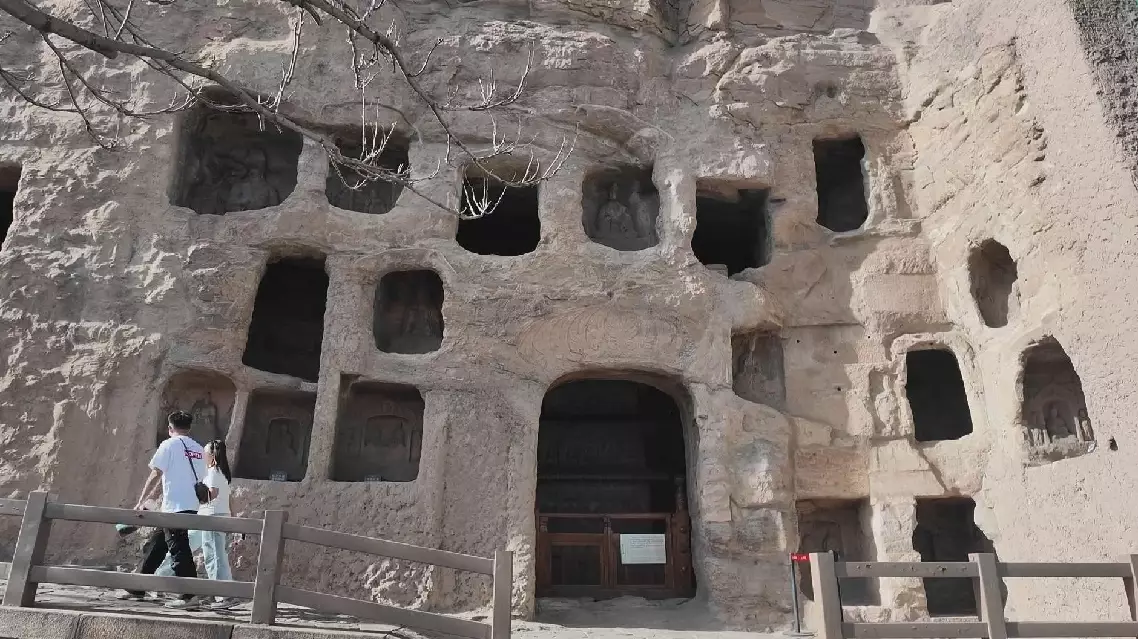
Some caves at Yungang Grottoes site closed for digitalization
The Hong Kong stock market drifted lower for most of Monday's session before staging a comeback to wipe out all losses by the end of the day, while Tokyo's Nikkei benchmark experienced a slight decline as the continuing tensions between the U.S. and Iran continued to cast a cloud over investor confidence.
Hong Kong's stock market ended higher Monday with the benchmark Hang Seng Index up 0.05 percent to close at 26,406.84 points.
The Hang Seng China Enterprises Index dipped 0.05 percent to end at 8,884.20 points, while the Hang Seng Tech Index edged up 0.07 percent to end at 5,106.40 points.
Recapping on the day's developments, Timothy Pope, a market analyst for the China Global Television Network (CGTN), noted that the uncertainties surrounding the situation in the Middle East continued to weigh on investor sentiment across the Asian markets.
"Around the region, attention really did turn to President Trump's blunt rejection of Iran's counter-proposal to the White House's one-page peace plan -- that leaves the conflict to drag on, and shipping in the region remains at a standstill. The Hang Seng spent most of the session lower. It did actually claw back all of those losses and closed pretty much flat. Resources, travel and tech stocks were among the biggest drags on the Hang Seng today," he said.
Despite this, Pope noted a surprising rally in the Chinese property market, with the state-owned China Poly Property Group Corporation seeing a jump after it posted encouraging sales figures for last month, as well as a strong debut showing for a newly-listed Chinese robotics firm.
"We don't get much good news from Chinese property developers these days, but over the last couple of sessions they have been doing a little bit better and a few of them have been reporting growth in property sales. Poly Property is the latest to release that kind of data with contracted sales amounting to 4.2 billion yuan in April. Now that's a huge jump and its stocks added about 5.5 percent today as a result. The big winner in Hong Kong though was robot maker Shenzhen Ldrobot, one that is brand new to the market. It debuted today and shot up more than 150 percent at one stage and still ended the day slightly off that but 127 percent higher," said Pope.
Japan's Nikkei Stock Average slipped 295.77 points, or 0.47 percent, to close at 62,417.88 on Monday.
"The Nikkei 225 went into retreat after some early gains took it to new record highs. But the Iran situation is weighing on investors minds there and the index closed 0.5 percent lower. The latest U.S. economic data has also raised some concerns about consumer sentiment there. And really that is fallout from the conflict that could hurt Japanese exporters too. As I've already said, though, nobody's worried about demand for AI going away, and that sector was doing okay in Tokyo," said Pope.
There was big disappointment for the Japanese video game giant Nintendo after its move to hike up the price of its games console was met with a poor reception on the markets, Pope said.
"The big drag actually came from the games company Nintendo. It slumped 8.4 percent today after increasing the price of its flagship 'Switch 2' console in the face of what's been growing market concerns that that video games console isn't attracting enough top-quality, high-profile video games coming out at the moment and they've just increased the price, so that didn't go down too well," said the analyst.
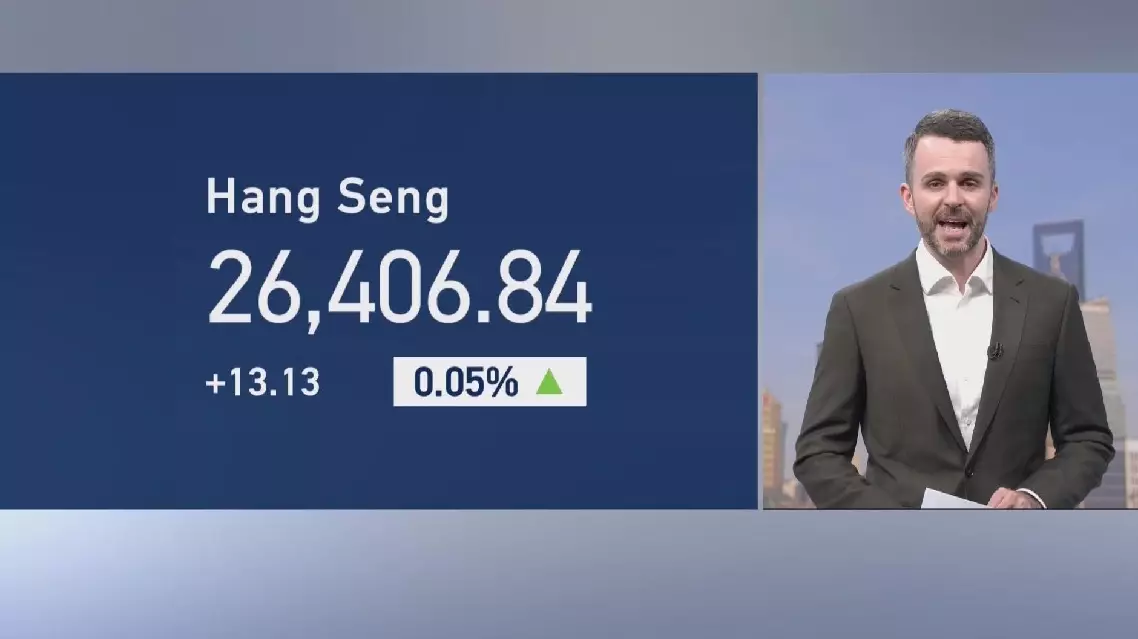
Hong Kong stocks rally, Tokyo slips amid Middle East turbulence