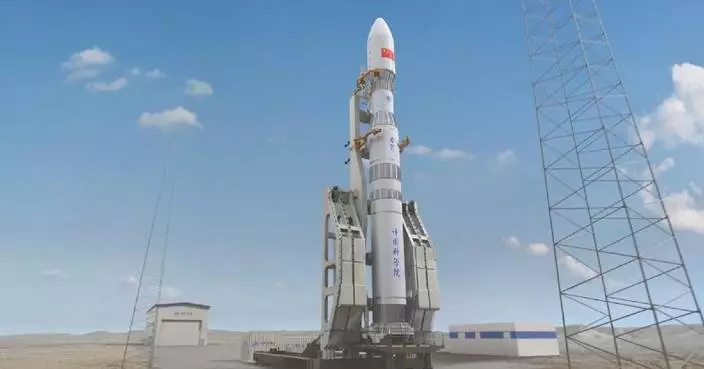
China launched the Tianzhou-10 cargo craft from the Wenchang Spacecraft Launch Site on Monday morning to deliver supplies, including artificial human embryos and a greenhouse gas monitor, to its orbiting Tiangong space station.
Upon arrival at the Tiangong space station, the payloads will be deployed to conduct 41 experiments, supporting the station's ongoing round of space science research.
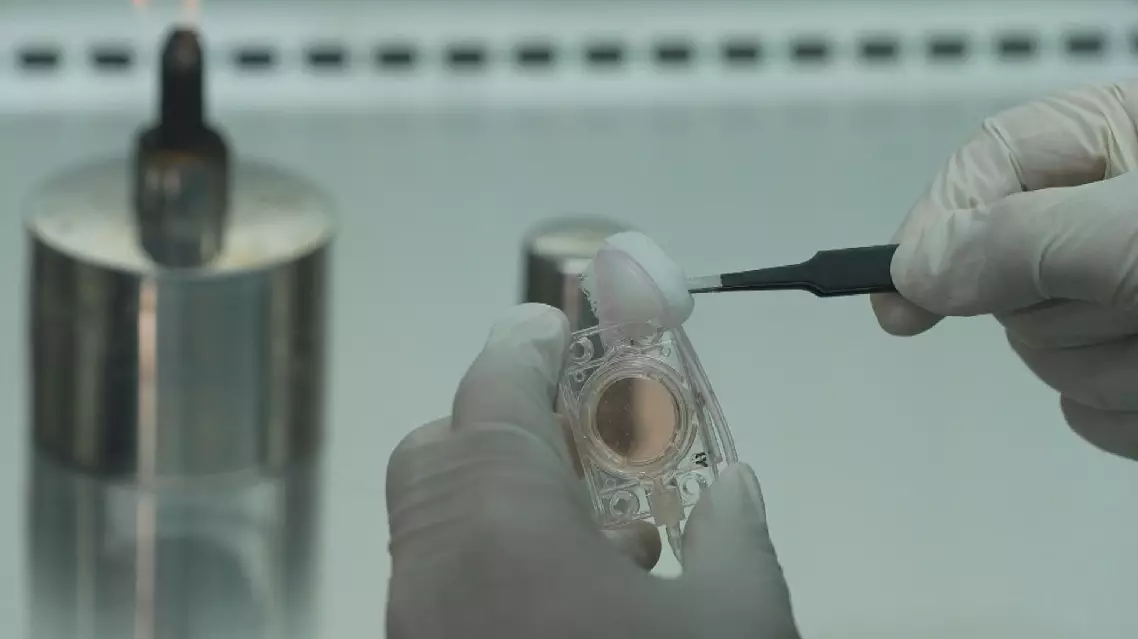
The experimental cargo includes zebrafish embryos, mouse embryos, and stem cell-derived artificial human embryos. The artificial human embryos, though not true life forms and unable to develop into human babies, will help simulate the earliest stages of human development.
The embryo experiments in orbit will help establish a space-based embryo research system spanning lower vertebrates to higher mammals. The biological research will provide insights into how the space environment, specifically microgravity and radiation, affects reproduction and development, to help understand the challenges of long-term human habitation in space.
"So, can humans reproduce in such a space environment? The entire series of project settings are actually aimed at answering this ultimate question - can humans reproduce? If there is an impact, what is it? How can we overcome this impact to ultimately reproduce in space? This is actually a very ambitious goal, but we have only taken the first step so far," said Yu Leqian, a researcher at the Chinese Academy of Sciences' (CAS) Institute of Zoology.
The cargo craft will also deliver a greenhouse gas monitoring instrument, developed under the leadership of the Hong Kong University of Science and Technology, which is designed to track the concentrations of carbon dioxide and methane across global mid- and low-latitudes. It will provide reliable, accurate and high-frequency data to support the monitoring, reporting and verification of such point-source carbon emissions.
"The data obtained from this project will be shared with the government and research institutions, and will also be uploaded to the website of the United Nations Environment Programme, for use by all research institutions worldwide. We believe that the outcomes of this project will play a positive role in reducing emissions in the Guangdong-Hong Kong-Macao Greater Bay Area, the whole country, even Belt and Road partner countries, and other countries," said Zhang Limin, chair professor of the Department of Civil and Environmental Engineering at the Hong Kong University of Science and Technology.
Tianzhou-10 is expected to remain docked in orbit for one year. Since the Tianzhou series cargo ships entered service, their mission durations have increased from about six months to nine-ten months, according to CASC.
The mission is the fifth cargo resupply flight of China's manned space program since the space station entered its application and development phase. It is also the 641st mission of the Long March rocket series.
China's Tianzhou-10 cargo craft delivers supplies for embryo experiments, greenhouse gas monitoring