Chinese President Xi Jinping met with Haji Al-Muhtadee Billah, the Crown Prince and Senior Minister at the Prime Minister's Office of Brunei Darussalam, in Beijing on Tuesday.
Pointing out that China and Brunei are close neighbors connected by the Maritime Silk Road, Xi said that China-Brunei cooperation not only brings tangible benefits to the people of both countries but also sets an example of equality and win-win cooperation between countries of different sizes.
Xi recalled his meeting with Sultan of Brunei Haji Hassanal Bolkiah Mu'izzaddin Waddaulah last year, saying they reached an important consensus on building a China-Brunei community with a shared future, and opened a new chapter in bilateral relations.
Noting that this year marks the 35th anniversary of the diplomatic relations between China and Brunei, Xi said in the face of a volatile and tumultuous international landscape, both sides should be guided by the vision of building a China-Brunei community with a shared future, strengthen strategic communication, deepen pragmatic cooperation, and inject more positive energy into regional peace and stability.
This year marks the beginning of China's 15th Five-Year Plan, and Brunei is striving towards the Brunei Vision 2035, Xi said, stressing that both sides should use this as a point of synergy to take their cooperation to a new level.
He made a four-point proposal in this regard:
First, China and Brunei should be strategic partners with a high degree of mutual trust, continue to firmly support each other, and promote coordinated exchanges and cooperation across all fields.
Second, be development partners committed to mutual benefit and win-win outcomes, advance major flagship cooperation projects, and expand cooperation in emerging fields such as artificial intelligence and digital economy.
Third, be civilization partners who understand and care for each other, jointly implement the Global Civilization Initiative, strengthen people-to-people exchanges, and create new highlights in fostering mutual understanding among the peoples.
Fourth, be partners in global governance. Together with ASEAN countries, China and Brunei should promote the building of a closer China-ASEAN community with a shared future, and build the region into a model of peace, stability, development, and prosperity amid the transformation not seen in a century.
Billah conveyed Hassanal's sincere greetings to Xi, saying that China is a long-standing friend of Brunei and that the two nations share a deep friendship.
Brunei firmly adheres to the one-China principle and is willing to work with China to advance the vision of building a community with a shared future as outlined by the two leaders, deepen the strategic cooperative partnership, maintain close high-level exchanges, and strengthen trade and investment cooperation for the benefit of the people of both countries.
Hailing China's remarkable accomplishments in economic and social development, Billah said he believes China will successfully implement the 15th Five-Year Plan and achieve greater development.
China has played a crucial role in promoting world peace and stability and safeguarding multilateralism and the international order, Billah said, adding that his country highly commends Xi's vision of building a community with a shared future for mankind and the Global Governance Initiative he proposed.
The ASEAN-China comprehensive strategic partnership has brought benefits to the region, and Brunei looks forward to working closely with China to deepen ASEAN-China cooperation and maintain regional prosperity and stability, said Billah.
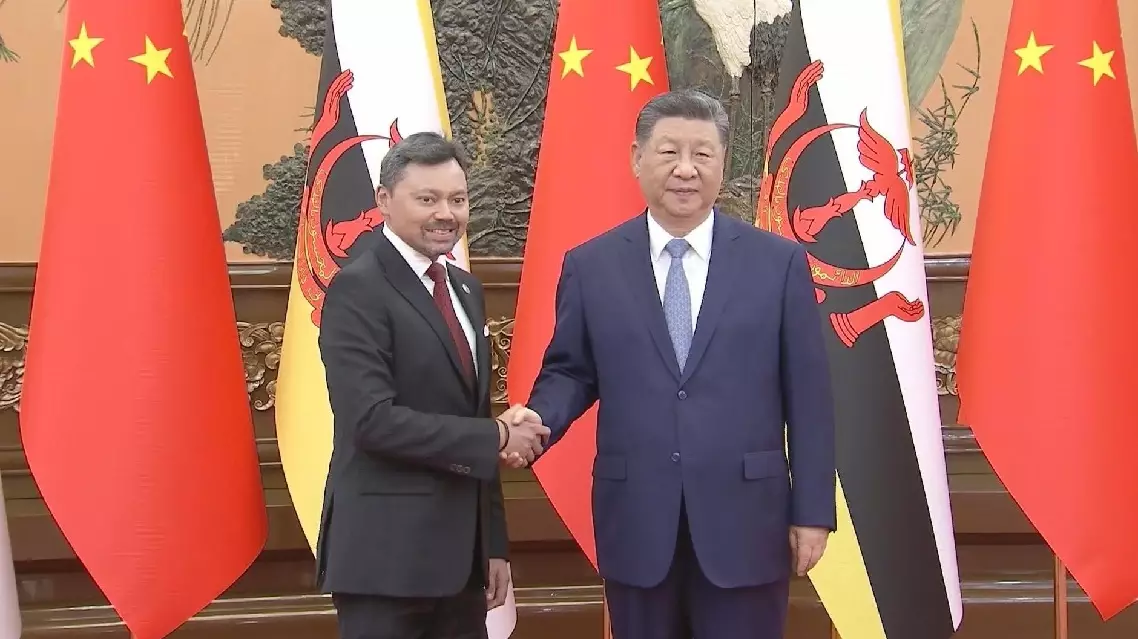
Xi meets Brunei's crown prince, calling for new chapter in bilateral relations
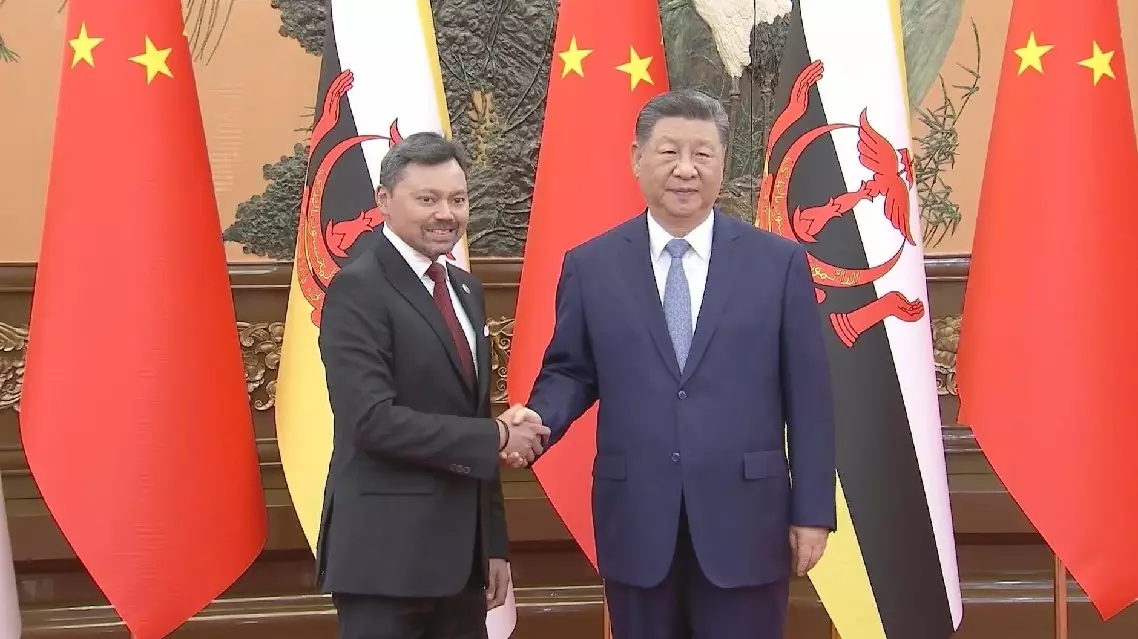
Xi meets Brunei's crown prince, calling for new chapter in bilateral relations