Skip to Content Facebook Feature Image

Muskets like those from 1776 are mostly exempt from today’s gun laws

News

Muskets like those from 1776 are mostly exempt from today’s gun laws
News

News

Muskets like those from 1776 are mostly exempt from today’s gun laws

2026-05-15 01:18 Last Updated At:01:20

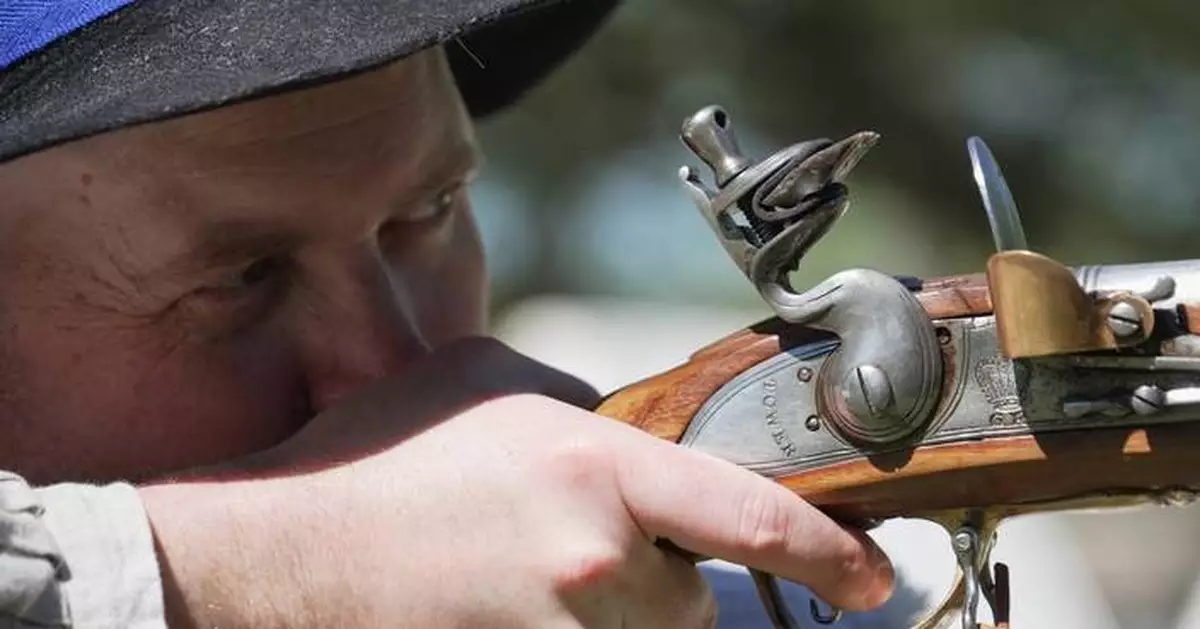
HALIFAX, N.C. (AP) — With 165 grains of black powder in the barrel, a .75-caliber Brown Bess flintlock musket like the ones the redcoats carried in 1776 can hurl a lead ball at a velocity of around 1,000 feet (305 meters) per second.

Imagine what that can do to a human body. Now, imagine that it’s almost completely exempt from gun regulations.

More Images
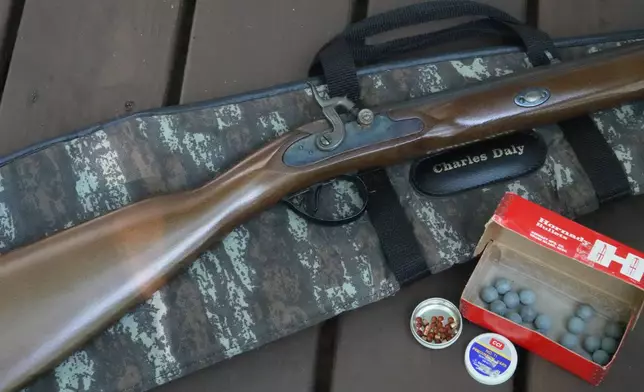
A .50-caliber Hawken replica rifle with lead balls and percussion caps sits on a deck in Wake Forest, N.C., on Monday, May 4, 2026. (AP Photo/Allen G. Breed)
A .50-caliber Hawken replica rifle with lead balls and percussion caps sits on a deck in Wake Forest, N.C., on Monday, May 4, 2026. (AP Photo/Allen G. Breed)

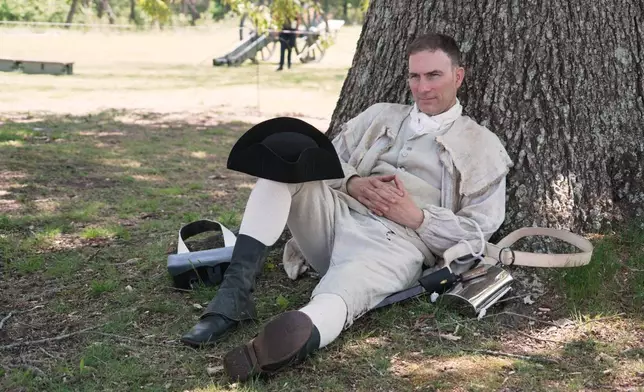
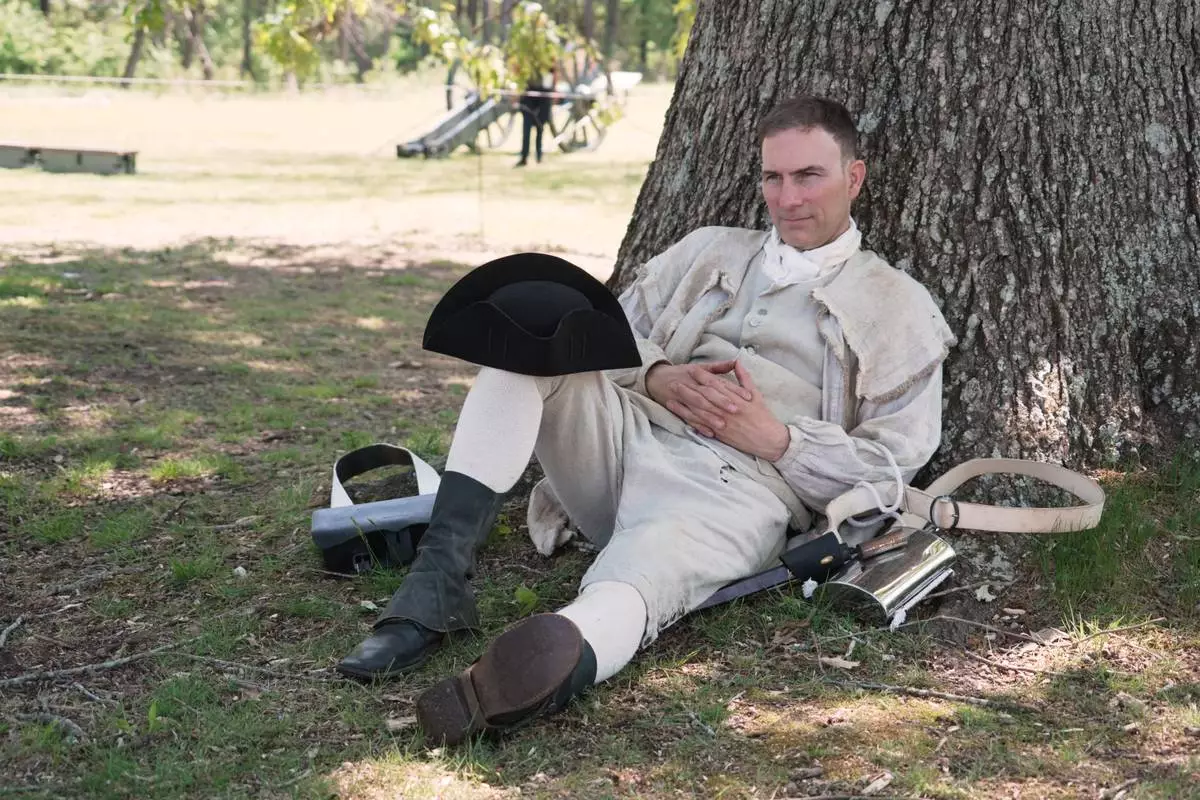
Army officer Jason Monhollen rests beneath a tree during a Revolutionary War event, in which he portrays a private in the 2nd North Carolina Infantry Regiment, in Halifax, N.C., on April 11, 2026. (AP Photo/Allen G. Breed)
Army officer Jason Monhollen rests beneath a tree during a Revolutionary War event, in which he portrays a private in the 2nd North Carolina Infantry Regiment, in Halifax, N.C., on April 11, 2026. (AP Photo/Allen G. Breed)

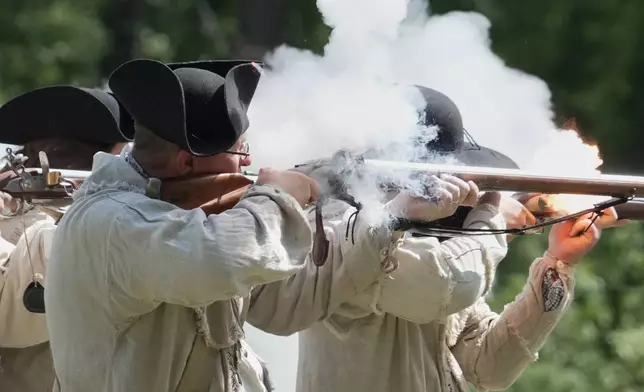
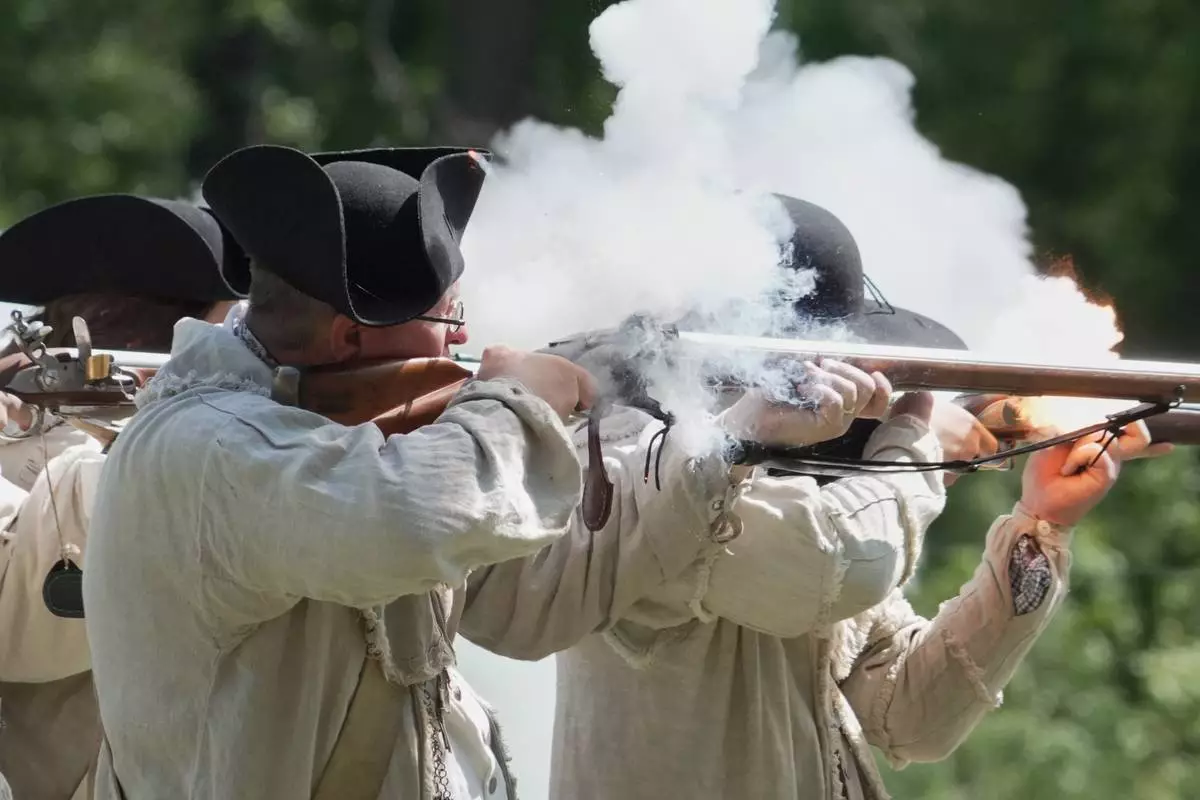
Re-enactors fire a volley with their flintlock muskets during a Revolutionary War event in Halifax, N.C., on April 11, 2026. (AP Photo/Allen G. Breed)
Re-enactors fire a volley with their flintlock muskets during a Revolutionary War event in Halifax, N.C., on April 11, 2026. (AP Photo/Allen G. Breed)

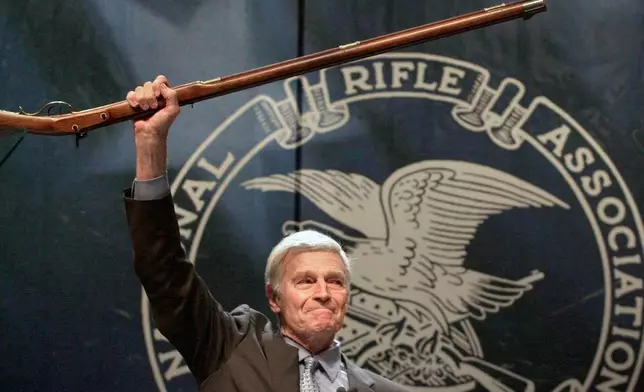
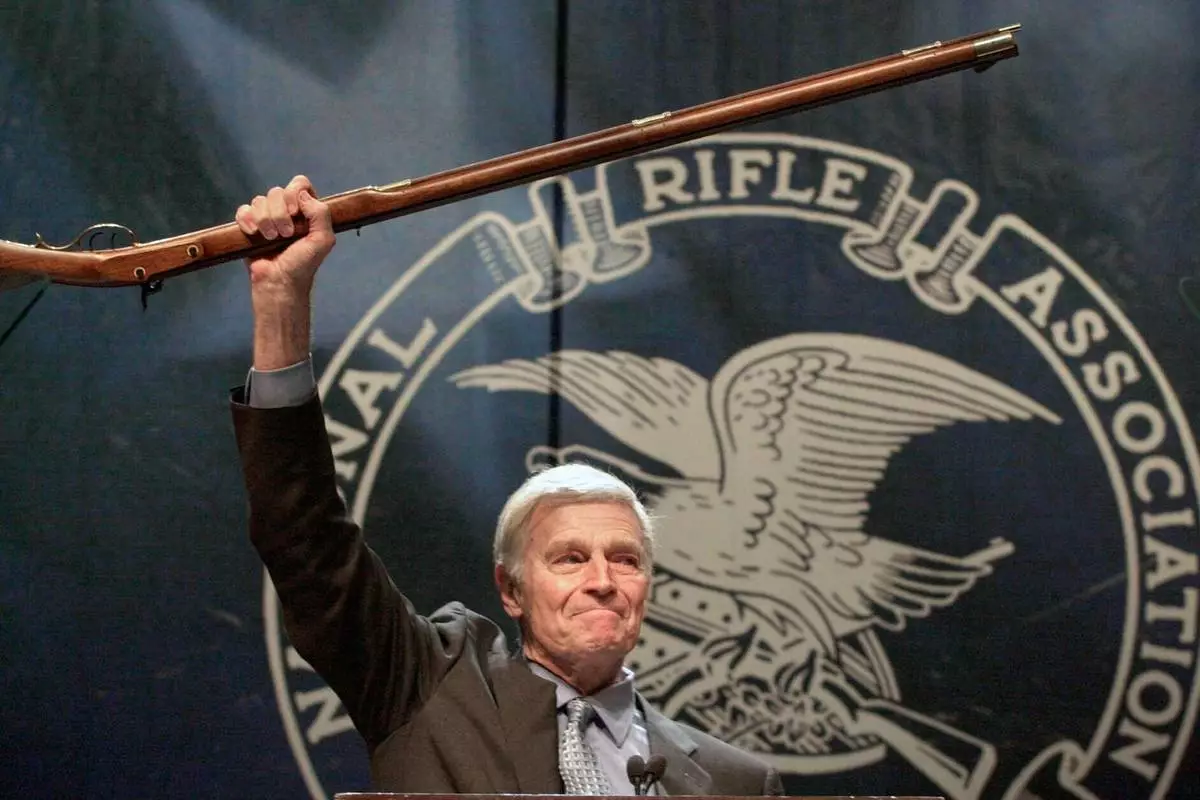
FILE - NRA president Charlton Heston holds up a musket as he tells the members attending the 129th Annual Meeting & Exhibit in Charlotte, N.C., that they can have his gun when they pry it, "from my cold dead hands," drawing a standing ovation, May 20, 2000. (AP Photo/Ric Feld, File)
FILE - NRA president Charlton Heston holds up a musket as he tells the members attending the 129th Annual Meeting & Exhibit in Charlotte, N.C., that they can have his gun when they pry it, "from my cold dead hands," drawing a standing ovation, May 20, 2000. (AP Photo/Ric Feld, File)

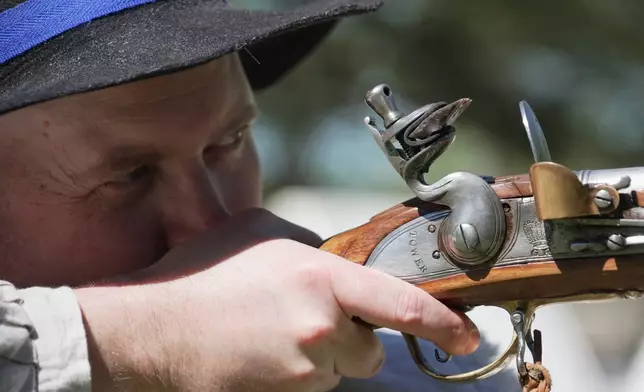
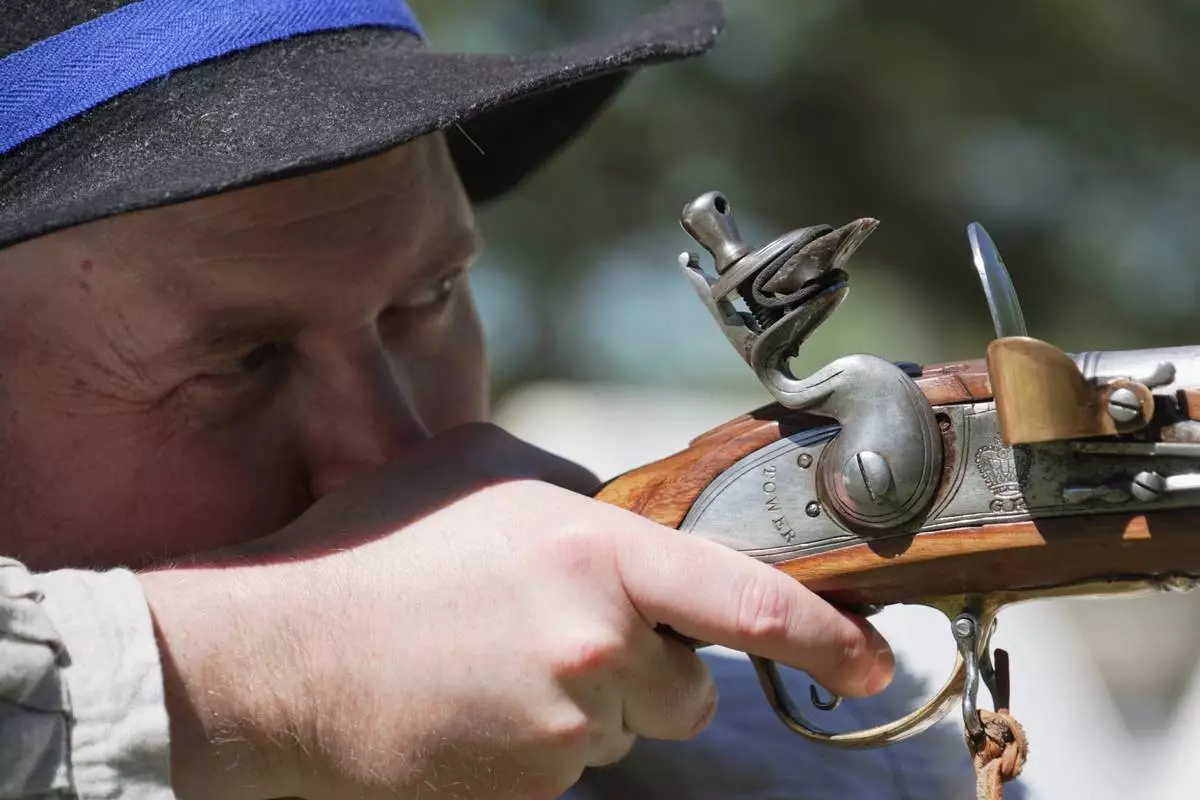
A.J. Drake, a historic interpreter, aims his Brown Bess flintlock replica musket during a Revolutionary War event in Halifax, N.C., on April 10, 2026. (AP Photo/Allen G. Breed)

A.J. Drake, a historic interpreter, aims his Brown Bess flintlock replica musket during a Revolutionary War event in Halifax, N.C., on April 10, 2026. (AP Photo/Allen G. Breed)

How can that be? Well, under federal and most state laws, many antique or replica guns aren’t technically considered firearms. In most places, even convicted felons can own them.

“I suspect the average judge would be surprised to find that out,” says Second Amendment scholar and gun-rights attorney Dave Hardy, himself the proud owner of two Civil War-era long guns.

During a National Rifle Association event back in 2000, the late actor Charlton Heston famously hoisted a flintlock — the single-shot weapon that won the Revolution and was still in wide use a half century after Congress debated the Second Amendment — into the air and said the Democrats would have to take it “from my cold, dead hands.”

He needn’t have worried.

During debate over the Gun Control Act of 1968, Sen. John Goodwin Tower argued that flintlocks and many other antique or replica guns should be exempt from regulation.

The Texas Republican said it was needed “to relieve an unnecessarily burdensome problem for serious collectors of antique firearms and for historians and museums.” Treating all weapons the same, he argued, would unfairly target collector items “which have little, if any, practical use as a firearm in the modern connotation.”

The provision defines an antique as any weapon “with a matchlock, flintlock, percussion cap, or similar type of ignition system” manufactured “in or before 1898” — as long as it hasn't been modified to fire modern ammunition. This generally means muzzleloaders that use black powder or a black powder substitute, though some early cartridge guns are included.

You can even own and fire a cannon.

Most states have adopted that language either verbatim or by direct reference to the federal provision. But, as military historian Patrick Luther says, “it’s a patchwork.”

“I live in NY (New York) and bought a civil war musket,” Luther, a Marine veteran with the website milsurpia.com, said in an email. “It was very similar to buying a regular firearm. Buying the blackpowder for the rifle felt not much different than buying a T-shirt.”

At least three states — Hawaii, Ohio and North Dakota — treat a smoothbore musket the same as an AK-47 or AR-15. Reenactor Jason Monhollen, an officer in the U.S. Army, says that’s “comparing apples and oranges.”

“It seems silly to put restriction on something that would be such a terrible weapon if you wanted to, you know, kill people,” says Monhollen, who portrays a private and carries a French Charleville musket in the 2nd North Carolina Regiment. “There’s just much better things. You can kill more people quickly with a car than you can with a musket.”

But these weapons are still deadly.

Maryland changed its law after a convicted sex offender killed his ex-girlfriend with a six-shot, .44-caliber cap and ball revolver purchased on the internet.

“It may have loaded like an 1851 weapon, but it fired like a 2017 manufactured modern handgun that was capable of lethal force,” Montgomery County State’s Attorney John McCarthy told reporters at the time.

Shadé's Law, passed in 2019, now prohibits people convicted of certain violent crimes from buying or possessing such weapons. But many states allow convicted felons to have these weapons; West Virginia makes an exception for people under an active protective order.

Some states’ laws are confusing or vague.

Montana law mentions “antique or replica arms” in a code regulating firearms and ammunition manufactured in the state. But nowhere in the code are those weapons defined.

Wisconsin uses the federal definition, but the only reference comes in a law regarding “look-alike” firearms.

And, of course, many local ordinances, like the one in Wake County, North Carolina, prohibit the firing of any “barreled weapon capable of discharging projectiles.” In many jurisdictions, it’s illegal to brandish even a toy gun at someone.

“Federal law does not exclude antique firearms from location-based restrictions,” Austin Gunderson, counsel for the North Dakota Legislative Council, said in an email.

Sometimes, attempts to strengthen gun laws have had unintended consequences.

The attorney general of New Jersey, one of the 13 original states, recently had to offer guidance when a new law targeting ghost guns seemed to require all firearms — including antiques and even air guns — to have serial numbers.

When New York toughened its gun laws in 2022, it required background checks for transfers and purchases of antique guns, and barred firearms of any kind from certain “sensitive places” like parks and museum sites — just the kinds of places reenactors appear most.

An exemption was later carved out for people “lawfully engaged in historical reenactments, educational programming involving historical weapons of warfare, or motion picture or theatrical productions.” But that hasn’t stopped out-of-state reenactors from worrying their muskets will be confiscated at the George Washington Bridge, says Justin Costantino, adjutant of the Long Island Companies of the 3rd New York Regiment.

“If the New York State Police department wants to charge me with weapons possession while I’m wearing a cocked hat and carrying around a Charleville ’66,” says Costantino, a graduate student in history, “then please, don’t call my lawyer. Call the New York Post!”

Then again, Costantino hates to hear a mother at a reenactment tell her child, “Oh, no. Don’t worry, sweetie. It’s not real.”

“It’s not really loaded, but it is really a weapon,” he says. “It’s really gunpowder. And if you stand close to it, you’ll feel the kind of breath of hot air ... They’re still things that we have to take very seriously, and you have to be safe with.”

AP Writer Jack Dura in Bismarck, North Dakota, contributed to this report.
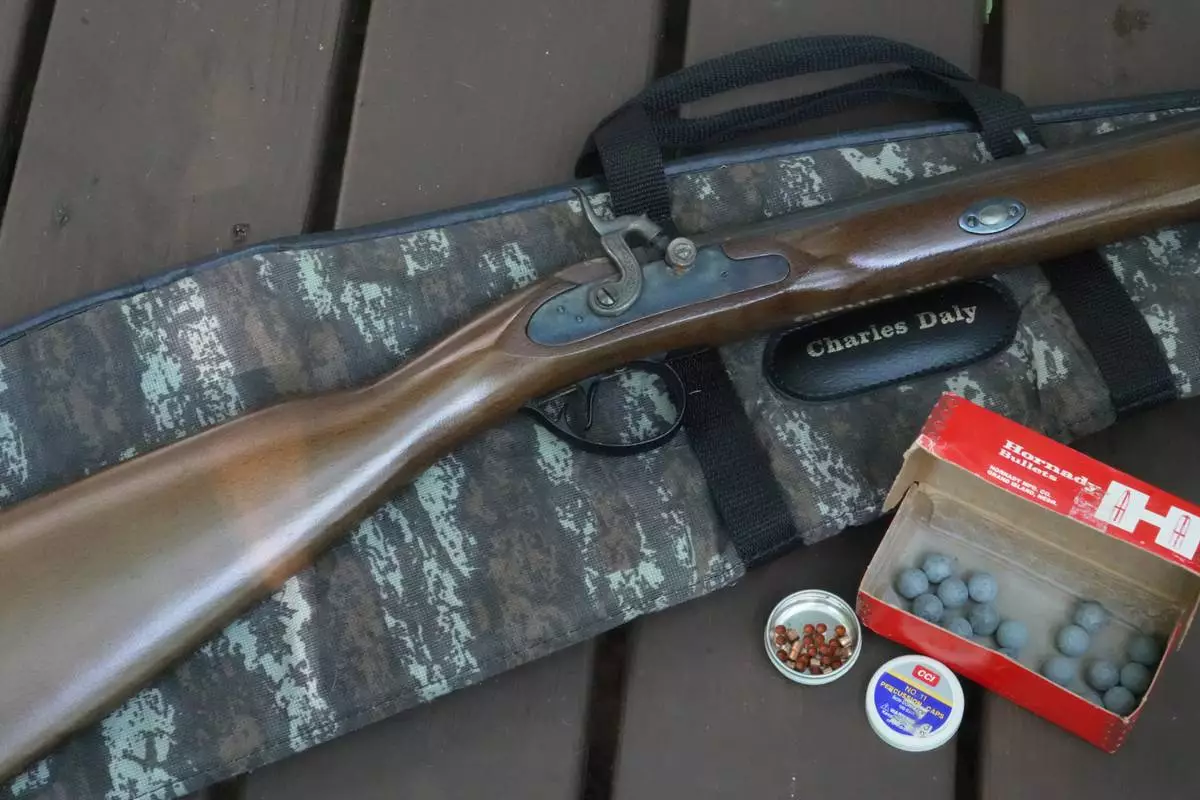
A .50-caliber Hawken replica rifle with lead balls and percussion caps sits on a deck in Wake Forest, N.C., on Monday, May 4, 2026. (AP Photo/Allen G. Breed)
A .50-caliber Hawken replica rifle with lead balls and percussion caps sits on a deck in Wake Forest, N.C., on Monday, May 4, 2026. (AP Photo/Allen G. Breed)

Army officer Jason Monhollen rests beneath a tree during a Revolutionary War event, in which he portrays a private in the 2nd North Carolina Infantry Regiment, in Halifax, N.C., on April 11, 2026. (AP Photo/Allen G. Breed)
Army officer Jason Monhollen rests beneath a tree during a Revolutionary War event, in which he portrays a private in the 2nd North Carolina Infantry Regiment, in Halifax, N.C., on April 11, 2026. (AP Photo/Allen G. Breed)

Re-enactors fire a volley with their flintlock muskets during a Revolutionary War event in Halifax, N.C., on April 11, 2026. (AP Photo/Allen G. Breed)
Re-enactors fire a volley with their flintlock muskets during a Revolutionary War event in Halifax, N.C., on April 11, 2026. (AP Photo/Allen G. Breed)

FILE - NRA president Charlton Heston holds up a musket as he tells the members attending the 129th Annual Meeting & Exhibit in Charlotte, N.C., that they can have his gun when they pry it, "from my cold dead hands," drawing a standing ovation, May 20, 2000. (AP Photo/Ric Feld, File)
FILE - NRA president Charlton Heston holds up a musket as he tells the members attending the 129th Annual Meeting & Exhibit in Charlotte, N.C., that they can have his gun when they pry it, "from my cold dead hands," drawing a standing ovation, May 20, 2000. (AP Photo/Ric Feld, File)

A.J. Drake, a historic interpreter, aims his Brown Bess flintlock replica musket during a Revolutionary War event in Halifax, N.C., on April 10, 2026. (AP Photo/Allen G. Breed)


A.J. Drake, a historic interpreter, aims his Brown Bess flintlock replica musket during a Revolutionary War event in Halifax, N.C., on April 10, 2026. (AP Photo/Allen G. Breed)

LONDON (AP) — British Prime Minister Keir Starmer’s leadership is on the rocks after his Labour Party suffered heavy defeats in local elections last week.

Health Secretary Wes Streeting on Thursday became the first Cabinet member to resign though he didn't immediately launch his widely expected bid to oust Starmer.

The election beating may have been the final straw for a leader already tainted by his decision to appoint Peter Mandelson as Britain’s ambassador to Washington despite the veteran politician’s ties to Jeffrey Epstein.

More than 90 Labour lawmakers have called for Starmer to step down and make way for a contest to pick a new leader, who would take over as prime minister, and several junior ministers have quit.

Starmer has insisted he is staying put, and no formal leadership challenge has yet been launched.

While there is no clear front-runner to replace Starmer, here are some of the leading contenders for the top job:

Wes Streeting, 43, is widely regarded as one of the government’s best communicators and has led on one of its key pledges, improving the creaky National Health Service.

That mission was personal. The NHS saved his life when he had kidney cancer, and Streeting said he would repay the debt by saving the health service.

Streeting, who was elected a lawmaker in 2015, was long considered to have his eye on the top job but had strongly denied he was plotting to replace Starmer.

He charted his rise from his roots in London’s working-class East End, where he grew up in public housing, in his memoir, “One Boy, Two Bills and a Fry Up: A Memoir of Growing Up and Getting On.” The title refers to two grandfathers both named Bill: The one on his mother’s side was associated with gangsters and served prison time for armed robbery; he credits the one on his father's side with leading him on the path to Cambridge University.

Streeting got into politics at a young age, leading the Cambridge student union and becoming president of the National Union of Students.

He later worked for Stonewall, the LGBT group, and has spoken of his struggle coming out as gay and reconciling his sexuality with his Anglican faith.

Former Deputy Prime Minister Angela Rayner has long set herself apart as a different kind of politician with a compelling personal story. She was brought up in social housing and left school at 16 as a teen mother.

Rayner, 46, was active in trade unions before she was elected a lawmaker in 2015 and is on the left of the party. She soon rose to Labour’s senior ranks when the party was in opposition and was elected deputy leader in 2020.

Rayner enjoys significant support within the party, but she was forced to resign from the government last year after admitting she did not pay enough tax on a house purchase. She announced Thursday that she had cleared up the issue with tax authorities in what appeared to be a precursor to a possible leadership challenge.

After the fallout over the Epstein files’ revelations on Mandelson, Rayner led a lawmakers’ revolt to force the government to cede control to Parliament’s Intelligence and Security Committee to decide which documents should be released into the public domain.

Former Cabinet minister Andy Burnham, the popular, center-left Greater Manchester mayor, has long been seen as a potential rival for Starmer.

By longstanding convention, the prime minister must be a member of Parliament. Burnham's supporters favor a delayed leadership contest that would give him time to return to the House of Commons through a special election.

His route back to the House of Commons opened up Thursday after Josh Simons, the representative for the Makerfield constituency in Greater Manchester, said he will step down to facilitate the return of Burnham.

Labour’s executive body will now have to decide whether Burnham will be allowed to stand. Earlier this year, Burnham was blocked from fighting a seat in Manchester.

If he’s allowed to stand, he will likely have to fend off Reform UK, which came in second at the last election when Labour's majority was around 5,400 votes, or around 13%.

Burnham said he will be seeking to run.

“I grew up in this area and have lived here for 25 years,” he said on X. “I care deeply about it and its people. I know they have been let down by national politics.”

Burnham, 56, served in senior roles in previous Labour governments, including as culture secretary and health secretary.

Energy Secretary Ed Miliband is a former Labour leader, but his five years at the top of the party when it was in opposition ended in the party's 2015 election defeat. Miliband, 56, has publicly played down any desire to return to the job, but he is one of the most experienced members of the Cabinet.

Home Secretary Shabana Mahmood, 45, has one of the toughest jobs in government, overseeing immigration and law and order. She has become a favorite of many on the right of the Labour Party with her moves to tighten border controls and crack down on unauthorized immigration.

The former Royal Marine who served with distinction in Afghanistan is the armed forces minister in Starmer’s Labour government and has seen his stock rise within the party ever since he was first elected to Parliament in Labour’s 2024 landslide election victory.

Carns, 46, has a captivating personal story that could attract support among the different factions within Labour. In addition to his distinguished service in Afghanistan, which saw him awarded the Military Cross in 2011, Carns was born in a working class family in the Scottish oil town of Aberdeen to a single mother.

“We do not need more slogans, strategies, press releases or commissions,” Carns said in an article for The New Statesman magazine published on Thursday, “We need action.”

His lack of experience could be a weakness. Replacing a leader who has been criticized for his lack of political sense with a relative newcomer, however compelling their backstory, could be risky

Jill Lawless, Pan Pylas and Brian Melley contributed.

FILE - This photo combination shows, from left, Wes Streeting in Liverpool, Sept. 30, 2025, Angela Rayner in Shoreditch, London, June 5, 2025, Andy Burnham in Liverpool, Sept. 29, 2025, Shabana Mahmood in Liverpool, Sept. 29, 2025 and Ed Miliband in Hamburg, Germany, Jan. 26, 2026. (AP Photo/Jon Super, Kirsty Wigglesworth, Martin Meissner, File)

FILE - This photo combination shows, from left, Wes Streeting in Liverpool, Sept. 30, 2025, Angela Rayner in Shoreditch, London, June 5, 2025, Andy Burnham in Liverpool, Sept. 29, 2025, Shabana Mahmood in Liverpool, Sept. 29, 2025 and Ed Miliband in Hamburg, Germany, Jan. 26, 2026. (AP Photo/Jon Super, Kirsty Wigglesworth, Martin Meissner, File)

Recommended Articles