BARCELONA, Spain (AP) — Pick one up. Be seduced by its glossy cover. Gaze upon the impossibly muscular body clad in a skin-tight suit. Our hero or heroine will surely be soaring, shouting, blasting a villain into next week.
They are ridiculous. They are addictively great. Comic books, of the superhero variety, are 100% American.
Compare the thin comic book to Europe’s graphic novels, and they come off looking flimsy, infantile. Compare the American comic to Japanese Manga and they appear innocent in their fixation with heroism; they hark back to a departed American age.
Once a nickel, a dime, a quarter, now the price of a latte, they are objects of American consumer capitalism. The comic is literature in junk-food version. Candy for the eyes, candy for the mind.
Yet what truly makes them American objects is what plays out in their 32 pages month after month, decade upon decade.
When the Fantastic Four took their fateful space journey in 1961 and “cosmic rays” transformed the quartet into unwilling superheroes, comics entered a weird realm where the all-powerful were also the unwilling, decidedly modern victims of science and circumstance.
Spider-Man, the Hulk, Wolverine (the list goes on) were given supernatural abilities that made them outcasts, obliging them to be flawed messiahs.
They were, by some quirk of the American character, bound to Peter Parker’s moral imperative: “With great power comes great responsibility." They are versions of an American Sisyphus, bound to saving us over and over again.
What could be more American — that might, when lashed to a sense of justice, eventually, makes right? So honorable, so naïve.
To this day, though the tone is darker, Marvel and DC, the two mammoths of comics, continue to reimagine the American character.
Once side attractions in a world of leading white men, Gwen Stacy, Jean Grey and Susan Storm have in recent years emerged as leaders to reinvigorate the Spider-Man, X-Men and Fantastic Four sagas. Absolute Wonder Woman has broken ground with beautiful art. Miles Morales is Spidey for a new generation.
Yet the central fissures remain.
Bruce Wayne can't connect with anyone other than his butler; he is the lonely individual in an atomized America. Steve Rogers bears the burden of representing the “Greatest Generation” from World War II. He is a Captain America forever out of place, even in his own land.
And could there be a more iconic tech magnate toying with humanity's fate than Superman's nemesis Lex Luthor and his delusions of grandeur? If only our world had a bespectacled Clark Kent keeping an eye on things. Just in case.
Part of a recurring series, “American Objects,” marking the 250th anniversary of the United States. For more American objects, click here. For more stories on the anniversary, click here.
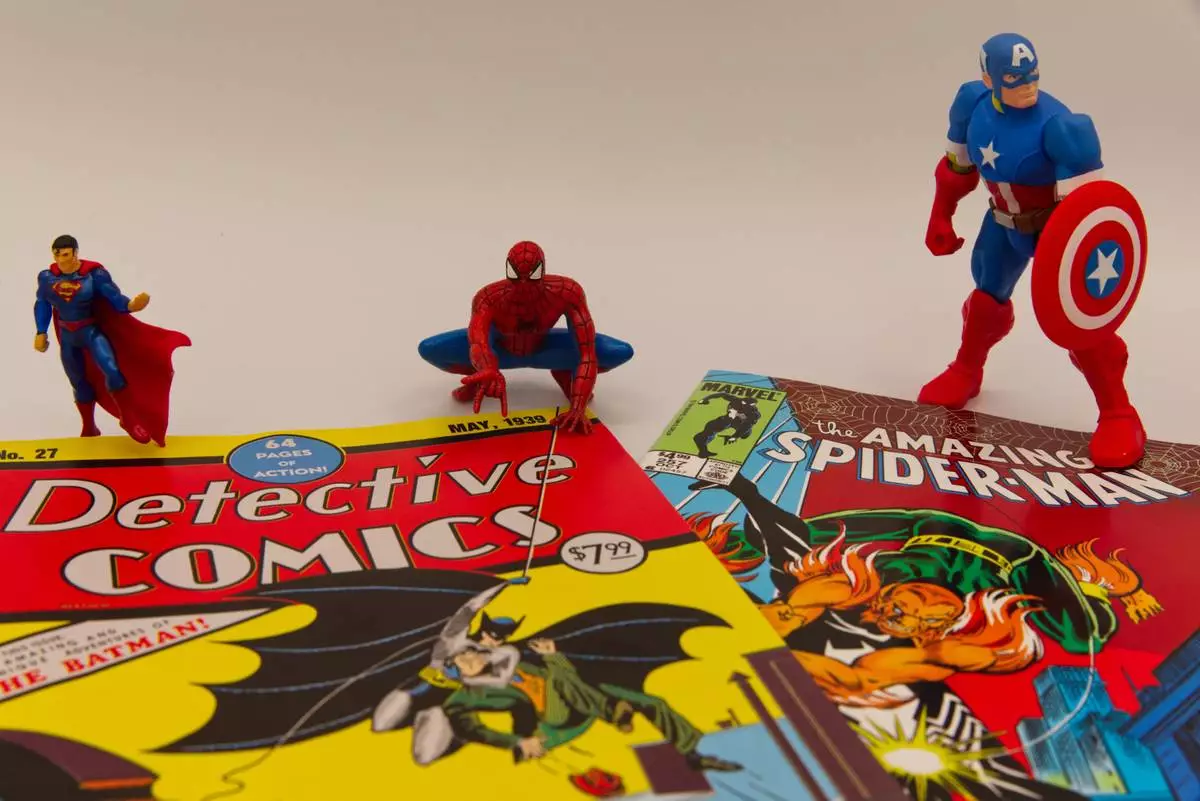
Famous comic book superhero figurines stand next to facsimile copies of comic book issues in Phoenix, May 14, 2026. (AP Photo/Dario Lopez-Mills)
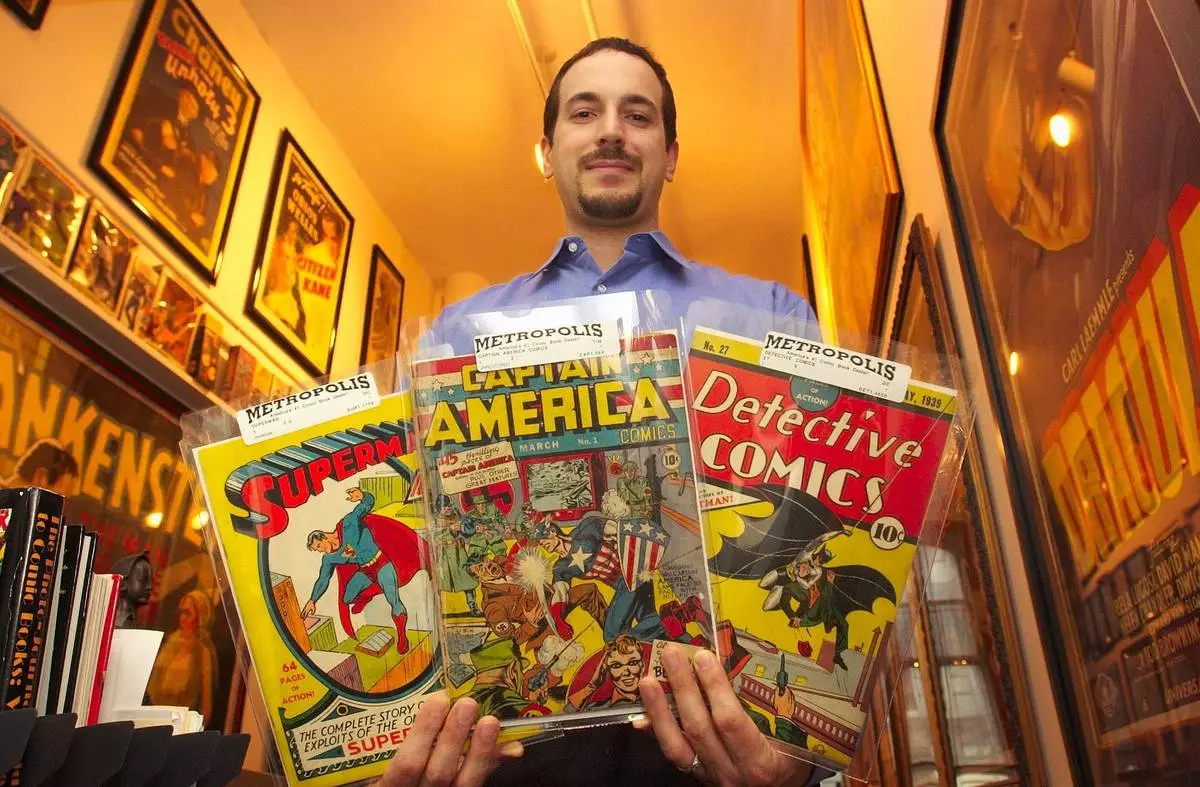
File - Vincent Zurzolo, co-partner of Metropolis Collectibles, holds three examples of the company's vast collection of comic books in their offices in New York, Thursday, July 10, 2003. (AP Photo/Gregory Bull, File)
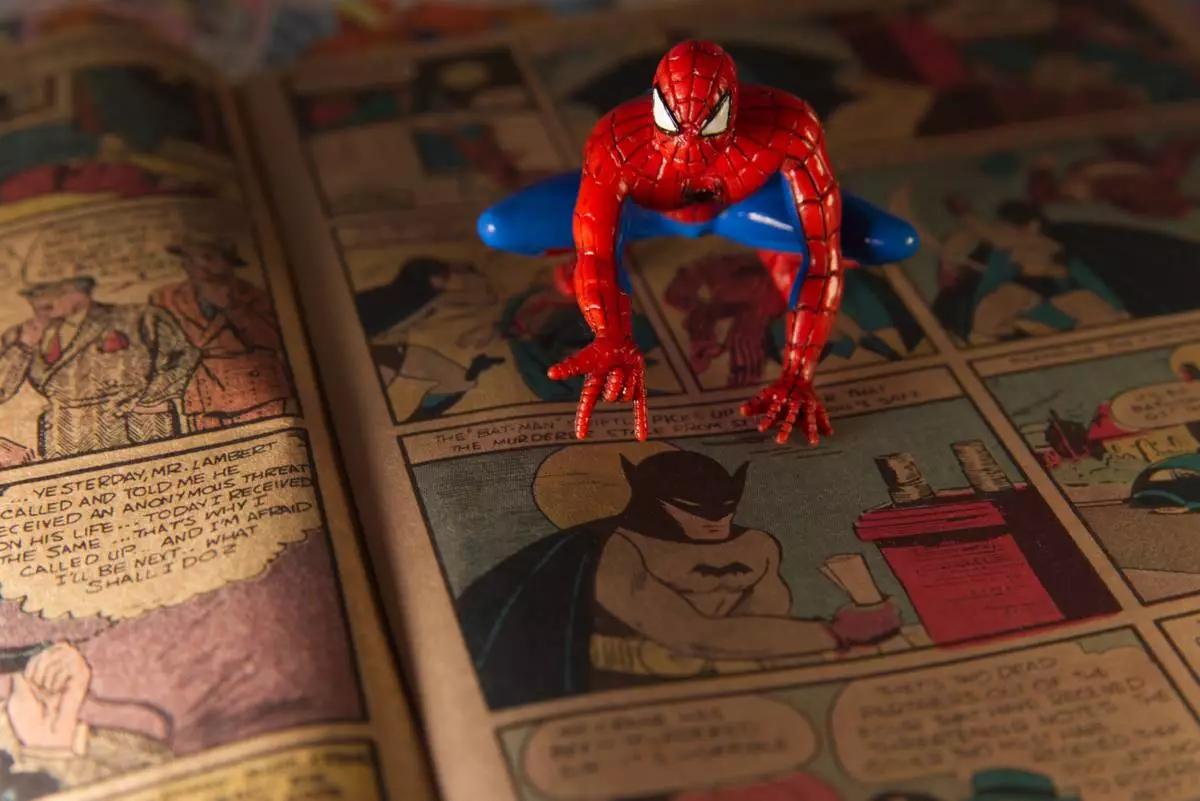
A Spiderman figurine sits atop a facsimile copy of the May 1939 Detective Comics anthology series in Phoenix, Thursday May 14, 2026. This issue made history for including the debut of the Batman superhero in a story called "The Case of the Chemical Syndicate". (AP Photo/Dario Lopez-Mills)
Africa’s top public health body has confirmed a new Ebola outbreak in Congo’s Ituri province, the 17th since the disease first emerged in the country in 1976.
A total of 246 suspected cases and 65 deaths in Congo have already been recorded in the new outbreak, the Africa Centres for Disease Control and Prevention said in a statement on Friday.
In neighboring Uganda, an Ebola case has been confirmed in a man from Congo who died in a hospital in the capital, Kampala. Ugandan officials said the man was tested posthumously.
Here’s what to know about the health crisis:
The suspected Ebola cases have mainly been recorded in Ituri's Mongwalu and Rwampara health zones. Suspected cases have also been reported in Bunia, the capital of Ituri province.
So far, only four of the deaths reported are laboratory-confirmed cases, but the new outbreak was confirmed after many suspected cases.
Ituri is in a remote eastern part of Congo with poor road networks, and is more than 1,000 kilometers (620 miles) from the nation’s capital, Kinshasa.
One major concern, the Africa CDC said, is the proximity of affected areas to Uganda and South Sudan. Bunia, Ituri's main city, is near the border with Uganda.
The agency said there's also risk of further spread due to intense population movement and attacks by armed groups that have killed dozens and displaced thousands in parts of Ituri province in the past year.
There are also gaps in contact tracing, the Africa CDC said, as local authorities race to find those who might have been exposed to the virus.
Africa CDC said results so far suggest a variant of illness other than the Ebola virus, also known as the Ebola Zaire strain. It said sequencing is ongoing to further characterize the strain, with results expected within the next 24 hours.
The Ebola Zaire strain was prominent in Congo’s past outbreaks, including the 2018 to 2020 outbreak in the eastern region that killed more than 1,000 people.
The World Health Organization says the Ebola disease is caused by a group of viruses, and that three of them are known to cause large outbreaks: Ebola virus, Sudan virus and Bundibugyo virus.
WHO said during Congo's Ebola outbreak last year that the country has a stockpile of treatments and some 2,000 doses of vaccine. However, the vaccine is for the Ebola virus, not the Sudan or Bundibugyo viruses.
Dr. Gabriel Nsakala, a professor of public health who has been involved in past Ebola outbreak responses in Congo, said treatments for viral infections like Ebola are often directed at symptoms and that efforts regarding vaccines would become clearer when the strain in the new outbreak is confirmed.
In Uganda, authorities said the case confirmed there was of the Bundibugyo virus, a strain that has been endemic to that country. However, health officials said the case was “imported” from Congo and that there had been no local cases detected.
Ugandan health officials said contacts linked to that case have been quarantined, including a high-risk contact who is a close relative of the deceased.
The Africa CDC convened an urgent high-level coordination meeting Friday with health authorities from Congo, Uganda and South Sudan, together with key partners including U.N. agencies and other countries.
The meeting, the agency said, was set to focus on immediate response priorities, cross-border coordination, surveillance, safe and dignified burials and resource mobilization, among other areas.
Congo and health workers on the ground have a high level of experience from past outbreaks, in addition to existing infrastructure such as laboratories, Nsakala said. “Now, the expertise and equipment need to be delivered quickly,” he added.
Congo is Africa’s second-largest country by land area and often faces logistical challenges in responding to disease outbreaks due to bad roads and long distances.
During last year’s outbreak, which lasted three months, the WHO initially faced significant challenges in delivering vaccines, which took a week after the outbreak was confirmed.
Funding has also been problematic. During last year's outbreak, health officials were concerned about the impact of recent U.S. funding cuts.
The U.S. had supported the response to Congo’s past Ebola outbreaks, including in 2021 when the U.S. Agency for International Development provided up to $11.5 million to support efforts across Africa.
The Ebola virus is highly contagious and can be transmitted to people from wild animals. It then spreads in the human population through contact with bodily fluids such as vomit, blood or semen, and with surfaces and materials such as bedding and clothing contaminated with these fluids.
The disease it causes is a rare but severe — and often fatal — illness in people. Symptoms include fever, vomiting, diarrhea, muscle pain and at times internal and external bleeding.
The virus was first discovered in 1976, near the Ebola River in what is now Congo. The first outbreaks occurred in remote villages in Central Africa, near tropical rainforests.
——
Saleh Mwanamilongo in Bonn, Germany, contributed.
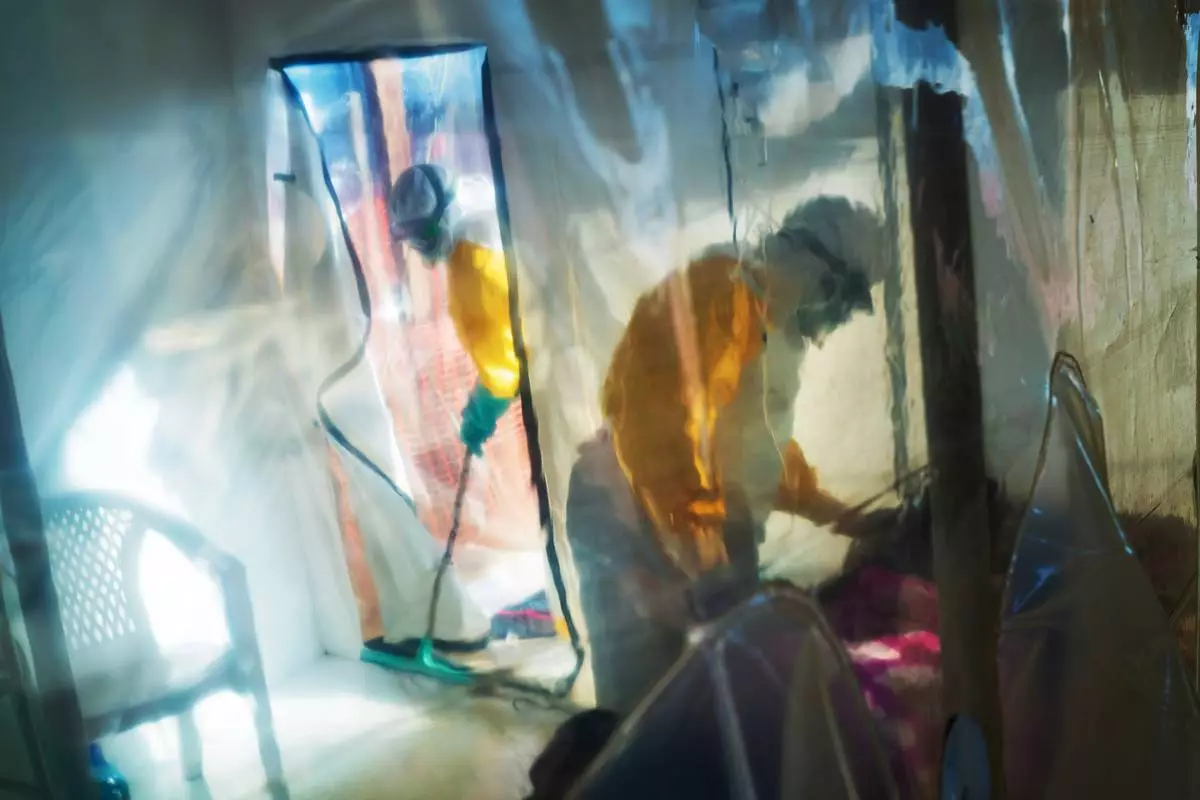
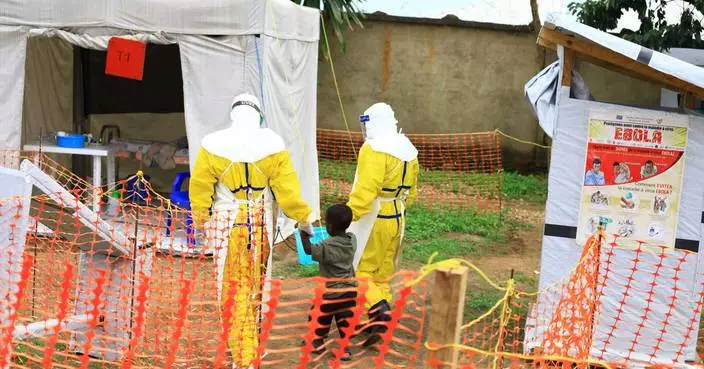
FILE - Health workers wearing protective suits tend to an Ebola victim kept in an isolation tent in Beni, Congo, July 13, 2019. (AP Photo/Jerome Delay, File)
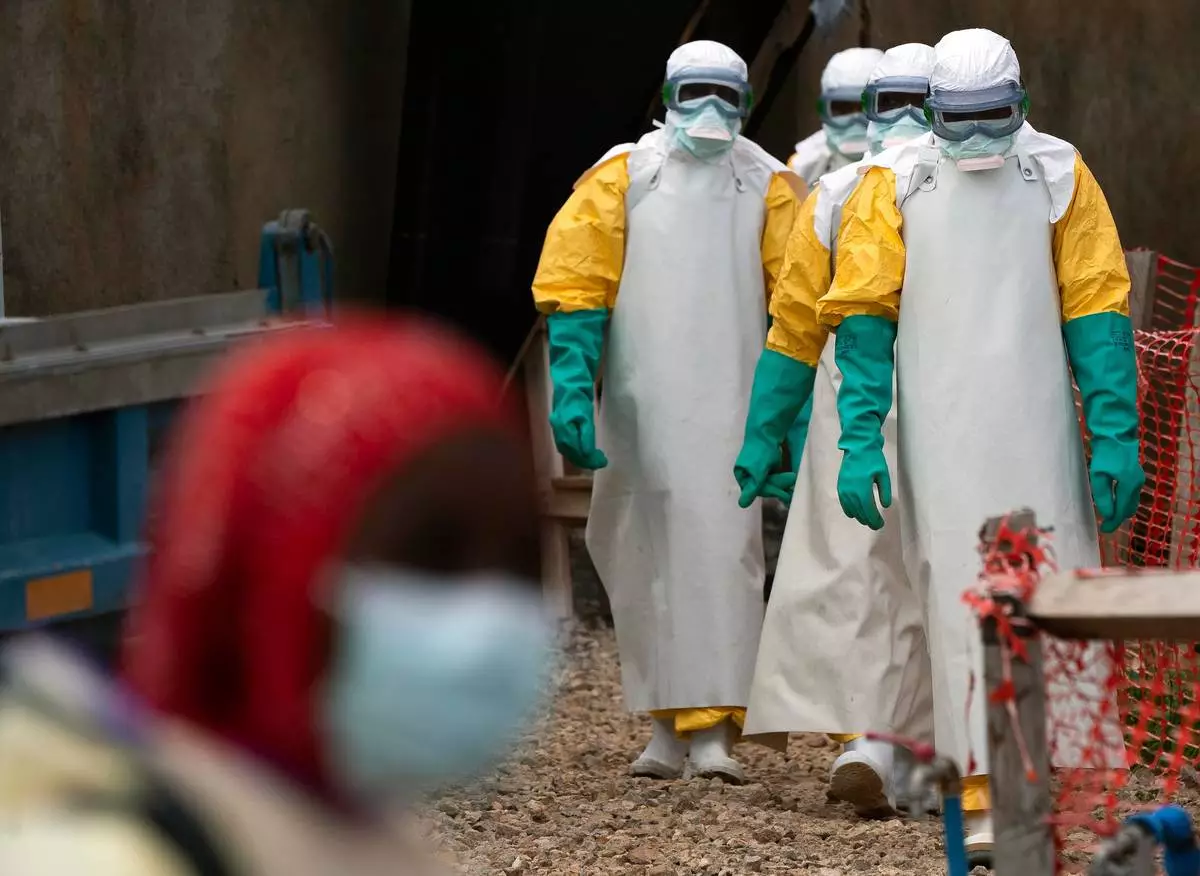
FILE - Health workers dressed in protective gear begin their shift at an Ebola treatment center in Beni, Congo, July 16, 2019. (AP Photo/Jerome Delay, File)
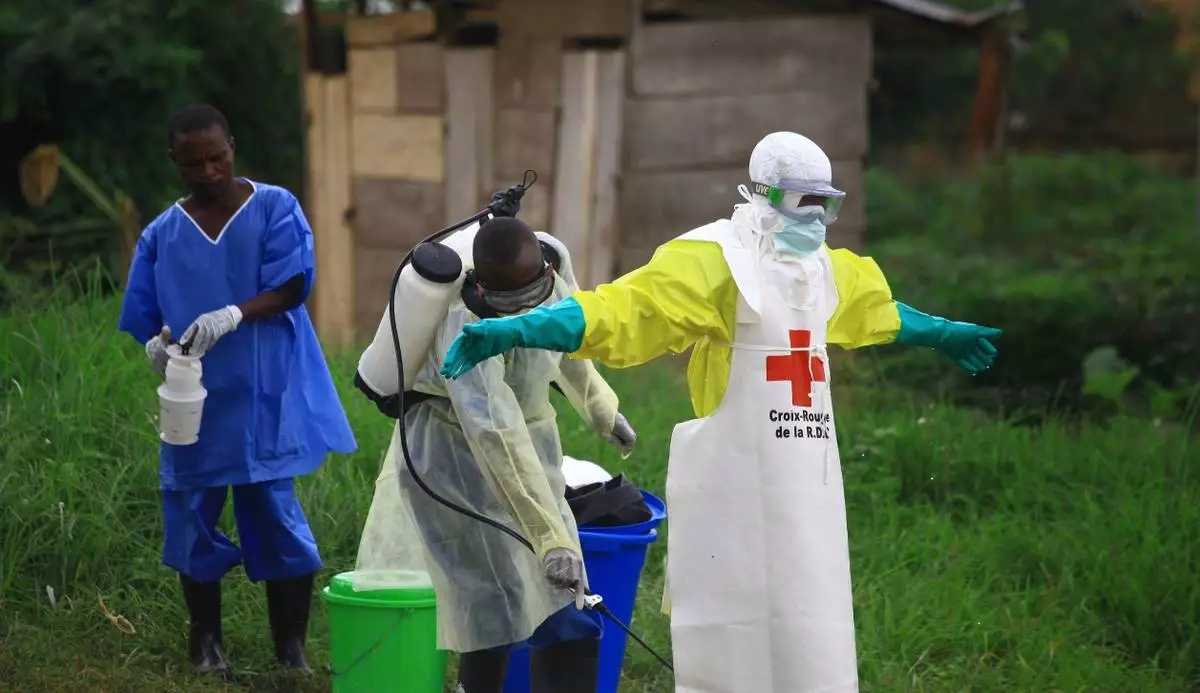
FILE - A health worker sprays disinfectant on his colleague after working at an Ebola treatment center in Beni, eastern Congo, Sept 9, 2018. (AP Photo/Al-hadji Kudra Maliro, File)