BUENOS AIRES, Argentina (AP) — At 6 a.m., in the Mataderos neighborhood of Buenos Aires, workers unload sides of beef from a truck outside a butcher shop as customers line up for wholesale purchases. Inside, 73-year-old owner Jorge García and his staff prepare meat orders before dawn.
Among the stacks of beef boxes and red meat cuts hanging from metal hooks, chicken and pork are increasingly present.
Click to Gallery
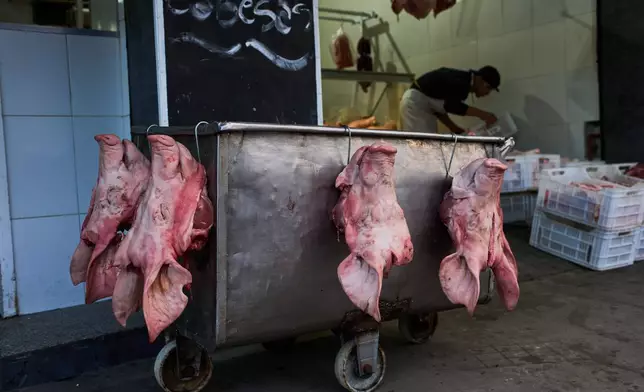
Pig heads hang outside a butcher shop for sale at the Mataderos meat market in Buenos Aires, Argentina, Thursday, May 14, 2026. (AP Photo/Rodrigo Abd)
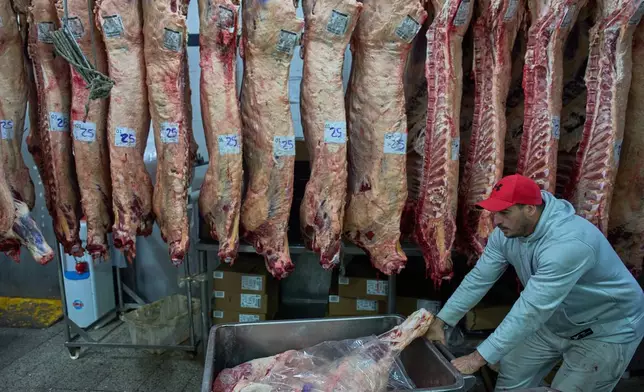
A worker stacks beef inside a fridge at a butcher shop in the Mataderos meat market in Buenos Aires, Argentina, Thursday, May 14, 2026. (AP Photo/Rodrigo Abd)
A worker loads pork and beef into a customer's trunk at the Mataderos meat market in Buenos Aires, Argentina, Thursday, May 14, 2026. (AP Photo/Rodrigo Abd)
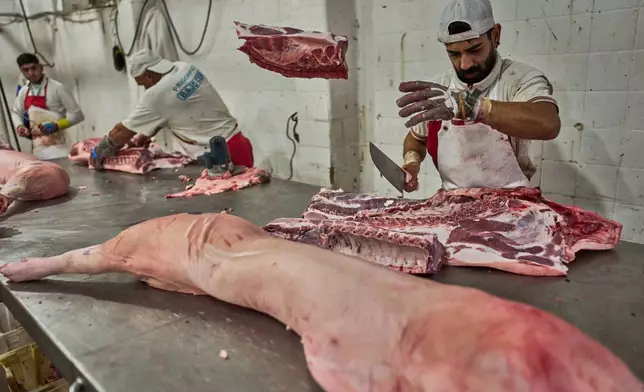
A worker cuts pork at the Mataderos meat market in Buenos Aires, Argentina, Thursday, May 14, 2026. (AP Photo/Rodrigo Abd)
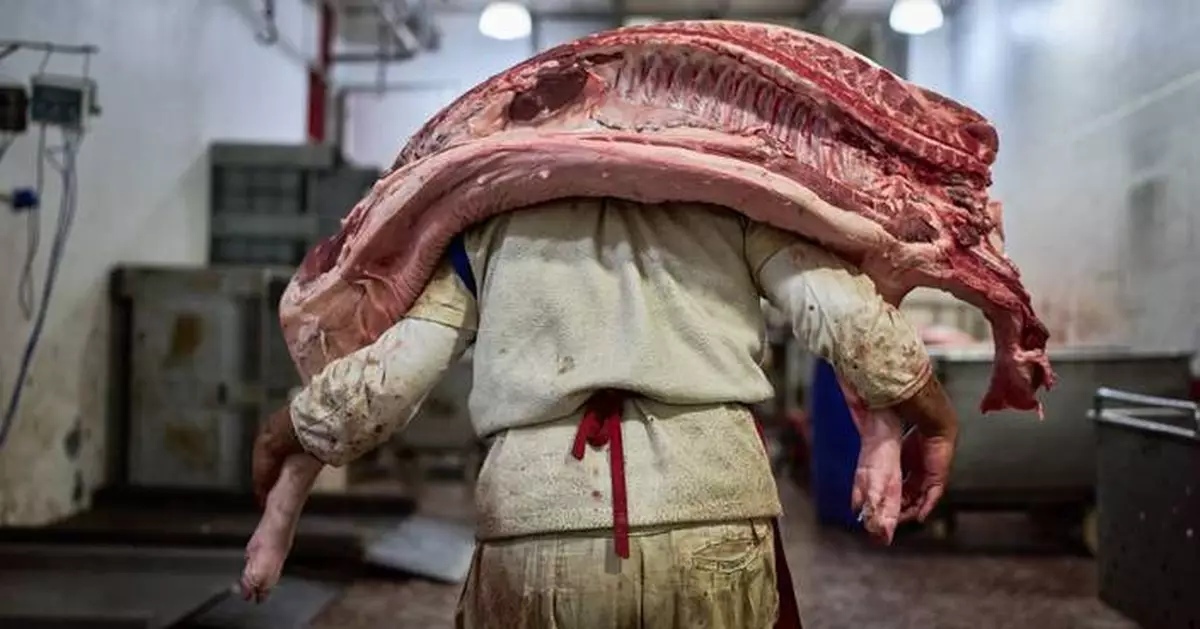
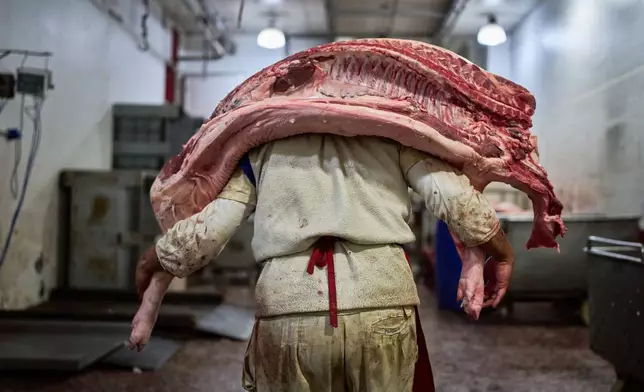
A worker carries pork inside a butcher shop at the Mataderos meat market in Buenos Aires, Argentina, Thursday, May 14, 2026. (AP Photo/Rodrigo Abd)
Red meat consumption in Argentina — historically one of the world’s biggest consumers of beef — has fallen to its lowest level in two decades amid economic austerity measures imposed by libertarian President Javier Milei.
As of April 2026, annual per capita beef consumption fell to 44.5 kilograms (98 pounds), down from 49.5 kilograms (109 pounds) during the same month a year earlier, according to the Agricultural Foundation for Argentina’s Development. In 2006, it was 63.4 kilos (139 pounds) per person.
“People are switching to cheaper proteins. They’re eating pork, they’re eating chicken,” said García.
Analysts attribute the decline to soaring beef prices, lower cattle supply and weakened household purchasing power. The opening of Argentina’s beef market to international trade has also pushed domestic prices closer to global levels.
“Beef moved into a completely different purchasing-power category. Workers’ wages fell far behind,” said Juampi Quintero, 25, a meat distributor who estimated consumption among his clients has fallen by more than half.
Since coming into office in December 2023 with an annual inflation at 211%, Milei promised to eliminate what he called “the cancer of inflation” through an adjustment plan that included cuts equivalent to nearly one-third of public spending, symbolized by the image of a chain saw.
The government succeeded in reversing the fiscal deficit and achieving a budget surplus — a rare result in Argentina’s recent history — but the social cost of the austerity measures has drawn criticism.
Within months, Milei’s administration eliminated 13 ministries, laid off about 30,000 public employees, halted public works projects and reduced funding for key areas such as education, healthcare and science, while also cutting subsidies for basic services such as electricity, gas, water and transportation.
“That affects household income because families now have to pay more for services that were previously subsidized by the state,” said economist Camilo Tiscornia. “As a result, they have less disposable income and must give up certain more expensive goods, such as beef.”
At the same time, household incomes did not rise at the same pace as beef prices, helping drive down consumption.
Wages for registered workers increased an average of 1.8% in February, the latest available data, compared with monthly inflation of 2.9%.
“Before, I had the freedom to buy what I wanted,” said Alberto Brajin, a 61-year-old retiree who runs a streetside barbecue stall in Buenos Aires.
Brajin said he now has to “trade down” to cheaper proteins such as chicken.
Beef prices rose more than 60% over the past year, reaching an average of 18,500 pesos ($13) per kilogram in Buenos Aires in May, according to the Argentine Beef Promotion Institute.
In July 2025, Milei’s government reduced export taxes on beef and poultry and removed production quotas to encourage overseas sales, reversing part of the restrictions imposed under former President Alberto Fernández to curb rising domestic prices. The easing of export regulations came just as Argentina's beef production dropped by more than 10 percent due to floods and droughts, according to CICCRA, the nonprofit organization that represents Argentina’s beef producers.
Argentina’s government said this week that beef exports rose 54% in the first quarter compared with a year earlier, totaling nearly 200,000 tons worth more than $1 billion. The increase followed a U.S. decision earlier this year to expand Argentina’s tariff-free beef quota amid American cattle shortages.
With the market opening up, producers began selling beef — once affordable across much of Argentina’s social spectrum — at prices closer to international levels.
“Previously, all meats had similar prices, which encouraged high beef consumption that did not reflect its real production costs,” agricultural consultant Iván Ordóñez explained.
As beef becomes increasingly expensive for many Argentine families, chicken and pork are gaining ground as cheaper alternatives.
“We’ve chosen to buy pork and chicken because beef is too expensive,” said shop owner Ruth Simon.
Chicken costs an average of 4,900 pesos ($3.50) per kilogram, while pork ribs cost around 8,900 pesos ($6.30).
García, the butcher shop owner, said he began selling chicken and pork less than a year ago after noticing changes in customers’ eating habits.
“You have to adapt,” he said. “We can’t just sit around crying. No crying. We have to work. We have to keep our dignity. We have to fight.”
Follow AP’s coverage of Latin America and the Caribbean at https://apnews.com/hub/latin-america
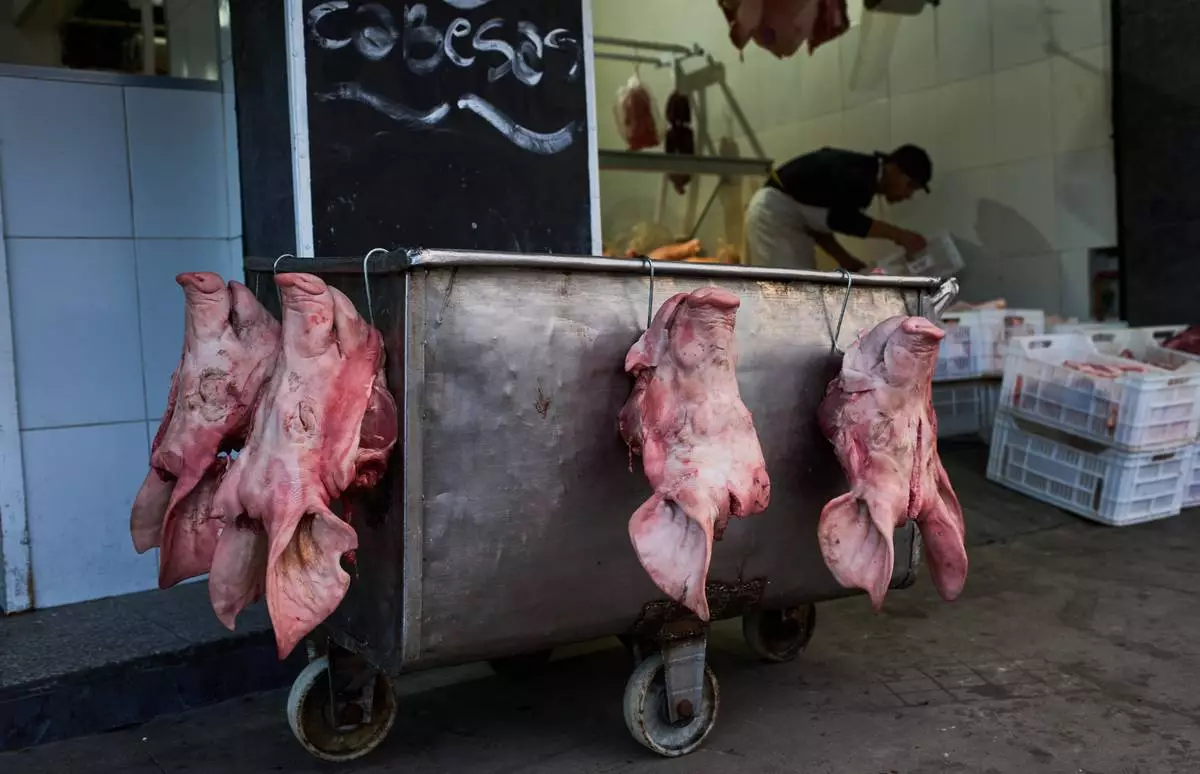
Pig heads hang outside a butcher shop for sale at the Mataderos meat market in Buenos Aires, Argentina, Thursday, May 14, 2026. (AP Photo/Rodrigo Abd)
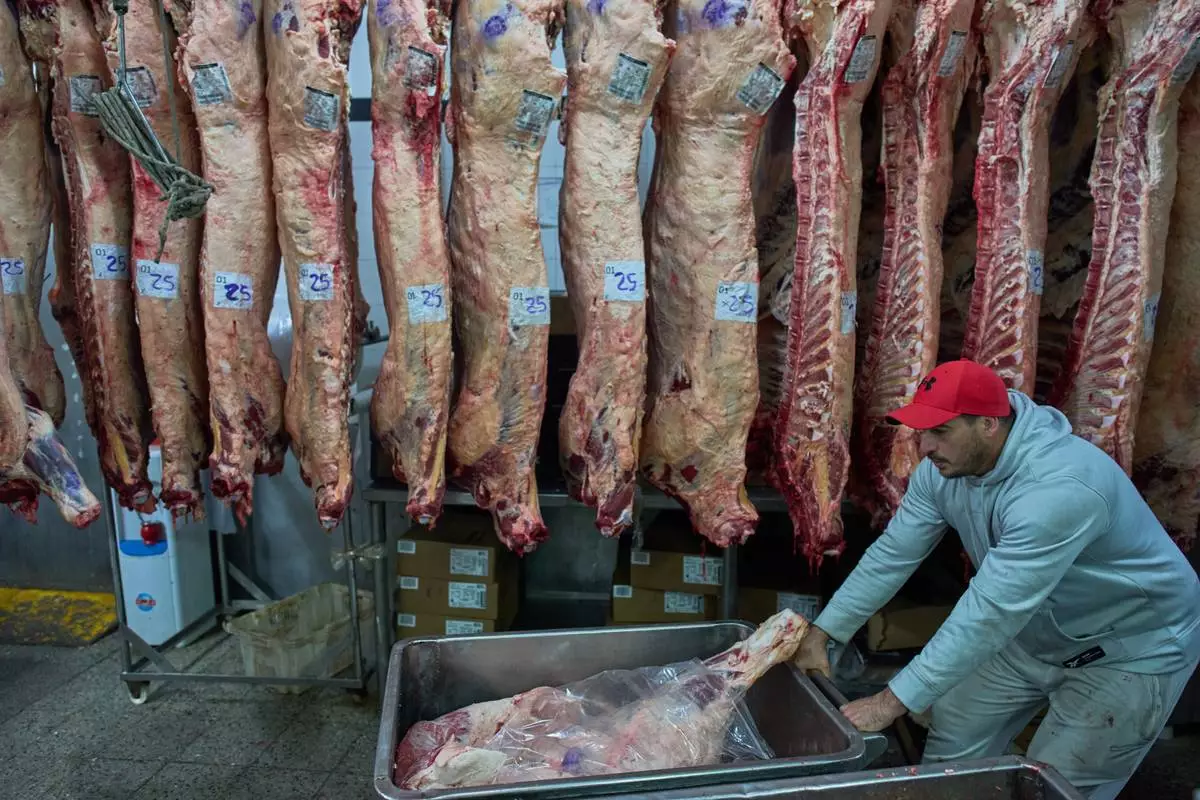
A worker stacks beef inside a fridge at a butcher shop in the Mataderos meat market in Buenos Aires, Argentina, Thursday, May 14, 2026. (AP Photo/Rodrigo Abd)

A worker loads pork and beef into a customer's trunk at the Mataderos meat market in Buenos Aires, Argentina, Thursday, May 14, 2026. (AP Photo/Rodrigo Abd)
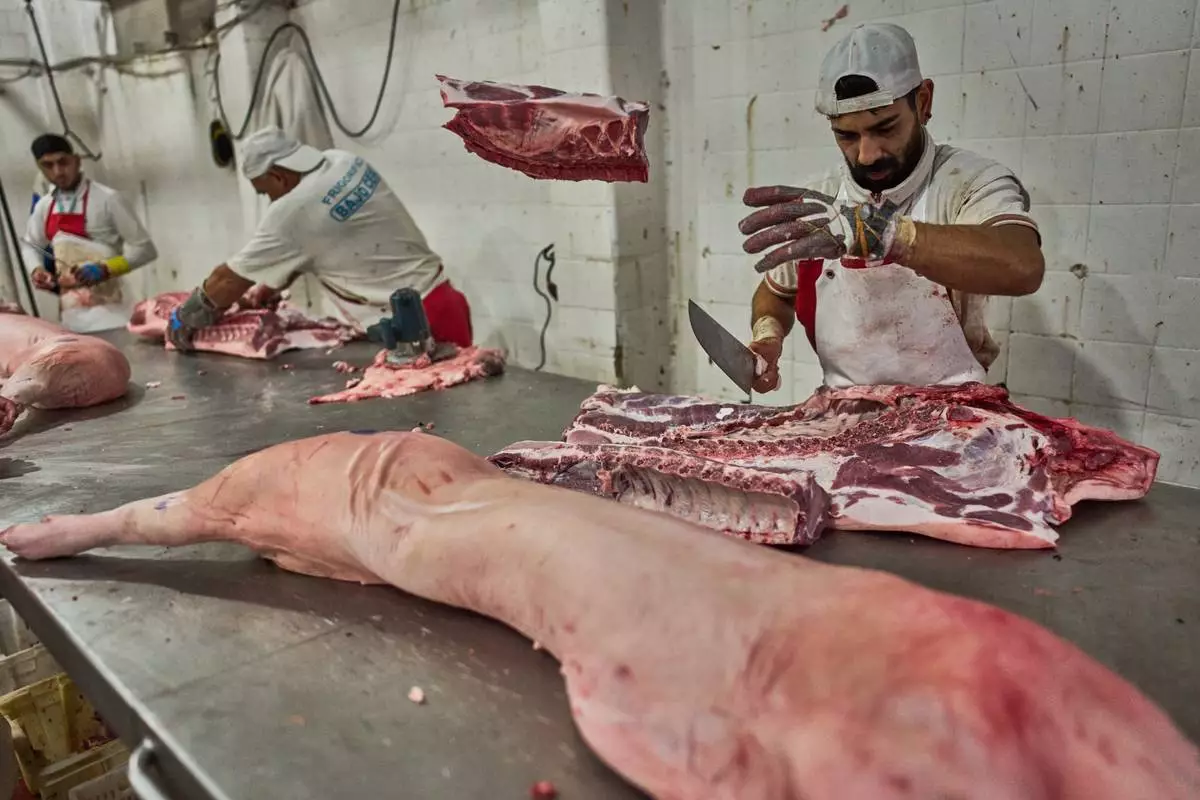
A worker cuts pork at the Mataderos meat market in Buenos Aires, Argentina, Thursday, May 14, 2026. (AP Photo/Rodrigo Abd)
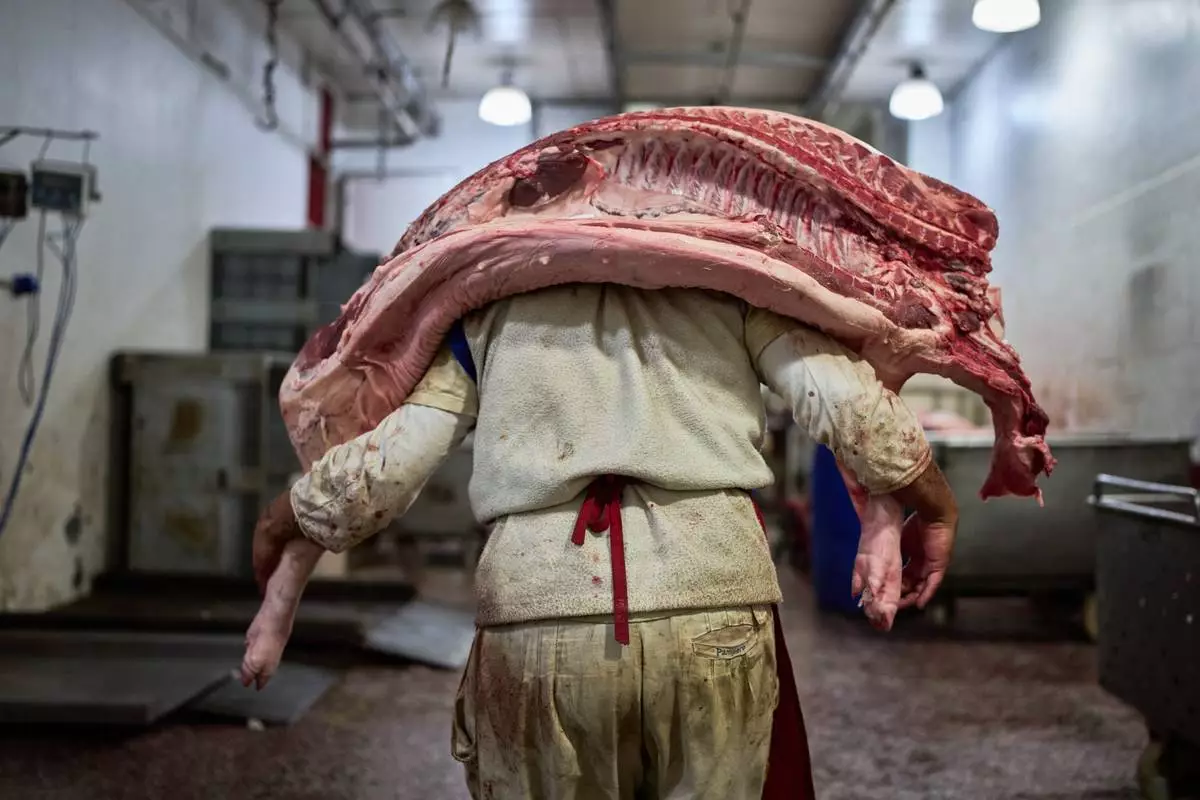
A worker carries pork inside a butcher shop at the Mataderos meat market in Buenos Aires, Argentina, Thursday, May 14, 2026. (AP Photo/Rodrigo Abd)
NEW DELHI (AP) — Iran ’s foreign minister said a lack of trust is the biggest obstacle in negotiations to end the war with the U.S., saying Friday that Tehran would be open to diplomatic help, particularly from China, to help ease tensions.
Iranian Foreign Minister Abbas Araghchi said contradictory messages have “made us reluctant about the real intentions of Americans.”
“We are in doubt about their seriousness,” he told reporters in New Delhi, adding that negotiations would move forward if Washington was ready for a “fair and balanced deal.”
U.S. President Donald Trump earlier this week dismissed Iran's latest formal proposal as “garbage.” While Iran was said to include some nuclear concessions, Trump has said he wants to remove highly enriched uranium from the country and prevent it from developing nuclear weapons. Iran says its nuclear program is for peaceful purposes.
In separate negotiations in Washington between Israel and Lebanon, both sides agreed Friday to extend their ceasefire until early June, U.S. officials said.
With talks between Iran and the U.S. at a standstill during the shaky ceasefire, tensions remain high and threaten to tip the Middle East back into open warfare and prolong the worldwide energy crisis sparked by the conflict.
Iran still has a chokehold on the Strait of Hormuz, a vital waterway where a fifth of the world’s oil passed through before the war, and America is blockading Iranian ports.
Trump and Chinese President Xi Jinping, who finished talks on Friday, agreed the strait needs to be reopened.
Araghchi said Friday that Iran would welcome diplomatic support from other countries, particularly from China, citing Beijing’s previous role in facilitating the restoration of ties between Iran and Saudi Arabia.
Beijing has shown little public interest in U.S. requests to get more involved, even though Trump told Fox News’ Sean Hannity that Xi had in their conversations offered to help.
Pakistan said Thursday it was continuing diplomatic efforts to help ease regional tensions. But it declined to disclose details of the discussions or say whether the U.S. had formally responded.
“The clock on diplomacy has not stopped. The peace process is working,” Pakistani Foreign Ministry spokesperson Tahir Andrabi told reporters in Islamabad.
Trump has demanded a major rollback of Iran’s nuclear activities while Iran says it has a right to enrich uranium.
Israeli Prime Minister Benjamin Netanyahu, who launched the war with Trump on Feb. 28, also wants Iran’s highly enriched uranium removed from the country.
Iran’s foreign minister said Friday that the issue of its enriched uranium stockpile is one of the most difficult subjects in negotiations with the U.S.
Russia has previously offered to take the stockpile if Iran is willing to give it up. Araghchi said Russia’s proposal was not currently under active discussion, but could be revisited.
“When we come to that stage, obviously we will have more consultations with Russia and see if the Russian offer can help or not,” he said.
Israel and Lebanon agreed to extend the expiring Israel-Hezbollah ceasefire for another 45 days to allow for negotiations on a broader peace agreement, the U.S. State Department said.
After two days of meetings, the department said it would reconvene the two sides for discussions on June 2 and 3, while a military track — between the Israeli and Lebanese armies — by the Pentagon will begin on May 29. Hezbollah opposes Lebanon’s direct negotiations with Israel and has not been part of the talks.
Israel’s ambassador to the U.S. Yechiel Leiter said the talks were frank and constructive. “There will be ups and downs, but the potential for success is great,” he said in a social media post. “What will be paramount throughout negotiations is the security of our citizens and our soldiers.”
The ongoing ceasefire hasn’t stopped Israel and Hezbollah from trading strikes.
The Israeli military said Friday it hit Hezbollah sites in southern Lebanon after reporting hostile aircraft alerts and launches from across the border. Lebanon’s health ministry said three paramedics were killed in a strike near the city of Harouf. Other strikes around the coastal city of Tyre wounded nearly 40 people, destroyed a health center and damaged the neighboring Hiram Hospital, wounding six medical workers, the ministry said.
A Chinese-owned ship anchored off the United Arab Emirates was seized this week and taken toward Iranian waters.
Chinese private security company Sinoguards said it had “been informed through relevant channels" that the vessel Hui Chuan, which it was operating as an offshore work platform, was taken into Iranian waters for documentation and compliance inspection by the authorities.
The company's emailed statement said there was no indication of any injuries on the ship and that it was cooperating.
Honduras, where the ship was flagged, said the ship had 17 crew including people from Nepal, Myanmar, Vietnam and Sri Lanka.
The seizure happened as a senior Iranian official reiterated his country’s claim of control over the Strait of Hormuz and another said it had a right to seize oil tankers connected to the U.S.
The U.S. seized vessels in the Gulf of Oman last month and on Friday the foreign minister of Pakistan said it had secured the return of 11 Pakistani nationals and 20 Iranian citizens who were aboard those vessels. “All individuals are in good health and high spirits,” said the foreign minister, Ishaq Dar, said.
The United Arab Emirates is speeding up the completion of a new pipeline that will allow the Gulf federation to export more oil without routing it through the Strait of Hormuz.
Sheikh Khaled bin Mohammed bin Zayed Al Nahyan, the crown prince of Abu Dhabi, directed state oil company ADNOC to accelerate work on the pipeline, the Abu Dhabi Media Office said Friday.
The oil company already runs a pipeline designed to carry 1.5 million barrels a day from its oil fields to the port of Fujairah on the Gulf of Oman.
The new pipeline, expected to double the company’s export capacity through that port, will become operational next year, the media office said.
Schreck reported from Dubai, United Arab Emirates. Associated Press reporters Munir Ahmed in Islamabad; Koral Saeed in Abu Snan, Israel; Matthew Lee in Washington; and Mae Anderson in New York contributed.
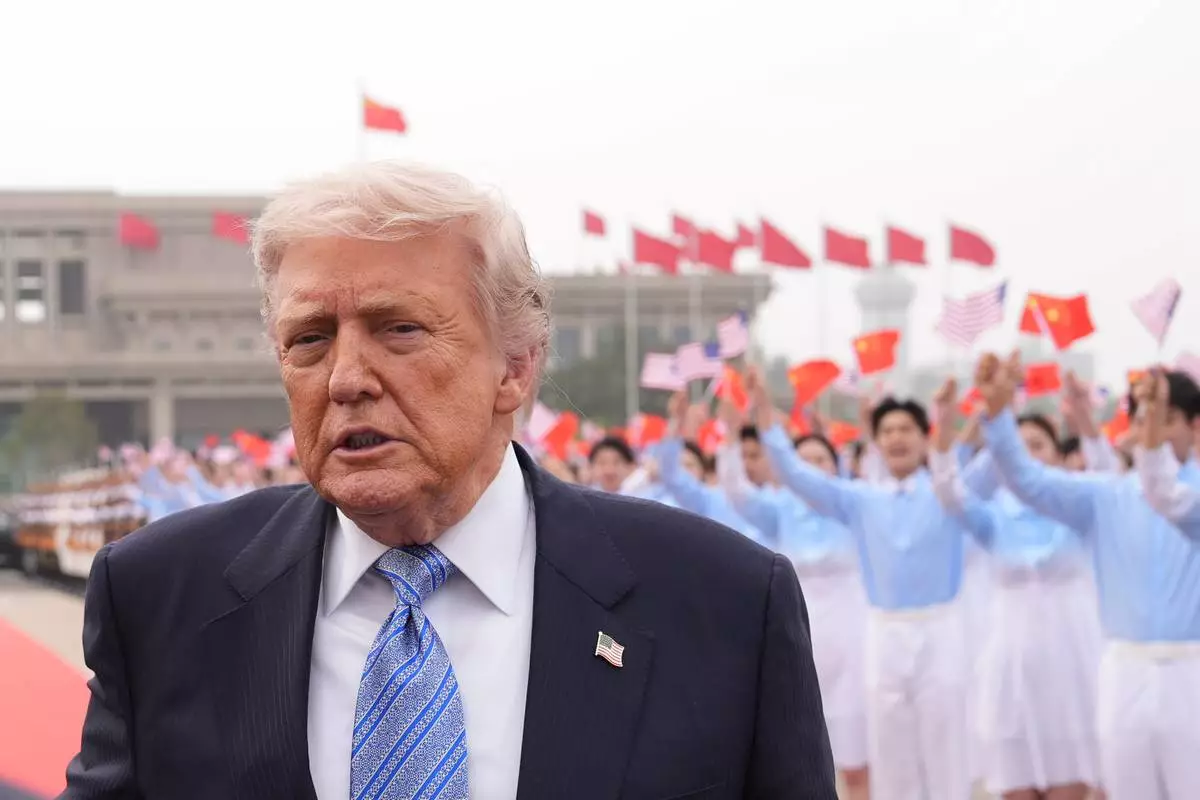
President Donald Trump walks to board Air Force One, Friday, May 15, 2026, at Beijing Capital International Airport in Beijing. (AP Photo/Mark Schiefelbein)
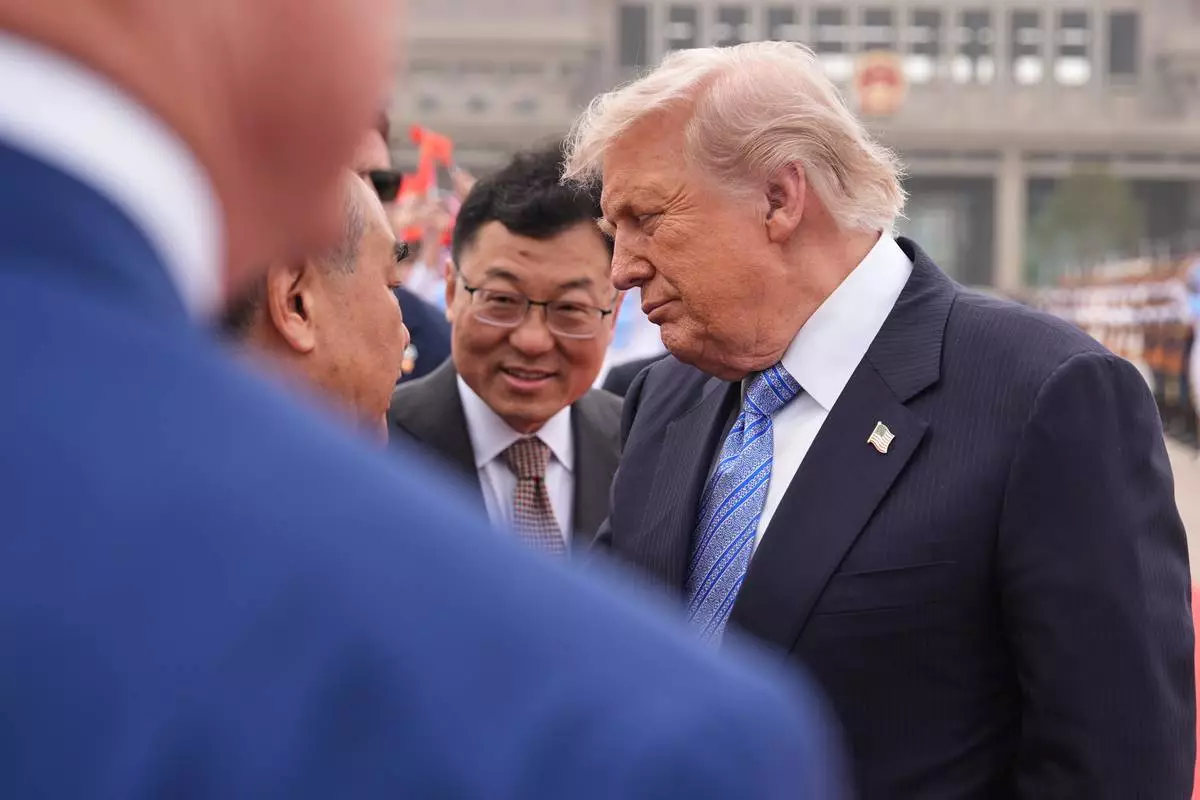
President Donald Trump interacts with China's Foreign Minister Wang Yi before boarding Air Force One, Friday, May 15, 2026, at Beijing Capital International Airport in Beijing. (AP Photo/Mark Schiefelbein)
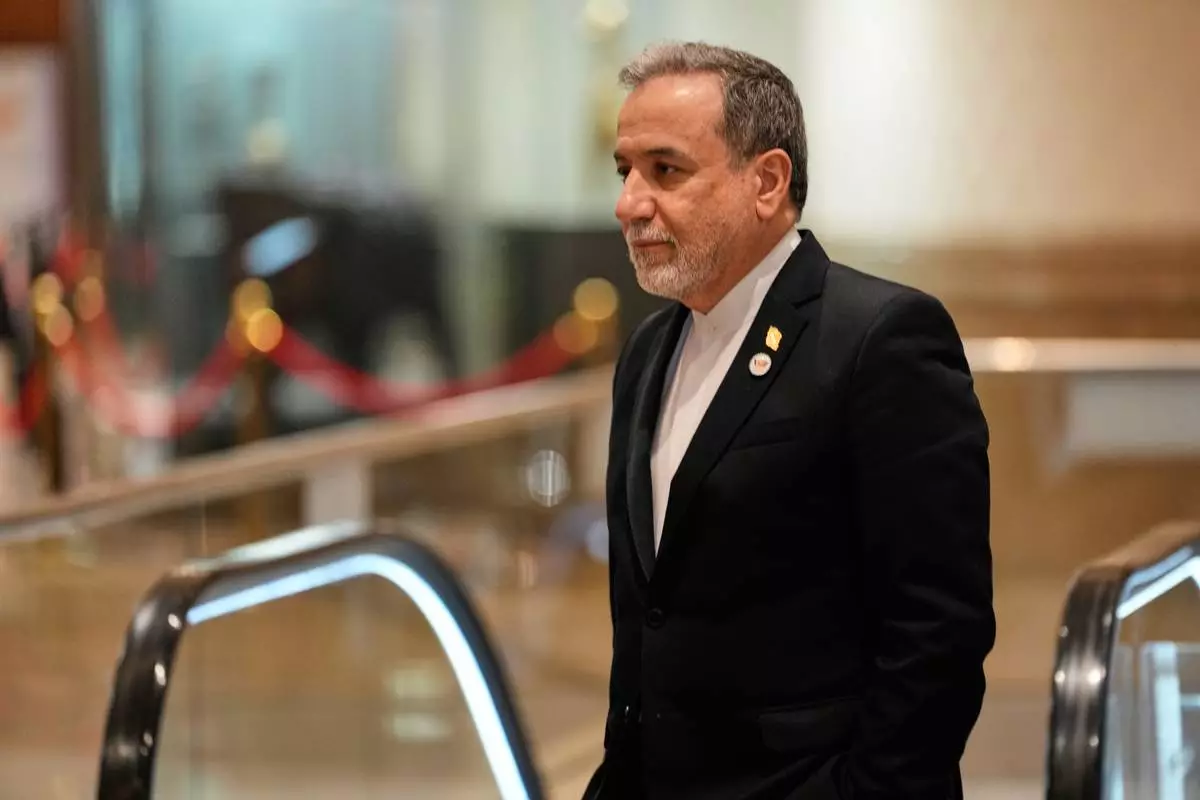
Iranian Foreign Minister Abbas Araghchi arrives for a meeting during the two-day BRICS summit in New Delhi, India, Thursday, May 14, 2026. (AP Photo/Manish Swarup)