JERUSALEM (AP) — The tight relationship between Israel and the United Arab Emirates is typically managed discreetly. But this week, it was thrust into the open, illuminating tensions underlying the alliance as the Iran war embroils the entire region.
The U.S. Ambassador to Israel, Mike Huckabee, first brought attention to the strengthening ties between Israel and the UAE by revealing that Israel had sent Iron Dome air-defense weapons and personnel to operate them to help protect the UAE from Iranian attacks.
Then, Israeli Prime Minister Benjamin Netanyahu said he had quietly visited the UAE during the war, prompting a hasty public denial from the Gulf nation.
As Netanyahu and the Trump administration ballyhoo their alliances as part of an effort to bolster the region's anti-Iran factions, the Gulf states prefer to downplay these partnerships — a sign of how public ties to Israel remain deeply controversial in the region.
Here’s what you need to know about the Israel-UAE relationship:
Netanyahu’s decision to reveal his wartime trip to Abu Dhabi rocked the boat, particularly coming after Huckabee confirmed military cooperation between the two countries. Reports swirled that Israel’s security chiefs had also visited.
The UAE’s official WAM news agency posted an article denying “reports circulating” about the visit. The agency wrote that the country’s relations with Israel “are public and conducted within the framework of the well-known and officially declared Abraham Accords, and are not based on non-transparent or unofficial arrangements.”
The report also denied any Israeli military delegation was received in the UAE.
“It complicates Abu Dhabi’s wartime-frame posture by forcing it into the open — which is why the denial was issued so quickly and worded so carefully,” said Hesham Alghannam, a Saudi Arabia-based scholar at the Malcolm H. Kerr Carnegie Middle East Center.
Though the UAE normalized relations with Israel in 2020, its rulers like to keep the alliance somewhat quiet.
Antipathy toward the Jewish state runs high in Arab and Muslim countries across the Middle East. The negative feelings were magnified by the war in Gaza, which began after Hamas, a militant group backed by Iran, attacked Israel on Oct. 7, 2023, killing some 1,200 people and taking 251 hostages.
Israel’s ensuing offensive in Gaza flattened much of the territory and has killed over 72,700 Palestinians, according to the Gaza Health Ministry, which does not distinguish between civilian and militant deaths. That conflict spilled across the region, with Israel waging deadly and damaging campaigns against Iran-backed militants in Lebanon and Yemen, and striking militant targets in Qatar and Syria.
“We are the ugly duckling of the Middle East,” said Dan Diker, the president of the Jerusalem Center for Security and Foreign Affairs, a conservative Israeli think tank.
Diker, who has had extensive talks and relationships with Abraham Accord countries in the region, said the regional officials with whom he often negotiated always asked to keep things under the radar.
Israel and the UAE collaborated militarily during the war with Iran. Israel benefited from having a defense foothold in a country geographically closer to its archenemy. The UAE, meanwhile, gained access to Israeli military technology, like the Iron Dome air-defense system.
The alliance has also been a boon for both countries’ economies, with trade between them rising steadily since 2020.
Israel, long isolated in the Middle East, gains legitimacy by partnering with an Arab country. And the UAE gains power in Washington.
The UAE was the third Arab country, after Egypt and Jordan, to establish full diplomatic ties with Israel.
Netanyahu faces fierce domestic opposition headed into an election season in Israel. He believes his image is bolstered if he can show his base that he is a Middle East power broker.
The Iran war did not much help the leader’s domestic popularity. One thing that could help it — while strengthening his strained relationship with President Donald Trump — would be more regional powers following the UAE’s lead. Israel is currently in talks with Azerbaijan to join the Abraham Accords.
But if Netanyahu was hopeful that broadcasting close Israel-UAE ties could serve as a model for other countries, he may need to temper expectations.
Saudi Arabia, a leader in the region that has resisted joining the Abraham Accords, has taken a different approach throughout the war. It has maintained open lines of communication with Tehran, and has supported Pakistan’s mediation between the sides, said Alghannam, the Saudi Arabia-based scholar.
“The aim is not to take a posture on Israel, per se. It is to refuse entanglement in a war whose dynamics Riyadh did not set and cannot control,” he said.
“Riyadh discussing the full range of options openly, with partners, without locking into one track, is itself a strategic signal," he said. "The regional security architecture will be designed regionally, not inherited from whatever Washington and Tehran negotiate bilaterally.”
Kareem Chehayeb in Beirut contributed to this report.
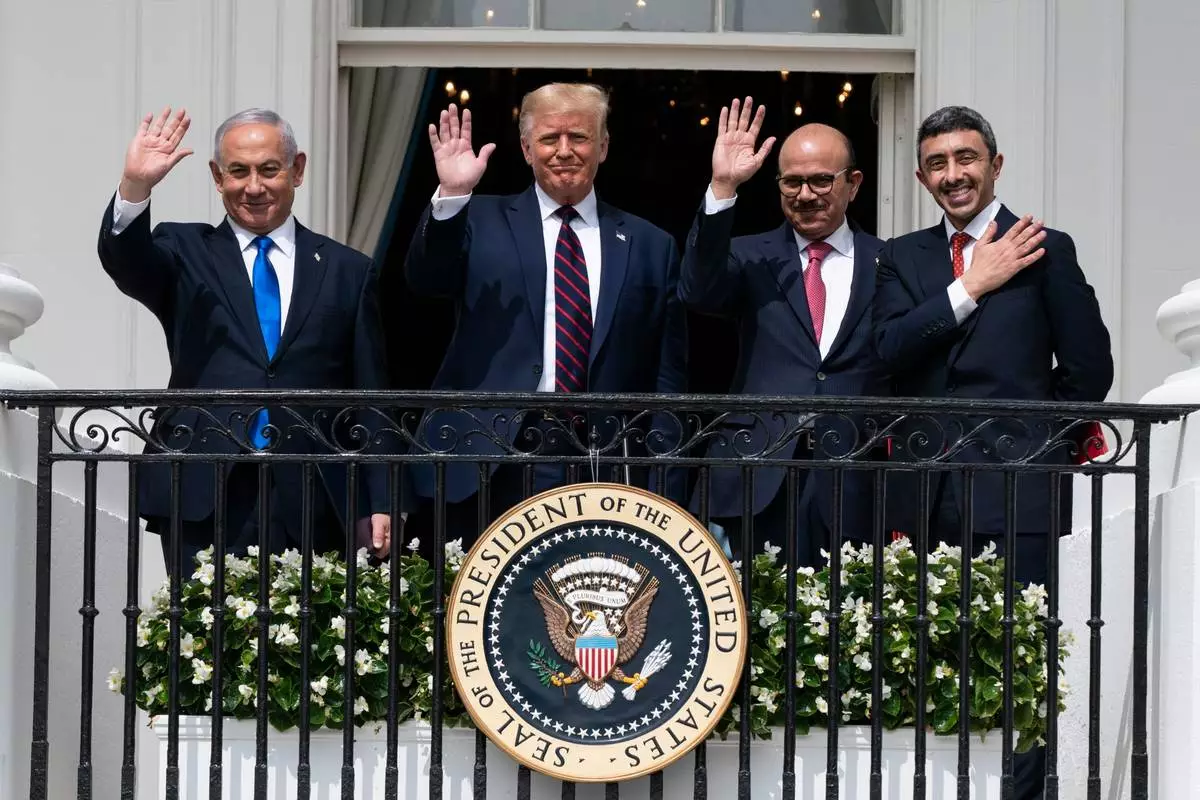
FILE - Israeli Prime Minister Benjamin Netanyahu, left, U.S. President Donald Trump, Bahrain Foreign Minister Khalid bin Ahmed Al Khalifa and United Arab Emirates Foreign Minister Abdullah bin Zayed al-Nahyan pose for a photo on the Blue Room Balcony after signing the Abraham Accords at the White House in Washington, Sept. 15, 2020. (AP Photo/Alex Brandon, File)
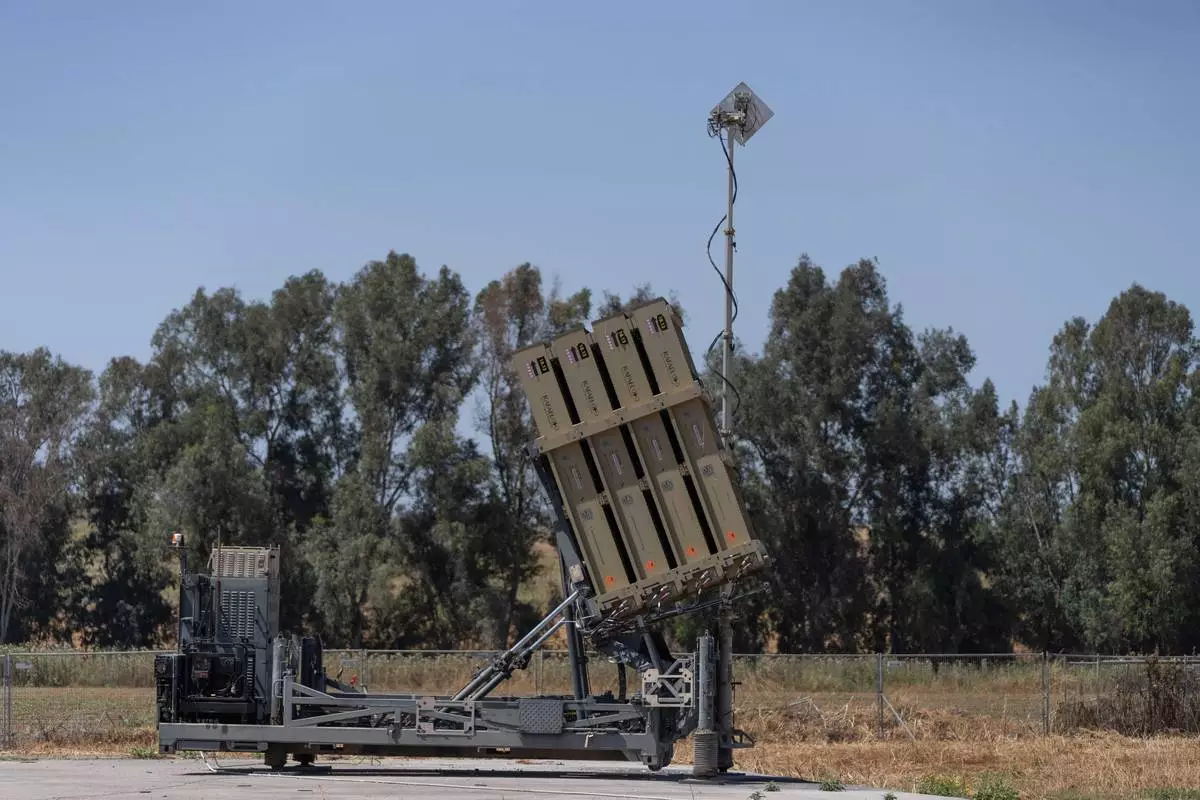
FILE - Israel's Iron Dome air-defense system stands in place in Sderot, Israel, April 17, 2024. (AP Photo/Ohad Zwigenberg, File)

FILE - Tel Aviv City Hall is lit up with the flag of the United Arab Emirates as UAE and Israel announced they would be establishing full diplomatic ties, Aug. 13, 2020, in Tel Aviv, Israel. (AP Photo/Oded Balilty, File)