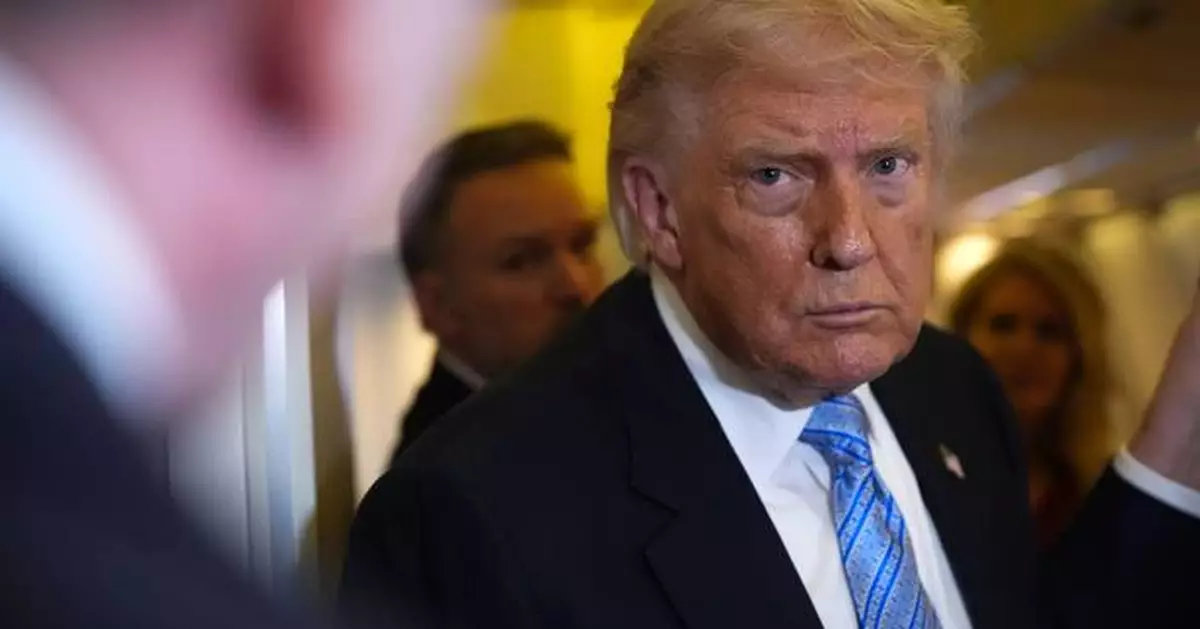
WASHINGTON (AP) — U.S. and Nigerian forces killed a leader of the Islamic State group in Nigeria in a mission carried out Friday, U.S. President Donald Trump said.
Trump announced the joint operation in Africa’s most populous country in a late-night social media post that offered few details. He said Abu Bakr al-Mainuki was second in command of the Islamic State group globally and “thought he could hide in Africa, but little did he know we had sources who kept us informed on what he was doing.”
Al-Mainuki was viewed as the key figure in IS organizing and finance, and had been plotting attacks against the United States and its interests, according to an official who spoke on condition of anonymity because they were not authorized to share sensitive information.
Nigerian President Bola Tinubu confirmed the operation and said Al-Mainuki was killed alongside “several of his lieutenants, during a strike on his compound in the Lake Chad Basin."
Born in Nigeria's Borno province in 1982, al-Mainuki took the helm of the IS branch in West Africa after the group’s previous leader in the region, Mamman Nur, was killed in 2018, according to the Counter Extremism Project, which tracks militant groups.
Al-Mainuki was based in the Sahel area, the monitoring group said, adding that it is believed that he fought in Libya when IS was active in the North African nation more than a decade ago. He was sanctioned by the U.S. in 2023.
Trump, in his social media announcement, said Al-Mainuki was “second in command globally,” hiding in Africa, a claim that analysts say is off the mark.
They say Al-Mainuki was the deputy to Abu Musab al-Barnawi, the leader of the Islamic State West African Province who was reported to have died in 2021. He is regarded as one of the central proponents of the formation of ISWAP after its split with Boko Haram in 2016.
“If confirmed, the killing of Al-Mainuki is huge because this is the first time a security agency has killed someone this high in the ranking of ISWAP,” Malik Samuel, a senior researcher at Good Governance Africa who specializes in insurgent groups in Nigeria, said.
“The potential to cause chaos within the group is also there because the operation must have been carried out in the heart of ISWAP’s fortified base, which is very difficult to access.”
Trump in December directed U.S. forces to launch strikes against the Islamic State group in Nigeria, though he released little detail then about the impact.
The Nigerian military said the operation was a result of its “recently formed U.S.-Nigeria partnership and intelligence sharing efforts.” Samalia Uba, the military spokesperson, said in a statement that the operation has also “disrupted a violent terrorist network that endangered Nigeria and the broader West African region.”
Nigeria has been battling multiple armed groups, including at least two affiliated with IS, as it has grappled with a multifaceted security crisis. IS affiliates in Africa have emerged as some of the continent's most active militant groups following the collapse of the IS caliphate in Syria and Iraq in 2017.
The U.S. in February sent troops to the West African nation to help advise its military and in March, the U.S. also deployed drones there after Trump alleged that Christians are being targeted in Nigeria’s security crisis.
The Friday night operation was the latest instance in a string of covert missions abroad that Trump has announced this year, starting with the stunning overnight raid in January to capture and remove Venezuela's then-leader Nicolás Maduro and whisk him to the U.S., followed nearly two months later by the launch of strikes that kicked off the war with Iran.
Adetayo reported from Lagos, Nigeria. Associated Press writers Konstantin Toropin in Washington and Samy Magdy in Cairo contributed to this report.
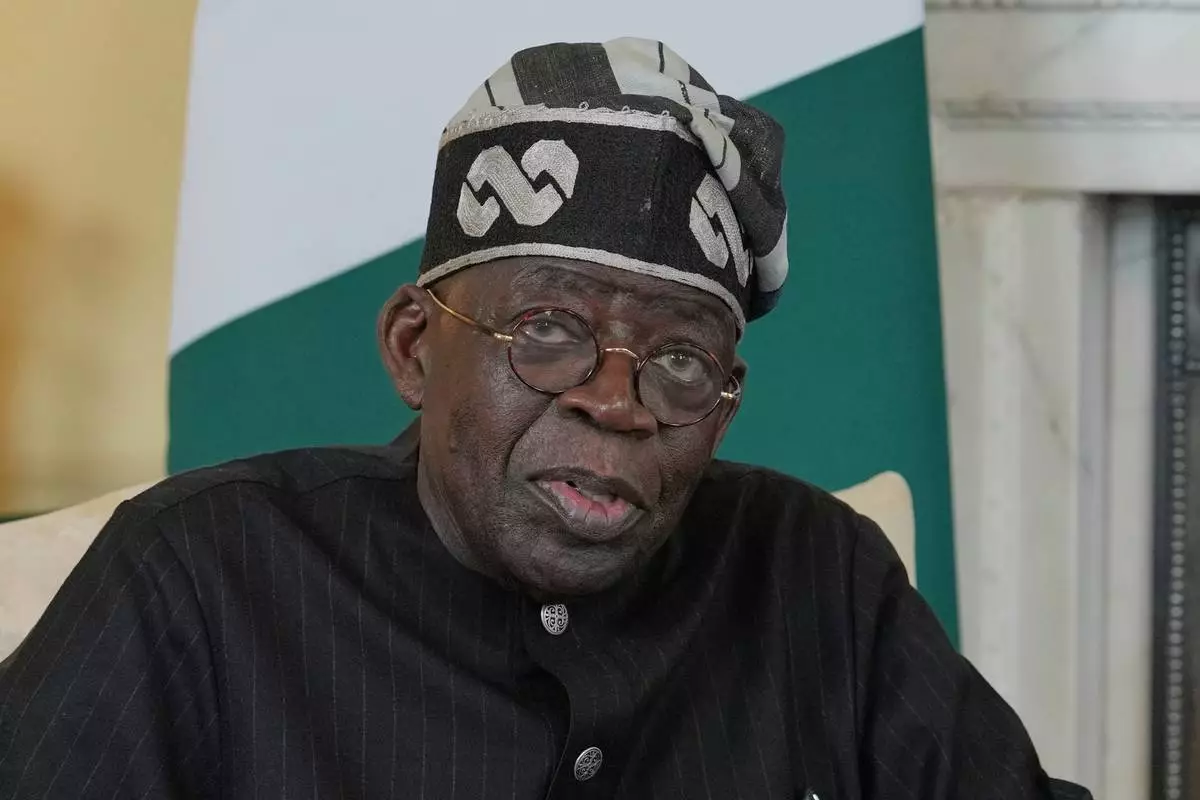
FILE -Nigerian President Bola Tinubu speaks to the media ahead of his meeting with Britain's Prime Minister Keir Starmer inside 10 Downing Street in London, Thursday, March 19, 2026. (AP Photo/Kin Cheung, Pool, File)
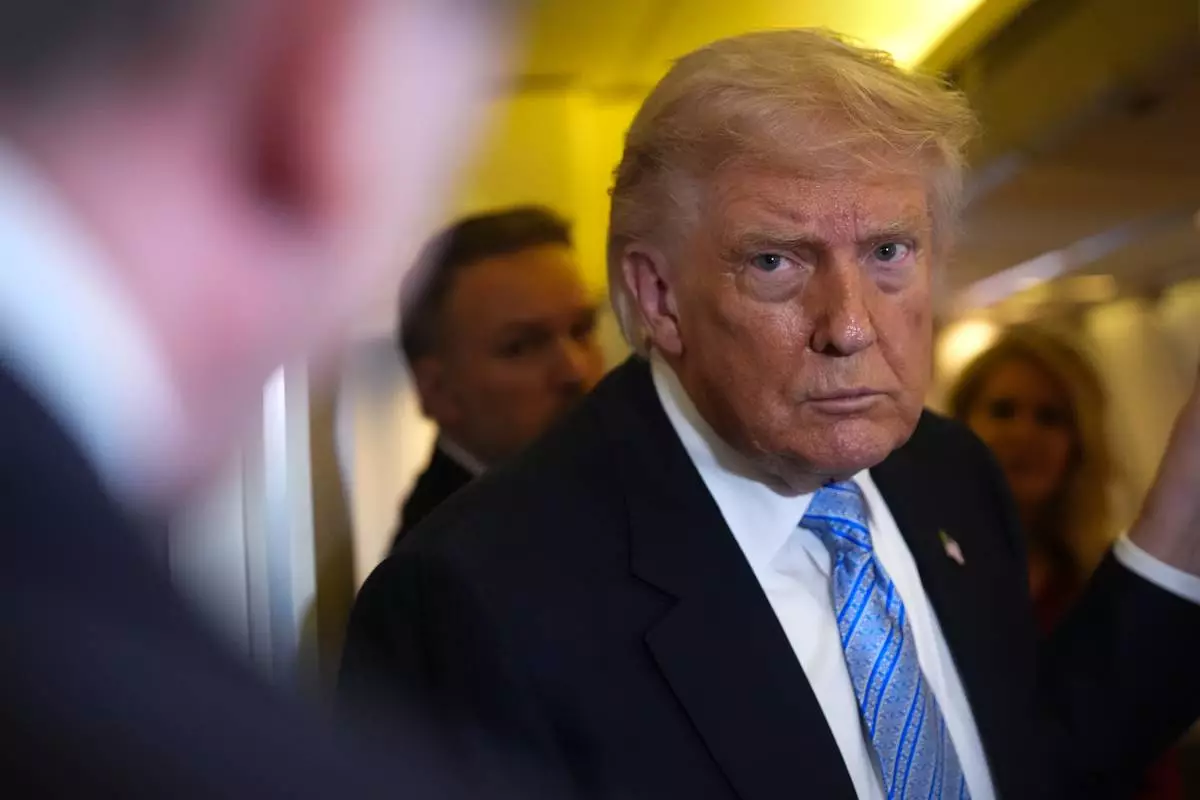
President Donald Trump speaks to reporters aboard Air Force One, Friday, May 15, 2026, as he returns from a trip to Beijing, China. (AP Photo/Mark Schiefelbein)
BUENOS AIRES, Argentina (AP) — At 6 a.m., in the Mataderos neighborhood of Buenos Aires, workers unload sides of beef from a truck outside a butcher shop as customers line up for wholesale purchases. Inside, 73-year-old owner Jorge García and his staff prepare meat orders before dawn.
Among the stacks of beef boxes and red meat cuts hanging from metal hooks, chicken and pork are increasingly present.
Red meat consumption in Argentina — historically one of the world’s biggest consumers of beef — has fallen to its lowest level in two decades amid economic austerity measures imposed by libertarian President Javier Milei.
As of April 2026, annual per capita beef consumption fell to 44.5 kilograms (98 pounds), down from 49.5 kilograms (109 pounds) during the same month a year earlier, according to the Agricultural Foundation for Argentina’s Development. In 2006, it was 63.4 kilos (139 pounds) per person.
“People are switching to cheaper proteins. They’re eating pork, they’re eating chicken,” said García.
Analysts attribute the decline to soaring beef prices, lower cattle supply and weakened household purchasing power. The opening of Argentina’s beef market to international trade has also pushed domestic prices closer to global levels.
“Beef moved into a completely different purchasing-power category. Workers’ wages fell far behind,” said Juampi Quintero, 25, a meat distributor who estimated consumption among his clients has fallen by more than half.
Since coming into office in December 2023 with an annual inflation at 211%, Milei promised to eliminate what he called “the cancer of inflation” through an adjustment plan that included cuts equivalent to nearly one-third of public spending, symbolized by the image of a chain saw.
The government succeeded in reversing the fiscal deficit and achieving a budget surplus — a rare result in Argentina’s recent history — but the social cost of the austerity measures has drawn criticism.
Within months, Milei’s administration eliminated 13 ministries, laid off about 30,000 public employees, halted public works projects and reduced funding for key areas such as education, healthcare and science, while also cutting subsidies for basic services such as electricity, gas, water and transportation.
“That affects household income because families now have to pay more for services that were previously subsidized by the state,” said economist Camilo Tiscornia. “As a result, they have less disposable income and must give up certain more expensive goods, such as beef.”
At the same time, household incomes did not rise at the same pace as beef prices, helping drive down consumption.
Wages for registered workers increased an average of 1.8% in February, the latest available data, compared with monthly inflation of 2.9%.
“Before, I had the freedom to buy what I wanted,” said Alberto Brajin, a 61-year-old retiree who runs a streetside barbecue stall in Buenos Aires.
Brajin said he now has to “trade down” to cheaper proteins such as chicken.
Beef prices rose more than 60% over the past year, reaching an average of 18,500 pesos ($13) per kilogram in Buenos Aires in May, according to the Argentine Beef Promotion Institute.
In July 2025, Milei’s government reduced export taxes on beef and poultry and removed production quotas to encourage overseas sales, reversing part of the restrictions imposed under former President Alberto Fernández to curb rising domestic prices. The easing of export regulations came just as Argentina's beef production dropped by more than 10 percent due to floods and droughts, according to CICCRA, the nonprofit organization that represents Argentina’s beef producers.
Argentina’s government said this week that beef exports rose 54% in the first quarter compared with a year earlier, totaling nearly 200,000 tons worth more than $1 billion. The increase followed a U.S. decision earlier this year to expand Argentina’s tariff-free beef quota amid American cattle shortages.
With the market opening up, producers began selling beef — once affordable across much of Argentina’s social spectrum — at prices closer to international levels.
“Previously, all meats had similar prices, which encouraged high beef consumption that did not reflect its real production costs,” agricultural consultant Iván Ordóñez explained.
As beef becomes increasingly expensive for many Argentine families, chicken and pork are gaining ground as cheaper alternatives.
“We’ve chosen to buy pork and chicken because beef is too expensive,” said shop owner Ruth Simon.
Chicken costs an average of 4,900 pesos ($3.50) per kilogram, while pork ribs cost around 8,900 pesos ($6.30).
García, the butcher shop owner, said he began selling chicken and pork less than a year ago after noticing changes in customers’ eating habits.
“You have to adapt,” he said. “We can’t just sit around crying. No crying. We have to work. We have to keep our dignity. We have to fight.”
Follow AP’s coverage of Latin America and the Caribbean at https://apnews.com/hub/latin-america
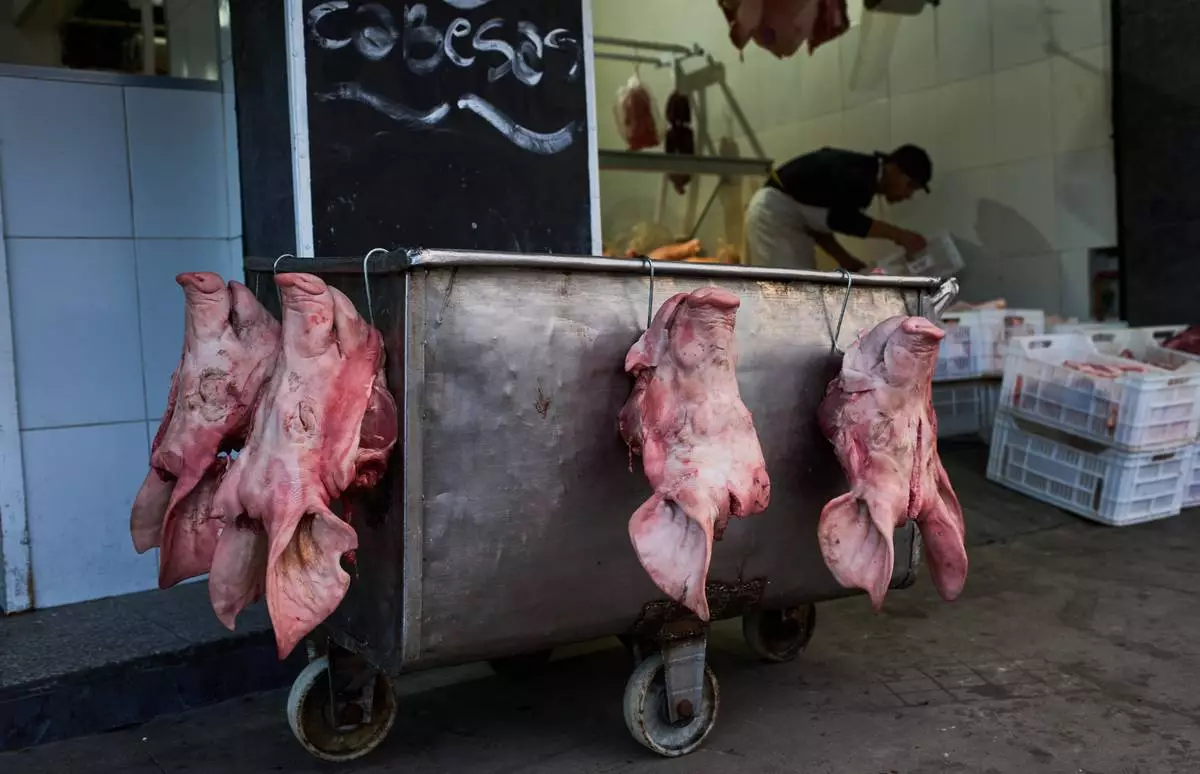
Pig heads hang outside a butcher shop for sale at the Mataderos meat market in Buenos Aires, Argentina, Thursday, May 14, 2026. (AP Photo/Rodrigo Abd)
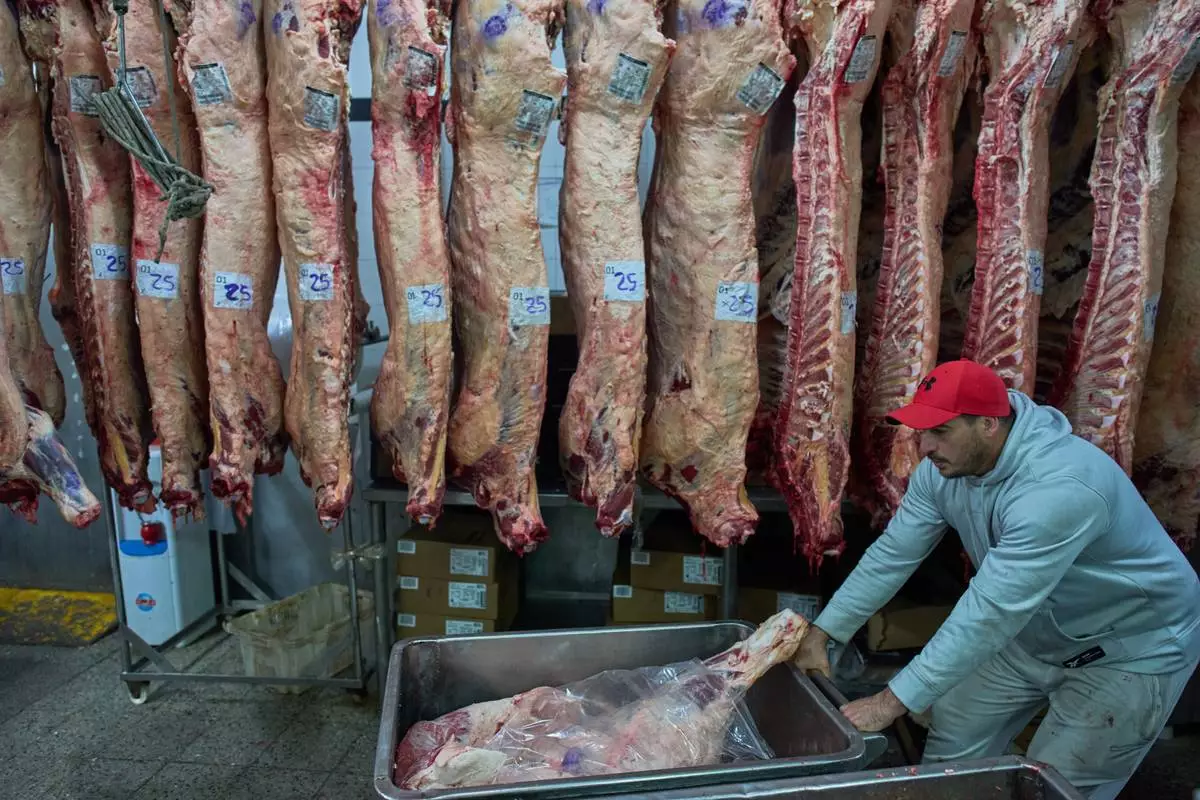
A worker stacks beef inside a fridge at a butcher shop in the Mataderos meat market in Buenos Aires, Argentina, Thursday, May 14, 2026. (AP Photo/Rodrigo Abd)
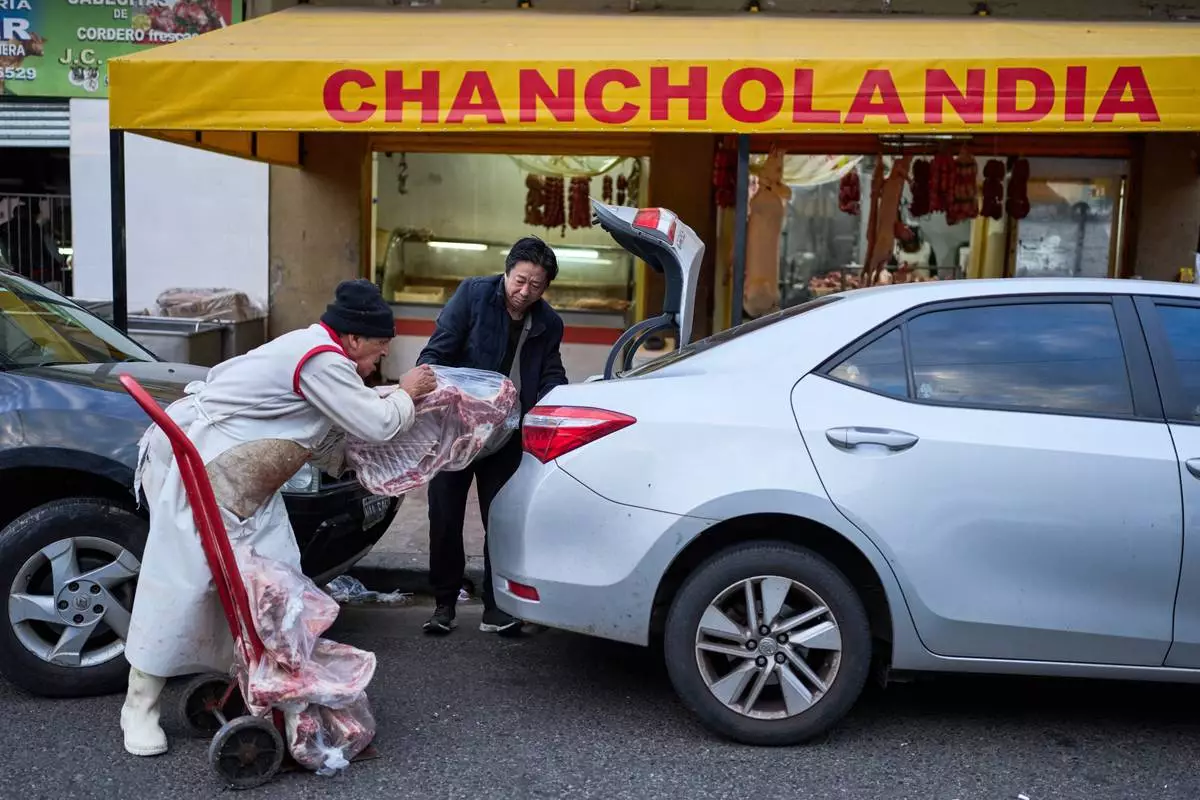
A worker loads pork and beef into a customer's trunk at the Mataderos meat market in Buenos Aires, Argentina, Thursday, May 14, 2026. (AP Photo/Rodrigo Abd)
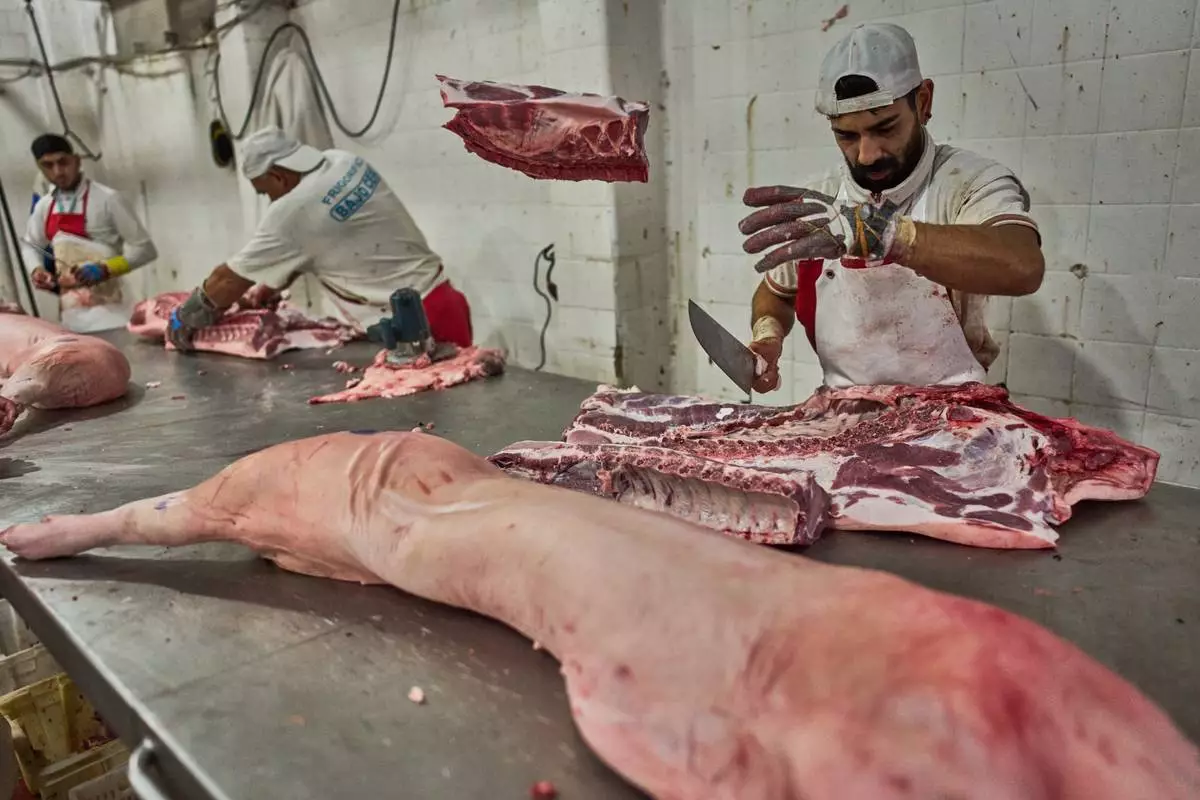
A worker cuts pork at the Mataderos meat market in Buenos Aires, Argentina, Thursday, May 14, 2026. (AP Photo/Rodrigo Abd)
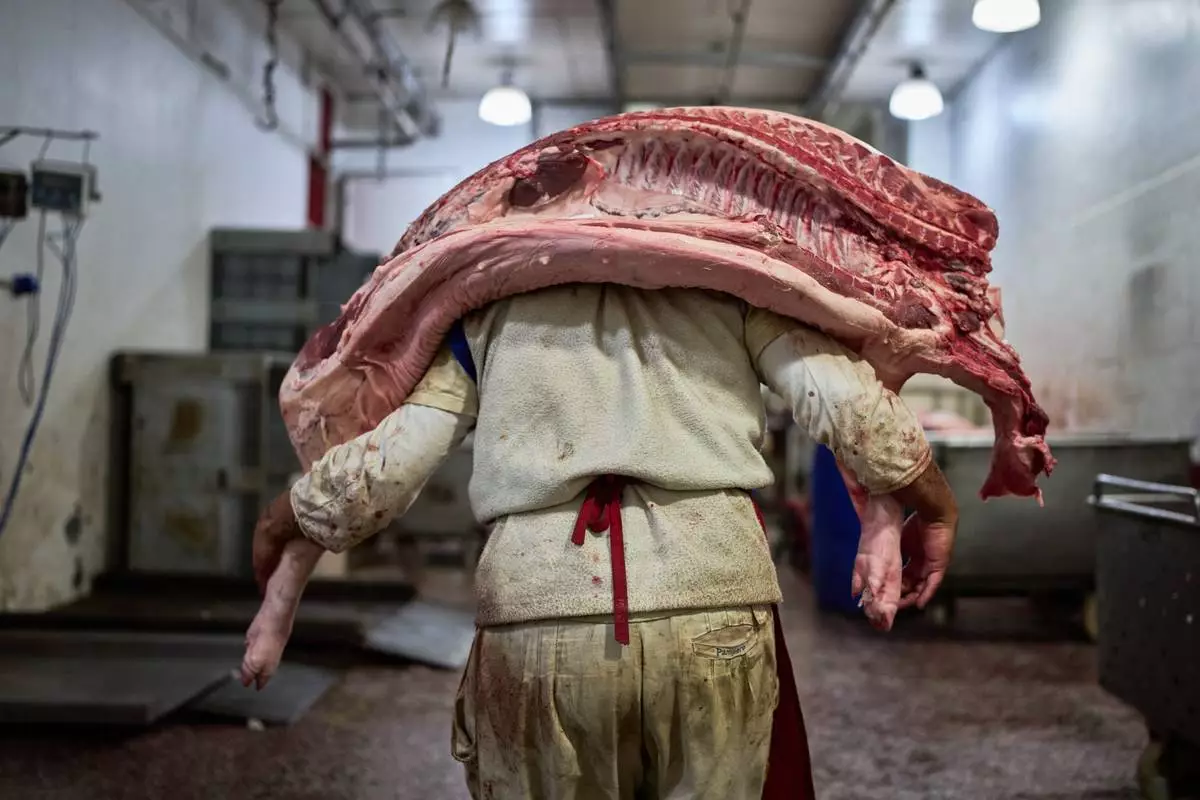
A worker carries pork inside a butcher shop at the Mataderos meat market in Buenos Aires, Argentina, Thursday, May 14, 2026. (AP Photo/Rodrigo Abd)