MONTGOMERY, Ala. (AP) — In 1965, Black Americans peacefully demonstrated for voting rights and were beaten by Alabama state troopers before returning two weeks later to complete their march under federal protection. Keith Odom was a toddler then.
Now 62 years old, the union man and grandfather of three retraced some of their final steps. On Saturday, he came from Aiken, South Carolina, to Atlanta, where he joined several dozen other activists on two buses to Montgomery, Alabama. A few hours later, he stepped off his bus and onto Dexter Avenue, where the original march concluded.
Click to Gallery
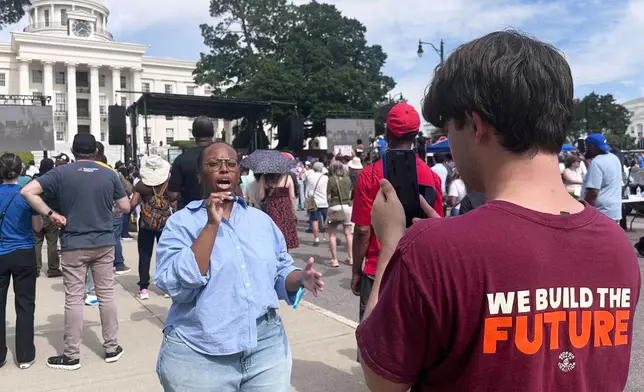
Kobe Chernushin, right, records Khayla Doby for the Georgia Youth Justice Coalition during a voting rights rally in Montgomery, Ala., Saturday, May 16, 2026. (AP Photo/Bill Barrow)
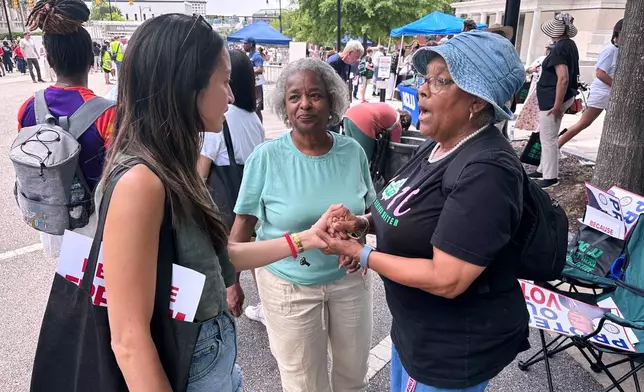
Bee Nguyen, left, talks to Carole Burton, center, and Tondalaire Ashford at a voting rights rally Saturday, May 16, 2026, in Montgomery, Ala. (AP Photo/Bill Barrow)
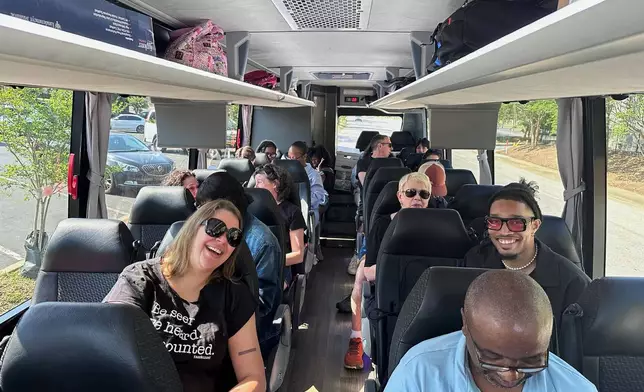
Voting rights and democracy activists ride together from Atlanta to Montgomery, Ala., on Saturday, May 16, 2026, for a rally against efforts by Republican legislative majorities to reduce Black representation in Congress from Southern states. (AP Photo/Bill Barrow)
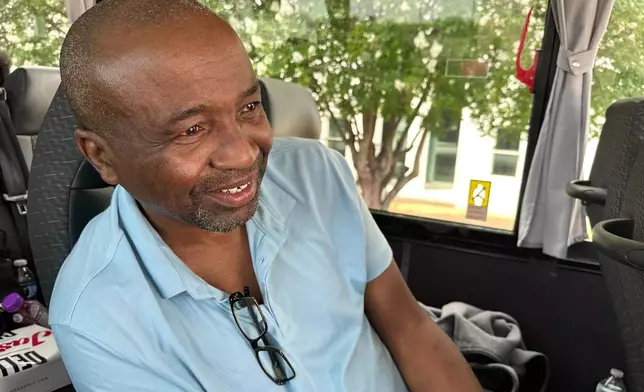
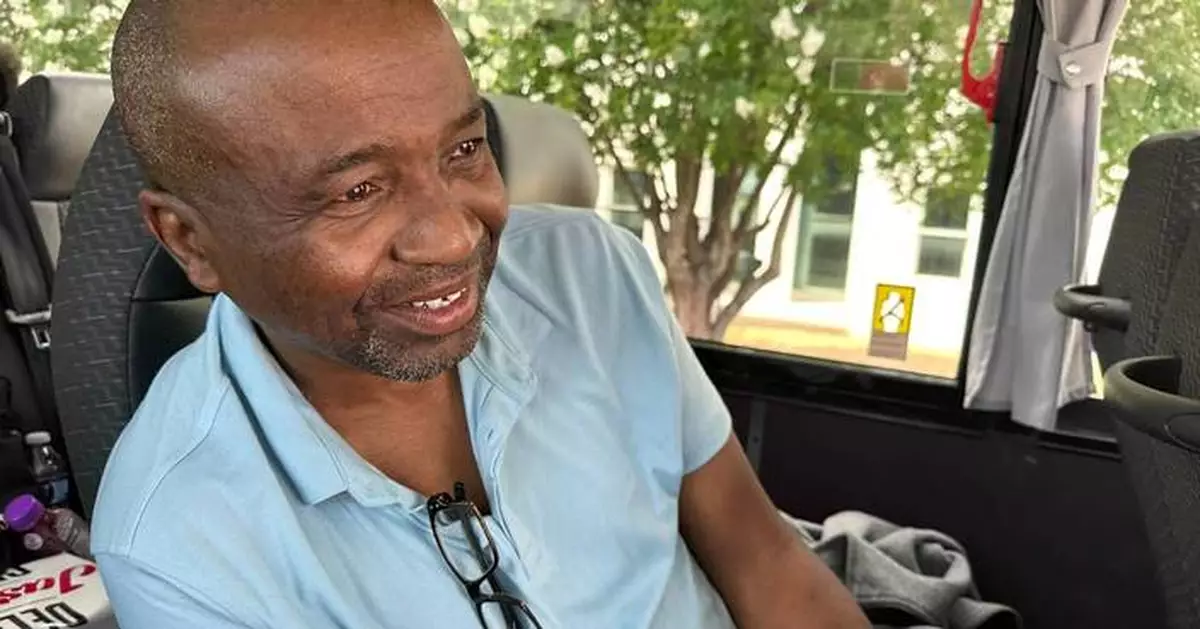
Keith Odom, a forklift driver from Aiken, S.C., looks out from his bus seat as he arrives in Montgomery, Ala., for a voting rights rally Saturday, May 16, 2026. (AP Photo/Bill Barrow)
“The history here — being a part of it, seeing it, feeling it,” said Odom, who is Black.
His voice trailed off as he saw the Alabama Capitol and a stage that sat roughly where the Rev. Martin Luther King Jr. concluded the original march.
Odom lamented that he and his fellow bus riders were not simply commemorating that seminal day in the Civil Rights Movement. Instead they came to renew the fight. The 1965 effort helped push Congress to send the Voting Rights Act to Democratic President Lyndon B. Johnson to sign, securing and expanding political power for Black and other nonwhite voters for more than a half-century.
Saturday’s “All Roads Lead to the South” rally was the first mass organizing response after a U.S. Supreme Court ruling that severely diminished that landmark law. Striking down a majority Black congressional district in Louisiana, the justices concluded in a 6-3 ruling that considering race when drawing political lines is in itself discriminatory. That spurred multiple states, including Alabama, to redraw U.S. House districts in ways that make it harder for Black voters, who lean overwhelmingly Democratic, to elect lawmakers of their choice.
“I’m not trying to live a life that’s going backwards,” Odom said. “I want to go forward, for my grandchildren to be able to go forward.”
The passenger rosters and the scene when riders arrived in Montgomery sounded the echoes and rhymes of past and present.
“I talked to my grandmother before I came, and she was so excited,” said Justice Washington, a Kennesaw State University student named because her mother and grandmother had faith in the American system. “My grandmother told me she did her part, and now it’s time for me to do mine.”
No one on the Atlanta buses had reached voting age when the Voting Rights Act became law. The youngest attendee was born as Democrat Barack Obama was elected the first Black president in 2008.
Kobe Chernushin is 18, white and just graduated high school in Atlanta’s northern suburbs. He is an organizer with the Georgia Youth Justice Coalition and spent the day filming Khayla Doby, a 29-year-old executive for the organization, doing standups for the group’s followers on social media.
“I believe in the power of showing up,” he said.
The buses launched from the congressional district in Georgia once represented by John Lewis, bloodied on the Edmund Pettus Bridge in Selma, Alabama, when he was 25. Lewis died in 2020, but some on the buses Saturday celebrated that a proposed federal election overhaul is named for him. If some Democrats get their way, the bill would override the U.S. Supreme Court, reinvigorate the Voting Rights Act and outlaw the kind of gerrymandering competition that Republican President Donald Trump has instigated.
“I’m here because of the same forces that pulled on John Lewis when he was a student,” said Darrin Owens, 27. He has worked for former Vice President Kamala Harris and now trains Democratic candidates.
“Political activism is personal,” Owens said, explaining that he attended Saturday as a citizen, not a political professional. “Sometimes those lines are blurred, and as a Black person in America, a Black person living in a Southern state, I’m committed to action that stops what I consider to be un-American, this possibility that the person who represents me is someone who is not from my community and does not understand me or my community.”
When he arrived, Owens saw no federal authorities on Montgomery’s streets. A wounded, recovering Lewis did during the second march in 1965.
This time many of the Alabama troopers and local officers who walked the area were Black.
The buses and sandwich lunches had been arranged by Fair Fight Action, a legacy of the political network built by Georgia Democrat Stacey Abrams, who became a national figure in her unsuccessful runs in 2018 and 2022 to become the first Black woman elected governor in U.S. history. No Black woman has yet achieved that feat.
At different points, Montgomery has branded itself as the cradle of the Confederacy and the cradle of the modern Civil Rights Movement.
“It feels like our country is stuck in this pattern of making progress, then there’s a huge backlash, and then people have to go through the same battle again just to get to where we were,” said Phi Nguyen, the 41-year-old daughter of Vietnamese refugees. She is now a civil rights lawyer in Atlanta.
She stood across from the church where a young King led the Montgomery Bus Boycott in 1955 and not far from where Jefferson Davis took the oath of office in 1861 as the slavery-defending Confederate president.
Nguyen and her sister Bee, a 44-year-old who served in the Georgia General Assembly and ran for statewide office, met two other women as they walked. Carole Burton and Tondalaire Ashford are 72-year-old Montgomery residents who have been friends since they were in a segregated junior high school and then newly desegregated Sidney Lanier High School.
“I don’t call it ‘integration,’” Ashford said, pointing at her dark skin. “It was never real integration, and it’s not like we can ever just blend in.”
Burton described them as being “in the second wave” of Black students. “It wasn’t easy,” she said. “And we had to support each other.”
They remember their parents not being able to vote in the era of poll taxes, literacy tests and other racist restrictions that the Voting Rights Act eventually outlawed. But they smiled as they swapped family histories with the Nguyens.
Burton said immigrants, descendants of enslaved persons and Native Americans have different but overlapping paths. “We just want to be treated like people with the same rights and opportunities the country has promised us,” she said. “They’ve never fully lived up to it.”
To Odom, who had begun his journey Saturday in South Carolina, the current U.S. Supreme Court reinforced that history by refusing to see some race-conscious election policy as a way to ensure fair representation, not simply the “technical right to vote.”
He recalls decades of his life being represented by Strom Thurmond, a segregationist Democratic governor who became a “Dixiecrat” presidential candidate and U.S. senator — by now as a Republican — into the 21st century. Odom said he fears his state losing U.S. Rep. Jim Clyburn, a senior member of the Congressional Black Caucus, through redistricting.
“They want to take away that legacy when we’re still living with Strom’s?” Odom said.
Odom said he is also worried that the young people who participated Saturday are not a vanguard but outliers.
“I was talking to a 20-year-old co-worker about this trip,” he said. “She told me she supported me but didn’t want to do it or work for anybody” running for office. “She wondered what any of them are going to do for her.”
Nonetheless, he said on the way home, “I’m still going to tell her what I saw and what I heard.”
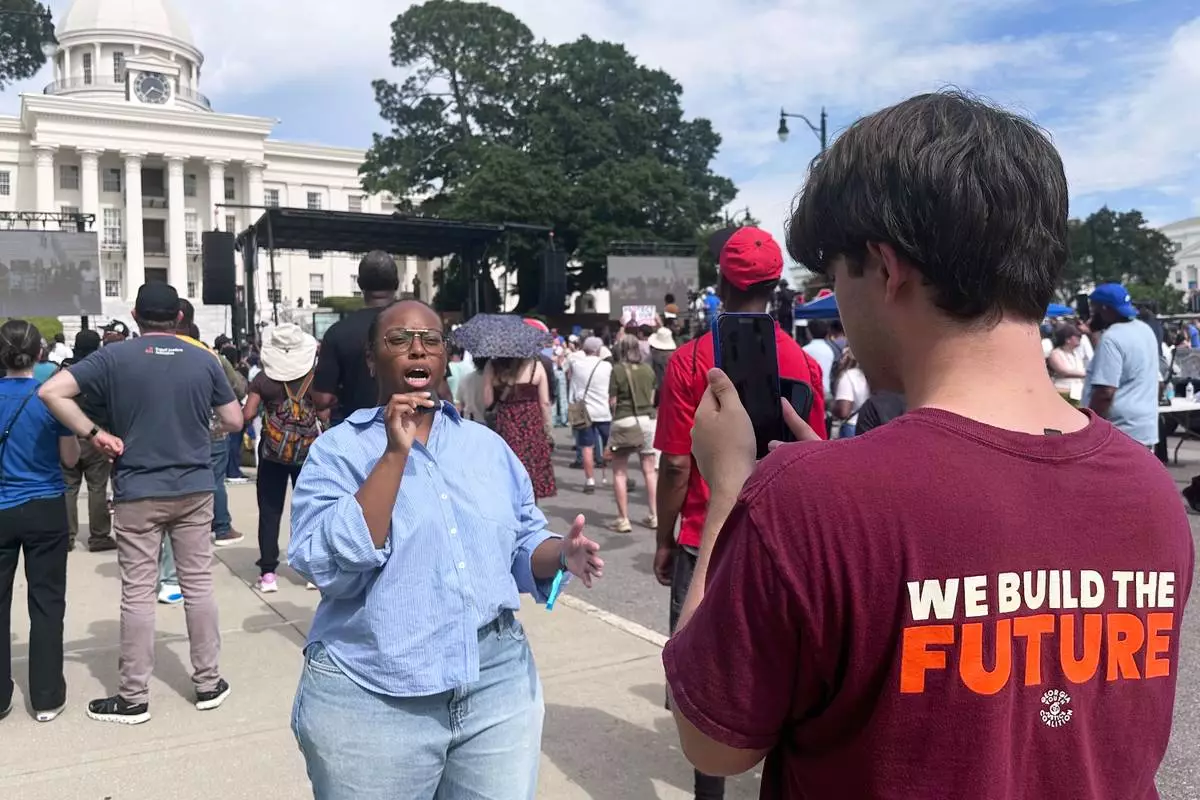
Kobe Chernushin, right, records Khayla Doby for the Georgia Youth Justice Coalition during a voting rights rally in Montgomery, Ala., Saturday, May 16, 2026. (AP Photo/Bill Barrow)
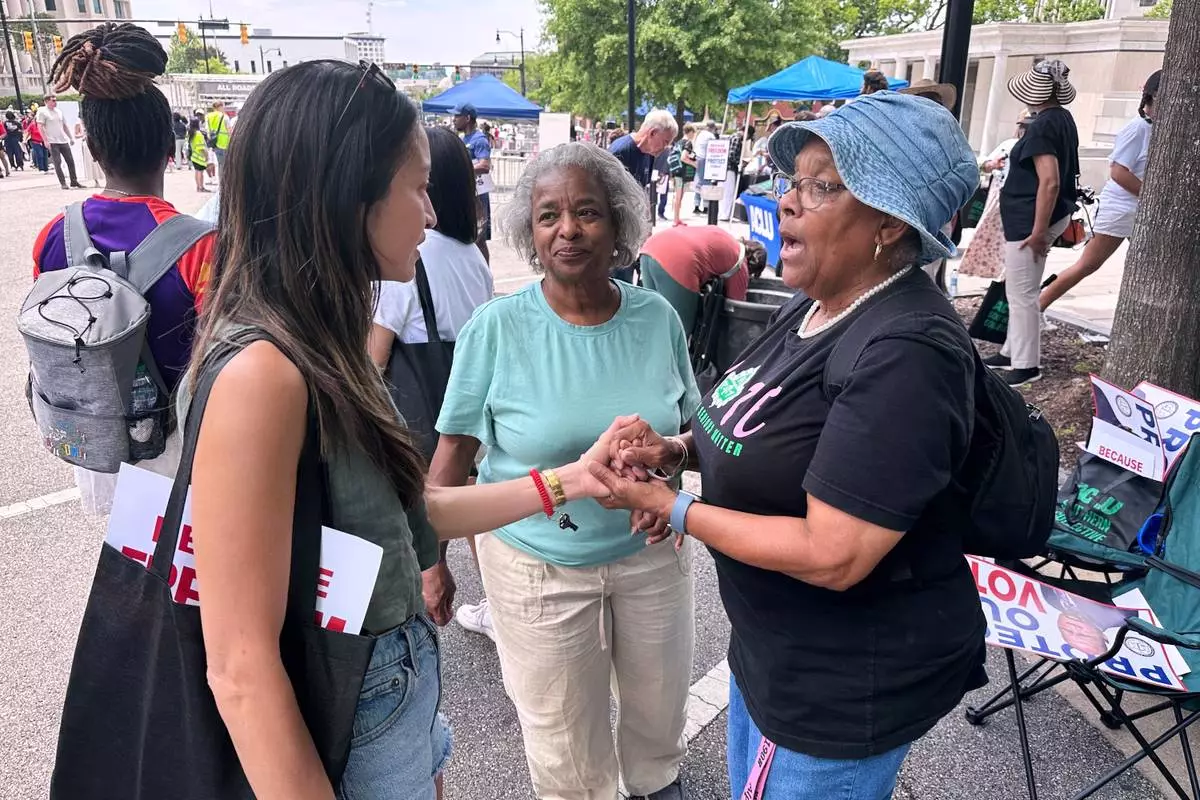
Bee Nguyen, left, talks to Carole Burton, center, and Tondalaire Ashford at a voting rights rally Saturday, May 16, 2026, in Montgomery, Ala. (AP Photo/Bill Barrow)
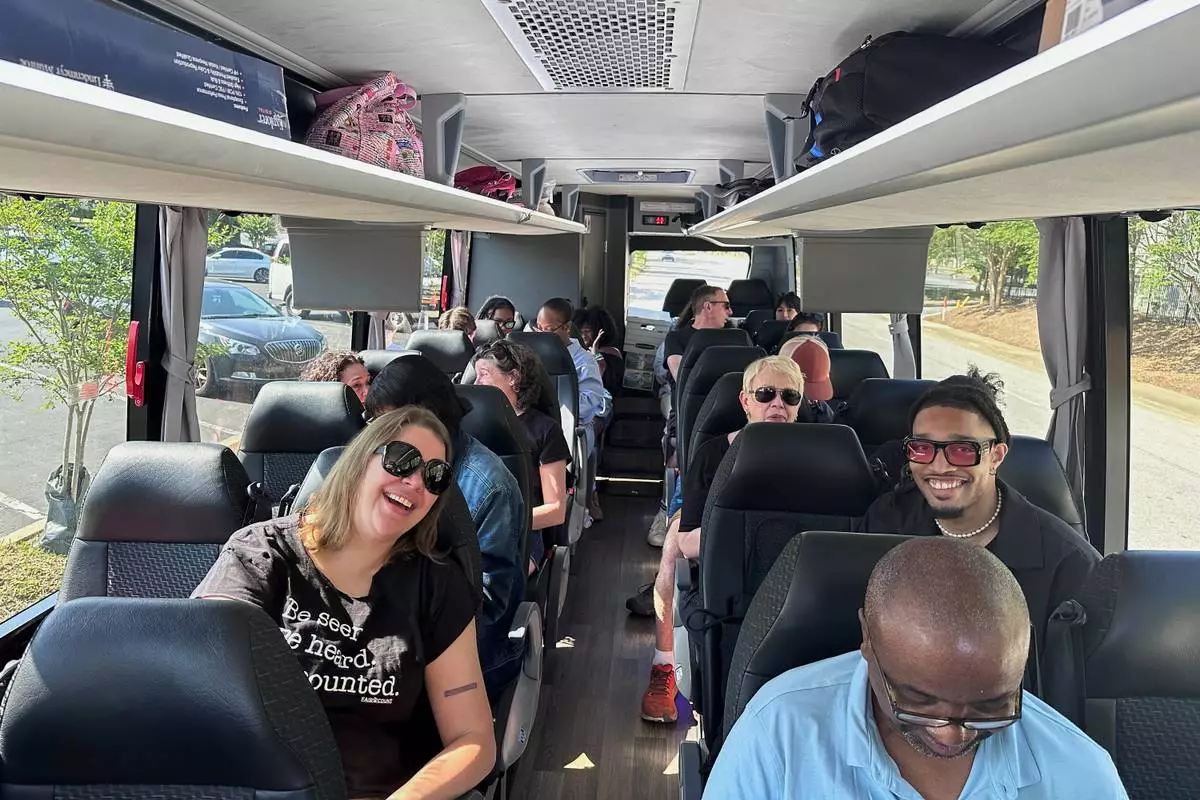
Voting rights and democracy activists ride together from Atlanta to Montgomery, Ala., on Saturday, May 16, 2026, for a rally against efforts by Republican legislative majorities to reduce Black representation in Congress from Southern states. (AP Photo/Bill Barrow)
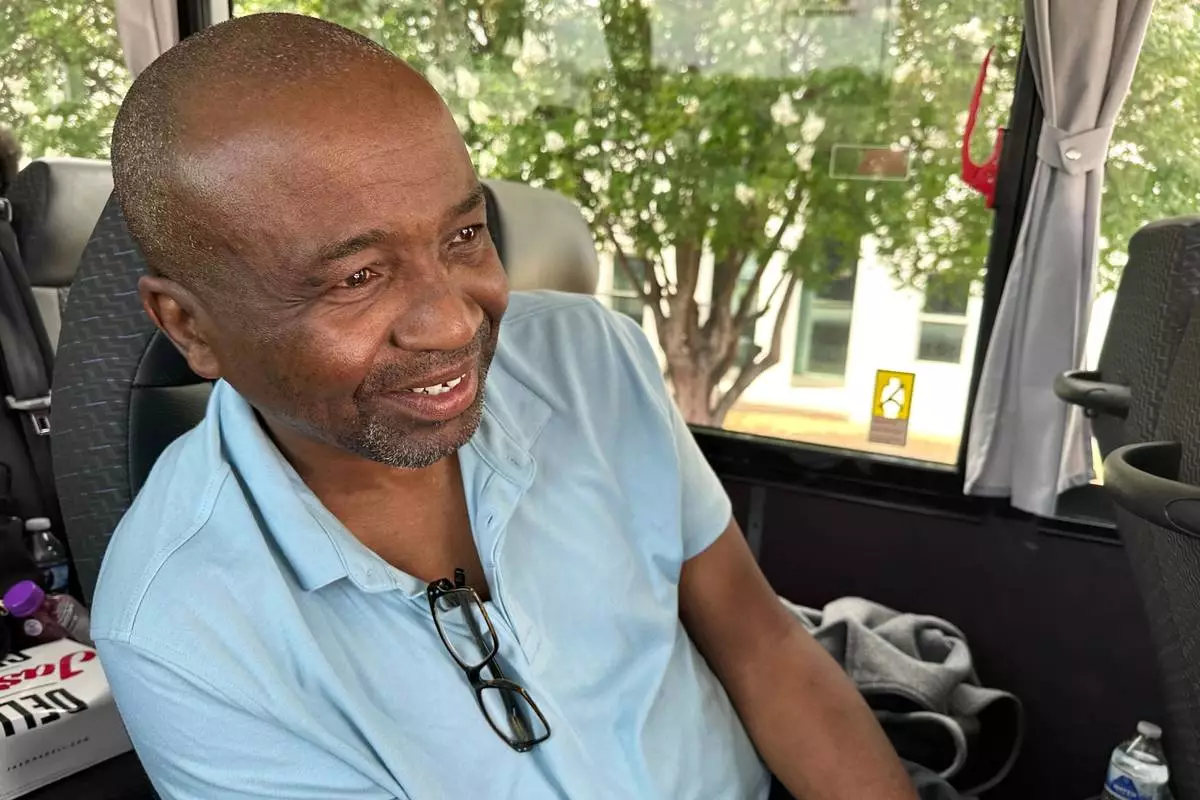
Keith Odom, a forklift driver from Aiken, S.C., looks out from his bus seat as he arrives in Montgomery, Ala., for a voting rights rally Saturday, May 16, 2026. (AP Photo/Bill Barrow)