RIO DE JANEIRO (AP) — Brazilian soccer fan and former metallurgist Jarbas Meneghini Carlini has been combining his love for the sport with his business, making replicas of the FIFA World Cup trophy in his workshop in western Rio de Janeiro.
After watching Brazil's then-captain Dunga triumphantly lift the trophy following the team's fourth World Cup win in 1994, Carlini resolved to create his own.
Click to Gallery
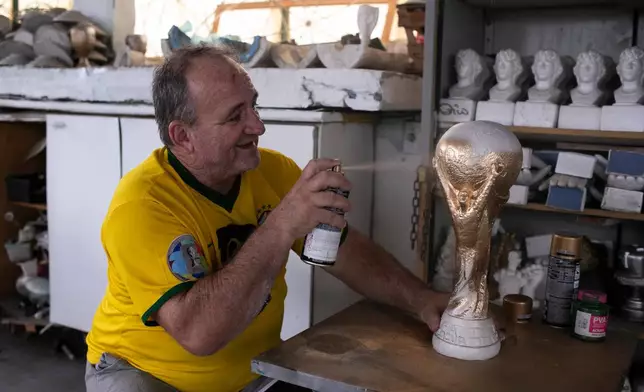
Jarbas Meneghini Carlini sprays a FIFA World Cup trophy replica he made, at his home in Rio de Janeiro, Friday, May 15, 2026. (AP Photo/Bruna Prado)
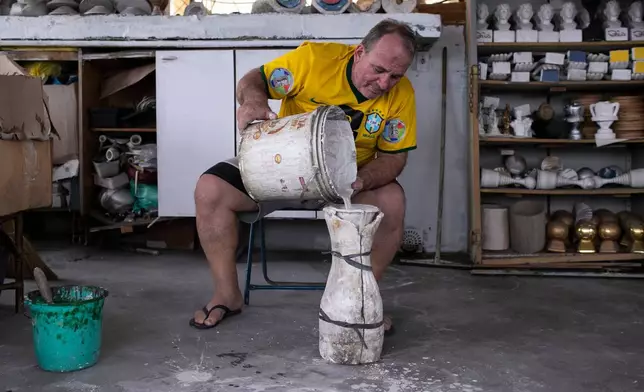
Jarbas Meneghini Carlini demonstrates how he makes FIFA World Cup trophy replicas at his home in Rio de Janeiro, Friday, May 15, 2026. (AP Photo/Bruna Prado)
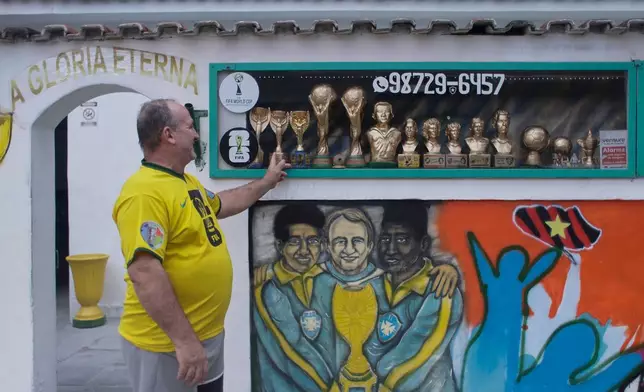
Jarbas Meneghini Carlini shows off FIFA World Cup trophy replicas he made, now decorations in front of his house, in Rio de Janeiro, Friday, May 15, 2026. (AP Photo/Bruna Prado)
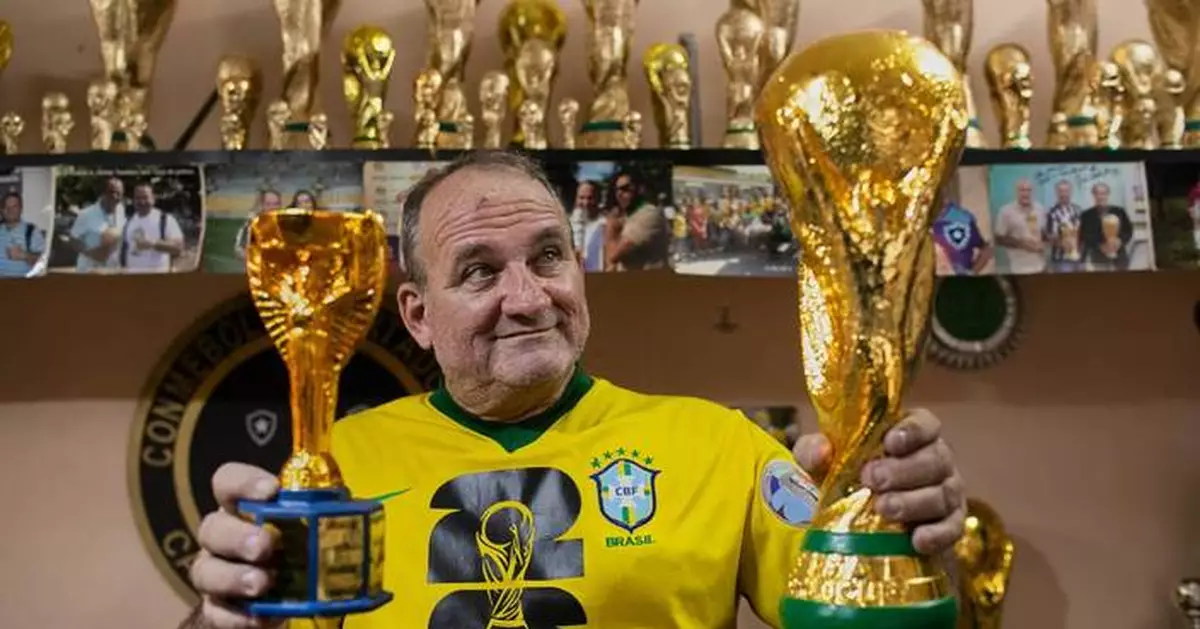
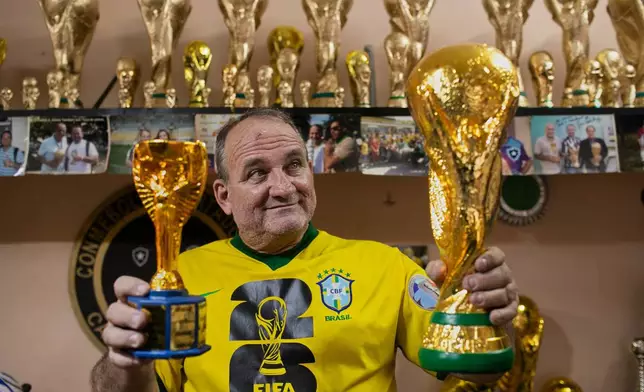
Jarbas Meneghini Carlini poses for a photo holding FIFA World Cup trophy replicas he made, at his home in Rio de Janeiro, Friday, May 15, 2026. (AP Photo/Bruna Prado)
“They weren’t for sale. So I decided to make the trophies myself. And today, I’m a trophy craftsman,” he said, from his workshop in Campo Grande.
The 58-year-old makes the replica World Cup trophies by hand from molds and finishes them off with paint. They range in size and price from about $1 to $100.
Carlini sells them to fans and tourists at the nearby Maracanã soccer stadium. But he has also gifted the trophies to stars including Pelé, Jorginho and Ronaldinho and sent them across Brazil and around the world.
To explain the emotion so often evident on his clients' faces when they pose for photos with his work, Carlini points to the trophy’s meaning.
“Everyone wants to be a world champion, everyone wants to be the best,” Carlini said.
Like the game’s original most-coveted accolade, Carlini’s trophies depict two stylized human figures reaching upward to support a globe. But his are made from plaster, rather than 18-carat gold.
“Yet it brings the same sense of wonder, as if it were made of gold,” Carlini said.
Over the years, the artisan has branched out, and now creates replicas of the former World Cup trophy used between 1930 and 1970, the Copa Libertadores trophy but also golden balls, gloves and boots.
World Cup years are particularly good for business, Carlini said.
As the country gears up to support the Seleção — or national team — in this year’s tournament hosted by the United States, Canada and Mexico in June and July, Carlini has prepared 200 trophies, but says sales could reach 600 if Brazil were to win.
South America’s biggest country has won five World Cup titles, more than any other nation, but its last successful attempt dates to 2002.
Brazilians are known for their joyful style of play and pulling off spectacular tricks such as a bicycle kick, said Carlini, who hopes his team will end the dry spell this year.
“That’s what we should use in the next World Cup to become champions: use joy, use artistry,” he said.
Follow AP’s coverage of Latin America and the Caribbean at https://apnews.com/hub/latin-america
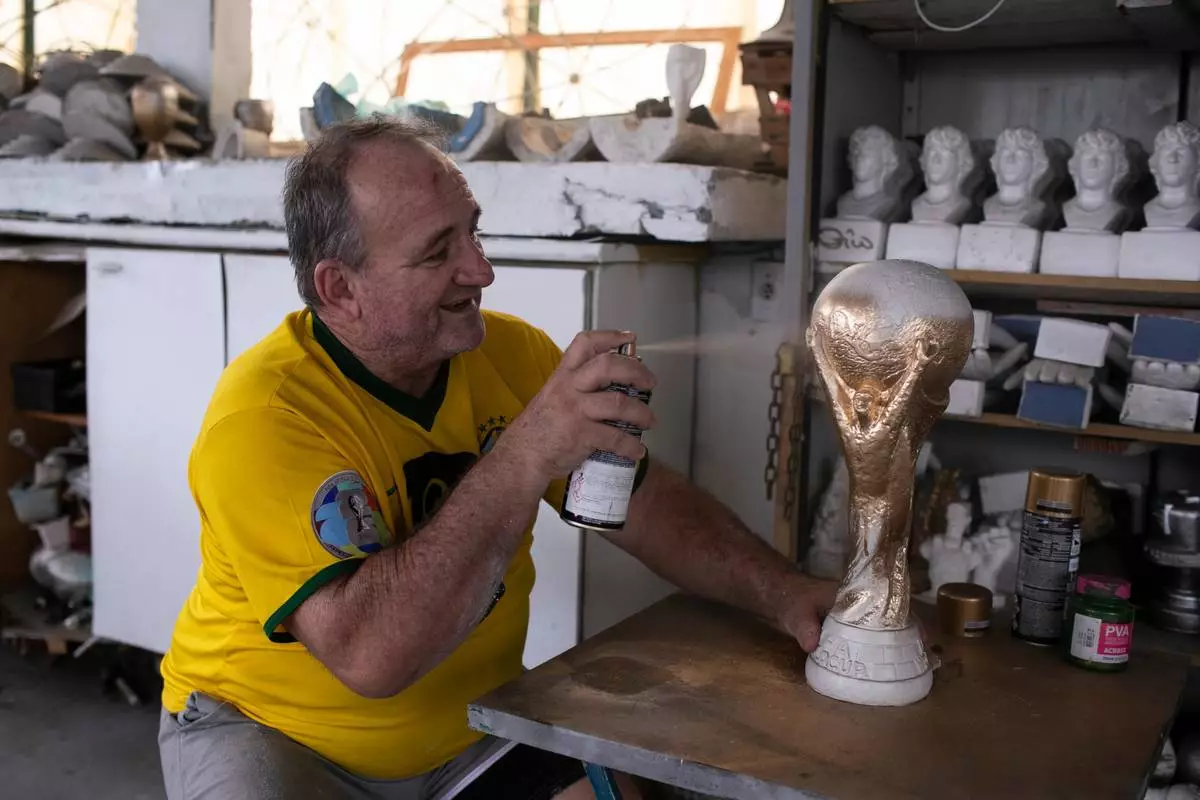
Jarbas Meneghini Carlini sprays a FIFA World Cup trophy replica he made, at his home in Rio de Janeiro, Friday, May 15, 2026. (AP Photo/Bruna Prado)
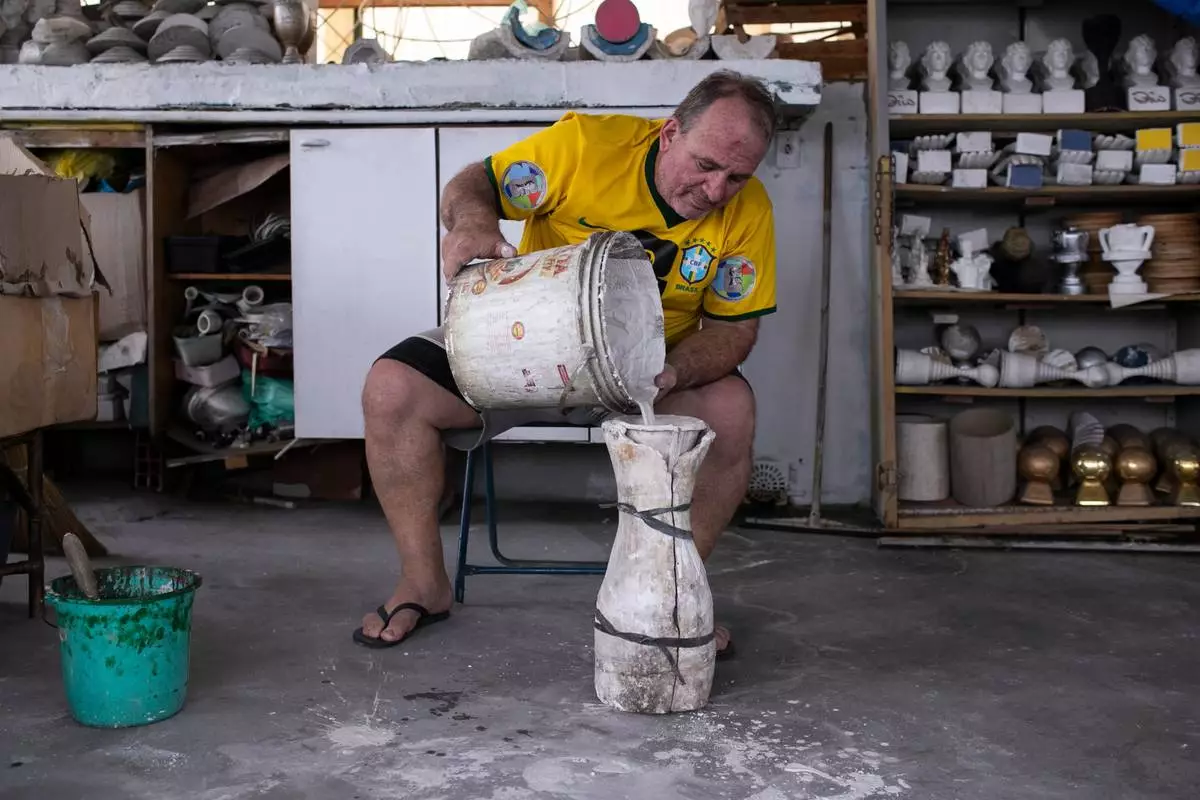
Jarbas Meneghini Carlini demonstrates how he makes FIFA World Cup trophy replicas at his home in Rio de Janeiro, Friday, May 15, 2026. (AP Photo/Bruna Prado)
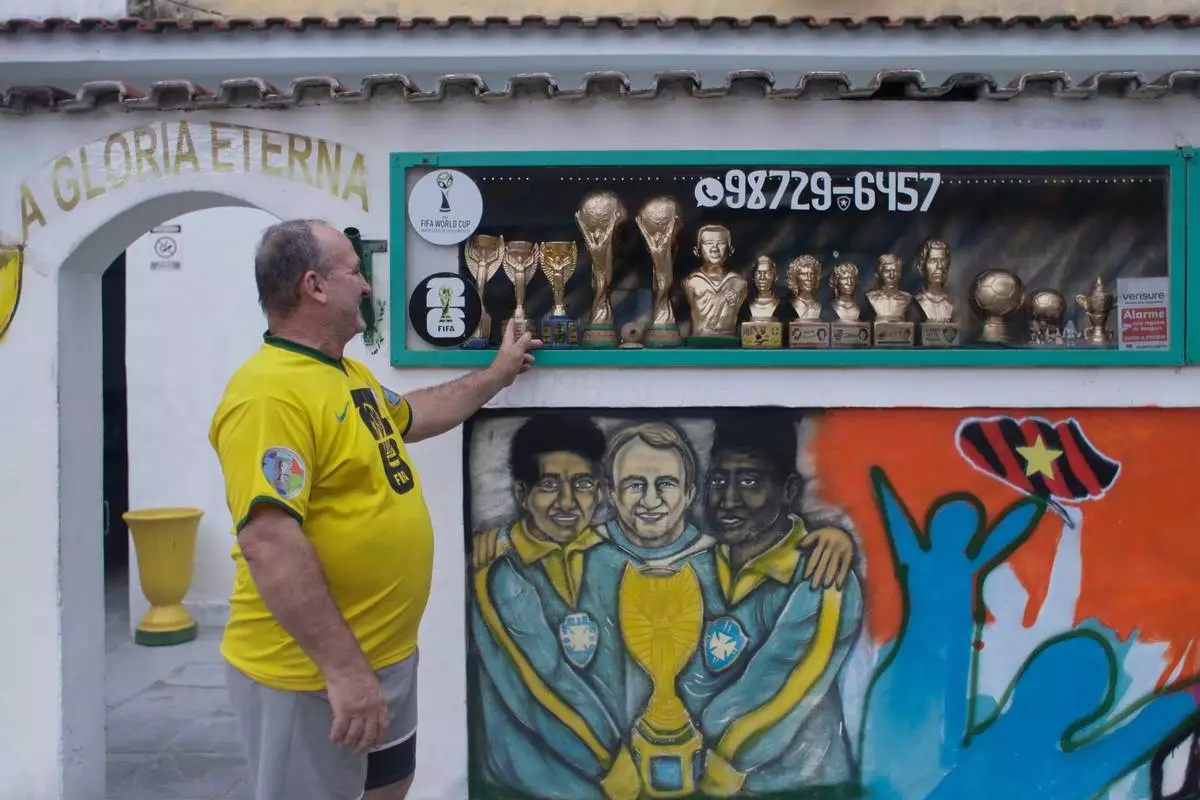
Jarbas Meneghini Carlini shows off FIFA World Cup trophy replicas he made, now decorations in front of his house, in Rio de Janeiro, Friday, May 15, 2026. (AP Photo/Bruna Prado)
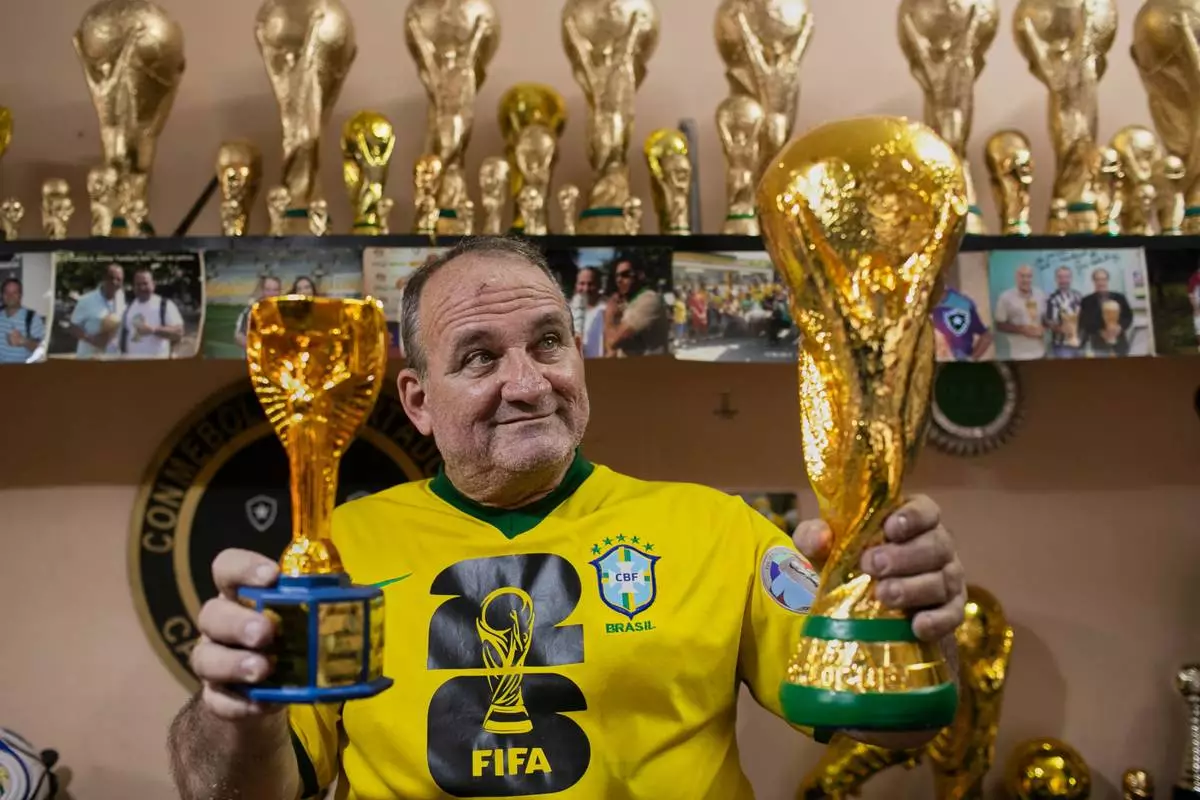
Jarbas Meneghini Carlini poses for a photo holding FIFA World Cup trophy replicas he made, at his home in Rio de Janeiro, Friday, May 15, 2026. (AP Photo/Bruna Prado)
MIAMI (AP) — A close ally of ousted Venezuelan President Nicolás Maduro was charged Monday with bribing top officials to steal hundreds of millions of dollars from lucrative contracts to import food at a time of widespread hardship in the South American country.
Alex Saab made his initial court appearance after being deported over the weekend by acting President Delcy Rodríguez as part of a purge of insider businessmen who are believed to have enriched themselves through corrupt dealings with Maduro.
Shackled and wearing a beige prison uniform, Saab answered “Yes, ma'am,” in English after being asked by a federal judge in Miami whether he understood the charges against him: a single count of money laundering tied to a decade-old conspiracy to create fake companies, falsify shipping records and skim from government contracts to import food from Colombia and Mexico.
As U.S. sanctions crippled Venezuela's foreign trade, Saab and others allegedly expanded their corrupt influence deep inside the Maduro government, accessing billions of dollars in oil sales from state-run oil company PDVSA, prosecutors said in a five-page indictment unsealed Monday.
Saab, 54, was previously charged during the first Trump administration in 2019 and then arrested during a refueling stop in Cape Verde on what the Venezuelan government described as a high-level humanitarian mission to Iran.
But President Joe Biden pardoned him in 2023 in exchange for the release of several imprisoned Americans in Venezuela and the return of a fugitive foreign defense contractor. The deal, part of a failed effort by the Biden White House to lure Maduro into holding a free presidential election, was harshly criticized by Republicans and federal law enforcement officials, who began investigating Saab for other alleged crimes not covered by the narrowly tailored pardon.
U.S. officials have long described Saab as Maduro's “bag man” and could ask him to serve as a valuable character witness against his former protector, who is awaiting trial on drug charges in Manhattan after being captured in a raid by the U.S. military in January.
The new U.S. prosecution of Saab is taking place against the backdrop of the Trump administration’s efforts to overhaul relations with Venezuela.
Trump and senior administration officials have heaped praise on Rodríguez, who has thrown open Venezuela's oil industry to U.S. investment at a time of surging oil prices tied to the war in Iran. In exchange, the White House has dampened talk of elections, which are required by Venezuela's constitution within 30 days of the president becoming “permanently unavailable.”
But Rodríguez faces enormous domestic pressures from the more radical, ideological wing of the ruling socialist party, some of whom, like Interior Minister Diosdado Cabello, wield great influence inside Venezuelan security forces and face criminal charges themselves in the U.S.
Mario Silva, who for years spread pro-government propaganda as the host of a program on state TV before being removed from the airwaves shortly after Maduro's capture, questioned the legality of Saab's removal, saying it violates a constitutional ban on extradition.
“The imperialists don't negotiate. They conquer, test and probe — until our country shatters,” said Silva in a livestream posted Sunday on social media. “Nobody is safe right now.”
Silva also pointed out that the efforts of Venezuela’s government to previously secure the release of Saab outmatch the work done to bring home Maduro and former first lady Cilia Flores.
Perhaps anticipating blowback, Venezuela's immigration authority, SAIME, in a statement Saturday referred to Saab only as a “Colombian citizen who is implicated in committing several crimes in the United States of America, a fact that is widely known, notorious, and heavily documented in the media.”
Cabello on Monday expressed support for Saab’s deportation, arguing that he had falsified his national ID card and was not a Venezuelan citizen.
Rodríguez's silence stands in contrast to the praise she heaped on Saab a few years ago during the international campaign Venezuela's government mounted to free him from U.S. custody. At the time, Rodríguez described him as an “innocent Venezuelan diplomat” who had been illegally “kidnapped” while on a humanitarian mission to Iran to circumvent the “immoral, imperial blockade” imposed by the United States.
As Rodríguez cements her rule, she has distanced herself from Saab, firing him from her Cabinet and stripping him of his role as the main conduit for foreign companies looking to invest in Venezuela.
Saab amassed a fortune through Venezuelan government contracts. The indictment against him in 2019 was tied to a government contract for low-income housing that was never built.
The new indictment stems from another case the Justice Department brought against Saab’s longtime partner, Alvaro Pulido, over the so-called CLAP program set up by Maduro to provide staples — rice, corn flour, cooking oil — to poor Venezuelans at a time of rampant hyperinflation and a crumbling currency.
Saab had been identified in the 2021 indictment as “Co-Conspirator 1" and allegedly helped set up a web of companies used to bribe a pro-Maduro governor who awarded the business partners a contract to import food boxes from Mexico at an inflated price.
Saab secretly met with the Drug Enforcement Administration before his first arrest and, in a closed-door court hearing in 2022, his lawyers revealed that the businessman for years had helped the DEA untangle corruption in Maduro’s inner circle. As part of that cooperation, he forfeited more than $12 million in illegal proceeds from dirty business dealings.
AP writer Regina Garcia Cano in Mexico City and Eric Tucker in Washington contributed to this report.
This story is part of an investigation that includes the FRONTLINE documentary “Crisis in Venezuela,” which aired Feb. 10, 2026, on PBS. Watch the documentary at pbs.org/frontline, in the PBS App and on FRONTLINE’s YouTube channel.
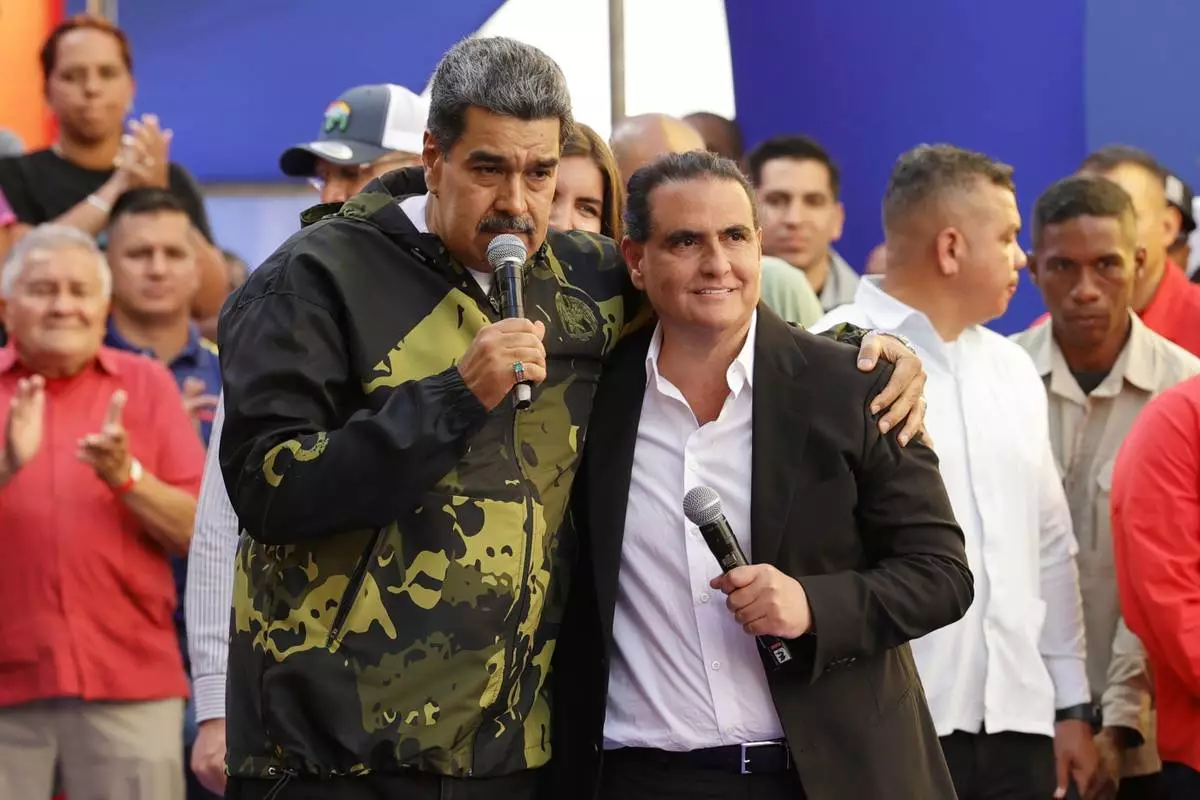
FILE - Venezuela's President Nicolas Maduro, left, and Alex Saab stand together during an event marking the anniversary of the 1958 coup that overthrew dictator Marcos Perez Jimenez, in Caracas, Venezuela, Jan. 23, 2024. (AP Photo/Jesus Vargas, File)