Skip to Content Facebook Feature Image

Louisiana Sen. Bill Cassidy has no regrets over Trump impeachment vote, even as it cost him his seat

News

Louisiana Sen. Bill Cassidy has no regrets over Trump impeachment vote, even as it cost him his seat
News

News

Louisiana Sen. Bill Cassidy has no regrets over Trump impeachment vote, even as it cost him his seat

2026-05-19 09:11 Last Updated At:09:21

WASHINGTON (AP) — Returning to the U.S. Capitol after a stinging primary reelection loss, Republican Sen. Bill Cassidy of Louisiana said Monday evening that he has no regrets about his “momentous” vote to convict President Donald Trump on impeachment charges five years ago.

“I voted to uphold the Constitution. It may have cost me my seat, but who cares?” Cassidy told reporters in the Capitol. “I had the privilege of voting to uphold the Constitution, isn’t that a great thing?”

Cassidy lost his seat in his state’s Republican primary Saturday after Trump endorsed one of his opponents, and after years of trying to convince his voters that he was still supportive of the president even though he had voted to convict Trump in a Senate impeachment trial after the Jan. 6, 2021, attack on the Capitol.

But after years of curtly dodging questions about his impeachment vote — and often saying nothing at all when pressed in the Capitol hallways — Cassidy now says he feels “great.”

“You’re looking at a man who loves his country, who feels very, very good about how I serve my country and my Constitution and my fellow Americans,” Cassidy said. "Wouldn’t all of us want to say, I voted to support the Constitution on something momentous? That’s the way I feel about it. I’m very pleased about it.”

He now joins a club of Republican lawmakers who have crossed Trump and lost. It remains unclear whether he will join GOP colleagues like North Carolina Sen. Thom Tillis, who has become more outspoken since he announced his retirement last year. Cassidy wouldn’t directly criticize Trump on Monday evening, saying that “people want me to say negative things, but I’m saying positive things.”

Still, he did hint that he may have more to say, telling reporters he is undecided on how he will vote on the next Democratic measure to halt the Iran war and criticizing a new nearly $1.8 billion fund to compensate Trump allies who believe they have been unjustly investigated and persecuted — potentially including people who were prosecuted and later pardoned for their roles in the Jan. 6 Capitol attack.

As Cassidy reflected on his two terms in the Senate, his GOP colleagues still loyal to Trump were mostly quiet or dispassionate about his loss.

“Bill’s loss was predictable, and Bill knew it,” said his Louisiana colleague, Republican Sen. John Kennedy.

Kennedy said Cassidy decided to run anyway, “and I respect that, and I thank him for his service. We’re running on to a runoff now and we’ve got two fine people in the runoff.”

Cassidy's vote to convict Trump five years ago “was an issue, there’s no question,” Kennedy said.

South Carolina Sen. Lindsey Graham, one of Trump’s closest allies, said on NBC’s “Meet the Press” Sunday that “those who try to destroy Trump politically, stand in the way of his agenda, are going to lose.”

Trump agreed, posting over the weekend on social media that “it’s nice to see that his political career is OVER!”

Only Alaska Sen. Lisa Murkowski, one of six other Republicans who voted to convict Trump in his second impeachment trial, said she regrets that Cassidy won’t be returning to the Senate.

His defeat “certainly has implications for us here,” she said. “I’ve appreciated working with him and his leadership.”

Until Saturday, Cassidy was also silent on most controversies involving Trump. And he worked hard to show that he was supportive of the president, most significantly by eventually supporting the nomination of Health and Human Services Secretary Robert F. Kennedy Jr. even after questioning Kennedy’s skepticism of vaccines. As a doctor and the chairman of the Senate Health, Education, Labor and Pensions Committee, Cassidy’s vote was crucial.

Cassidy wouldn’t say Monday if he regretted that vote. He compared the vote to a bad date in high school and said “life is lived forward.”

He was more outspoken about Trump’s new “anti-weaponization fund,” which is part of a settlement that resolves the president's lawsuit against the Internal Revenue Service over the leak of his tax returns.

While other Republicans dodged questions on the fund as they returned to Washington on Monday evening, telling reporters they didn’t know enough about it or just declining to weigh in, Cassidy said he doesn’t see any precedent for it.

“We are a nation of laws,” Cassidy said. “You can’t just make up things.”

Congress should have a say, he said, adding that people he met on the campaign trail “are concerned about making their own ends meet, not about putting the slush fund together without a legal precedent.”

Cassidy’s support for Trump's conviction in the February 2021 impeachment trial was a surprise, after the mild-mannered doctor had been mostly supportive of — or at least reluctant to challenge — Trump through his first term. He wrestled with how to vote for days beforehand and declined to comment on the trial before casting his vote.

He was one of seven Republicans to vote to convict as the Senate eventually acquitted Trump. The only other two remaining in the Senate are Murkowski and Maine Sen. Susan Collins, who is up for reelection as well in her much more moderate state.

Cassidy said after the vote in 2021 that he was “at peace” with his decision. But it dogged him for the full five years, and became much more of an issue when Trump was reelected and Cassidy was running again.

When asked Monday if he would run for office again, Cassidy made a subtle dig at Trump’s efforts to overturn his 2020 presidential election loss and his false claims that led to the Jan. 6 attack on the Capitol by his supporters.

“I respect democracy,” Cassidy said. “So right now that door just seems to be shut.”

Associated Press writers Steven Sloan, Joey Cappelletti and Stephen Groves contributed to this report.
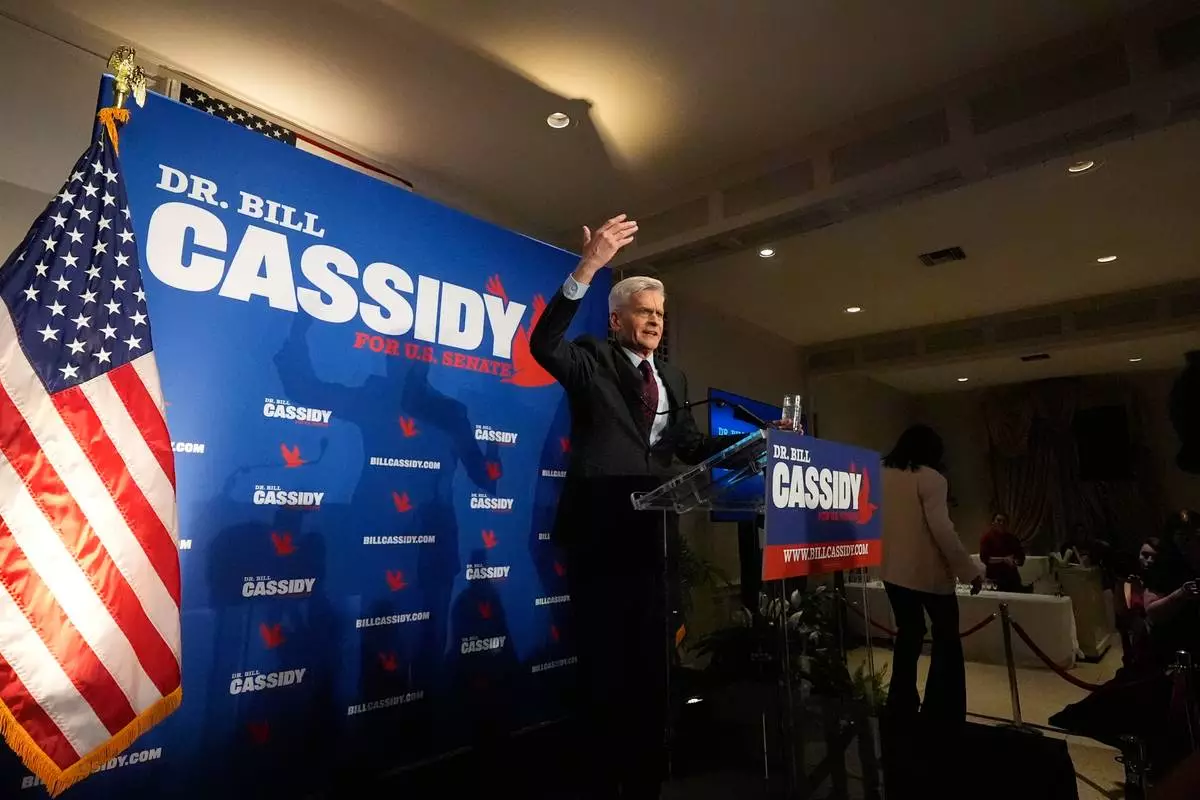
Sen. Bill Cassidy, R-La., speaks to supporters during an election night watch party Saturday, May 16, 2026, in Baton Rouge, La. (AP Photo/Gerald Herbert)
Sen. Bill Cassidy, R-La., speaks to supporters during an election night watch party Saturday, May 16, 2026, in Baton Rouge, La. (AP Photo/Gerald Herbert)

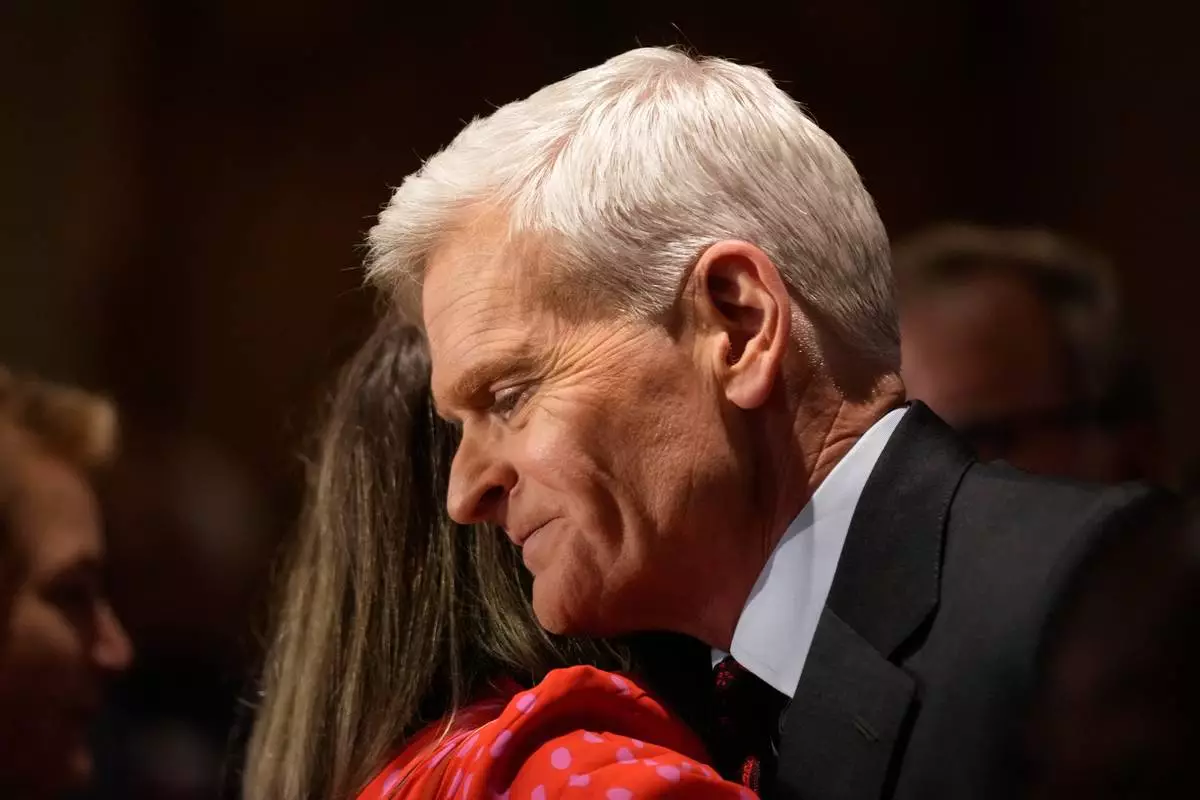
Sen. Bill Cassidy, R-La., right, hugs a supporter during an election night watch party Saturday, May 16, 2026, in Baton Rouge, La. (AP Photo/Gerald Herbert)
Sen. Bill Cassidy, R-La., right, hugs a supporter during an election night watch party Saturday, May 16, 2026, in Baton Rouge, La. (AP Photo/Gerald Herbert)
NEW YORK (AP) — Negotiators on Monday reached a deal to end the strike that stalled service on the Long Island Rail Road, the busiest commuter rail system in North America.

Gov. Kathy Hochul said in a statement on X that the deal “delivers raises for workers while protecting riders and taxpayers” and that service would start back up beginning Tuesday at noon.

The Metropolitan Transportation Authority and leaders of the five labor unions had been bargaining for a new contract for years before the unions went on strike at 12:01 a.m. Saturday. Roughly 250,000 commuters use the rail system that connects New York City to its eastern suburbs every weekday.

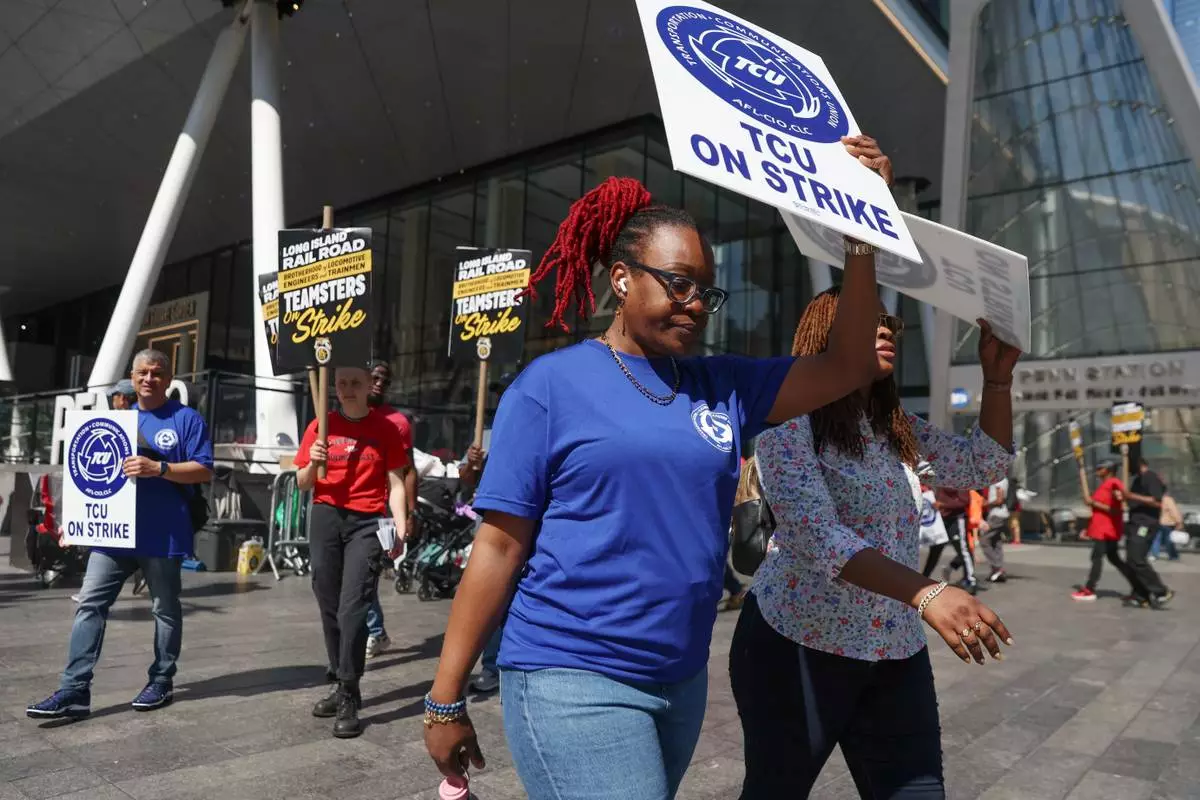
Locomotive engineers, machinists, signalmen and other workers picketed at train stations through the weekend.

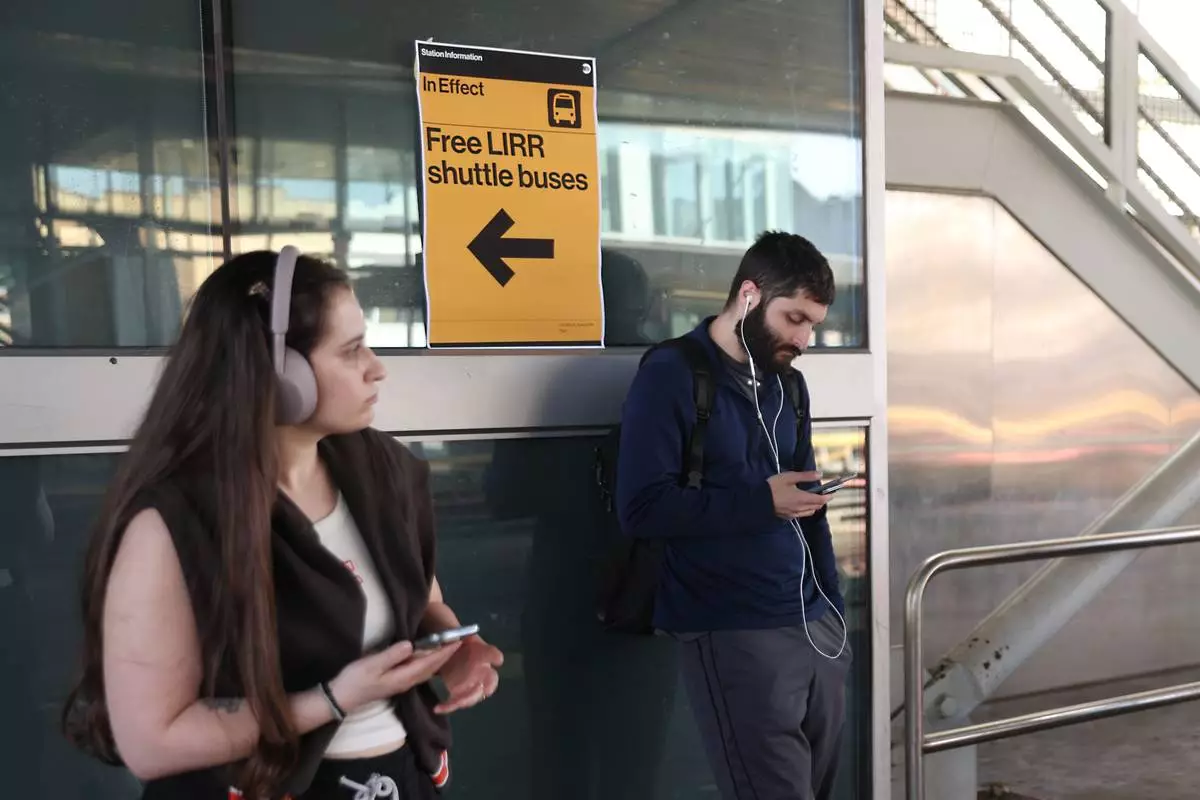
The MTA, which runs the railroad, offered free but limited shuttle buses during the morning and evening rush hours starting Monday, leaving most commuters to navigate the gauntlet of car, bus and subway routes. New York Gov. Kathy Hochul had urged LIRR riders to work from home, if possible.

Union officials and the MTA negotiated Sunday afternoon into the early morning hours Monday after prodding from the National Mediation Board, which is the federal agency that governs labor relations for railroads and airlines.

The five unions, representing about half the train system’s workforce, had demanded raises they said were needed to help workers keep up with inflation and rising living costs. The MTA argued that the unions’ initial demands would lead to fare increases.

The two sides have been negotiating a new contract since 2023, but talks have stalled over salaries and healthcare premiums.

The Trump administration got involved in September after the unions asked for the appointment of a panel of experts. The move temporarily averted a strike, but the two sides still couldn’t reach a deal after months passed.

The LIRR serves hundreds of thousands of commuters who live along a 118-mile-long (190-kilometer-long) land mass that includes Brooklyn and Queens in New York City and the Hamptons, a summertime playground for the rich and famous near its eastern tip.

Most of its riders live outside New York City in two Long Island counties populated by nearly 3 million people.

Before this latest walkout, LIRR workers last went on strike in 1994.

Ridership has been lighter than expected on the free but limited shuttle buses the MTA provided from a handful of locations on Long Island to New York City subway stations.

Officials had implored the roughly 250,000 riders who normally use the train system each weekday to work from home rather than commute into the city, if possible.

During the morning commute, more than 2,000 people took advantage of the shuttle service, the agency said. It had prepared for about 13,000 riders.

The first impacts of the walkout were felt over the weekend as baseball fans had to find other ways to get to Citi Field in Queens to see the New York Mets take on their crosstown rivals the New York Yankees.

This story has been corrected to show that the body in charge of the LIRR is the Metropolitan Transportation Authority, not the Metropolitan Transportation Agency.

McCormack reported from Concord, New Hampshire. Associated Press writers Ted Shaffrey and Joseph Frederick in New York contributed.

Signs for free Long Island Rail Road shuttle buses hang at the Howard Beach–JFK Airport station as Long Island Rail Road workers enter the third day of their strike, Monday, May 18, 2026, in New York. (AP Photo/Heather Khalifa)

Signs for free Long Island Rail Road shuttle buses hang at the Howard Beach–JFK Airport station as Long Island Rail Road workers enter the third day of their strike, Monday, May 18, 2026, in New York. (AP Photo/Heather Khalifa)

Long Island Rail Road workers walk on the picket line outside of Penn Station on the third day of their strike, Monday, May 18, 2026, in New York. (AP Photo/Heather Khalifa)

Long Island Rail Road workers walk on the picket line outside of Penn Station on the third day of their strike, Monday, May 18, 2026, in New York. (AP Photo/Heather Khalifa)

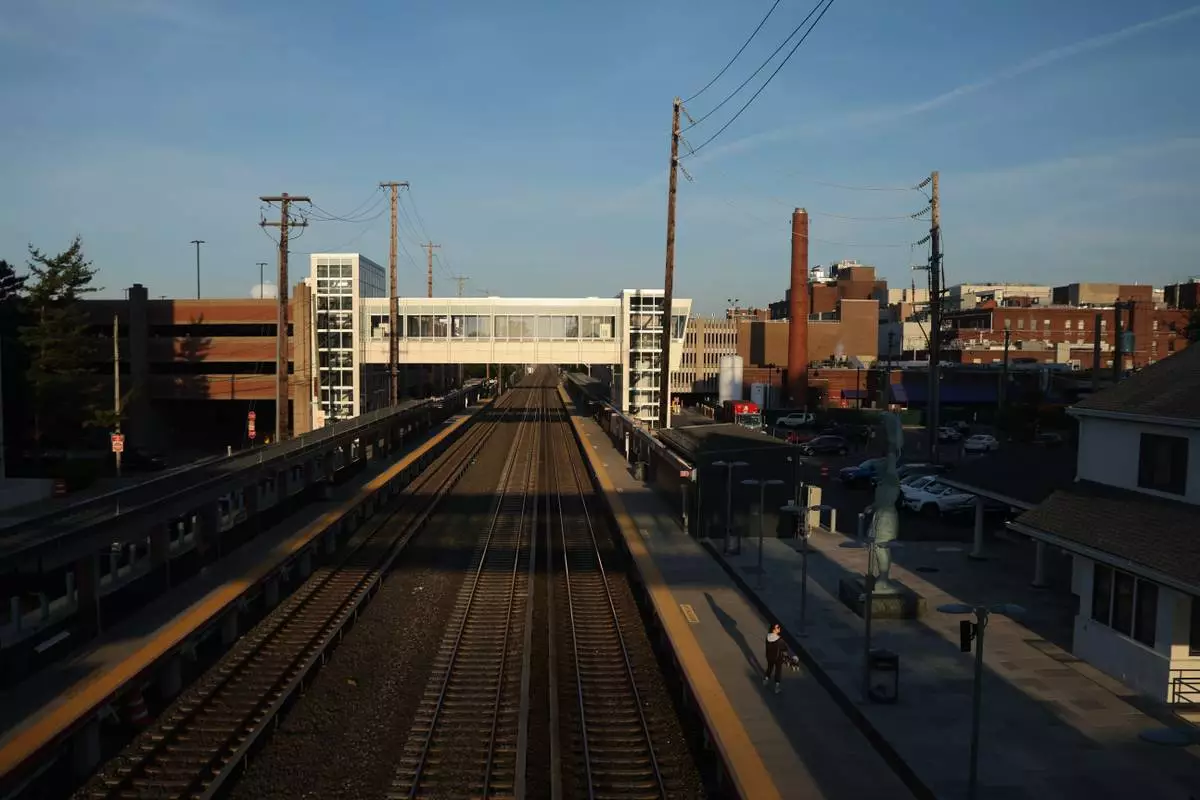
A pedestrian walks along an empty track at Mineola train station as Long Island Rail Road workers strike, Monday, May 18, 2026, in Mineola, N.Y. (AP Photo/Heather Khalifa)

A pedestrian walks along an empty track at Mineola train station as Long Island Rail Road workers strike, Monday, May 18, 2026, in Mineola, N.Y. (AP Photo/Heather Khalifa)

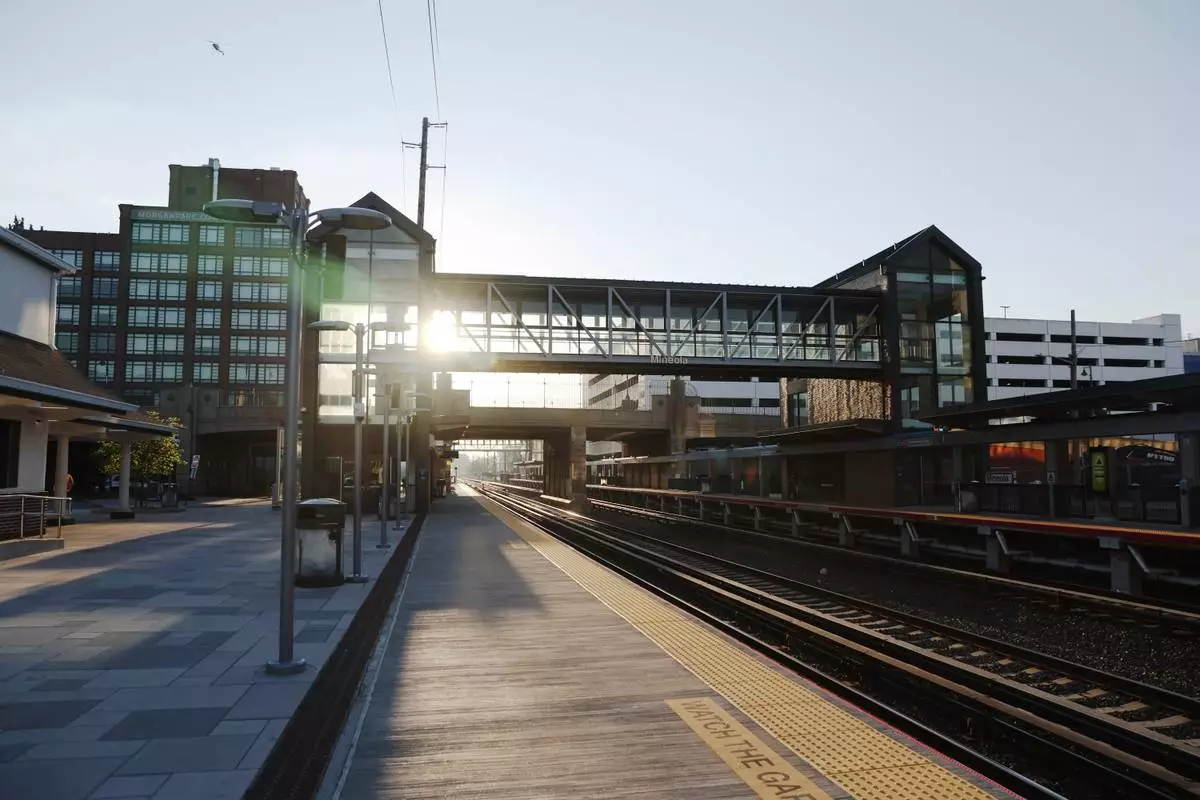
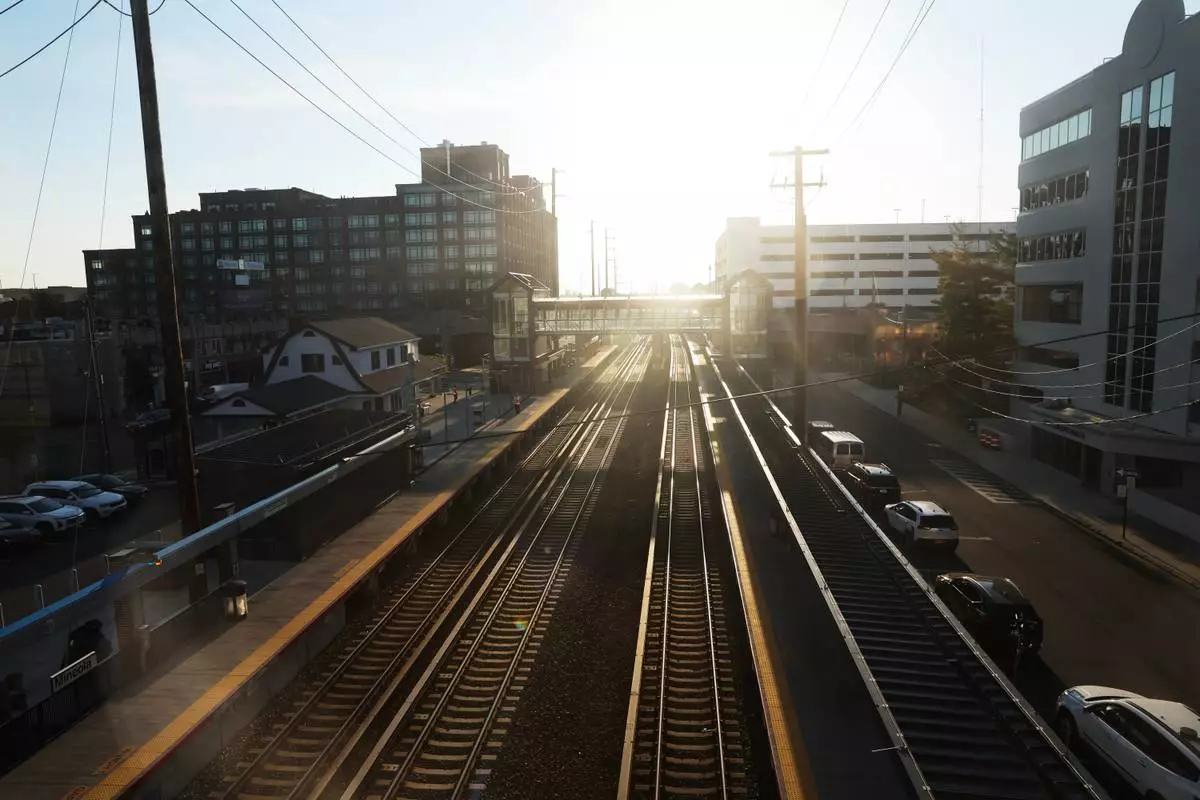
Tracks are empty at Mineola train station as Long Island Rail Road workers enter the third day of their strike, Monday, May 18, 2026, in Mineola, N.Y. (AP Photo/Heather Khalifa)

Tracks are empty at Mineola train station as Long Island Rail Road workers enter the third day of their strike, Monday, May 18, 2026, in Mineola, N.Y. (AP Photo/Heather Khalifa)

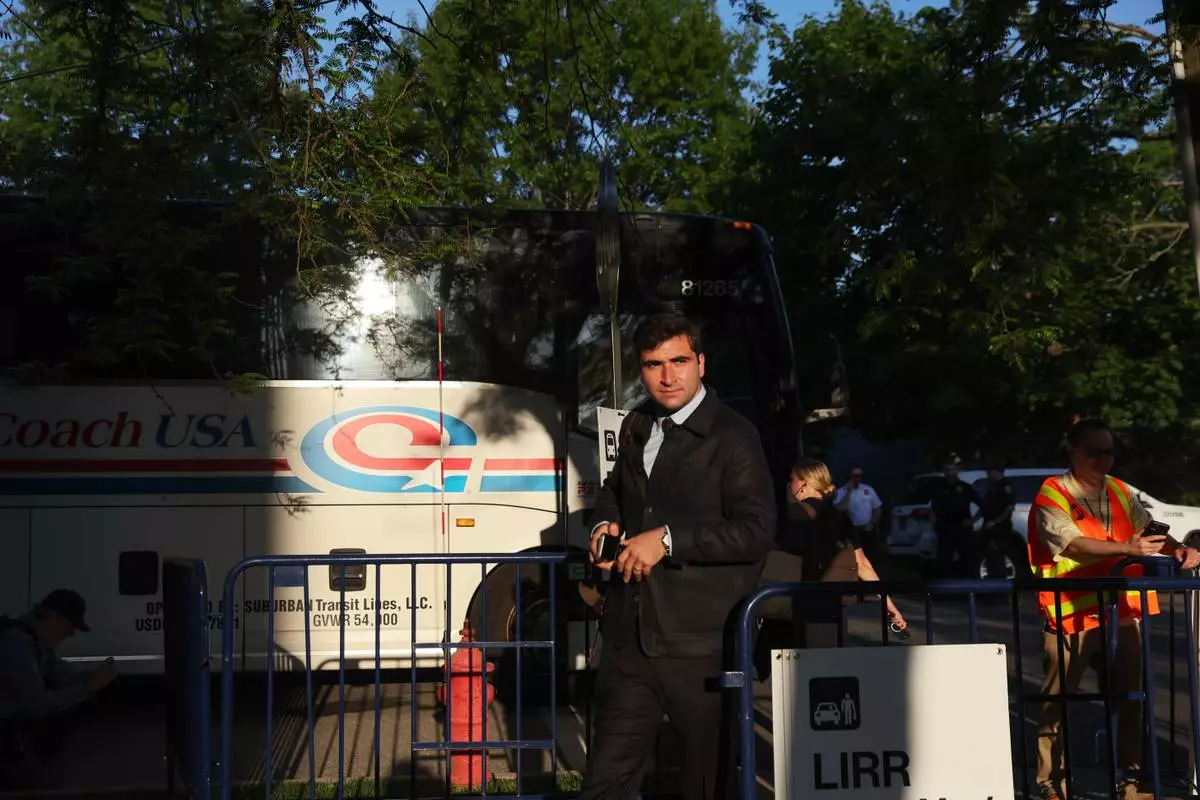
People exit and board buses at the Mineola train station as Long Island Rail Road workers enter the third day of their strike, Monday, May 18, 2026, in Mineola, N.Y. (AP Photo/Heather Khalifa)

People exit and board buses at the Mineola train station as Long Island Rail Road workers enter the third day of their strike, Monday, May 18, 2026, in Mineola, N.Y. (AP Photo/Heather Khalifa)

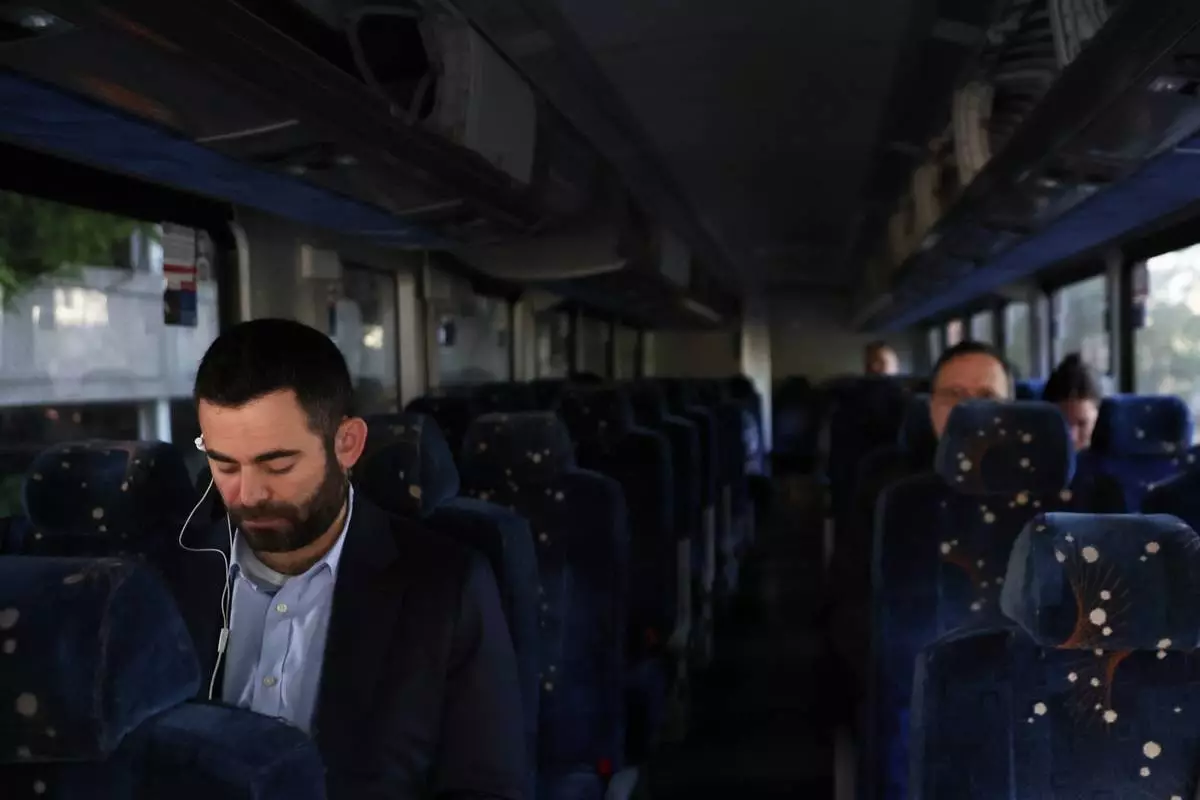
Commuters sit on a shuttle bus as Long Island Rail Road workers strike, Monday, May 18, 2026, in Mineola, N.Y. (AP Photo/Heather Khalifa)

Commuters sit on a shuttle bus as Long Island Rail Road workers strike, Monday, May 18, 2026, in Mineola, N.Y. (AP Photo/Heather Khalifa)

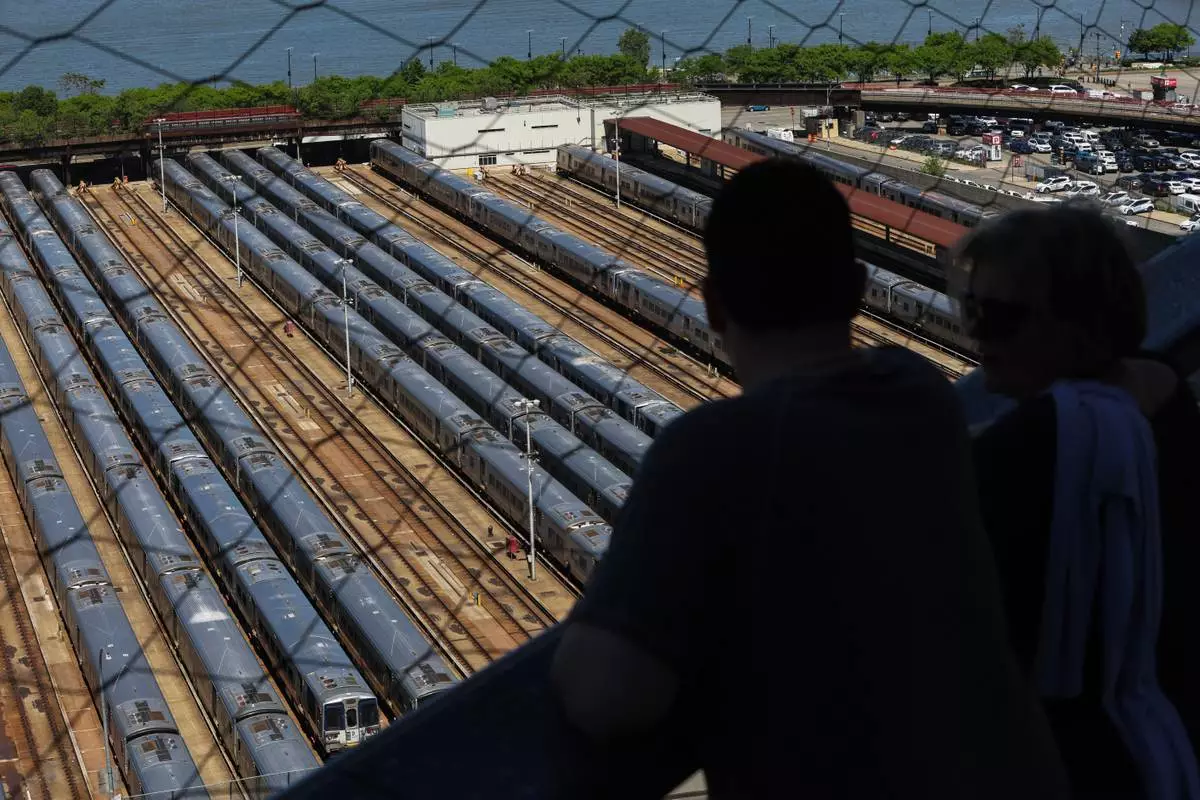
Visitors look out at the trains at the West Side Yard from the Vessel on the first day of a Long Island Rail Road workers' strike, Saturday, May 16, 2026, in New York. (AP Photo/Heather Khalifa)

Visitors look out at the trains at the West Side Yard from the Vessel on the first day of a Long Island Rail Road workers' strike, Saturday, May 16, 2026, in New York. (AP Photo/Heather Khalifa)

Tracks are empty at Mineola train station as Long Island Rail Road workers enter the third day of their strike, Monday, May 18, 2026, in Mineola, N.Y. (AP Photo/Heather Khalifa)

Tracks are empty at Mineola train station as Long Island Rail Road workers enter the third day of their strike, Monday, May 18, 2026, in Mineola, N.Y. (AP Photo/Heather Khalifa)

Recommended Articles