An array of exquisite traditional handicrafts and intangible cultural heritage skills are showcased at the ongoing 10th China-Russia Expo in Harbin, the provincial capital of Heilongjiang Province in northeast China.
Held from May 17 to 21, this year's expo covers a floor space of 55,000 square meters, with more than 1,500 companies from 46 countries and regions taking part. Nearly 300 Russian companies are attending, and over 5,000 buyers are expected.
In addition to high-quality cross-border goods, intangible cultural heritage skills were showcased at the expo. Among the most eye-catching exhibits is the fish skin handicraft of the Hezhe ethnic group, which was once the only fishing and hunting community in northern China.
The Hezhe people traditionally used fish skin and bones to make clothes, shoes and decorations due to their long-standing fishing heritage.
Cui Yinghua, member of the Fish Skin Painting Professional Committee of the Heilongjiang Provincial Calligraphy and Painting Art Association, was demonstrating the craft at one exhibition booth.
She said among all her works showcased here, her favorite is a painting of lotus and a bird. She said the petals are made from fish bones, the leaves are from fish skin, and the little bird is from fish scales. The picture features blank space for viewers to expand their own imagination, showcasing the charm of Chinese paintings, she said.
Beyond intangible cultural heritage, a combination of traditional Chinese medicine (TCM) culture and modern technology also shine at this China-Russia Expo. A TCM intelligent diagnosis robot attracted the attention of many visitors. It not only provides professional consultation services, but also perform the Eight Pieces of Brocade (Baduanjin), a traditional Chinese aerobic exercise.
In addition, a TCM physiotherapy experience area is open to visitors, allowing Chinese and international visitors to experience the benefits and natural healing methods of TCM firsthand.
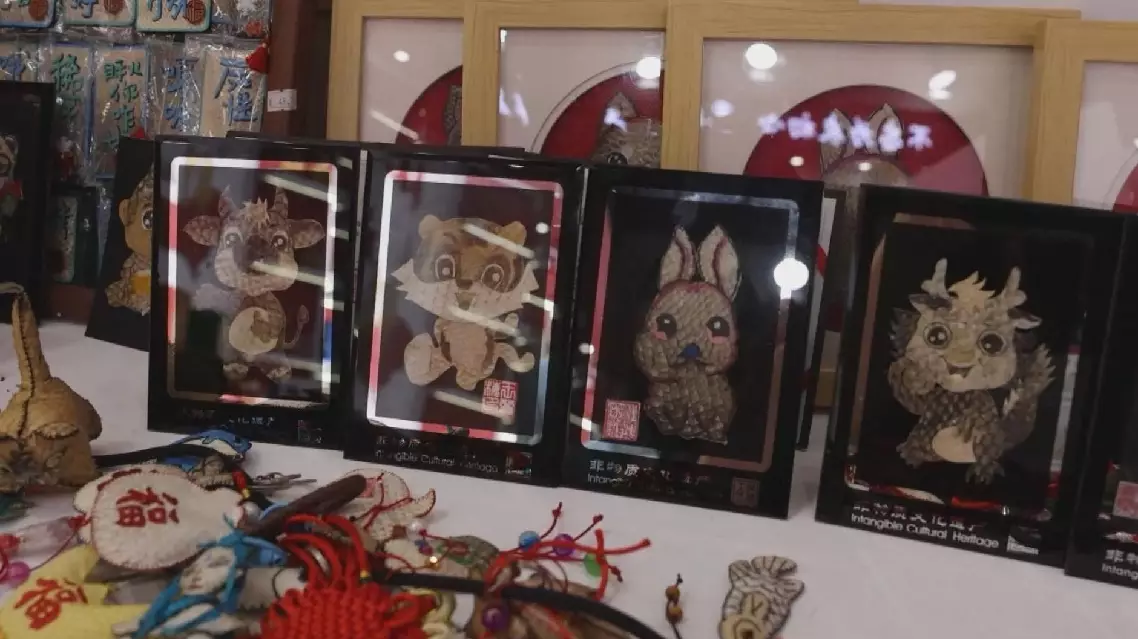
Traditional Chinese culture displayed at China-Russia expo
The World Organization for Animal Health (WOAH) on Monday called for enhanced surveillance of viruses of animal origin, as recent hantavirus and Ebola outbreaks have sparked global alarm.
The 93rd General Session of the World Assembly of Delegates of the WOAH kicked off on Monday in Paris, France. WOAH's Director General Emmanuelle Soubeyran and other experts attending the session stressed that strengthening the surveillance of animal-borne viruses and improving early detection capabilities are crucial to reducing public health risks.
Citing a recent WOAH report, Soubeyran noted that approximately 75 percent of emerging infectious diseases worldwide originate from animals. She emphasized the importance of intensifying research into cross-species transmission pathways of viruses.
"What is important, maybe for us, is to really understand how there is a jump from wildlife to humans or to farm animals. So that's very important to understand, to make research, to understand how this spillover is appearing," she said.
In a recent statement, WOAH said that the hantavirus is an animal-borne virus primarily hosted by rodents. It said that effective rodent management based on an integrated ecological approach is an important measure to reduce the risk of human infection. Continuous monitoring and early detection mechanisms, it added, are essential for mitigating public health risks.
"It has a zoonotic origin and it's quite fatal in humans. There are different serotypes or strains of hantavirus and not each strain is affecting humans, but only one of them is transmissible from human to human. So surveillance is important because of the early detection and to avoid fatalities in humans and to guide the communities to take precautionary measures and to invest in health emergencies on the human side," said Tahreem Khalid, Animal Health Information Officer at WOAH.
Through enhanced animal surveillance, improved laboratory capacity, and facilitated information sharing, the organization aims to strengthen countries’ abilities to respond to risks and promote cross-sectoral collaboration under the "One Health" framework.

World Organization for Animal Health urges tighter monitoring of animal-borne viruses