The United Nations (UN) is calling for urgent action in response to the Ebola outbreak in Africa, highlighting the need for faster vaccine development and more humanitarian aid to control the virus's spread.
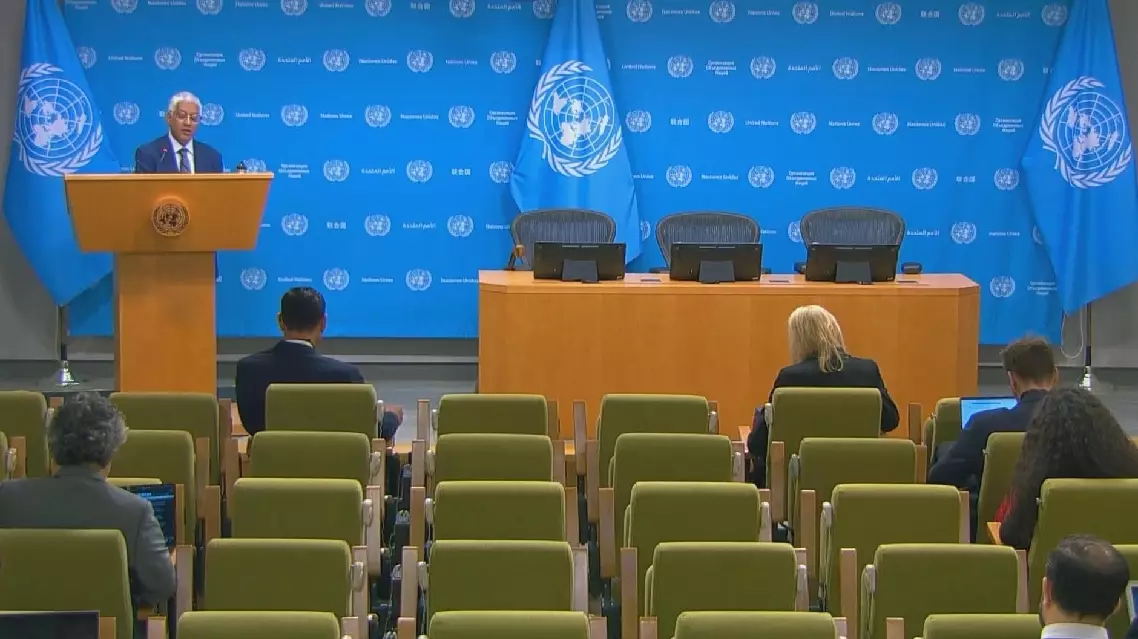
At a press briefing on Monday, Farhan Haq, deputy spokesman for the UN chief, said the UN and the World Health Organization are focused on contact tracing to monitor the outbreak and curb transmission as soon as possible.
"The problem is that this is a specific strain called the Bundibugyo strain of the virus. And there are no licensed vaccines for specific therapeutics for this strain. So that creates a huge problem. And we hope that the research into this strain can allow for vaccines to be developed as soon as possible," Haq said.
He noted that the current Ebola outbreak is centered in eastern Democratic Republic of the Congo (DRC) and bordering regions of Uganda, where additional resources and ongoing humanitarian access are essential to containment and stopping wider spread.
"Regarding resources, I mean, one of the problems is that our own humanitarian needs and response plan for the DRC is underfunded. It's only got about a third of the 1.4 billion dollars in funding that it needs. So obviously in order to combat this more effectively, we need to make sure that donors will provide the necessary support," said Haq.
In the DRC, around 350 suspected Ebola cases and 91 probable deaths have been recorded amid the current outbreak, Health Minister Roger Kamba said Sunday.
Congolese health authorities declared a new Ebola outbreak in Ituri on Friday, the country's 17th since 1976. The current outbreak is driven by the Bundibugyo strain, for which no strain-specific vaccine is currently available, and which carries a high risk of regional spread.
On Sunday, the World Health Organization (WHO) declared the outbreak in the DRC and Uganda an international public health emergency.
International spread has already been documented, with two confirmed cases reported in Kampala, Uganda on Friday and Saturday following travel from the DRC. Both confirmed cases were admitted to intensive care units in Kampala, said the WHO on Sunday.
Neighboring countries, including Rwanda, Burundi and Tanzania, have stepped up surveillance, border screening and emergency preparedness measures.
UN urges faster vaccine efforts, more funding for Africa Ebola outbreak