MISSISSAUGA, Ontario--(BUSINESS WIRE)--May 19, 2026--
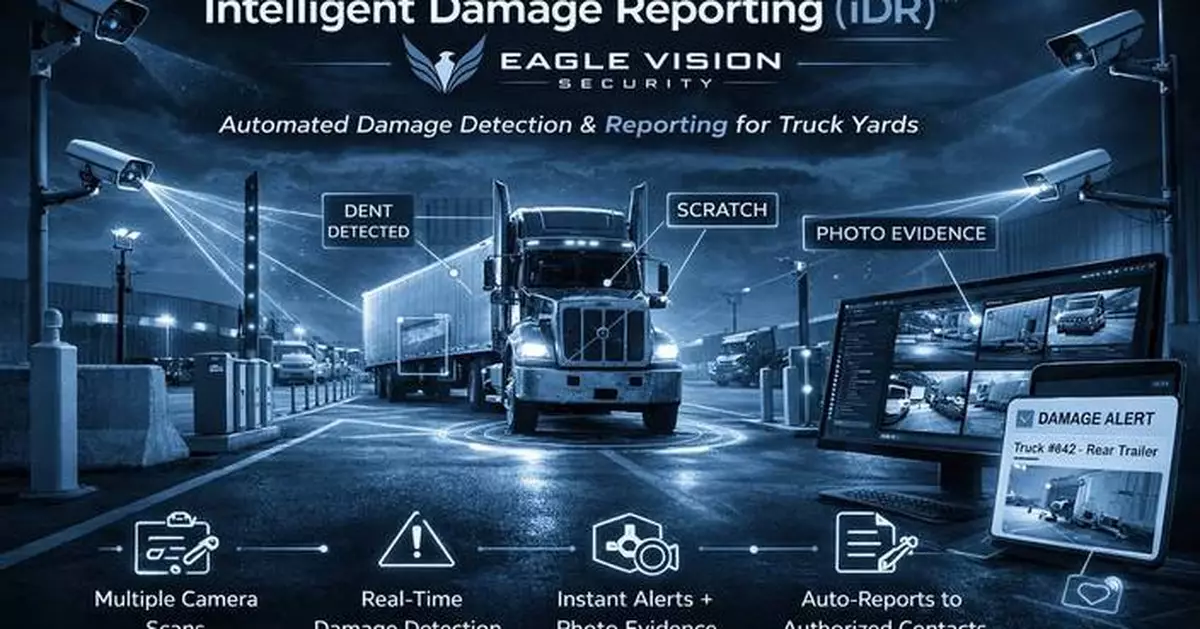
As cargo theft, equipment damage, and operational inefficiencies continue to impact the trucking and transportation industries, Eagle Vision Security has announced the launch of Intelligent Damage Reporting (iDR)™, an advanced AI-powered inspection solution designed to help fleet operators proactively identify vehicle damage, document incidents in real time, and improve visibility across truck yards, logistics terminals, and transportation facilities throughout North America.
This press release features multimedia. View the full release here: https://www.businesswire.com/news/home/20260518174997/en/
Headquartered in Mississauga, and regional operations centers across California, Arizona, Texas, and Oregon, Eagle Vision Security is a privately held corporation serving transportation and logistics clients across North America. The company has built its reputation on delivering advanced security and operational intelligence solutions powered by AI-driven technology, video analytics, and real-time monitoring capabilities. With the introduction of Intelligent Damage Reporting (iDR)™, Eagle Vision Security expands beyond traditional surveillance by providing fleet operators with a proactive platform designed to detect vehicle damage early, streamline reporting, and improve operational visibility across truck yards, logistics terminals, and fleet facilities.
Industry analysts and transportation leaders across North America continue to report growing concerns around vehicle damage, trailer incidents, and operational inefficiencies impacting fleet performance and profitability. For many trucking and logistics operators, undetected damage and delayed reporting can lead to costly repairs, equipment downtime, insurance complications, operational disruptions, and strained customer relationships — making proactive inspection and real-time visibility more important than ever.
Eagle Vision Security developed Intelligent Damage Reporting (iDR)™ in response to the growing need for faster, more accurate vehicle inspection and damage documentation across the transportation industry. Unlike traditional inspection processes that rely heavily on manual reporting and delayed assessments, iDR™ uses advanced AI-powered imaging and analytics to automatically detect visible damage in real time. The platform helps fleet operators quickly identify issues, document incidents with greater accuracy, and streamline reporting workflows — enabling faster decision-making, reduced downtime, and improved operational visibility across truck yards and fleet facilities.
When damage or inspection issues are identified, Intelligent Damage Reporting (iDR)™ provides fleet operators with immediate access to detailed visual documentation and real-time reporting data. High-resolution imagery, AI-powered analysis, and centralized reporting tools help accelerate incident reviews, improve maintenance coordination, and support faster operational decision-making. By delivering accurate and timely damage visibility, iDR™ helps fleets reduce downtime, streamline claims and repair processes, and maintain greater accountability across transportation operations.
“Fleet operations move fast, and even minor vehicle damage can quickly become a costly operational issue if it goes unnoticed. Traditional inspection processes are often manual, inconsistent, and reactive. Intelligent Damage Reporting (iDR)™ was designed to help fleet operators identify issues early, improve reporting accuracy, and gain real-time visibility into vehicle conditions. By using advanced video analytics powered imaging, we’re delivering a smarter and more proactive approach to fleet management,” said Parm Deol - President of Eagle Vision Security.
Truck yards, fleet terminals, and warehouse facilities face constant operational pressure to keep vehicles moving while minimizing downtime and maintenance disruptions. High vehicle volumes, multiple entry and exit points, and around-the-clock activity can make it difficult to consistently identify and document damage before it impacts operations. Intelligent Damage Reporting (iDR)™ was engineered to help transportation and logistics operators address these challenges by providing automated vehicle inspections, real-time damage detection, and centralized reporting designed to improve visibility, accountability, and operational efficiency across fleet environments.
Eagle Vision Security’s investment in research and development has played a central role in bringing Intelligent Damage Reporting (iDR)™ to market. The company’s in-house technology combines AI-powered imaging, advanced video analytics, and intelligent reporting tools to deliver fast, accurate, and consistent vehicle damage detection. By blending automation with operational oversight, iDR™ helps reduce manual inspection errors, improve reporting accuracy, and ensure that critical damage events are identified and addressed quickly. This combination of intelligent automation and practical fleet visibility sets the platform apart from traditional inspection and reporting processes.
The launch of Intelligent Damage Reporting (iDR)™ also reflects a broader shift within the transportation and logistics industry. As fleets face increasing operational costs, tighter maintenance demands, and growing pressure to improve efficiency, many operators are seeking smarter alternatives to manual vehicle inspection and reporting processes. Intelligent Facility Management (iFM)™ delivers an AI-powered damage detection and automated reporting provide a scalable, cost-effective solution that improves accuracy, accelerates inspections, and delivers real-time operational visibility without slowing down fleet operations.
Transportation and logistics companies across North America trust Eagle Vision Security to help protect fleet assets, improve operational visibility, and streamline damage reporting processes. From truck yards and logistics terminals to fleet maintenance facilities and distribution centers, the company delivers technology-driven solutions designed to support modern transportation operations. Eagle Vision Security’s mission emphasizes continuous innovation, operational excellence, and the development of advanced AI-powered solutions with live agents that help clients reduce risk, improve efficiency, and make smarter fleet management decision.
About Eagle Vision Security
Eagle Vision Security is a North American technology company specializing in AI-powered fleet visibility and intelligent damage detection solutions for the transportation and logistics industry. Headquartered in Mississauga, the company helps truck yards, fleet operators, logistics terminals, and transportation facilities improve operational awareness through advanced imaging, analytics, and automated reporting technologies. With Intelligent Damage Reporting (iDR)™, Eagle Vision Security delivers proactive vehicle inspection capabilities, real-time damage visibility, and data-driven operational insights designed to help fleets reduce downtime, improve reporting accuracy, and streamline maintenance and claims processes.
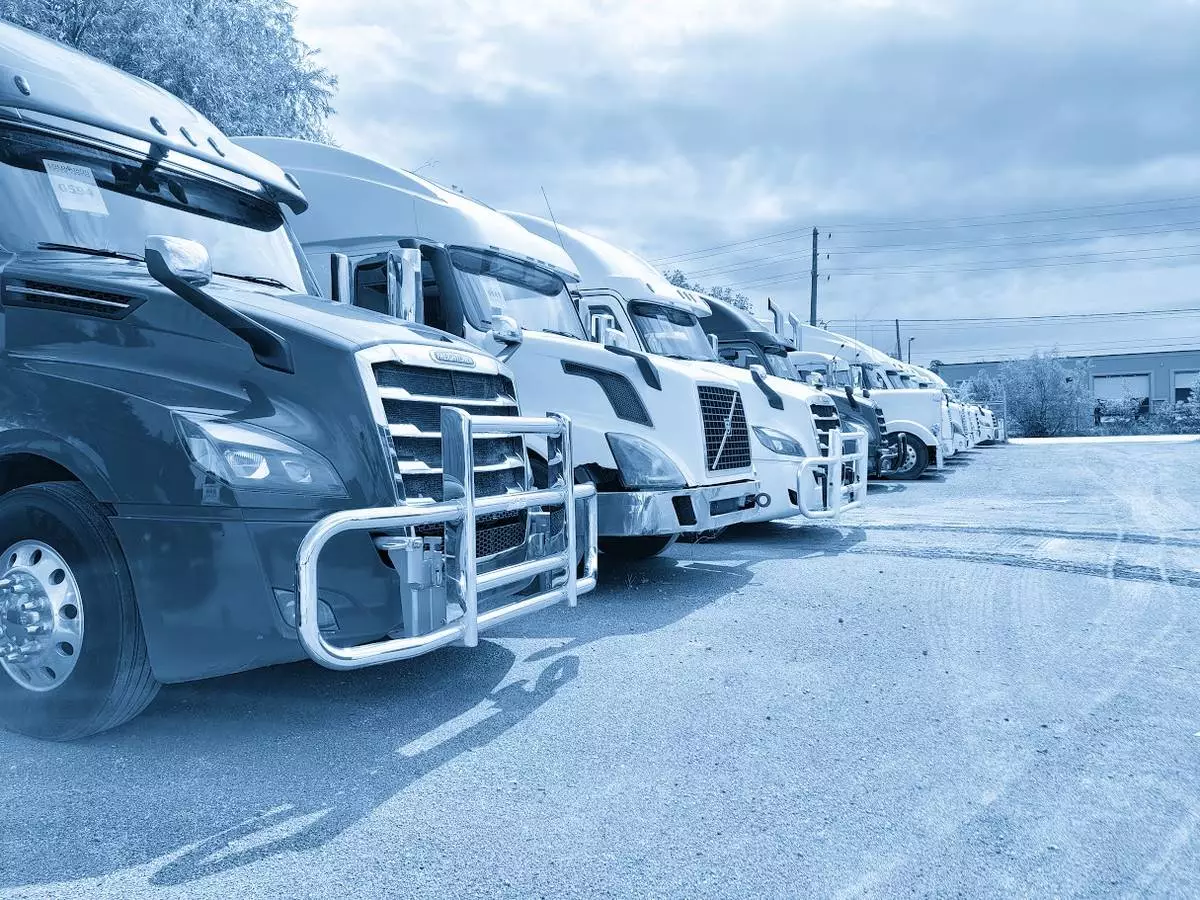
Vehicle Inspection
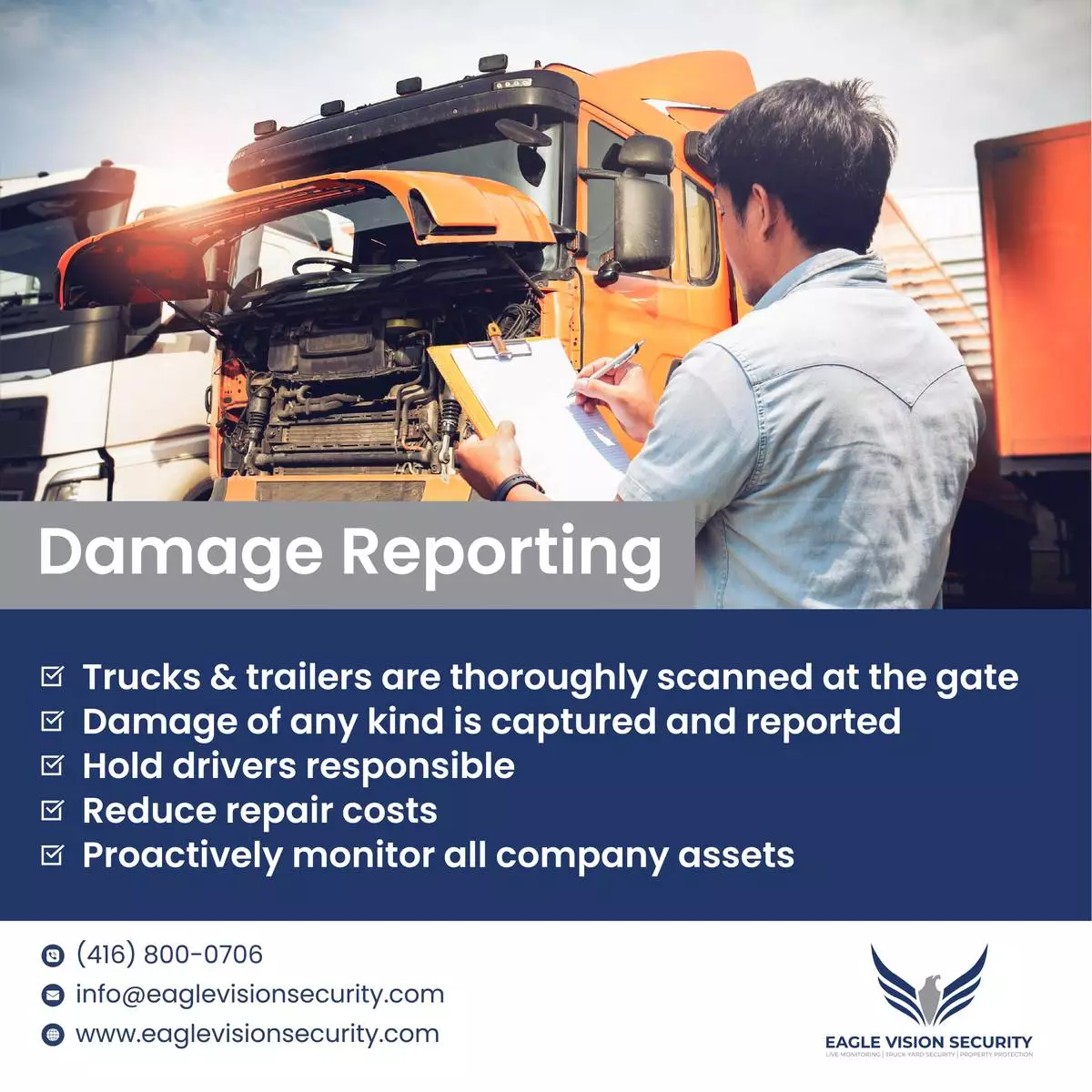
Damage Reporting by Eagle Vision Security
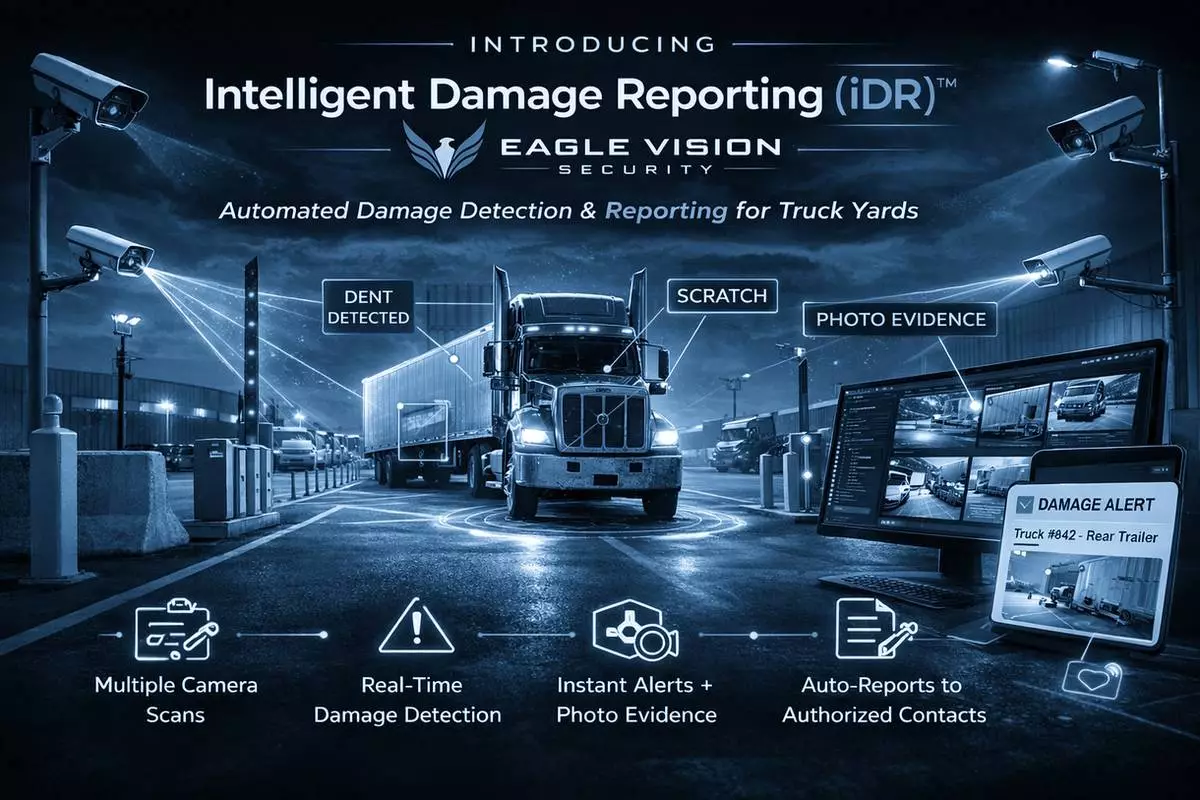
Intelligent Damage Reporting (iDR)™