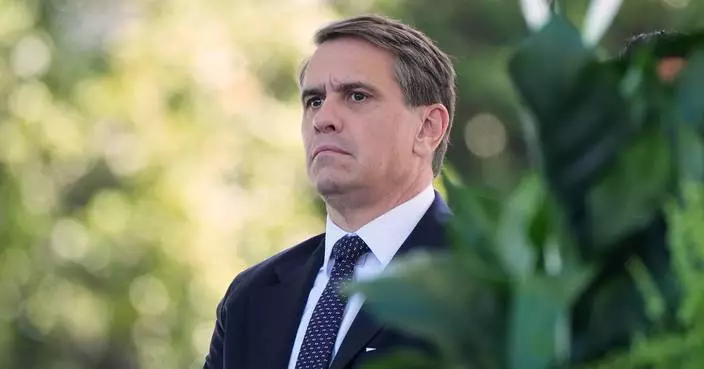
OKLAHOMA CITY (AP) — The numbers deserve a deeper look: 41 points, 24 rebounds, three blocked shots.
Take a bow, Victor Wembanyama. That's a conference finals debut like none other in the NBA's 80-year history.
Click to Gallery
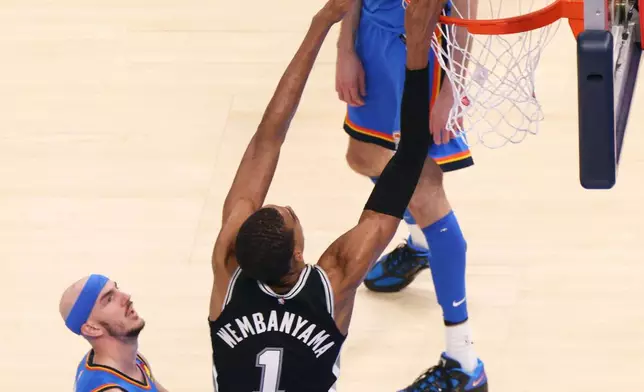
San Antonio Spurs forward Victor Wembanyama (1) dunks against Oklahoma City Thunder guard Alex Caruso, left, and center Chet Holmgren (7) during double overtime of Game 1 in a third-round NBA basketball playoffs series Monday, May 18, 2026, in Oklahoma City. (AP Photo/Nate Billings)
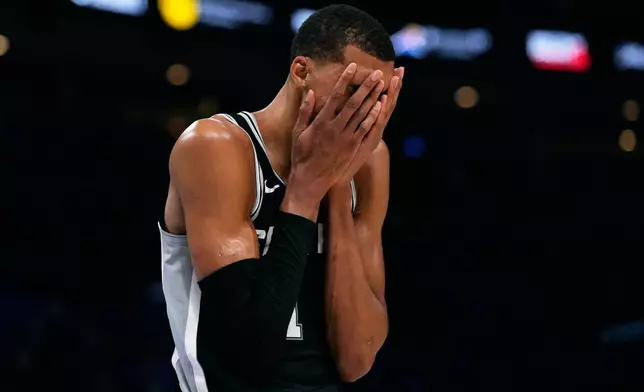
San Antonio Spurs forward Victor Wembanyama reacts during the second overtime of Game 1 in a third-round NBA basketball playoffs series against the Oklahoma City Thunder Monday, May 18, 2026, in Oklahoma City. (AP Photo/Tony Gutierrez)
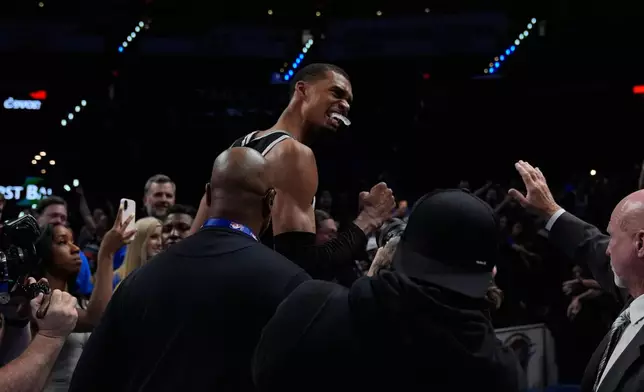
San Antonio Spurs forward Victor Wembanyama leaves the court after winning Game 1 in a third-round NBA basketball playoffs series against the Oklahoma City Thunder Monday, May 18, 2026, in Oklahoma City. (AP Photo/Tony Gutierrez)
San Antonio Spurs forward Victor Wembanyama (1) celebrates with teammates during the second overtime of Game 1 in a third-round NBA basketball playoffs series against the Oklahoma City Thunder Monday, May 18, 2026, in Oklahoma City. (AP Photo/Nate Billings)
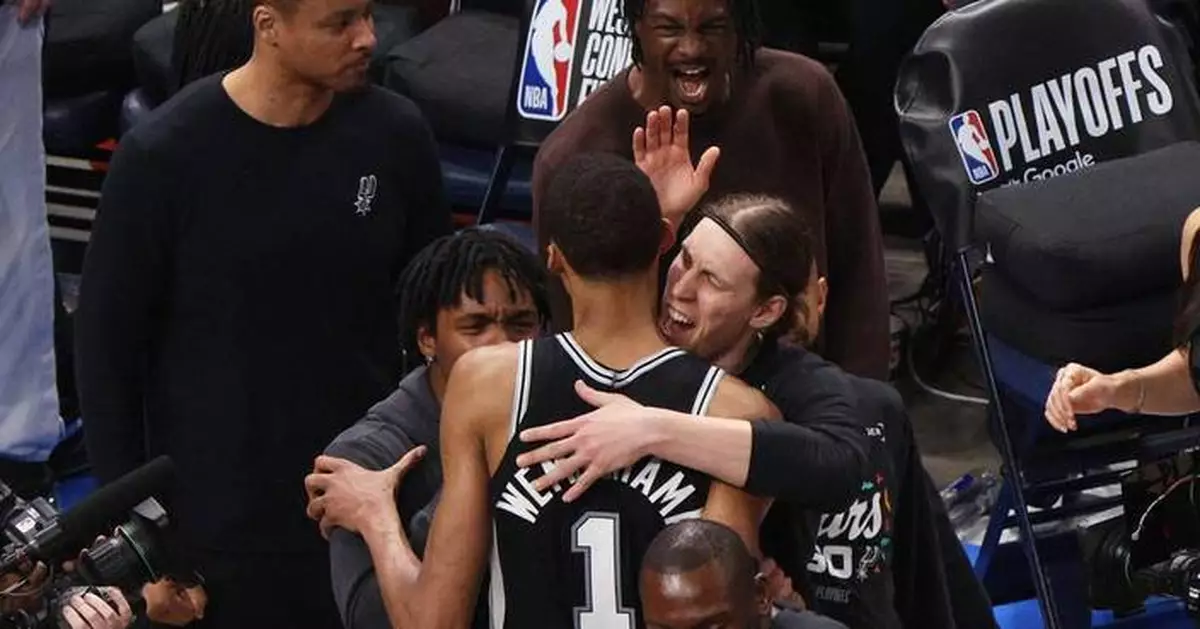
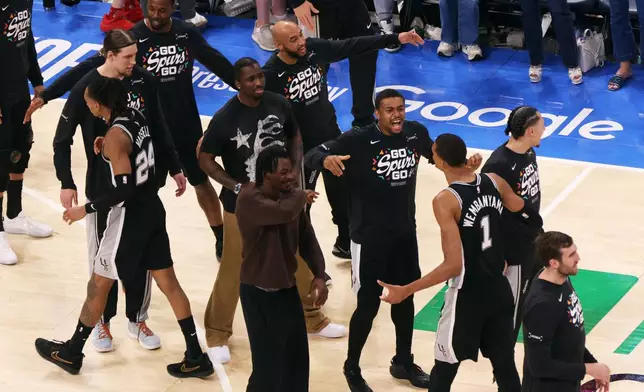
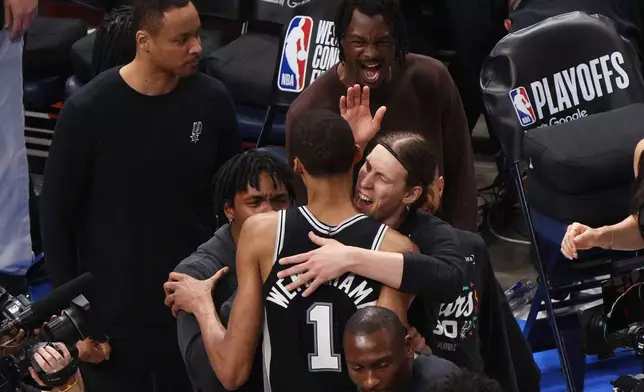
San Antonio Spurs forward Victor Wembanyama (1) celebrates with teammates after winning Game 1 in a third-round NBA basketball playoffs series against the Oklahoma City Thunder Monday, May 18, 2026, in Oklahoma City. (AP Photo/Nate Billings)
The San Antonio star did everything — and a whole lot of it — in the Spurs' 122-115 double-overtime Game 1 victory over Oklahoma City to open the Western Conference finals on Monday night. He dunked, he flexed, he screamed, he posed for teammates.
Of course, all he cared about was that the Spurs won.
“The relentlessness is built as well,” Wembanyama said. “First of all, the first thing is physical ability, getting stronger as the years go on. And the mental toughness, you have to have it all the time. Yes, it takes a toll, but we will rest in July.”
Note that phrase — “we will rest in July.” It's May. If the Spurs play in June, it'll be in the NBA Finals. That's clearly the hope and if you listen to Wembanyama, it's clearly his plan as well.
“He has a rare desire to step into every moment that’s in front of him,” Spurs coach Mitch Johnson said. “And I think he has showed in his three years, in a lot of different situations, with a lot of different circumstances, that he’s going to attack those moments. Doesn’t mean they’ll always work out for him or be exactly the outcome that he wants, but he has some rare God-given ability. He puts in even more work and preparation into maximizing that and his disposition and mentality and approach is reflected at times in the way he handles those moments.”
Poor Dylan Harper. All the Spurs guard did in Game 1 — as a rookie — was have 24 points, 11 rebounds, six assists and seven steals. He joined Magic Johnson as the only rookies with 15 points, five assists and five steals in a conference finals game.
That's a monster night. And Wemby overshadowed that as only a 7-foot-4 man can.
A look inside the night that was for Wembanyama:
At 22, he's the youngest to do that in NBA playoff history, seven months younger than Kareem Abdul-Jabbar was when he had a 46-point, 25-rebound game in 1970.
He's the second-youngest to have such a game in the NBA, including regular season. Bob McAdoo had a 45-point, 25-rebound game as a 21-year-old in 1973.
The big games just come with more regularity now for Wembanyama. He now has 10 games of 40 or more points in his career. Of those, five were in his first 2 1/2 seasons — and the last five have come in the last three months.
The 24 rebounds topped his previous career-best of 23 rebounds, done on his 21st birthday — Jan, 4. 2025, against Denver. Since that was in the regular season, it'll still be generally considered his “career-high” and the playoff one will stand on its own.
The 12 free throws made (he was 12 for 13) matched his second-most makes from the line in any game as a pro. He had 16 in a loss to Denver last month. The 12-of-13 effort was one of his best from the line during his NBA career; he was 12-for-12 against Phoenix in March and 16-for-17 in that game against the Nuggets in April.
“He's one of a kind.” — Harper, on Wembanyama.
AP NBA: https://apnews.com/nba

San Antonio Spurs forward Victor Wembanyama (1) dunks against Oklahoma City Thunder guard Alex Caruso, left, and center Chet Holmgren (7) during double overtime of Game 1 in a third-round NBA basketball playoffs series Monday, May 18, 2026, in Oklahoma City. (AP Photo/Nate Billings)
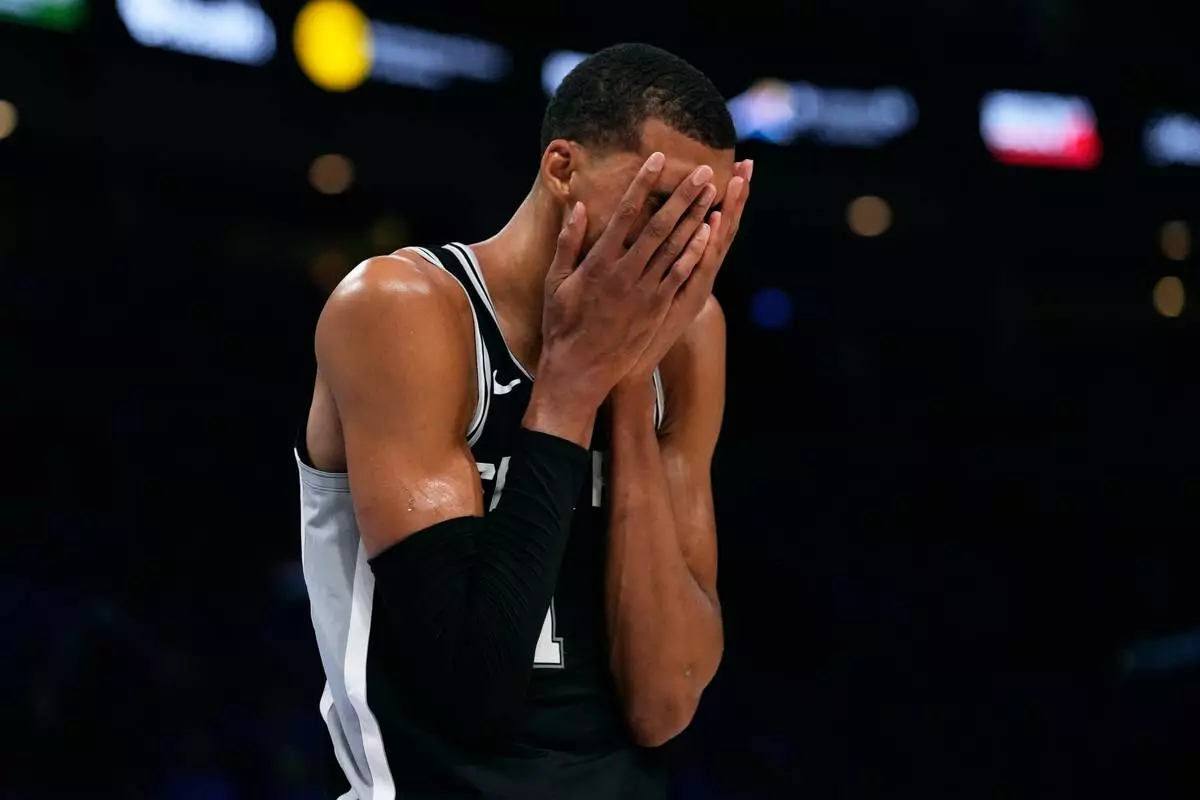
San Antonio Spurs forward Victor Wembanyama reacts during the second overtime of Game 1 in a third-round NBA basketball playoffs series against the Oklahoma City Thunder Monday, May 18, 2026, in Oklahoma City. (AP Photo/Tony Gutierrez)
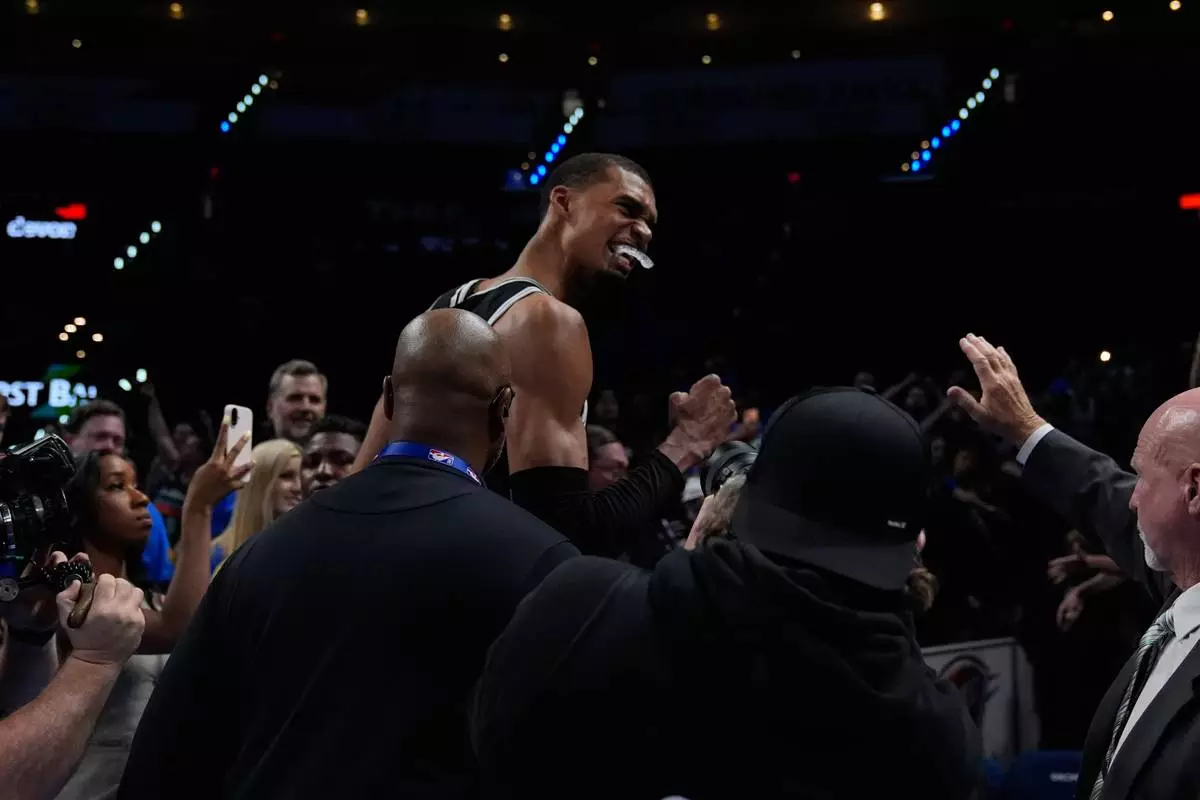
San Antonio Spurs forward Victor Wembanyama leaves the court after winning Game 1 in a third-round NBA basketball playoffs series against the Oklahoma City Thunder Monday, May 18, 2026, in Oklahoma City. (AP Photo/Tony Gutierrez)
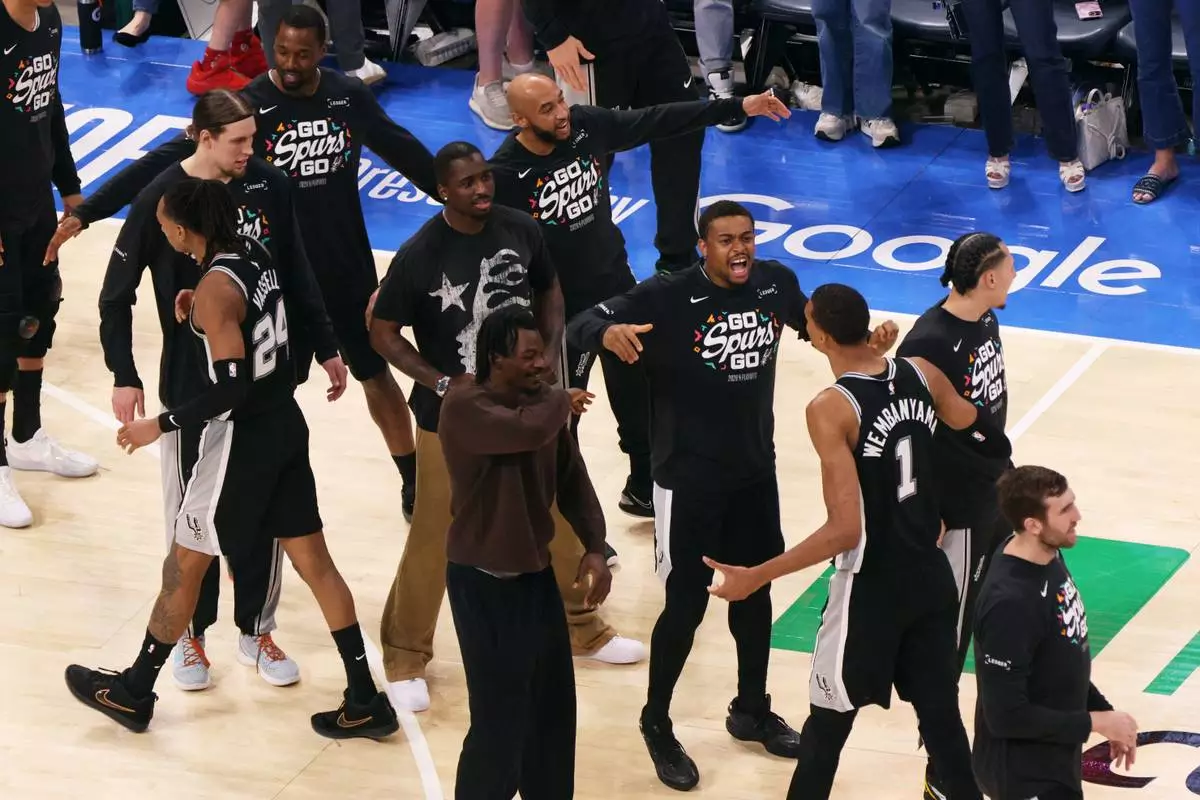
San Antonio Spurs forward Victor Wembanyama (1) celebrates with teammates during the second overtime of Game 1 in a third-round NBA basketball playoffs series against the Oklahoma City Thunder Monday, May 18, 2026, in Oklahoma City. (AP Photo/Nate Billings)
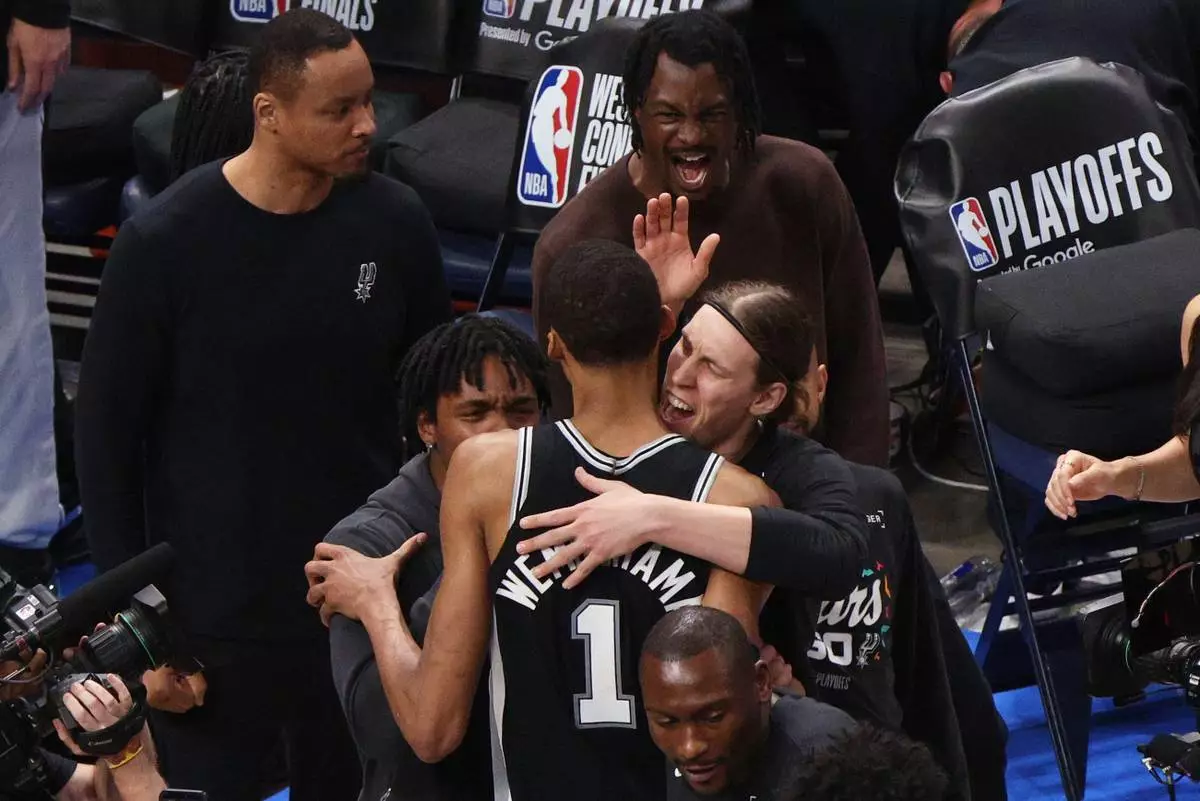
San Antonio Spurs forward Victor Wembanyama (1) celebrates with teammates after winning Game 1 in a third-round NBA basketball playoffs series against the Oklahoma City Thunder Monday, May 18, 2026, in Oklahoma City. (AP Photo/Nate Billings)
WASHINGTON (AP) — Scientists are jettisoning their worst and best case scenarios for a warming world as no longer plausible. That shows how modest gains in the fight to curb climate change have dialed back the most catastrophic of future heating but also confirmed that there's no chance to limit warming to the international goal set in 2015.
Researchers' new list of seven plausible carbon pollution scenarios for the future are pushing aside two staples of climate policy: the extremes on either end.
The extremes have become less probable in the past several years because of how we power our world. Carbon dioxide, released from the burning of gas, oil and coal, is chiefly responsible for warming. Increasing use of green energies, like solar, wind and geothermal, which don’t emit carbon dioxide, have lowered top end carbon pollution projections. However, because those changes haven’t been fast enough, the bottom end projections have risen.
The Paris climate agreement in 2015 set a goal of limiting warming to 1.5 degrees Celsius (2.7 degrees Fahrenheit) since pre-industrial times, or the mid-1800s, giving rise to the mantra “1.5 to stay alive,” but now scientists say that even their best case scenario still shoots past that signature temperature mark. On the other end, those same new scenarios no longer include the coal-heavy future that would lead to 4.5 degrees Celsius (8.1 degrees Fahrenheit) of warming by 2100, a scary scenario that many scientific studies used in their future projections.
The new proposed worst case scenario has an end-of-the-century warming of about 3.5 degrees Celsius (6.3 degrees Fahrenheit), a full degree (1.8 degrees Fahrenheit) less than the old scenario, while the updated best case future is a couple tenths of a degree Celsius (0.36 degrees Fahrenheit) warmer than previously theorized, squeezing past the Paris goal, said climate scientist Detlef Van Vuuren of Utrecht University, lead author of a recent study laying out future scenarios.
“There is kind of a narrowing of the futures. It cannot be as bad as we thought, but it cannot be as good as we hoped,” said Johan Rockström, director of the Potsdam Institute for Climate Impact Research in Germany.
The scenarios include a “middle” one where by the end of the century the world warms 3 degrees Celsius (5.4 degrees Fahrenheit) above pre-industrial times, which is roughly the path society is currently on, scientists said. The world is now about 1.3 degrees Celsius (2.3 degrees Fahrenheit) above pre-industrial times. Even tenths of a degree of warming cause problems for Earth's ecosystems, as species die off, fresh water becomes more scarce and extreme weather events, such as flooding and heat waves, intensify.
Because carbon pollution keeps rising globally and stays in the atmosphere for about century, the best case scenario is for warming to shoot past the 1.5 degree mark, peak at 1.7 degrees Celsius (3.1 degrees Fahrenheit) for maybe as long as 70 years, and eventually somehow come back down below 1.5 degrees if a technology can be designed to remove massive amounts of carbon from the air, said nine of the 10 scientists interviewed for this article. The world is warming at a pace of a tenth of a degree Celsius (nearly 0.2 degrees Fahrenheit) every five years, they said.
“This is just physics,” said climate scientist Bill Hare, CEO of Climate Analytics, a policy institute. “We’re losing the ability to limit warming even by two degrees without strong action and people need to be aware of that and be aware that it’s a political failure. It’s not an act of God or anything. It is just because politicians in many places are not acting fast enough.”
The 1.5 goal is not just a number, said Cornell University climate scientist Natalie Mahowald, co-author of a U.N. science report detailing the harms of going higher than 1.5 degrees.
“There’s a lot of implications for, you know, not being able to meet the 1.5. And, of course, the people who will suffer the most are on the small island developing states,” Mahowald said. “Some of them will go underwater.”
American Enterprise Institute’s Roger Pielke Jr. said changes to the highest end scenario matter because it was presented as a likely future that could come true if nothing changed. Thousands of scientific studies have been based on that highest warming scenario, called RCP8.5, even though research had already shown it to be improbable.
“It was always presented as where we were headed absent explicit climate policy,” even though it was based on out-of-date and incorrect coal-heavy energy theories, Pielke said in an email.
Keywan Riahi, lead author of the 2011 study that introduced that scenario, said when it was designed the high-end case was not where scientists thought the world was heading.
“It was never a likely case. It was basically, given the underlying studies in the literature at that time, a plausible higher bound of what possible emissions could look like. This is very different than if you would ask the question, what is now the most likely scenario,” said Riahi who is director of the Energy, Climate and Environment Program at the International Institute for Applied Systems Analysis in Austria.
It's a success story, said Riahi, because “in the last 10 years or the last 15 years, the cost of renewables, particularly solar and wind, have fallen by almost 90%.”
President Donald Trump jumped into the fray with a social media post saying: “GOOD RIDDANCE! After 15 years of Dumocrats promising that 'Climate Change' is going to destroy the Planet, the United Nations TOP Climate Committee just admitted that its own projections (RCP8.5) were WRONG! WRONG! WRONG!”
“The risks of climate change have not disappeared,” responded study author and scientist Van Vuuren. “The good news is that we did not follow the most dramatic emission pathway. However, we are still heading towards a future with significant climate impacts; a future we should avoid.”
While the upward curve of emissions is flattening, there's a factor that could still make the older high end temperature estimates come true, Mahowald, Rockstrom and Hare said. That's because the newest batch of scenarios only look at emissions from the burning of fossil fuels, which is the control knob that humans can turn.
Nature has another knob of its own referred to as climate feedbacks, which humans don't control. Scientists have had a hard time projecting climate feedbacks, and that can add another half a degree Celsius (nearly a degree Fahrenheit) of warming on top of what's caused by emissions.
Those feedbacks include release of massive amounts of heat-trapping carbon now being stored in the world's oceans, in forested areas and in the Amazon, along with changes to ocean currents and cloud reflectivity, Rockstrom said.
The Associated Press’ climate and environmental coverage receives financial support from multiple private foundations. AP is solely responsible for all content. Find AP’s standards for working with philanthropies, a list of supporters and funded coverage areas at AP.org.
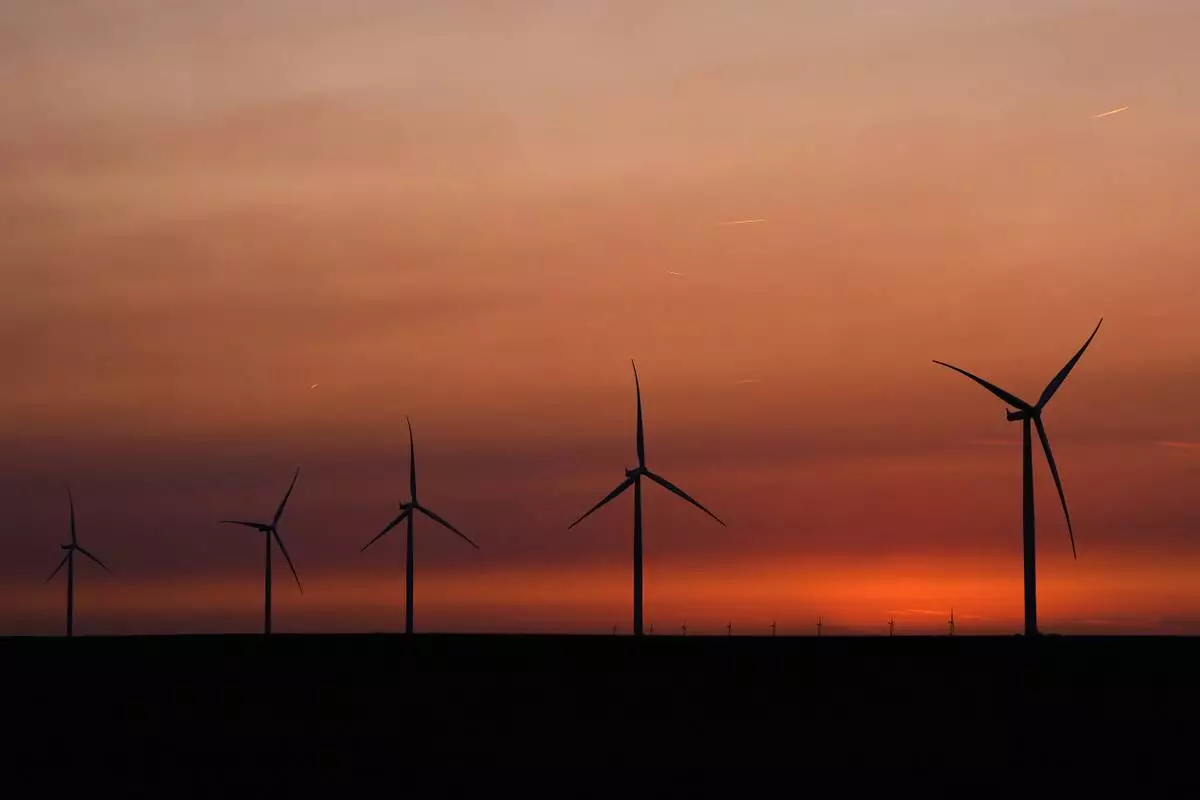
FILE - Wind turbines are silhouetted against the sky at dusk May 15, 2026, near Cimarron, Kan. (AP Photo/Charlie Riedel, File)
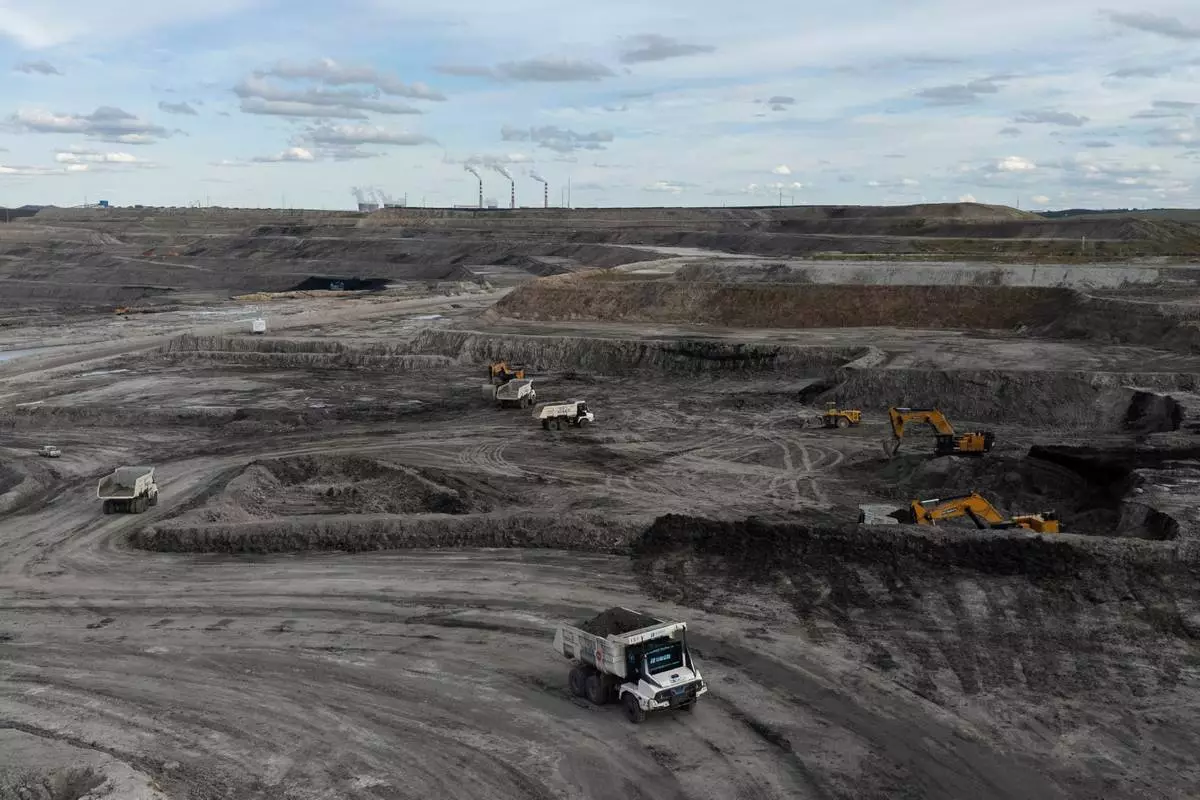
FILE - A mining truck operates in the Huaneng Yimin open-pit coal mine in Hulunbuir in northern China's Inner Mongolia province China, Sept. 15, 2025. (AP Photo/Ng Han Guan, File)
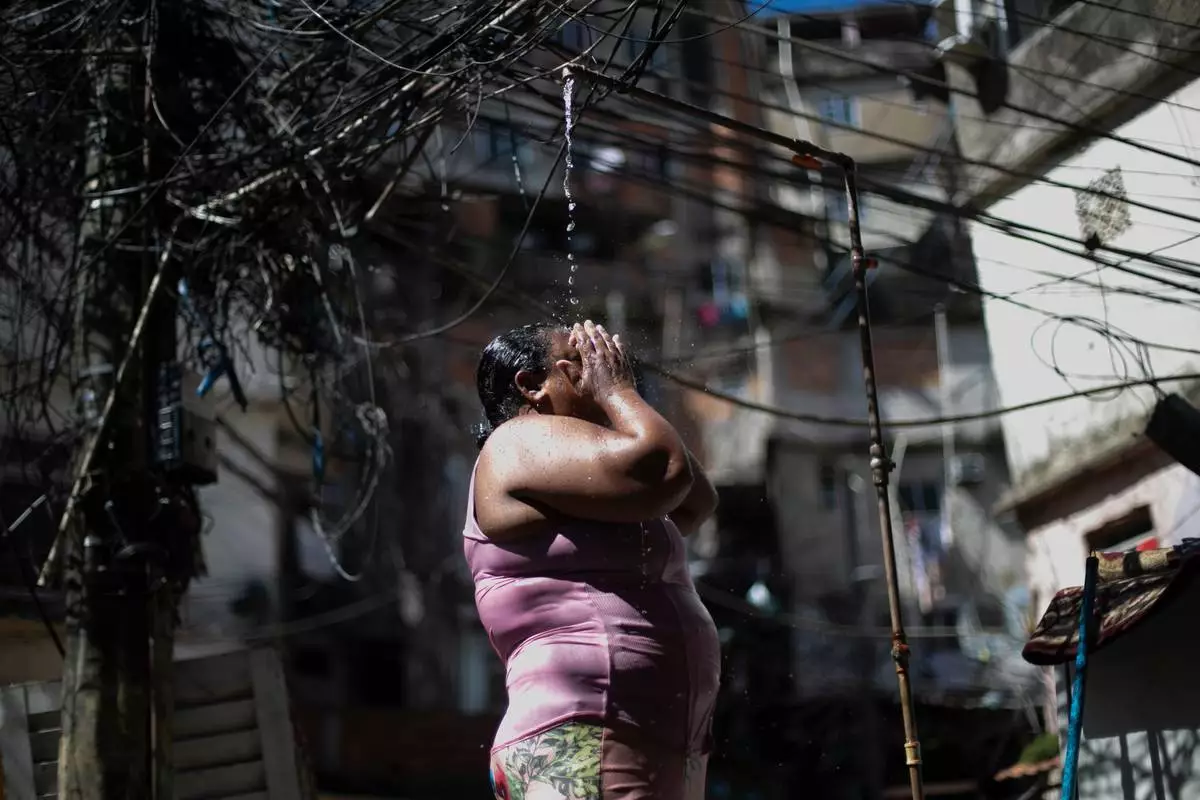
FILE - Kelly Cristina da Cruz cools off in a public shower in the Rocinha favela amid a heat wave in Rio de Janeiro, Jan. 15, 2026. (AP Photo/Bruna Prado, File)
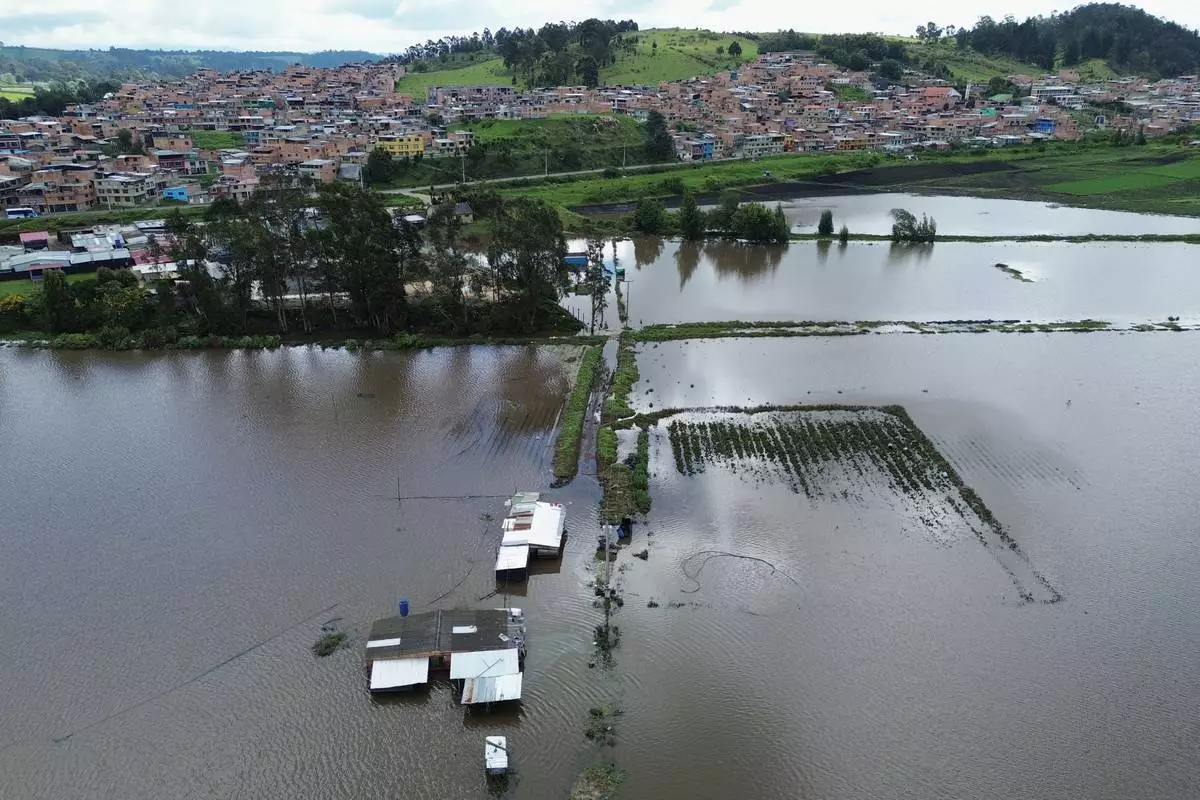
FILE - A strawberry farm is flooded after the Botello River overflowed due to heavy rain in Facatativa, Colombia, March 20, 2026. (AP Photo/Fernando Vergara, File)
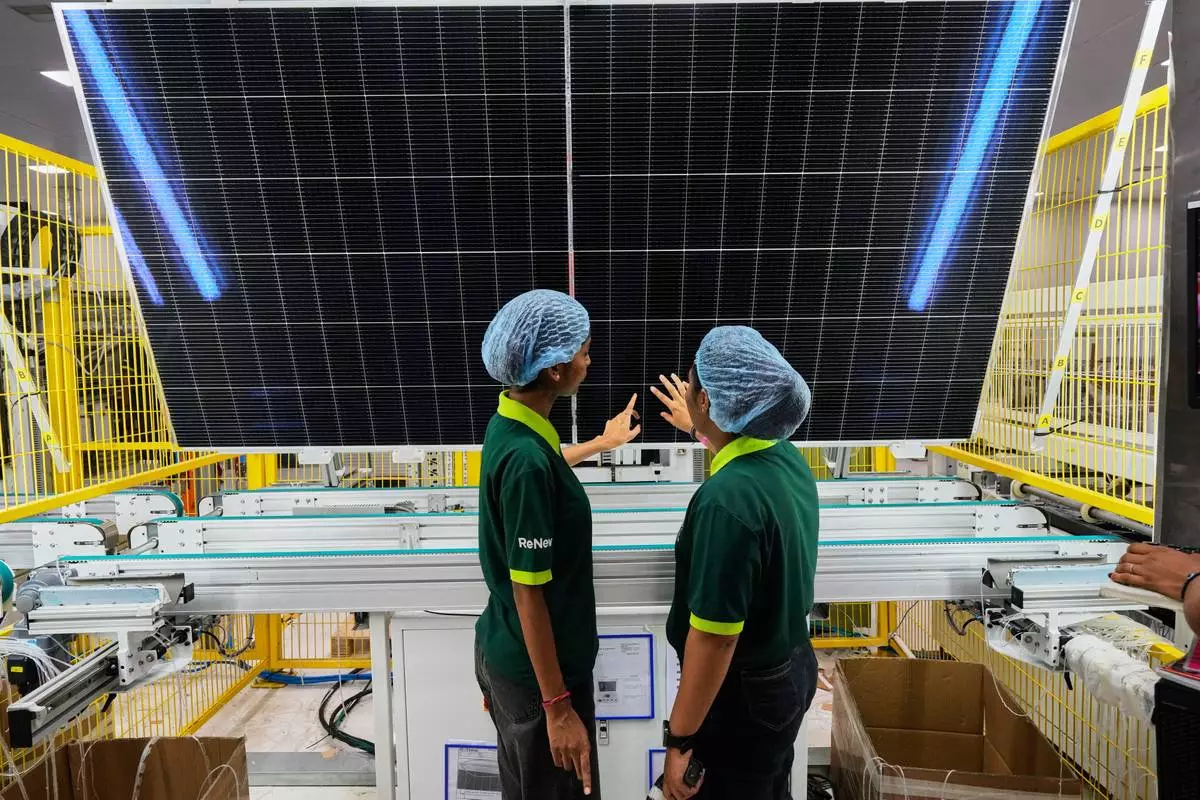
FILE - Workers check the quality of a solar panel at the production line up at the ReNew solar panels manufacturing plant on the outskirts of Jaipur, India, Aug. 21, 2025. (AP Photo/Manish Swarup, File)
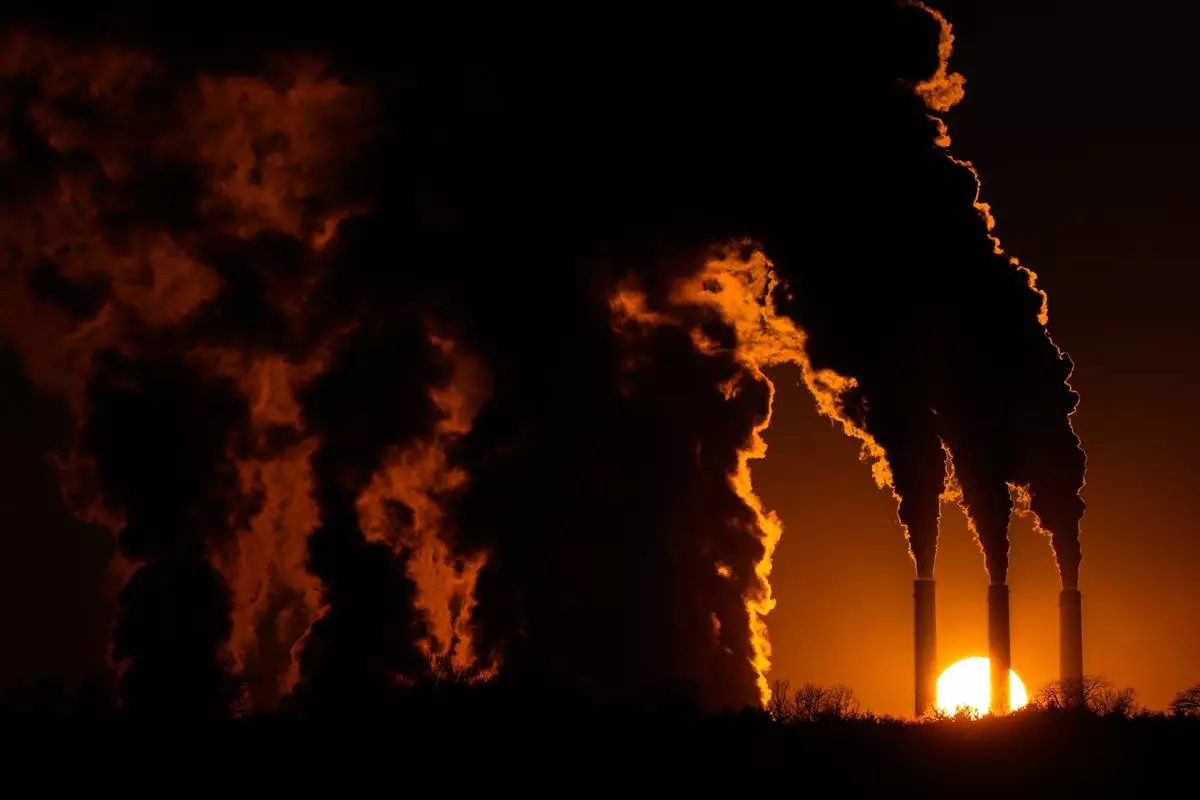
FILE - The Jeffrey Energy Center coal-fired power plant operates at sunset near Emmett, Kan., Jan. 3, 2026, in Topeka, Kan. (AP Photo/Charlie Riedel, file)