WASHINGTON (AP) — Scientists are jettisoning their worst and best case scenarios for a warming world as no longer plausible. That shows how modest gains in the fight to curb climate change have dialed back the most catastrophic of future heating but also confirmed that there's no chance to limit warming to the international goal set in 2015.
Researchers' new list of seven plausible carbon pollution scenarios for the future are pushing aside two staples of climate policy: the extremes on either end.
Click to Gallery
FILE - Wind turbines are silhouetted against the sky at dusk May 15, 2026, near Cimarron, Kan. (AP Photo/Charlie Riedel, File)
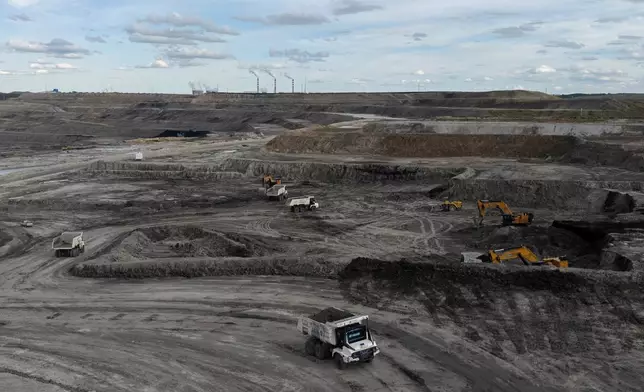
FILE - A mining truck operates in the Huaneng Yimin open-pit coal mine in Hulunbuir in northern China's Inner Mongolia province China, Sept. 15, 2025. (AP Photo/Ng Han Guan, File)
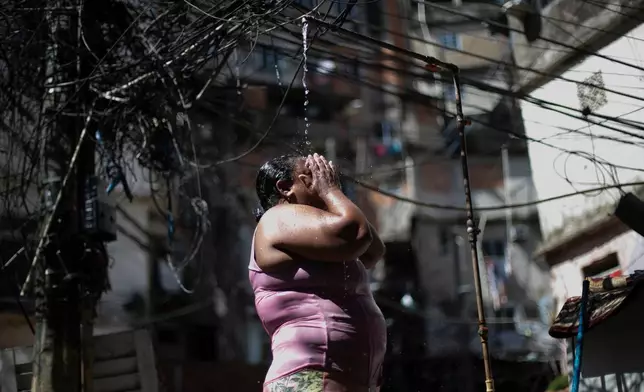
FILE - Kelly Cristina da Cruz cools off in a public shower in the Rocinha favela amid a heat wave in Rio de Janeiro, Jan. 15, 2026. (AP Photo/Bruna Prado, File)
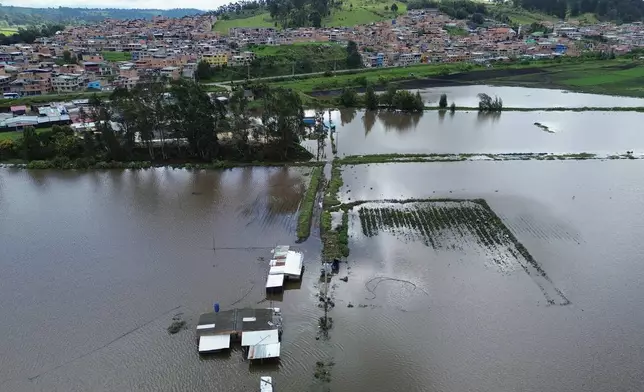
FILE - A strawberry farm is flooded after the Botello River overflowed due to heavy rain in Facatativa, Colombia, March 20, 2026. (AP Photo/Fernando Vergara, File)
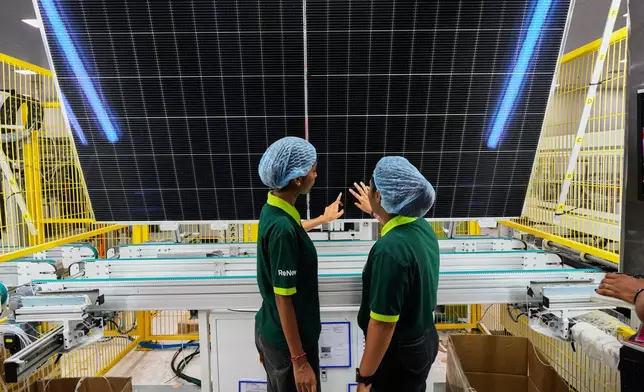
FILE - Workers check the quality of a solar panel at the production line up at the ReNew solar panels manufacturing plant on the outskirts of Jaipur, India, Aug. 21, 2025. (AP Photo/Manish Swarup, File)
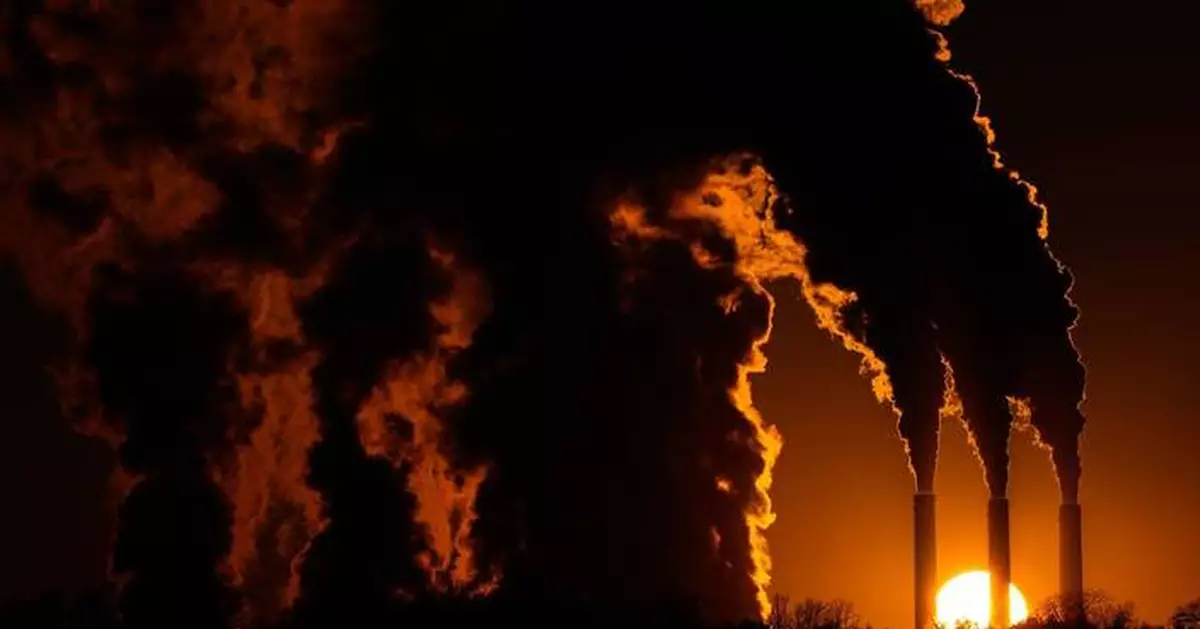
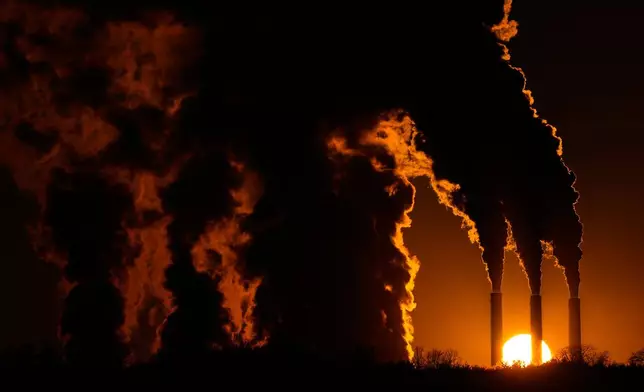
FILE - The Jeffrey Energy Center coal-fired power plant operates at sunset near Emmett, Kan., Jan. 3, 2026, in Topeka, Kan. (AP Photo/Charlie Riedel, file)
The extremes have become less probable in the past several years because of how we power our world. Carbon dioxide, released from the burning of gas, oil and coal, is chiefly responsible for warming. Increasing use of green energies, like solar, wind and geothermal, which don’t emit carbon dioxide, have lowered top end carbon pollution projections. However, because those changes haven’t been fast enough, the bottom end projections have risen.
The Paris climate agreement in 2015 set a goal of limiting warming to 1.5 degrees Celsius (2.7 degrees Fahrenheit) since pre-industrial times, or the mid-1800s, giving rise to the mantra “1.5 to stay alive,” but now scientists say that even their best case scenario still shoots past that signature temperature mark. On the other end, those same new scenarios no longer include the coal-heavy future that would lead to 4.5 degrees Celsius (8.1 degrees Fahrenheit) of warming by 2100, a scary scenario that many scientific studies used in their future projections.
The new proposed worst case scenario has an end-of-the-century warming of about 3.5 degrees Celsius (6.3 degrees Fahrenheit), a full degree (1.8 degrees Fahrenheit) less than the old scenario, while the updated best case future is a couple tenths of a degree Celsius (0.36 degrees Fahrenheit) warmer than previously theorized, squeezing past the Paris goal, said climate scientist Detlef Van Vuuren of Utrecht University, lead author of a recent study laying out future scenarios.
“There is kind of a narrowing of the futures. It cannot be as bad as we thought, but it cannot be as good as we hoped,” said Johan Rockström, director of the Potsdam Institute for Climate Impact Research in Germany.
The scenarios include a “middle” one where by the end of the century the world warms 3 degrees Celsius (5.4 degrees Fahrenheit) above pre-industrial times, which is roughly the path society is currently on, scientists said. The world is now about 1.3 degrees Celsius (2.3 degrees Fahrenheit) above pre-industrial times. Even tenths of a degree of warming cause problems for Earth's ecosystems, as species die off, fresh water becomes more scarce and extreme weather events, such as flooding and heat waves, intensify.
Because carbon pollution keeps rising globally and stays in the atmosphere for about century, the best case scenario is for warming to shoot past the 1.5 degree mark, peak at 1.7 degrees Celsius (3.1 degrees Fahrenheit) for maybe as long as 70 years, and eventually somehow come back down below 1.5 degrees if a technology can be designed to remove massive amounts of carbon from the air, said nine of the 10 scientists interviewed for this article. The world is warming at a pace of a tenth of a degree Celsius (nearly 0.2 degrees Fahrenheit) every five years, they said.
“This is just physics,” said climate scientist Bill Hare, CEO of Climate Analytics, a policy institute. “We’re losing the ability to limit warming even by two degrees without strong action and people need to be aware of that and be aware that it’s a political failure. It’s not an act of God or anything. It is just because politicians in many places are not acting fast enough.”
The 1.5 goal is not just a number, said Cornell University climate scientist Natalie Mahowald, co-author of a U.N. science report detailing the harms of going higher than 1.5 degrees.
“There’s a lot of implications for, you know, not being able to meet the 1.5. And, of course, the people who will suffer the most are on the small island developing states,” Mahowald said. “Some of them will go underwater.”
American Enterprise Institute’s Roger Pielke Jr. said changes to the highest end scenario matter because it was presented as a likely future that could come true if nothing changed. Thousands of scientific studies have been based on that highest warming scenario, called RCP8.5, even though research had already shown it to be improbable.
“It was always presented as where we were headed absent explicit climate policy,” even though it was based on out-of-date and incorrect coal-heavy energy theories, Pielke said in an email.
Keywan Riahi, lead author of the 2011 study that introduced that scenario, said when it was designed the high-end case was not where scientists thought the world was heading.
“It was never a likely case. It was basically, given the underlying studies in the literature at that time, a plausible higher bound of what possible emissions could look like. This is very different than if you would ask the question, what is now the most likely scenario,” said Riahi who is director of the Energy, Climate and Environment Program at the International Institute for Applied Systems Analysis in Austria.
It's a success story, said Riahi, because “in the last 10 years or the last 15 years, the cost of renewables, particularly solar and wind, have fallen by almost 90%.”
President Donald Trump jumped into the fray with a social media post saying: “GOOD RIDDANCE! After 15 years of Dumocrats promising that 'Climate Change' is going to destroy the Planet, the United Nations TOP Climate Committee just admitted that its own projections (RCP8.5) were WRONG! WRONG! WRONG!”
“The risks of climate change have not disappeared,” responded study author and scientist Van Vuuren. “The good news is that we did not follow the most dramatic emission pathway. However, we are still heading towards a future with significant climate impacts; a future we should avoid.”
While the upward curve of emissions is flattening, there's a factor that could still make the older high end temperature estimates come true, Mahowald, Rockstrom and Hare said. That's because the newest batch of scenarios only look at emissions from the burning of fossil fuels, which is the control knob that humans can turn.
Nature has another knob of its own referred to as climate feedbacks, which humans don't control. Scientists have had a hard time projecting climate feedbacks, and that can add another half a degree Celsius (nearly a degree Fahrenheit) of warming on top of what's caused by emissions.
Those feedbacks include release of massive amounts of heat-trapping carbon now being stored in the world's oceans, in forested areas and in the Amazon, along with changes to ocean currents and cloud reflectivity, Rockstrom said.
The Associated Press’ climate and environmental coverage receives financial support from multiple private foundations. AP is solely responsible for all content. Find AP’s standards for working with philanthropies, a list of supporters and funded coverage areas at AP.org.

FILE - Wind turbines are silhouetted against the sky at dusk May 15, 2026, near Cimarron, Kan. (AP Photo/Charlie Riedel, File)
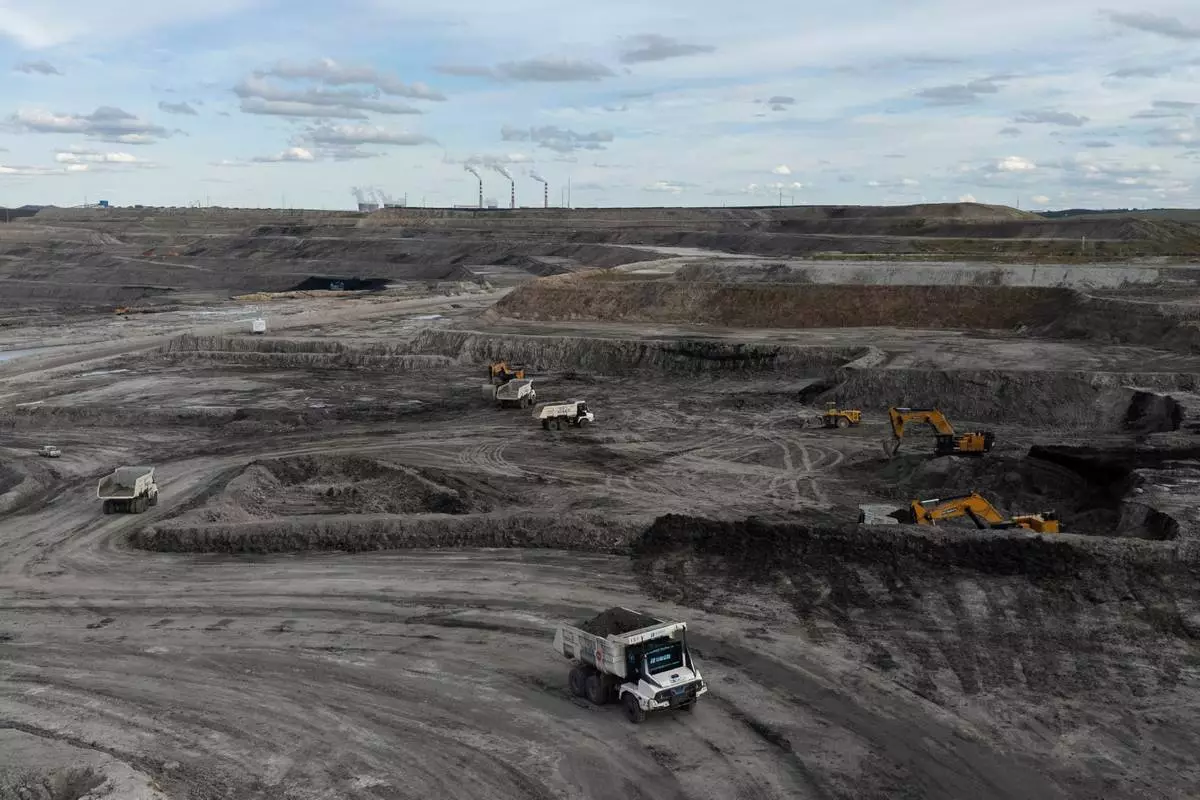
FILE - A mining truck operates in the Huaneng Yimin open-pit coal mine in Hulunbuir in northern China's Inner Mongolia province China, Sept. 15, 2025. (AP Photo/Ng Han Guan, File)
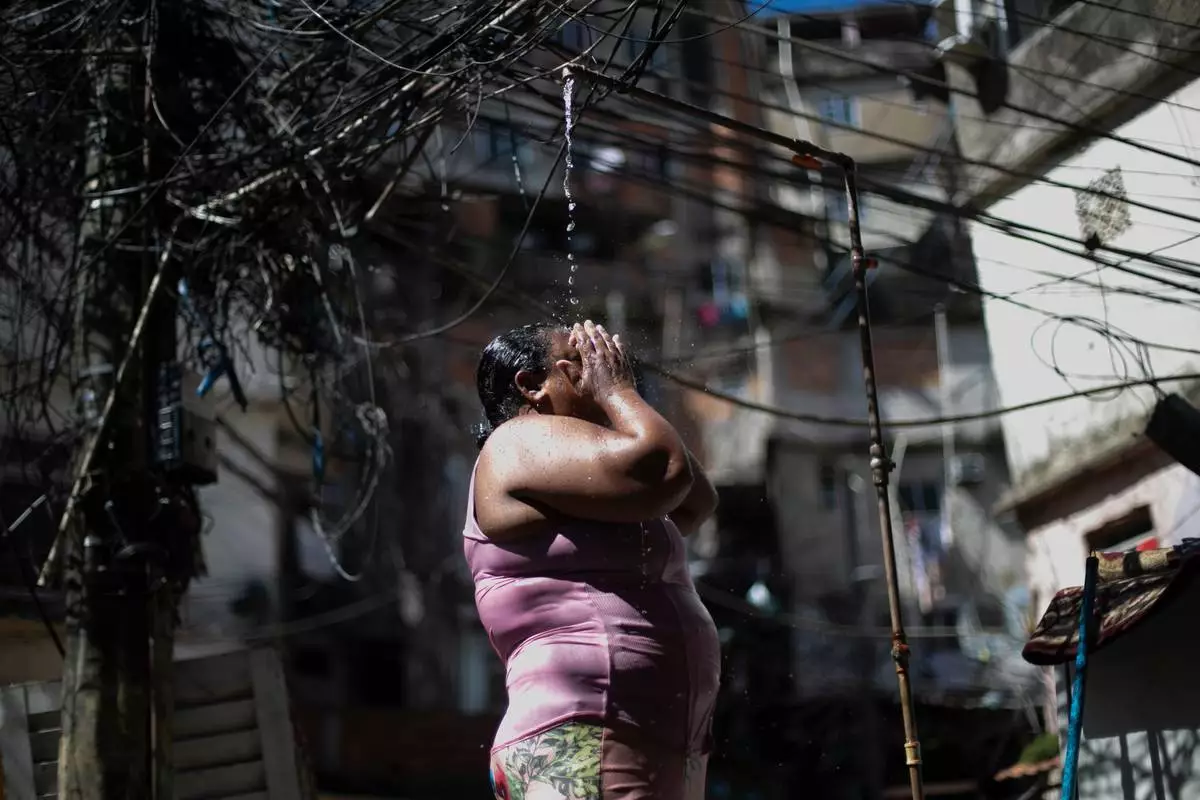
FILE - Kelly Cristina da Cruz cools off in a public shower in the Rocinha favela amid a heat wave in Rio de Janeiro, Jan. 15, 2026. (AP Photo/Bruna Prado, File)
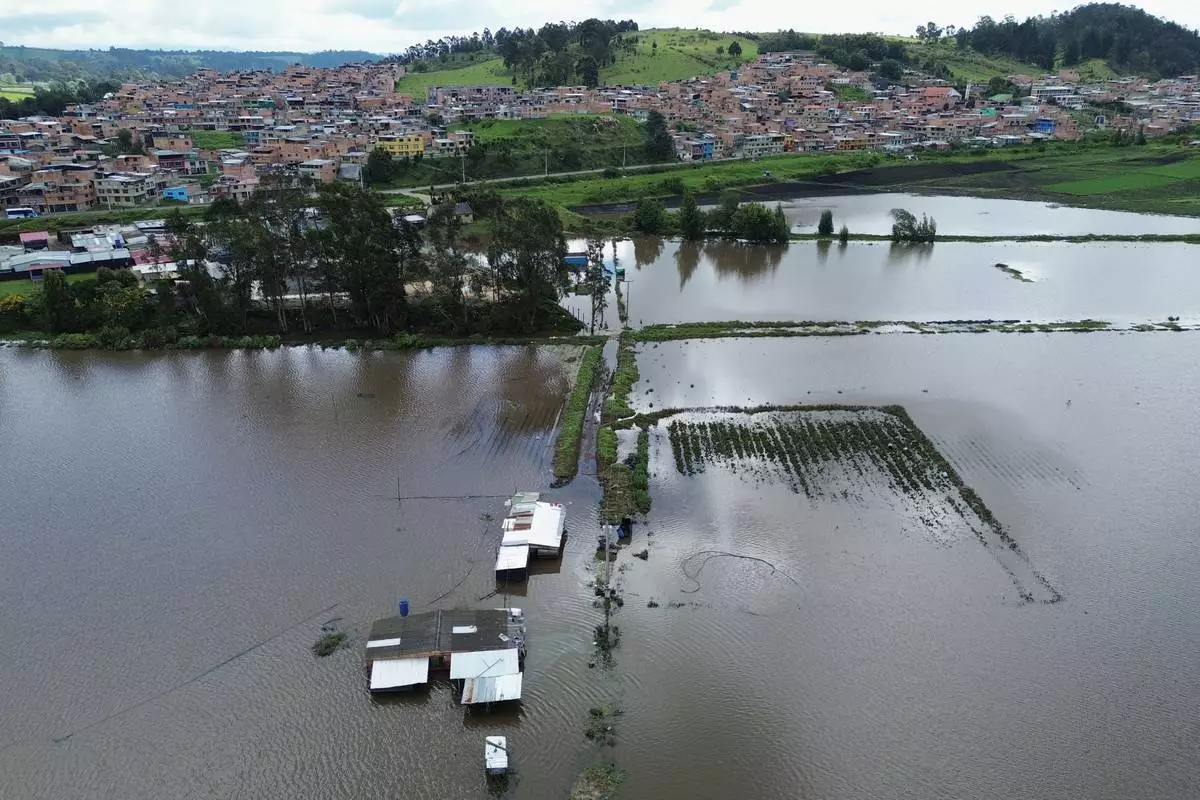
FILE - A strawberry farm is flooded after the Botello River overflowed due to heavy rain in Facatativa, Colombia, March 20, 2026. (AP Photo/Fernando Vergara, File)

FILE - Workers check the quality of a solar panel at the production line up at the ReNew solar panels manufacturing plant on the outskirts of Jaipur, India, Aug. 21, 2025. (AP Photo/Manish Swarup, File)
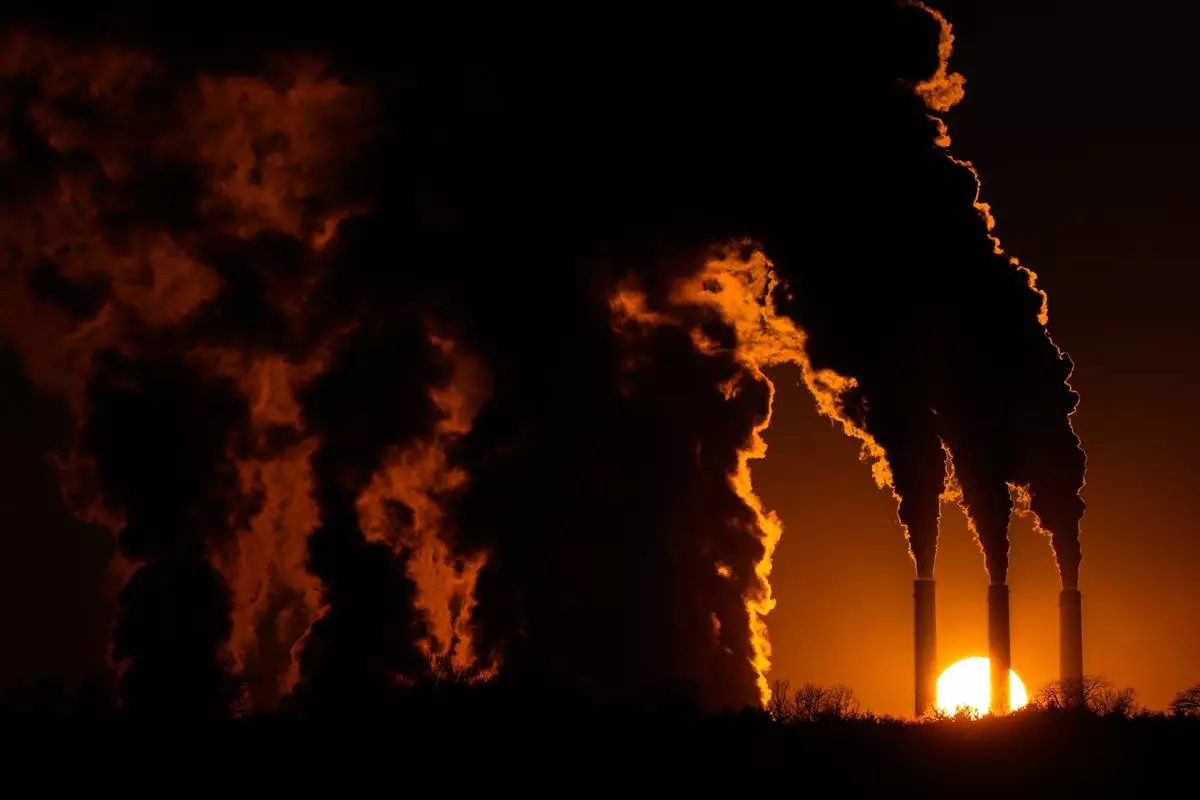
FILE - The Jeffrey Energy Center coal-fired power plant operates at sunset near Emmett, Kan., Jan. 3, 2026, in Topeka, Kan. (AP Photo/Charlie Riedel, file)
Acting Attorney General Todd Blanche on Tuesday wouldn’t rule out the possibility that violent rioters at the U.S. Capitol on Jan. 6, 2021, will be considered for payouts from a new $1.776 billion fund to compensate individuals who believe they were targeted politically. Testifying before Congress for the first time since taking the reins of the Justice Department last month, Blanche defended the “Anti-Weaponization Fund” while Democrats blasted it as an illegal abuse of power.
Also, Trump said he's holding off on a military strike on Iran planned for Tuesday because “serious negotiations” are underway to end the war. Trump said he had planned “a very major attack” but put it off — “for a little while, hopefully, maybe forever.” He said America’s allies in the Gulf asked him to wait for two to three days because they feel they're close to a deal with Iran.
Republican voters in northern Kentucky will choose between U.S. Rep. Thomas Massie and challenger Ed Gallrein in Tuesday’s House primary, another test of Trump’s power over his party after he handpicked Gallrein to take on the incumbent. Follow live updates of Tuesday’s primary elections.
Here's the latest:
U.S. Secretary of State Marco Rubio will travel this week to a NATO foreign ministers meeting in Sweden, where U.S. plans to reduce troop levels in Europe, coupled with President Donald Trump’s often inconsistent stance on the alliance, have raised concerns as the world grapples with the fallout from the war with Iran and rising energy prices.
The Department of State said Tuesday that Rubio would attend the NATO meeting in Helsingborg on Friday before traveling on to India, where he plans to visit four cities, including Kolkata, Agra, Jaipur and New Delhi.
In Sweden, Rubio will call “for increased defense investment and greater burden sharing in the alliance,” the department said in a statement. It added that he would also focus on Arctic issues. The statement did not mention Greenland by name, but Trump has rankled Europeans with persistent talk of taking over the Danish territory.
President Trump has endorsed Texas Attorney General Ken Paxton, supercharging his effort to oust incumbent Sen. John Cornyn in a Republican primary runoff.
Paxton and Cornyn qualified for the May 26 runoff after a March 3 primary, while Congressman Wesley Hunt finished third and did not advance.
Although the four-term Cornyn has backed Trump’s agenda in Washington, Paxton pitched himself as a political warrior for the Make America Great Again movement. Trump’s endorsement Tuesday puts him at odds with his party’s establishment, which is convinced Cornyn is the better candidate for November’s general election.
The runoff has been shaping up as a bitter and expensive battle for the future of the Republican Party.
The Democrats nominated Texas State Rep. James Talarico as their Senate candidate.
▶ Read more
In a brief appearance before reporters, Secretary of State Marco Rubio said President Trump's administration would “lean into” Ebola response efforts “pretty heavy” with a priority on funding 50 emergency clinics in affected areas.
“It’s a little tough to get to because it’s in a rural area. So, it’s a kind of confined and hard-to-get-to place in a war-torn country, unfortunately.”
The U.S. has so far contributed $13 million to the effort and Rubio said more would be coming.
Rubio said, adding that the lead agencies in the response would be the Centers for Disease Control and the World Health Organization, which Trump withdrew from last year and which Rubio complained had been “a little late to identify this thing, unfortunately.”
The State Department is strongly urging Americans against any travel to the Congo, South Sudan and Uganda after the outbreak of a rare Ebola virus strain there and advising Americans to reconsider visiting Rwanda.
The heightened advisories date back to Sunday when the World Health Organization declared the outbreak an international public health emergency. The advisories expand on similar warnings issued on May 15 by the Centers for Disease Control and Prevention, which is taking the lead on the U.S. response to the virus.
Of the four, only South Sudan had previously been identified as a Level 4 – Do Not Travel – country due to unrest. Congo and Uganda had previously been identified as Level 3 – Reconsider Travel – and Rwanda as Level 2 – Exercise Increased Caution. Level 4 is the most severe warning that the State Department issues.
Adm. Brad Cooper, the top U.S. military leader in the Middle East, was questioned about reports on Iran’s missile capabilities during Tuesday’s hearing before the House Armed Services Committee.
The New York Times and other publications have reported that U.S. intelligence assessments have found that Iran regained access to many of its missile sites and underground facilities following U.S. and Israeli military strikes.
Cooper, the leader of U.S. Central Command, said the reports were inaccurate. He did not elaborate.
Republicans pressed acting Attorney General Todd Blanche about violent crime, drug enforcement and other conventional Justice Department topics.
But for the most part, they’re steering clear of the Justice Department’s creation of a new $1.776 fund created to compensate allies of President Trump who say they’ve been mistreated by the criminal justice system and Democrats. That’s in contrast to their Democratic counterparts, who routinely pressed Blanche on the fund.
The primary exception on the GOP side was Sen. Susan Collins of Maine, who asked Blanche about the fund.
The president said he would be making an announcement in the early afternoon in the contest between incumbent Sen. John Cornyn or state Attorney General Ken Paxton, “And I hope you find it good.”
Trump didn’t say who he would endorse but said, “I’ve pretty much always known who I was going to endorse.”
During a hearing Tuesday, Democrat Rep. John Garamendi asked Adm. Brad Cooper whether the Pentagon’s assessment is that hostilities between Tehran and Washington have been halted since the ceasefire was announced last month.
Cooper continued to testify that the U.S. remained in a ceasefire despite several attacks from both sides in the last several weeks.
“That’s not my question,” Garamendi said. “My question was is the military assessment that hostilities have ceased since April?” Cooper responded that was his assessment but added that “Iran pushes it.”
There have been reports that China, which has close ties to Iran, has considered sending weapons for use in the conflict against the United States.
But Trump says Chinese President Xi Jinping assured him that wasn’t the case.
“He promised that he’s not sending any weapons,” Trump told reporters after he was asked about the reports.
The leaders held two days of in-person talks last week in Beijing.
China’s foreign ministry has denied the reports.
Thune told reporters he isn’t sure how the administration intends to use it, but said “I don’t see a purpose for that.”
Thune’s comments come after Louisiana Sen. Bill Cassidy, who lost reelection in a GOP primary Saturday, called it a “slush fund” on Monday.
“We are a nation of laws,” Cassidy said. “You can’t just make up things.”
It is unclear, though, if Republicans will try to block the funding.
The House Armed Services Committee’s ranking Democrat pressed the top U.S. military leader in the Middle East for information on the bombing of a school that killed more than 165 people when the U.S. and Israel launched the Iran war.
Adm. Brad Cooper, who leads U.S. Central Command, said the bombing is still under investigation. He said the strike was complex, noting how the school was on a missile site operated by Iran’s paramilitary Revolutionary Guard.
Cooper said he’s committed to transparency once the investigation is complete. But Democratic Rep. Adam Smith of Washington said, “I do not trust that answer.”
Smith said he respects Cooper, but accused Defense Secretary Pete Hegseth of showing a “callous disregard” for protecting civilian life.
Under questioning from Sen. Jeff Merkley, an Oregon Democrat, Blanche said he “will definitely encourage the commission” responsible for deciding on the payouts to “take everything into account.”
He also said he’ll commit to “making sure that the commissioners are effectively doing their jobs and that includes setting your guidelines.”
But he declined to explicitly rule out the idea that people implicated in the violence of Jan 6. could apply for payments from the fund, which was set up to pay people who believe they’ve been mistreated by the criminal justice system.
The U.S. Treasury Department imposed sanctions against four people aboard an aid flotilla bound for the Gaza Strip organized by the Popular Conference for Palestinians Abroad, also subject to U.S. sanctions.
Included in the sanctions are a group of European activists: Saif Abu Keshek, Jaldia Abubakra Aueda, Hisham Abdallah Sulayman Abu Mahfuz and Mohammed Khatib.
Israel has recently intercepted dozens of aid flotillas after more than 50 vessels departed from the port of Marmaris, Turkey, last week in what the organizers of the Global Sumud Flotilla described as the final leg of their planned journey to Gaza’s shores.
In a statement, Treasury Secretary Scott Bessent called the flotilla “pro-terror” and “a ludicrous attempt to undermine President Trump’s successful progress toward lasting peace in the region.”
The president said he was giving Iran “two or three days,” but then suggested he might give Iran a week.
“Maybe Friday, Saturday, Sunday, something, maybe early next week. A limited period of time,” he said.
The president said he “was an hour away from making the decision” to launch strikes on Tuesday before calling them off Monday.
Asked how close he was to striking Iran and ending a fragile ceasefire, Trump on Tuesday said he was “an hour away” from making the call.
“I was an hour away from making the decision to go today,” Trump told reporters at the White House.
He said the strikes “would have been happening right now” if he hadn’t held off. “The ships are all loaded, they’re loaded to the brim,” he added.
Trump on Monday announced he was holding off on military strikes planned for Tuesday because “serious negotiations” were underway to end the war.
The president told reporters Cuba may not need a change in regime to address his concerns but said if he wanted to, “I can do that.”
He didn’t offer many details about what he wanted from Cuba but said: “That’s not going to be hard for us to solve.”
Cuba’s economic and energy crises have deepened this year after the U.S. invaded Venezuela in early January, halting critical oil shipments from the South American country. Then in late January, Trump threatened to impose tariffs on any country that sells or provides oil to the island.
A severe gas shortage has persisted and widespread blackouts continue across the island.
“This is a room that’s been wanted for 150 years by presidents,” Trump said of the ballroom.
Trump has renderings of the building on easels as he explains the various components, including what he calls a “drone-free” roof.
“One thing doesn’t work without the other,” he said.
Trump said the ballroom will be paid for by donors and himself. Republicans in Congress are grappling with a $1 billion funding request to cover all the security elements.
The acting attorney general said the Justice Department is committed to “full transparency” in providing public information about beneficiaries of the new fund meant to compensate allies of President Trump who say they were mistreated by the criminal justice system.
Blanche said in response to a question at the Senate budget hearing that there are privacy laws that mandate some information be kept quiet, but that otherwise, the department intended to be transparent.
Democratic Sen. Chris Van Hollen pressed Blanche on the creation of the fund during a budget hearing and asked him directly whether Jan. 6 rioters involved in crimes of violence could apply for payment from the fund.
“As was made plain yesterday, anybody in this country is eligible to apply if they believe they were a victim of weaponization,” Blanche said.
The decisions on payouts will be made a five-member commission appointed by Blanche.
In response to questions from Sen. Susan Collins, a Maine Republican, he said that though the fund was “unusual,” it’s not unprecedented.
He said the fund was similar in structure to one created during the Obama administration to compensate Native American farmers who alleged they were victims of racial discrimination.
Blanche said the fund will not be limited to Republicans or to people who were investigated or prosecuted by the Biden administration.
He also said he expected the payouts, which will be decided by a five-member commission, to be a matter of public record.
Sen. Chris Van Hollen, a Maryland Democrat, castigated acting Attorney General Todd Blanche over the new $1.8 billion fund meant to compensate allies of President Trump who feel they’ve been unjustly targeted by the criminal justice system.
Van Hollen called the Anti-Weaponization Fund announced Monday a “pure theft of public funds.”
He told Blanche he was “still acting as the president’s personal lawyer” and not the acting attorney general that he is.
The acting attorney general’s testimony before a Senate appropriations subcommittee comes a day after the Justice Department announced a $1.776 billion fund to pay allies of the Republican president who believe they were targeted politically.
Tuesday’s hearing is meant to address the Trump administration’s budget request for the Justice Department. But it’s likely to delve into other controversies that have escalated concerns about the erosion of the law enforcement agency’s tradition of independence from the White House.
He’s repeatedly shown that Republican primary voters will follow his lead, even as his popularity wanes with the broader electorate.
In Kentucky, he’s supporting first-time candidate Ed Gallrein over Massie, who’s been in office since 2012. Massie is trying to convince Republicans they can support both himself and Trump at the same time, a proposition that’s been tried unsuccessfully in other races around the country.
In the race for Georgia governor, Trump is backing Lt. Gov. Burt Jones in an unexpectedly ugly battle for the Republican nomination. Jones, who comes from a wealthy Georgia family, has given his campaign $19 million. But billionaire Rick Jackson, a health care tycoon, has put more than $83 million of his fortune into the race. Trump’s endorsement power has rarely been tested against that level of lopsided spending.
▶ Follow live updates
The signs this year suggest no, and Trump has convinced his voters to defeat his adversaries again and again. The next test of the president’s power to extract retribution is Tuesday, when Rep. Thomas Massie of Kentucky faces a Trump-backed primary challenger.
Massie has been a thorn in the president’s side for pushing for the release of the Jeffrey Epstein files, opposing the war with Iran and voting against Trump’s signature tax legislation last year.
Meanwhile, Georgia is about to feature a fresh case study in the divergent paths available to Republicans who defy Trump.
Secretary of State Brad Raffensperger and former Lt. Gov. Geoff Duncan were among the few Republicans to speak out against Trump’s attempt to overturn his 2020 loss. Both are now running for governor — Raffensperger as a Republican and Duncan as a Democrat — and both are trying to convince voters to look past things they said in the past.
▶ Follow live updates
President Trump has considered himself an effective dealmaker above all else, but he appears to have hit a wall with Iran as his tough talk, threats and even military action haven’t moved Tehran from its long-established positions.
With shifting goals that make it difficult to judge the status of the U.S. effort, Trump and his top aides have insisted the U.S. has already won the war and that Iran is ready to reach an agreement in the wake of escalating U.S. threats during a tenuous ceasefire.
But Trump once again backed down, saying Monday that he’d put plans for an imminent resumption of attacks on hold at the request of Gulf Arab states because “serious negotiations are now taking place, and that, in their opinion, as Great Leaders and Allies, a Deal will be made, which will be very acceptable to the United States of America, as well as all Countries in the Middle East, and beyond.”
Crucially, Iran still has a chokehold on the Strait of Hormuz, the vital shipping lane for global oil supplies, even as the U.S. military has enforced its own blockade on Iranian ports.
▶ Read more
Russian President Vladimir Putin is traveling to China to meet with Chinese leader Xi Jinping less than a week after President Trump wrapped up his own trip to Beijing.
Putin is scheduled to be in China on Tuesday and Wednesday in a visit likely to be closely watched as Beijing seeks to maintain stable relations with the United States while also preserving strong ties with Russia.
The Kremlin has said Putin and Xi plan to discuss economic cooperation between the two countries, but also “key international and regional issues.” The visit coincides with the 25th anniversary of the Sino-Russian Treaty of Friendship signed in 2001.
China is a key trading partner for Russia, especially after Moscow’s full-scale invasion of Ukraine in 2022. Beijing has said it is neutral in the conflict while maintaining trade ties with the Kremlin despite economic and financial sanctions by the U.S. and Europe.
▶ Read more
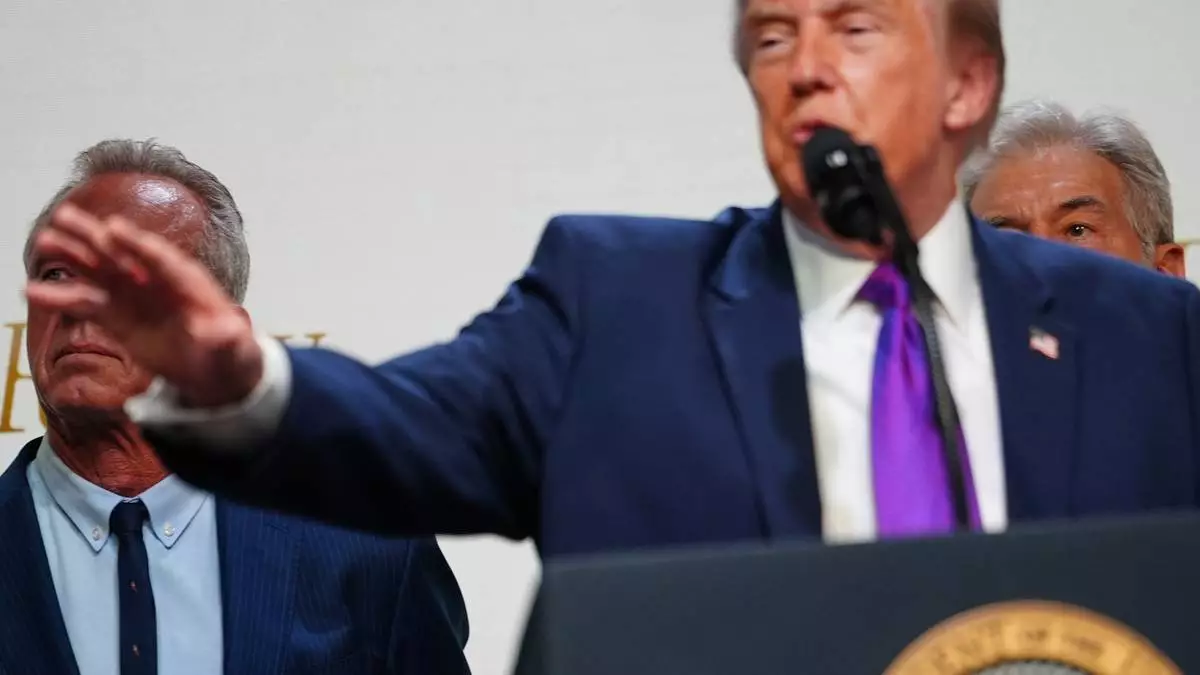
President Donald Trump answers questions from reporters during and event about prescription drug prices in the South Court Auditorium in the Eisenhower Executive Office Building on the White House campus, Monday, May 18, 2026, in Washington, with Health and Human Services Secretary Robert F. Kennedy Jr., left, and Centers for Medicare & Medicaid Services administrator Dr. Mehmet Oz. (AP Photo/Julia Demaree Nikhinson)
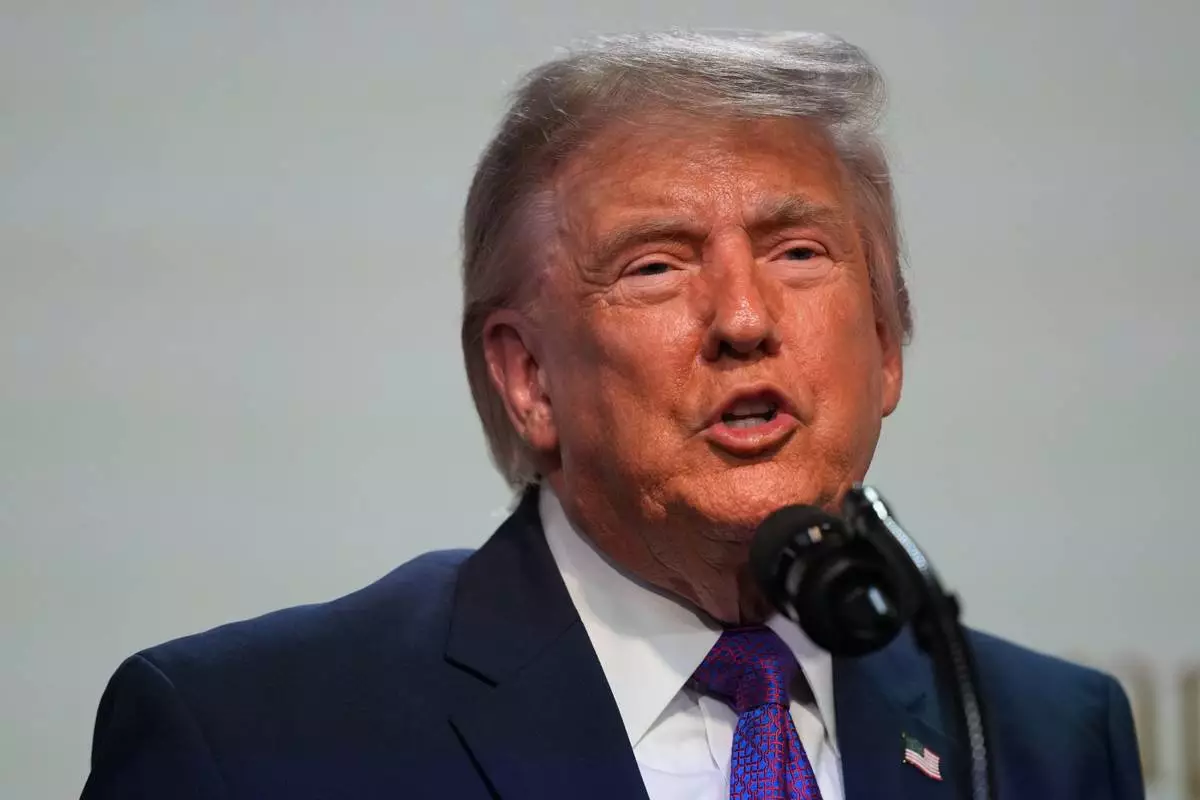
President Donald Trump speaks about prescription drug prices in the South Court Auditorium in the Eisenhower Executive Office Building on the White House campus, Monday, May 18, 2026, in Washington. (AP Photo/Julia Demaree Nikhinson)