WASHINGTON (AP) — Secretary of State Marco Rubio will travel this week to a NATO foreign ministers meeting in Sweden, where U.S. plans to reduce troop levels in Europe coupled with President Donald Trump’s often inconsistent stance on the alliance have created concern while the world grapples with the fallout from the Iran war and rising energy prices.
The State Department said Tuesday that Rubio would attend the NATO meeting in Helsingborg on Friday, one of the last senior-level NATO gatherings before alliance leaders meet at a summit in Ankara, Turkey, in July.
Rubio will then travel on to India and plans to visit four cities, including Kolkata, Agra, Jaipur and New Delhi, where he will see Indian officials and is expected to meet with his Indian, Australian and Japanese counterparts, the other three members of the so-called “Quad” grouping of Indo-Pacific democracies.
In Sweden, Rubio will echo previous U.S. demands “for increased defense investment and greater burden sharing in the alliance,” the State Department said in a statement.
It added that he would also focus on Arctic issues and meet with NATO's Arctic members “to discuss our shared economic and security interests in the Arctic and our strengthened posture in the High North.”
The statement did not mention Greenland by name, but Trump has rankled Europeans with persistent talk about wanting to take over the Danish territory. Trump's special envoy for Greenland, Louisiana Gov. Jeff Landry, visited the island this week.
Greenland’s Prime Minister Jens-Frederik Nielsen said Monday that he had a respectful and positive meeting with Landry, but that he made it clear that the Greenlandic people insist on self-determination.
“The Greenlandic people are not for sale. Greenlandic self-determination is not something that can be negotiated,” Nielsen was quoted by Danish TV 2 as saying after meeting Landry.
For Europeans nervous about Trump, Rubio's presence at transatlantic meetings has often been welcomed because of his less antagonistic nature and calm demeanor.
He has been dispatched on several such missions this year, including to the Munich Security Conference in February, and more recently to Italy, where he met with Italian officials and the pope after Trump criticized the pontiff for his stances on crime and the Iran war.
Ahead of the NATO foreign ministers meeting, the alliance's top military officer said Tuesday that he doesn’t expect any more drawdowns of American troops from Europe — at least not anytime soon — beyond the 5,000 that Trump announced would leave the continent.
The remarks by U.S. Lt. Gen. Alex Grynkewich follow Trump’s surprise announcement of the move early this month. The U.S. leader has bickered with allies over the Iran war and called for changes.
The Pentagon later said it would draw down thousands of troops in Europe by canceling deployments to Poland and Germany as opposed to yanking out forces already stationed there.
Asked Tuesday about Trump’s plans regarding troop levels in Poland, Vice President JD Vance said the administration’s focus is on promoting “European independence and sovereignty.” He also disputed that the U.S. is reducing troop levels in Poland.
“What we did is that we delayed a troop deployment that was going to go to Poland,” Vance told White House reporters. “That’s not a reduction. That’s just a standard delay in rotation that sometimes happens in these situations.”
Trump’s announcement blindsided NATO and came despite U.S. promises to coordinate military moves with its allies and avoid creating security gaps.
Trump was notably angry at Germany, after Chancellor Friedrich Merz said the United States was being “humiliated” by the Iranian leadership and criticized what he called a lack of U.S. strategy in the war.
Associated Press writers Lorne Cook in Brussels and Seung Min Kim in Washington contributed.
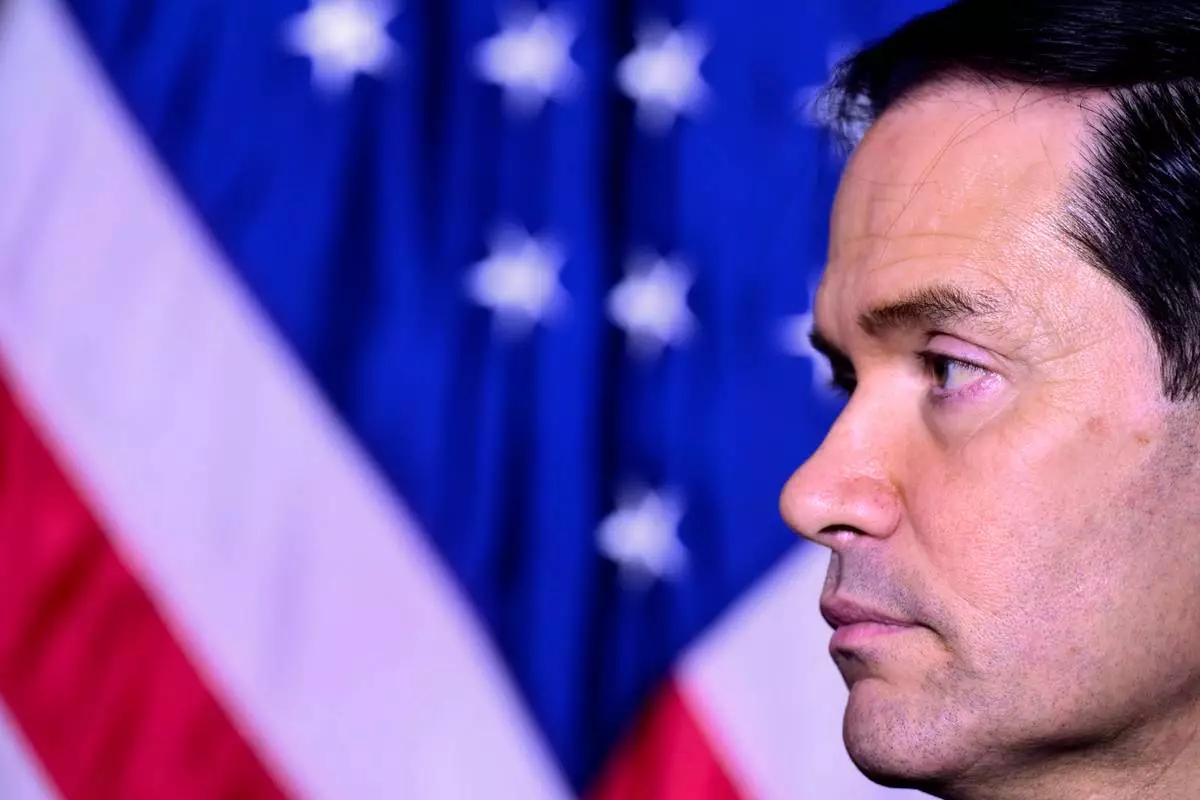
US Secretary of State Marco Rubio attends at a press conference at the US Embassy in Rome, Friday, May 8, 2026. (Stefano Rellandini/Pool Photo via AP)
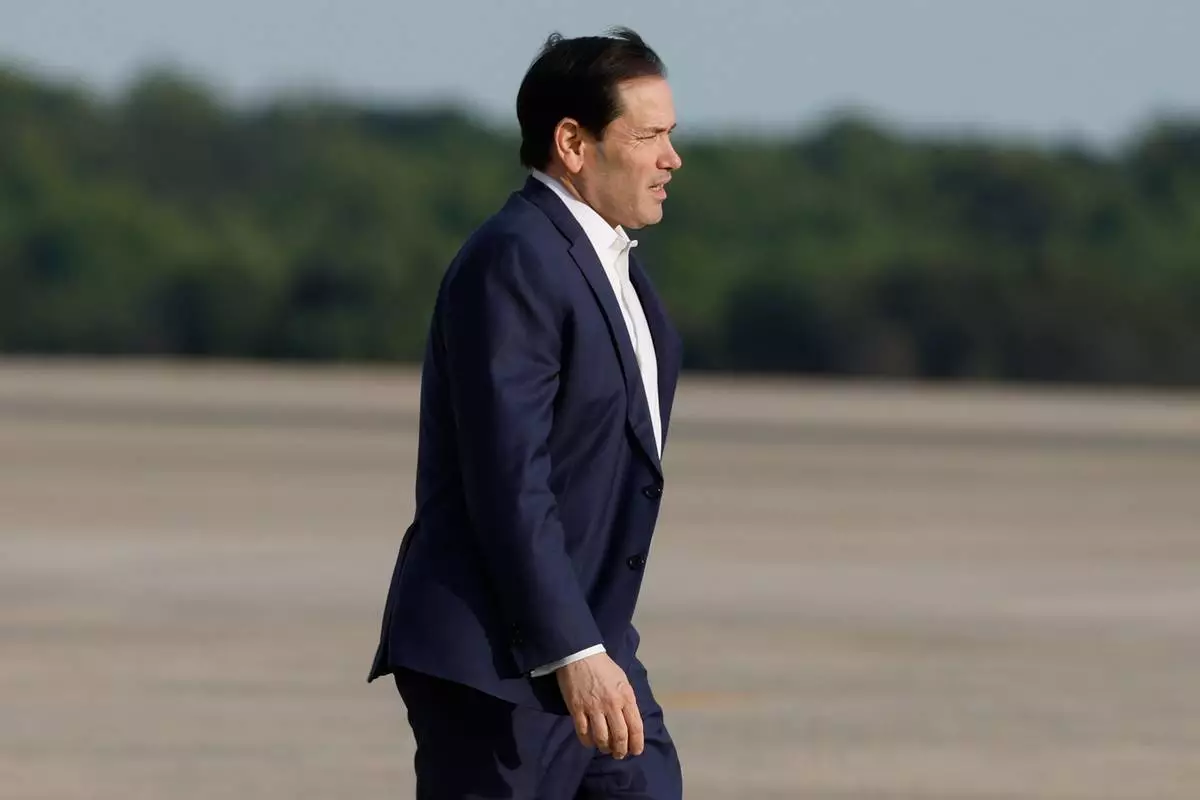
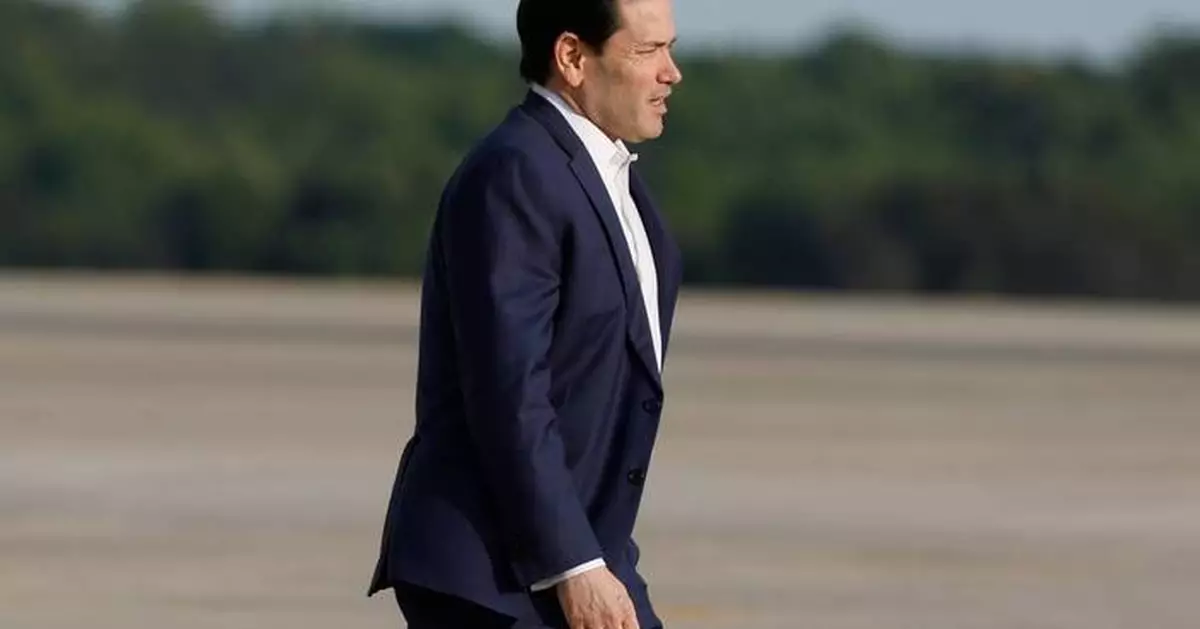
Secretary of State Marco Rubio departs Air Force One upon President Trump's arrival at Joint Base Andrews, Md., Friday, May 15, 2026. (AP Photo/Luis M. Alvarez)
BUNIA, Congo (AP) — The World Health Organization director-general openly worried Tuesday over the “scale and speed” of an outbreak of a rare type of Ebola in eastern Congo, where authorities reported a sharp increase in suspected deaths — to at least 134 — and more than 500 suspected cases.
The virus spread undetected for weeks after the first known death as authorities tested for a more common type of Ebola and came up negative, health experts and aid workers said. The Bundibugyo virus has no approved medicines or vaccines.
In Bunia, the site of the first known death, health workers in protective gear moved among residents wearing fabric masks. “I know the consequences of Ebola, I know what it’s like,” said a worried resident, Noëla Lumo.
Congo was expecting shipments from the United States and Britain of an experimental vaccine for different types of Ebola, developed by researchers at Oxford, said Jean-Jaques Muyembe, a virologist at the National Institute of Bio-Medical Research.
“We will administer the vaccine and see who develops the disease,” he said. But experts said such efforts would take time.
WHO Director-General Tedros Adhanom Ghebreyesus said he was “deeply concerned about the scale and speed of the epidemic,” and pointed to the emergence of cases in urban areas, the deaths of healthcare workers and significant population movement.
Thirty cases have been confirmed in Congo, Tedros later told a meeting of the U.N. health agency’s emergency committee. He said neighboring Uganda has informed the WHO of two confirmed cases including a death in its capital, Kampala, among people who had traveled from Congo.
WHO has declared the Ebola outbreak a public health emergency of international concern, requiring a coordinated response. Resources were being rushed to two affected provinces near Uganda. Parts of eastern Congo are in the hands of armed rebels.
The head of the WHO team in Congo said authorities haven’t identified “patient zero."
Dr. Anne Ancia also said the Ervebo vaccine, used against a different type of Ebola, was among those considered for possible use, but anything approved would take two months to become available.
“I don’t see that in two months we will be done with this outbreak," she said.
For now, Ancia said, neither the U.S. Centers for Disease Control and Prevention nor the Africa Centers for Disease Control were on the ground, but others were, including Doctors Without Borders and the Red Cross.
The UNICEF office in Bunia said it had been sent an initial 16 tons of relief supplies, mainly disinfectants and soaps, personal protective equipment and water purification tablets and water tanks.
Cases have been confirmed in the capital of Congo's Ituri province, Bunia; North Kivu’s rebel-held capital, Goma; and the localities of Mongbwalu, Nyakunde and Butembo — home to well over a million people in all.
Dr. Peter Stafford, an American doctor, is among the Bunia cases, said Serge, the Christian organization he works for. He had been treating patients at a hospital.
Tedros said an American had tested positive and been transferred to Germany.
Ebola is highly contagious and can be contracted via bodily fluids such as vomit, blood or semen. The disease it causes is rare but severe and often fatal. Symptoms include fever, headache, muscle pain, weakness, diarrhea, vomiting, stomach pain and unexplained bleeding or bruising.
During an outbreak more than a decade ago that killed more than 11,000 people, many were infected while washing bodies for funerals.
“Ebola is very much a disease of compassion in that it impacts the people who are more likely to be taking care of sick folks,” said Dr. Craig Spencer, an associate professor at the Brown University School of Public Health who survived Ebola more than a decade ago after contracting it in Guinea.
There was growing panic in Bunia neighborhoods. Local authorities urged people to remain calm and adhere to preventive measures including practicing good hygiene and exercising caution during funerals.
The most important challenge is breaking the virus transmission chain, Muyembe said, adding that most of Congo's previous Ebola outbreaks “were brought under control simply by applying public health measures.”
Congo has said the first person died from the virus on April 24 in Bunia, and the body was repatriated to the Mongbwalu health zone, a mining area with a large population.
“That caused the Ebola outbreak to escalate,” said Congo’s health minister, Samuel Roger Kamba.
When another person fell ill on April 26, samples were sent to Congo's capital, Kinshasa, for testing, according to the Africa CDC. Bunia is more than 1,000 kilometers (620 miles) away in a country with some of the world's worst infrastructure.
Samples from Bunia were initially tested for the more common type of Ebola, Zaire, Congolese officials said. They came back negative, said Dr. Richard Kitenge, the health ministry incident manager for Ebola.
On May 5, WHO was alerted of about 50 deaths in Mongbwalu, including four health workers. The first confirmation of Ebola came on May 14.
“Our surveillance system didn't work,” Muyembe said. “The Bunia laboratory ... should have continued searching and sent the samples to the national laboratory. Something went wrong there. That’s why we ended up in this catastrophic situation."
Only laboratories in Kinshasa and Goma, which is now controlled by the Rwanda-backed M23 rebel group, have the capacity to test for the Bundibugyo type of Ebola.
Benjamin Mbonimpa, M23’s permanent secretary, has said the rebel government established entry and exit points in Goma and would take responsibility for funeral services if the virus spreads.
“Our priority is to protect the population within our jurisdiction, and we urge people to resume their daily activities,” he said.
Matthew M. Kavanagh, director of the Georgetown University Center for Global Health Policy and Politics, has criticized the Trump administration’s earlier decision to withdraw from WHO and make deep cuts in foreign aid — “the exact surveillance system meant to catch these viruses early."
The U.S. State Department has said it has provided $13 million for the response.
Pronczuk reported from Dakar, Senegal. AP writers Jamey Keaten in Geneva, Constant Same Bagalwa in Bunia, Congo and Wilson McMakin in Dakar contributed.
This version corrects the name of the Ervebo vaccine.
For more on Africa and development: https://apnews.com/hub/africa-pulse
The Associated Press receives financial support for global health and development coverage in Africa from the Gates Foundation. The AP is solely responsible for all content. Find AP’s standards for working with philanthropies, a list of supporters and funded coverage areas at AP.org.
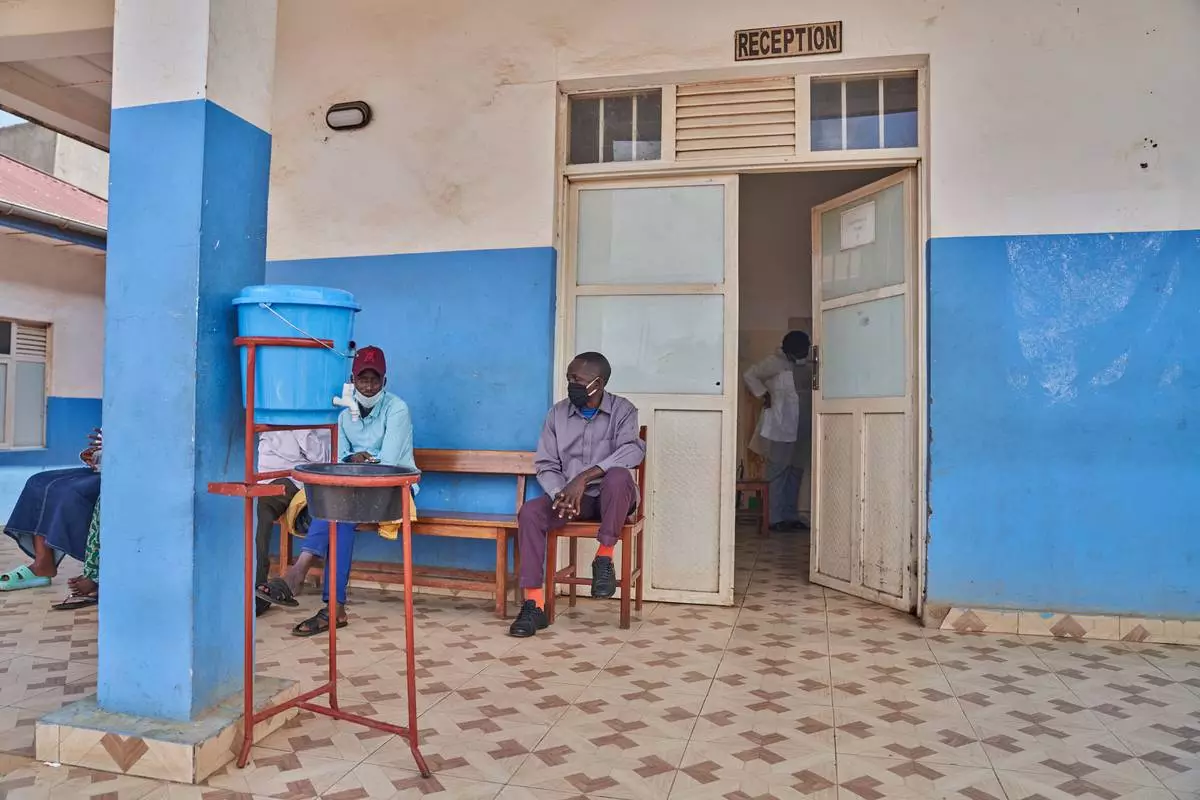
People wait outside a hospital reception in Bunia, Congo, Tuesday, May 19, 2026. (AP Photo/Dirole Lotsima Dieudonne)
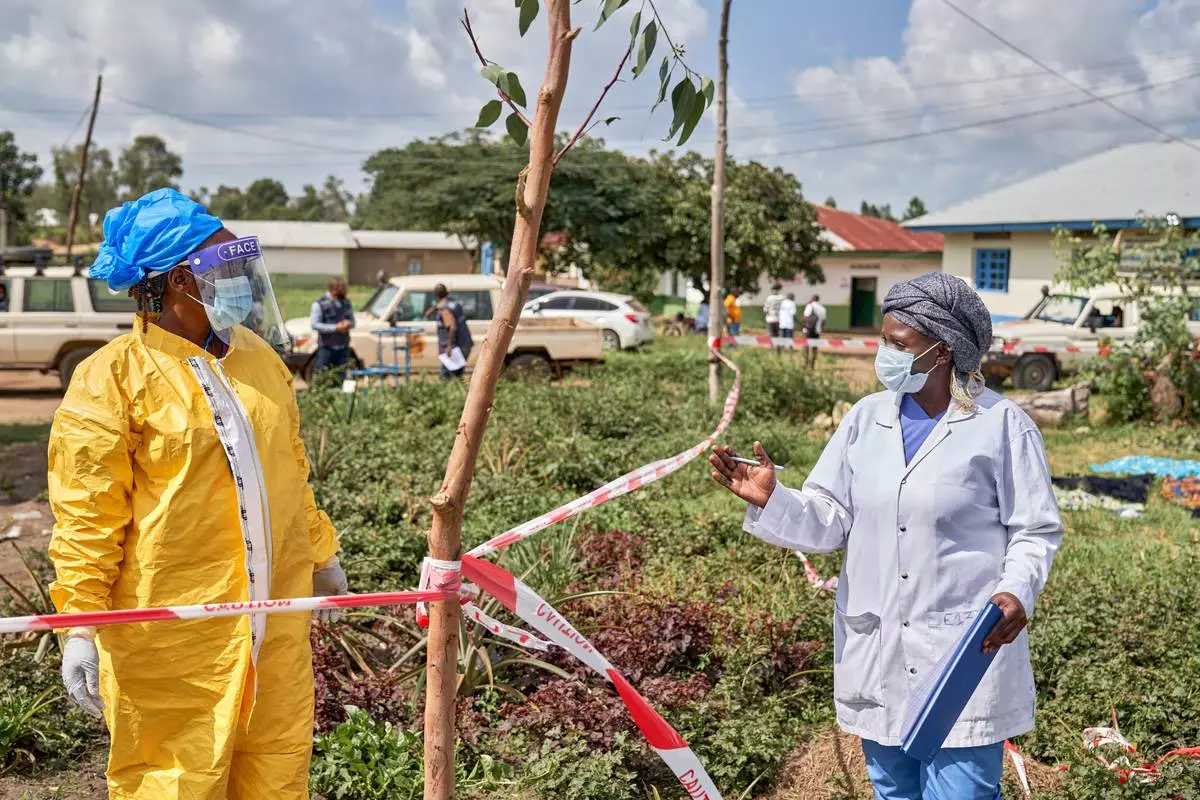
Health workers chat at an Ebola treatment center in Bunia, Congo, Tuesday, May 19, 2026. (AP Photo/Dirole Lotsima Dieudonne)
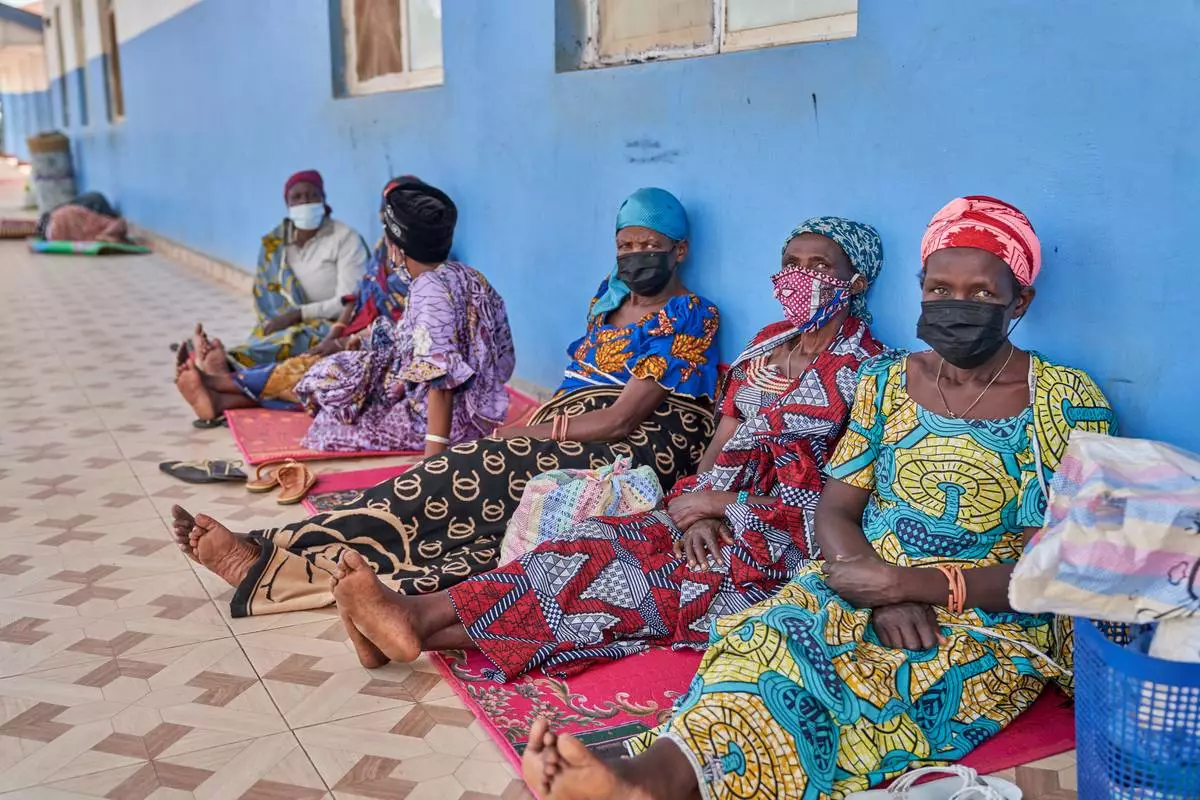
People in protective masks wait in the corridor of a hospital in Bunia, Congo, Tuesday, May 19, 2026. (AP Photo/Dirole Lotsima Dieudonne)
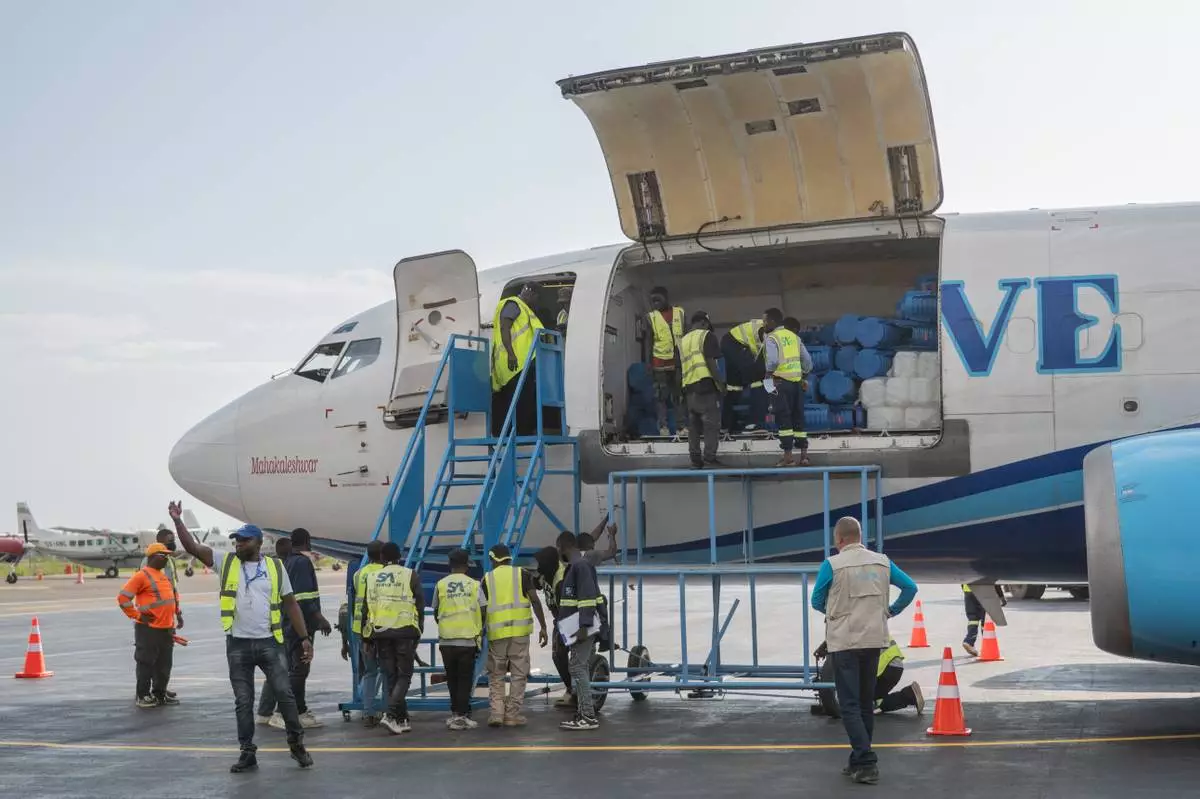
People offload a shipment of more than 15 tonnes of supplies donated by UNICEF as part of the response to the Ebola virus outbreak at Bunia National Airport in Bunia, Congo, Tuesday, May 19, 2026. (AP Photo/Moses Sawasawa)
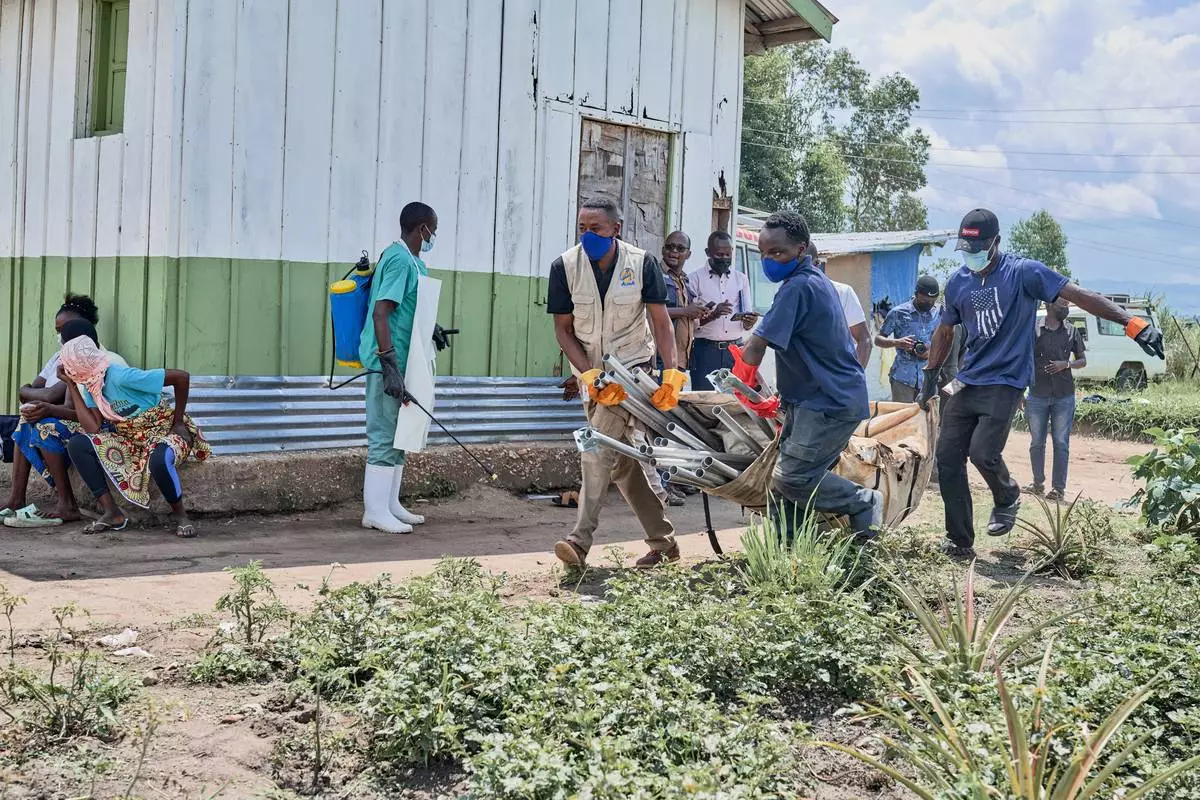
Aid workers carry supplies to set up an Ebola treatment center in Bunia, Congo, Tuesday, May 19, 2026. (AP Photo/Dirole Lotsima Dieudonne)
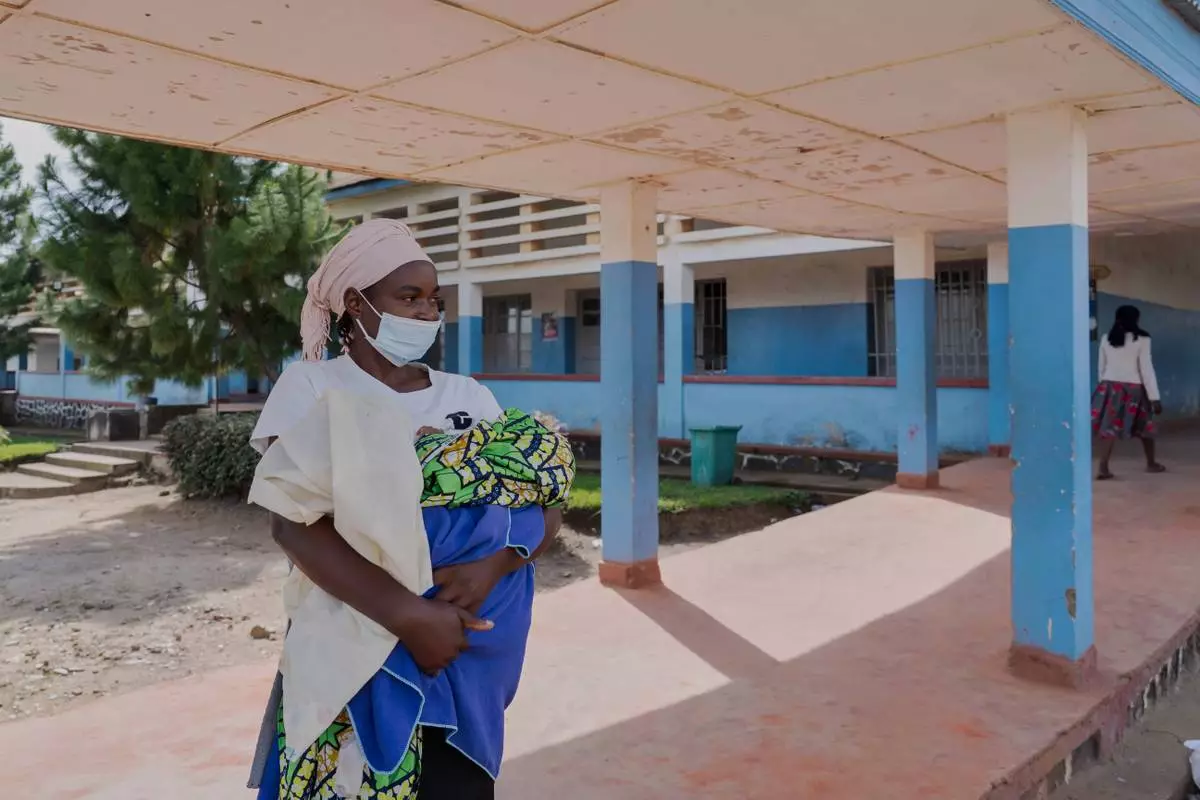
A woman wearing a protective mask stands in the corridor of a hospital in Bunia, Congo, Sunday, May 17, 2026. (AP Photo/ Dirole Lotsima Dieudonne)