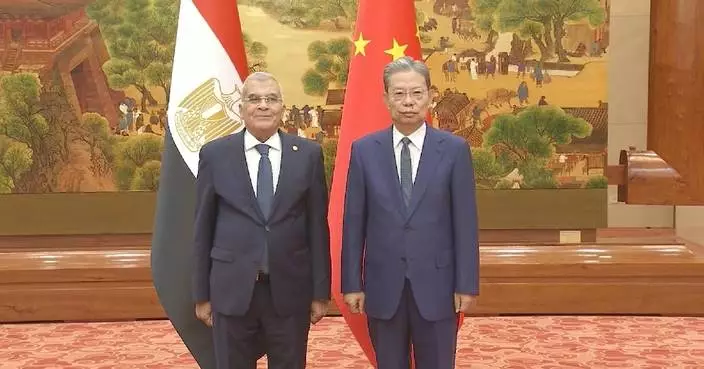
Chinese Premier Li Qiang has called for efforts to accelerate the building of hubs for the distribution of bulk commodities and important materials to ensure both development and security.
Li, also a member of the Standing Committee of the Political Bureau of the Communist Party of China Central Committee, made the remarks during trips to Zhoushan and Ningbo in east China's Zhejiang Province from May 25 to 27.
He emphasized the importance of doing a good job in regulating the reserves of bulk commodities and important materials, strengthening the functions of strategic guarantee, macro-control and responding to urgent needs, and improving the resilience of industrial and supply chains.
In Zhoushan, Li heard officials' reports on work related to petroleum and grain reserves, inspected reserve facilities, and inquired about the construction and operation of related projects.
Li said that building good reserves of bulk commodities and important materials is of great significance for the stability of the economy and society, as he urged efforts to push forward the construction of multiple types of reserve facilities and expand the reserve capacity.
He also called for technological innovation in reserve work and management to enhance the level of intelligence, and deepening the reform of systems and mechanisms to promote the coordinated operation of strategic reserves and commercial reserves.
At the Zhejiang Mercantile Exchange in Zhoushan, Li learned about progress in building a resource allocation hub and inquired about trading activities.
He urged efforts to build an integrated service platform, improve multi-category and full-chain trading services, and strengthen China's influence on global pricing mechanism.
Li then inspected the Ningbo Section of the Jintang undersea tunnel, and the Meishan port area of Ningbo-Zhoushan Port, which has ranked first globally in cargo throughput for 17 consecutive years.
The 16.18-km undersea tunnel is a key facility for the Ningbo-Zhoushan high-speed railway and is set to be the world's longest undersea high-speed railway tunnel upon completion.
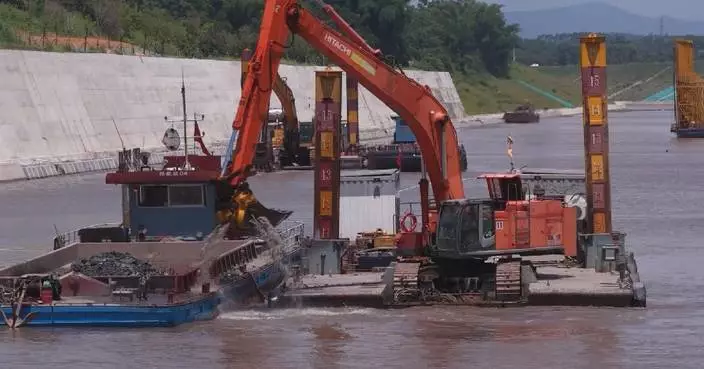
At the construction site of the undersea tunnel, the premier emphasized safe and green practices given the tunnel's complex geographic conditions, and urged strict quality control throughout the process.
At the port, Li observed unmanned container loading and unloading operations. Noting the port's strong advantages and leading role, he called for enhancing infrastructure and promoting multi-modal transport through sea, land, air and digital trade.
He also underscored the advancement of smart and digital transformation to boost throughput capacity and foster port-related industries, with the goal of building Ningbo-Zhoushan Port into a world-class port.
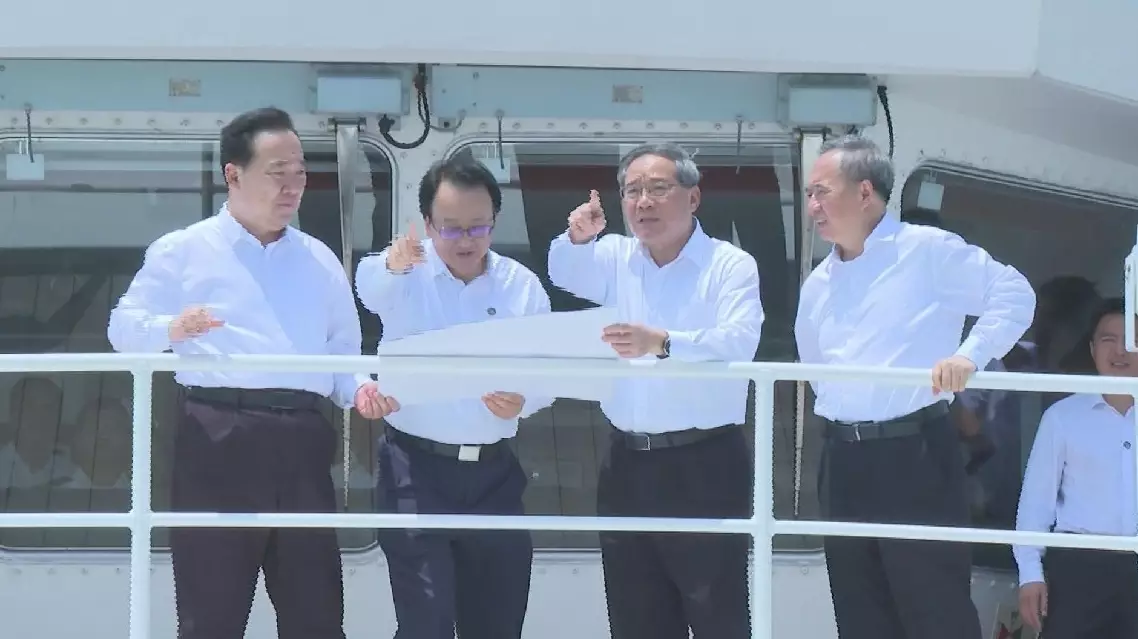
Chinese premier stresses efforts to build distribution hubs for bulk commodities
Chinese premier stresses efforts to build distribution hubs for bulk commodities