The final full-system drill was completed at the Dongfeng landing site in north China's Inner Mongolia Autonomous Region on Wednesday night to ensure a safe return of the Shenzhou-21 crew upon completion of their mission, which lasted more than 200 days aboard China's Tiangong space station.
The drill tested the organization, coordination, and emergency response capabilities of all units involved in the retrieval of the return capsule.
Drills for communication coordination and air-ground coordinated search and rescue had previously been conducted at the landing site.
The Shenzhou-21 astronauts, Zhang Lu, Wu Fei and Zhang Hongzhang, will return to Earth aboard the Shenzhou-22 manned spacecraft, which is scheduled to land around dusk.
The Dongfeng landing site will continue to use the proven drone lighting deployment plan from previous nighttime search and rescue operations, ensuring sufficient overall illumination and clear visibility at the site, thereby supporting continuous operations both during during daytime and at night.
At present, all search and rescue forces at the site are ready, with equipment and devices in good condition and favorable weather conditions, meeting all the requirements for carrying out the return mission.
The Shenzhou-21 crew entered the space station on November 1, 2025. After completing a full six-month stay in orbit, the trio has continued working on the space station for another month, and are set to break the record for the longest stay in space by Chinese astronauts.
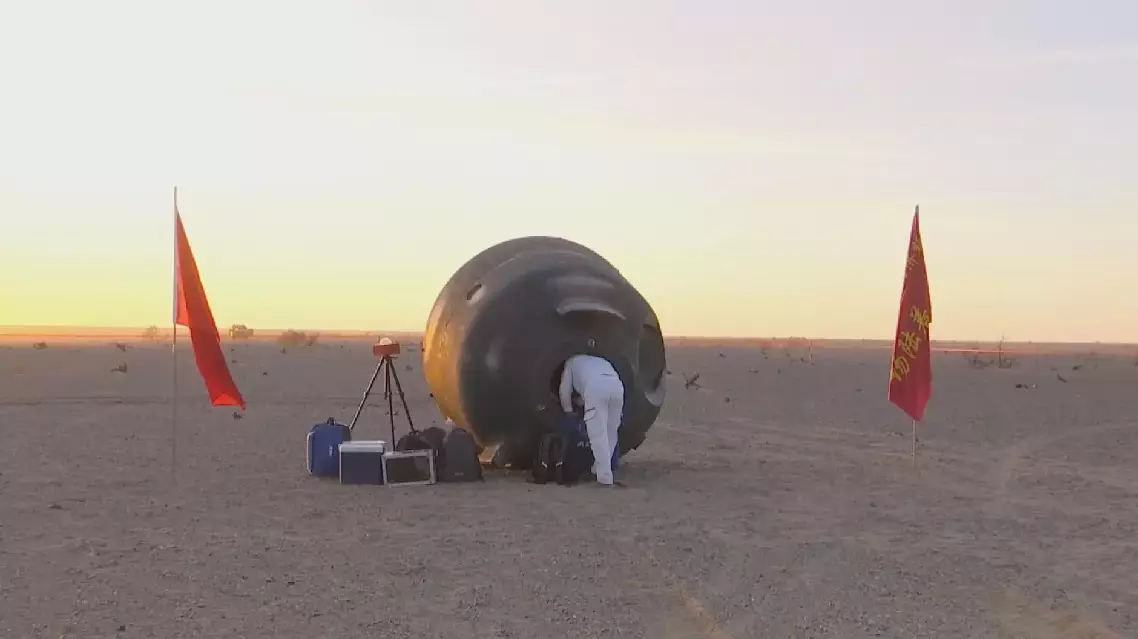
Final drill conducted at landing site for Shenzhou-21 crew's safe return
Visitors can now experience firsthand how artificial intelligence (AI) is reshaping future lifestyles at the newly opened AI Matrix Store "MetAI Hub" in Shanghai's Zhangjiang AI Innovation Town.
Opened on May 11, the nearly 2,000-square-meter space features more than 500 AI products from 100 brands. Unlike traditional "display-only" technology venues, the store encourages visitors to touch, test, and interact with the latest AI products.
The store houses six themed zones, including a curated product space, makers' workshops, and an AI health area. One of the most popular attractions is an AI health screening system that generates a rapid health assessment report within 90 seconds using non-contact sensing technology.
The store also functions as a makerspace for innovators, helping startups test products in real-life scenarios and shorten the time it takes to turn a concept into reality.
"Here we can see the advanced processing equipment, including 3D printer and laser engraver. We also have a highly experienced technical team that helps One-Person Companies quickly bring their ideas to life and conduct model testing," said Lan Chaoxiang, head of the Maker Area of MetAI Hub.
In addition, the AI Matrix Store aims to serve as a global launch platform for AI products and a gateway for startups expanding overseas.
"When their products are still in the prototype stage, we will build a complete funding mechanism for producers, allowing many global geeks to get a sneak peek. We also hope to combine online and offline channels for this overseas expansion platform," said Zhao Tongyang, an executive at the store.
Zhao said the store will be developed into an AI ecosystem center rather than a traditional retail outlet, combining experience, commerce, incubation, and social interaction.
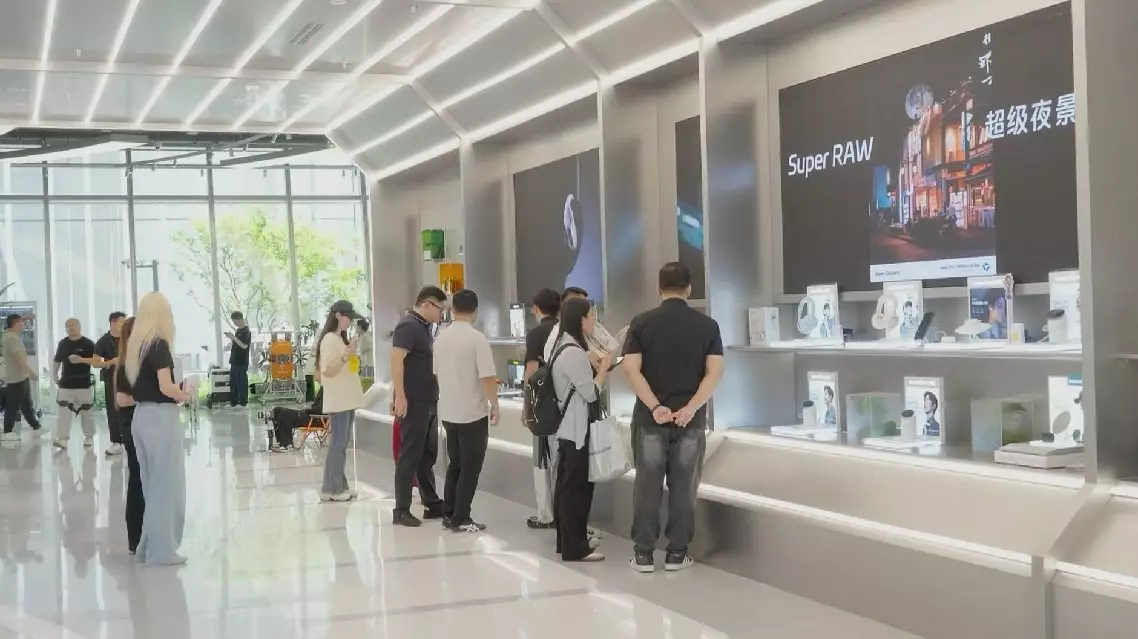
Visitors explore future lifestyles at newly opened AI store in Shanghai