The Network of Partner Cities in New Industrial Revolution was officially launched on Wednesday at the BRICS New Industrial Revolution Partnership Forum held in Xiamen, east China's Fujian Province.
The network was jointly initiated by 11 cities, including Durban in South Africa, Lagos in Nigeria, Belgrade in Serbia, Almaty and Astana in Kazakhstan, Kaposvar in Hungary, and the Chinese cities of Xiamen, Nanjing, Wuhan, Yinchuan and Chengdu.
The network's focus is on green and low-carbon development, digital transformation, industrial chain collaboration, and talent cultivation. It aims to create a new platform for international inter-city cooperation through regular communication mechanisms, industrial matchmaking and the sharing of innovation resources.
"Using cities as key nodes, we aim to build the Network of Partner Cities in New Industrial Revolution. This approach will enable precise alignment of local resource advantages and industrial needs, effectively integrate innovation resources and manufacturing capabilities, as well as market channels across cities. This will ultimately reduce the costs of cross-border cooperation for businesses," said Zheng Hong, director of the Center for International Economic and Technological Cooperation of the Ministry of Industry and Information Technology (MIIT) and director of the China Center for BRICS Industrial Competencies.
Jointly hosted by the MIIT and the Fujian provincial government, the forum includes an opening ceremony, a main forum, parallel sessions, as well as related events.
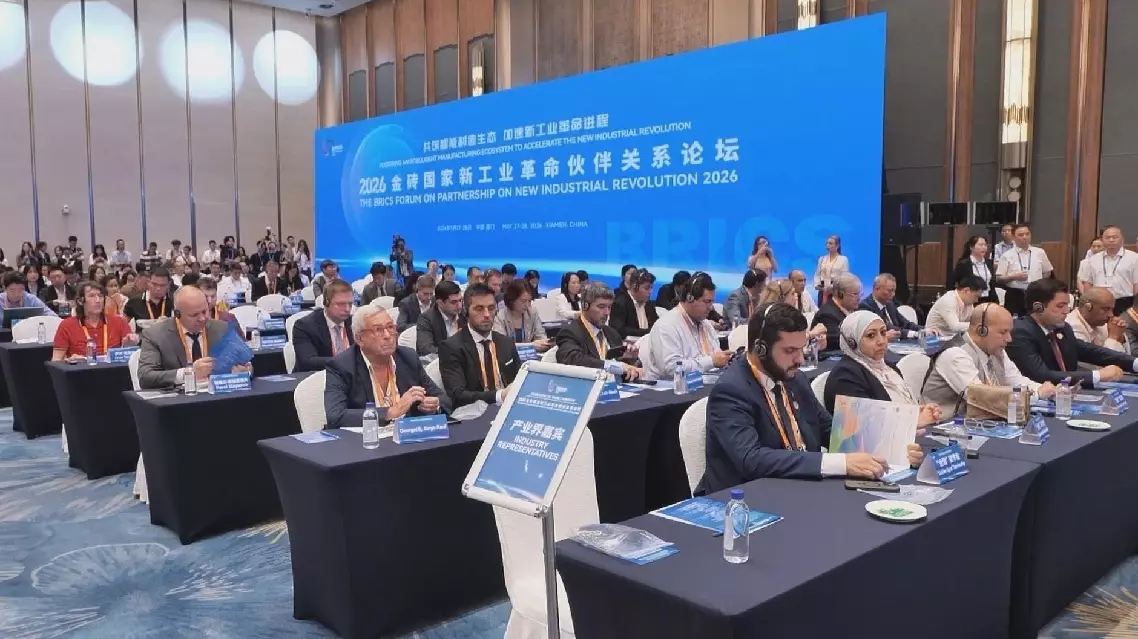
Network of Partner Cities on New Industrial Revolution launched at BRICS forum in Xiamen
China's industrial sales revenue grew steadily in the first eight months of this year, with equipment manufacturing and high-tech industries posting notable growth as new quality productive forces are cultivated at a faster pace, revealed the country's latest tax data released on Monday.
From January to August, the industrial economy maintained steady progress, with industrial sales revenue rising 7.3 percent year on year, according to the State Taxation Administration (STA).
Sales revenue in mining, manufacturing, and the production and supply of electricity, heat, gas and water grew 8.3 percent, 7.5 percent and five percent respectively, all maintaining relatively fast growth.
Equipment manufacturing continued to play a stabilizing role, with sales revenue up 10.1 percent year on year. In particular, sales revenue in computer and communication equipment manufacturing, electrical machinery and equipment manufacturing, and instruments and meters manufacturing grew 18.8 percent, 14 percent and 14.1 percent respectively.
Meanwhile, new quality productive forces were cultivated at a faster pace. In the first eight months, sales revenue of high-tech industries rose 15.7 percent year on year.
Among them, high-tech manufacturing sales revenue grew 18.9 percent, with AI-related sectors such as integrated circuits and intelligent vehicle-mounted devices up 67.7 percent and 38.8 percent respectively, the data showed.
In addition, the integration of the digital and real economies continued to deepen. From January to August, sales revenue of core industries of the digital economy grew 9 percent year on year, according to STA.
Sales revenue of digital product manufacturing and digital product services grew 16.6 percent and 11.1 percent respectively, reflecting the continuous improvement of digital industrialization.
Nationwide, corporate procurement of digital technology rose 8.6 percent year on year. In particular, the manufacturing sector increased investment in digital transformation, with its procurement of digital technology also growing from a year earlier.
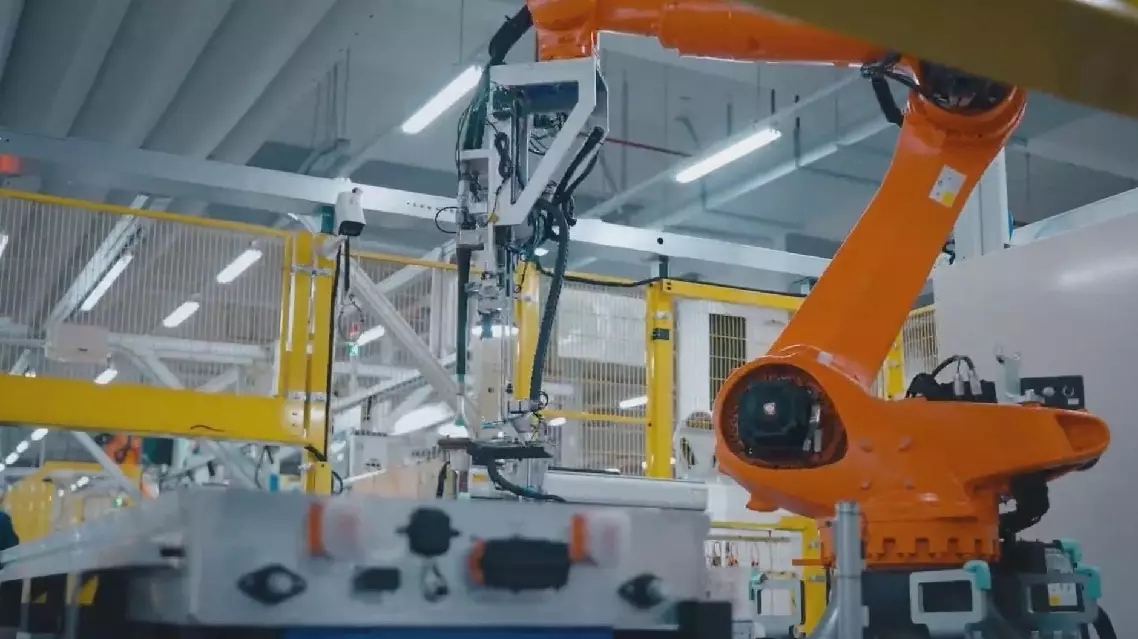
China's industrial economy grows steadily in first eight months