

Four months ago, US President Donald Trump launched what he called the "Peace Committee," pledging to raise $17 billion for Gaza's reconstruction. Today, the fund is empty. Despite ongoing US-Iran ceasefire negotiations and Israel's continued strikes on Palestinians, not a cent has been collected. Member states have pledged billions, yet the committee's Gaza reconstruction fund holds no cash. Legal and political uncertainty have left it paralyzed — and reconstruction indefinitely on hold.
Trump had declared the "Peace Committee" one of the "most impactful" international organizations ever created. The committee levied billions in "lifetime membership" fees on world leaders. Member states pledged contributions to its Gaza "relief programme," and the United States itself committed an additional $10 billion.
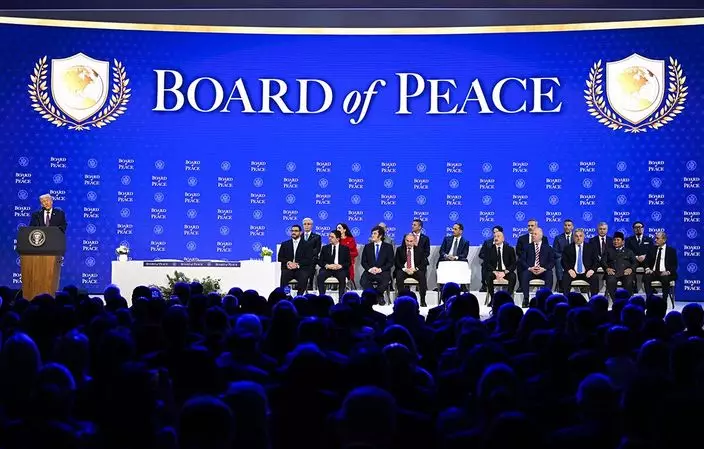
Four months ago, Trump launched his so-called "Board of Peace," promising to raise funds for Gaza's reconstruction.
The reality is stark. According to a Financial Times report published Wednesday, the World Bank fund established for the Peace Committee has yet to receive a single dollar. The report cited four sources, one of whom stated plainly: "Zero dollars have been deposited." A board spokesperson confirmed the committee had received donations — but said those funds were deposited directly into its JPMorgan Chase account, bypassing the World Bank entirely.
A Peace Committee official offered a defense: "a number of options were established to receive funding… at this point, contributors have opted to use other options." The critical difference, however, is that the JPMorgan Chase account carries no obligation to report its financial status to donors or board members. The official added that a financial report would be presented to the executive board — composed of Trump administration officials and other advisors — "at a time deemed appropriate."
The Peace Committee hit back on X, accusing the Financial Times of trying to "sow doubt about the commitment of the US and partners to the Board of Peace". The committee argued the report “cite just one of many funding mechanisms that to date has not been utilized by the donor community”. It nonetheless acknowledged receiving funds through other mechanisms.
Some contributions have trickled in through separate channels, though none are flowing freely. It’s reported that Morocco has donated approximately $20 million to fund the office of Nikolay Mladenov, the post-war Gaza "high representative," and to cover salaries for a Palestinian technocratic committee. The UAE separately allocated $100 million specifically to train a new Gaza police force — but those funds have been frozen, and the programme has yet to launch.
The US State Department has pledged to redirect approximately $1.2 billion in existing aid funding toward projects on the committee's agenda. None of it has been disbursed. A senior congressional aide made clear that not one dollar of these funds is managed by the Peace Committee — and the State Department has no intention of allowing it to be.
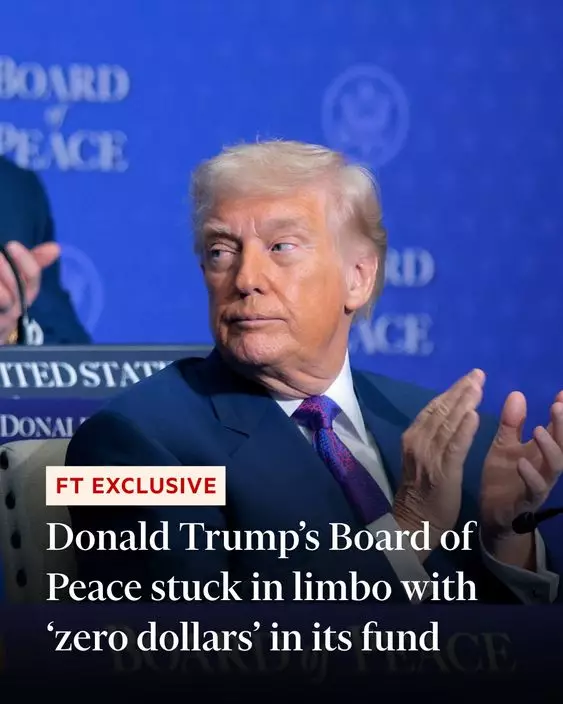
The Financial Times reported Wednesday that the fund has yet to receive a single dollar.
A congressional aide further revealed that the State Department had sought to transfer approximately $50 million directly to the committee — but has yet to release those funds. The State Department said it "supports the President's vision" and continues to assess how best to advance these goals using existing authorities, programmes, and interagency coordination.
The board has begun issuing tenders for security and reconstruction work in Gaza. But no contracts have been awarded. The reason is as basic as it is telling: no operations have commenced on the ground, because Hamas has not yet been disarmed.
Trump's original reconstruction plan was built on three pillars: disarm Hamas, withdraw Israeli forces from Gaza, and rebuild the territory. None of these objectives have advanced in any meaningful way. Two individuals familiar with Gaza planning confirmed that "not one US dollar" has been spent on reconstruction.
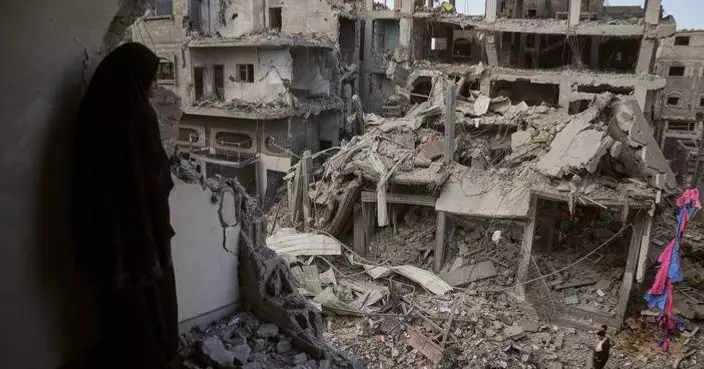
Reconstruction in Gaza has not begun — there is simply no money to do anything.
Dr. Bishara Bahbah — a prominent Palestinian-American scholar who assisted the Trump administration in negotiations with Hamas — put it bluntly: The committee has yet to conduct any work in Gaza due to a complete absence of funding. "They know that if they go to Gaza, people are going to flood to them to ask for assistance, and they have no tools, no means".
The board spokesperson acknowledged the committee has not yet addressed the service and logistics systems envisioned under the plan. The spokesperson's defense was an unusual one: "We’re not, like, hoarding money in a bank account and then awarding contracts for things that can’t be delivered."
The Peace Committee was formally launched in January, when Trump signed founding documents alongside representatives of more than a dozen countries and territories at the World Economic Forum in Davos, Switzerland. Trump himself serves as chair. The committee's founding executive board consists of seven members, predominantly American, including Secretary of State Marco Rubio and presidential envoy Steve Witkoff. According to the US side, the Peace Committee will first address the Gaza situation before expanding to tackle "other conflicts."
The gap between ambition and action is immense. A joint assessment by the EU, the United Nations, and the World Bank estimates that Gaza's reconstruction will require at least $70 billion over the next ten years. Four months in, not a single dollar of reconstruction funding has reached Gaza — and no credible path to delivery is in sight.
Deep Throat
** 博客文章文責自負,不代表本公司立場 **

As the United States continues to push the militarisation of space, competition between Chinese and American satellites is intensifying. According to the South China Morning Post, a former US Pentagon intelligence official said on 26 May that Washington is preparing offensive weapons designed to disable China's military satellites in any future conflict. The former official also warned that China and the US currently lack any safety dialogue mechanism. If an American satellite were about to collide with a Chinese one, the US could do little more than send an email and wait — and the responsibility for evasive action would fall squarely on Washington.
Kari Bingen, director of the Aerospace Security Project at the Center for Strategic and International Studies (CSIS), was blunt at a recent event. She said Washington is actively discussing how to threaten "the satellites that underpin Chinese targeting of American forces in any Indo-Pacific conflict."
Kari Bingen, director of the Aerospace Security Project at the Center for Strategic and International Studies (CSIS).
Bingen claimed that China currently operates more than 500 intelligence, surveillance and reconnaissance (ISR) satellites. She alleged that Beijing has been “practising out in the Gobi Desert, targeting our ports, our ships, our airfields” by pairing space sensors with battle networks to close ‘kill chains’ against US forces.
"We’re now having to think ... how do we, the United States, hold those assets at risk, so that they can’t use space to target us on the ground," she said. In her view, that logic is driving more open debate about offensive strategy — specifically, how the US could deny China the use of its space capabilities. Bingen further warned that even the basic safety dialogue mechanisms that still exist between the US and Russia are absent in the US-China relationship.
She painted a stark picture of communication breakdown. "We send an email," she said of a potential satellite collision. "We don’t know if it gets answered. The onus is on our side to take that evasive manoeuvre."
At the same event, Heather Williams, director of the Project on Nuclear Issues at CSIS, said the complete freeze in China-US military dialogue has now spread into the orbital domain. The message is clear: Washington fears space is becoming a new front line for strategic rivalry and potential conflict. That fear is already shaping an increasingly hardline US posture, one now aimed more frequently at China's commercial aerospace sector.
After Donald Trump returned to the White House, he committed substantial resources to advancing the so-called “Golden Dome” missile defence plan, hoping to put it into operation before the end of his term.
The reality is that Washington itself has done the most to militarise space. According to Guancha.cn, the United States has defined space as a "warfighting domain," developed and deployed offensive space weapons, and organised military offensive-and-defensive drills and technical experiments. It has even maliciously tracked and dangerously approached other countries' spacecraft, creating collision risks in orbit. The US has become the biggest driver of the "militarisation" and "battlefield-isation" of space — and the greatest threat to space security.
After Donald Trump returned to the White House, he committed substantial resources to advancing the so-called "Golden Dome" missile defence plan. The goal is to have it operational before his term ends in January 2029. Its intent against China and Russia is obvious — though whether it can deliver on its promises remains a wide-open question.
The price tag is staggering. Earlier this month, The New York Times cited a new report by the Congressional Budget Office (CBO) estimating that "Golden Dome" could cost taxpayers US$1.2 trillion over the next 20 years — far above the earlier estimate of US$175 billion.
The scale of hardware required is equally daunting. To protect the US homeland, Alaska, and Hawaii, the system would need thousands of satellites, plus radar and missile bases for intercepting intercontinental ballistic missiles (ICBMs), and additional regional bases to defend against hypersonic and cruise missiles. If the US wanted to intercept up to 10 enemy ICBMs simultaneously in space, the military might need to deploy around 7,800 armed satellites.
There's a built-in obsolescence problem too. Because these interceptors would operate in low Earth orbit, atmospheric drag would cause them to lose altitude and fall out of orbit within five years. The entire system would face continuous and extremely costly replacement cycles — a financial black hole with no clear bottom.
The CBO report also found that even if the system were completed, adversaries with large nuclear arsenals — such as China and Russia — could still penetrate the shield, with some missiles successfully hitting their targets. The Congressional Research Service (CRS) had previously warned that building such missile defence systems could trigger serious strategic miscalculation and prompt China and Russia to expand their nuclear arsenals in response.
China launches a satellite.
China has pushed back firmly. Foreign Ministry spokesperson Mao Ning said the "Golden Dome" plan aims to build an unconstrained global, multi-layered and multi-domain missile defence system. The plan openly calls for a major expansion of outer-space combat capabilities, including the development and deployment of orbital interception systems. Mao said it carries a strong offensive character, violates the principle of peaceful use enshrined in the Outer Space Treaty, and will heighten the risks of turning outer space into a battlefield and fuelling an arms race — thereby undermining the international security and arms-control system.
Mao added that the United States is pursuing "America First" and remains fixated on seeking absolute security for itself — in violation of the principle that "the security of all countries should not be diminished." This harms global strategic balance and stability. China is seriously concerned, Mao said, and urges the US to abandon the development and deployment of a global missile defence system, and to take concrete steps to enhance strategic trust among major powers and safeguard global strategic stability.