A mysterious rumor circulates through Washington's political and business circles as we speak. The ace warship Donald Trump originally intended to use for a major assault on Iran's oil lifeline mysteriously disappeared midway through its journey for over a hundred days. This bizarre vanishing act has left even Pentagon insiders tight-lipped.
The drama began in March of this year. Trump repeatedly threatened to "completely obliterating" Kharg Island if Iran refused to reopen the Strait of Hormuz and sign a new agreement. This island serves as Iran's economic lifeline and handles about 90 percent of the country's crude oil exports. If captured by the US military, it would trigger an immediate financial collapse for the Iranian regime.
Click to Gallery
Kharg Island: Iran’s strategic crude oil export lifeline.
USS Boxer: US military’s core island-capturing warship.
The Delay: Propulsion failure strands USS Boxer in June, delaying mission.
The Challenge: Complex maintenance heavily delays open-sea deployments.
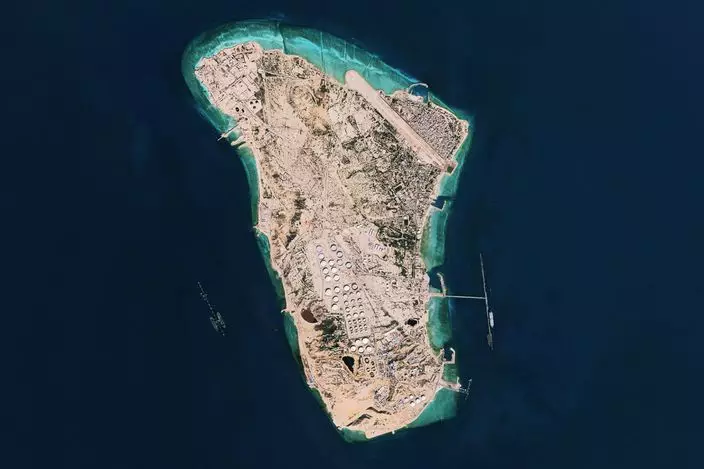
Kharg Island: Iran’s strategic crude oil export lifeline.
The US Navy responded on March 19 with a high-profile deployment of its most powerful island-capturing ace. The USS Boxer amphibious assault ship departed from the San Diego naval base in California with 2,500 fully armed Marines and sped toward the Middle East. Global media naturally speculated that a genuine amphibious landing was imminent.
This warship is no ordinary vessel. The USS Boxer measures over 250 meters in length with a displacement exceeding 40,000 tons, making it comparable to a light aircraft carrier. It can rapidly deploy M1A2 main battle tanks alongside heavy armored vehicles when fully loaded with 2,500 Marines. The ship also features a field hospital and an ocean-going command center.
It remains the only main surface combatant in the US military's beach landing system capable of executing heavy-duty island-capturing missions. Aircraft carriers merely drop bombs, while destroyers only fire shells. The entire US military relies on this single ship to actually deploy troops onto foreign shores and occupy territory. Iran had anticipated this move early on and stood in strict readiness for a direct confrontation with the USS Boxer.
The reality is far less intimidating. Sources close to the military recently leaked information revealing that the USS Boxer went completely silent after passing through the Strait of Malacca. The massive warship repeatedly delayed its appearance in the combat zone. Whispers within small circles suggested that the ship's core propulsion system was completely crippled.
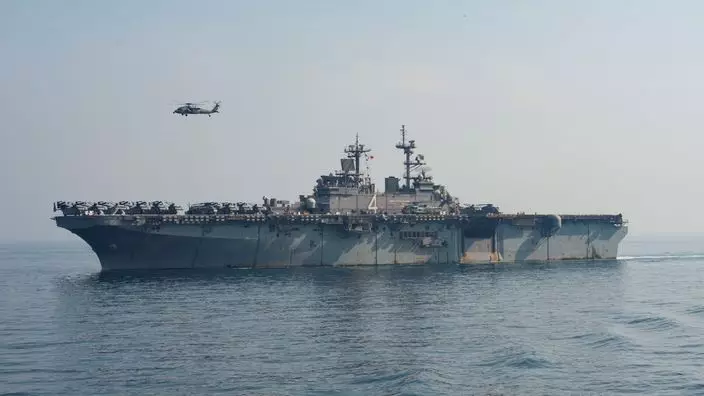
USS Boxer: US military’s core island-capturing warship.
Its speed reportedly dropped below that of a common fishing boat. The catastrophic failure forced the vessel to undergo on-site repairs on an isolated island in the Indian Ocean. The ensuing delay stretched for over 100 days and rendered the original landing timetable completely obsolete.
The US military's only frontline ship capable of executing an island-capturing mission practically evaporated at the most critical moment. Trump's bold claim to destroy Kharg Island was likely doomed to fail from the very beginning.
The truth finally emerged on July 9. The American news website Newsmax published an exclusive report citing three officials that confirmed the USS Boxer did indeed experience a malfunction. A problem with the main circulation pump of the engine cooling system forced the ship to undergo repairs and await spare parts at the joint US-UK base in Diego Garcia in the Indian Ocean.
The official version naturally avoided verifying the specific number of days rumored by the public. However, US officials themselves confirmed the malfunction, removing any doubt of unilateral speculation. The US has yet to provide a complete timeline detailing the exact delay or the true severity of the breakdown. Washington offered only a relatively downplayed explanation, keeping the exact truth closely guarded.
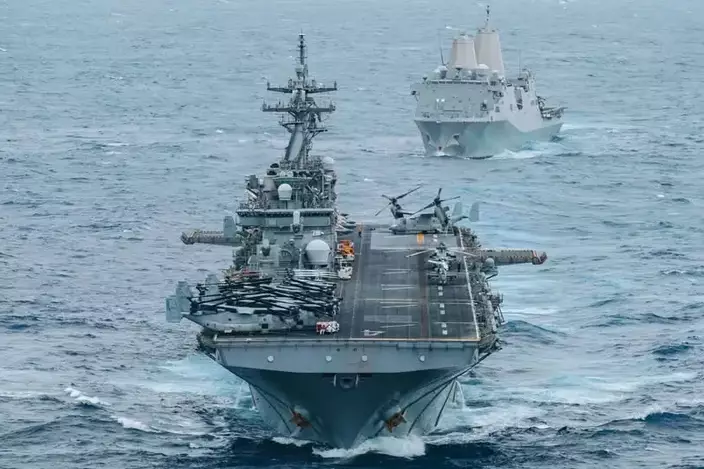
The Delay: Propulsion failure strands USS Boxer in June, delaying mission.
The ordeal of the USS Boxer is hardly an isolated incident. Higher-level official documents had already sounded the alarm well in advance. A 2024 report by the US Government Accountability Office explicitly pointed out that half of the 32 large amphibious ships currently active in the US military are in a state of poor readiness. Five out of the seven Wasp-class amphibious assault ships are actively experiencing issues.
General Eric Smith, Commandant of the US Marine Corps, previously admitted to Congress that the shortage of amphibious ships has reached a crisis level. He estimated it would take at least 10 years to resolve this systemic decline. The aging and low readiness rates of the US amphibious fleet are fully confirmed by the highest levels of the US military.
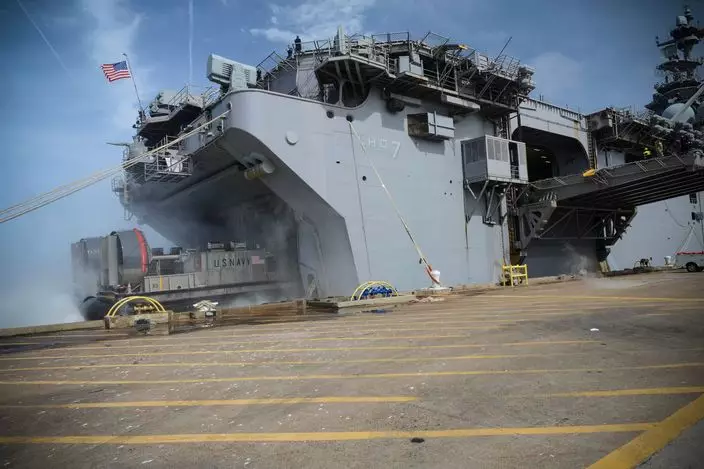
The Challenge: Complex maintenance heavily delays open-sea deployments.
The timing of these events is particularly intriguing. Trump suddenly acted out of character on June 11, right around the time the USS Boxer reportedly broke down. He announced the cancellation of a bombing operation against Iran scheduled for that very evening. He claimed that Iran's supreme leadership had approved the final terms of a new agreement, temporarily resolving the Strait of Hormuz crisis.
Less than three months passed between his bold claims to destroy Kharg Island and his hasty cancellation of military action. This pivot perfectly overlaps with the USS Boxer's maintenance cycle while stranded in the Indian Ocean. Trump likely knew he had no available forces left and resorted to diplomatic rhetoric to save face.
The key point is that an aging warship with over 30 years of service became the last straw for the US military's amphibious island-capturing capabilities. This fragile straw snapped at the most critical moment, suggesting the underlying truth is far more complex than the public narrative.
Washington remains eager to drop threatening rhetoric on social media to intimidate its adversaries. Yet, its actual execution capabilities fall dramatically short of even the most basic deployments. American hegemonic confidence is simply no longer what it used to be, a reality the Pentagon dares not answer directly.
Deep Throat
** 博客文章文責自負,不代表本公司立場 **
Brussels has evidently decided that targeting electric vehicles, steel, and chemicals just isn't enough. In a bizarre escalation, the EU is now dragging its trade war with China straight to the dinner table, turning Peking duck into the latest casualty.
The European Commission announced a full anti-dumping investigation into Chinese duck meat products, effective immediately, and left the door open to punitive tariffs. It also ordered mandatory customs registration for all Chinese duck meat entering the EU. This marks the first time in recent years that Brussels has extended trade barriers to a Chinese agricultural product. Analysts see it as possible payback for China's anti-dumping duties on European cognac imposed in May 2025, a sign that the EU-China trade dispute has now reached the dinner table.
According to the Commission's notice, China's duck production and cross-border sales benefit from policy intervention and multiple layers of subsidy. That support, Brussels argues, has driven a flood of cheap, oversupplied duck meat toward European markets. The influx has hit local farmers hard and undermined existing market mechanisms while eating into the EU's domestic industry. If the allegations hold up, the EU could impose tariffs on Chinese duck meat products.
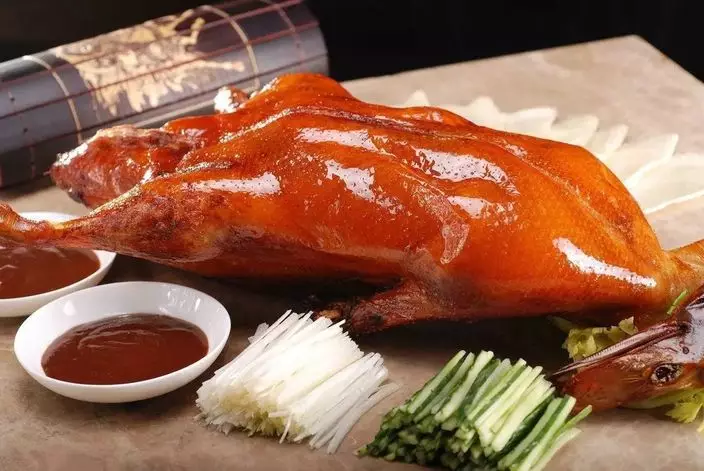
The Commission's investigation into Chinese duck products could affect the raw materials behind China's signature Peking duck dish, with punitive tariffs not ruled out.
The Financial Times reported on July 10 that this is the EU's first extension of trade barriers into the Chinese agricultural sector in recent years. Previous EU protectionist measures against China focused mainly on industrial goods such as electric vehicles, steel and chemicals. The latest dispute is expected to further strain EU-China relations.
EU officials have repeatedly warned that the bloc's trade deficit with China is widening and now stands at roughly one billion euros a day, calling the trend unsustainable. Tensions between the two sides are already running high. Brussels has signaled that it will take further action if no progress is made on trade issues by October this year.
The European Commission says China rears the well known Pekin duck, the raw material for Peking duck dishes. Farmers benefit from subsidies tied to the national five year plan, low interest loans and cheap soybean feed. The Commission states the investigation stems from a complaint filed by five EU duck producers, who allege Chinese export prices for duck meat are below market levels and are damaging the EU industry. If the allegations are proven, the EU could impose tariffs on imported duck meat, whether fresh, frozen or smoked.

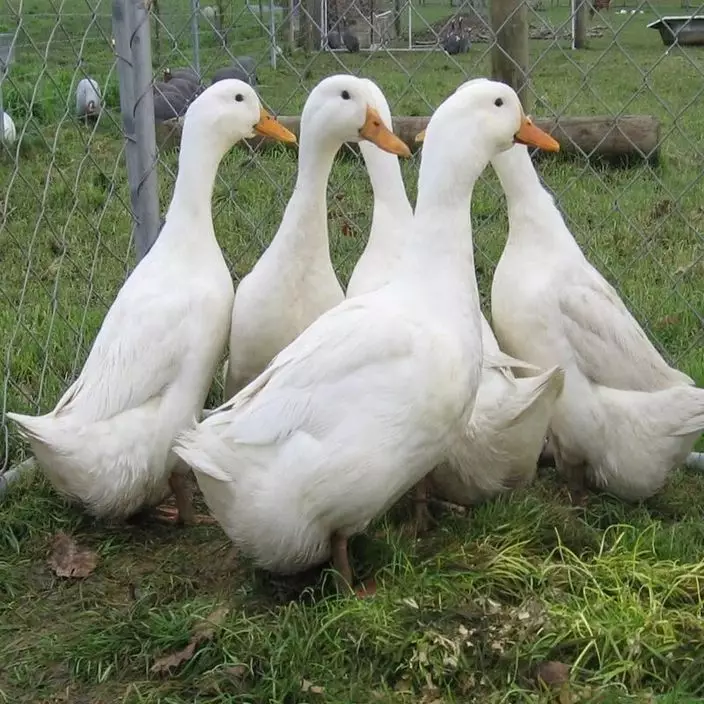
Pekin ducks have been raised in Europe and the United States for some 400 years.
Pekin duck sits at the center of this trade dispute, and it comes with centuries of history. The breed is known for its large size, fast growth and well distributed fat, traits that have made it a mainstay of modern duck meat farming. Pekin ducks were introduced to Europe and the United States some 400 years ago and remain one of the most important breeds in commercial duck farming today.
John Clarke, a former senior agricultural trade negotiator for the EU, finds the timing of the probe highly curious. He points out the absurdity of targeting such an iconic would likely provoke a strong response from both producers and authorities in Beijing.
Clarke also points to the odd timing given the EU's push to register Peking duck as a Geographical Indication (GI) product, which would tie the product's identity to its place of origin and bar non-Chinese producers from using the name. He warns that Beijing and Chinese companies may view the probe as retaliation for the earlier anti-dumping measures on cognac, another iconic European product, and could strike back. Producers of Italy's Prosecco, he adds, should be nervous.
Financial Times figures citing the UN Food and Agriculture Organization show China produces 4.8 million tonnes of the 5 million tonnes of duck meat made worldwide each year, about 96 percent of global output. The EU's duck meat market was worth 800 million euros in 2025, of which 199 million euros came from Chinese imports.
China accounts for 4.8 million of the 5 million tonnes of duck meat produced globally each year, about 96 percent of world output.
Chinese outlet Observer, however, notes that the EU is not actually a major market for Chinese poultry exports. In recent years, poultry exports from the Chinese Mainland have flowed mainly to Japan, South Korea, Hong Kong and Southeast Asia. The EU market only developed gradually after Brussels resumed imports of Chinese poultry in 2019.
This is not the first duck related trade dispute between China and the EU. In 2015, China requested consultations with the EU over its poultry tariff quota management measures and initiated World Trade Organization dispute settlement proceedings. In 2017, a WTO panel ruled that the EU's tariff quota allocation for duck products violated WTO rules.
To implement the ruling, China and the EU held multiple rounds of talks and signed an implementation agreement in November 2018. The deal set an annual country specific tariff quota of 6,600 tonnes for cooked duck meat from China, with a 10.9 percent tariff rate within the quota and a levy of 2,765 euros per tonne on volumes exceeding it.
The agreement ended the previous arrangement under which Chinese duck meat competed for quota alongside other exporting countries, and it created more stable conditions for Chinese duck meat to enter the EU market.
On June 29, Chinese Commerce Minister Wang Wentao met with EU Trade Commissioner Maros Sefcovic. Both sides agreed to establish a trade and investment dialogue mechanism, aiming to resolve bilateral economic and trade differences.
After the talks, Sefcovic said that if no progress is made on narrowing the trade imbalance by October this year, the EU will take further measures.
Friction between China and the EU has been building for years. Brussels has launched anti-subsidy and anti-dumping measures against Chinese products including electric vehicles, while Beijing has opened anti-dumping investigations into EU pork, dairy and French cognac. This latest probe shows the dispute is now spreading into agricultural products.
Under EU procedure, the investigation is expected to run for about a year, and even if dumping is confirmed, the EU still needs support from a majority of member states before formally imposing anti-dumping measures.