
Something telling happened in the Japanese parliament recently. A lawmaker said something the government found deeply uncomfortable — something that happened to be true — and was promptly accused of making a gaffe. What she said inadvertently laid bare the Self-Defense Force's most glaring embarrassment, setting off a storm of public debate.
A Parliamentary Question That Triggered a PR Crisis
Koga Chikage, a Constitutional Democratic Party (CDP) member of the House of Councillors, spent over 30 years teaching at primary and secondary schools in Fukuoka Prefecture. On June 15, she appeared before the Senate Budget Committee to question Defense Minister Koizumi Shinjiro on a children's booklet produced by the Ministry of Defense “Easy to Understand! Japan's Defense”.
The booklet tells Japanese children that the military capabilities of China, North Korea, and Russia pose a security threat to Japan and its surroundings.
Koga raised a concern: Japanese schools have children from China, North Korea, and Russia too — would content like this hurt their feelings? She asked the government to explain whether the feelings of these children had been considered when the materials were written.
This was never going to sit well with Japan's conservative commentariat. Yet for those who believe peace matters more than confrontation, the question itself was entirely reasonable.
Then came her second remark — the one that blew up in her face: "Children from economically disadvantaged families join the SDF." She added, "No children from rich families become SDF members."
The chamber erupted. Koizumi Shinjiro seized the moment: Koga had spoken at length about concern for the feelings of Chinese children — but didn't her remark that "only poor kids join the military" do precisely the same harm to the children of SDF members? Koga was left speechless, acknowledged her words were inappropriate, and retracted them.
By June 17, the fallout had escalated further. CDP party leader Mizuoka Toshikazu felt compelled to issue a public apology at an internal party meeting, stating that Koga's remarks had shown a "lack of consideration for the feelings of SDF personnel, their families, and those connected to them." The party expressed its deep regret.
The More People Criticize, the More the Numbers Stand Out
The incident spread rapidly across Japanese social media, with public anger zeroing in on Koga's alleged "discrimination against SDF personnel." While Japan was busy tearing itself apart online, one question went conspicuously unanswered: how much truth was there in what Koga actually said?
Japan's accelerating military expansion has been raising alarm across East Asia for some time. Since Abe Shinzo entrenched his "strong military" doctrine, Japan's defense budget has risen for 14 consecutive years. This year it breaks all previous records as Japan charges toward the 2% of GDP target demanded by the United States — a figure equivalent to Japan spending over HK$450 billion annually on armaments.
Military spending can be inflated year after year by parliamentary vote. Young people, however, voted differently.
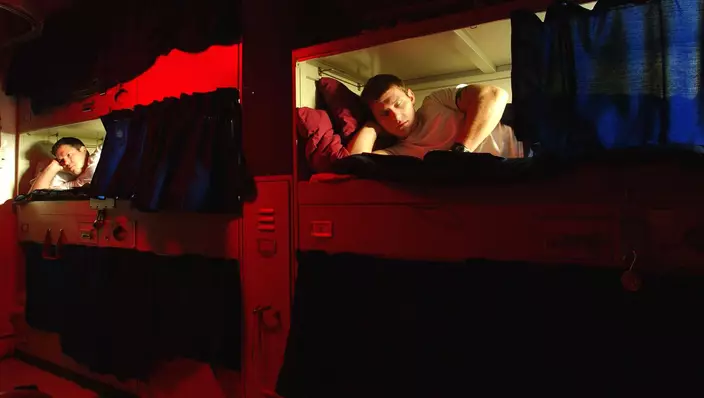
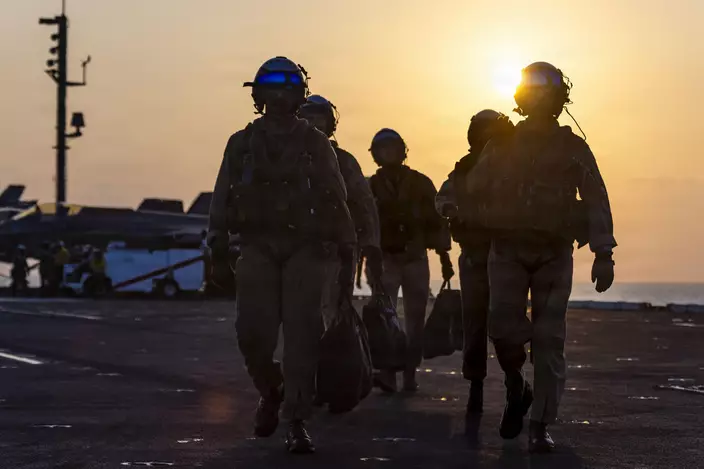
The Japan Self-Defense Force — Japan's military, which cannot be called an army under constitutional constraints — has repeatedly fallen short of its recruitment targets in recent years. In 2023, the annual recruitment goal was approximately 20,000; fewer than half were actually enlisted.
The shortfall has widened every year, and the overall headcount now sits more than 20,000 below approved strength. The Ministry of Defense's own documents have acknowledged that the recruitment environment remains "persistently severe" and that securing personnel has become "the paramount challenge."
The reason is not difficult to understand. Japan's labor market is acutely short-staffed across virtually every sector: convenience stores post hiring notices, logistics companies raise wages to poach workers, and tech firms offer premium salaries to attract talent.
Young people have no shortage of options. In this environment, persuading someone to give up relatively flexible employment and submit to rigorous military training and constant deployment readiness has become a markedly harder sell.
Young People Are Voting With Their Feet
The Ministry of Defense's official explanation for the recruitment crisis points to Japan's declining birth rate and shrinking workforce. The convenient thing about this framing is that it blames demographic structure, sparing the government from confronting a more uncomfortable question: Japanese young people are not without choices; they simply have not chosen the SDF.
Opinion polls have long pointed to a deeper contradiction. A JNN survey found that while 53% of the public say they support increasing defense spending, opposition jumps to 71% when the question is made concrete: "funding military expenditure through tax increases." People support having someone enlist, just not necessarily their own children. People back higher defense spending, just not if it comes out of their own pockets.
A teacher of over 30 years, instinctively remarking in parliament that "children from better-off families don't join the military" — however politically incorrect that statement may be in Japan's public discourse, the social reality it reflects was clearly not conjured from thin air.
The Ghost of Militarism Frightens No One
Japan's authorities show no sign of listening to what the public mood is telling them. Since the Abe era, Japan has been treading an ever more unmistakable path toward the rehabilitation of militarism: record-breaking defense budgets, renewed momentum to revise the constitution, and children's educational materials that openly portray neighboring countries as threats.
Figures such as Takaichi Sanae have repeatedly issued provocative statements, championing confrontation with scant regard for regional stability. China has on multiple occasions made its position unambiguously clear: the historical crimes of Japanese militarism are seared into the memory of the peoples of Asia, and any attempt to retrace that path is a betrayal of history and a threat to regional peace.
Defense budgets can be voted through parliament year after year. Children's booklets can be printed and distributed in thousands. But no law can compel young people to put on a uniform with any genuine willingness. Year after year, fewer Japanese young people are walking into recruitment offices. That, without question, is the most clear-eyed rejection that Japan's youth has delivered against the country's drive to rehabilitate militarism.
Deep Throat
** 博客文章文責自負,不代表本公司立場 **