
Trump lost his temper. During a phone call brokered in the context of his efforts to mediate a ceasefire between Israel and Lebanese Hezbollah — talks he desperately needs to keep alive to protect the ongoing US-Iran nuclear negotiations — he unleashed a profanity-laced tirade at Israeli Prime Minister Benjamin Netanyahu. He accused Netanyahu of ingratitude, ordered a halt to Israeli plans to strike Beirut, and warned that if Netanyahu pressed ahead, Washington would move to further isolate Israel on the international stage.
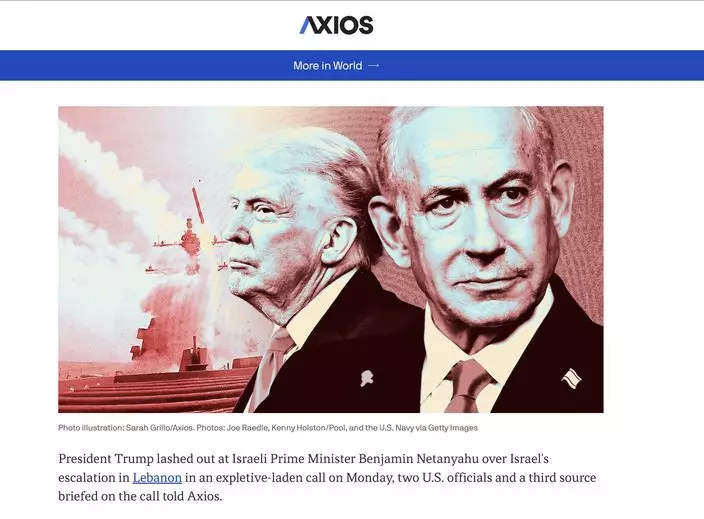
According to US media, Trump unloads on Netanyahu in expletive-filled phone call: accused him of ingratitude, and threatened to further isolate Israel on the international stage.
According to Axios, reporting on the afternoon of June 1 local time, two US officials and one source who knew about the call revealed what Trump told Netanyahu directly: "You're fucking crazy. You'd be in prison if it weren't for me. I'm saving your ass. Everybody hates you now. Everybody hates Israel because of this." Trump's reference to saving Netanyahu from prison alluded to the support he extended during the Israeli PM's ongoing corruption trial.
Click to Gallery
According to US media, Trump unloads on Netanyahu in expletive-filled phone call: accused him of ingratitude, and threatened to further isolate Israel on the international stage.
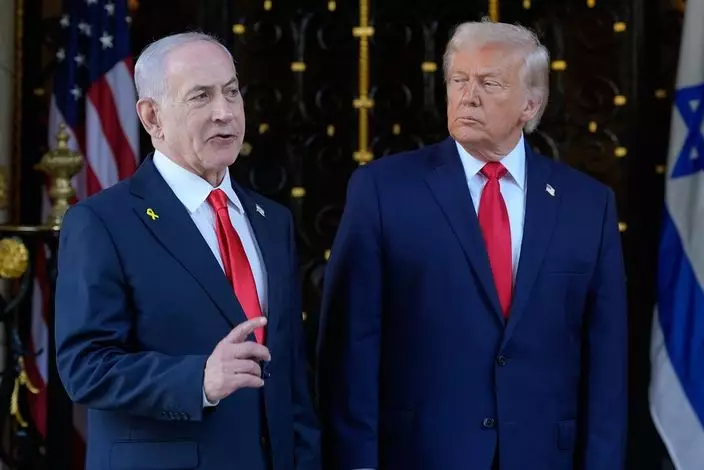
An official described the call as the worst between Trump and Netanyahu since Trump returned to the White House.
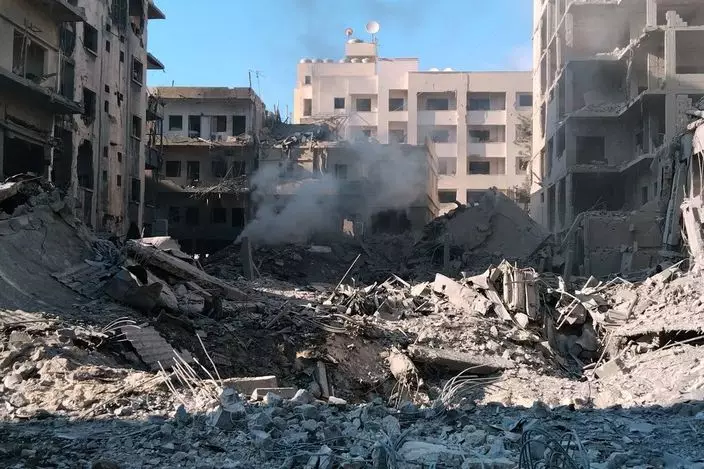
Israel escalates its bombardment of Lebanon.

In Sidon, a port city in southern Lebanon, rescue workers carry an injured person out of a damaged apartment building struck by an Israeli airstrike.
A second source familiar with the call added that Trump was "pissed". At one point, he shouted at Netanyahu: "What the fuck are you doing?"
An official described the call as the worst between Trump and Netanyahu since Trump returned to the White House.
One US official noted that Trump understood Hezbollah had been firing at Israel and that Israel had the right to defend itself. But in recent days, he felt Netanyahu had pushed the situation far beyond what was necessary. Beyond the threat to Beirut, Israel had also been expanding its ground operations in southern Lebanon.
Another US official said Trump was deeply concerned about the number of civilians Israel had killed in Lebanon. He objected to Israel demolishing entire buildings just to eliminate a single Hezbollah commander.
Trump and Netanyahu have had several tense calls in the past while still maintaining close coordination on Iran and other issues. But this one was different. One official described it as the worst call between the two since Trump returned to the White House. The fury stems from a clear strategic fear: Netanyahu's escalation in Lebanon risks derailing the US-Iran negotiations entirely. Iran had previously warned it would withdraw from talks with the United States if Israel continued its military operations in Lebanon.
After the call, Trump posted on his Truth Social platform, stating that the Iran negotiations were continuing "at a rapid pace", that Israel would not send forces into Beirut, and that Hezbollah had agreed to a ceasefire.
Netanyahu told a different story. In a statement issued after the call, he said he had told Trump that if Hezbollah did not stop attacking Israel, Israel would strike targets in Beirut. He added that military operations in southern Lebanon would continue, and emphasized: "This position of ours remain unchanged." Yet another US official contradicted that account entirely, claiming Trump had in fact "steamrolled" Netanyahu during the call. That official said: "Bibi (Netanyahu) said, 'OK, OK, just make sure everything is taken care of.'"
Earlier, Netanyahu and Defense Minister Israel Katz had issued a joint statement announcing that, given Hezbollah's "repeated and ongoing violations of the ceasefire," they had ordered the Israeli military to carry out airstrikes on the Dahiyeh district of Beirut. That announcement triggered a sharp reaction from Iran.
Israel escalates its bombardment of Lebanon.
Analysts have noted that the memorandum of understanding currently being negotiated between the US and Iran reportedly contains provisions for ending the conflict in Lebanon — a key source of the recurring friction between Trump and Netanyahu. The White House has not yet confirmed those claims.
The diplomatic fallout is widening fast. A source close to the negotiating team revealed that, in response to Israel's continued military operations in Lebanon and Gaza, the Iranian negotiating team has suspended its dialogue and text exchanges with the United States through intermediaries. Iran is now considering a full blockade of the Strait of Hormuz.
In Sidon, a port city in southern Lebanon, rescue workers carry an injured person out of a damaged apartment building struck by an Israeli airstrike.
On the afternoon of June 1 local time, the United Nations Security Council convened an emergency meeting on the Lebanon-Israel situation. Chinese Ambassador to the United Nations Fu Cong spoke at the session, stating that the situation had deteriorated sharply. Israel has expanded its military operations in Lebanon and continuously enlarged its so-called "security zone" — crossing the Litani River and occupying Beaufort Castle. This marks Israel's deepest military incursion into Lebanon in over two decades.
The Lebanon-Israel ceasefire has become a "ceasefire in name only." The international community must take urgent action before the situation slides into an even more dangerous abyss. He called on all parties to: immediately achieve a ceasefire and cessation of hostilities, and ease tensions; strengthen support for Lebanon to stabilize its domestic situation; and ensure that UNIFIL (United Nations Interim Force in Lebanon) can fulfill its mandate and safeguard regional stability.
Deep Throat
** 博客文章文責自負,不代表本公司立場 **