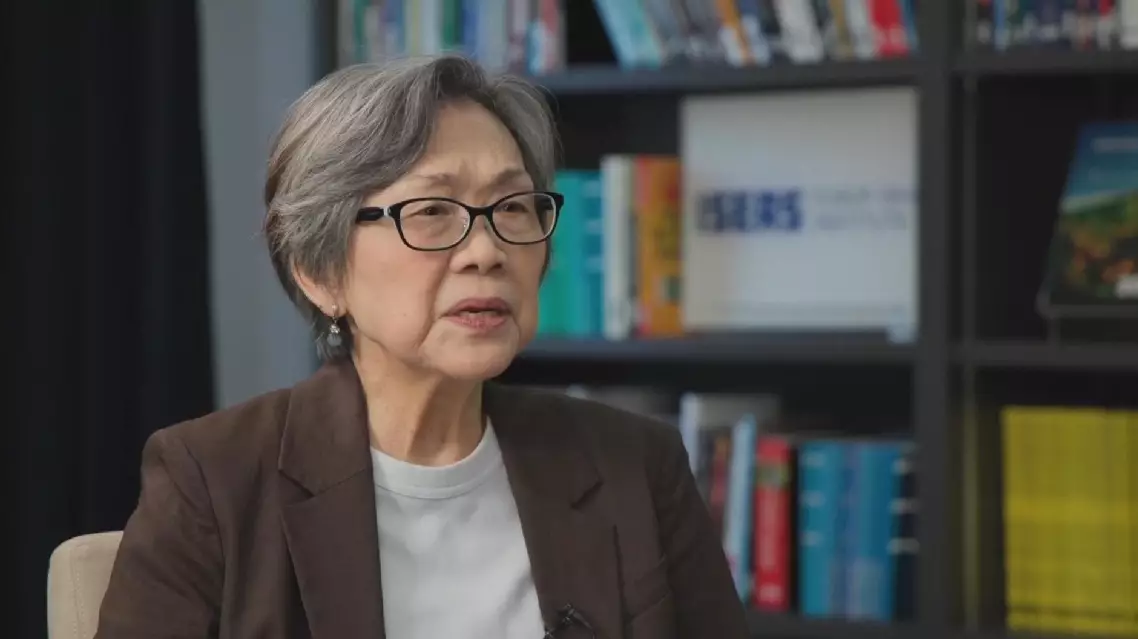
China possesses strong fundamentals that will continue to support its long-term development despite mounting global uncertainties, while middle-sized countries have an increasingly important role to play in safeguarding multilateralism and the rules-based international order, Singapore's Ambassador-at-Large Chan Heng Chee said in a recent interview with China Media Group (CMG).
Chan, who also serves as Global Co-Chair of Asia Society, said Singapore remains confident about China's future development prospects, citing the country's leadership, strategic planning, talent pool and innovation capabilities.
"In Singapore, we believe China will do well -- the trajectory in the future is upwards. This is because the fundamentals in China are right. You have good leadership. You have strategic plans, and you have educated people. I mean look at your innovation -- DeepSeek, Unitree Robotics, LLM model -- there are so many things. So, we see that trajectory," Chan said.
At the same time, Chan noted that countries around the world are facing a more complex international environment, with growing challenges to established international rules and institutions.
"But, you see, for all of us, and not just China, with our economic growth and our plans, we have to cope with a world where rules are increasingly being unraveled and attacked. We saw this happening. The trading rules -- WTO rules -- are being defied, and it can get contagious. And also, UN multilateralism -- the belief that in international law, you cannot just move into another country aggressively and take over the country -- I think, might become right. I think we are concerned, small countries, middle-sized countries, are concerned with that. And for countries like China, Singapore, other countries that want to grow economically, trading rules are changing, rules of investment are changing. So that may slow things a bit, but it doesn't stop the growth. And we try to work with it, work around it, and try in fact to create spaces, groupings, that still practice the rules," she said.
Asked about the need to defend multilateralism in trade and international law, including through institutions such as the World Trade Organization and the United Nations, Chan pointed to growing efforts among middle powers to strengthen coordination and cooperation.
"I do see, for instance, middle-sized countries who are allies of the United States want to come together a bit more so that they can have a Plan B, they can do things together just in case the United States chooses to lessen its role in NATO. And some middle powers are offering cooperation to countries in the region. And I would say middle powers when they stand up to speak for upholding the values of the multilateral system of the UN, that's very important and very useful," Chan said.
China to maintain upward growth trajectory despite global uncertainties: Singaporean diplomat