ASEAN Secretary-General Kao Kim Hourn said he is optimistic that ASEAN and China can conclude the negotiations on the South China Sea Code of Conduct (COC) this year.
In an interview with CGTN at the Shangri-La Dialogue 2026 in Singapore, Kao said both sides remain committed to advancing talks and stressed that finalizing the agreement serves the interests of ASEAN and China.
"We have been negotiating for the COC since 2017. And the goal was to conclude the COC negotiations within this year. Our member states on the ASEAN side and China have been working very hard together to conclude the COC. And I believe that we have a lot of confidence, I have a lot of optimism that we will be able to conclude this. It's for the interests of ASEAN in China to have the COC concluded. I think there's a commitment and there's interest there," the secretary-general said.
The push for the COC dates back to the early 2000s, following the 2002 Declaration of Conduct of Parties, a non-binding accord between ASEAN and China. The talks then stalled for years before regaining traction in 2017.
Kao also noted that special events will be held to mark the deepening ties between China and ASEAN.
"This year, what is important also I want to highlight is that this is the 5th anniversary of the ASEAN-China comprehensive strategic partnership. And we have to do a lot of activities in that regard. "
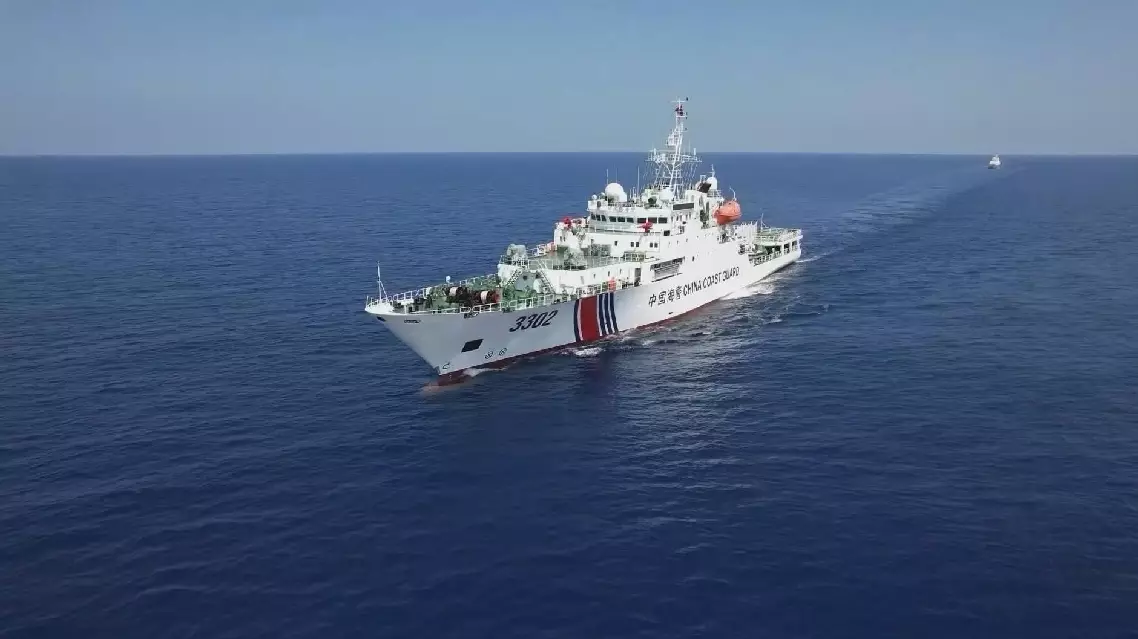
ASEAN chief expects conclusion of South China Sea COC negotiations this year
With the Pinglu Canal in the Guangxi Zhuang Autonomous Region officially open to shipping, Yangpu Port in south China's Hainan Province will fully leverage the policy and geographical advantages of the Hainan Free Trade Port (FTP) to accelerate its development into an international shipping hub, further connecting the New International Land-Sea Trade Corridor with global markets.
The canal stretches along the New International Land-Sea Trade Corridor, a strategic trade route connecting China's inland regions with ASEAN and other global markets. It is the first river-to-sea canal project planned and coordinated at the national level since the founding of the People's Republic of China in 1949.
Located in the northwest of the island province, Yangpu Port is the deep-water port closest to the main international shipping routes in the Beibu Gulf, and is also one of the maritime outlets of the New International Land-Sea Trade Corridor.
The opening of the Pinglu Canal to navigation has opened up a new sea-river intermodal transport corridor for goods entering and leaving the southwestern region, and has also brought new opportunities to some enterprises.
At a petrochemical enterprise in Danzhou City, robotic arms are bagging and packaging chemical products on a conveyor belt, and these goods will be shipped to southwest China's Guizhou Province and other places.
Most of this enterprise's customers in the Chinese mainland are concentrated in the southwestern Chinese provinces of Yunnan, Sichuan and Guizhou. At present, the enterprise is adjusting its future shipping plans in response to the logistics changes brought by the opening of the Pinglu Canal to navigation.
"We plan to shift about 70 percent of our goods to this new sea-river intermodal transport corridor, and overall logistics costs are expected to drop by 30 to 40 percent. Next year we also plan to build another plant in Hainan, which will allow us to take advantage of the free trade port's policies, import raw materials from places like Indonesia, and after processing, sell the products to the southwestern region or re-export them. This is expected to add about 200,000 tons of production capacity," said Wei Jianqiang, head of Hainan Oxiranchem Co., Ltd.
Behind the enterprises' expansion of production and the busier flow of goods, there is also the upgraded service support made possible by the opening of the Pinglu Canal to navigation. In this regard, the relevant authorities have also made full preparations.
"After the Pinglu Canal opens to navigation, we will strengthen safeguard measures in areas such as facilitating the entry and exit of container ships on fixed routes, credit-based regulation, and cross-regional coordination," said Jiang Yufeng, head of the Xiaochantan Maritime Patrol and Law Enforcement Brigade, Yangpu Maritime Safety Administration.
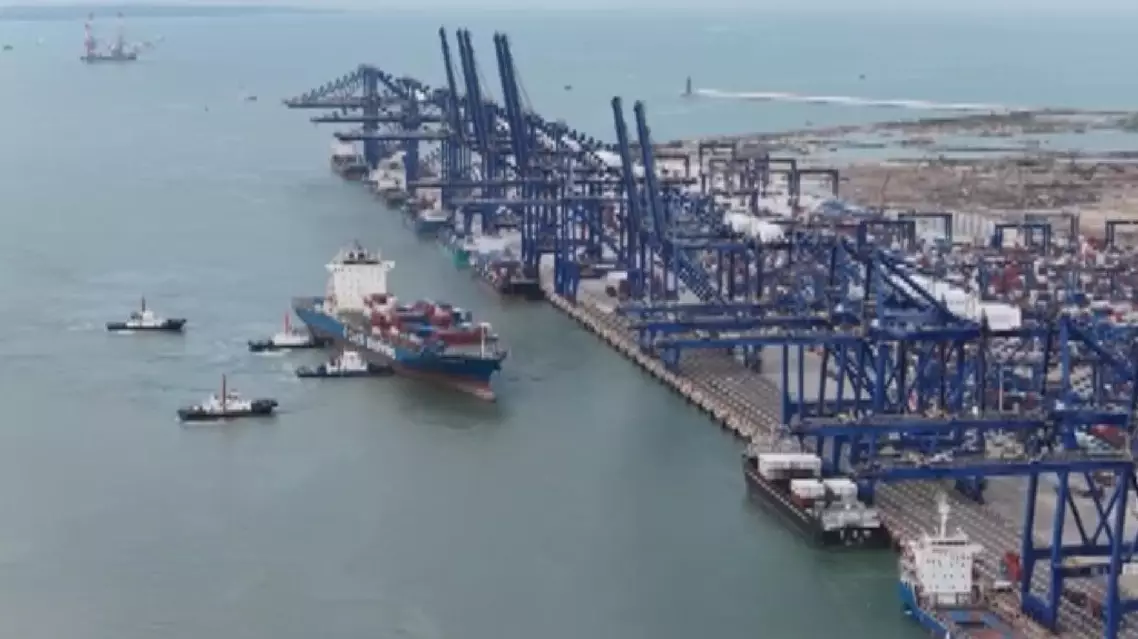
Pinglu Canal underscores growing role of Yangpu Port as int'l shipping hub