LAKE FOREST, Calif.--(BUSINESS WIRE)--Jun 1, 2026--
This press release features multimedia. View the full release here: https://www.businesswire.com/news/home/20260601134664/en/
Engineered for demanding, fast-moving settings, Toshiba's BX820T provides industrial professionals with the day-to-day reliability and consistency they require, along with a low total cost of ownership that finance departments appreciate.
Toshiba's cloud-enabled printing innovation delivers up to eight-inch media for standard and specialty labeling while supporting vellum, matted and glossy paper as well as synthetic and polyester film. The company's metal-reinforced printer produces clear and durable labels for oversize pallets, cartons, and drums, as well as product identification and regulatory compliance labeling (such as Occupational Safety and Health Administration, Environmental Protection Agency, and other local and regional regulatory agencies).
High Tech Labeling
Toshiba's latest label printer features a dual-core processor, powering both real-time and Linux operating systems, propelling the company's A-BRID ecosystem. Toshiba's A-BRID platform integrates multifunction printer technology with high-tech-laden hardware, enabling impressive print speeds (up to six inches per second) and advanced IT applications to deliver a premium labeling experience.
Effortless Integration & Management
Considering the BX820T printer's following attributes, integration and remote management are also a breeze.
Supports Global Sunrise 2027 Labeling Standard
Toshiba's BX820T printer additionally aligns with Sunrise 2027, the GS1 US-led (the worldwide standards organization for barcode labeling) initiative that is transitioning the retail supply chain from one-dimensional (1D) to two-dimensional (2D) barcodes. Optimized for 2D barcodes, the newly introduced Toshiba system enables organizations to feature far more sales and marketing information on their product labels while also allowing for faster scanning.
"Toshiba's new barcode printer provides warehouse, distribution center, horticulture and manufacturing professionals with a versatile product for producing larger labels and thicker tags on a diverse array of media," states Toshiba America Business Solutions Vice President of Marketing and Strategic Business Development Bill Melo. "By easily integrating within existing fleets as well as supporting the upcoming GS1 US initiative, our printer presents industrial professionals with an ideal solution today and in the future."
The Toshiba BX820T industrial label printer is now available from the company's authorized resellers, starting at the manufacturer's suggested retail price of $4,999. For more information, specs, or to find a reseller near you, please visit www.business.toshiba.com.
About Toshiba America Business Solutions, Inc.
Toshiba America Business Solutions is a leading innovator of solutions empowering people to perform efficiently and effectively in their work environment. Serving professionals across the United States, Mexico, and Central and South America, Toshiba delivers secure and sustainable systems, services, and subscriptions to better print, manage, and display information. Toshiba continuously focuses on its clients and communities, is committed to sustainability, and is recognized as a Wall Street Journal Top 100 Sustainable Company. To learn more, please visit business.toshiba.com. Follow Toshiba on LinkedIn, X (Twitter) and YouTube.

Toshiba America Business Solutions is tackling the comprehensive and ruggedized labeling needs for warehouse, distribution center, horticulture and manufacturing professionals with the introduction of its new high-performance industrial printer.
NEUILLY-SUR-MARNE, France (AP) — Therapy donkeys are helping patients with mental health conditions recover in a psychiatric hospital unit outside Paris that's unique to France.
The 19th century farm buildings and wooded surroundings are a haven within the Ville-Evrard hospital complex in Neuilly-sur-Marne. On Friday, patients took the five donkeys for a walk and cared for them. Some confidently lifted their hooves to remove dirt. Many ended the session with a hug.
The couple behind the program say more scientific evaluation is needed of animal therapy, which is practiced around the world. They would like it to be formally recognized by the psychiatric community as a complementary form of care, citing their experience with patients and caregivers.
“It brings relief,'' said Nathalie, a 60-year-old patient. ‘’You stop thinking about everything else." She and others were identified by their first names only in accordance with French medical privacy rules.
Patients attend the sessions free of charge as part of their treatment, which is funded by France’s public health system.
Participants are usually paired with a donkey — Nono, Pitou, Oscar, Manolo or Malraux. Over time, they become familiar with each other’s personalities.
Audrey Seffar, a nurse at the animal therapy unit, said Nathalie's progress after only a few sessions was significant.
“At first, she wouldn’t get out of the cart (provided for people with physical difficulties). But little by little, with encouragement, she did," Seffar said. "The animal serves as a mediator. It’s such an extraordinary one that today she was able to leave the cart and stand beside her donkey."
Another patient, Jérôme, 52, said the program helps reduce his loneliness.
“Talking with people, taking part in activities I wouldn’t normally do, it helps me in my daily life,” he said.
He added, “It helps you break away from the routine of treatment and medication. Staying at home isn’t good for me.”
The first donkeys arrived at Ville-Evrard hospital in 2016 as part of a project launched by Ermelinda and François Hadey.
Ermelinda, a nurse specializing in psychiatry, strongly believed in animal therapy benefits and thought donkeys, known for their calm and social nature, would be perfect. Her husband learned how to train donkeys for therapy work. Some of the animals were adopted through shelters after experiencing neglect or mistreatment.
“A donkey is very intelligent. It understands things very quickly, but you have to explain slowly,” François Hadey said. “Donkeys are calm, serene animals that are generally close to people. Once they’re involved in these interactions, they connect very well with patients. They’re emotional sponges.”
Since 2022, the animal therapy program has had official status as a healthcare unit in the hospital, allowing it to employ three full-time nurses. Volunteers with a nonprofit group help care for the animals.
The program has expanded to include guinea pigs, chickens, doves, goats, turtles and rabbits. Sessions are tailored to people’s needs and preferences, and smaller animals can be brought to hospital rooms.
Alicia Fabi, an 18-year-old nursing student, said the activity gives patients a chance to leave the hospital environment.
“Every time we come back from the activity, they say they feel good, calm and relaxed, and that they enjoyed the outing. That’s really positive,” she said.
Walking together also allows patients and health workers to develop a deeper relationship.
“We talk about many different things, their illness, their lives and just about everything else. We don’t focus only on the illness because we don’t want them dwelling on it all the time,” Fabi said.
Health workers say the sessions are designed as therapeutic interventions for living with anxiety, depression, autism, schizophrenia or other conditions. Staff said they can help improve emotional regulation, communication, social interaction and self-esteem.
“Everything we do with the animals allows us to work with the patient,” Ermelinda Hadey said. “We work on feeding the animal, which helps us address the patient’s own eating habits. We work on the animal’s hygiene, and by mirror effect, we work on the patient’s hygiene as well.”
Many patients take intensive treatments, including antipsychotic medications or sedatives, which can make it difficult to find the motivation to participate in activities, she said. That’s where the relationship to donkeys and other animals play a role, she stressed.
“It does not replace a doctor or a medical prescription, but it can help patients regain confidence and a sense of self-worth," Hadey said.
To get animal therapy formally recognized, she said, ‘’We need research. We have plenty of accounts from patients ... Caregivers who accompany them see the benefits every day as well. But doctors have so many other responsibilities that they don’t necessarily witness it firsthand."
At the end of Friday’s session, as patients chatted, a nurse summed up the program’s appeal: “Donkeys are my best colleagues.”

Patients with mental health conditions, assisted by staff members and volunteers, participate in a therapy session involving donkeys at a psychiatric hospital in Neuilly-sur-Marne, in the eastern suburbs of Paris, Friday, May 29, 2026. (AP Photo/Thomas Padilla)
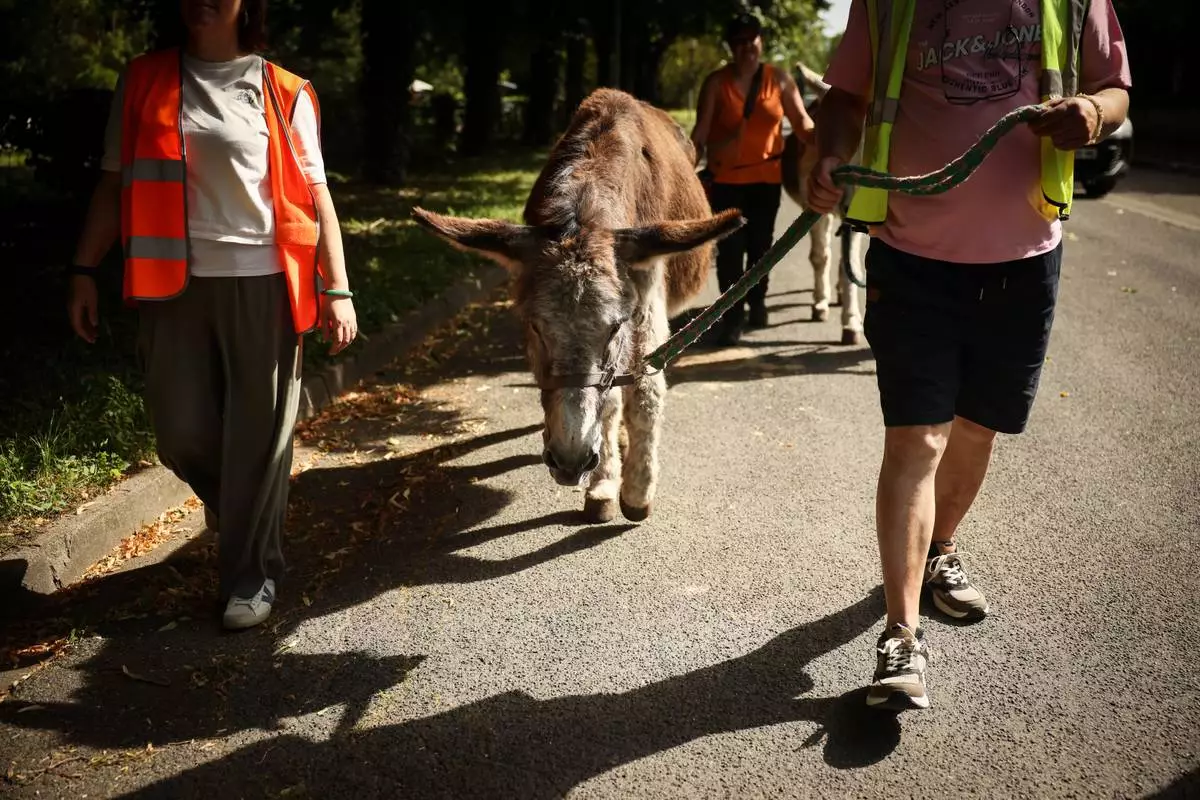
Patients with mental health conditions assisted by staff members and volunteers participate in a therapy session involving donkeys at a psychiatric hospital in Neuilly-sur-Marne, in the eastern suburbs of Paris, Friday, May 29, 2026. (AP Photo/Thomas Padilla)
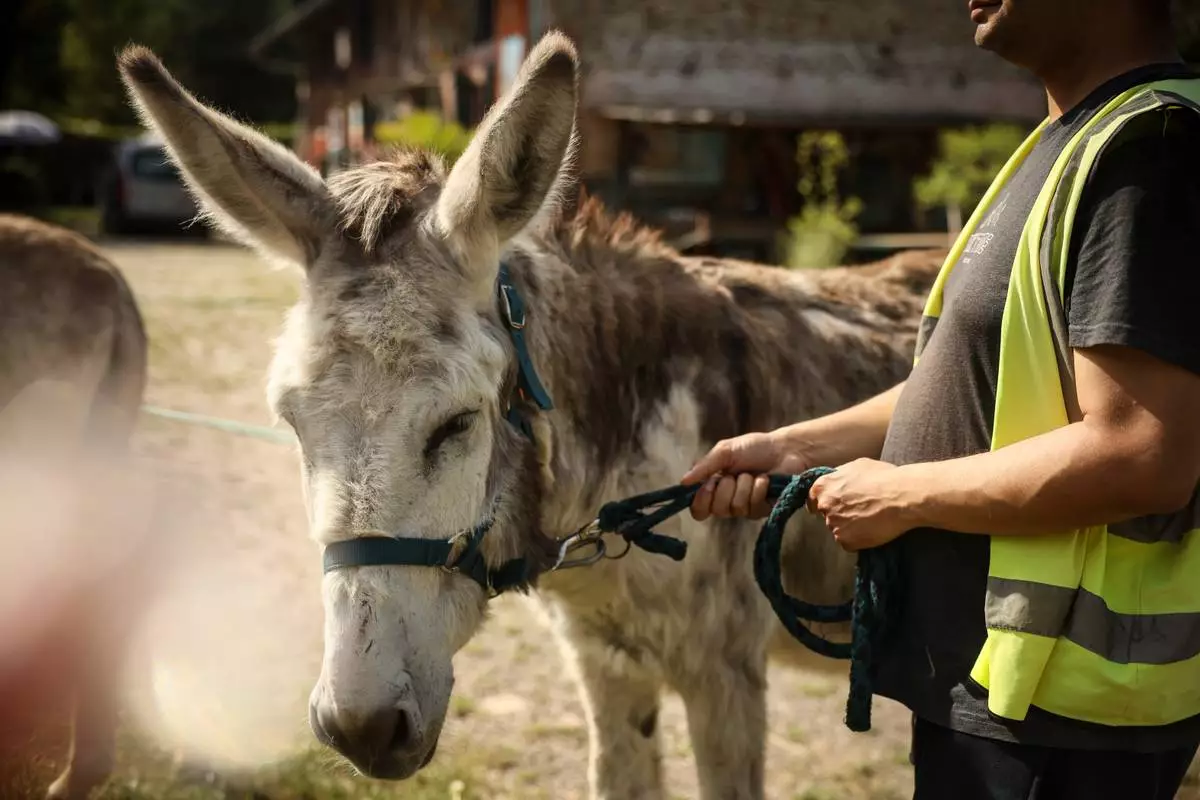
A patient with mental health conditions participates in a therapy session involving donkeys at a psychiatric hospital in Neuilly-sur-Marne, in the eastern suburbs of Paris, Friday, May 29, 2026. (AP Photo/Thomas Padilla)

A patient with mental health conditions participates in a therapy session involving donkeys at a psychiatric hospital in Neuilly-sur-Marne, in the eastern suburbs of Paris, Friday, May 29, 2026. (AP Photo/Thomas Padilla)
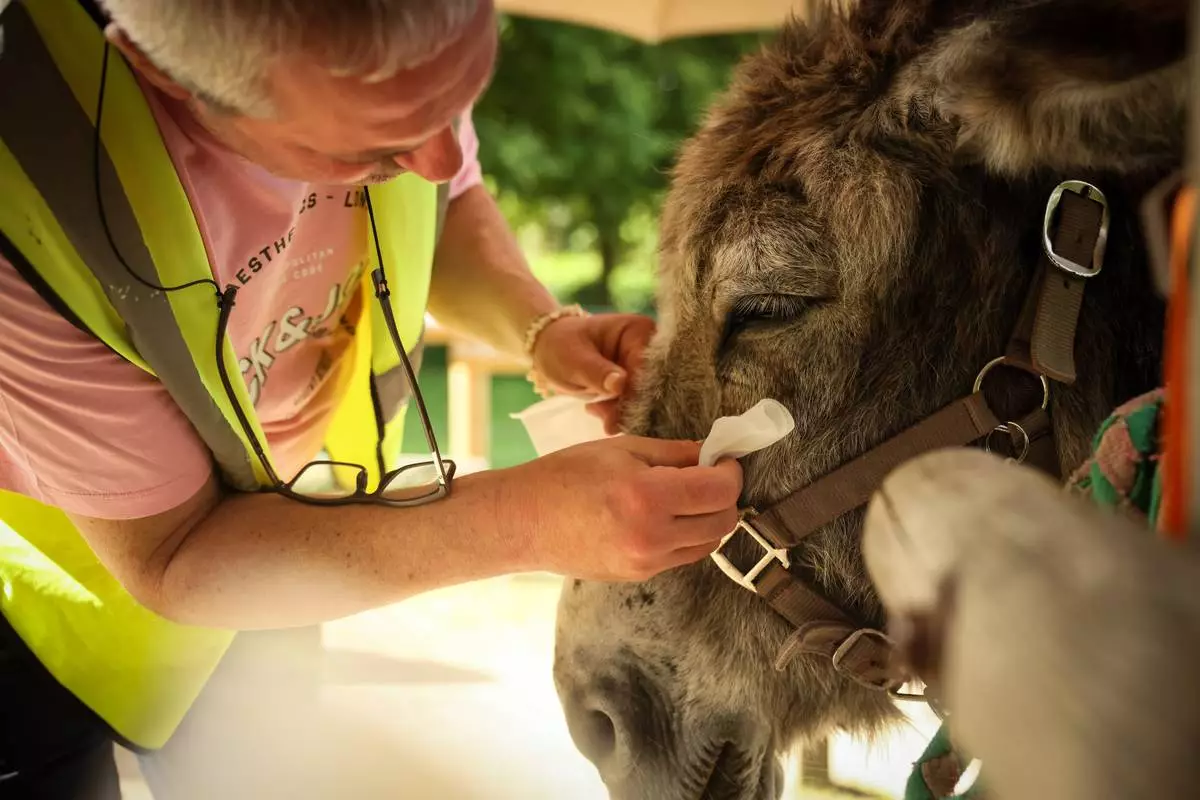
A patient with mental health conditions cleans a donkey's eyes during the animal therapy session at a psychiatric hospital in Neuilly-sur-Marne, in the eastern suburbs of Paris, Friday, May 29, 2026. (AP Photo/Thomas Padilla)