MONTRÉAL--(BUSINESS WIRE)--Jun 1, 2026--
The City of Montréal is deploying Derq’s AI-powered INSIGHT as part of its citywide Safety and Mobility Analysis System at Intersections (SASMI), enabling the city’s transportation teams to proactively monitor roadway safety, identify risk patterns, and improve traffic flow across its large multimodal network. The deployment is being delivered in partnership with Tacel Ltd., Derq’s Canadian distribution partner for intelligent transportation solutions.
This press release features multimedia. View the full release here: https://www.businesswire.com/news/home/20260601422777/en/
As part of this deployment, Montréal is rolling out Derq INSIGHT across 100 intersections—one of the largest North American deployments to date—positioning the city to expand the platform across its broader network over time.
“At Montréal, the safety of all road users is an absolute priority. The deployment of artificial intelligence solutions marks a strategic shift toward more proactive mobility management, enabling us to anticipate risks, respond more quickly, and, ultimately, save lives, while positioning the City as a leader in innovation,” said Alan DeSousa, Borough Mayor, responsible for mobility and infrastructure.
The INSIGHT platform provides transportation teams with real-time visibility into roadway activity and emerging safety risks, helping them identify patterns earlier and respond faster to improve safety outcomes.
“This project demonstrates how innovation, driven by the intelligent use of data, can improve daily life for Montréalers. By taking full advantage of real-time data, we are strengthening our ability to analyze issues on the ground and better target interventions where they can have the greatest impact,” said Alexandre Teodoresco, City Councillor, responsible for optimization, municipal performance, and innovation.
“Cities have traditionally relied on fragmented, historical reports and limited data to understand roadway safety and traffic performance,” said Karl Jeanbart, COO and Co-Founder of Derq. “Montréal is taking a more proactive approach by using AI to produce granular traffic intelligence and provide real-time decision support across its transportation network. As founders from Montréal, we’re especially proud to support the city in advancing this work.”
Tacel, a longstanding partner of the City of Montréal on intelligent transportation systems, is supporting the project's implementation and facilitating Derq’s deployment across the city.
“Transportation agencies are under growing pressure to make faster, more informed decisions across increasingly complex transportation networks,” said Yassine Benamghar, Vice President at Tacel. “Montréal’s deployment of Derq demonstrates how real-time safety intelligence can respond more quickly to emerging roadway risks.”
About Derq
Derq is an AI-powered intelligent transportation company helping agencies improve safety and optimize traffic flow for all road users. An MIT spinoff founded in 2016, Derq's award-winning technology is deployed across the U.S., Canada, and the GCC region, with 20 patents and global recognition from leaders in AI and mobility. Learn more at https://www.derq.com.
About Tacel Ltd.
Founded in 1979, Tacel Ltd. is Canada’s trusted provider of intelligent transportation systems and traffic signal solutions. With over 46 years of expertise, Tacel partners with municipalities and transportation agencies nationwide to deliver reliable, innovative, and sustainable products that enhance road safety and optimize mobility. From traffic signal equipment to advanced connected solutions, Tacel is committed to building smarter, safer communities across Canada. Learn more at www.tacel.ca.
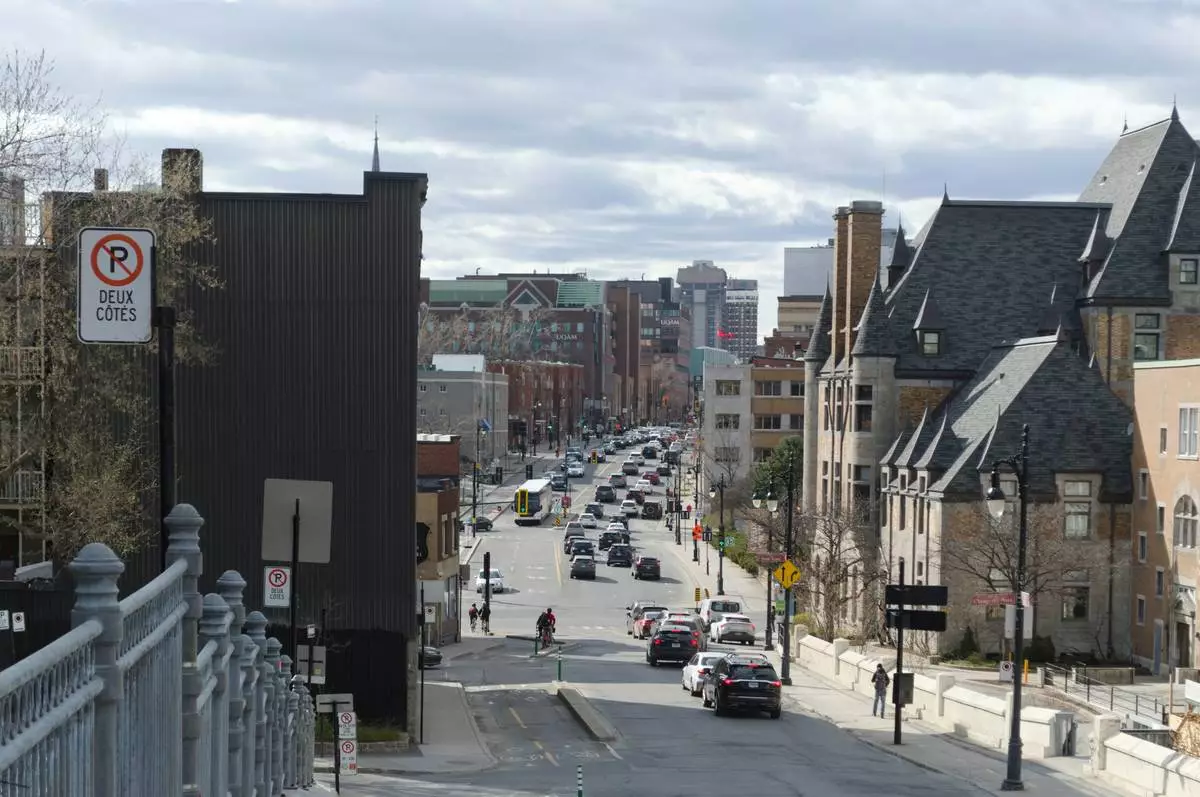
Traffic in Montréal, where the City is deploying Derq INSIGHT across 100 intersections as part of its AI-powered Safety and Mobility Analysis System at Intersections initiative. Photo credit: Robert MacLeod.
DUBAI, United Arab Emirates (AP) — The United States said Monday that it bombed radar and drone sites in Iran after Tehran shot down an American drone over the weekend. Iran then said it targeted American soldiers in Kuwait with missiles, which the U.S. says it shot down.
The nominal ceasefire between Iran and the U.S. has been repeatedly tested with such back-and-forth attacks, even as officials from both countries try to negotiate an end to the war. It’s not clear how close they are to a deal — and there is always the risk that an attack could derail those talks.
In the meantime, Iran has maintained its chokehold on the Strait of Hormuz, disrupting global energy supplies and driving up the price of fuel around the world, with far-reaching consequences. A cargo ship came under attack off Iraq Monday afternoon, the British military said.
Fighting has also escalated between Israel and the Lebanese militant group Hezbollah, despite their nominal ceasefire. Israel has extended its occupation deep into Lebanon, and Hezbollah — which joined the war in support of its main backer, Iran — continues to launch drones into Israel.
The fighting in Lebanon could threaten the emerging deal to extend the Iran war ceasefire. Tehran wants any agreement to include Lebanon.
The U.S. military’s Central Command said it carried out the strikes in Iran on Saturday and Sunday around the city of Geruk and on Qeshm Island, hitting air defenses, a ground control station and two attack drones it said threatened ships in the region.
“The measured and deliberate strikes occurred ... in response to aggressive Iranian actions that included the shootdown of a U.S. MQ-1 drone that was operating over international waters,” Central Command said.
Traffic through the Strait of Hormuz is at a trickle compared to before the war, with ship owners deterred by the risk of an Iranian attack. Only 36 ships transited the waterway in the seven days leading up to to Friday, a third of them carrying crude oil or petroleum products, according to Lloyd’s List Intelligence. That compares to an average of more than 130 ships per day before the war began.
Kuwait said its air defenses opened fire early Monday morning to intercept incoming drone and missile fire.
Around the same time, Iran’s paramilitary Revolutionary Guard said it responded to an American attack without saying where, likely referring to the attack on Kuwait. In a statement carried by the state-run IRNA news agency, the Guard said that U.S. forces had targeted a telecommunications tower.
Kuwait is home to U.S. Army Central, the Mideast forward command for the Army.
Iranian state television shared footage of the ballistic missile launch, including a close-up showing a sticker on its body depicting a bruised U.S. President Donald Trump overlaid on a “closed” Strait of Hormuz with the caption: “Until the last American soldier leaves the region.”
Central Command said U.S. forces shot down two ballistic missiles Iran launched toward bases home to American troops. No Americans were hurt, it added.
The attacks represent the latest escalation between the U.S. and Iran. Over the weekend, the U.S. fired a missile into the engine room of a Gambia-flagged cargo ship trying to break its blockade of Iranian ports.
On Monday, a cargo ship off Umm Qasr, Iraq, was struck by a projectile that caused a “large explosion,” the British military said. It offered no other details and no one claimed the attack, though Iran previously has attacked ships off Iraq.
A trickle of ships has made it out of the strait, through which a fifth of all traded oil and natural gas once passed, but pressure continues on global energy supplies, as well as on chemical fertilizer. That has led to fears of food shortages. The Gulf region produces 30% of globally traded chemical fertilizers.
Trump met with advisers on Friday but has yet to decide on whether to move ahead with a deal to extend the ceasefire and reopen the strait. Iran has said the deal had not been finalized.
The U.S. and Israel launched the war with strikes on Iran on Feb. 28. Trump has offered shifting goals for the conflict, although preventing Iran from building a nuclear weapon is among them. Iran has insisted its nuclear program is peaceful, though it has enough highly enriched uranium to build several nuclear weapons, should it choose to do so.
U.S. Vice President JD Vance suggested last week that negotiators are trying to strike general terms on Iran’s nuclear program, with the specifics to be hammered out in the ensuing talks.
Iranian Foreign Ministry spokesperson Esmail Baghaei on Monday again accused the U.S. of “constantly” changing its positions.
“From the beginning, we knew — and we continue to know — that we are negotiating in an atmosphere of mistrust," Baghaei told journalists.
Trump expressed optimism about the talks in a post on his Truth Social platform early Monday in Washington.
“Iran really wants to make a deal, and it will be a good one for the U.S.A. and those that are with us,” he wrote. “Just sit back and relax, it will all work out well in the end — It always does!”
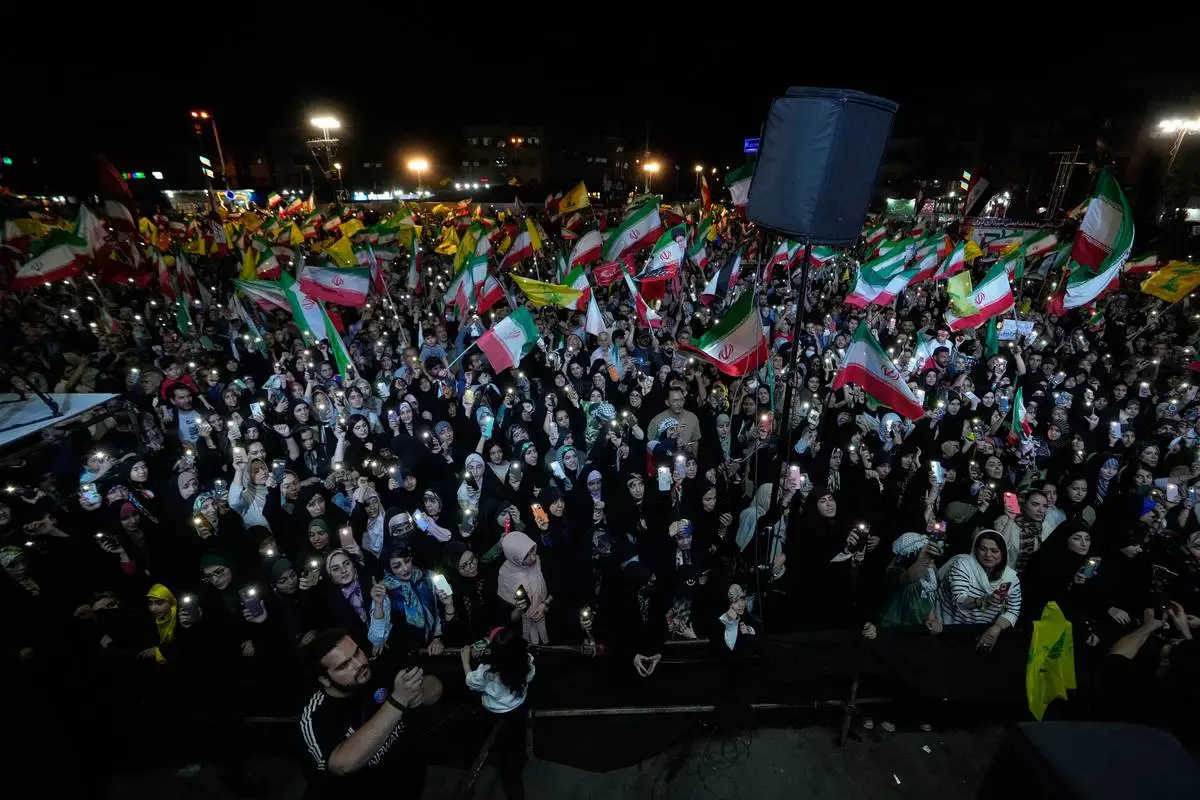
Demonstrators wave Iranian flags and flags of Lebanon's militant Hezbollah group during a pro-government gathering at Islamic Revolution Square in Tehran, Iran, Saturday, May 30, 2026. (AP Photo/Vahid Salemi)