China’s seawater desalination capacity has surpassed 3 million tons per day, equal to the daily water use of 15 million people, the Ministry of Natural Resources said. Seawater desalination projects are advancing steadily nationwide, including Hebei’s Cangzhou Botou New Water Source project, which combines photovoltaic power, energy storage and desalination. The first phase is designed to produce 50,000 tons of fresh water daily, with construction now 60 percent complete.
"The project aims to solve the problem of water scarcity in Cangzhou, which is located by the sea. At the same time, we will realize the resource utilization of concentrated brine, which will effectively optimize the allocation of water resources in the region," said Hu Xiaojie, deputy general manager of Hebei Botou New Water Source Seawater Treatment Company, which runs the project.
Apart ffrom an accelerated pace of facility construction, the county's seawater desalination industry continues to delve into core technologies, gradually achieving self-reliance.
A seawater desalination project built in the Nangang Industrial Zone in Tianjin Municipality achieved a processing capability of 150,000 tons a day. The project covers a fully domestically produced production line with a single unit capacity of 30,000 tons a day, breaking the foreign technology monopoly and realizing the first application of independently developed 10,000-ton-level energy recovery equipment.
Currently, reverse osmosis seawater desalination projects account for 68.25 percent of the total scale in China. The ratio of domestically produced equipment is steadily increasing, with the energy consumption per ton of water comparable to that of similar advanced international equipment.
Seawater desalination facilities are widely used in Shandong, Zhejiang, Hainan and other seaside provinces. More than 30 remote islands in these three provinces alone have achieved full water supply coverage, completely bidding farewell to the past predicament of relying on ship transport for water replenishment and limited water supply.
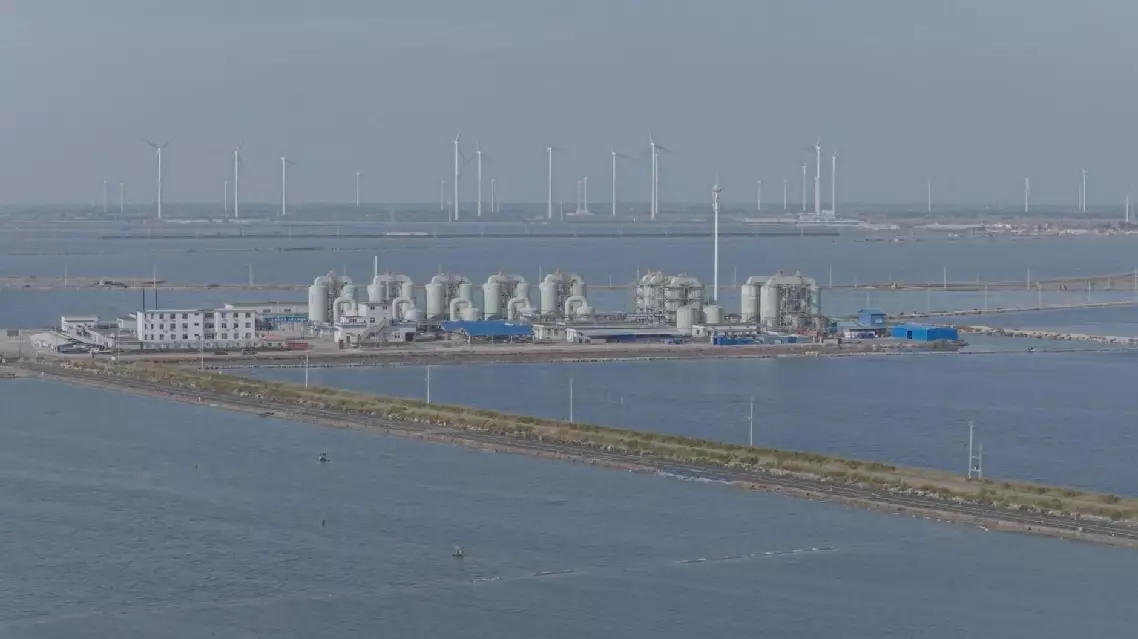
China's daily seawater desalination capacity exceeds 3 million tons