Skip to Content Facebook Feature Image

China uses seawater desalination to ensure success of major projects

China

China

China

China uses seawater desalination to ensure success of major projects

2026-06-02 17:20 Last Updated At:06-03 15:05

China is using seawater desalination to ensure water supply for people's livelihood, and also for advancing major projects at some of the nation's principal ports.

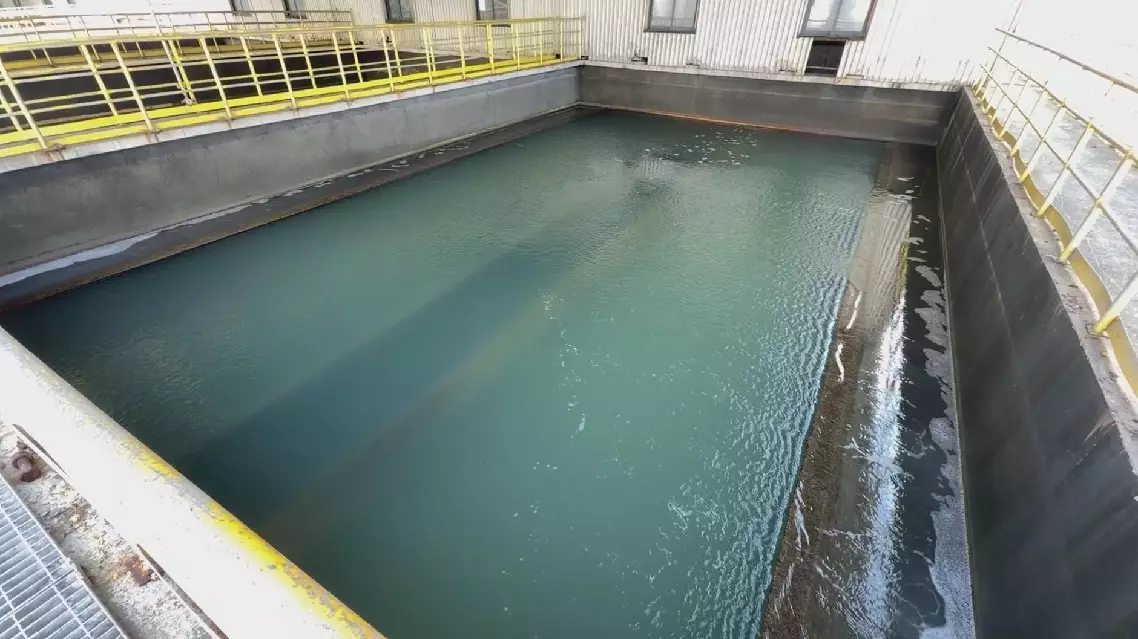
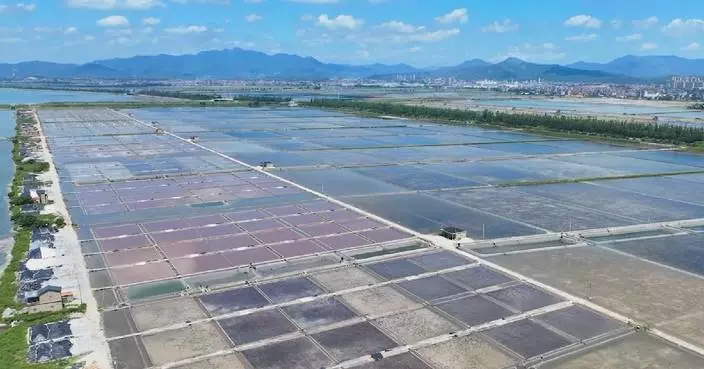
An integrated refining and petrochemical base on Yushan Island, in Zhoushan City in east China's Zhejiang Province, which requires a lot of water, has given rise to the world's largest seawater desalination project cluster built specifically for a petrochemical refinery.

It uses self-developed dual desalination technology, which can provide over 515,000 tons of water every day, with an annual freshwater output of more than 140 million tons of water which meets high-end industrial production standards.

"Seawater desalination is the core guarantee for our industrial development. The stable supply of high-quality desalinated water fully meets the requirements of production processes and has completely resolved the water supply challenges faced by major industrial projects on islands. Without seawater desalination, the petrochemical base could not achieve efficient and stable operation," said Guo Ai, manager of Zhoushan Green Petrochemical Base's water supply department.

In 2026, China's seawater desalination industry is aiming for higher quality, greater sustainability, and a broader international market for its technology and know-how. It continues to strengthen the country's capacity to safeguard water resource security, while injecting strong momentum into the efficient and sustainable utilization of water resources.

"China's seawater desalination sector has progressed from meeting domestic needs to exporting technology and equipment, achieving a leap from independent innovation to international development. This advancement has not only addressed the country's own water resource shortages, but also provided mature and practical solutions for water-scarce countries and regions worldwide. It has become a significant symbol of China's high-end manufacturing to the world," said Xiang Wenxi, director of the Institute of Seawater Desalination and Multipurpose Utilization in Tianjin, which is under the administration of the Ministry of Natural Resources.
China uses seawater desalination to ensure success of major projects
China uses seawater desalination to ensure success of major projects

The China (Inner Mongolia) Pilot Free Trade Zone is accelerating the implementation of reform measures including customs clearance facilitation at ports, in efforts to boost quality growth of the local region's open economy.

China expanded its pilot free trade zones (FTZs) to 23 in April with the establishment of the one in north China's Inner Mongolia Autonomous Region.

The State Council's plan on the new pilot FTZ specifies 19 reform and innovation measures, including developing border trade in an innovative way, strengthening international logistics services, improving the efficiency of technology transfer and application, and expanding external exchanges across multiple fields.

The China (Inner Mongolia) Pilot FTZ covers 119.74 square kilometers and comprises three subzones in Hohhot, capital of the autonomous region, Manzhouli, a northern border city, and Erenhot, an inland port on the China-Mongolia border, each tasked with differentiated functions and the development of industries tailored to local conditions.

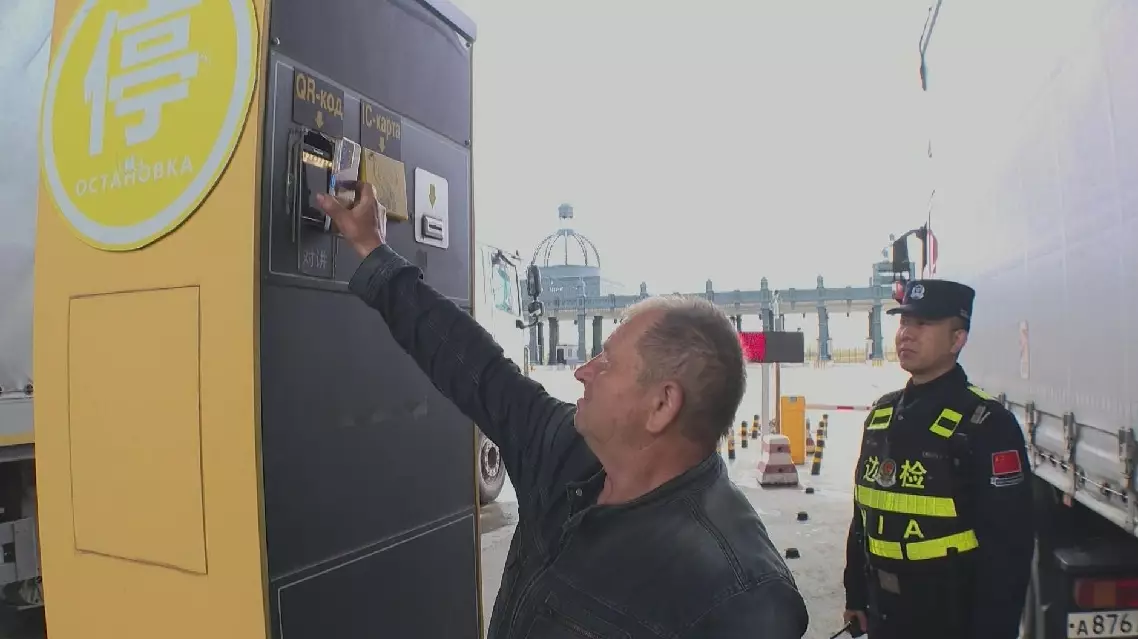
At the intelligent freight checkpoint of the Manzhouli inland port, drivers can complete customs clearance within just a few seconds by showing a QR code to the scanning machine.

The QR code is generated by a smartphone application, which collects the relevant customs clearance information in advance.

"Only one QR code is needed for customs clearance here. We can go through all the required formalities and have the entire application documentation processed through electronic data transmission. After getting the QR code and having it scanned at the checkpoint, the driver will be allowed to enter the country. It's very convenient and fast," said Zhao Shuang, general manager of a freight company in Manzhouli.

From January to April, Manzhouli's total foreign trade volume increased by 43.1 percent year on year.

Inner Mongolia pilot FTZ accelerates reform to boost quality growth

Inner Mongolia pilot FTZ accelerates reform to boost quality growth

Recommended Articles