A Chinese-owned UK firm is optimistic about the development prospects of China's aviation market and looks forward to taking cooperation with other Chinese aircraft manufacturers to new heights.
Business ties between the two countries are in the spotlight as the British Foreign Secretary Yvette Cooper embarks on a three-day trip to China from Monday to Wednesday, which saw her meet with senior Chinese officials and attend the 11th China-UK Strategic Dialogue.
It comes after British Prime Minister Keir Starmer visited the country earlier this year, with the two sides agreeing to develop a "long-term, stable comprehensive strategic partnership."
One company that illustrates the depth of ties between the UK and China is Gardner Aerospace. Headquartered in Derby in central England, the aerospace manufacturer produces millions of aircraft components every year and has built up operations in both countries.
The crucial aluminum components it produces may not be visible to passengers, but they are vital in keeping planes in the sky, ranging from small fittings to structures for wings measuring up to 16 meters. At Gardner Aerospace's Derby facility, parts are made for major airplane companies including Airbus, Boeing and Rolls-Royce, but a network of sites, stretching from the UK, to Poland, India and China produce around 2.5 million components every year.
Since 2017, the company has been owned by a Chinese parent group based in southwest China's Sichuan Province, while maintaining its manufacturing roots in the UK.
The firm's CEO Philipp Visotsching highlighted the need for such well-connected supply chains spanning the globe, and said having facilities spread across different countries allows the company to serve customers more efficiently. "Aerospace is a global industry, as such supply chains are completely intertwined, there is production all over the world, and at the end an aircraft doesn't fly if there is a part missing. So you need to have a completely intertwined supply chain," said Visotsching.
While Europe is now largely a replacement market for aircraft, industry growth is increasingly being driven by Asia, he added. "Aerospace or aviation has enjoyed growth rates far beyond GDP over the last 30 years. It is expected to [continue to] grow beyond GDP, and most of this growth comes from Asia. This is where we want to capture the market," said Visotsching. China's home-grown aircraft manufacturer COMAC could be an important new source of business for Gardner Aerospace, but China's importance goes beyond simply being a market for aircraft parts.
Company representatives stress that a strong relationship between Britain and China has created key opportunities to develop the entire industry.
"We can all learn from each other. It's really emerging in China. They have a different view. There is a cultural difference as well, a different way of looking at things. And I think that the cross exchange between what we are doing in the UK and what China is doing and how they look at how the industry can develop, I think that's very important," said Sebastian Berckmans, the Group Quality Director for Gardner Aerospace.
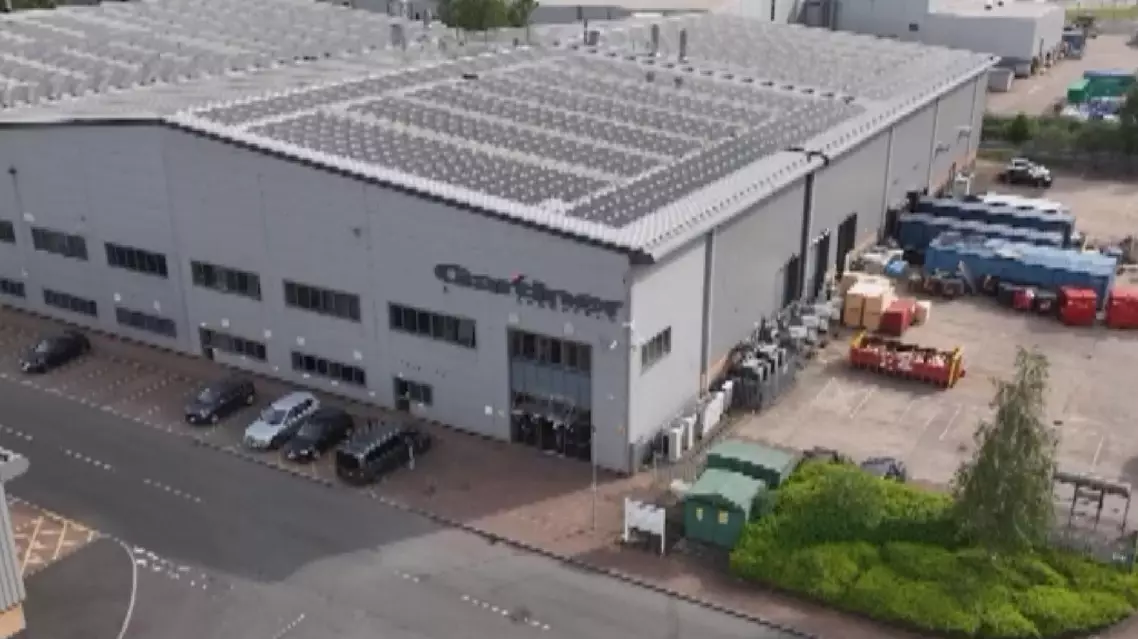
UK aerospace firm looks to tap into development prospects of China's growing aviation market