Skip to Content Facebook Feature Image

AI companies are barreling toward huge Wall Street debuts. A look at the biggest players

TECH

AI companies are barreling toward huge Wall Street debuts. A look at the biggest players
TECH

TECH

AI companies are barreling toward huge Wall Street debuts. A look at the biggest players

2026-06-04 12:01 Last Updated At:06-05 10:00

Some of the leading artificial intelligence companies are moving toward initial public offerings this year at eye-popping valuations. From Anthropic to SpaceX to OpenAI, tech giants are looking to take their shares public to access more capital in the race to shape the technology's future.

The amount of money involved in building and maintaining artificial intelligence models, the pursuit of artificial general intelligence that can surpass humans at many tasks, and widespread AI adoption all have led to an air of excitement around the technology that has helped lift the stock market to record highs.

“These companies are now burning through cash to win the AI race, and public equity is the cheapest source available, particularly in a rising interest rate environment,” said Michael Field, chief equity analyst at Morningstar.

But amid the billions — even trillions — at stake, worries about an AI bubble are looming in the background. Some experts fear tech companies and venture capitalists are pouring too much money into a still-nascent and unproven technology.

For now, though, the market shows no signs of a slowdown. Here's a look at some of the biggest AI-focused companies.

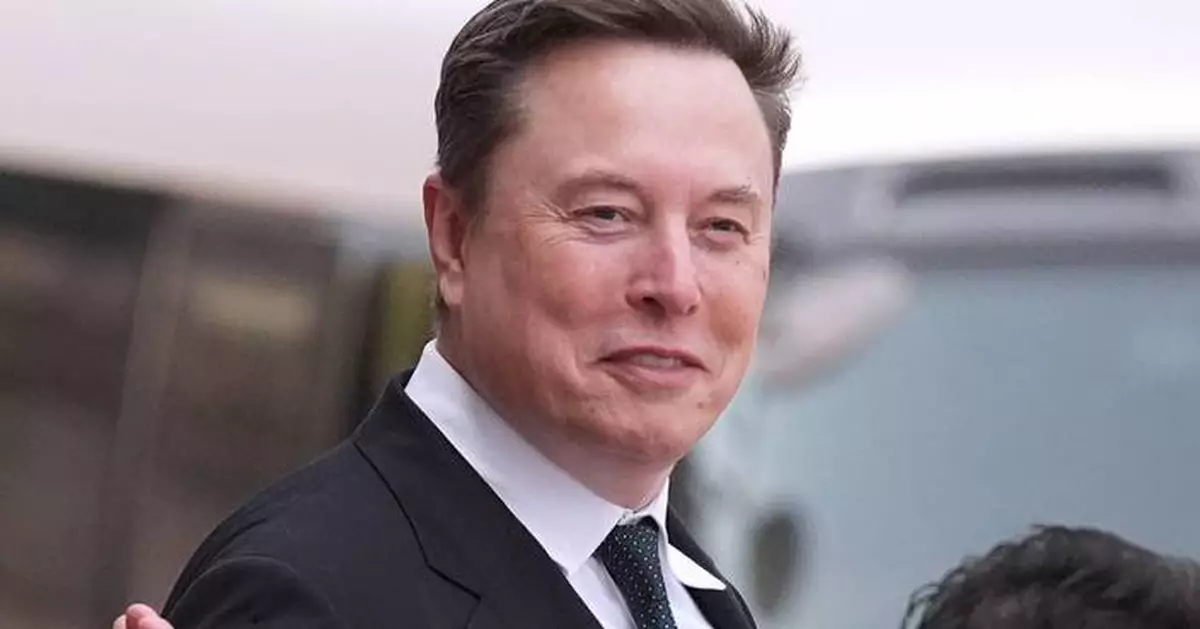
Elon Musk’s SpaceX was valued at $800 billion last year, but its value grew to $1.25 trillion after the space exploration company merged in February with Musk’s artificial intelligence company, xAI. Now, SpaceX plans an IPO that could become one of the biggest stock sales ever — even though the company is currently losing billions of dollars a year. SpaceX lost $2.6 billion from operations last year on $18.7 billion in revenue, according to a May regulatory filing, and the losses kept piling up at the start of this year. xAI, which features the Grok chatbot, lost $6.4 billion in operations last year, according to a company document.

Musk got SpaceX to buy xAI earlier this year despite protests from some SpaceX investors that it was a bailout and unethical given that he was a controlling shareholder in both.

SpaceX said on Wednesday it plans to raise up to $75 billion when it goes public this month, setting the stage for the largest-ever stock market debut and putting Musk on course to becoming the world’s first trillionaire. An offering of that size would easily break the record for the largest IPO, which was set by Saudi Aramco in 2019 when the oil giant went public and raised $26 billion.

Anthropic, the maker of the Claude chatbot, was formed in 2021 by ex-OpenAI leaders. It was recently valued at $965 billion, making it one of the world’s most valuable startups. It has been a meteoric rise for what was once a little-known research laboratory. The San Francisco-based company is moving toward going public on Wall Street, announcing June 1 that it has submitted a confidential filing with the U.S. Securities and Exchange Commission for a proposed IPO.

Anthropic has said it is making annualized revenue of $47 billion from selling its technology to people and organizations using Claude to write code and do other work and personal tasks on their behalf.

The maker of ChatGPT began in 2015 as a nonprofit dedicated to developing AI for the common good. It is now a company valued at $852 billion planning an IPO as soon as this fall.

While OpenAI may have helped set off the current AI boom, Anthropic’s meteoric rise and Claude’s growing popularity have left the ChatGPT maker playing catch-up.

In an unsuccessful lawsuit against OpenAI and its top executives, Elon Musk, an OpenAI co-founder, claimed the company diverted from its founding mission to make more money. OpenAI had countered that Musk was simply seeking a bigger slice of the company. OpenAI has not yet reported filing initial IPO paperwork with the SEC.

Google designed the Gemini AI assistant in response to a competitive threat posed by OpenAI’s ChatGPT, which came out in late 2022. Gemini AI models are integrated into Google search and other products such as Maps. The market value of Alphabet, Google's Mountain View, California-based parent company, was $4.54 trillion at the beginning of June, up from $2.3 trillion a year earlier. That growth is a sign that Alphabet’s spending spree on AI is producing dividends so far, despite investor worries about some of its peers' massive AI investments.

Meta's AI push has meant integrating its assistant, Llama, into all aspects of its business, including advertising and consumer-facing tools such as a digital assistant that can help with daily tasks, as well as image and video creation. Unlike many rival models, Llama is open source, meaning it is largely available to the public and to developers. Meta AI is available as a standalone app and it is integrated into the Menlo Park, California-based company's smart glasses. Meta's market value as of early June was $1.55 trillion, down from $1.76 trillion a year earlier amid investor concerns about the company's massive AI spending.

Microsoft, which went public 40 years ago, likely would have been running behind in the AI race were it not for a timely multibillion-dollar investment in OpenAI. Microsoft provided the computing power and financial backing that helped OpenAI build ChatGPT. In turn, Microsoft was able to use the same technical foundation to power its own AI assistant, now called Copilot. The once-exclusive partnership has since evolved as both companies look to other partners to advance their AI ambitions.
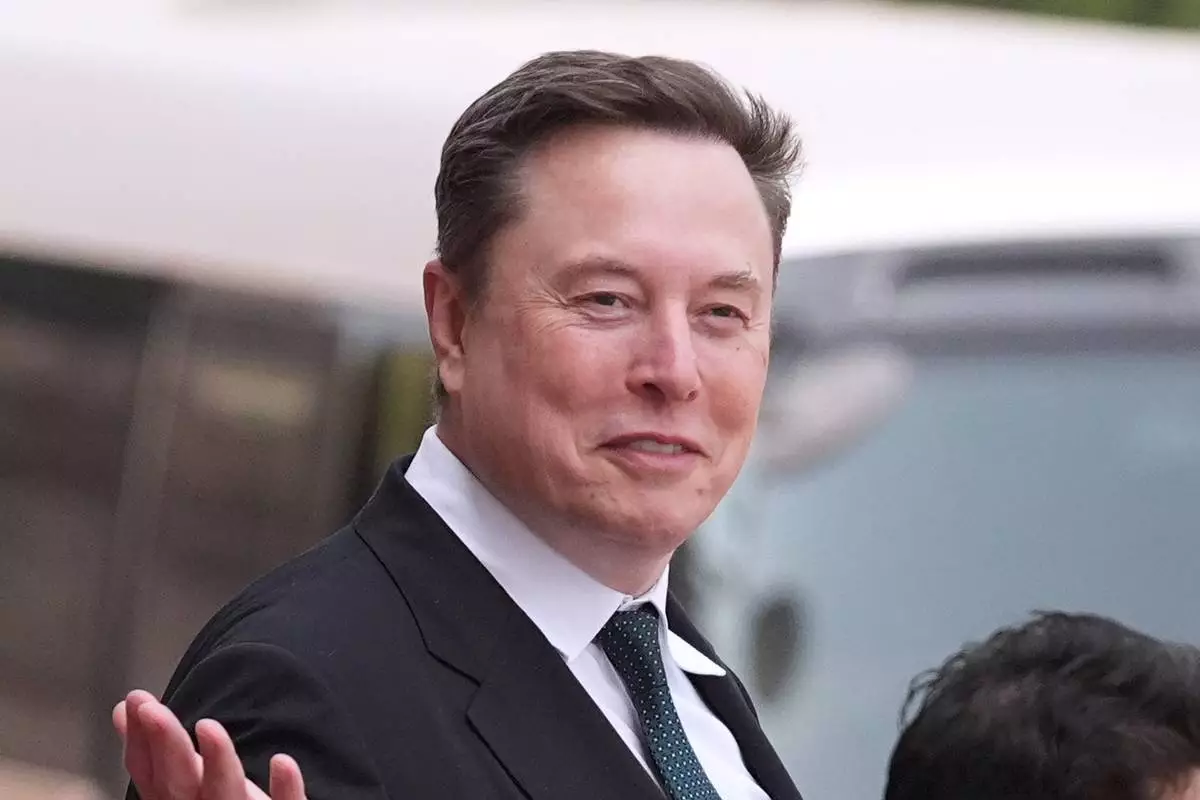
FILE - Elon Musk departs after a welcome ceremony with President Donald Trump and China's President Xi Jinping at the Great Hall of the People, Thursday, May 14, 2026, in Beijing. (AP Photo/Mark Schiefelbein, File)
FILE - Elon Musk departs after a welcome ceremony with President Donald Trump and China's President Xi Jinping at the Great Hall of the People, Thursday, May 14, 2026, in Beijing. (AP Photo/Mark Schiefelbein, File)

ST. LOUIS (AP) — Far from its European homeland, Bosnia and Herzegovina has zealous fans in the American Midwest as it prepares for its second World Cup.

An estimated 60,000-70,000 Bosnians live in St. Louis, with many arriving in the early 1990s during the Bosnian War and the breakup of Yugoslavia.

Bosnia faces Panama on Saturday in an international friendly at St. Louis' Energizer Park and plays World Cup group matches in Toronto (vs. Canada), Los Angeles ( vs. Switzerland) and Seattle (vs. Qatar).

“We should be able to create an atmosphere like a home match,” said Elvir Kafedžić, a Bosnia-born St. Louisan and an assistant coach for the city’s MLS team, St. Louis City SC.

He was only 9 1-2 when he fled Bosnia in 1992 with his mother and brothers to escape the war.

“Unfortunately, I remember a lot of it,” said Kafedžić, whose story mirrors many who rebuilt in St. Louis after meandering across Europe.

“We kind of tumbled through some different countries like Montenegro, the Czech Republic, Sweden and wound up in Germany," Kafedžić explained.

That ended when Germany stopped granting temporary protection to Bosnians in the late 1990s.

“We didn’t have anywhere to go back to in Bosnia. And we already had some relatives living in St. Louis. So in 1999 we made the move with my mom and two older brothers."

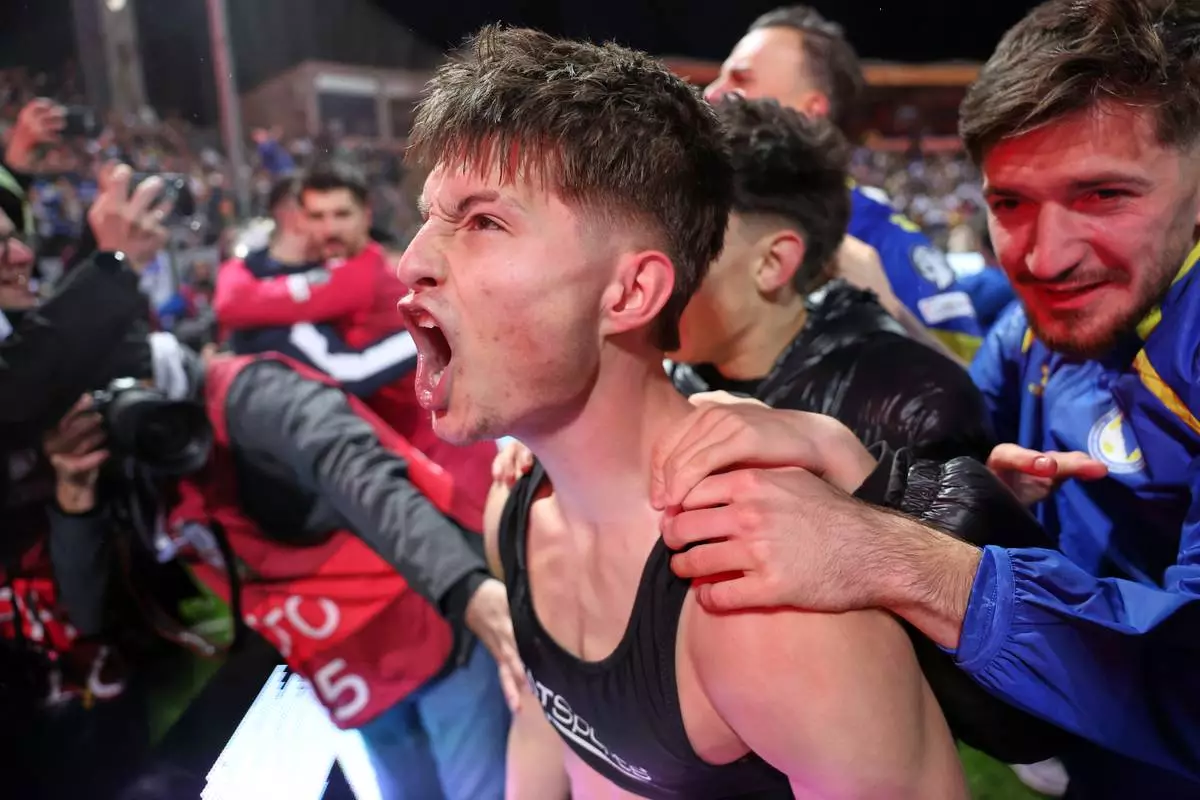
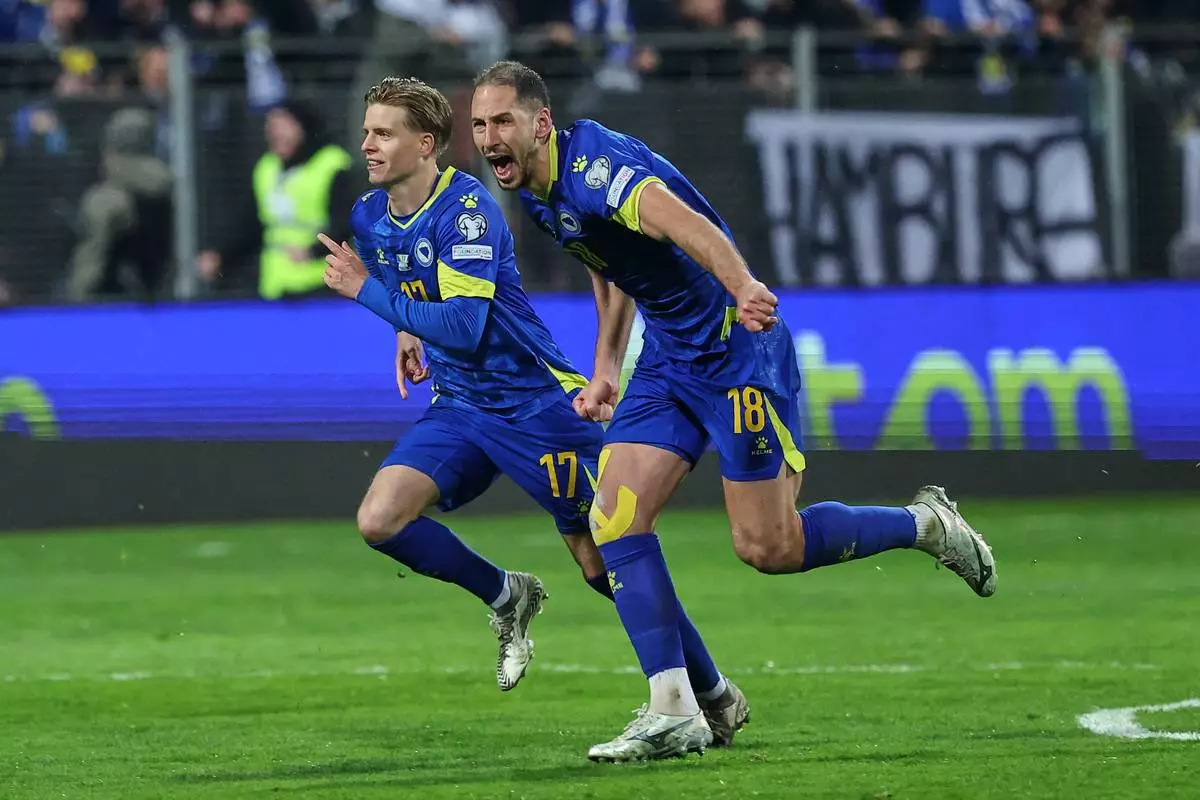
Bosnia qualified for the World Cup two months ago, defeating four-time World Cup champion Italy 4-1 on penalties after a 1-1 draw. The deciding penalty was converted by Esmir Bajraktarević, a Bosnian-American from Appleton, Wisconsin.

“That day you could see cars flying Bosnian flags in the streets,” Kafedžić said of the St. Louis scene. “All the restaurants, all the coffee shops were packed wall-to-wall with strangers hugging each other. For me, this goes beyond soccer. This shows who we are, the pride, where we come from and how deeply we’re connected to our roots.”

Bosnia's World Cup team is led by 40-year-old captain Edin Džeko and 18-year-old winger Kerim Alajbegović. Džeko has scored at least 50 goals playing in the English Premier League, Italy’s Serie A, and the German Bundesliga.

Bosnia’s only other World Cup appearance was at Brazil in 2014, where it was narrowly eliminated in the group stage. The team’s first World Cup goal was scored by Vedad Ibišević in a 2-1 loss to Argentina.

Ibišević played high school soccer in St. Louis, starred at Saint Louis University and followed up with a successful professional career, primarily in the Bundesliga.

St. Louis surfaced as a destination for Bosnian refugees because it offered jobs, reasonable housing prices and had a small community in place.

“We all came looking for a better life because everything was taken away from us at home,” Kafedžić said. “You can’t put in words how thankful we are.”

A swath of the city’s South Side is known as “Little Bosnia,” anchored by rows of tidy red-brick houses, bars, cafes and bakeries and a replica wood fountain that mimics one in the capital Sarajevo, known as the Sebilj.

“It represents Sarajevo in the heart,” said Jasmina Silić, working across the street from the monument at the Skala Bar on Gravois Avenue, the fulcrum of the community.

Skala is located just a few doors away from the “Association of Survivors of the Srebrenica Genocide,” a constant reminder of the war and the ethnic cleansing committed by Bosnian Serb forces.

More than 8,000 Bosnian Muslims died in Srebrenica, which was declared a genocide by the United Nations, the International Court of Justice and others. It’s estimated that 104,000 died from the war, 2 million were displaced, and 83% of the civilian deaths were Bosnian Muslims.

Bosnia's influence is all over St. Louis, a metropolitan area of almost 3 million on the banks of the Mississippi River.

The best-selling food at St. Louis’ MLS stadium is Bosnian fare from a restaurant called the “Balkan Treat Box.” Saint Louis University houses the Center for Bosnian Studies, and several books document the diaspora including “Bosnian St. Louis: Between Two Worlds” by Patrick McCarthy and Akif Cogo.

It tells of tragedy, resilience and the community’s ties to Europe.

“One woman in St. Louis still carries the keys to her house in Bosnia,” they wrote. “Another man describes his feelings toward Bosnia as a divorce he did not want from a woman he still loves.”

Bosnia was a multi-ethnic and multi-religious nation before the war, predominantly Muslim but with a large number of Croatian Roman Catholics and Serbian Orthodox Christians.

The mix binds the World Cup team, a symbol of pride and reconciliation.

“A lot of people from here go to Bosnia every year to see families,” said Silić, speaking at the Skala Bar. ”The team represents unity because it’s all three religions and everybody is one like it used to be when it was still Yugoslavia.”

AP World Cup: https://apnews.com/hub/fifa-world-cup

FILE - Bosnia's Esmir Bajraktarevic celebrates after winning a penalty shootout during the World Cup qualifying playoff final soccer match between Bosnia and Italy in Zenica, Bosnia, on March 31, 2026. (AP Photo/Armin Durgut, File)

FILE - Bosnia's Esmir Bajraktarevic celebrates after winning a penalty shootout during the World Cup qualifying playoff final soccer match between Bosnia and Italy in Zenica, Bosnia, on March 31, 2026. (AP Photo/Armin Durgut, File)

FILE - Bosnia's Nikola Katic, right, and Bosnia's Dzenis Burnic celebrate after winning a penalty shootout during the World Cup qualifying playoff final soccer match between Bosnia and Italy in Zenica, Bosnia, on March 31, 2026. (AP Photo/Armin Durgut, File)

FILE - Bosnia's Nikola Katic, right, and Bosnia's Dzenis Burnic celebrate after winning a penalty shootout during the World Cup qualifying playoff final soccer match between Bosnia and Italy in Zenica, Bosnia, on March 31, 2026. (AP Photo/Armin Durgut, File)

Recommended Articles