Skip to Content Facebook Feature Image

How Voodoo overcame suppression and became a democratic force in the West African nation of Benin

News

How Voodoo overcame suppression and became a democratic force in the West African nation of Benin
News

News

How Voodoo overcame suppression and became a democratic force in the West African nation of Benin

2026-06-04 12:22 Last Updated At:12:51

OUIDAH, Benin (AP) — Democracy came to the cradle of Voodoo religion in 1991, when Benin’s military dictator of many years surprisingly lost an election that he had organized.

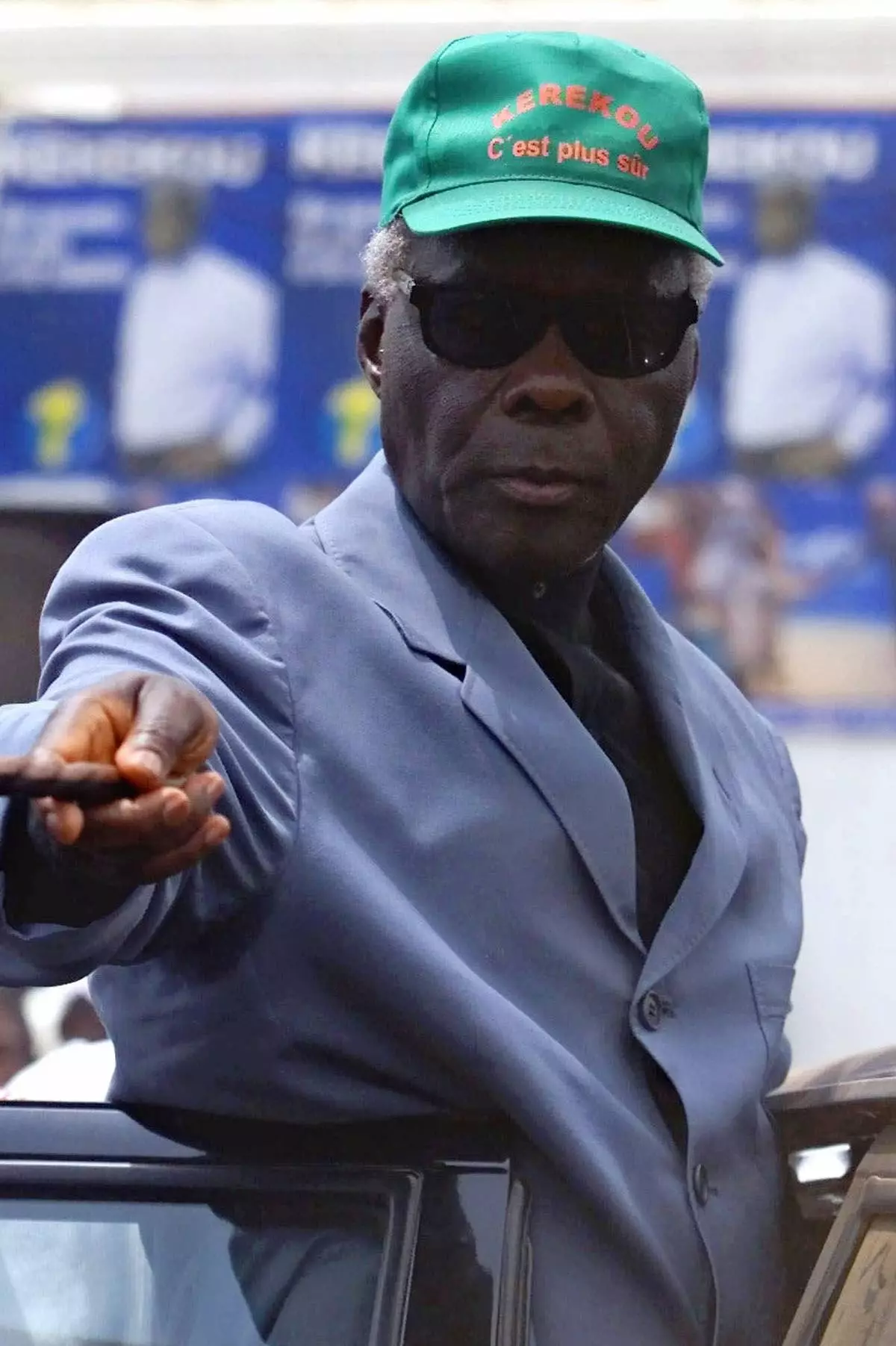
Mathieu Kérékou had amassed power partly by banning the practice of so-called sorcerers, whose authority he deemed subversive to his own. Voodooists would have the last laugh.

More Images
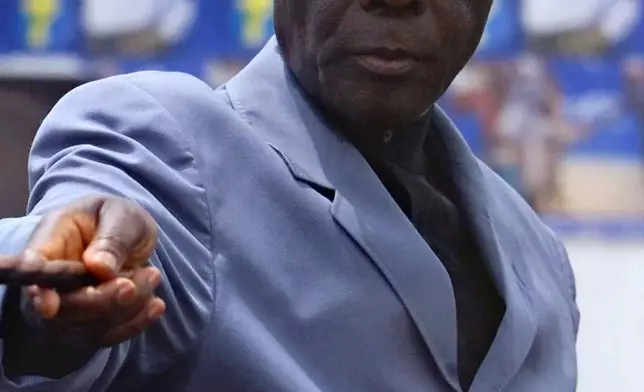
FILE - Then Benin President Mathieu Kérékou gestures during an election campaign in Ouidah, about 40 kilometers (25 miles) west of Cotonou, Benin, March 2, 2001. (AP Photo/Christine Nesbitt, File)
FILE - Then Benin President Mathieu Kérékou gestures during an election campaign in Ouidah, about 40 kilometers (25 miles) west of Cotonou, Benin, March 2, 2001. (AP Photo/Christine Nesbitt, File)

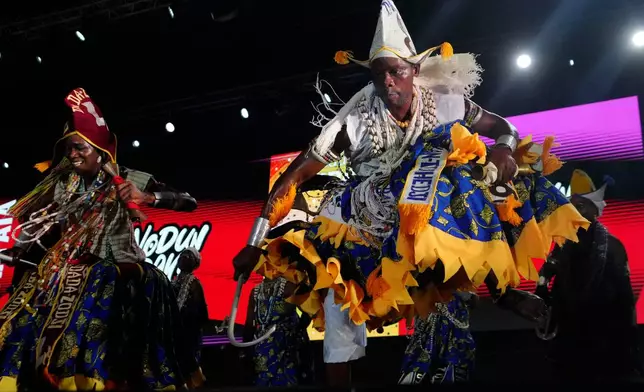
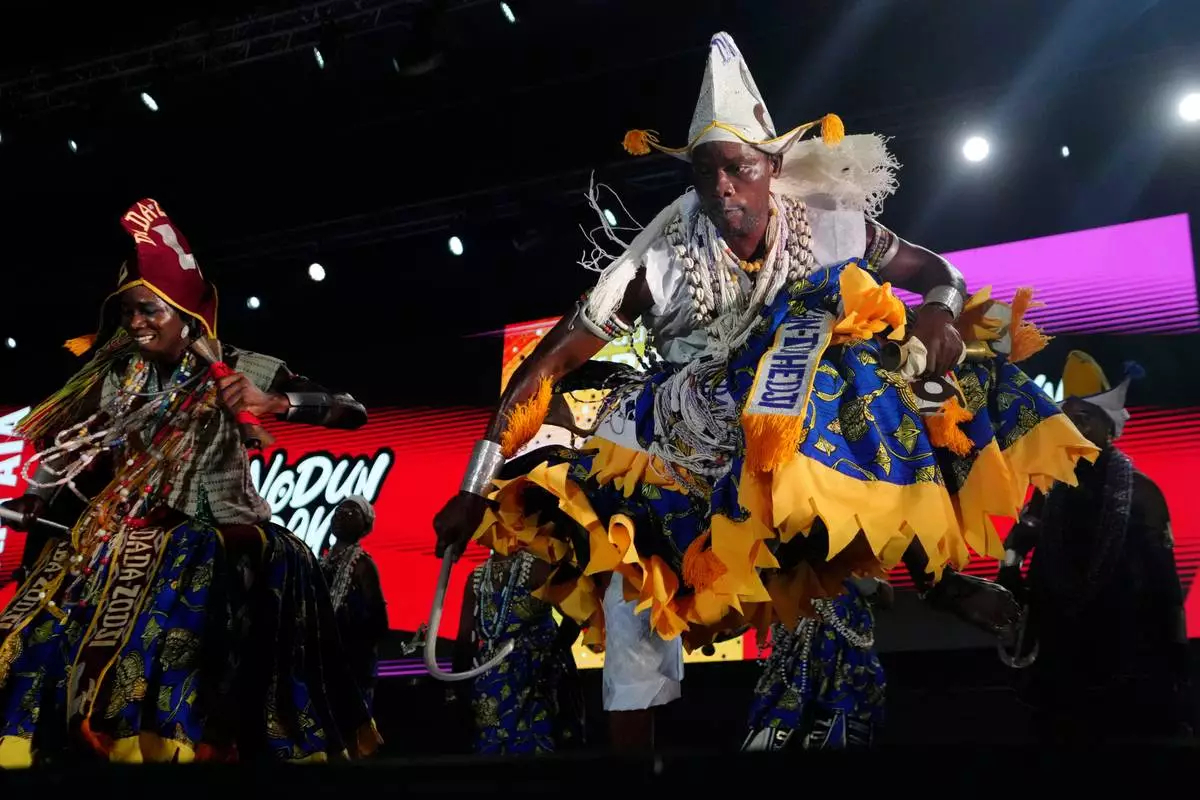
FILE - Voodoo worshippers dance during the annual Voodoo Festival in Ouidah, Benin, Jan. 10, 2025. (AP Photo/Sunday Alamba, File)
FILE - Voodoo worshippers dance during the annual Voodoo Festival in Ouidah, Benin, Jan. 10, 2025. (AP Photo/Sunday Alamba, File)

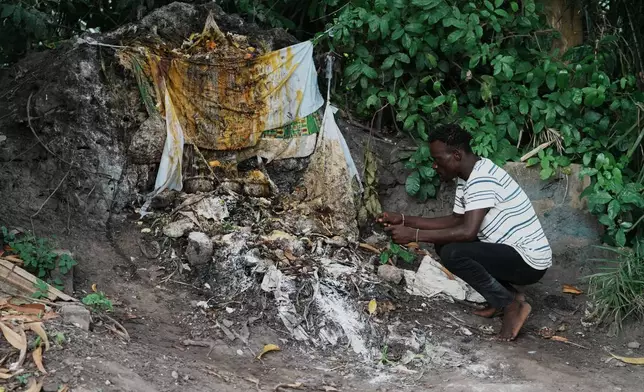
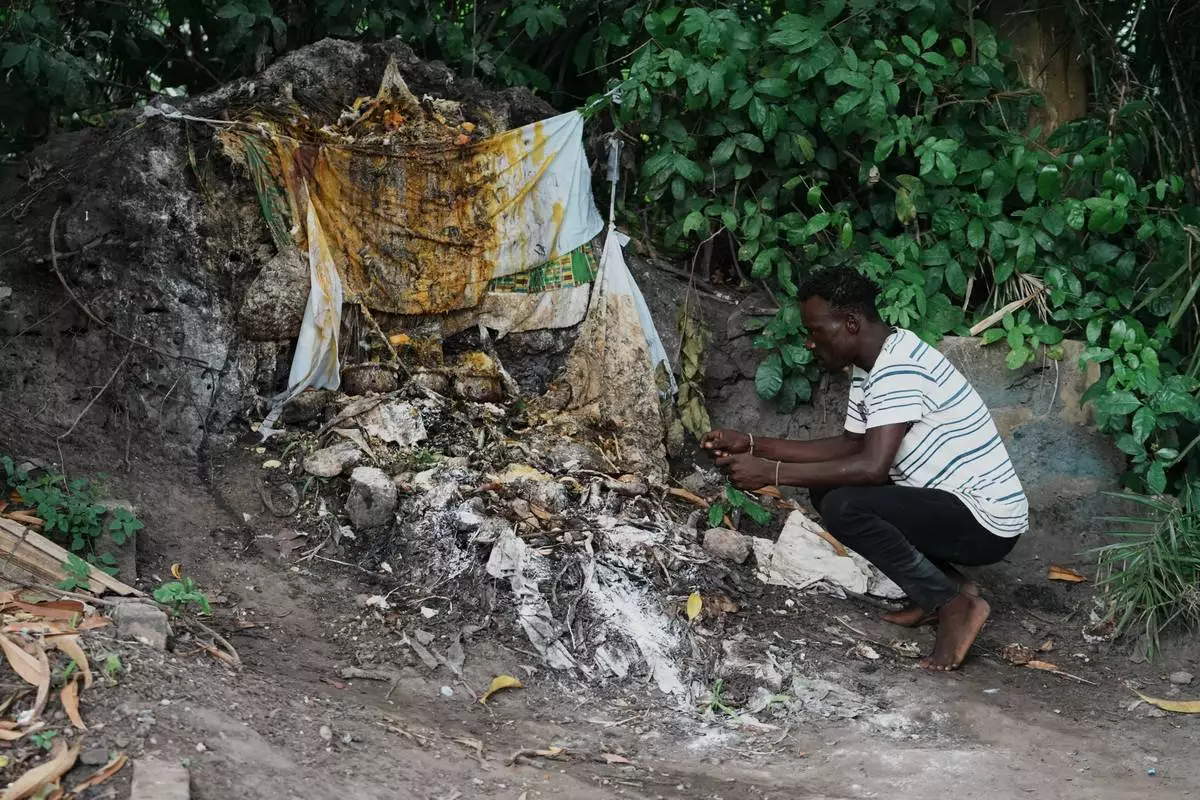
Irène Kpatenon, a tourist guide and Voodoo devotee, prays at a shrine in Ouidah, Benin, May 14, 2026. (AP Photo/Sunday Alamba)
Irène Kpatenon, a tourist guide and Voodoo devotee, prays at a shrine in Ouidah, Benin, May 14, 2026. (AP Photo/Sunday Alamba)

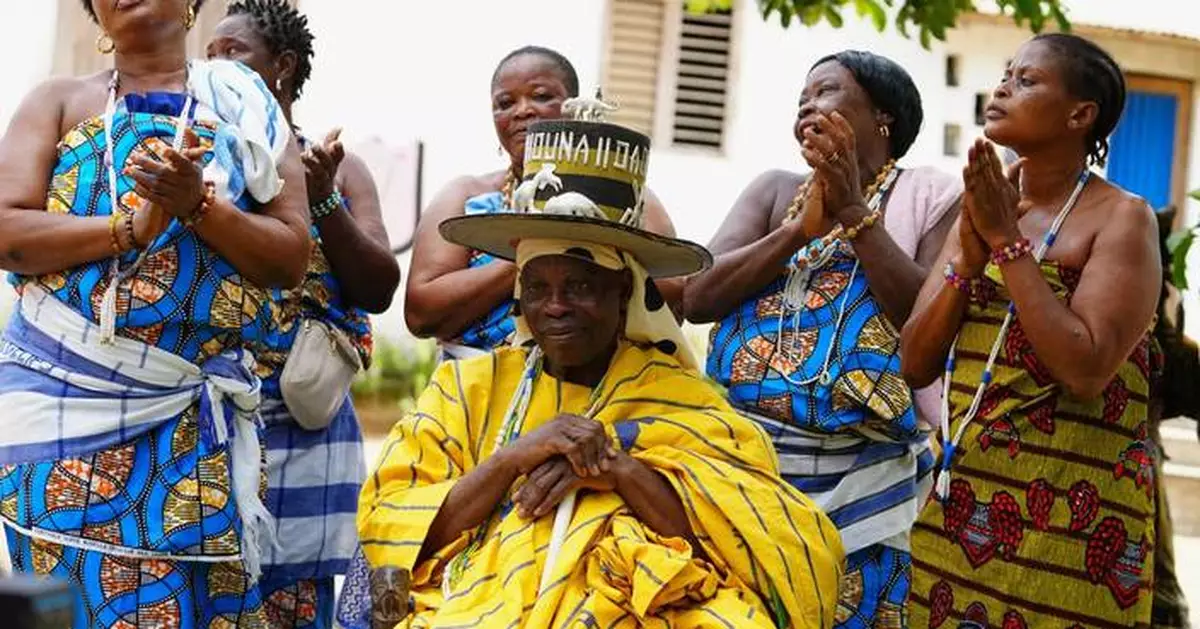
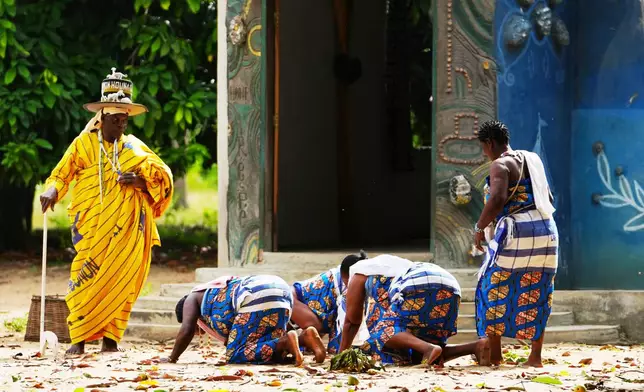
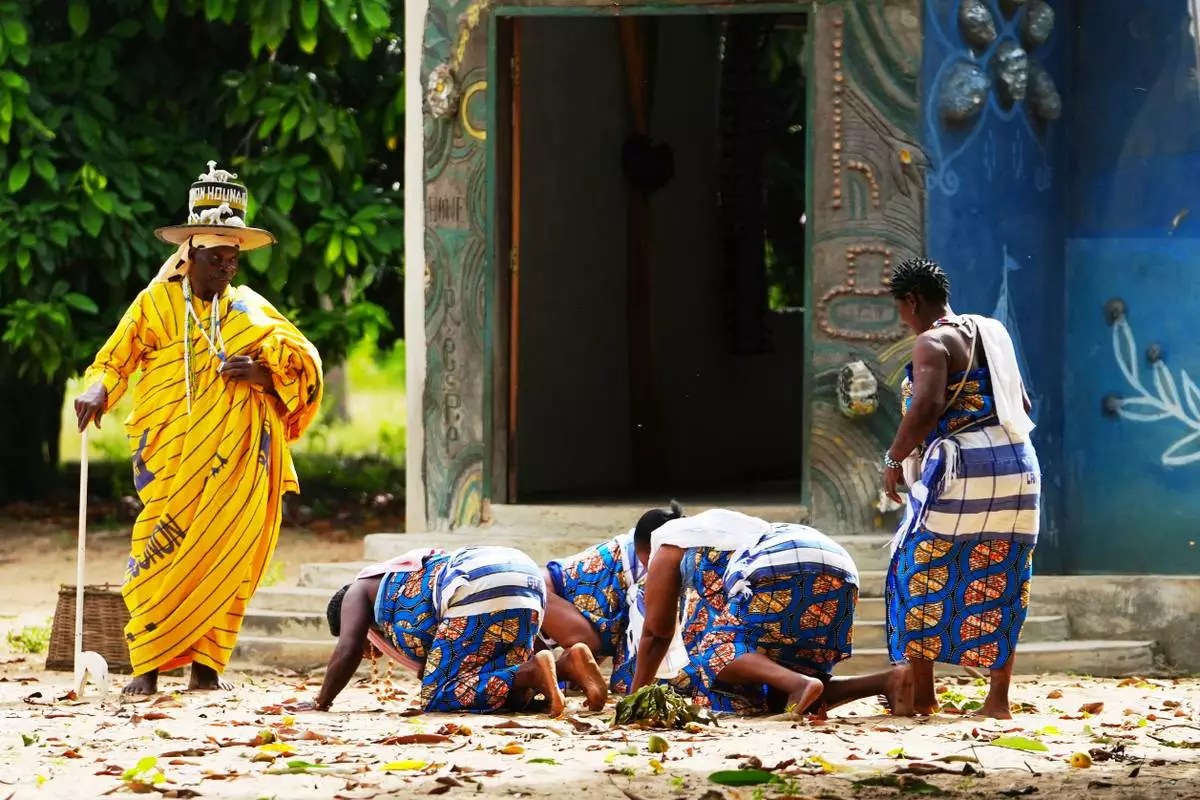
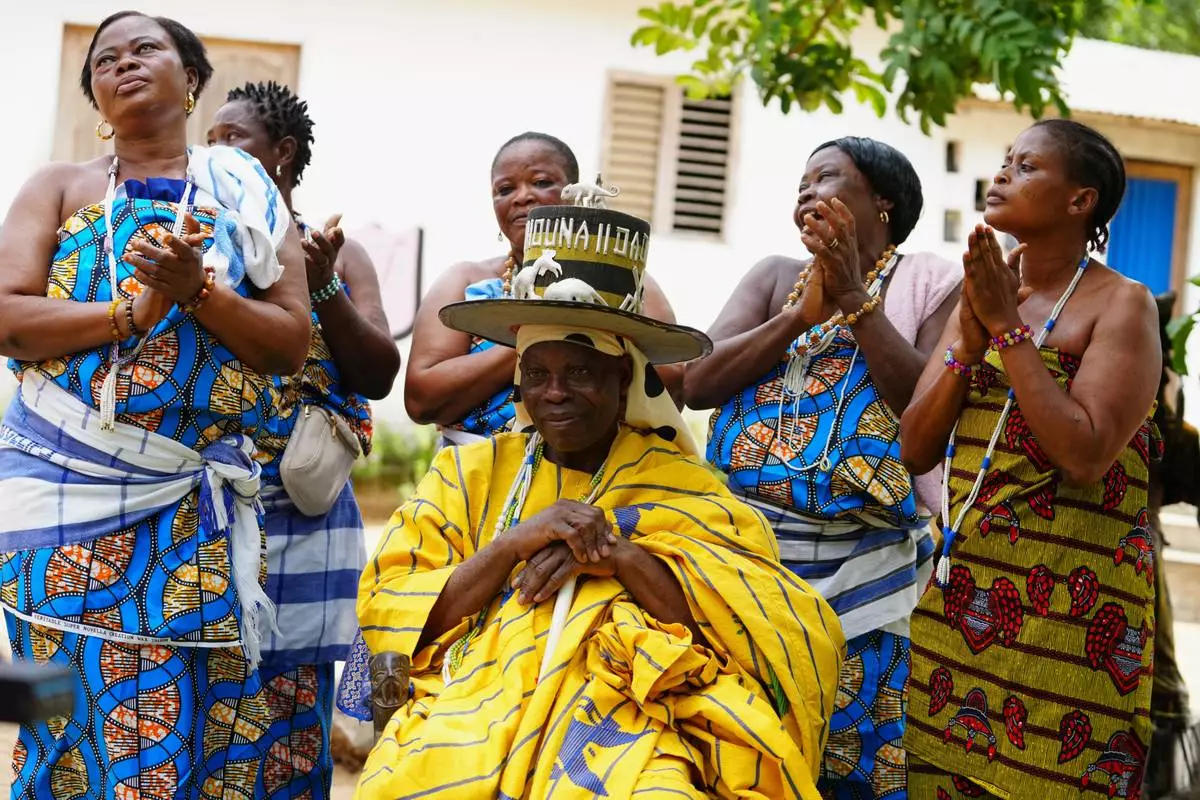
Daagbo Hounon Houna II, the Supreme Spiritual Voodoo Chief, left, is greeted by priestesses before an interview with The Associated Press In Ouidah, Benin, May 14, 2026. (AP Photo/Sunday Alamba)
Daagbo Hounon Houna II, the Supreme Spiritual Voodoo Chief, left, is greeted by priestesses before an interview with The Associated Press In Ouidah, Benin, May 14, 2026. (AP Photo/Sunday Alamba)

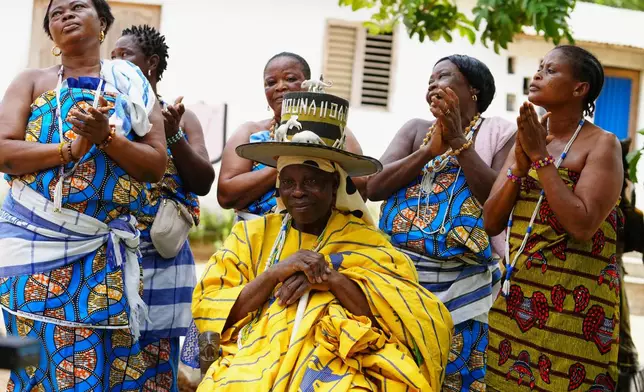
Daagbo Hounon Houna II, the Supreme Spiritual Voodoo Chief, surrounded by priestesses, is interviewed by The Associated Press, in Ouidah, Benin, May 14, 2026. (AP Photo/Sunday Alamba)

Daagbo Hounon Houna II, the Supreme Spiritual Voodoo Chief, surrounded by priestesses, is interviewed by The Associated Press, in Ouidah, Benin, May 14, 2026. (AP Photo/Sunday Alamba)

The opposition figure who defeated Kérékou, Nicéphore Soglo, rehabilitated Voodoo, or Vodún as it is known in Benin, as part of national heritage and emphasized the kind of tolerance that Kérékou would try to emulate when he successfully sought reelection in 1996.

Two decades and three presidents later, this West African nation is a bastion of democracy in a region dubbed “the coup belt” for the trend since 2020 of military takeovers. President Romuald Wadagni was inaugurated on May 24 to replace Patrice Talon, who stepped down after serving two terms.

To an intriguing degree, Benin’s democratic stance reflects the resilience of the Vodún religion, which confounded Kérékou’s authoritarianism until he could no longer afford to be so rigid. The humbling of Kérékou showed that no leader, however powerful, could strangle faith in the land of Voodoo, according to devotees and scholars.

“The return to democracy recognized the existence of traditional religion,” Vodún supreme leader Daagbo Hounon Houna II told The Associated Press. “Kérékou acknowledged that (African) religions must be respected.”

Kérékou was no ordinary president. As a major in the military of Dahomey, as Benin was then known, he took power in a 1972 coup and presided over a Marxist-Leninist dictatorship. But his nationalization of state enterprises helped trigger economic collapse toward the end of the Cold War, adding to pressure for change from the Catholic Church and others in the National Conference of 1990.

That period was also marked by an assault on Voodoo religion. Vodún was considered backward to Kérékou, even as he retained the services of spiritual advisers known as marabouts. Priests were detained and shrines were lost in urban projects, angering believers.

Voodooists are believed to have retaliated against Kérékou, who grew terrified of being zombified by a curse. He recruited a Malian marabout nicknamed the Devil and experimented with other religions in search of spiritual strength, according to devotees.

Kérékou faced “the heat, and there were parts of the country he couldn’t go to,” said Léon Bani Bigou, a former lawmaker who once served as Kérékou’s adviser. “This is precisely what led him to reconsider his position regarding Indigenous religions.”

Benin's president, who had been raised Catholic, later professed Islam as Ahmed Kérékou before embracing born-again Christianity, a decision that may have been aimed at self-preservation, said Gerrie ter Haar, an emeritus professor of religion and development at the International Institute of Social Studies of Erasmus University.

It's not surprising that Kérékou “remained terrified to become a victim of a Vodún curse and had to search for stronger spiritual power" he saw in evangelical Christianity, she said.

Roughly half of Benin’s 14 million people identify as Christians, according to the U.S. State Department. Yet Vodún is “the first religion of all Beninese," said Mahougnon Kakpo, a prominent politician and lawmaker in Cotonou, Benin's commercial capital.

"The rest is hypocrisy,” Kakpo said. “Kérékou himself practiced Voodoo.”

Vodún is an animist religion in its engagement with the spirit world. Believers see grace and providence in nature, from rocks to rivers. Ceremonies involve sacrificing animals, incantation and frenzied dancing.

The birthplace of Vodún is Ouidah, a city on the Gulf of Guinea that once was a major slave-trading port. It's the seat of Houna II, the Vodún supreme leader.

On a recent morning, Houna II adjusted his thick robes as he settled into his antique chair to describe Voodoo’s resilience, his account punctuated by incantations from the priestesses surrounding him.

Voodoo’s “sworn leaders were not afraid to confront anyone, to leave behind what their ancestors bequeathed them no matter the cost,” he said. “It has been shown that the more you attack their religion, the more you raise their spirits.”

Kérékou was among several postcolonial African leaders who tried to replace religious authority with their own. But he failed and later recanted. That is partly why Kérékou is remembered by his people as “the chameleon.”

Gnassingbé Eyadéma, as Togo's president, successfully encouraged a personality cult, depicting himself as a savior. Eyadema, who justified some attacks on his opponents by calling them sorcerers, ruled uninterrupted from 1967 to 2005.

In Zaïre, present-day Congo, Mobutu Sese Seko took power by force and presented himself as a “god-chief,” widely feared for his perceived access to occult forces. He ruled virtually unchallenged for three decades.

Kérékou's 1991 defeat marked the first time a sitting president had been voted out of power in West Africa. Five years later, he returned as a civilian democrat, his Marxist-Leninist banners gone. And he backed the creation of the National Voodoo Board, with a festive holiday celebrated on Jan. 10 since 1996.

Kérékou failed to eradicate Vodún “because he was attacking a centuries-old social practice deeply rooted in the daily lives of Beninese people, a resource to which he and officials in his regime had been able to turn in the exercise of power,” said Narcisse Martial Yedji, a political sociologist at Université d’Abomey-Calavi. “Kérékou could not win over all the guardians of Voodoo traditions. Voodoo is not private property.”

Voodoo proved resilient, he said, and even now “priests claim that most public authorities resort to magical-religious practices and other rituals deeply rooted in the Voodoo collective consciousness.”

By 2001, seeking his last term, Kérékou was actively campaigning for the Voodoo vote in Ouidah, where pilgrims can be found carrying talismans by the sea.

There, in a forested patch on the edge of a wetland, a Vodún devotee named Irène Kpatenon pointed to the stump of a tree that was the shrine where he occasionally deposited fruits, because he heard that “Voodoo spirits like sweet things.” Kpatenon recently prayed for well-paying work.

Pilgrims to Ouidah may march along the sandy path heading to the monument known as “the Door of No Return” for the hapless victims of the trans-Atlantic slave trade. Even in that sad episode, there is a story of resistance that Houna II proudly recalled.

Enslaved Africans transported to the Caribbean, notably present-day Haiti where the religion is known as Vodou, would rebel against their owners.

In a Vodou ceremony known as the Bois Caïman pact of 1791 — during which a pig was sacrificed for its blood — some slaves plotted the rebellion that made Haiti the first free Black republic in 1804.

Haitian Vodou was suppressed, stigmatized for centuries as superstition and diluted by Catholicism. As in Benin, Vodou in Haiti survived to have a lasting influence on culture.

“Voodoo is life,” said Dossavi Yovo, a priestess in Houna II’s temple, discouraging those who would be so faithless as to mix Christianity with Vodún. “If you want to practice Voodoo, you have got to dedicate yourself to it.”

Associated Press religion coverage receives support through the AP’s collaboration with The Conversation US, with funding from Lilly Endowment Inc. The AP is solely responsible for this content.
FILE - Then Benin President Mathieu Kérékou gestures during an election campaign in Ouidah, about 40 kilometers (25 miles) west of Cotonou, Benin, March 2, 2001. (AP Photo/Christine Nesbitt, File)
FILE - Then Benin President Mathieu Kérékou gestures during an election campaign in Ouidah, about 40 kilometers (25 miles) west of Cotonou, Benin, March 2, 2001. (AP Photo/Christine Nesbitt, File)

FILE - Voodoo worshippers dance during the annual Voodoo Festival in Ouidah, Benin, Jan. 10, 2025. (AP Photo/Sunday Alamba, File)
FILE - Voodoo worshippers dance during the annual Voodoo Festival in Ouidah, Benin, Jan. 10, 2025. (AP Photo/Sunday Alamba, File)

Irène Kpatenon, a tourist guide and Voodoo devotee, prays at a shrine in Ouidah, Benin, May 14, 2026. (AP Photo/Sunday Alamba)
Irène Kpatenon, a tourist guide and Voodoo devotee, prays at a shrine in Ouidah, Benin, May 14, 2026. (AP Photo/Sunday Alamba)

Daagbo Hounon Houna II, the Supreme Spiritual Voodoo Chief, left, is greeted by priestesses before an interview with The Associated Press In Ouidah, Benin, May 14, 2026. (AP Photo/Sunday Alamba)
Daagbo Hounon Houna II, the Supreme Spiritual Voodoo Chief, left, is greeted by priestesses before an interview with The Associated Press In Ouidah, Benin, May 14, 2026. (AP Photo/Sunday Alamba)

Daagbo Hounon Houna II, the Supreme Spiritual Voodoo Chief, surrounded by priestesses, is interviewed by The Associated Press, in Ouidah, Benin, May 14, 2026. (AP Photo/Sunday Alamba)

Daagbo Hounon Houna II, the Supreme Spiritual Voodoo Chief, surrounded by priestesses, is interviewed by The Associated Press, in Ouidah, Benin, May 14, 2026. (AP Photo/Sunday Alamba)
MADRID (AP) — Pope Leo XIV honored Spain's centuries-old tradition of religious devotion on Sunday as a “school of faith” for today, as he presided over a Mass before a million people and highlighted one of the most iconic expressions of Spanish popular piety with a procession over flower-petal carpets.

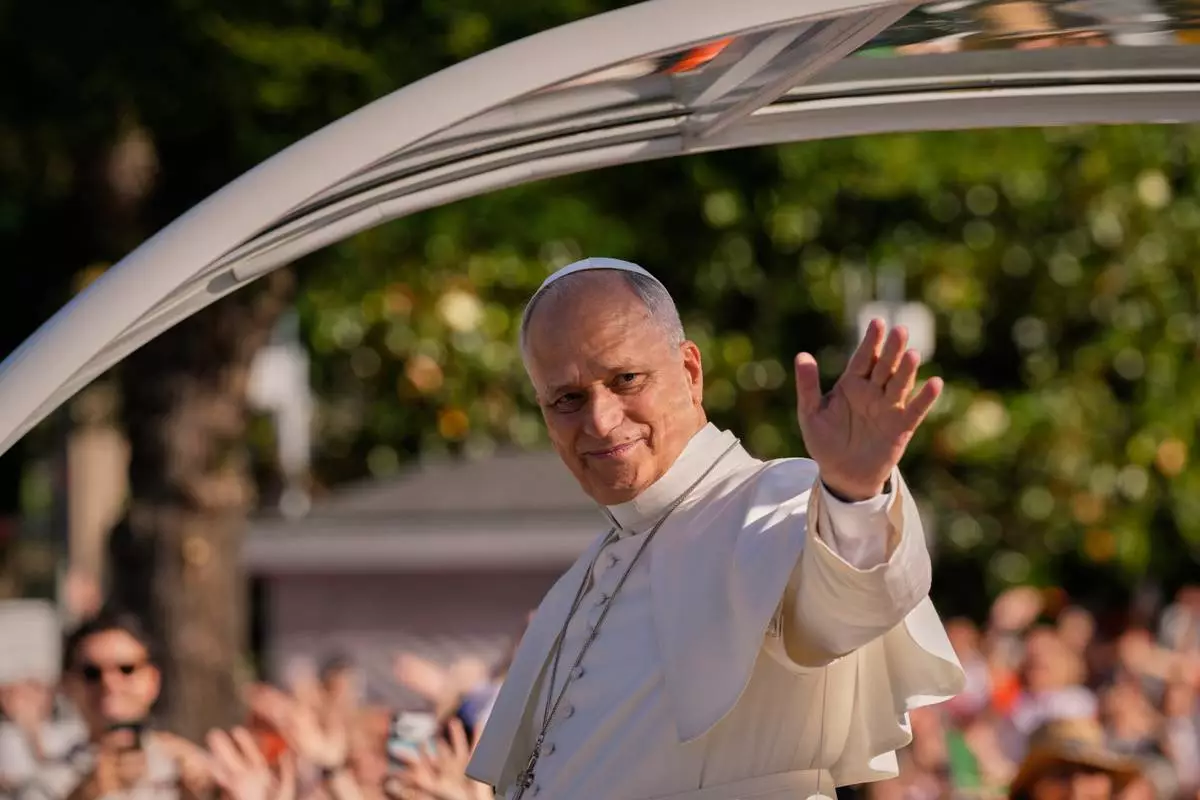
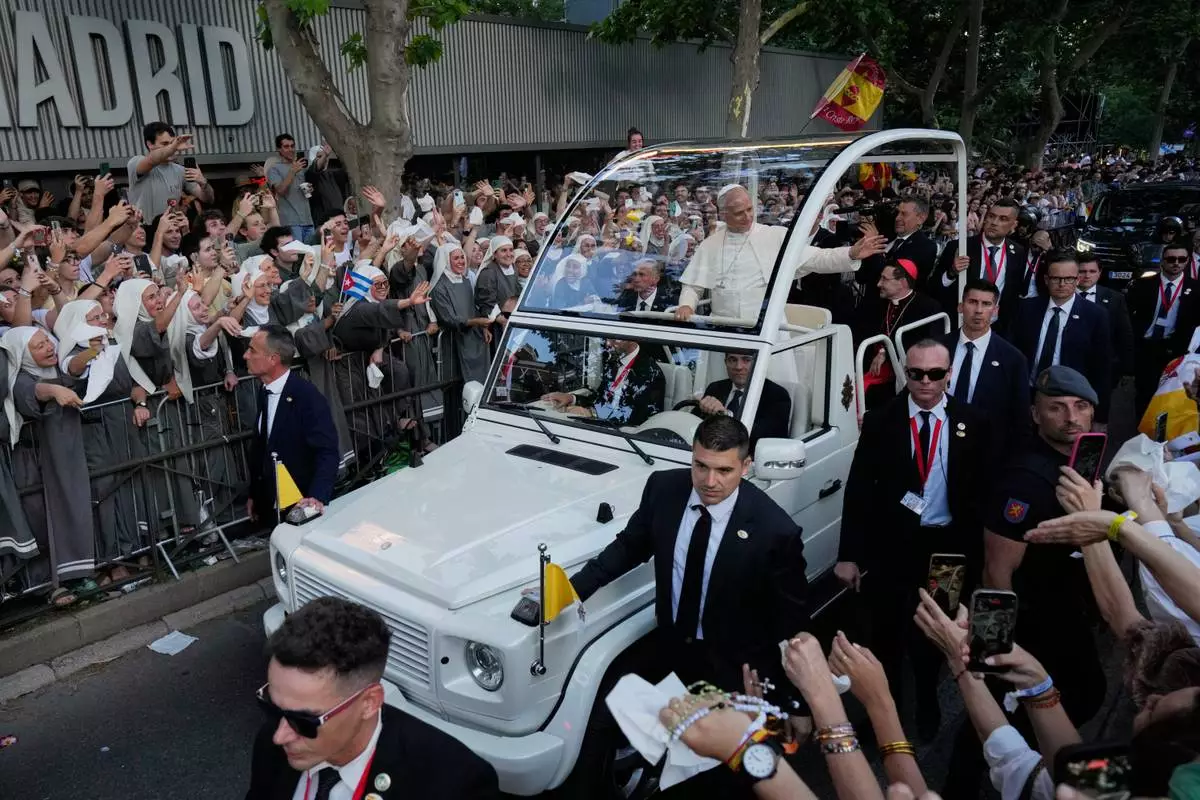
The crowd cheered and shouted “This is the youth of the pope!” as Leo arrived for the Mass at a central Madrid plaza. He looped around the plaza and surrounding streets in his popemobile to a crowd packed several rows deep of people eager to witness the first papal visit in 15 years.

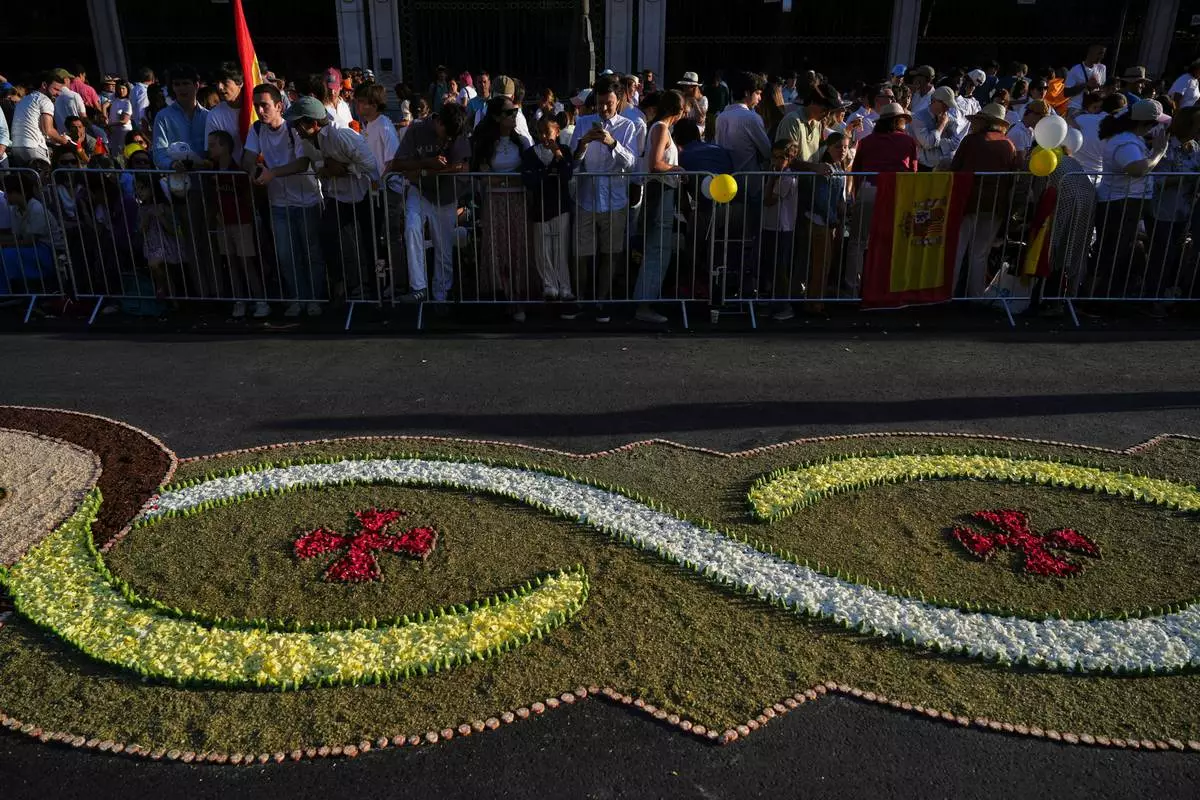
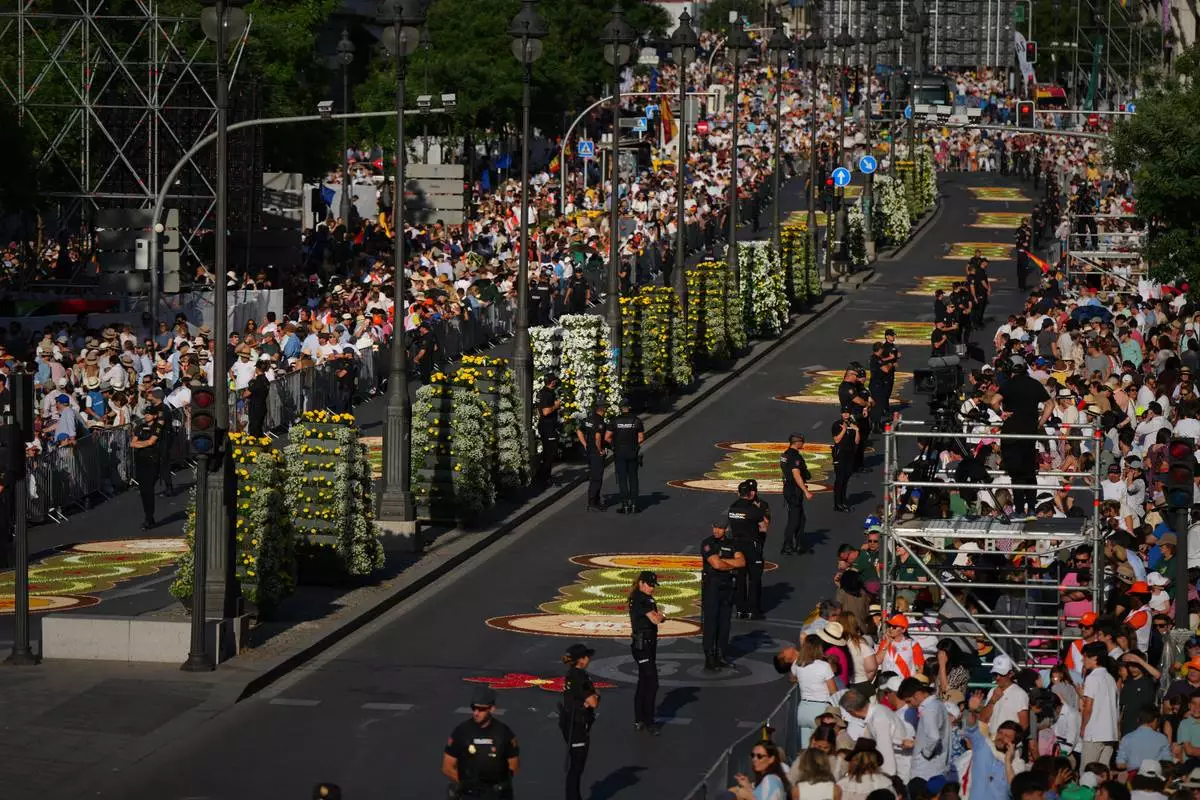
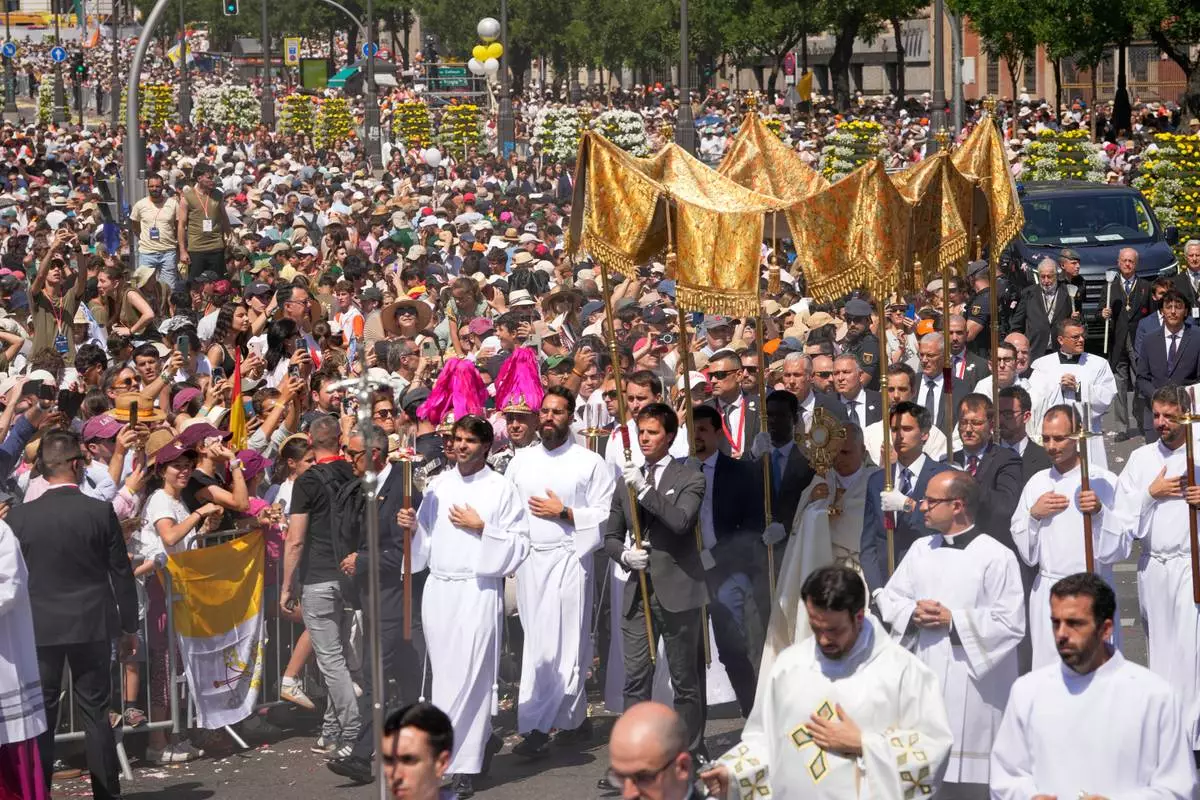
Sunday’s Mass fell on the Catholic Corpus Domini feast day, which often features processions of faithful through towns and cities led by a priest carrying the Eucharist. In Spain as in other predominantly Catholic countries, the processions often feature elaborate floral carpets arranged along the route.

According to Spanish organizers, the 16 flower carpets decorating the half-kilometer (mile) procession route off Plaza Cibeles were prepared by a Spanish florists association from Galicia. Florists used more than 30,000 flowers, most the yellow and white colors of the Holy See flag, for the carpets that feature decorations such as the Holy See keys.

Leo, who arrived in Spain on Saturday at the start of his weeklong visit, has been keen to highlight the long tradition of Catholic devotion here to encourage especially young generations to find their faith in a once-staunchly Catholic country where religious observance has largely been on the wane.

In his homily Sunday, Leo honored Spain's tradition of the Corpus Domini processions, saying the floral carpets express the “spiritual sentiments of this country” through “altars erected in the streets.”

“This is not an exhibition, a remnant of folklore or a simple display of beauty,” he said. “It is a profession of faith in the presence of the risen Lord, who is alive and continues to walk among us.”

He said the continued observance of such devotional practices points to what Spain can and should be for the world.

“Herein lies the task of Spain today and in the future: to ensure that the religiosity which has shaped and defined this country for centuries is not a museum of the past to be visited, but a school of faith from which to draw even today,” he said.

At the end of the Mass, Leo carried a gilded monstrance, or container, holding a Eucharistic host and walked over the floral carpets, as children dropped additional petals before him and the crowd tossed petals from behind the barricades.

The huge turnout in Spain began the day of Leo's arrival, when an estimated 600,000 young Spaniards attended a vigil service Saturday night. They knelt for several minutes in silent prayer alongside Leo, suggesting that there is indeed interest in the faith among young people despite Spain’s heavily secularized society.

“Let me take the opportunity to tell all of you: Don't ever be afraid of thinking about a vocation to the priesthood or religious life, or other services in the church!” Leo told the crowd.

Irati Valda and Javier Hormazal, a young couple, held up a cardboard sign announcing they are going to get married on June 13 and were ushered up close to receive Leo's blessing during the vigil.

“To see so many young people together, it's incredible. Half a million people in silence, this is something you will only live once," Valda said.

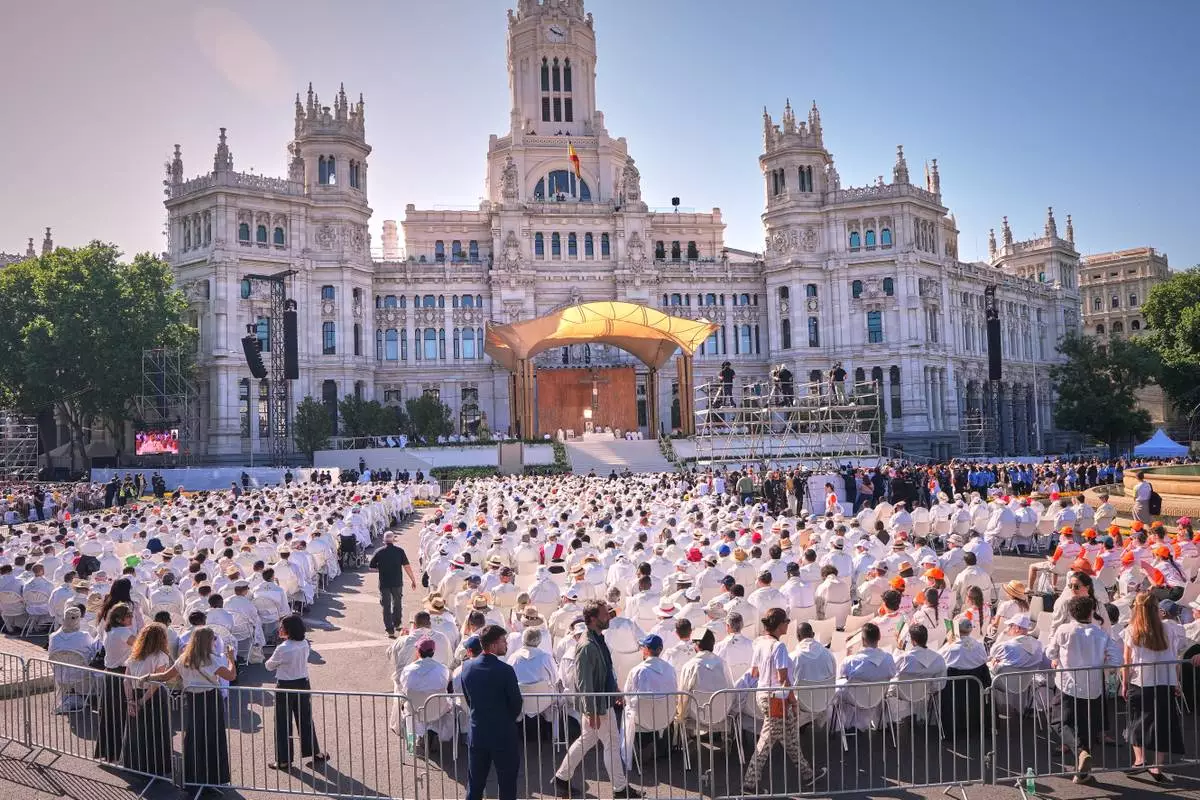
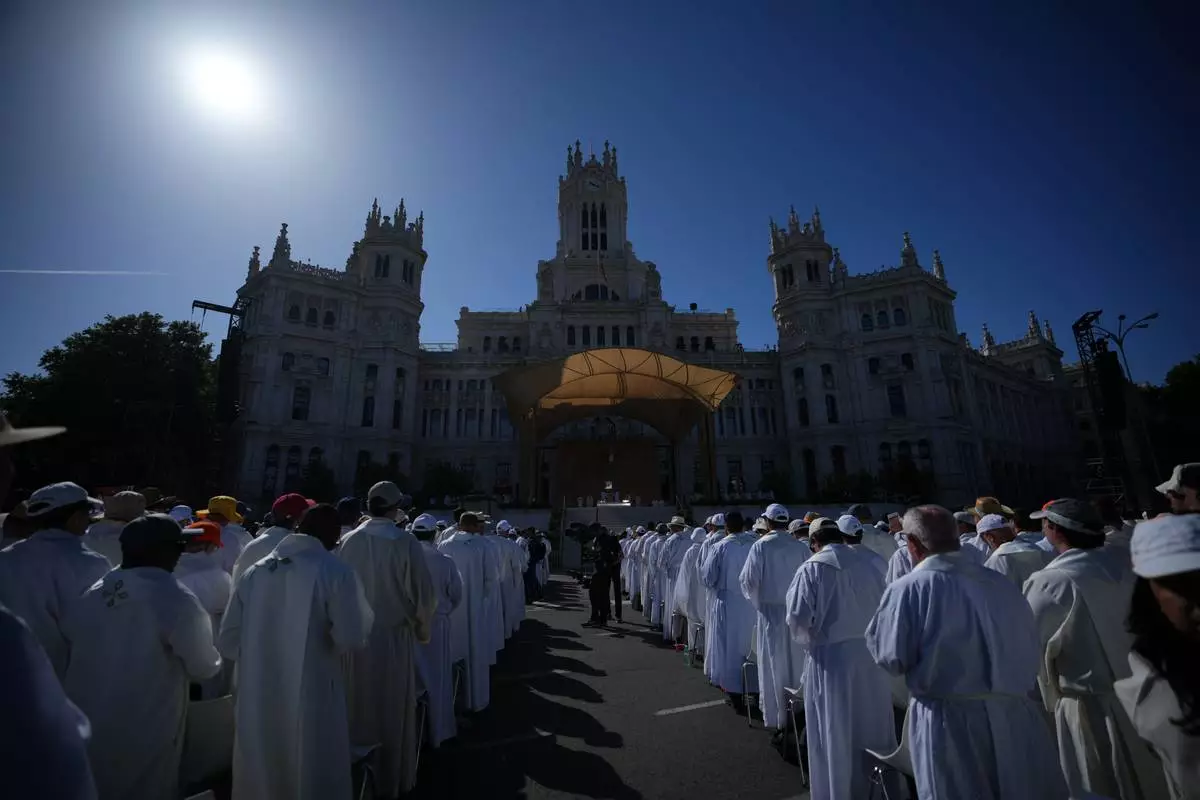
For Sunday's Mass and procession, local organizers said 1.2 million people had turned out on a brilliant spring morning at the central plaza and surrounding streets, with more trying to get in.

The tradition of laying flower carpets — and destroying them when the procession tramples them — dates back two centuries and is popular also in Latin America, where elaborate sand designs are also made. The painstaking displays are considered an offering to the Eucharist.

Poland has already had its tradition of Corpus Domini flower carpets recognized by UNESCO, and Spain's Galicia region is trying to have its tradition listed along with other countries as part of the world’s intangible cultural heritage.

Wildly popular religious processions, pilgrimages and feasts continue to be held in most Spanish regions. The most recognizable are Holy Week processions during the final week of Lent where brotherhoods and robed penitents parade ornate statues of Christ and the Virgin Mary through cities, towns and villages alongside marching bands. Such processions draw the faithful as well as droves of non-believers and tourists.

Spanish towns and cities also regularly honor local patron saints with fiestas. Religious pilgrimages to local shrines mix piety with communal festivities and music. In Andalusia, the El Rocío pilgrimage fetches a million people that make a long, dusty journey over the Pentecost weekend on horseback and decorated covered wagons to venerate an icon of the Virgin Mary.

Leo arrived in Spain on Saturday and urged its people to put an end to polarization and work for unity. Later Sunday he is to meet privately with members of his Augustinian religious order and address cultural leaders.

AP visual journalist Helena Alves contributed to this report.

Associated Press religion coverage receives support through the AP’s collaboration with The Conversation US, with funding from Lilly Endowment Inc. The AP is solely responsible for this content.

Pope Leo XIV takes part in a procession marking the Catholic feast of Corpus Christi at Plaza de Cibeles in Madrid, Spain, Sunday, June 7, 2026, on the second day of his seven-day apostolic visit to mainland Spain and the Canary Islands. (AP Photo/Bernat Armangue)

Pope Leo XIV takes part in a procession marking the Catholic feast of Corpus Christi at Plaza de Cibeles in Madrid, Spain, Sunday, June 7, 2026, on the second day of his seven-day apostolic visit to mainland Spain and the Canary Islands. (AP Photo/Bernat Armangue)

Clergymen wait for Pope Leo XIV to arrive to preside over Mass marking the feast of Corpus Christi in Plaza de Cibeles in Madrid, Sunday, June 7, 2026, on the second day of his seven-day apostolic journey to mainland Spain and the Canary Islands. (AP Photo/Alessandra Tarantino)

Clergymen wait for Pope Leo XIV to arrive to preside over Mass marking the feast of Corpus Christi in Plaza de Cibeles in Madrid, Sunday, June 7, 2026, on the second day of his seven-day apostolic journey to mainland Spain and the Canary Islands. (AP Photo/Alessandra Tarantino)

People wait for Pope Leo XIV to preside over Mass marking the Catholic feast of Corpus Christi in Plaza de Cibeles in Madrid, Sunday, June 7, 2026, on the second day of a seven-day apostolic journey to mainland Spain and the Canary Islands. (AP Photo/Alessandra Tarantino)

People wait for Pope Leo XIV to preside over Mass marking the Catholic feast of Corpus Christi in Plaza de Cibeles in Madrid, Sunday, June 7, 2026, on the second day of a seven-day apostolic journey to mainland Spain and the Canary Islands. (AP Photo/Alessandra Tarantino)

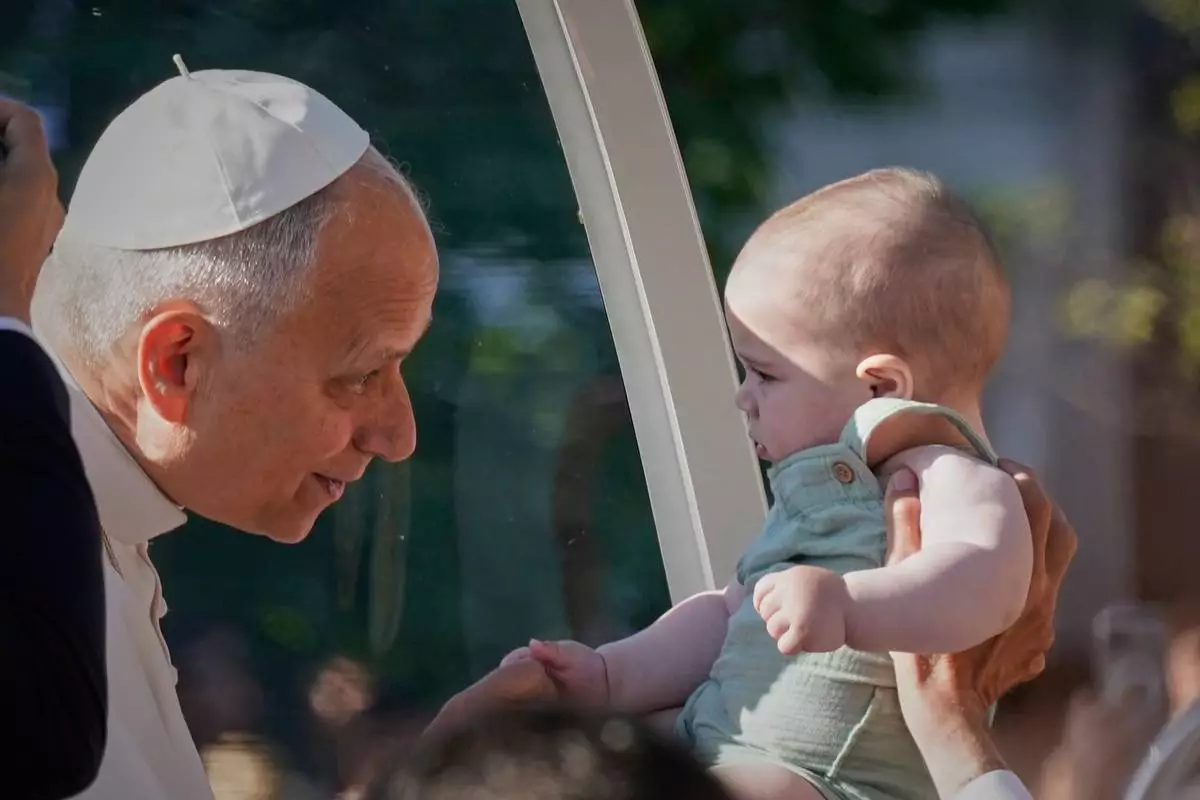
Pope Leo XIV greets a child upon arriving in the popemobile at Plaza de Cibeles for a Holy Mass and Corpus Christi procession in Madrid, Spain, Sunday, June 7, 2026, on the second day of his seven-day apostolic visit to mainland Spain and the Canary Islands. (AP Photo/Andrea Comas)

Pope Leo XIV greets a child upon arriving in the popemobile at Plaza de Cibeles for a Holy Mass and Corpus Christi procession in Madrid, Spain, Sunday, June 7, 2026, on the second day of his seven-day apostolic visit to mainland Spain and the Canary Islands. (AP Photo/Andrea Comas)

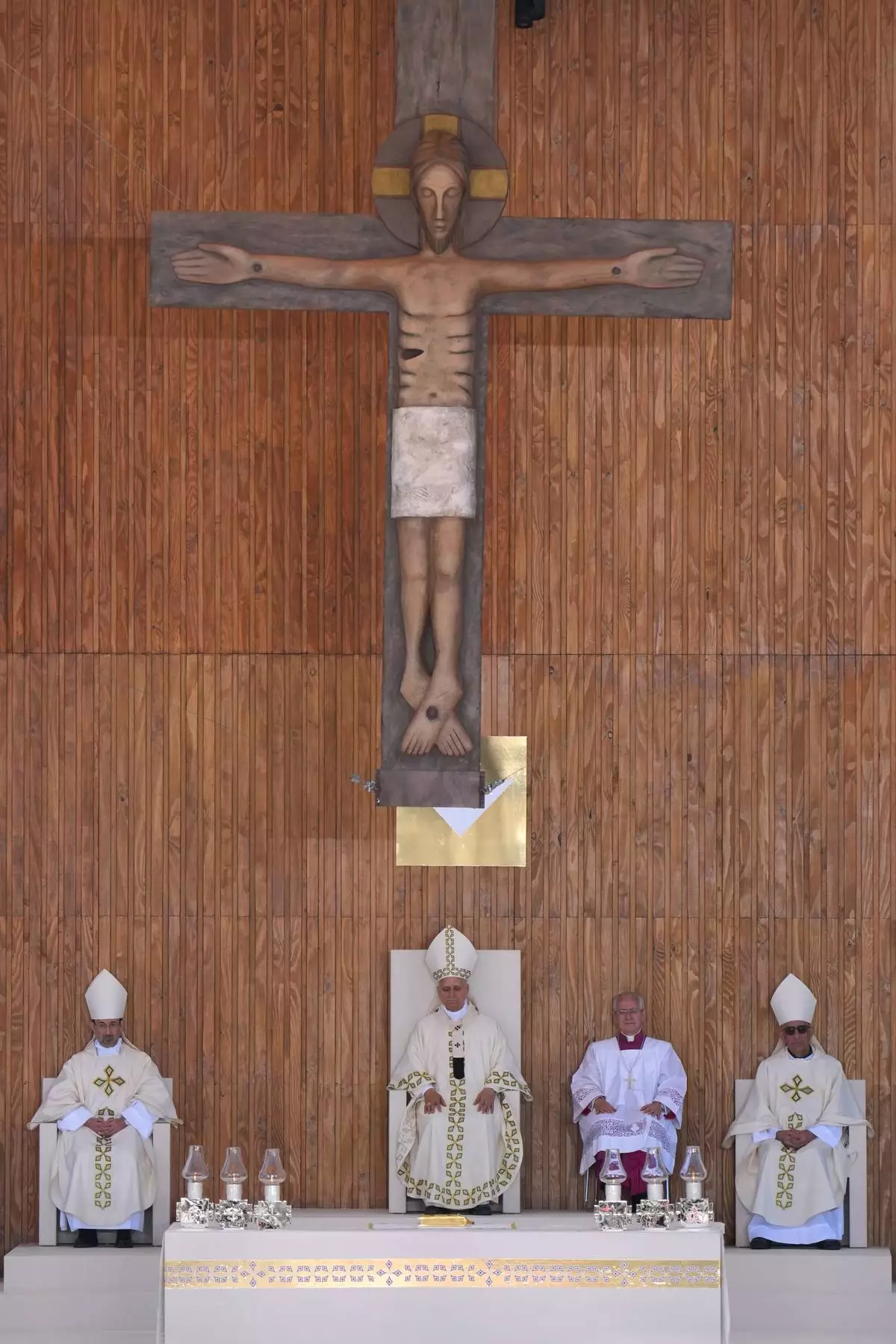
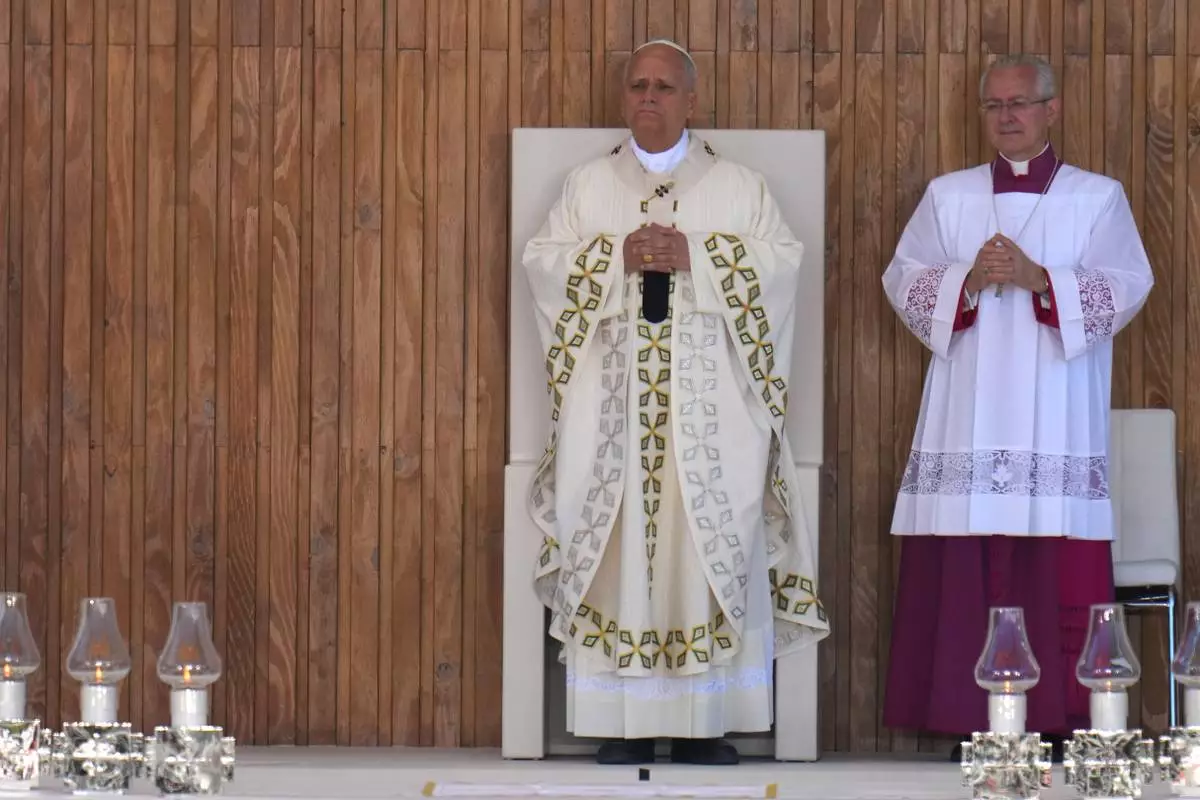
Pope Leo XIV presides over a Mass marking the Catholic feast of Corpus Christi at Plaza de Cibeles in Madrid, Spain, Sunday, June 7, 2026, on the second day of his seven-day apostolic visit to mainland Spain and the Canary Islands. (AP Photo/Manu Fernandez)

Pope Leo XIV presides over a Mass marking the Catholic feast of Corpus Christi at Plaza de Cibeles in Madrid, Spain, Sunday, June 7, 2026, on the second day of his seven-day apostolic visit to mainland Spain and the Canary Islands. (AP Photo/Manu Fernandez)

Pope Leo XIV presides over a Mass marking the Catholic feast of Corpus Christi at Plaza de Cibeles in Madrid, Spain, Sunday, June 7, 2026, on the second day of his seven-day apostolic visit to mainland Spain and the Canary Islands. (AP Photo/Manu Fernandez)

Pope Leo XIV presides over a Mass marking the Catholic feast of Corpus Christi at Plaza de Cibeles in Madrid, Spain, Sunday, June 7, 2026, on the second day of his seven-day apostolic visit to mainland Spain and the Canary Islands. (AP Photo/Manu Fernandez)

Pope Leo XIV arrives in the popemobile at Plaza de Cibeles for a Holy Mass and Corpus Christi procession in Madrid, Spain, Sunday, June 7, 2026, on the second day of his seven-day apostolic visit to mainland Spain and the Canary Islands. (AP Photo/Bernat Armangue)

Pope Leo XIV arrives in the popemobile at Plaza de Cibeles for a Holy Mass and Corpus Christi procession in Madrid, Spain, Sunday, June 7, 2026, on the second day of his seven-day apostolic visit to mainland Spain and the Canary Islands. (AP Photo/Bernat Armangue)

Pope Leo XIV presides over a Mass marking the Catholic feast of Corpus Christi at Plaza de Cibeles in Madrid, Spain, Sunday, June 7, 2026, on the second day of his seven-day apostolic visit to mainland Spain and the Canary Islands. (AP Photo/Manu Fernandez)

Pope Leo XIV presides over a Mass marking the Catholic feast of Corpus Christi at Plaza de Cibeles in Madrid, Spain, Sunday, June 7, 2026, on the second day of his seven-day apostolic visit to mainland Spain and the Canary Islands. (AP Photo/Manu Fernandez)

Pope Leo XIV arrives in the popemobile at Plaza de Lima in Madrid, Saturday, June 6, 2026, for a prayer vigil with young people on the first day of a seven-day apostolic journey to mainland Spain and the Canary Islands. (AP Photo/Bernat Armangue)

Pope Leo XIV arrives in the popemobile at Plaza de Lima in Madrid, Saturday, June 6, 2026, for a prayer vigil with young people on the first day of a seven-day apostolic journey to mainland Spain and the Canary Islands. (AP Photo/Bernat Armangue)

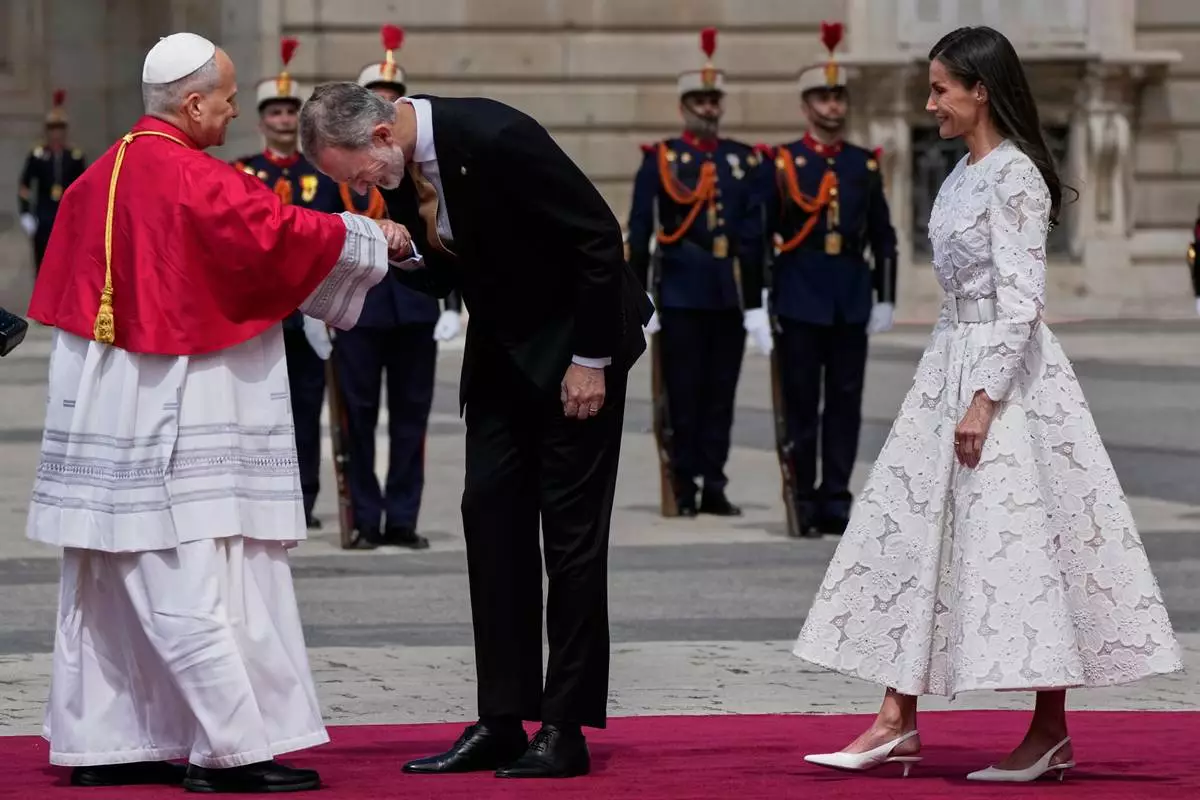
Pope Leo XIV is welcomed by Spain's King Felipe VI and Queen Letizia, as he arrives at the Royal Palace in Madrid, Saturday, June 6, 2026, on the first day of his seven-day apostolic journey to mainland Spain and the Canary Islands. (AP Photo/Alessandra Tarantino)

Pope Leo XIV is welcomed by Spain's King Felipe VI and Queen Letizia, as he arrives at the Royal Palace in Madrid, Saturday, June 6, 2026, on the first day of his seven-day apostolic journey to mainland Spain and the Canary Islands. (AP Photo/Alessandra Tarantino)

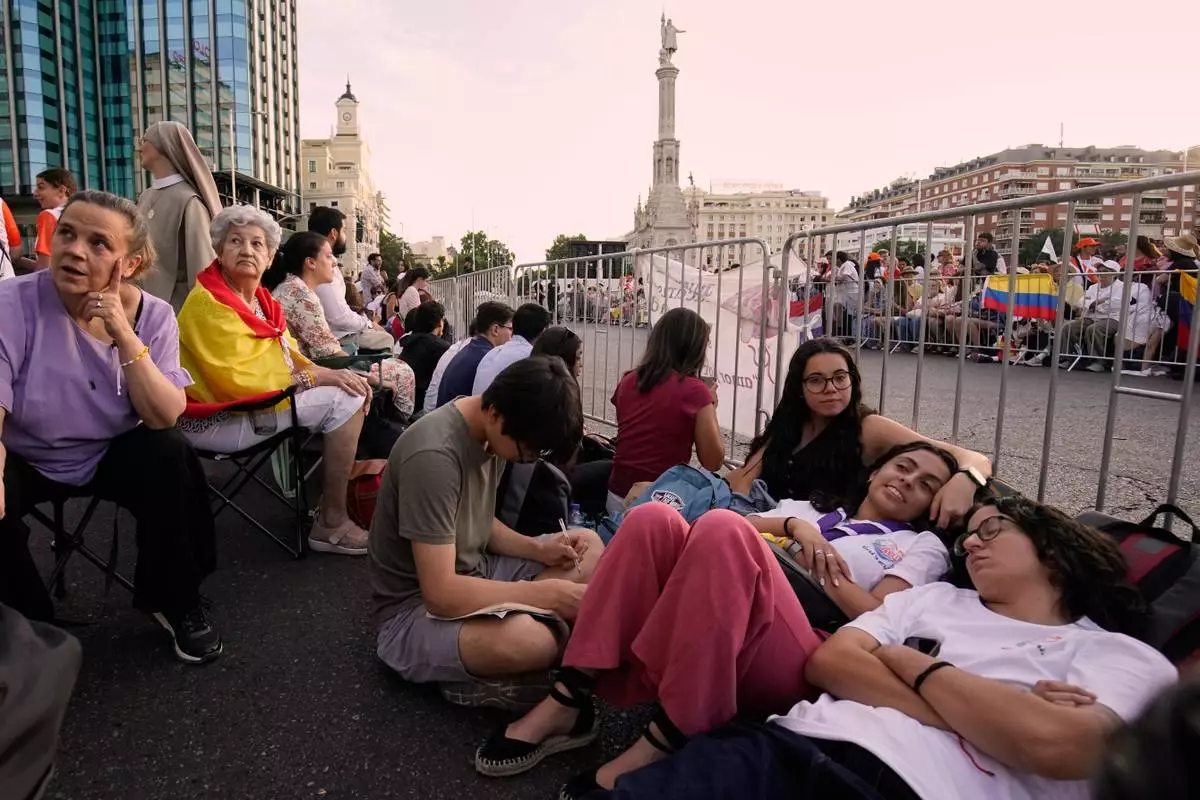
People wait for the arrival of Pope Leo XIV ahead of a Holy Mass and Corpus Christi procession at Plaza de Cibeles in Madrid, Spain, Sunday, June 7, 2026, on the second day of his seven-day apostolic visit to mainland Spain and the Canary Islands. (AP Photo/Andrea Comas)

People wait for the arrival of Pope Leo XIV ahead of a Holy Mass and Corpus Christi procession at Plaza de Cibeles in Madrid, Spain, Sunday, June 7, 2026, on the second day of his seven-day apostolic visit to mainland Spain and the Canary Islands. (AP Photo/Andrea Comas)

People wait for the arrival of Pope Leo XIV ahead of a Holy Mass and Corpus Christi procession at Plaza de Cibeles in Madrid, Spain, Sunday, June 7, 2026, on the second day of his seven-day apostolic visit to mainland Spain and the Canary Islands. (AP Photo/Andrea Comas)

People wait for the arrival of Pope Leo XIV ahead of a Holy Mass and Corpus Christi procession at Plaza de Cibeles in Madrid, Spain, Sunday, June 7, 2026, on the second day of his seven-day apostolic visit to mainland Spain and the Canary Islands. (AP Photo/Andrea Comas)

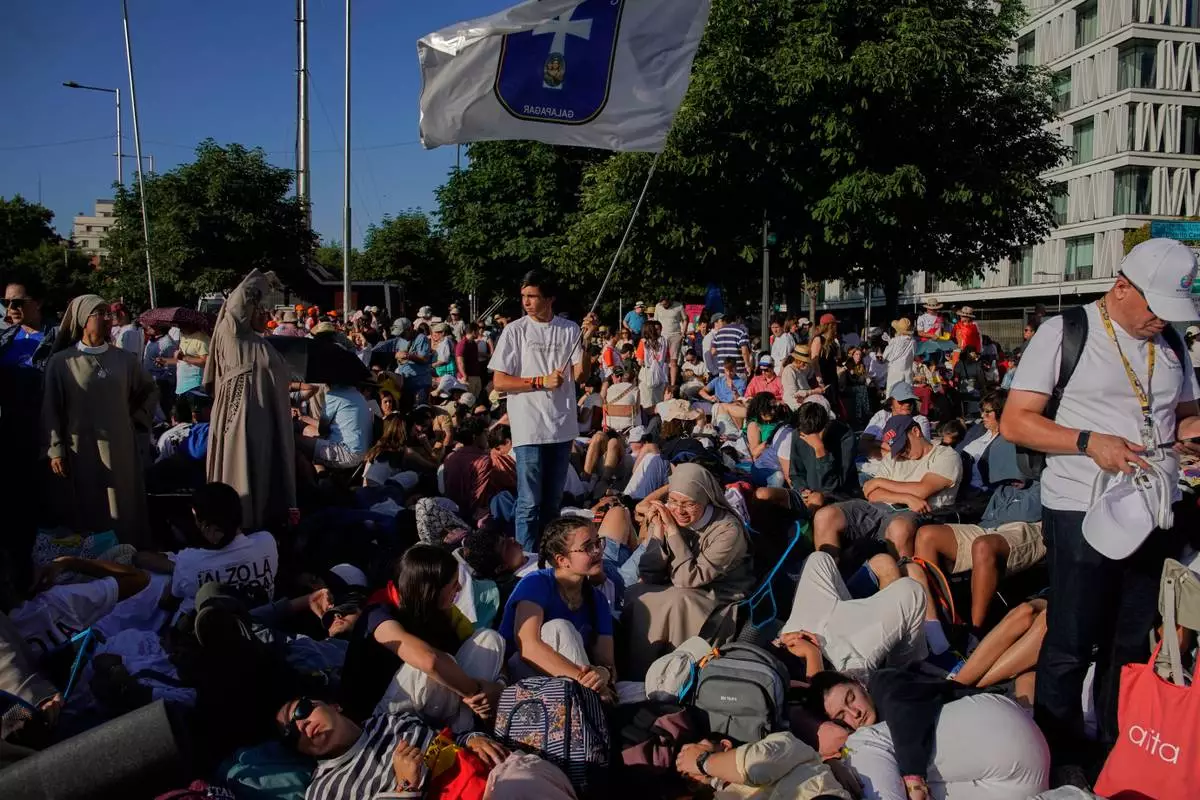
People wait for the arrival of Pope Leo XIV ahead of a Holy Mass and Corpus Christi procession at Plaza de Cibeles in Madrid, Spain, Sunday, June 7, 2026, on the second day of his seven-day apostolic visit to mainland Spain and the Canary Islands. (AP Photo/Manu Fernandez)

People wait for the arrival of Pope Leo XIV ahead of a Holy Mass and Corpus Christi procession at Plaza de Cibeles in Madrid, Spain, Sunday, June 7, 2026, on the second day of his seven-day apostolic visit to mainland Spain and the Canary Islands. (AP Photo/Manu Fernandez)

Recommended Articles