MONTREAL (AP) — Montreal Canadiens captain Nick Suzuki has won the Frank J. Selke Trophy given to the NHL's top defensive forward while teammate Cole Caufield was awarded the Lady Byng Trophy for sportsmanship and skill.
Suzuki, the first choice on 151 of the 198 ballots cast by members of the Professional Hockey Writers Association for the honor announced Friday, posted a career-high 101 points in 2025-26, and the Canadiens outscored their opponents 94-58 at even strength when Suzuki was on the ice. Tampa Bay center Anthony Cirelli finished second followed by Colorado center Brock Nelson.
“It doesn’t happen without him and his leadership every day,” Caufield said of Suzuki, the Canadiens’ top center. “There’s so many things that he does that help the team as a whole. We really follow his lead. It’s very well-deserved, but I think the guys in the room will tell you maybe not expected, but it’s something that we all knew he has in him.”
Caufield was the Canadiens’ first 50-goal scorer in 36 years with 51, and was assessed just seven minor penalties. Newly retired Los Angeles Kings center Anze Kopitar, a three-time Lady Byng winner, was second in voting, followed by Ottawa defenseman Jake Sanderson.
“Special to give Cole his award and all the effort that he put in this season and what he’s done for our team,” Suzuki said. “The enthusiasm every morning that we all need on some tough mornings. It was cool to share that experience with him. We’ve been through a lot together.”
Suzuki and Caulfield were tasked with presenting the other with their award and said they had no idea they themselves were winners until they were surprised last month.
“It got both of us,” Suzuki said on a video conference call of the award ruse on May 11 that was kept secret for 3 1/2 weeks. “We just thought we were both presenting. It was a great job by everyone to keep that on the down low.”

Montreal Canadiens' Nick Suzuki (14) controls the puck against the Carolina Hurricanes during the first period in Game 5 of the Eastern Conference finals NHL hockey Stanley Cup playoff series in Raleigh, N.C., Friday, May 29, 2026. (AP Photo/Karl DeBlaker)
ST. LOUIS (AP) — Far from its European homeland, Bosnia and Herzegovina has zealous fans in the American Midwest as it prepares for its second World Cup.
An estimated 60,000-70,000 Bosnians live in St. Louis, with many arriving in the early 1990s during the Bosnian War and the breakup of Yugoslavia.
Bosnia faces Panama on Saturday in an international friendly at St. Louis' Energizer Park and plays World Cup group matches in Toronto (vs. Canada), Los Angeles ( vs. Switzerland) and Seattle (vs. Qatar).
“We should be able to create an atmosphere like a home match,” said Elvir Kafedžić, a Bosnia-born St. Louisan and an assistant coach for the city’s MLS team, St. Louis City SC.
He was only 9 1-2 when he fled Bosnia in 1992 with his mother and brothers to escape the war.
“Unfortunately, I remember a lot of it,” said Kafedžić, whose story mirrors many who rebuilt in St. Louis after meandering across Europe.
“We kind of tumbled through some different countries like Montenegro, the Czech Republic, Sweden and wound up in Germany," Kafedžić explained.
That ended when Germany stopped granting temporary protection to Bosnians in the late 1990s.
“We didn’t have anywhere to go back to in Bosnia. And we already had some relatives living in St. Louis. So in 1999 we made the move with my mom and two older brothers."
Bosnia qualified for the World Cup two months ago, defeating four-time World Cup champion Italy 4-1 on penalties after a 1-1 draw. The deciding penalty was converted by Esmir Bajraktarević, a Bosnian-American from Appleton, Wisconsin.
“That day you could see cars flying Bosnian flags in the streets,” Kafedžić said of the St. Louis scene. “All the restaurants, all the coffee shops were packed wall-to-wall with strangers hugging each other. For me, this goes beyond soccer. This shows who we are, the pride, where we come from and how deeply we’re connected to our roots.”
Bosnia's World Cup team is led by 40-year-old captain Edin Džeko and 18-year-old winger Kerim Alajbegović. Džeko has scored at least 50 goals playing in the English Premier League, Italy’s Serie A, and the German Bundesliga.
Bosnia’s only other World Cup appearance was at Brazil in 2014, where it was narrowly eliminated in the group stage. The team’s first World Cup goal was scored by Vedad Ibišević in a 2-1 loss to Argentina.
Ibišević played high school soccer in St. Louis, starred at Saint Louis University and followed up with a successful professional career, primarily in the Bundesliga.
St. Louis surfaced as a destination for Bosnian refugees because it offered jobs, reasonable housing prices and had a small community in place.
“We all came looking for a better life because everything was taken away from us at home,” Kafedžić said. “You can’t put in words how thankful we are.”
A swath of the city’s South Side is known as “Little Bosnia,” anchored by rows of tidy red-brick houses, bars, cafes and bakeries and a replica wood fountain that mimics one in the capital Sarajevo, known as the Sebilj.
“It represents Sarajevo in the heart,” said Jasmina Silić, working across the street from the monument at the Skala Bar on Gravois Avenue, the fulcrum of the community.
Skala is located just a few doors away from the “Association of Survivors of the Srebrenica Genocide,” a constant reminder of the war and the ethnic cleansing committed by Bosnian Serb forces.
More than 8,000 Bosnian Muslims died in Srebrenica, which was declared a genocide by the United Nations, the International Court of Justice and others. It’s estimated that 104,000 died from the war, 2 million were displaced, and 83% of the civilian deaths were Bosnian Muslims.
Bosnia's influence is all over St. Louis, a metropolitan area of almost 3 million on the banks of the Mississippi River.
The best-selling food at St. Louis’ MLS stadium is Bosnian fare from a restaurant called the “Balkan Treat Box.” Saint Louis University houses the Center for Bosnian Studies, and several books document the diaspora including “Bosnian St. Louis: Between Two Worlds” by Patrick McCarthy and Akif Cogo.
It tells of tragedy, resilience and the community’s ties to Europe.
“One woman in St. Louis still carries the keys to her house in Bosnia,” they wrote. “Another man describes his feelings toward Bosnia as a divorce he did not want from a woman he still loves.”
Bosnia was a multi-ethnic and multi-religious nation before the war, predominantly Muslim but with a large number of Croatian Roman Catholics and Serbian Orthodox Christians.
The mix binds the World Cup team, a symbol of pride and reconciliation.
“A lot of people from here go to Bosnia every year to see families,” said Silić, speaking at the Skala Bar. ”The team represents unity because it’s all three religions and everybody is one like it used to be when it was still Yugoslavia.”
AP World Cup: https://apnews.com/hub/fifa-world-cup
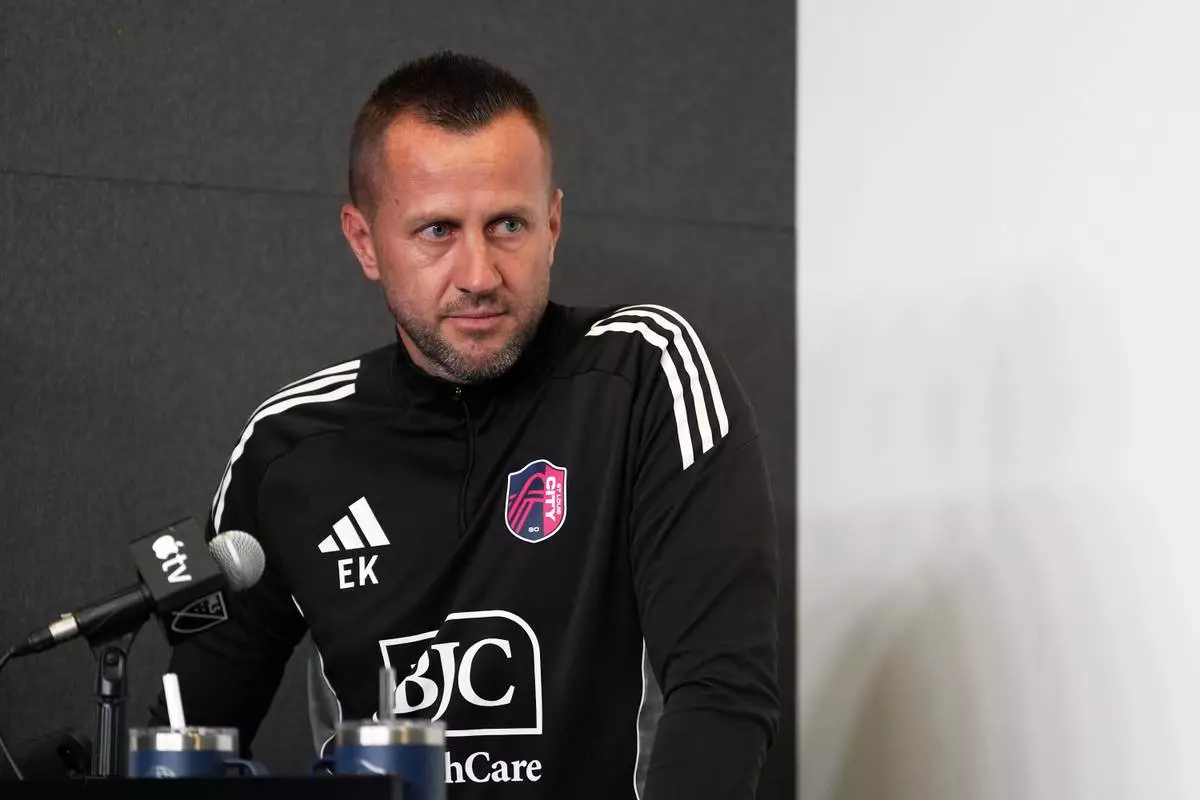
Bosnia-born assistant coach with MLS team St. Louis City Elvir Kafedzic translates during a news conference for the Bosnia national soccer team Friday, June 5, 2026, in St. Louis, ahead of the World Cup soccer tournament. (AP Photo/Jeff Roberson)
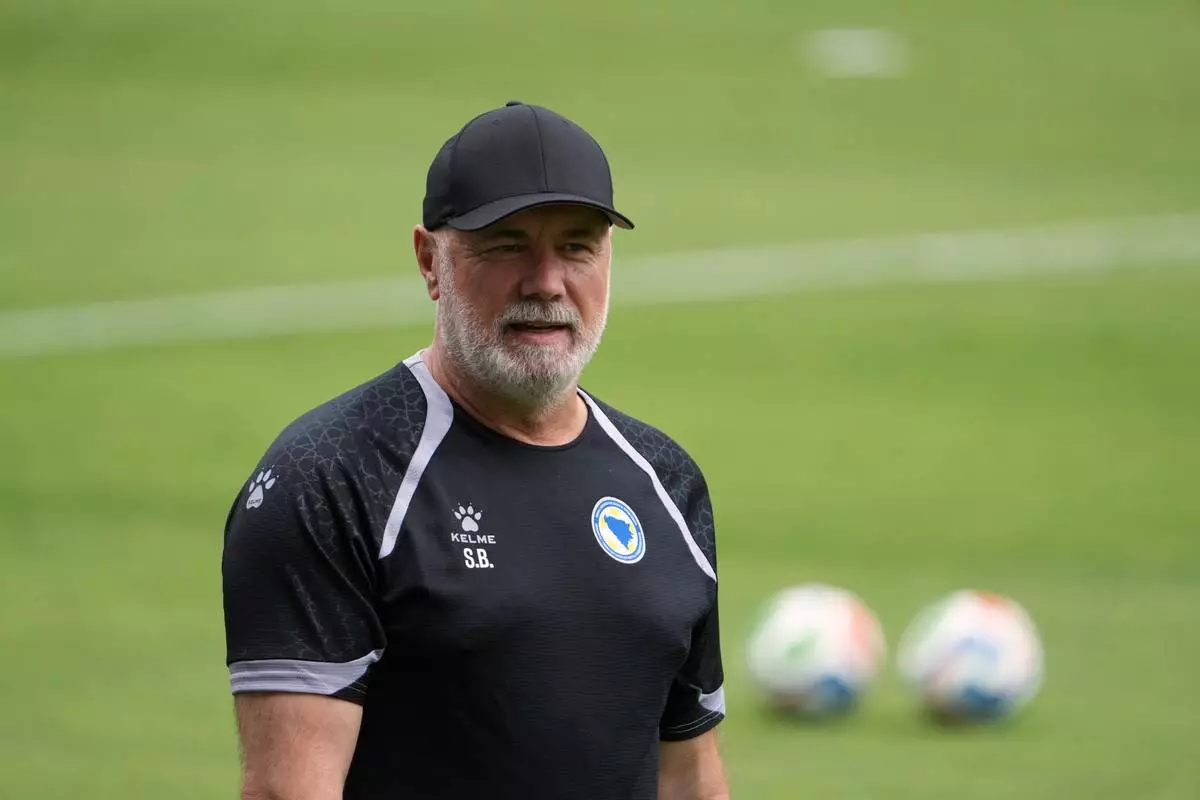
Bosnia head coach Serge Barbarez watches during a training session for the national soccer team Friday, June 5, 2026, in St. Louis, ahead of the World Cup soccer tournament. (AP Photo/Jeff Roberson)
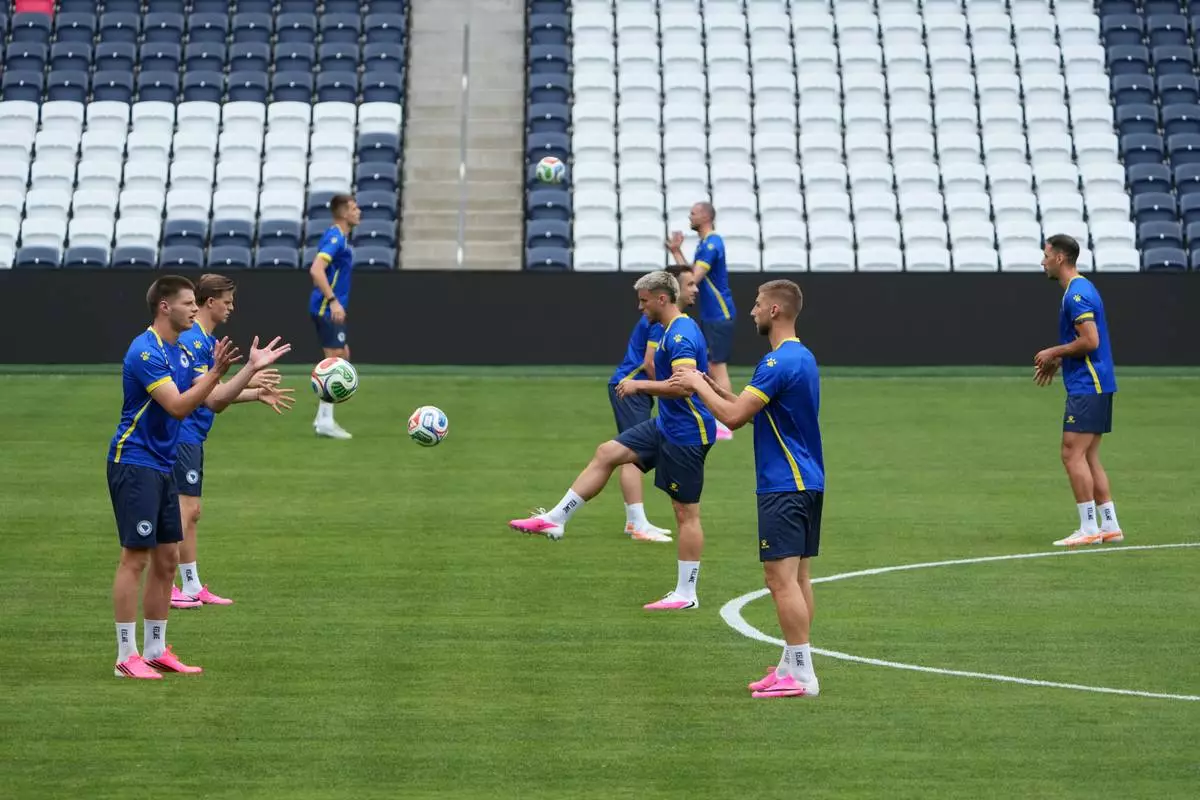
Bosnia team members warm up during a training session for the national soccer team Friday, June 5, 2026, in St. Louis, ahead of the World Cup soccer tournament. (AP Photo/Jeff Roberson)
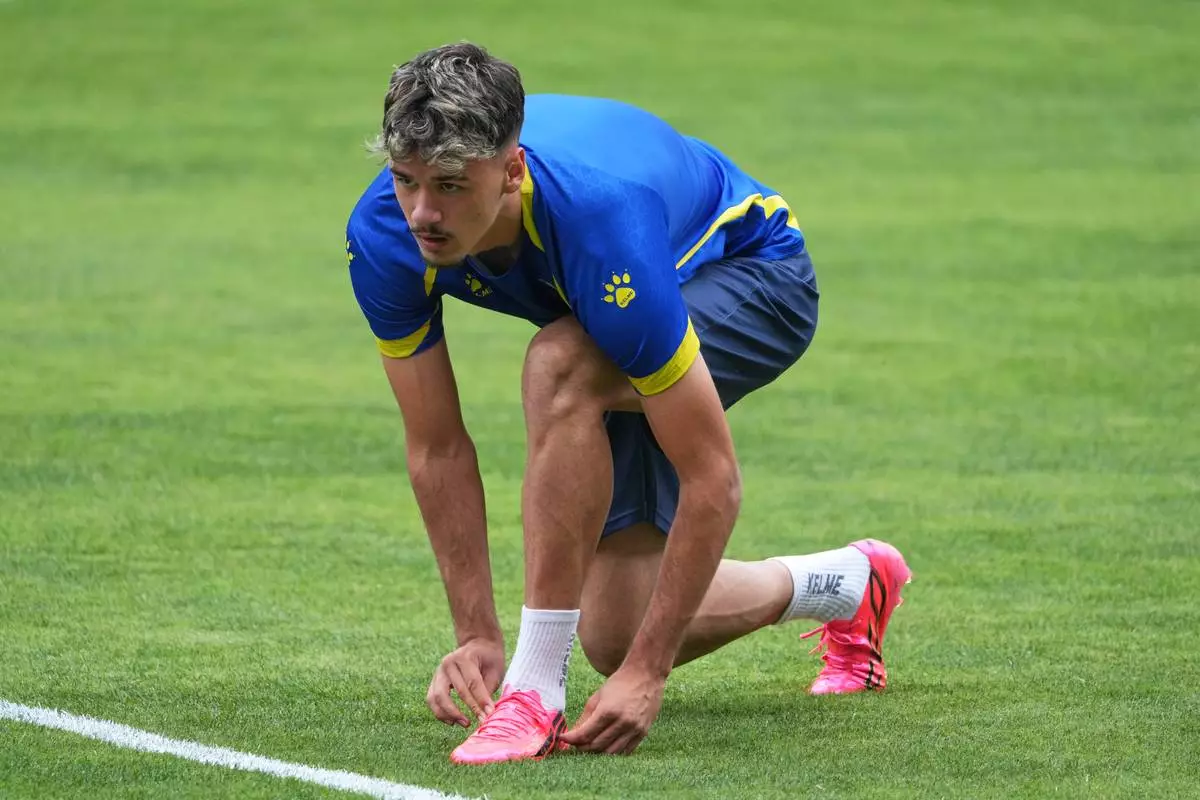
Bosnia's Kerim Alajbegovic ties his shoe during a training session for the national soccer team Friday, June 5, 2026, in St. Louis, ahead of the World Cup soccer tournament. (AP Photo/Jeff Roberson)
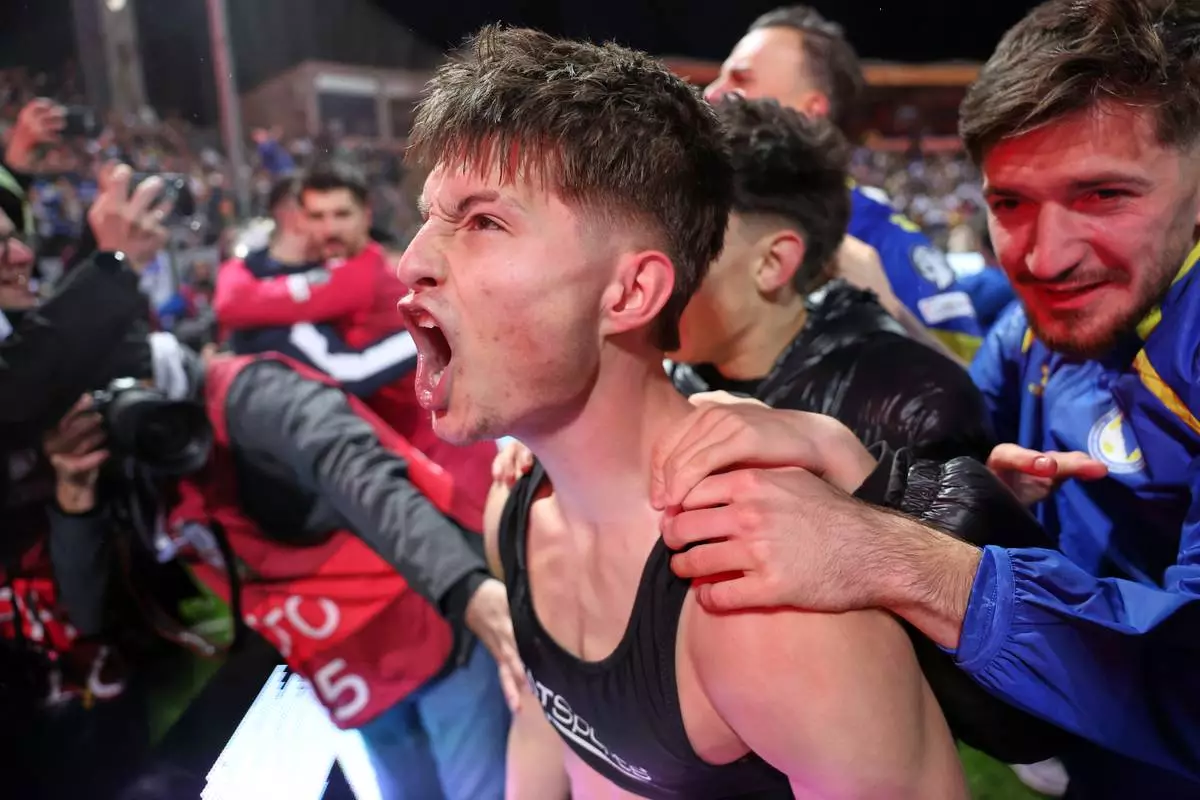
FILE - Bosnia's Esmir Bajraktarevic celebrates after winning a penalty shootout during the World Cup qualifying playoff final soccer match between Bosnia and Italy in Zenica, Bosnia, on March 31, 2026. (AP Photo/Armin Durgut, File)
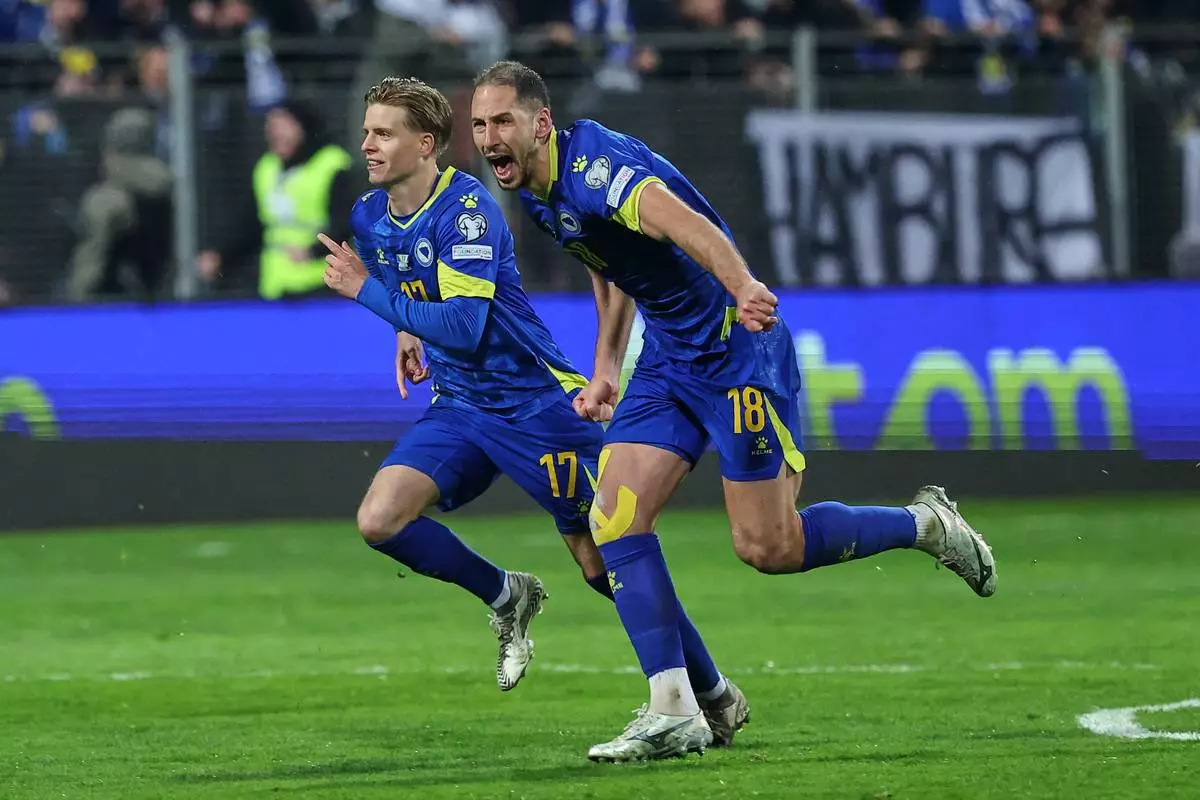
FILE - Bosnia's Nikola Katic, right, and Bosnia's Dzenis Burnic celebrate after winning a penalty shootout during the World Cup qualifying playoff final soccer match between Bosnia and Italy in Zenica, Bosnia, on March 31, 2026. (AP Photo/Armin Durgut, File)